
Rubber bung
Rubber bung which is often called laboratory rubber stopper, rubber stopper or rubber cork you will most often find in wineries and laboratories. And why right there? Because rubber bung is necessary to completely close the flasks and test tubes, because they contain various substances, many of which are dangerous to humans if their fumes are inhaled or if the substance comes into contact with skin or any other part of the body. In wineries it is used for the fermentation process. It is often used for food fermentation, and there is a suitable material for each of these purposes.
In our offer you can find all these materials. For contact with chemicals, fuels and other similar substances we recommend Polyacrylate rubber (ACM), Styrene-butadiene rubber (SBR), Buna-N and Fluorocarbon rubber (FKM) which has very high chemical stability. Also consider whether the rubber bung will be exposed to high temperatures, as this must have a big impact on the choice of material. You must not expose any type of rubber that has low heat aging resistance to high temperatures, otherwise it will be damaged. Bungs made of natural rubber and silicone are used for the fermentation of wine and food. These two materials are the safest.
We must also mention the size of the rubber bung. If the size is wrong, the fermentation process will be interrupted or the chemicals will evaporate, which is certainly not what you want to achieve. With us you have a large number of pre-made bungs and we can make any size you need. The same goes for different colors. If you’re wondering why color matters at all, the reason is very simple. When you have a large number of bottles, flask and test tubes, it will be difficult for you to tell which one is which if the bungs are all the same color.
Stopper & Plug Size Catalog
Compare four stopper profiles and check the selected part dimensions against your opening and available depth. Each profile has its own drawing and dimension meanings.
RST T-Shaped Plugs
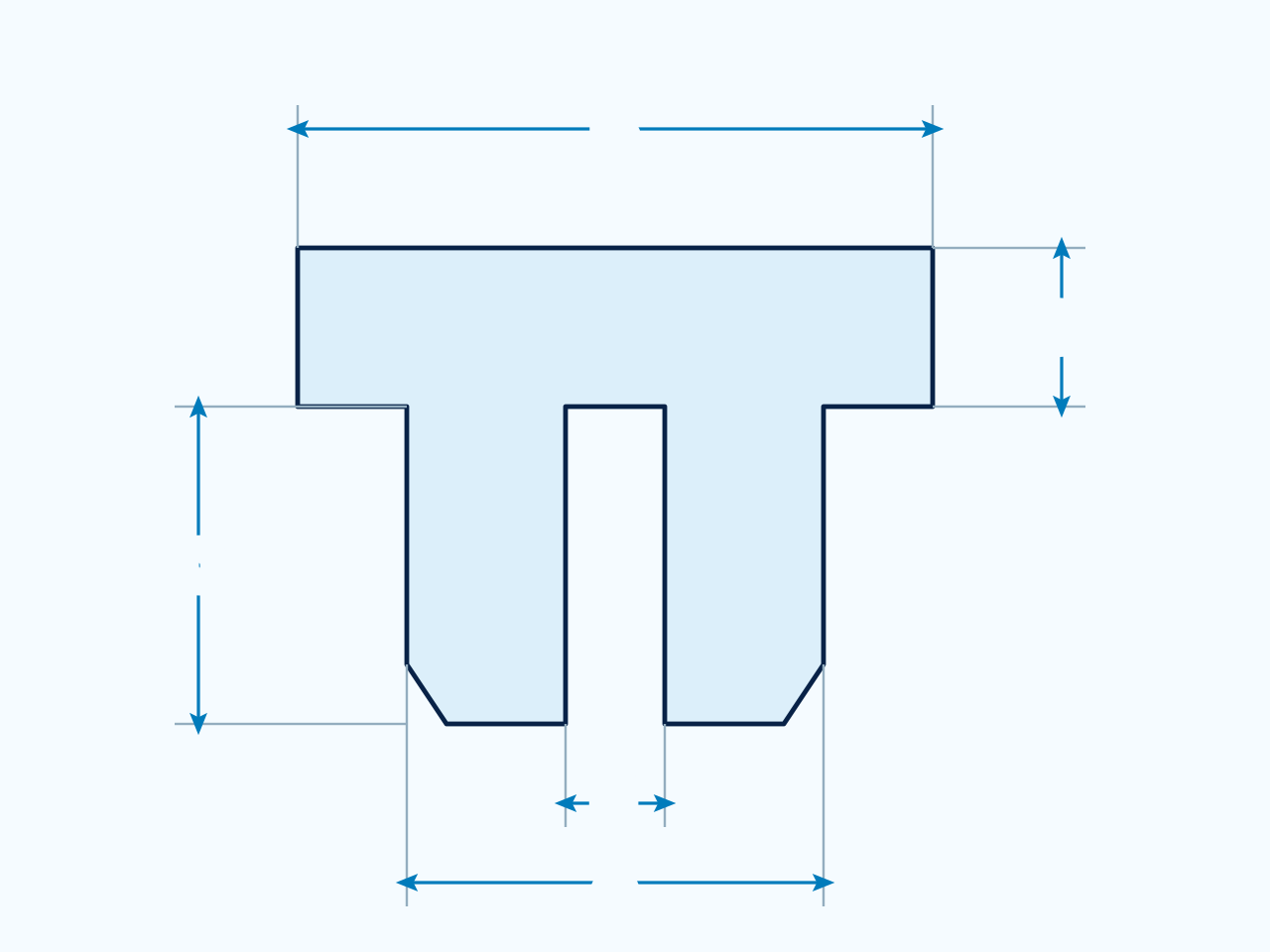
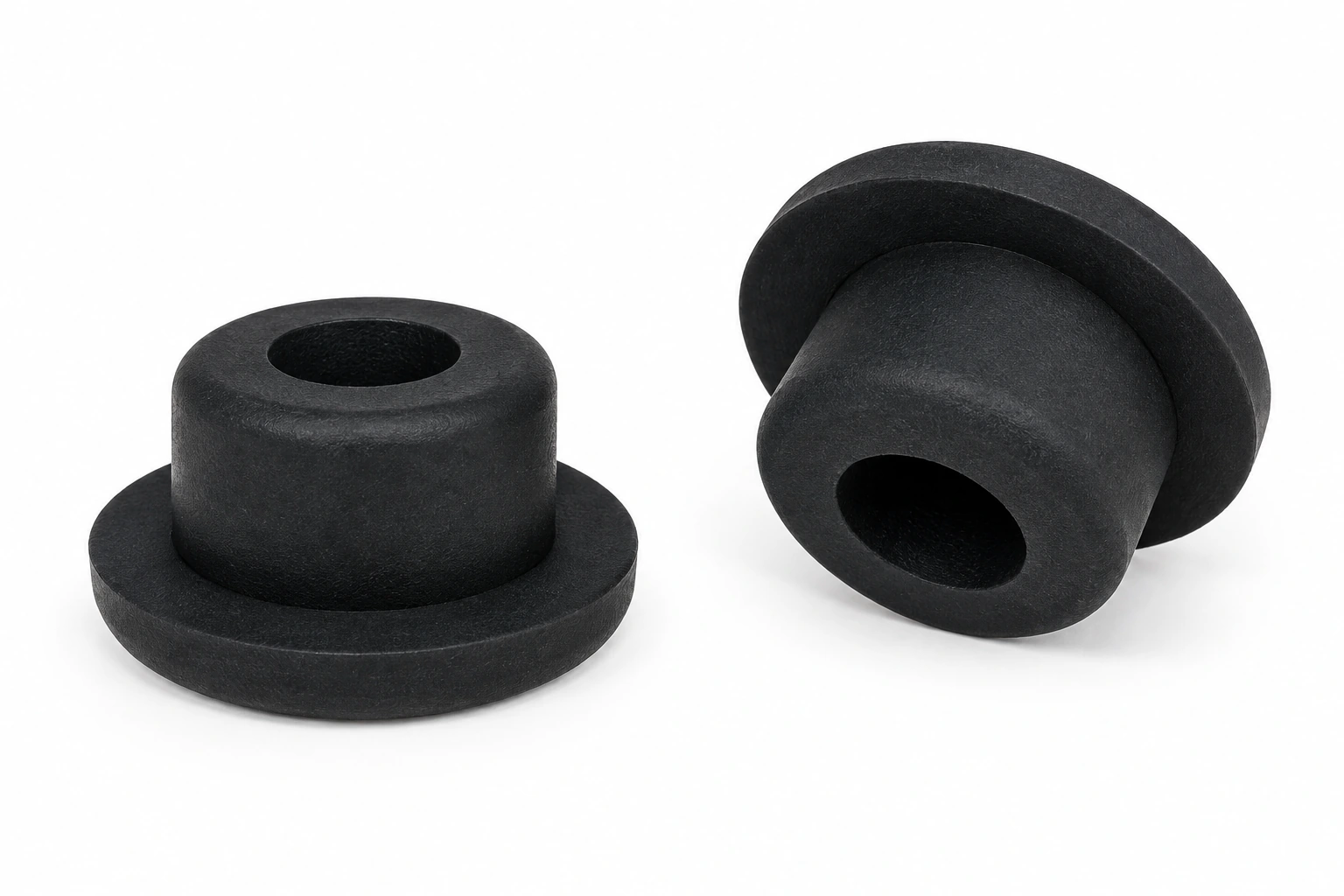
Match stem diameter A, flange diameter B, stem length C and flange thickness D. E refers to the underside recess; use the selected row and approved drawing to confirm the actual profile.
RSA Tapered Corks
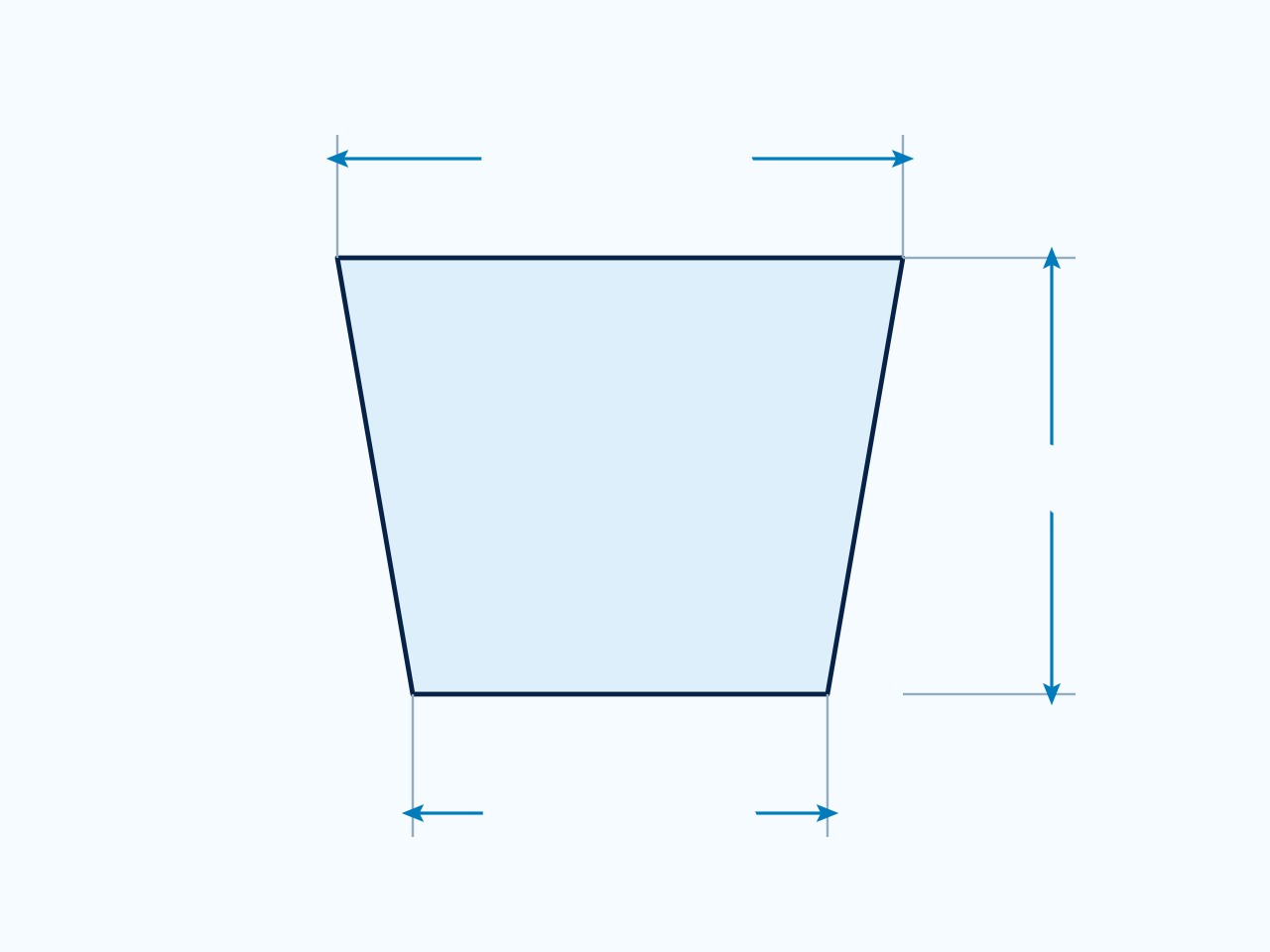
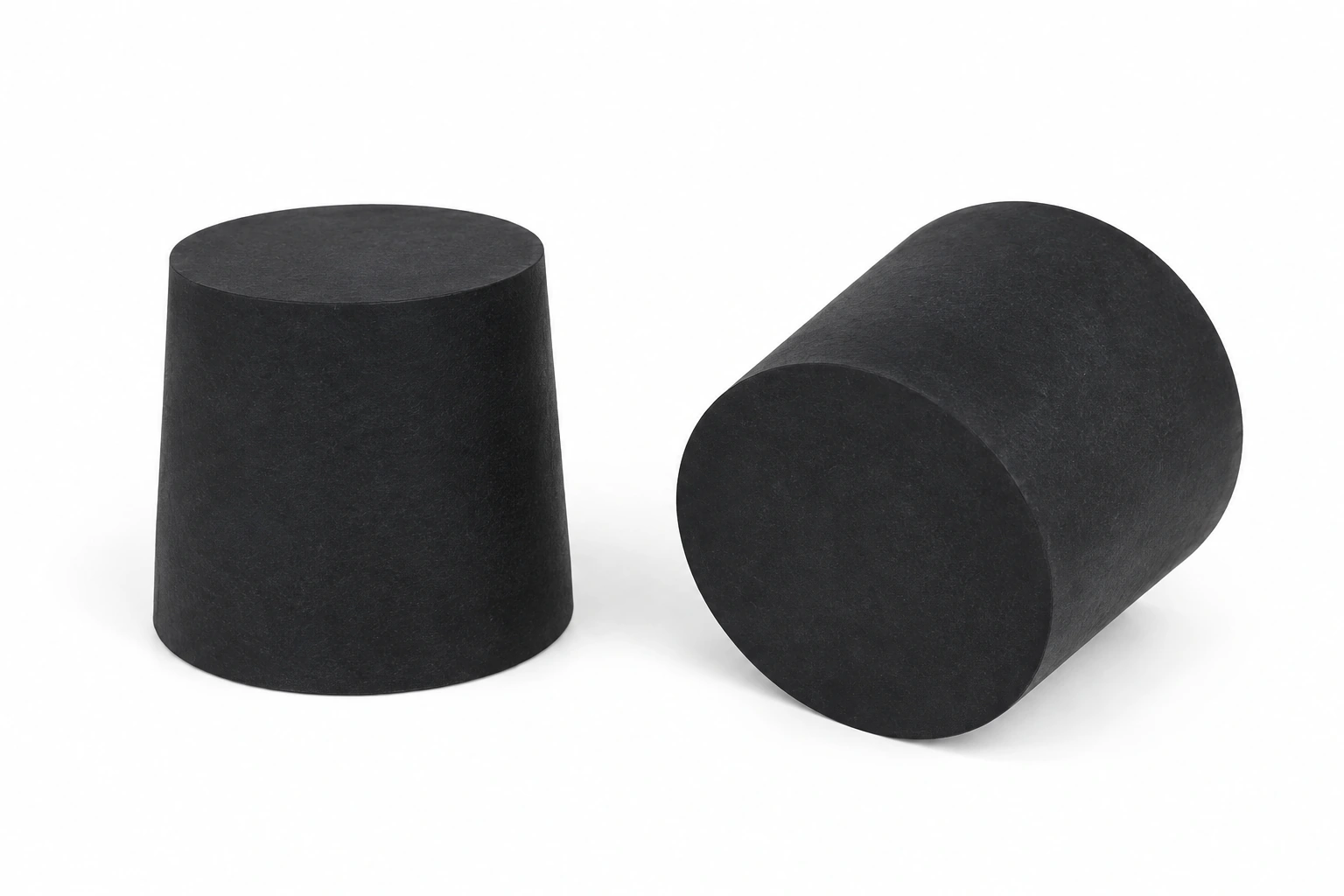
Compare large-end diameter A, small-end diameter B and Height, in mm. The mating bore and required seating depth determine where the taper contacts the opening.
RSB Undercut Plugs
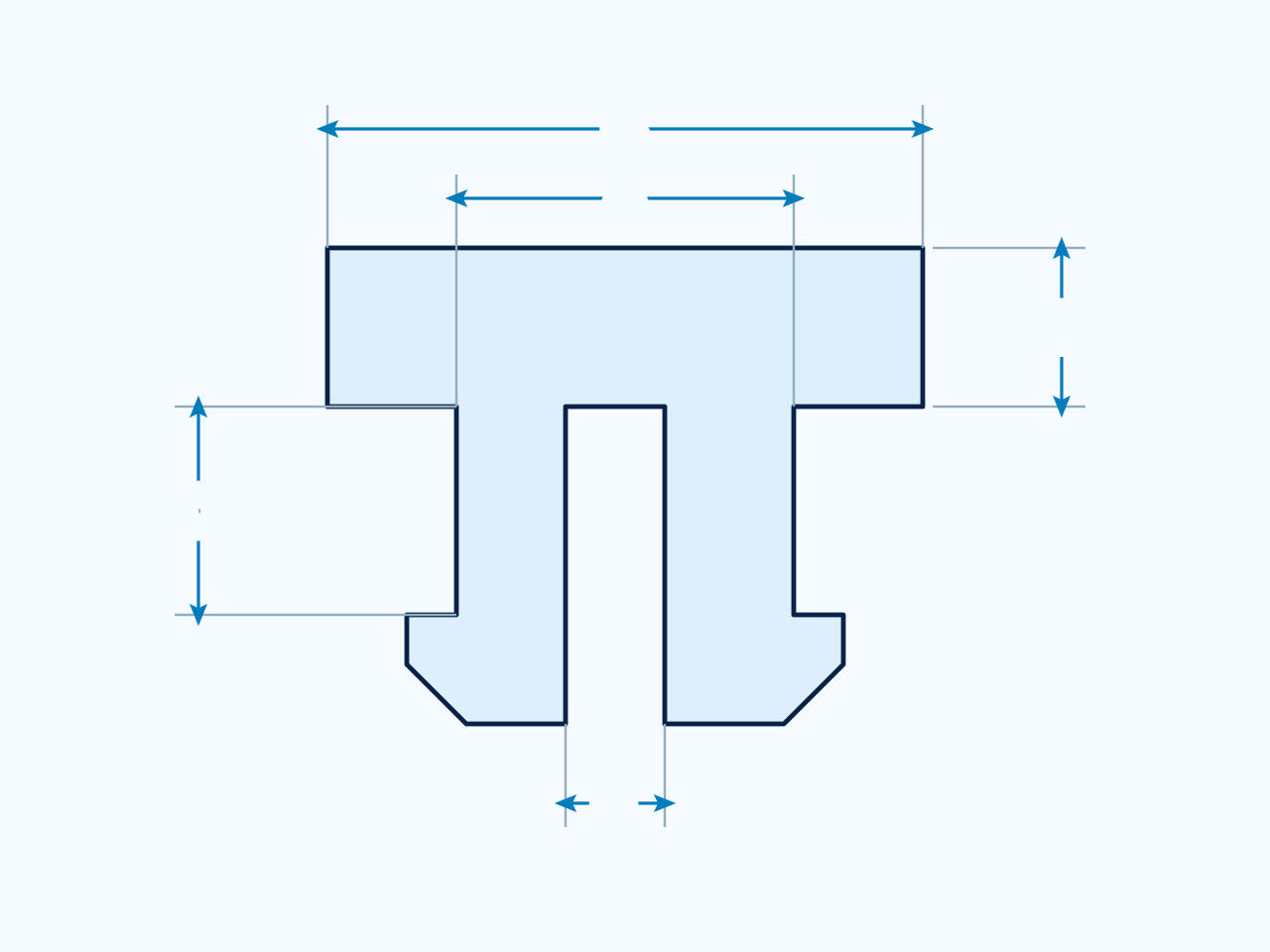
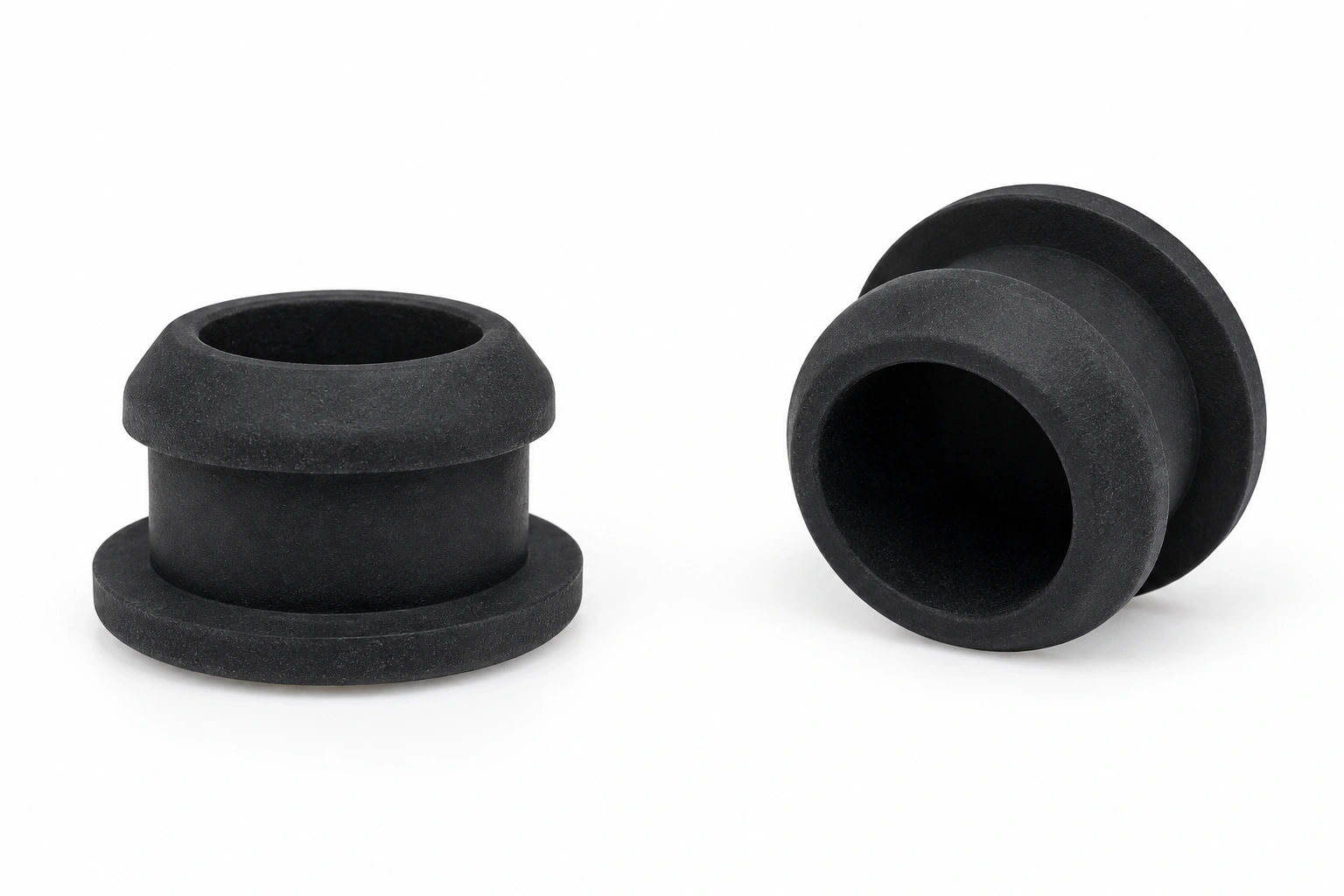
Compare neck diameter A, flange diameter B, flange-to-lip distance C and flange thickness D. Check panel thickness and rear clearance. E refers to the underside recess.
RSD T-Shaped Stoppers
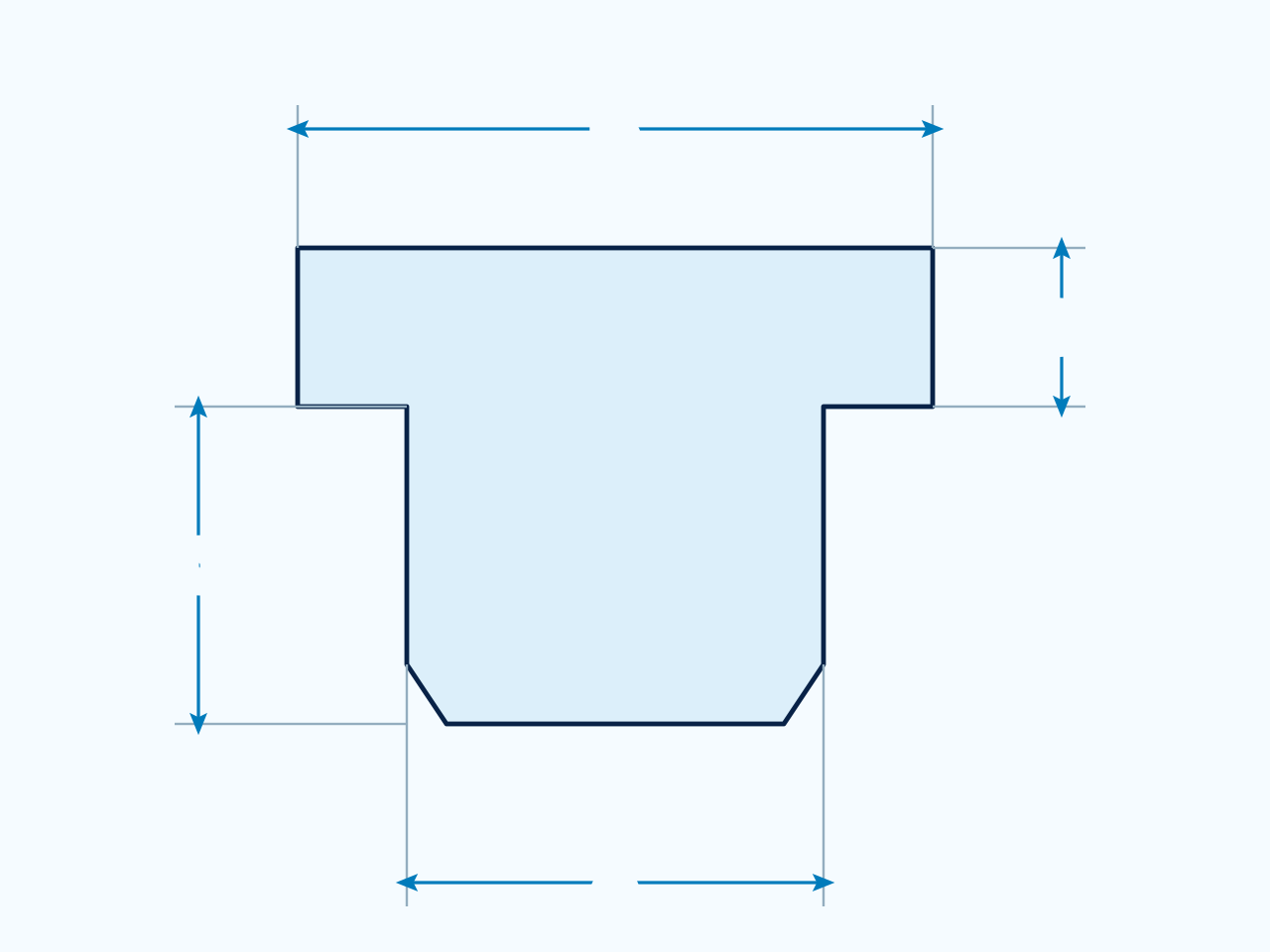
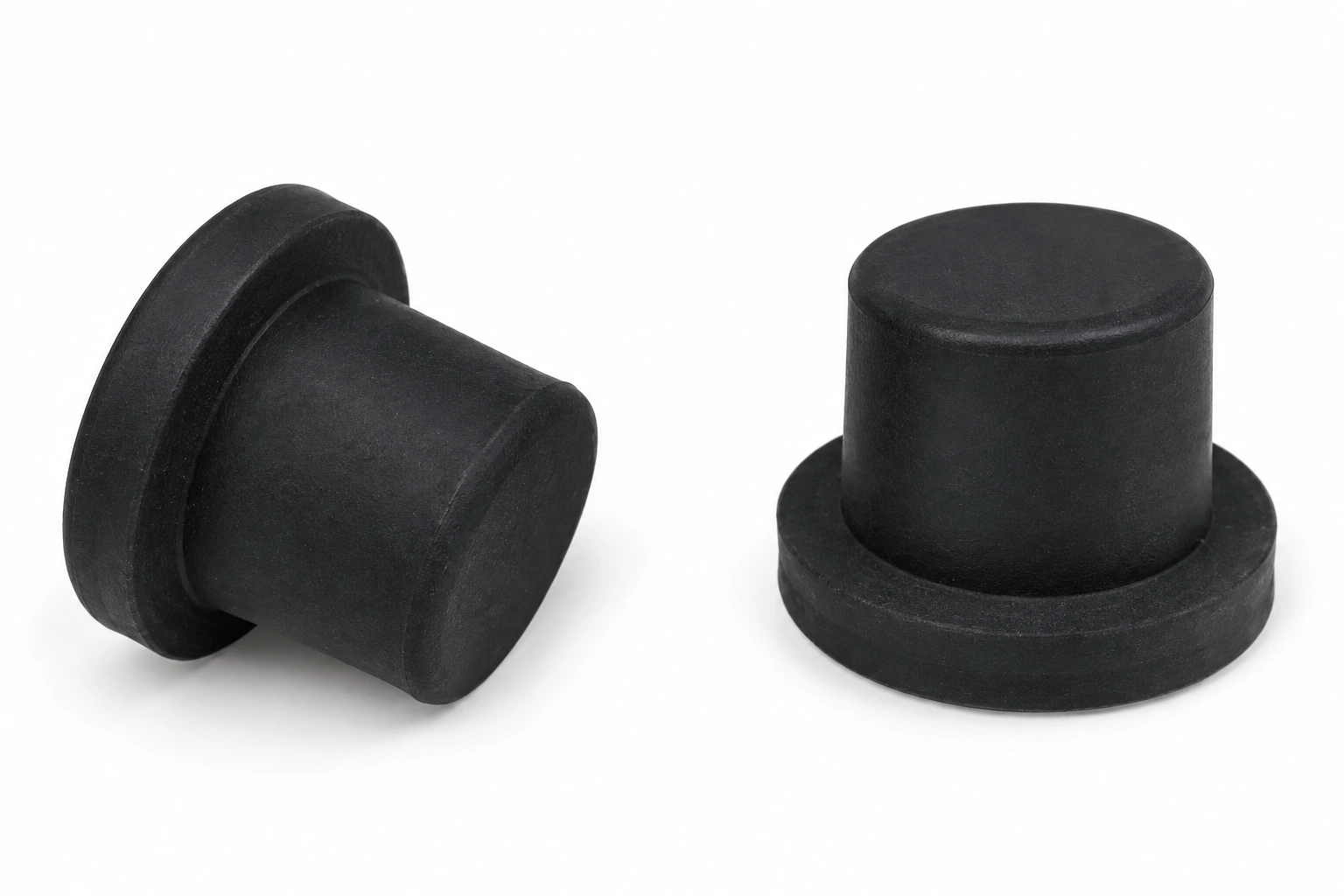
Compare stem diameter A, flange diameter B, stem length C and head thickness D, in mm. Check the seating surface and available depth as well as the hole diameter.
Need a different fit? Share the opening dimensions, mating profile and intended use for a custom size.
Discuss Your RequirementsProduct specifications
- Product form
- Removable closure fitted inside an opening
- Material options discussed
- Silicone, NBR, FKM, natural rubber / latex and SBR. Choose one formulation for the actual contact and loading conditions.
- Application focus
- Laboratory vessels, laboratory flasks, test tubes, wine bottles and bottle necks. Size the part against the selected assembly.
- Dimensions to confirm
- Opening diameter, closure profile, insertion depth and exposed grip. Match these to laboratory vessels and laboratory flasks.
- Contact conditions
- Food ingredients and wine: define concentration, temperature and contact time, then check compatibility with the chosen compound.
- Seating check
- Check the sealing contact around the opening and the force needed for insertion and removal.
Need a quote or a custom part?
Send your requirements, drawings or samples to discuss standard and custom silicone rubber parts.
Email us[email protected]