
Professional Manufacturer of Rubber Mounts and Vibration Isolators
ETOL is a manufacturer of rubber mounts with over 20 years of experience and more than 4,500 types of vibration isolators. Choose a standard part or share a drawing for a custom design. Samples may be available in as little as 48 hours, depending on the design; contact us to confirm the schedule.
Need a custom color? Include your Pantone color code when requesting a quote.
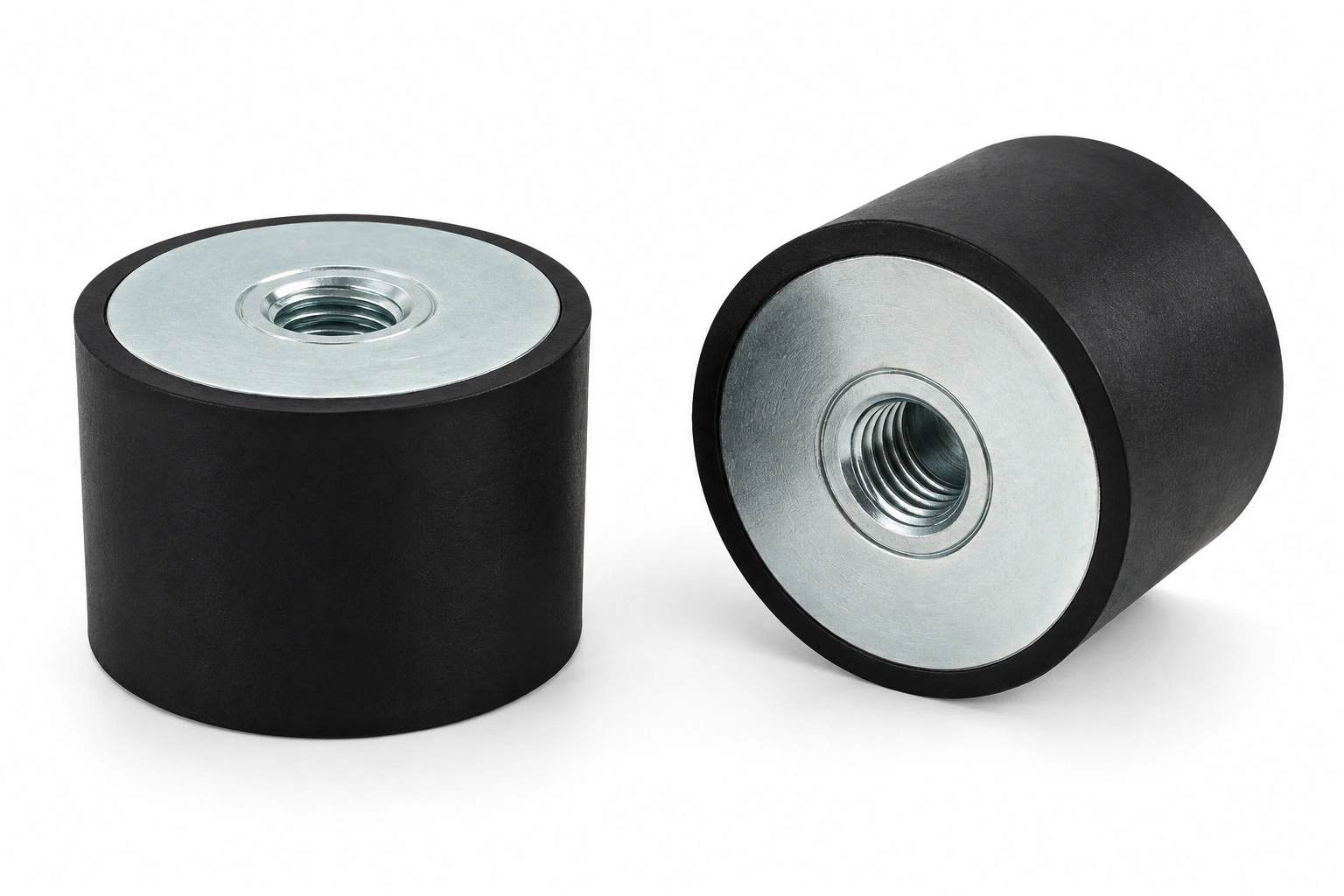
Explore Our Product Range
Find the right part for your application.
A Closer Fit for Your Application
Every application has its own requirements. From choosing a standard size to developing a custom part, our team can help you explore suitable dimensions, materials and mounting options.
Discuss Your ApplicationWhat Are Rubber Mountings and Vibration Isolators?
Rubber isolation mounts and vibration isolators help limit the vibration transmitted between machinery and its supports. Often fitted inside equipment or vehicles, they cushion movement and help protect connected components.
Rubber mountings and vibration isolators are made from natural or synthetic elastomers. They cushion shock and help reduce transmitted vibration and noise in industrial machinery, vehicles and household appliances. The geometry, material and working load determine how they perform.
Rubber isolation mounts and vibration isolators are related terms. When selecting rubber vibration dampers, check the required load directions and isolation performance rather than relying on the name alone.
Key Benefits of Rubber Mounts and Vibration Isolators:
-
Machinery Protection:
Rubber shock mountings cushion contact and reduce vibration transmitted between machine components. Select the mount for the load, movement and vibration frequency; a different elastomer alone does not guarantee better isolation. -
Improved Handling:
Rubber mounts can reduce the vibration felt at supporting structures or controls, making machinery more comfortable to operate when properly selected and installed. -
Enhanced Process Stability:
Laboratory and precision equipment may need vibration isolators to limit movement that affects measurements or processing. Check performance against the sensitivity of the equipment. -
Customizable Shapes and Types:
Rubber mounts and vibration isolators can be made in different shapes, sizes and mounting configurations to fit the assembly. -
Maintenance Considerations:
A rubber isolation mount can help reduce vibration-related wear on connected parts. Follow the equipment's maintenance and lubrication schedule; fitting an isolator does not replace it. -
Easy Application and Replacement:
Accessible mounting points can make rubber mounts easier to inspect and replace. Installation time depends on the equipment, fastening method and access.
Applications of Vibration Isolators
- Rubber mounts and vibration isolators are used wherever equipment needs controlled support and reduced vibration transmission. Common applications include:
On Vehicles:
Rubber shock mountings support vehicle engines and transmissions while reducing vibration transmitted to the body. A rubber vibration damper used at the transmission is commonly called a transmission mount; engine mounts serve a similar role at the engine. The number and arrangement depend on the vehicle.
On Machinery:
Vibration isolators can limit vibration traveling from machinery to its surroundings or from the surroundings into sensitive equipment. Applications include heavy machinery, ventilation systems, power generators and heating systems. Specify the source of vibration and the equipment to be protected.
On Audiovisual Equipment:
In audio recording, minimizing unwanted noise is vital. Rubber mounts are used in speakers, microphones, and mixing consoles to reduce vibrations. A rubber mount can also act as a separator between stacked speakers and consoles, further preventing interference.
In Laboratories:
Isolation mounts help limit the vibration reaching sensitive laboratory equipment. Select them for the instrument's load and vibration limits, then verify performance in the installed setup.
On Home Appliances:
Many household appliances that generate motion, such as washing machines, benefit from rubber mounts. These mounts act as feet, keeping the appliances steady and protecting them from damage due to vibrations.
On Furniture:
In addition to appliances, many pieces of furniture use rubber isolator feet to prevent scratching the floor and to provide stability.
How to Select and Install a Rubber Mount
The proper use of a rubber mount involves selecting, positioning, and installing the mount to achieve optimal vibration isolation. Below are the key steps to using a rubber mount effectively:
-
Choose the Right Mount:
Select a rubber mount based on the application, load capacity, and environment. Consider factors like the weight of the machinery, vibration frequency, and exposure to elements such as heat or chemicals. -
Position the Mounts Correctly:
Position rubber mounts according to the equipment layout and load distribution. Engine mounts fit between the engine and its supporting structure; machinery mounts may sit beneath the base or at designated attachment points. -
Prepare the Surface:
Ensure that the surface where the rubber mount will be applied is clean, dry, and free of debris. This ensures proper adhesion if the mount has an adhesive backing, or firm contact if bolted in place. -
Install the Mount Securely:
If the mount comes with an adhesive backing, peel off the protective layer and press the mount firmly onto the surface. For mounts that require bolts or screws, align the mount with the holes and fasten it securely. Make sure the mount is tightly attached to prevent movement. -
Test for Proper Isolation:
After installation, check vibration levels, stability and mount deflection. Review any change in mount number or position against the load distribution and equipment requirements. -
Inspect Regularly:
Periodically check the rubber mounts for wear and tear, especially in heavy-duty applications. Replace the mounts if they become damaged or lose their effectiveness over time.
Various Shapes and Types of Vibration Isolators
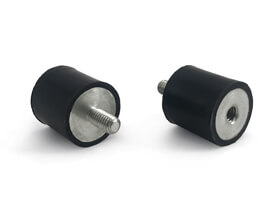
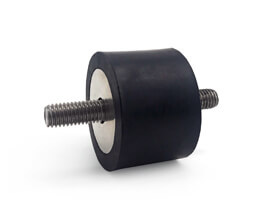
For many equipment layouts, cylindrical vibration isolator mounts provide a compact mounting option. Check our size chart for dimensions, then confirm load and vibration requirements. Other common types include:
-
Rubber Mounting Pad:
These large pads are placed on the floor to absorb machine vibrations and reduce noise. Some versions come with metal covers to protect the elastomer from UV exposure, making them more durable in outdoor environments. -
HVAC Mounts:
HVAC mounts support heating, ventilation and air conditioning equipment and help reduce vibration transmitted to the building. Choose the size and load rating for the system. -
Rubber Hanger Mounts:
Rubber hanger mounts, also called acoustic isolation hangers, support suspended equipment or pipes and help reduce vibration transmitted through the supporting structure. -
Rubber Buffers:
Rubber buffers cushion impacts from moving components in machinery and other assemblies. Select them for the impact energy, travel and mounting arrangement. -
Cone Mounts:
Cone mounts are used for supported loads that require controlled movement in several directions. Confirm the load rating and directional stiffness for the vehicle or equipment. -
Engine Mounts:
Essential for securing a car’s engine in place, engine mounts reduce engine vibrations, contributing to a smoother ride and optimal vehicle performance. These mounts should be replaced when worn out to maintain the vehicle’s proper function.
Why Choose Us
Manufacturing Experience
With over 20 years in the rubber and silicone industry, we have manufactured parts for 30,000+ customers in over 60 countries. Share your requirements so we can help you choose or develop a suitable part.
Quality Requirements
Tell us which FDA or RoHS requirements apply to your part. We will review the selected product and compound against your application requirements.
Fast Delivery
Delivery may be available in as little as 3 days, depending on stock and destination. Contact us to confirm timing for your order.
Extensive Product Range
Browse more than 18,000 product types. Choosing an existing standard part may avoid the cost of a new mold.
Samples for Evaluation
Want to check the size and quality? Free samples may be available for eligible requests. Contact our team to confirm eligibility, availability and shipping costs.
Custom Manufacturing
Work with us from design and prototyping through mold making, mass production and delivery.
Request a Quote
Need a quote?
Can’t find the size you need?
Looking for custom services?
Share your mounting dimensions, load and application. We will help you choose suitable parts and confirm pricing, quality requirements and delivery timing.
Ready to Find Your Rubber Part?
Send your requirements or drawing to discuss the right part for your application.