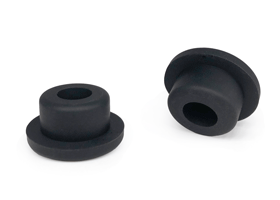
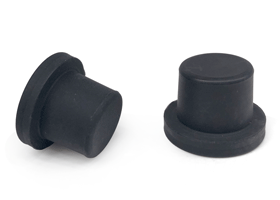
T-shaped plug
A flange stops the plug at the opening; the stem fits inside the bore.
CheckHole diameter · stem length · flange clearance

ETOL is a rubber and silicone stoppers manufacturer with over 20 years of experience. Our wider range includes more than 18,000 types of rubber products. Need a custom plug? Share your drawing, material and size requirements. Samples may be available in as little as 48 hours, depending on the design; we will confirm the schedule with you.
Need a custom color? Include your Pantone color code when requesting a quote.
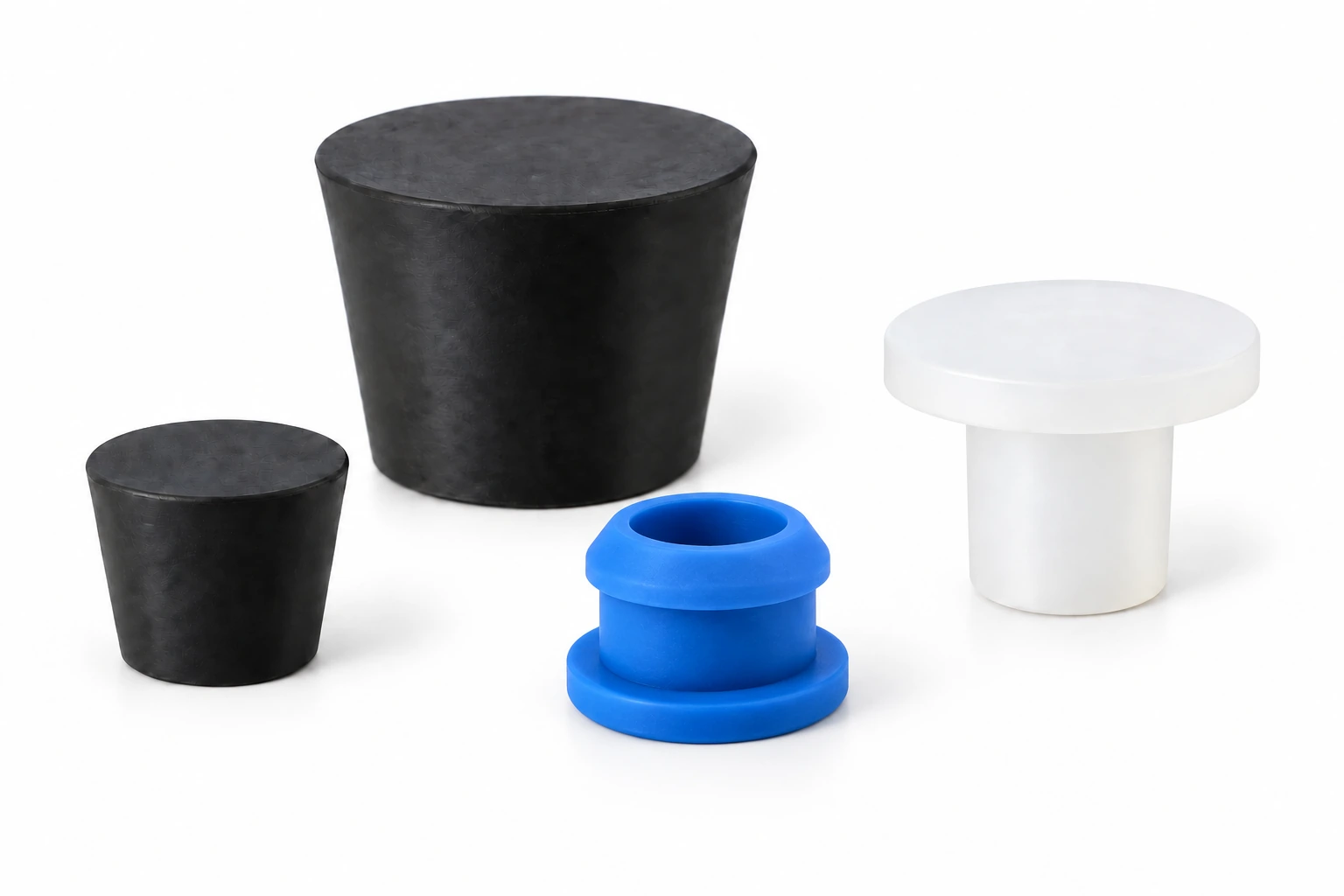
Find the right part for your application.
STOPPERS & PROTECTIVE CAPS
Compare four common profiles, measure the mating part and confirm how the rubber part will be retained.
Schematic sections, not to scale. Actual profiles and dimensions vary by product.
A flange stops the plug at the opening; the stem fits inside the bore.
CheckHole diameter · stem length · flange clearance
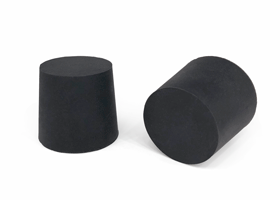
A tapered body seats progressively as it enters the opening.
CheckHole diameter · taper range · insertion depth
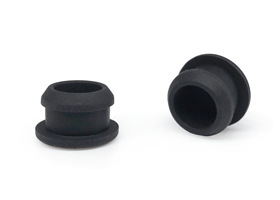
A retaining lip sits behind the panel to help resist pull-out.
CheckHole diameter · panel thickness · groove width
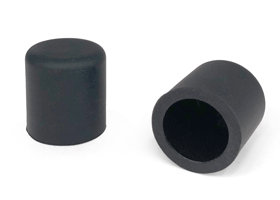
A hollow cap slides over the outside of a tube, rod or component.
CheckComponent outside diameter · cover length
Measure the rigid mating part first. Rubber compresses under caliper pressure. Fit allowance depends on the profile, compound and hardness; confirm it against the chosen part drawing and a sample.
Blue = rubber part · gray = mating component · dashed line = centerline.
The stem engages the bore. Leave room for the flange and check clearance below the plug.
Confirm the contact diameter at the intended depth. Do not force the plug to bottom out.
The panel sits between the flange and retaining lip. Check full engagement from the rear where accessible.
The cap grips the outer surface. Match the internal fit and cover length to the component.
Sections illustrate fit principles only. Check seating, insertion/removal force and retention on samples in the actual assembly. A protective fit alone does not establish a pressure or leak rating.
| Application / need | Profile to consider | What to confirm |
|---|---|---|
| Close an equipment access hole | T-shaped plug | Hole tolerance, flange clearance, stem engagement and removal frequency. |
| Temporary masking or a tapered opening | Tapered plug | Contact diameter, insertion depth, process temperature, exposure time and coating compatibility. |
| Retain a plug in a thin panel | Undercut plug | Panel thickness, retaining groove, rear clearance and required pull-out force. |
| Protect a tube, rod or fitting during handling | External cap | Outside diameter, cover length, edge condition and retention during transport. |
| Contain liquid or gas | Application-specific sealing design | Medium, pressure or vacuum, temperature, leakage target and assembly validation. |
Include profile, D or OD, t, available depth, units, tolerances, operating temperature, contact media, quantity and any required material specifications.
Every application has its own requirements. From choosing a standard size to developing a custom part, our team can help you explore suitable dimensions, materials and mounting options.
Discuss Your ApplicationExplore more than 3,000 types of rubber hole plugs and check our rubber stopper sizes. If you cannot find a suitable fit, ask about custom colors, materials and dimensions.
A rubber stopper seals an opening to help isolate and protect its contents. Rubber plugs are used in automotive, machinery and electronics applications, while silicone plugs are also considered for medical and cosmetic products where the selected material meets the application requirements. If you need rubber plugs to fill holes, start with the opening dimensions and the type of seal or protection required.
Rubber parts appear throughout everyday equipment and furniture. A rubber stopper, rubber plug, rubber cork or rubber cap can seal an opening, cover an exposed end or protect a contact point. The right choice depends on how the part fits and what it needs to do.
In laboratories, a rubber stopper seals the opening of a flask, test tube or other glassware. Also called a rubber bung plug, it helps contain liquids or gases when correctly sized and selected for the operating conditions. Check the fit, chemical compatibility and intended handling before use.
Depending on the material and design, a rubber stopper can offer:
A rubber cork works much like a rubber stopper. It is used in electrical appliances, gas systems, vehicles, industrial equipment, transport, railways and construction. When matched to the application, its useful features include:
A small rubber stopper can be made from natural or synthetic rubber. Rubber stoppers and corks seal container openings, while a rubber plug can also close a hole to help keep liquids or gases out. These parts are used in gas, chemical, shipping and construction applications. Features to consider include:
A rubber end cap covers the outside of a pipe or component end; a rubber body plug fits into an opening. Rubber endcaps help keep out dirt, dust, moisture and other contaminants during storage, manufacturing, transportation and assembly. Choose rubber caps or plugs according to the surface to be covered and the fit required.
A rubber stopper, rubber cork, rubber plug and rubber cap may serve related purposes, but their fit and intended use differ. Commercial, industrial, chemical and scientific applications each call for a suitable shape, material and sealing method.
Commercial applications include rubber caps used as rubber feet on chairs and furniture, and rubber stoppers used as bumpers or door stoppers. These parts help cushion contact and protect surfaces. Rubber plugs also close openings in plumbing and other equipment; the fit and material must suit the intended service.
In manufacturing, a rubber stopper or rubber cork may seal a process or storage container. The rubber plug needs to match the opening, contents, temperature and pressure. Chemical resistance and tear resistance depend on the compound, so share these conditions when selecting the part.
Chemical containers need a seal that is compatible with their contents. A rubber plug can help limit leaks and contact with air, but no compound suits every chemical. Specify the substance, concentration, temperature and handling conditions so the material and sealing arrangement can be reviewed.
Scientific applications include rubber cork seals for test tubes, flasks and laboratory glassware. Tube stoppers help contain a sample and reduce contamination during handling. A rubber stopper with hole can accommodate a thermometer or other instrument; one-hole and two-hole versions need to be sized for both the container and the inserted equipment.
Select a rubber stopper for the opening and operating conditions, then follow the equipment instructions. The following steps outline the fitting process.
Step 1: Check the opening dimensions and choose a matching rubber plug. For a tapered rubber cork, the opening should fall within the specified diameter range so the stopper seats securely without excessive force.
Step 2: Choose a solid rubber plug or rubber hole plug according to whether the assembly needs a closed seal or a passage for tubing or instruments.
Step 3: Clean the mating surfaces. If lubrication is required, use only a lubricant approved for the stopper, container and contents, and avoid contaminating the sample.
Step 4: Insert the rubber stopper gently and check that it is seated correctly. Stop if excessive force is needed, especially with glass containers.
Rubber stoppers, plugs and corks fit inside an opening. Rubber caps fit over the outside of a component, so check the external dimensions before fitting them:
Step 1: Remove dust and chemical residue from the external mating surface using an appropriate cleaning method.
Step 2: Check the cap size and any installation requirements. Use lubricant only if it is approved for the material and application.
Step 3: Press the cap into place and check that it is fully seated.
Rubber stopper and rubber cork designs often have a tapered body. Common configurations include:
Common material options include the following. Confirm the compound against your temperature, chemical and mechanical requirements.
Compare the rubber stopper sizes in the product tables to find a rubber plug for your opening. We also make special-shaped stoppers to your drawing. Depending on the design, samples may be available in as little as 48 hours; ask us to confirm pricing and timing for your project.
With over 20 years in the rubber and silicone industry, we manufacture parts for 30,000+ customers in over 60 countries. Share your application challenges so we can help you define the right part.
Tell us which FDA or RoHS requirements apply to your product. We will review the selected material and part against your application requirements before you order.
Delivery may be available in as little as 3 days, depending on stock and destination. Share your required arrival date so we can confirm the options.
Browse more than 18,000 product types. An existing standard part may meet your requirements without the cost of a new mold.
Want to check the fit and quality first? Free samples may be available for eligible requests. Contact our team to confirm eligibility, availability and shipping costs.
Work with one team from design and prototyping through mold making, mass production and delivery.
Send your requirements or drawing to discuss the right part for your application.