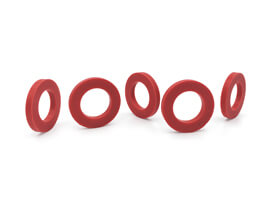
Round rubber washers
Circular profiles for your assembly.

CUSTOM RUBBER COMPONENTS
As a rubber washers and rubber gaskets manufacturer, ETOL helps you match the shape, dimensions and material to your assembly. Send a drawing or sample to get started.
Custom shapes · Material options · Pantone color matching
Round, flat or custom profiles
Selected for your application
Support from sampling to production
THE PRODUCT COLLECTION
Explore washer and gasket shapes from our range. Each image is a starting point for discussing your own dimensions and requirements.
Circular profiles for your assembly.
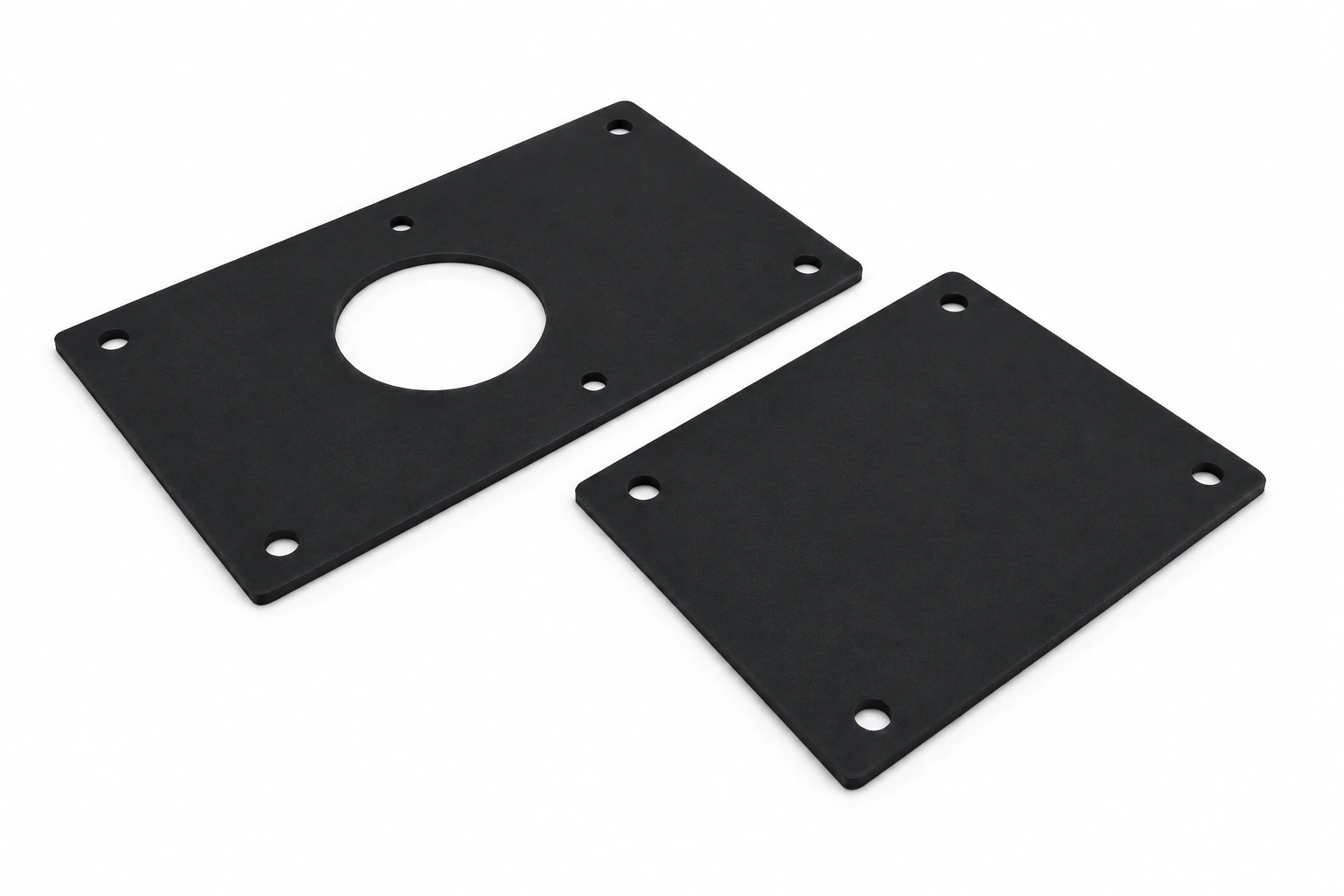
Cutouts and fixing holes to suit your drawing.
Frame shapes in different lengths and widths.
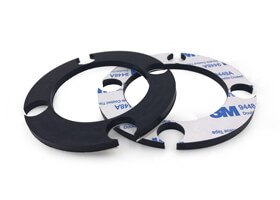
Backing options for positioning and assembly.
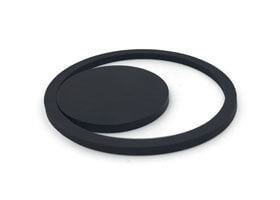
Solid and open-center circular shapes.
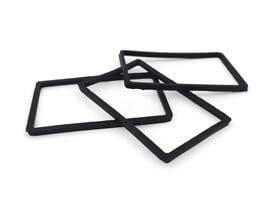
Continuous frames for mating surfaces.
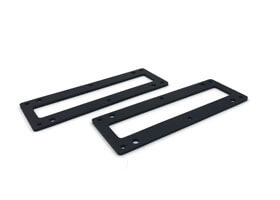
Long openings with mounting-hole details.
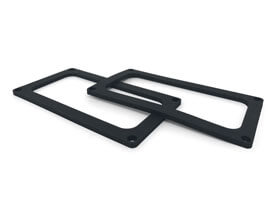
Rectangular profiles with fixing holes.
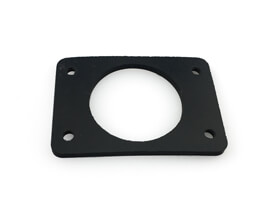
Panel gaskets with a central opening.
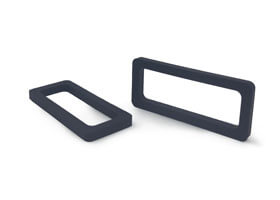
Small frame profiles for custom assemblies.
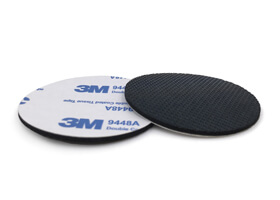
Circular pads with an adhesive backing.
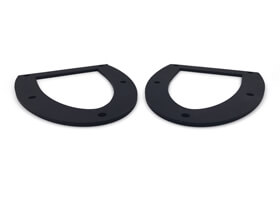
Contoured profiles with fixing holes.
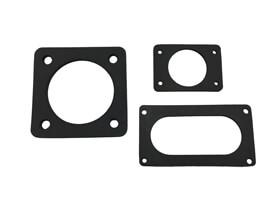
Round and oblong openings to suit the part.
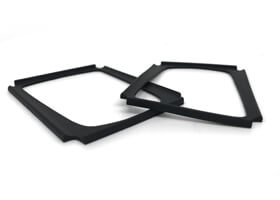
Shaped edges for non-standard interfaces.
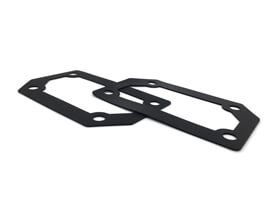
Custom outlines and multiple cutouts.
Need a different profile? Send us your drawing
DIMENSIONS · PROFILE · APPLICATION
A practical washer & gasket brief, from first measurements to sample approval.
Use these reference shapes to describe your requirement. Availability, tooling and dimensions are confirmed after drawing review.
Show both mating faces, the sealing land, bolt pattern and available clamp load. Include stops, flatness requirements and the installed gap; identify the fluid side and any openings to keep clear.
Send an assembly section alongside the part drawing. Confirm free size, installed size and tolerances separately. Agree on compression and fit for the selected compound and geometry before approving a sample.
Already specified a compound? Share its grade and datasheet. Otherwise, use this checklist to discuss silicone, EPDM, NBR, CR, FKM or another candidate with our team.
List fluids, gases, cleaners and concentrations. Request compatibility review for the exact compound at the operating temperature.
Separate continuous service from short peaks. Include outdoor exposure, immersion time and cleaning cycles.
State the hardness value and scale if known. For sponge or hollow profiles, include compression-force and recovery requirements.
Identify any contact requirements, test methods or traceability needs for the application. Specify color with a Pantone code.
A polymer name alone does not confirm temperature limits, chemical compatibility or compliance. Final selection depends on the compound, assembly and agreed validation conditions.
Include the following with your drawing. Mark unknown items for review rather than guessing.
Before production: agree on the drawing and compound, check sample dimensions and assembly fit, then evaluate sealing under the agreed conditions.
Discuss Your Seal RequirementsSPECIFIED FOR YOUR APPLICATION
Tell us how the part will be used. We’ll discuss the geometry, material and production requirements with you.
Share Your RequirementsMaterial suitability depends on the compound, operating conditions and required approvals.
YOUR PART CHECKLIST
Have a drawing? Attach it to your inquiry.
FROM DRAWING TO DELIVERY
Agree on the dimensions, material and production requirements before work begins.
Send your drawing, dimensions, application and estimated quantity.
Discuss material, tooling, pricing and the production schedule.
Agree on sample arrangements and check the fit before production.
Confirm the approved specification, order and delivery arrangements.
KNOW YOUR COMPONENT
Explore shapes, applications and the factors behind material selection.
Ask about your applicationRubber washers and rubber gaskets sit between mating parts to seal, cushion or provide spacing. They are used in vehicles, plumbing, furniture and tools. Flat rubber washers come in different shapes, sizes and compounds to suit the assembly. Some applications need moisture resistance; others call for flexibility, controlled compression or resistance to heat, UV light, chemicals or gases. EPDM washers are one material option to discuss. As a manufacturer of rubber gaskets, we help you match the dimensions and material to the working conditions.
A rubber washer commonly sits beneath a fastener or between contacting parts. A rubber gasket seals a joint that contains liquid or gas, such as a pipe connection or housing. A rubber grommet protects a cable or tube where it passes through an opening. These parts may look similar, but choosing by function helps you specify the correct profile and material.
Rubber parts have a long history, from natural latex to today's engineered compounds. Modern rubber gaskets use both natural and synthetic rubbers. Compounding and curing allow manufacturers to adjust properties for different applications, including flexibility, hardness and resistance to the operating environment.
The elasticity of rubber washers helps them conform to mating surfaces and accommodate some movement. Rubber gaskets are used in aerospace and automotive assemblies, construction, plumbing, electrical installations, original equipment manufacturing and household appliances. Each application has its own requirements for fit, loading and material performance.
A rubber washer or gasket works as part of the joint design. It may sit beneath a bolt head or nut, or between mating surfaces, depending on whether its purpose is sealing, cushioning or spacing. Select the location, dimensions and compression for the assembly; a washer does not automatically secure every fastened joint.
When selecting a rubber washer, consider the load, compression and movement it will experience. Excessive stress can damage the part or reduce sealing performance. Useful material properties include tear resistance, abrasion resistance, density, specific gravity and hardness. Evaluate these properties under test conditions that reflect the application.
Tensile strength, tensile modulus, elongation and rebound describe different aspects of how rubber responds to a load. Compression set describes the deformation that remains after compression; a sealing gasket generally needs adequate recovery to maintain contact. For moving assemblies such as window frames, review flexibility and recovery alongside the sealing force.
Storage conditions and shelf life affect rubber gaskets before they are installed. Storage conditions and shelf life depend on the compound; keep batch information with the parts.
Temperature, sunlight, humidity and other environmental exposure can affect stored rubber washers. Natural rubber, neoprene and silicone have different storage requirements; confirm the shelf life for the selected grade rather than relying on a general material estimate.
Store rubber gaskets in a cool location away from direct sunlight, using packaging appropriate to the compound and cleanliness requirements.
Inspect rubber gaskets as part of the equipment's maintenance schedule. Signs that may call for replacement include:
Use a cleaning method approved for the rubber compound and the equipment. Check compatibility before using bleach, acids or other cleaning agents. If contamination or damage remains, replace the rubber washer or gasket.
A thick rubber washer and a thin rubber washer serve different spacing and compression needs. For a flat, round rubber washer, specify the inside diameter, outside diameter and thickness. A wide rubber ring and a rubber disk with a small center hole will behave differently under load, so include the contact area and required function.
Custom shapes range from a rectangular gasket or round gasket to a hemispherical gasket or curved saddle washer. Send a drawing showing the mating surfaces and any tube recess, holes or contours. Rubber washer sizing depends on the outside diameter, inside diameter and thickness; specify these dimensions for your assembly.
Rubber gasket properties depend on the polymer, additives and curing process. Plasticizers, curing agents, accelerators, antioxidants and pigments can affect processing, flexibility, aging and color. Specify the performance and appearance you need so the compound can be selected accordingly.
Silicone washers and neoprene washers offer different combinations of flexibility and environmental resistance. Confirm the selected compound's temperature range and compatibility with oils, solvents, acids, UV light and ozone, as relevant to your application.
Other options include Ethylene Propylene Diene Monomer (EPDM), Nitrile and Viton®. Select the compound for the required strength and resistance. For contact with potable water or food, material selection must account for the intended contact and operating conditions.
Rubber washers can be die cut from sheet material, sliced from suitable tubing or molded to shape. Injection molding fills a closed mold with compound; compression molding shapes a measured charge as the mold closes. The process depends on the dimensions, material and production quantity.
A complex rubber gasket may be individually molded or cut using a suitable process. Equipment can include extruders, lathes, presses, autoclaves and water jet cutters. Curves, ridges, asymmetric outlines and other features need to be reviewed for manufacturability and the required tolerances.
Need a custom rubber gasket? Send your drawing, material requirements and quantity so we can review the shape and production options.
LET’S BUILD THE RIGHT FIT
Share a drawing or tell us what you need to seal.
Dimensions · Material · Quantity