
Rubber Cap Plugs
Creating a tight and waterproof seal is not always easy. Thankfully, if you just use a rubber cap plug – it is. A rubber cap plug can be used for a wide range of applications across several different industries. Most commonly, these rubber caps are used for creating a tight, waterproof seal in pipes and also for special applications where in addition to a tight seal, a plug must provide sufficient resistance to heat and/or chemicals. In addition to these two, you can also find rubber cap plugs, more precisely silicone cap plugs, in very hot, coating and e-coating environments, where these plugs provide brilliant masking for certain parts during the coating processes. Seeing how silicone can withstand temperatures as high as 270 degrees Celsius, these ones are ideal.
Unlike regular rubber caps, rubber cap plugs are not placed on top of an opening. Instead, they are inserted into one, while the cap portion of the plug manages to provide additional seal and protection.
Now, considering their wide range of applications, we manufacture rubber cap plugs in all kids of different shapes. In fact, we have dozens of different types of rubber cap plugs, each of them designed with a special purpose and use-case scenario in mind. As you will see if you take a look at our extensive catalogue, the rubber cap plugs we manufacture not only differ in type, but they also differ in size and materials. The size difference is pretty self-explanatory, but different materials might confuse you. Essentially, it all comes down to where and what for you want to use these. If you are looking for something with low thermal conductivity, low chemical reactivity, and high-temperature tolerance, you will get FKM or silicone cap plugs. If you are a bit more lenient with our requirements – natural rubber cap plugs might suffice.
Rubber Cap Size Catalog
Compare the internal and external dimensions of rubber caps against the part being covered.
Rubber Caps-RSE
Compare A (inner diameter), B (outer diameter), C (inner depth) and D (total height), in mm.
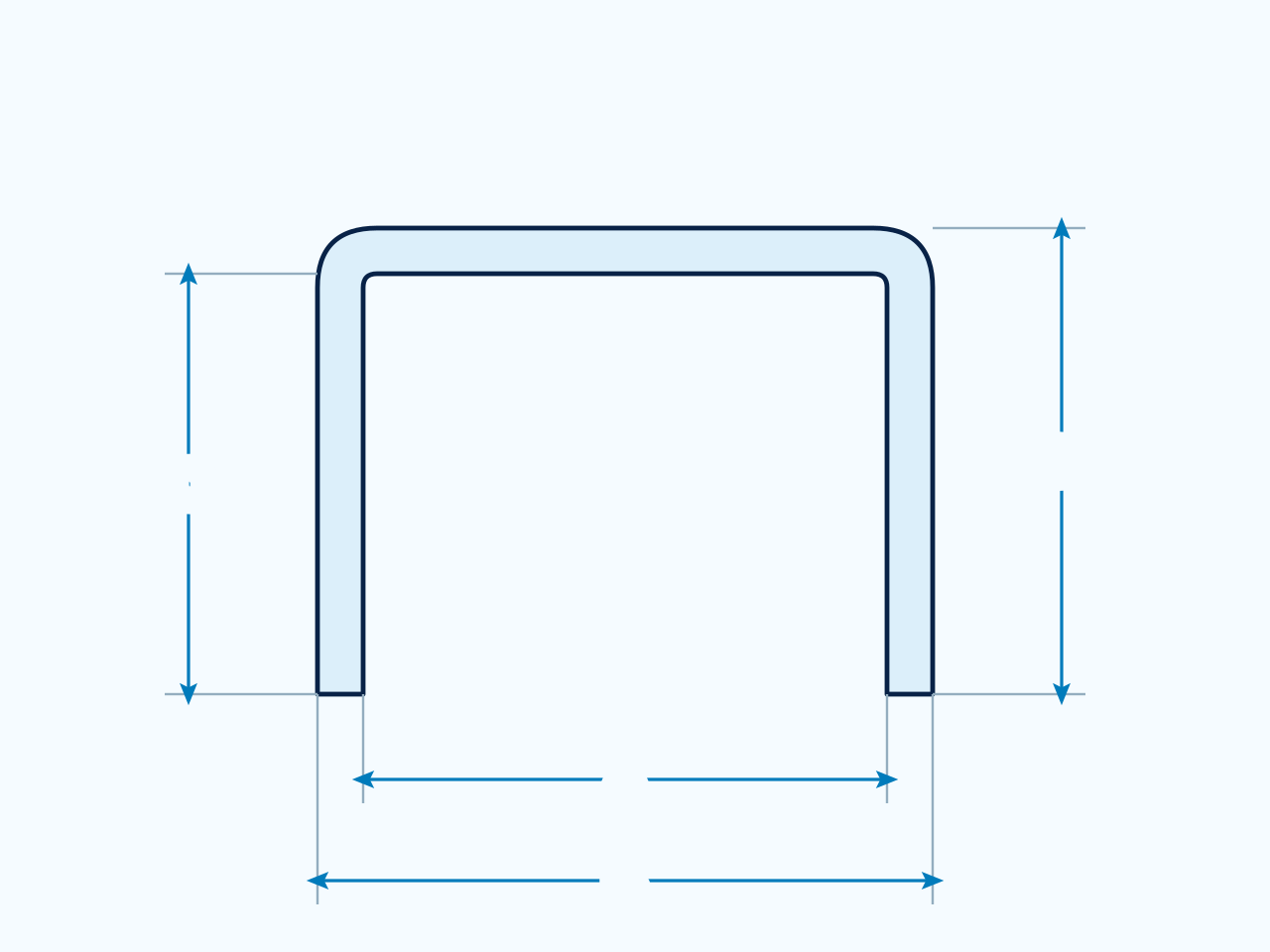
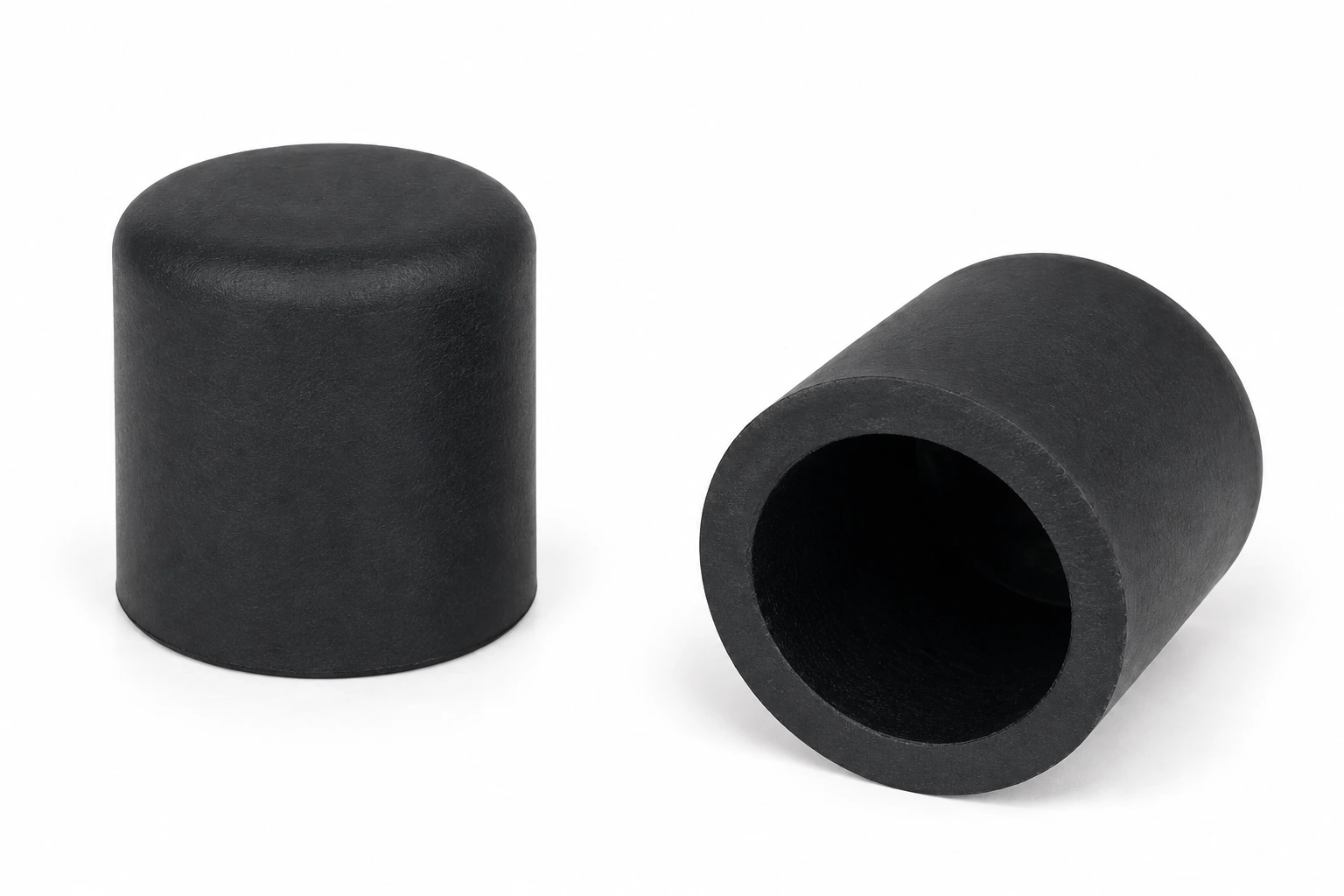
Need a different size? Share your drawing, mating dimensions and intended use to discuss a suitable part.
Discuss Your RequirementsProduct specifications
- Product form
- Protective cover fitted over a component end
- Material options discussed
- Silicone, FKM and natural rubber / latex. Choose one formulation for the actual contact and loading conditions.
- Application focus
- Pipe or conduit ends and masking during surface finishing. Size the part against the selected assembly.
- Dimensions to confirm
- Mating outside dimensions, cover depth, cavity and wall thickness. Match these to pipe or conduit ends and masking during surface finishing.
- Cover retention
- Check the installed overlap and pull-off force on the actual end profile.
Need a quote or a custom part?
Send your requirements, drawings or samples to discuss standard and custom silicone rubber parts.
Email us[email protected]