
Heavy duty rubber tubing
The main difference between standard and heavy duty rubber tubing is self-explanatory since the purpose of both remains the same. Namely, both products we craft are designed to transfer any type of gas or liquid matter from one place to another, while its content remains unchanged by the external factors. Besides that, they must provide an air-tight environment, while they deliver as expected regardless of weather conditions they are exposed to. In a nutshell, if a tubing does not work in a specific environment, then it must be replaced with an adequately performing alternative solution, otherwise, various issues might arise from a seemingly harmless glitch.
Now that we have covered the basics, we should focus on what makes the heavy duty rubber tubing more special than the classic option. As we suggested earlier, the catch with heavy duty rubber tubing lies in its name. Namely, the materialization of heavy duty rubber tubing is utterly different than that of the regular one. During the production process, specific components are both added and excluded from the original recipe in order to potentiate peculiar features. In this case, we care about uncompromised performance under unorthodox conditions, so the point is to craft a product capable of resisting various challenges its future working environment would impose. You can even use heavy duty rubber tubing in a regular environment instead of standard tubing since it will outlast its competition by far.
Considering you have grasped the idea of how specific features are potentiated, while the undesirable ones are excluded, we should emphasize that we can also potentiate amends according to what you want. All you have to take care of is that you feed our support team with as many details as possible, and they will take care of the rest. Thus, waste no more time and tell us how we can be of assistance.
Rubber Hose Size Catalog
Compare tube bore, outside diameter and available wall thickness. Confirm material compatibility and operating requirements for the selected hose.
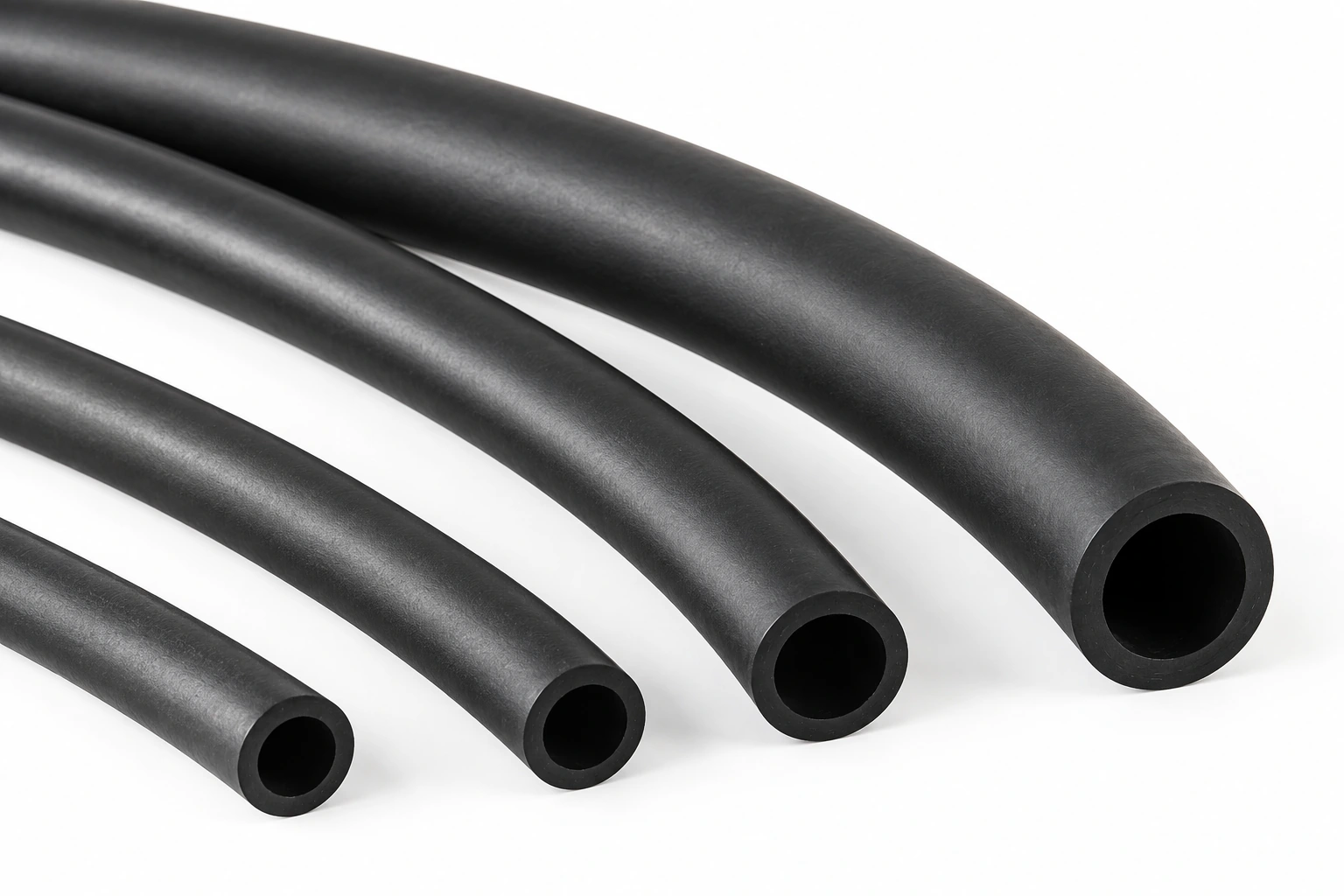
Rubber Hose
Compare Inside Diameter and Outside Diameter in mm. The cross-section drawing identifies the bore and outside diameter; confirm the selected tube material and service requirements.

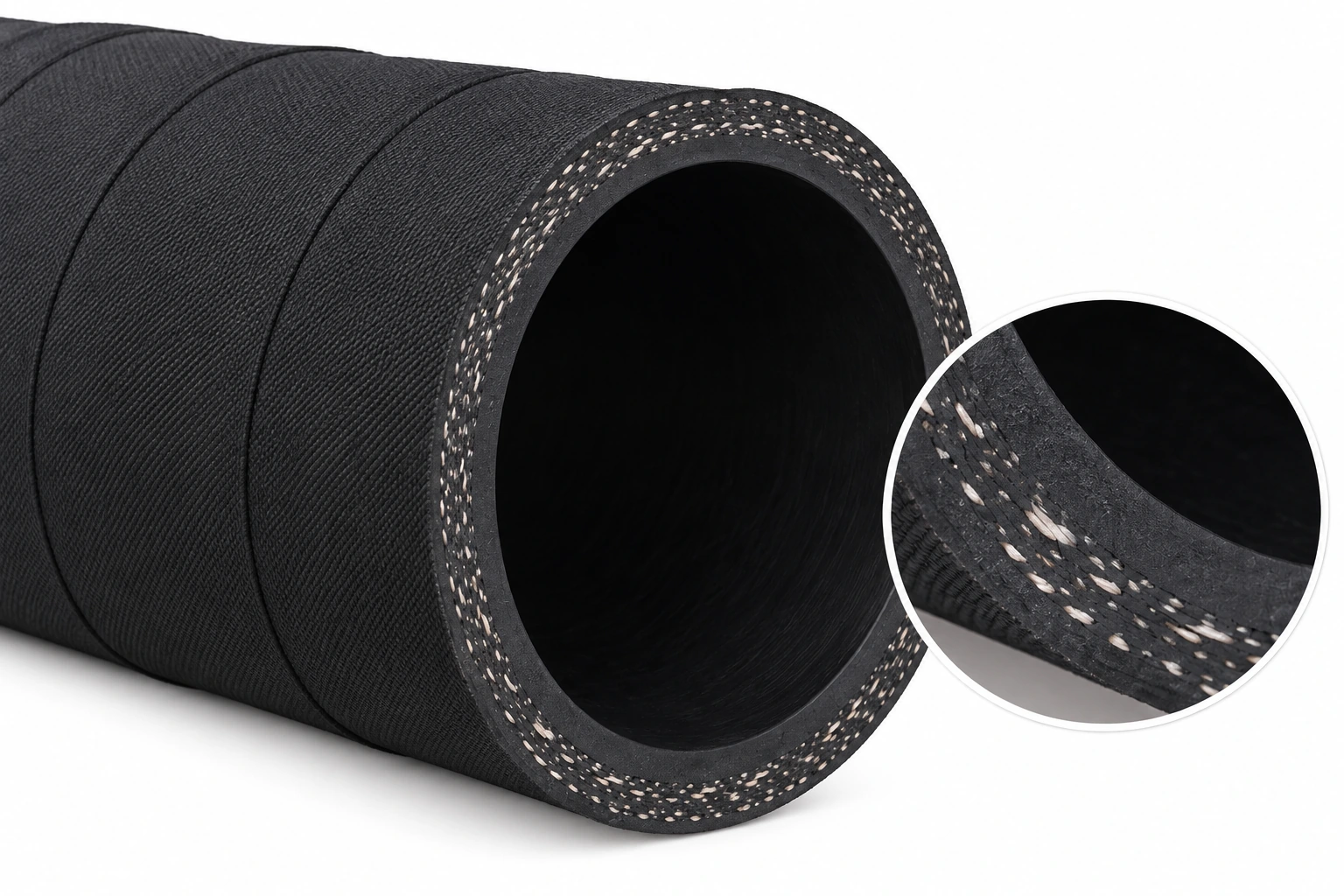
Fluororubber Hose
Compare Inside Diameter and Outside Diameter in mm. The cross-section drawing identifies the bore and outside diameter; confirm the selected tube material and service requirements.
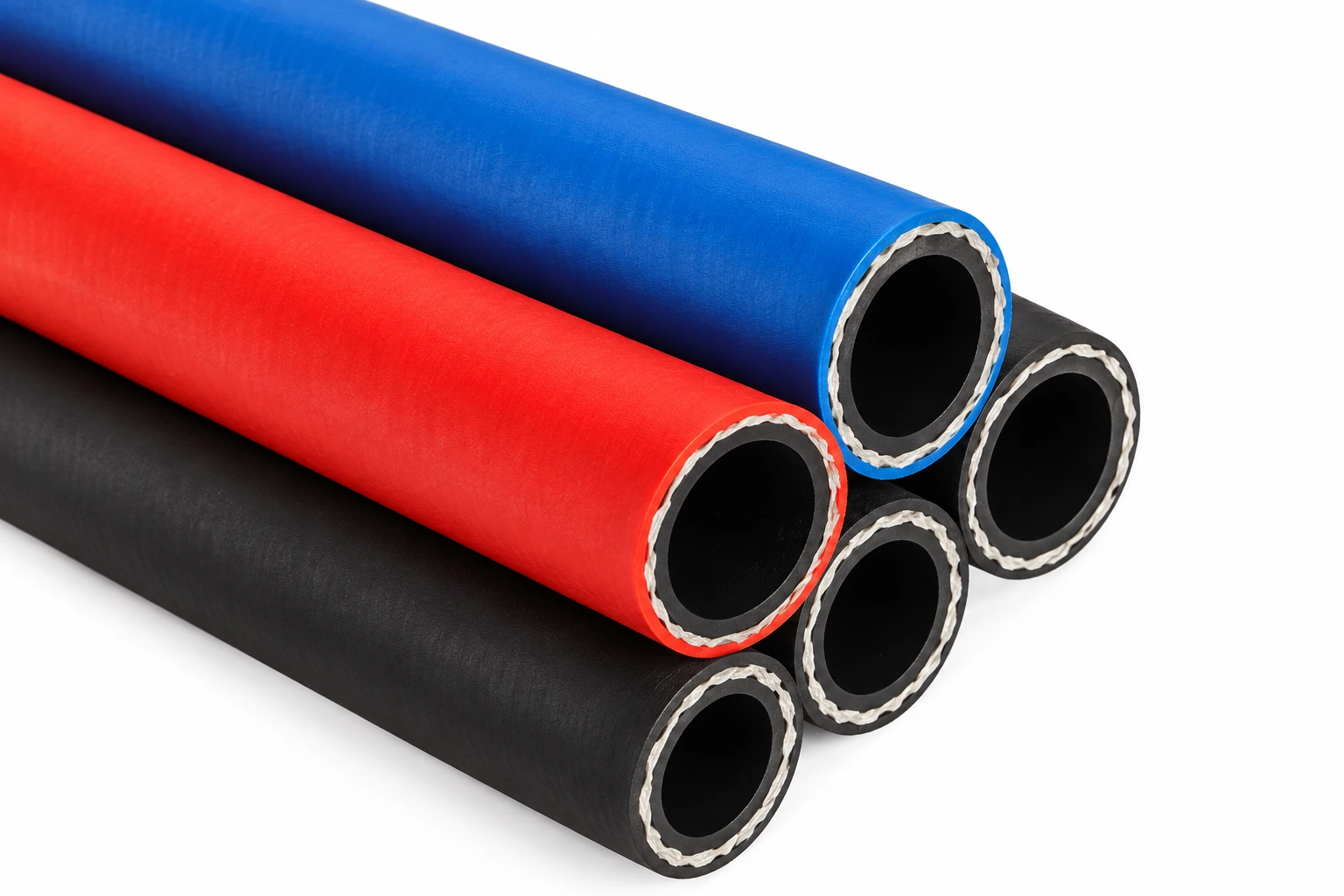
Colourful rubber high pressure hose
Compare Inside Diameter and Outside Diameter in mm, together with the listed Thickness and Colour. The cross-section drawing identifies the bore and outside diameter; confirm the selected tube material and service requirements.
Need a different size? Share your drawing, mating dimensions and intended use to discuss a suitable part.
Discuss Your RequirementsProduct specifications
- Product form
- Hollow elastomer tubing for a fitted line or sleeve
- Dimensions to confirm
- Inside diameter, outside diameter, wall thickness and cut length.
- Mechanical duty
- State the external loads, pressure cycling and wear locations; identify any reinforcement needed for that duty.
- Contact conditions
- Other gases and air: define concentration, temperature and contact time, then check compatibility with the chosen compound.
- Exposure to evaluate
- Outdoor weather. Validate the selected material under the combined conditions.
- Line layout
- Check bend radius, unsupported spans and clearance at both connections.
Need a quote or a custom part?
Send your requirements, drawings or samples to discuss standard and custom silicone rubber parts.
Email us[email protected]