
Conductive Rubber Tubing
Conductive rubber tubing uses an electrically conductive formulation or layer where an electrical path is required. In a static-control application, its resistance and connection to the surrounding system need to support the intended discharge path. A conductive tube should not be treated as an electrical insulator.
Define how resistance will be measured on the finished tube, including its length and the contact arrangement. The properties of the rubber compound alone do not describe every assembled line. Fittings and connections also affect whether the intended electrical path is maintained.
If the tube carries a fluid, check chemical compatibility, pressure and temperature separately from the electrical requirement. Specify bore, wall thickness, routing and end connections. Electromagnetic shielding is a separate performance requirement and should be assessed for the complete arrangement rather than assumed from conductivity alone.
Rubber Hose Size Catalog
Compare tube bore, outside diameter and available wall thickness. Confirm material compatibility and operating requirements for the selected hose.
Rubber Hose
Compare Inside Diameter and Outside Diameter in mm. The cross-section drawing identifies the bore and outside diameter; confirm the selected tube material and service requirements.

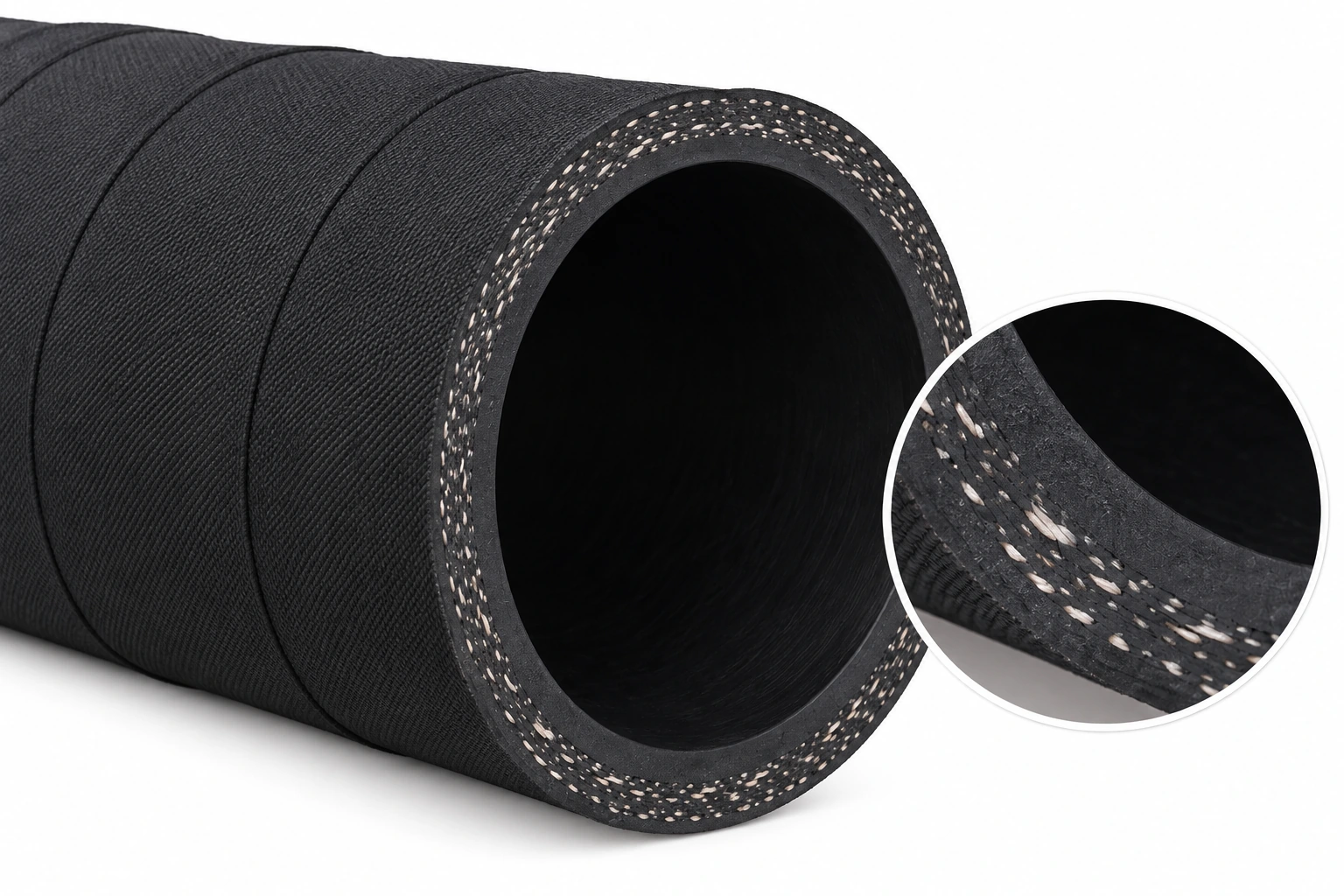
Fluororubber Hose
Compare Inside Diameter and Outside Diameter in mm. The cross-section drawing identifies the bore and outside diameter; confirm the selected tube material and service requirements.
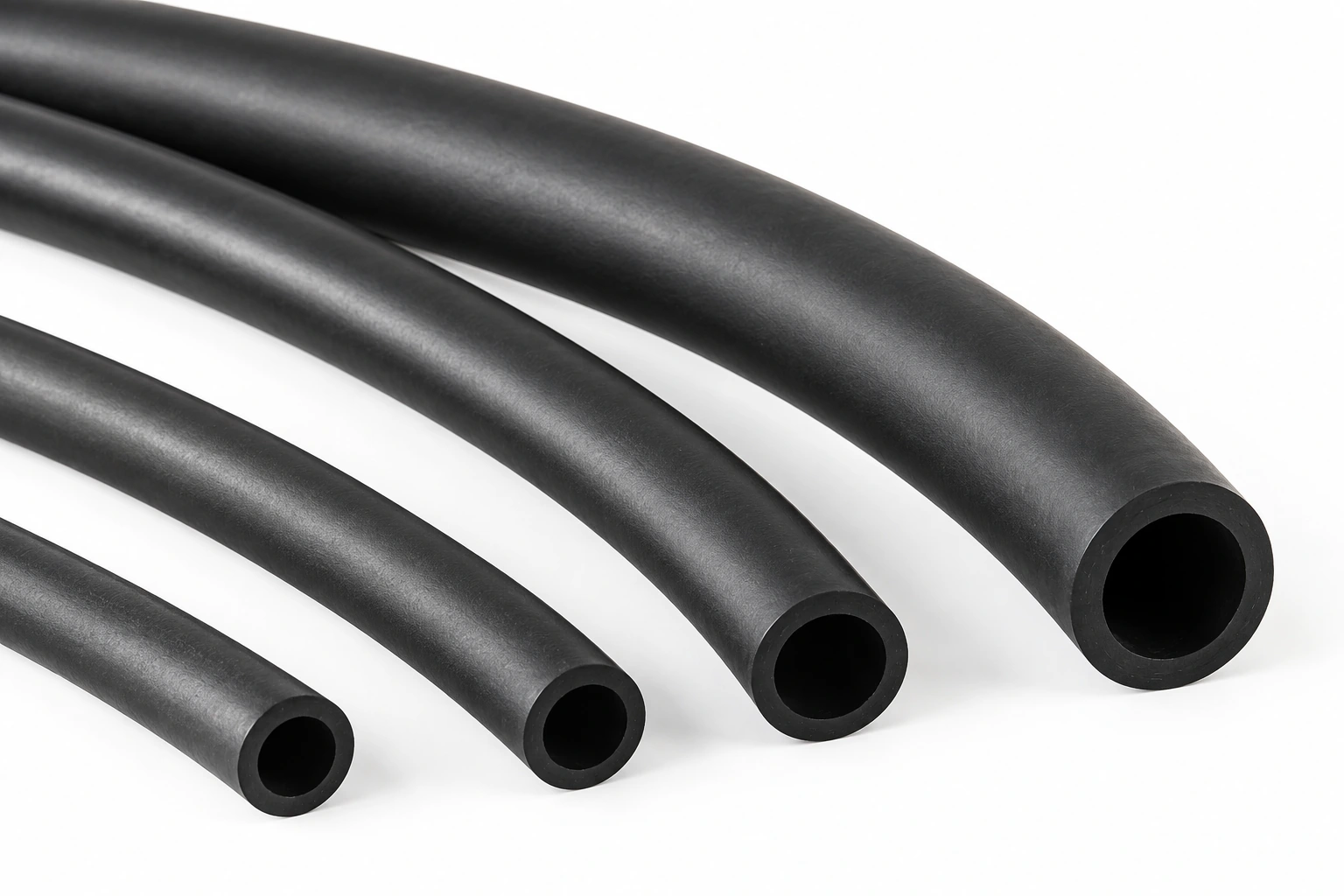
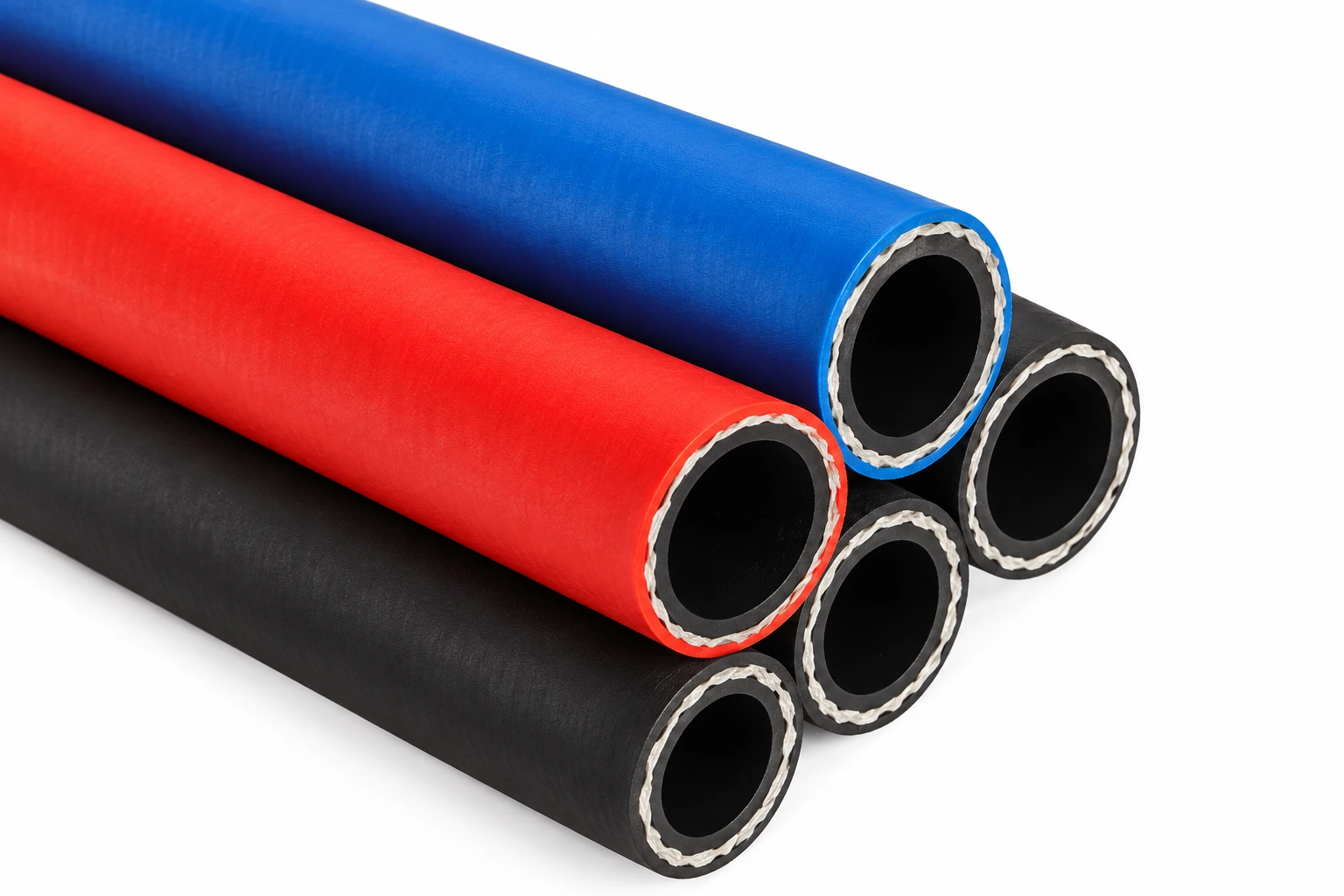
Colourful rubber high pressure hose
Compare Inside Diameter and Outside Diameter in mm, together with the listed Thickness and Colour. The cross-section drawing identifies the bore and outside diameter; confirm the selected tube material and service requirements.
Need a different size? Share your drawing, mating dimensions and intended use to discuss a suitable part.
Discuss Your RequirementsProduct specifications
- Product form
- Rubber tube with a conductive formulation or conductive layer.
- Electrical requirement
- Set resistance and the intended connection into the static-control system.
- Measurement arrangement
- Define tube length, electrical contacts and the test method.
- Fluid service
- Assess medium compatibility, pressure and temperature independently of conductivity.
- Mechanical layout
- Specify bore, wall, bends and end connections; assess shielding separately if required.
Need a quote or a custom part?
Send your requirements, drawings or samples to discuss standard and custom silicone rubber parts.
Email us[email protected]