
Damper Mount
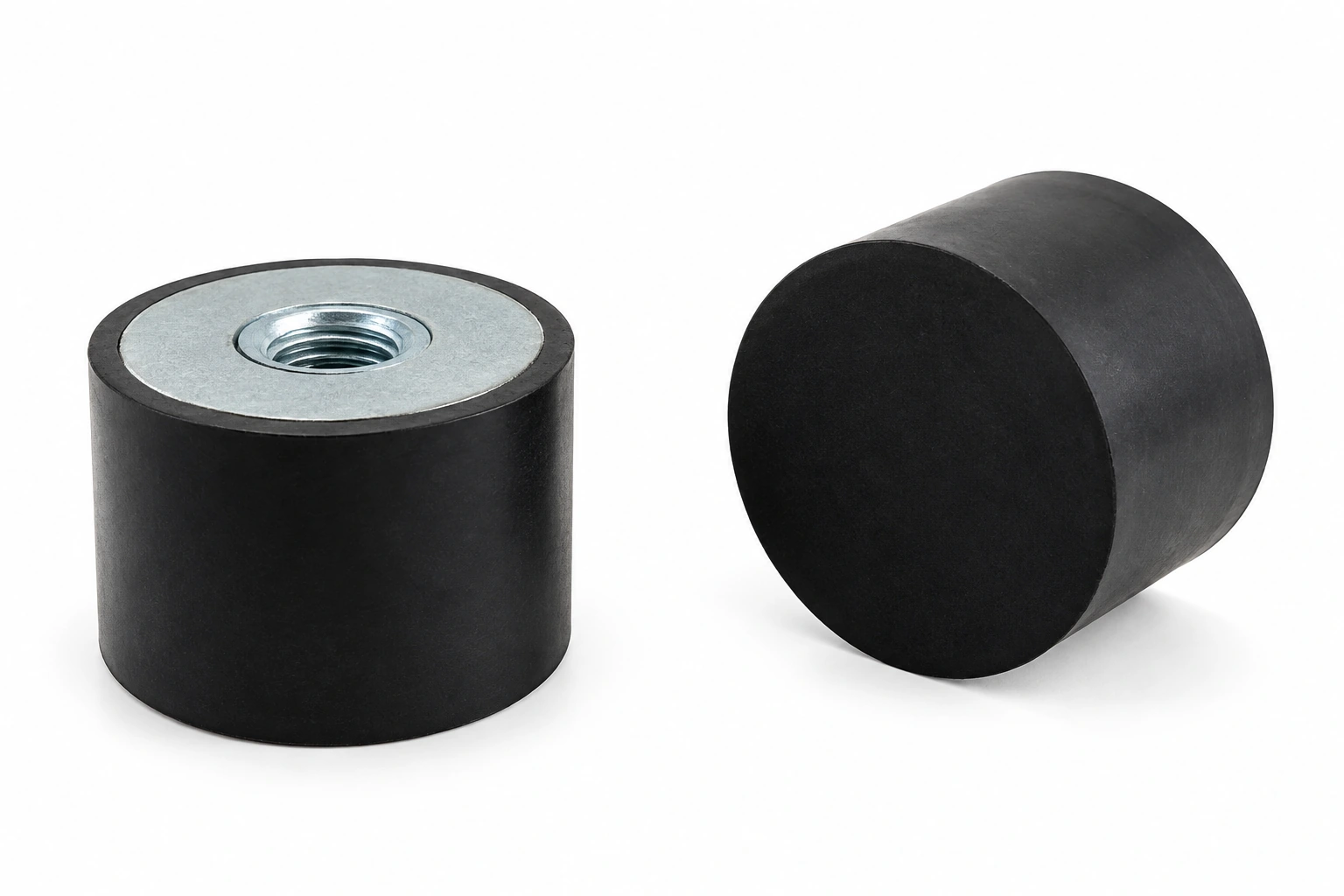
Damper mount is a very important element in many industries – but we most often associate it with the automotive and motorcycle industries. These small but very important parts affect your comfortable and safe driving. Their function is to mitigate vertical movement and vibration as a consequence of vehicle movement on uneven surfaces while driving. Their role is to maintain constant contact of the wheels with the ground – so as not to cause the vehicle to skid or even worse to go off the road. The role of the damper mount is to dampen the vibrations and oscillations of the body – in a way that can ensure the proper operation of other parts of the vehicle and the best possible contact of the tire with the ground.
However, damper mounts are not only intended for the car industry. Generally, they are very simply put together. In some devices, they are used as springs to prevent severe shock or damage. Their greatest application is in the car industry, although we must not forget the aviation industry. Namely, the aviation industry uses special types of damper mounts that are very important when landing aircraft. They must be very resilient to withstand the pressure when the plane lands on the runway – so their role is extremely important.
Like other small parts – the damper mount can break down or lose its function. Failures can be quite common and this most often happens due to the condition of the roads. In countries where roads are modern and maintained, shock absorber failures occur less frequently – and their lifespan is much longer. The importance of having proper damper mounts is of utmost importance. Namely, a proper damper mount can provide you with safety and comfort while driving. If there is a suspicion that the damper mount on your vehicle is not performing its function properly – you can visit the nearest service that deals with the technical inspection. There they will confirm with certainty the correctness of the shock absorber and its functionality.
Vibration Mount Size Catalog
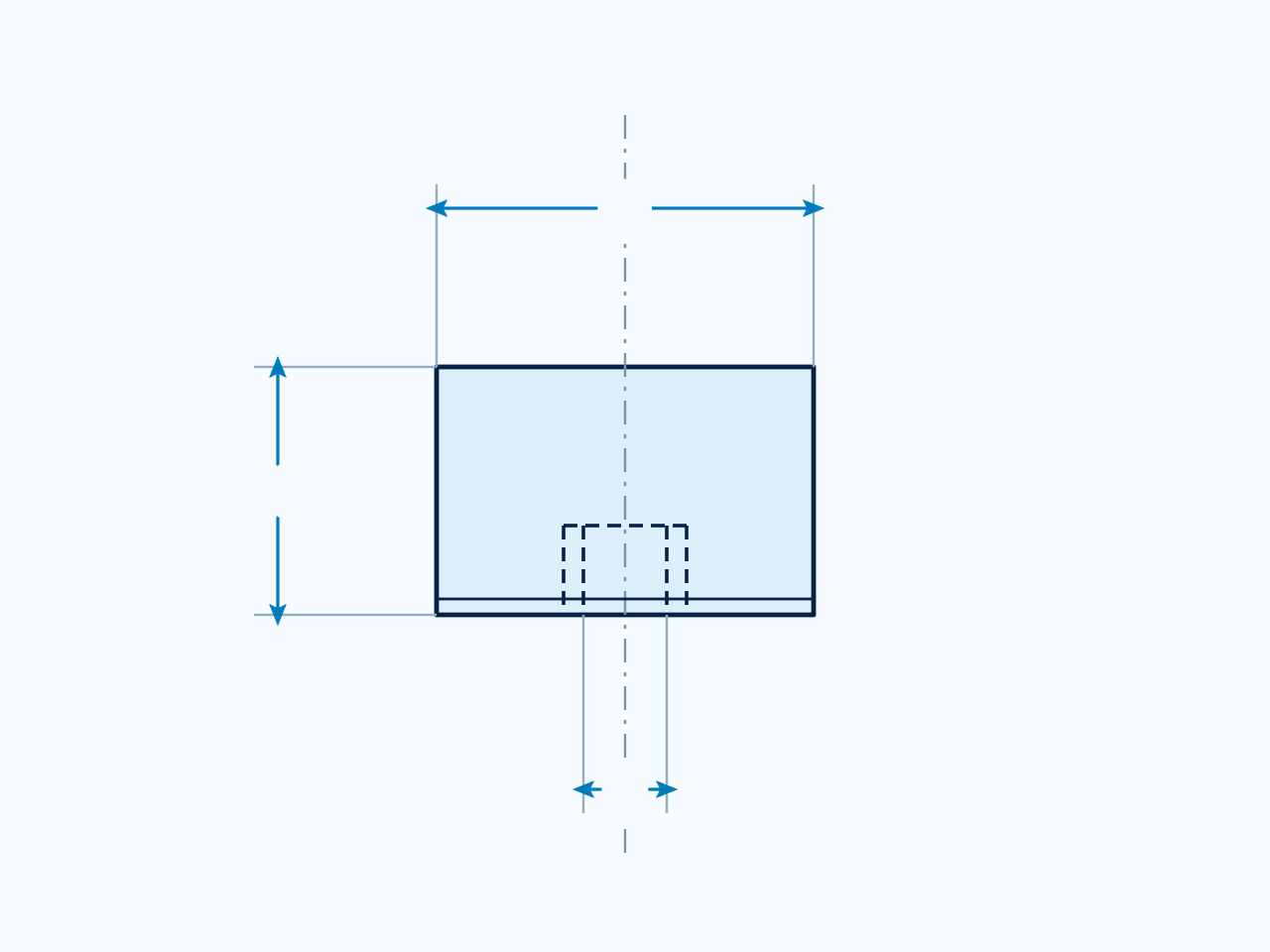
Compare five mounting arrangements using the matching drawing, thread and dimensional data. Load and compression columns retain their stated units; confirm operating conditions for your installation.
Vibration Damping Mounts A
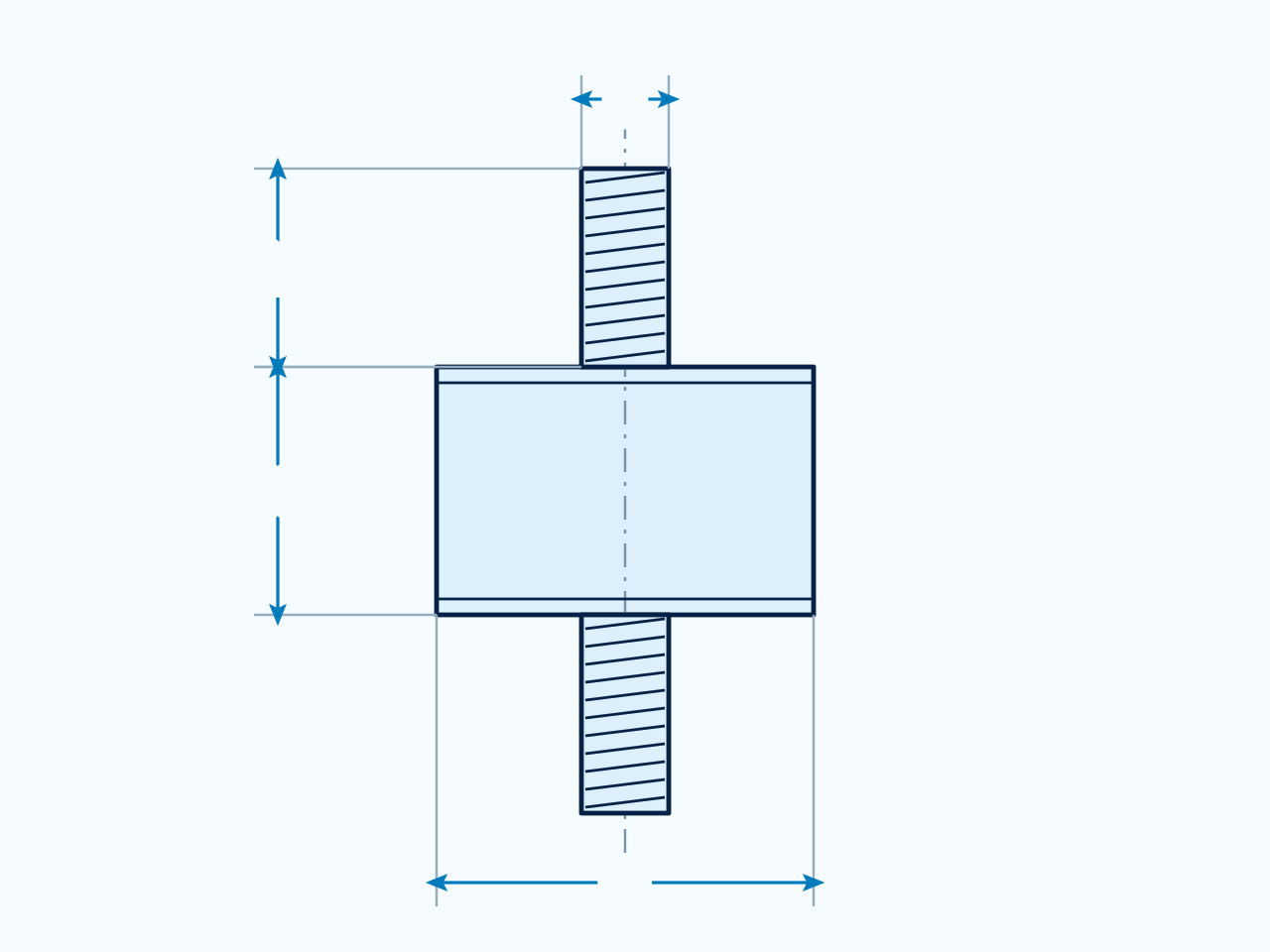
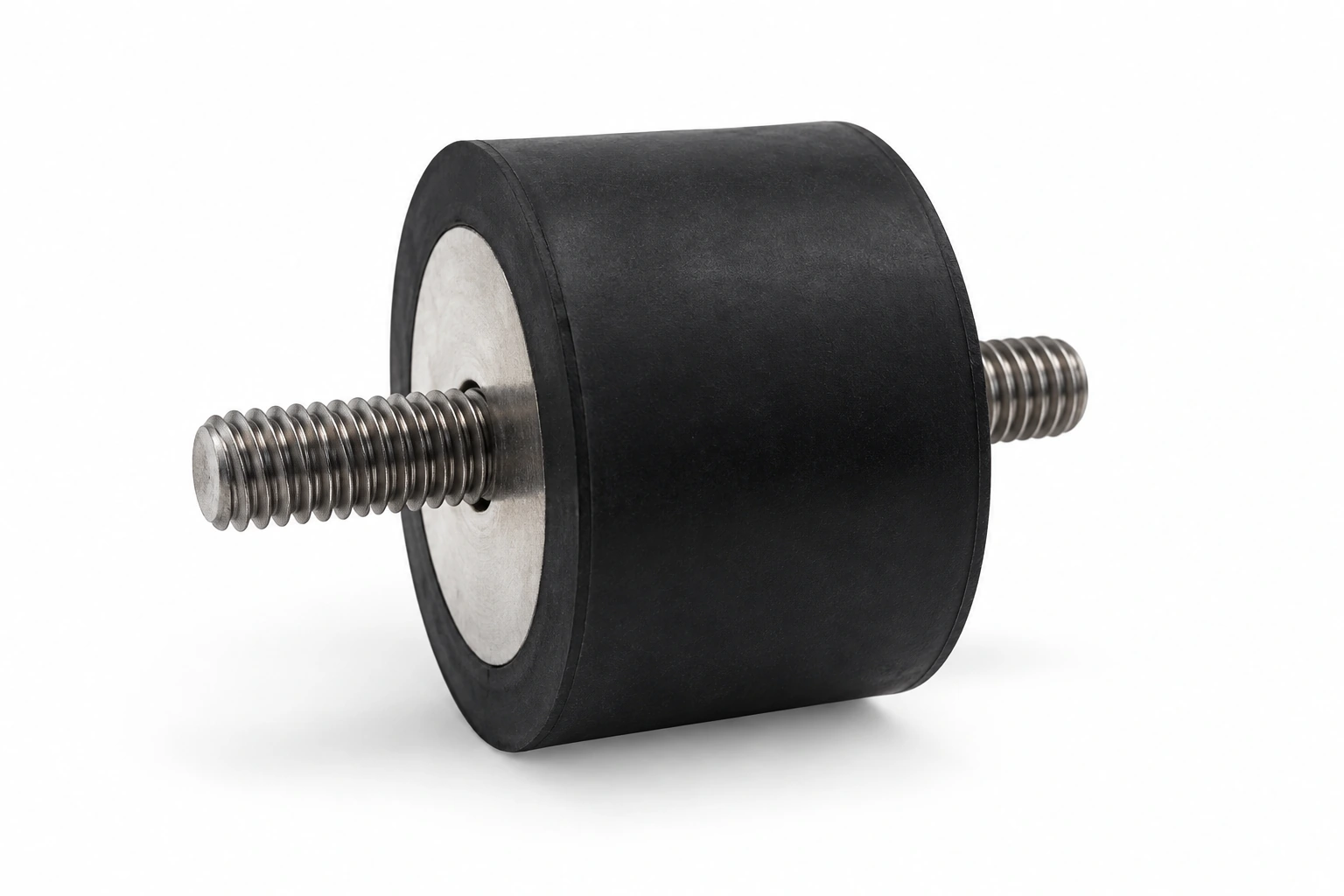
Match D, H and thread d to the drawing, including stud length L. Dimensions are in mm; thread designations, load in kg and compression in mm follow the table headings. Confirm load direction and operating conditions for your installation.
Anti-Vibration Rubber Mounts B
Match D, H and thread d to the drawing, including stud length L. Dimensions are in mm; thread designations, load in kg and compression in mm follow the table headings. Confirm load direction and operating conditions for your installation.
Vibration Isolators C
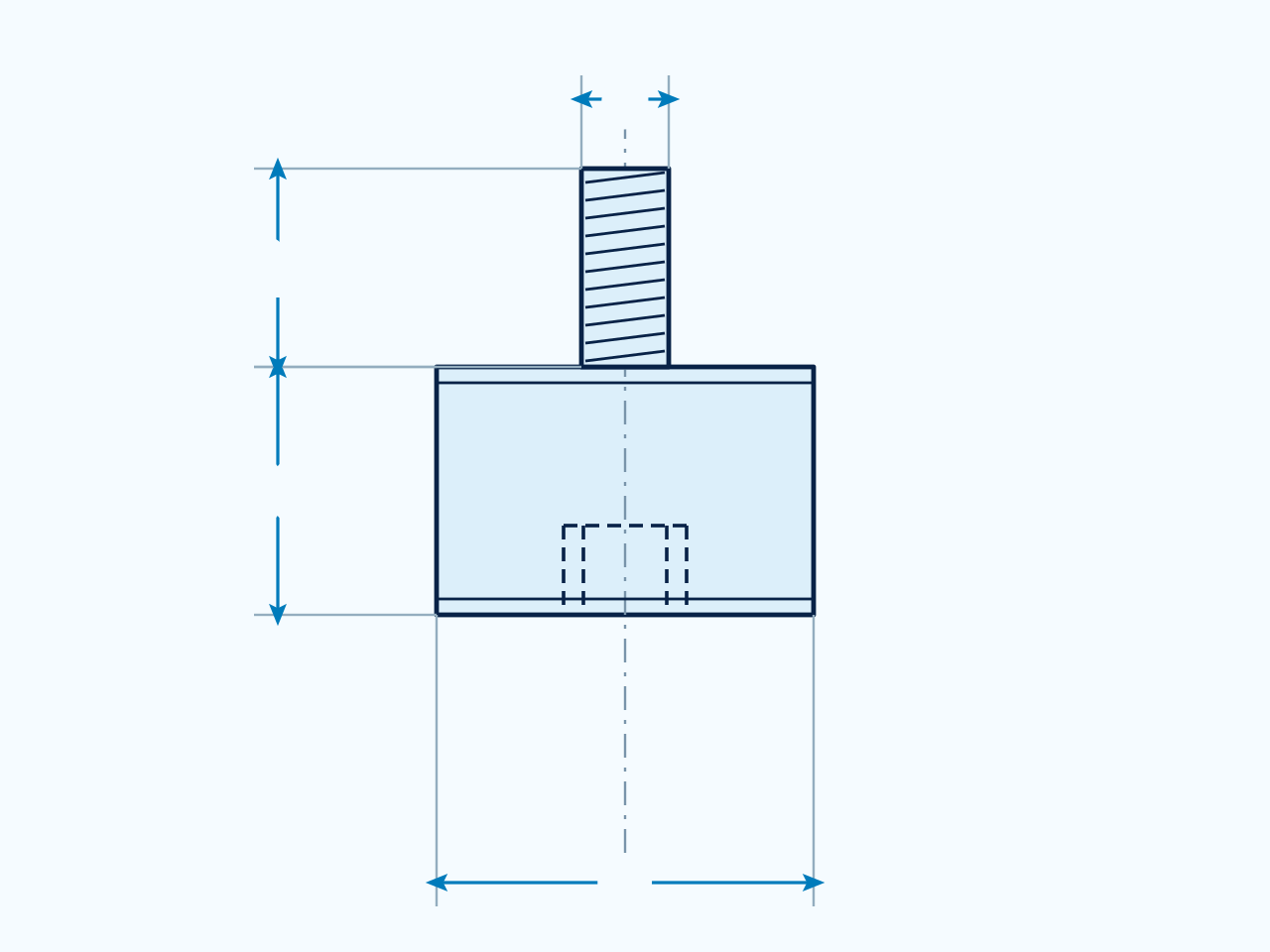
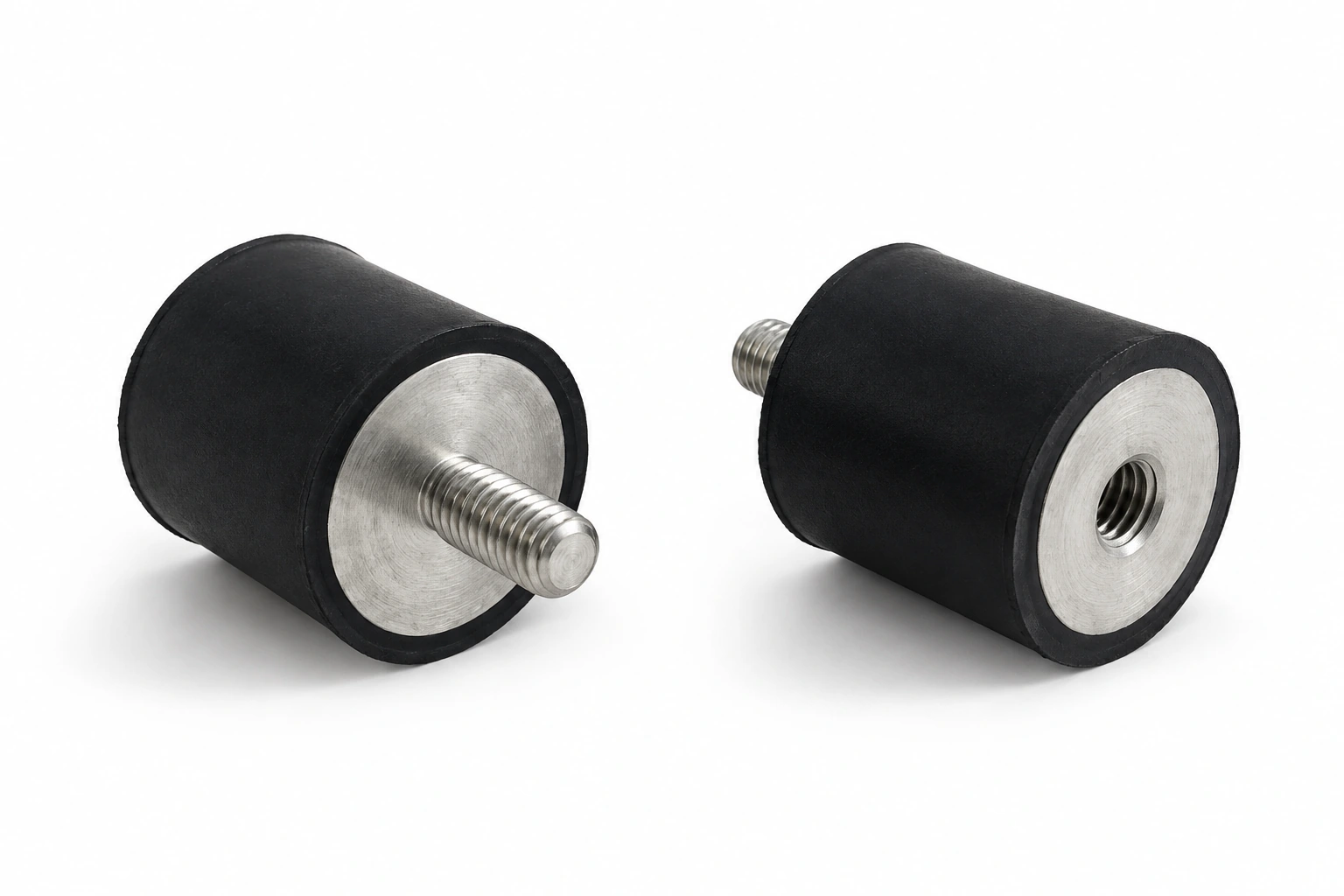
Match D, H and thread d to the drawing. Dimensions are in mm; thread designations, load in kg and compression in mm follow the table headings. Confirm load direction and operating conditions for your installation.
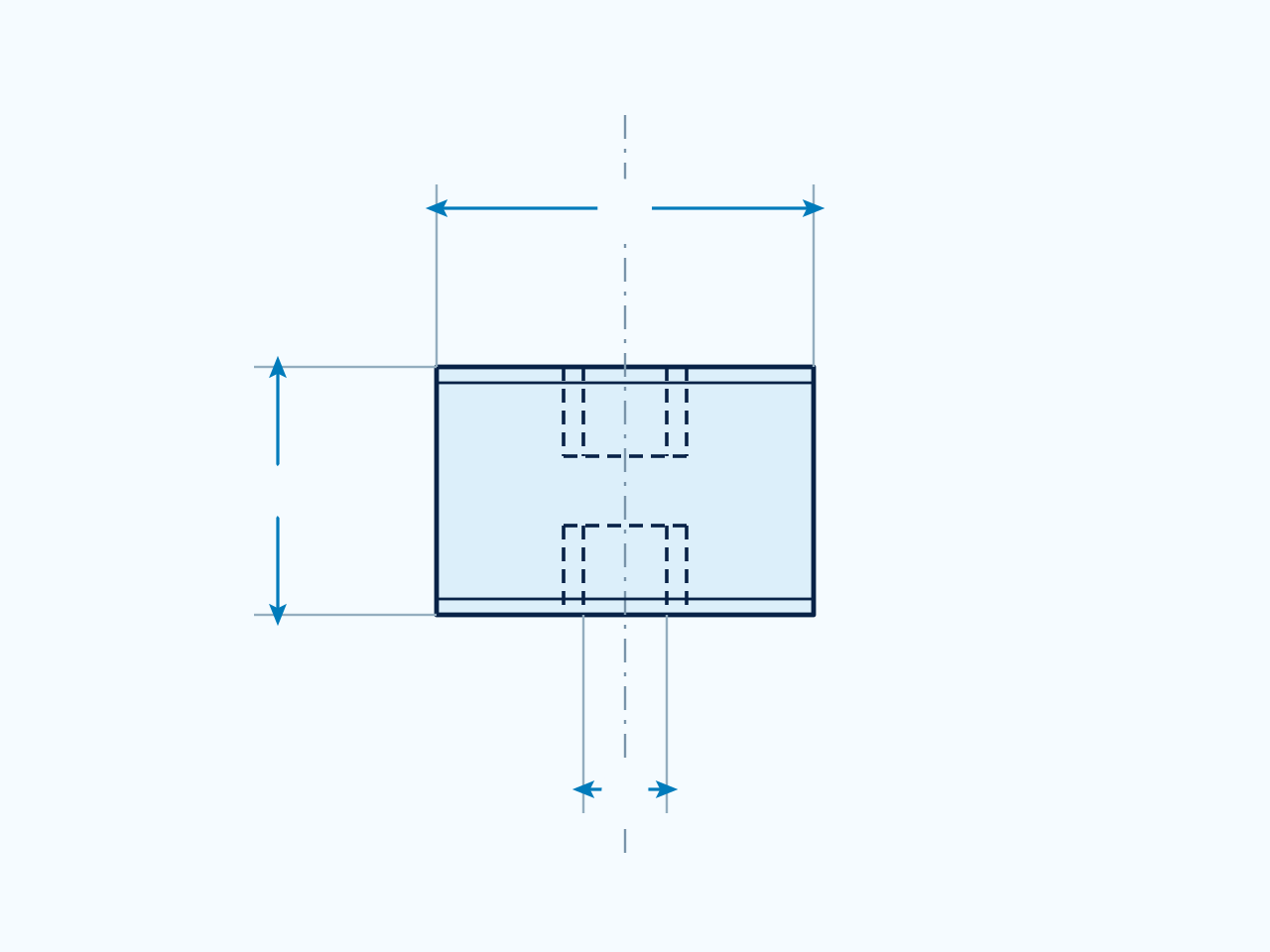
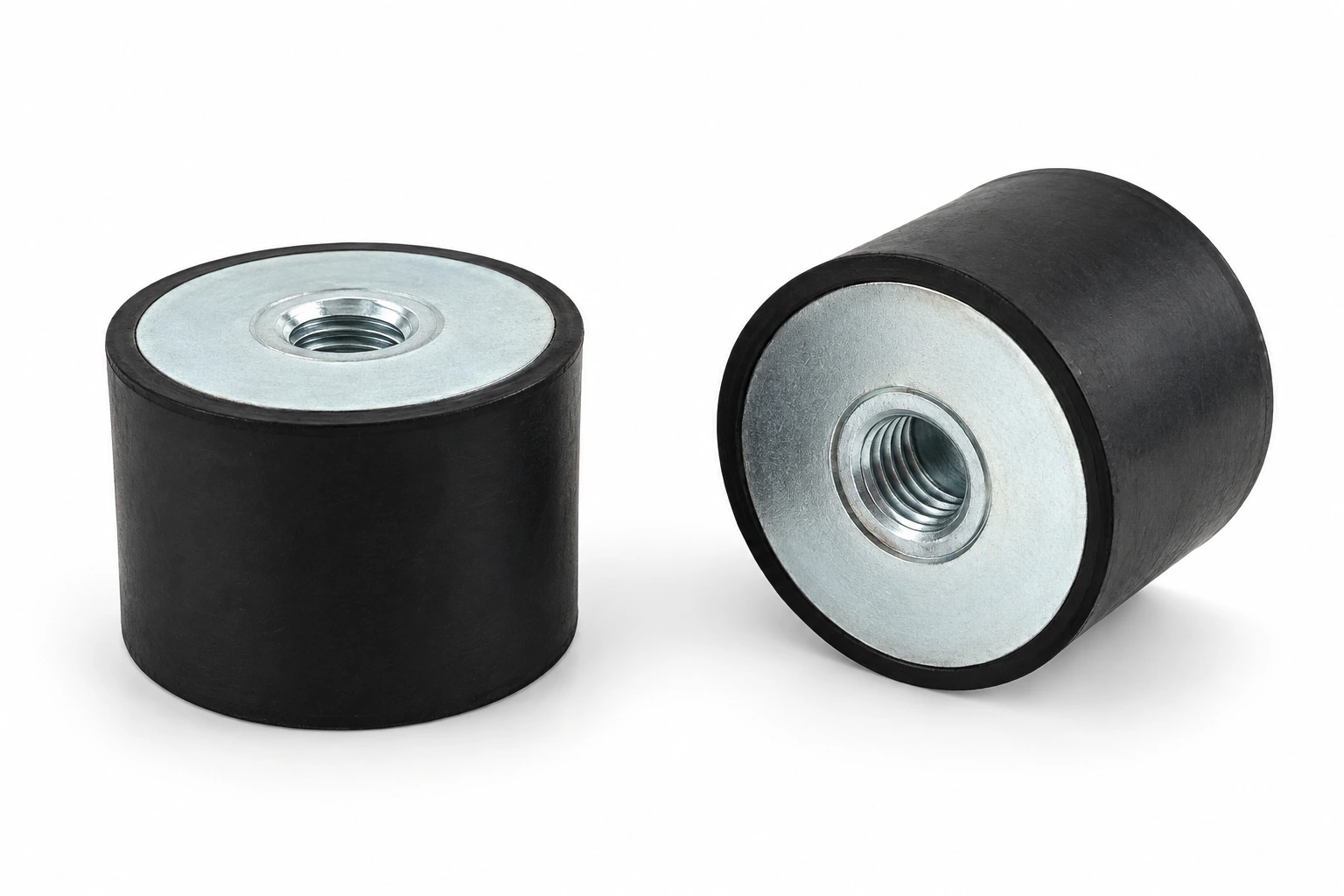
Rubber Mountings D
Match D, H and thread d to the drawing, including stud length L. Dimensions are in mm; thread designations, load in kg and compression in mm follow the table headings. Confirm load direction and operating conditions for your installation.
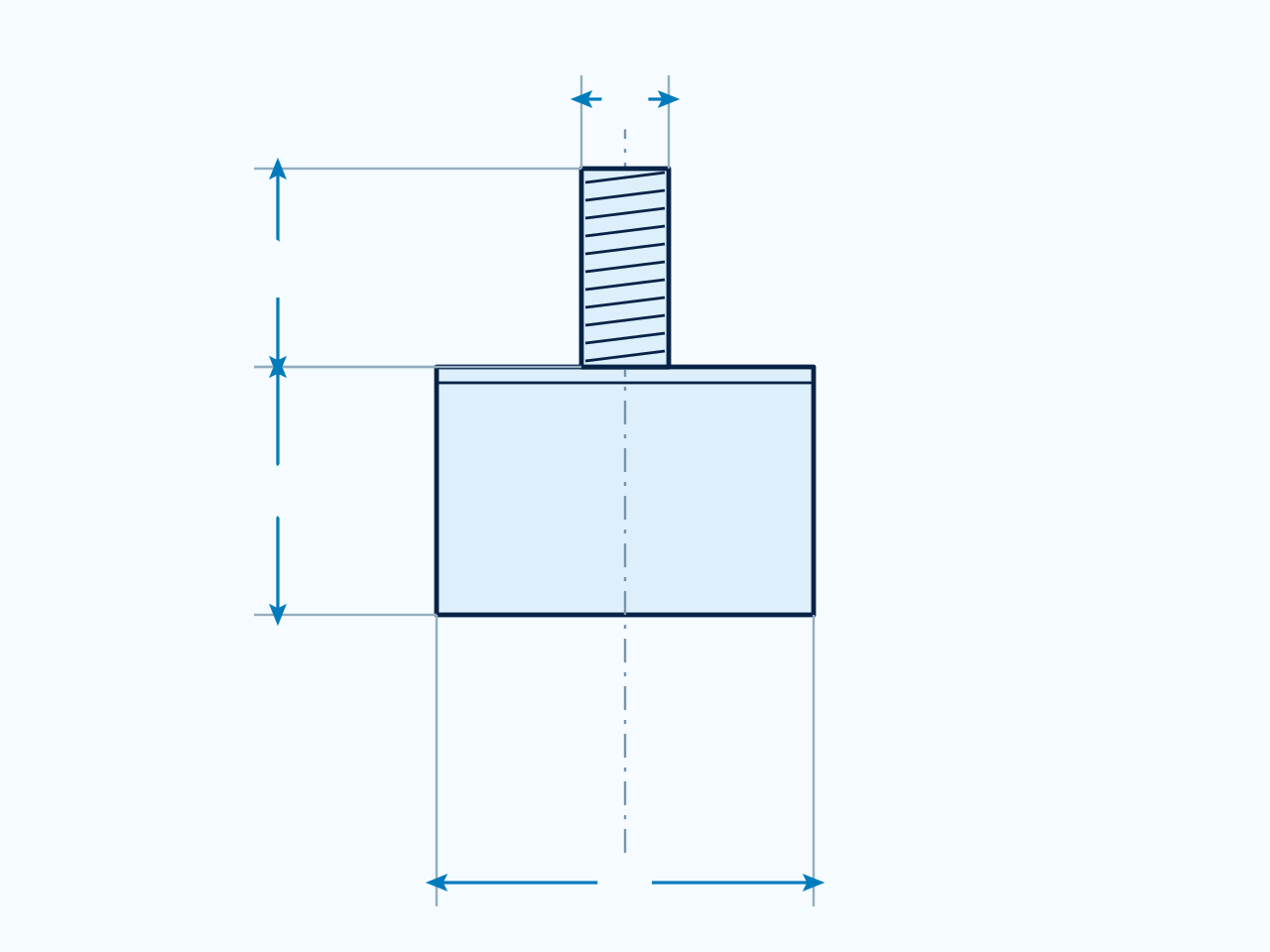
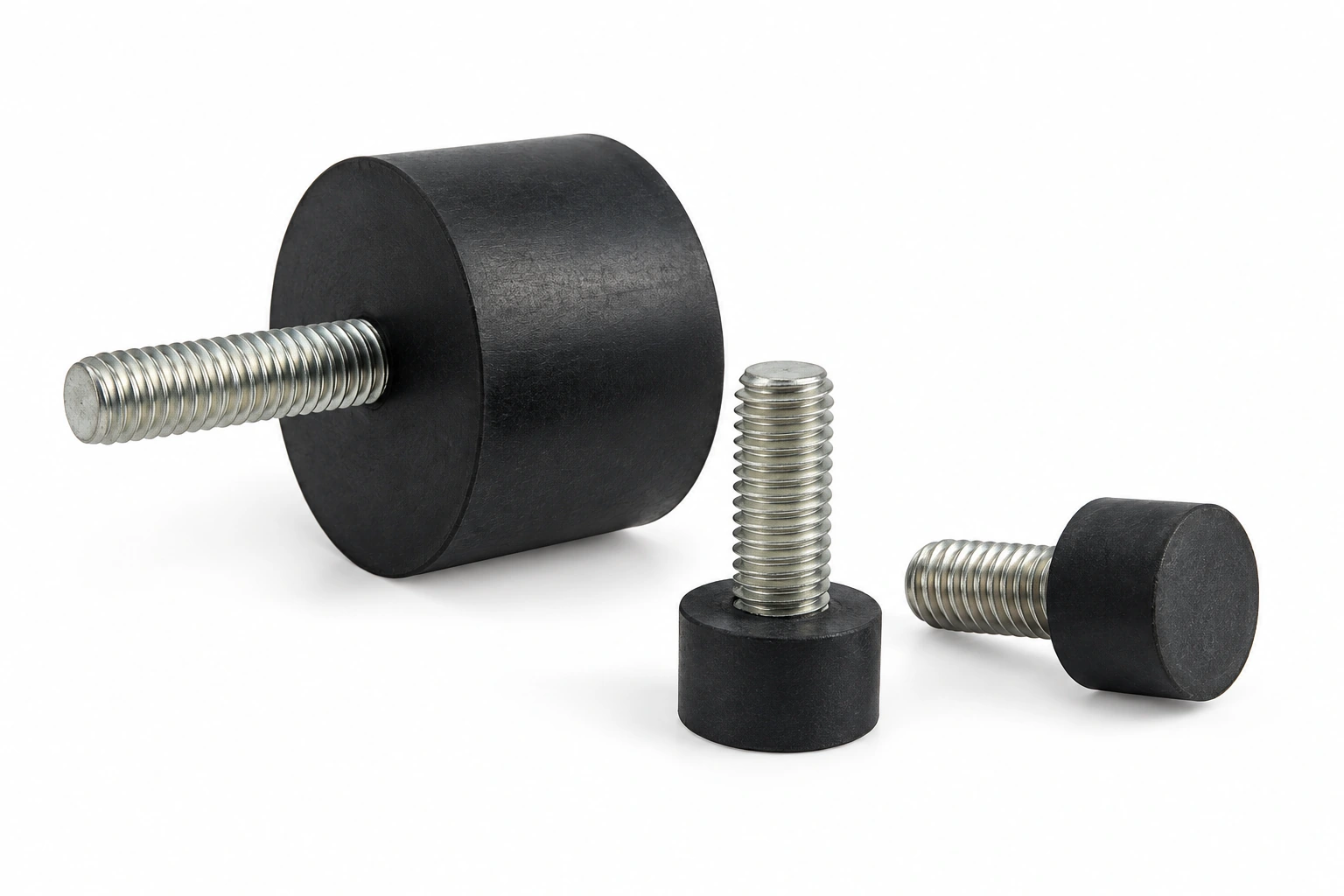
Rubber Vibration Mounts E
Match D, H and thread d to the drawing. Dimensions are in mm; thread designations, load in kg and compression in mm follow the table headings. Confirm load direction and operating conditions for your installation.
Need a different size? Share your drawing, mating dimensions and intended use to discuss a suitable part.
Discuss Your RequirementsProduct specifications
- Product form
- Elastomer mount between a vibrating assembly and its support
- Application focus
- Aircraft equipment. Size the part against the selected assembly.
- Dimensions to confirm
- Free and loaded heights, attachment spacing and body envelope. Match these to aircraft equipment.
- Isolation objectives
- Steady vibration, impact or shock and sliding at the support. Define a measurable acceptance target on the supported assembly.
- Dynamic selection
- Use the load per mount, excitation frequency and allowed movement to select the mount.
Need a quote or a custom part?
Send your requirements, drawings or samples to discuss standard and custom silicone rubber parts.
Email us[email protected]