
Clear rubber bumpers
Although our selection of clear rubber bumpers can be used across all industries and fields, they are most commonly used for protecting cabinetry and furniture. By sticking these bumpers to the bottom of different household items such as gadgets, vases, and cutting boards, computers, and laptops, our customers can ensure that they are protected from wear and tear. Additionally, by placing our clear rubber bumpers on table and chair legs, there will be no damage, scratches, or marks on any surface, including wood, glass, and/or marble. They are also perfect for cabinet doors, doors, picture frames, and glass tables, mostly because they will prevent damage if these items are slammed or banged by accident.
Our clients could also choose to use our clear rubber bumpers as a spacer for frames or artwork, something that will give that extra rise that might be needed for completing the look of an area. An important thing worth mentioning is that these bumpers won’t leave any stains on the surfaces, but more importantly, the high-quality materials used for manufacturing them will not be influenced by different factors over a longer period of time, hence, the clear rubber bumpers will not change their color, no matter where they are placed.
They also come in various shapes – such as square, rectangular, and circle – and sizes, which means that our customers can choose exactly what fits their application requirements and needs. Also, the clear rubber bumpers offered on our website are self-adhesive, which means that the installation process is relatively easy. All that has to be done to install them is to peel the back off, place it on the desired area, and press it into place. Since they are completely clear, they will not impact how your room feels and looks, nor will they change the aesthetics of your furniture, gadgets, or other items.
Rubber Feet & Bumper Size Catalog
Compare mounting style, overall size and recess dimensions. Each profile uses its own drawing and column meanings.
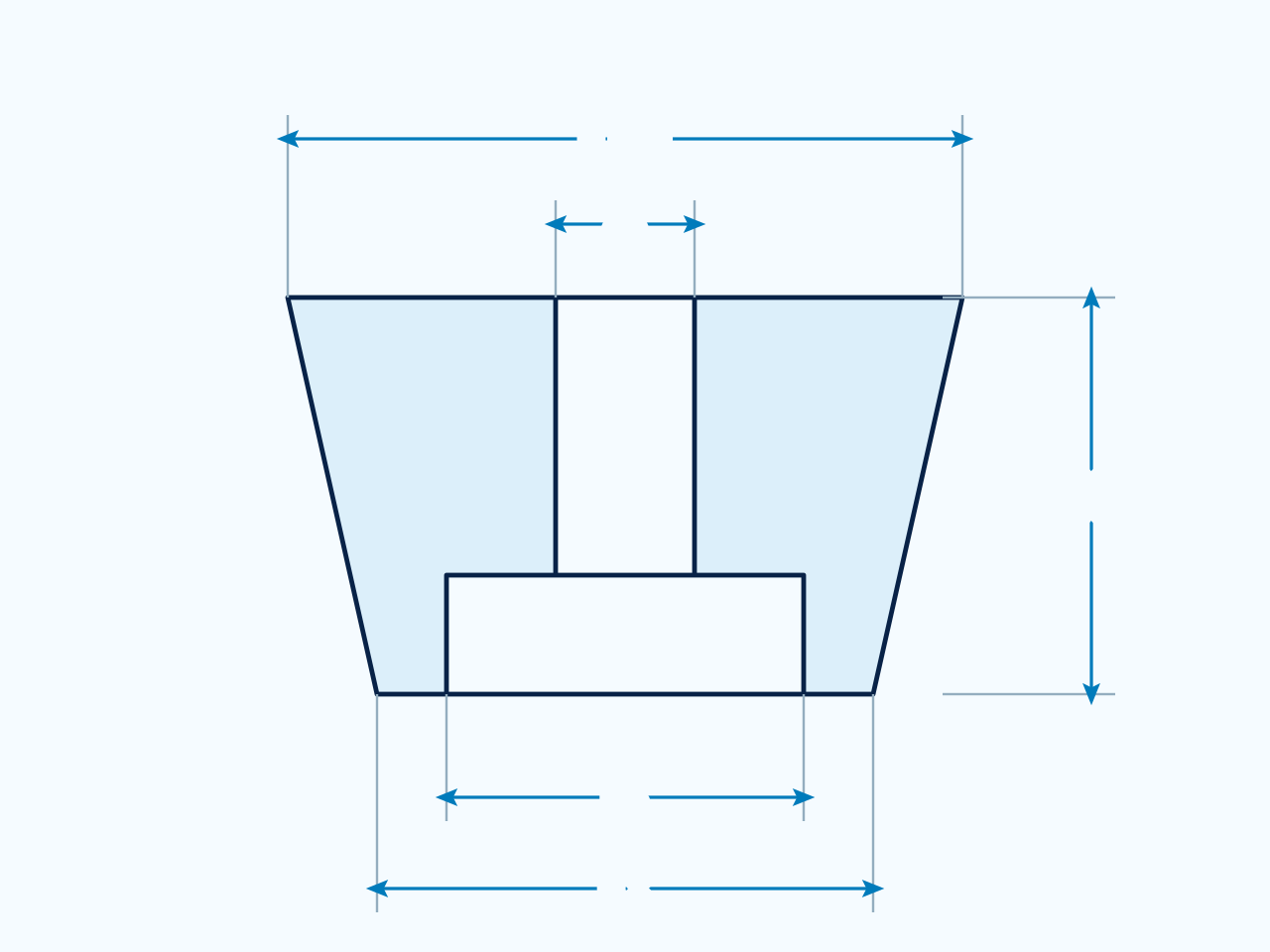
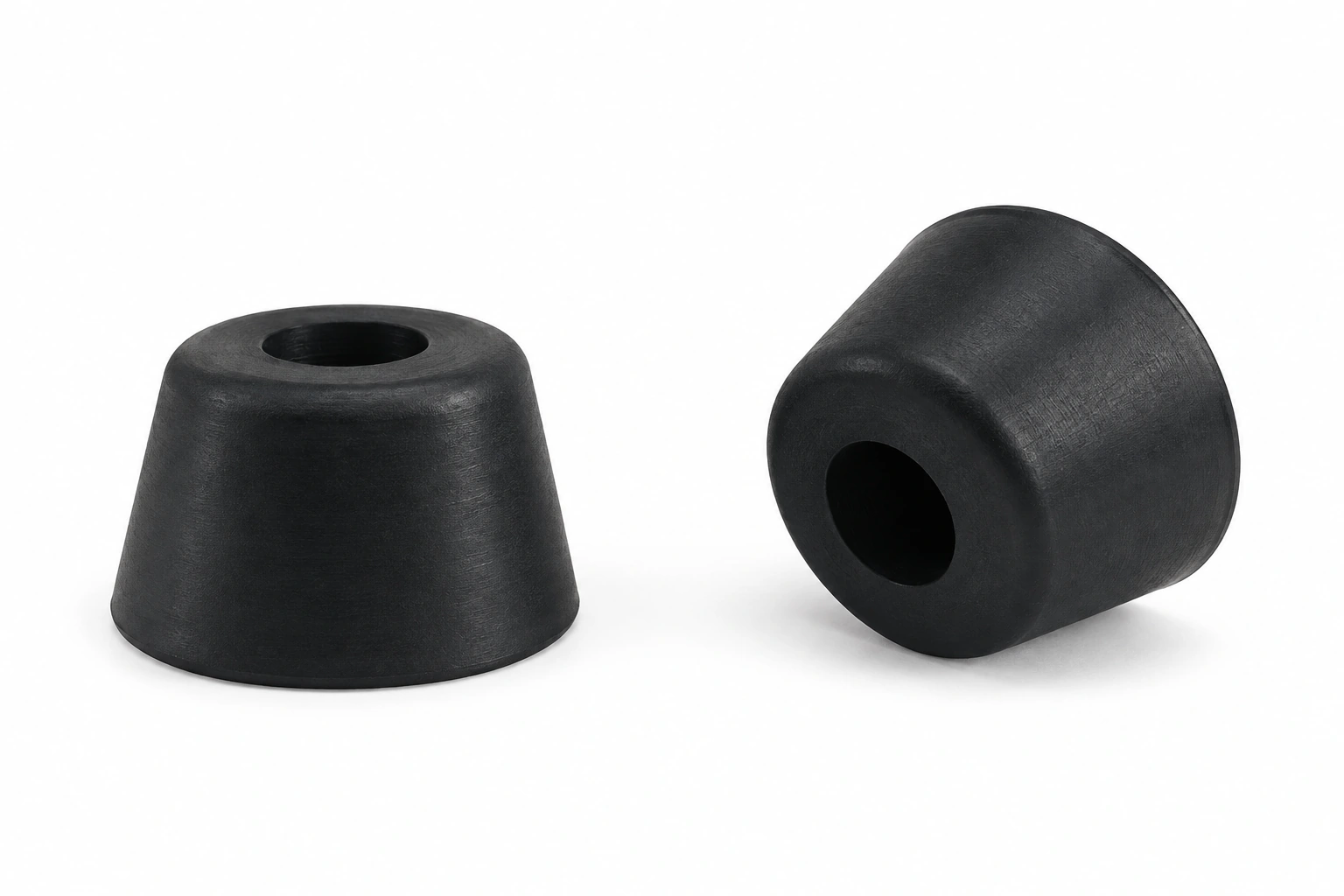
Recess Rubber Bumper
Compare OD, H, A, B and C in mm. C indicates the outer base dimension on this bumper profile, not the recess depth.
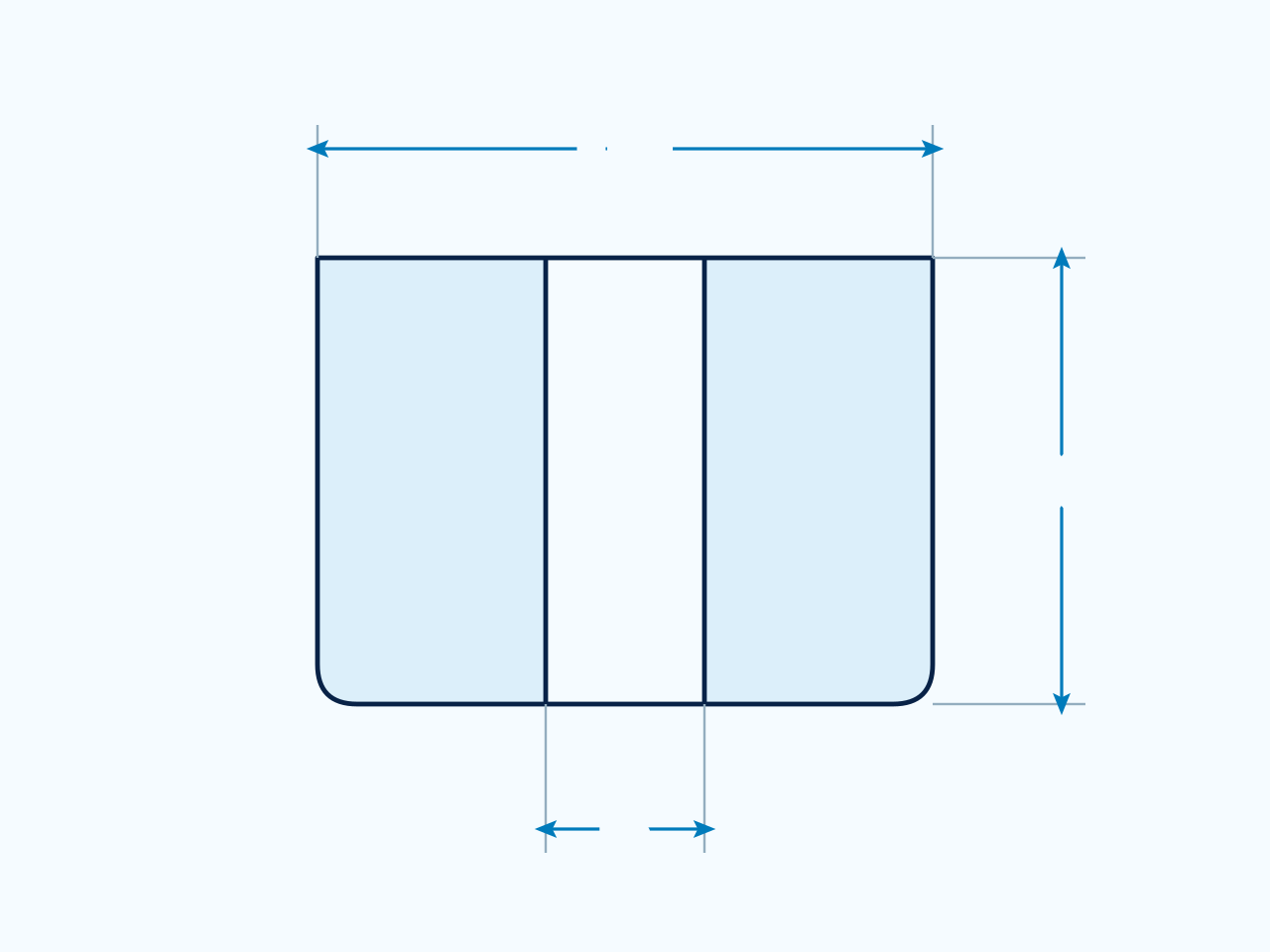
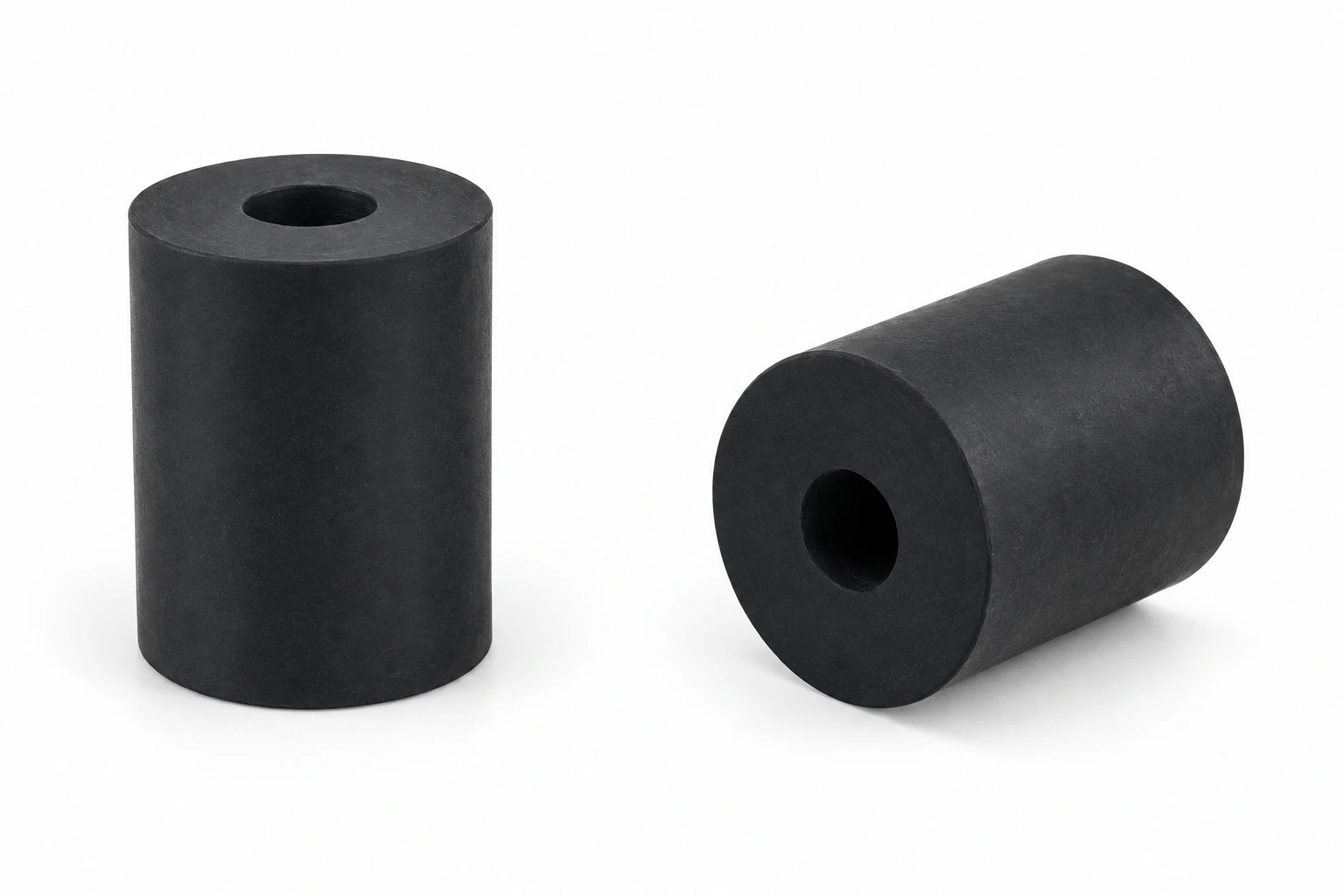
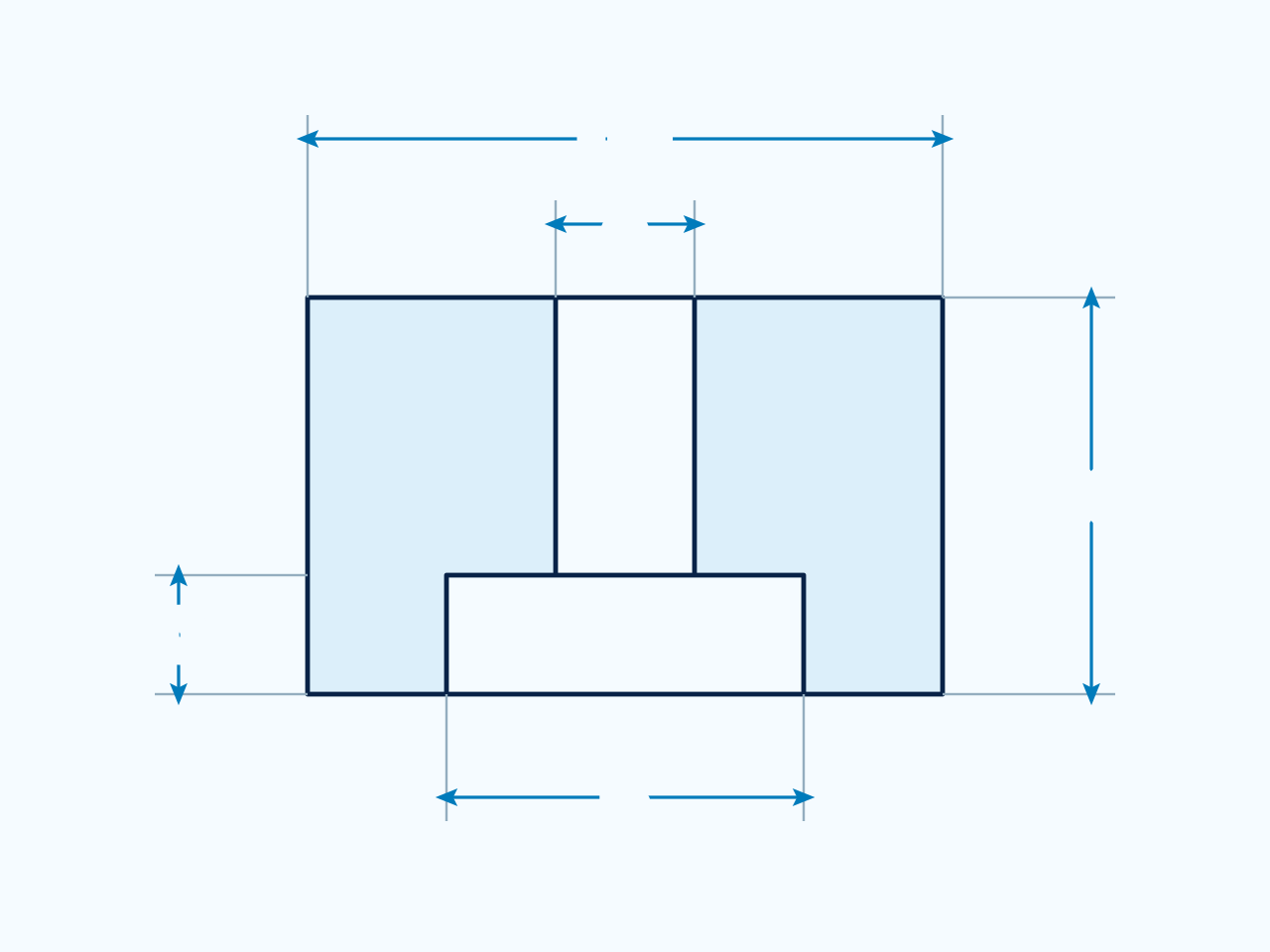
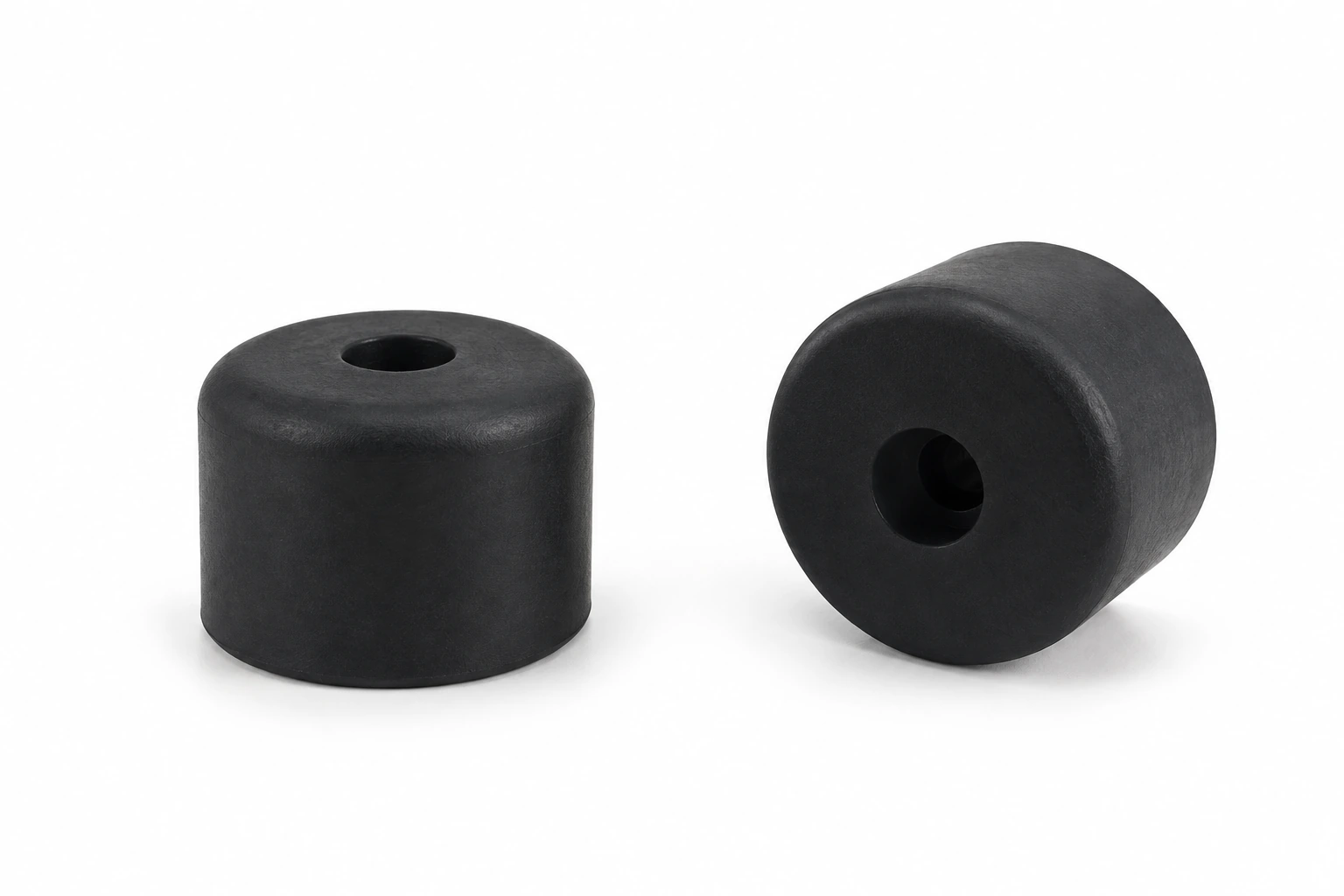
Cylindrical Rubber Feet
Compare OD, H and B in mm using the cylindrical-foot drawing. Material and colour remain listed separately.
Recess Rubber Feet
Compare OD, H, A, B and C in mm. C indicates the recess depth on this feet profile.
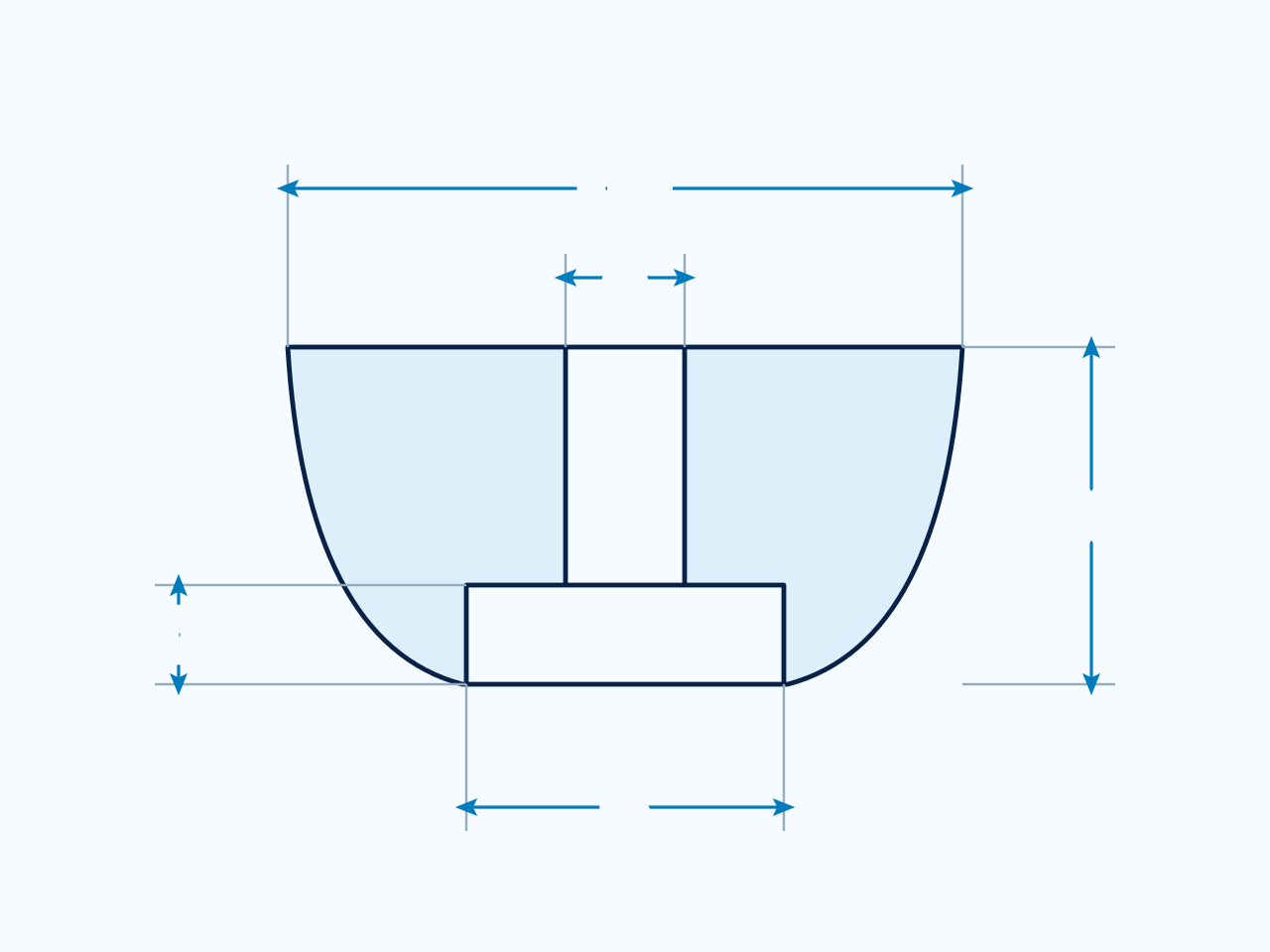
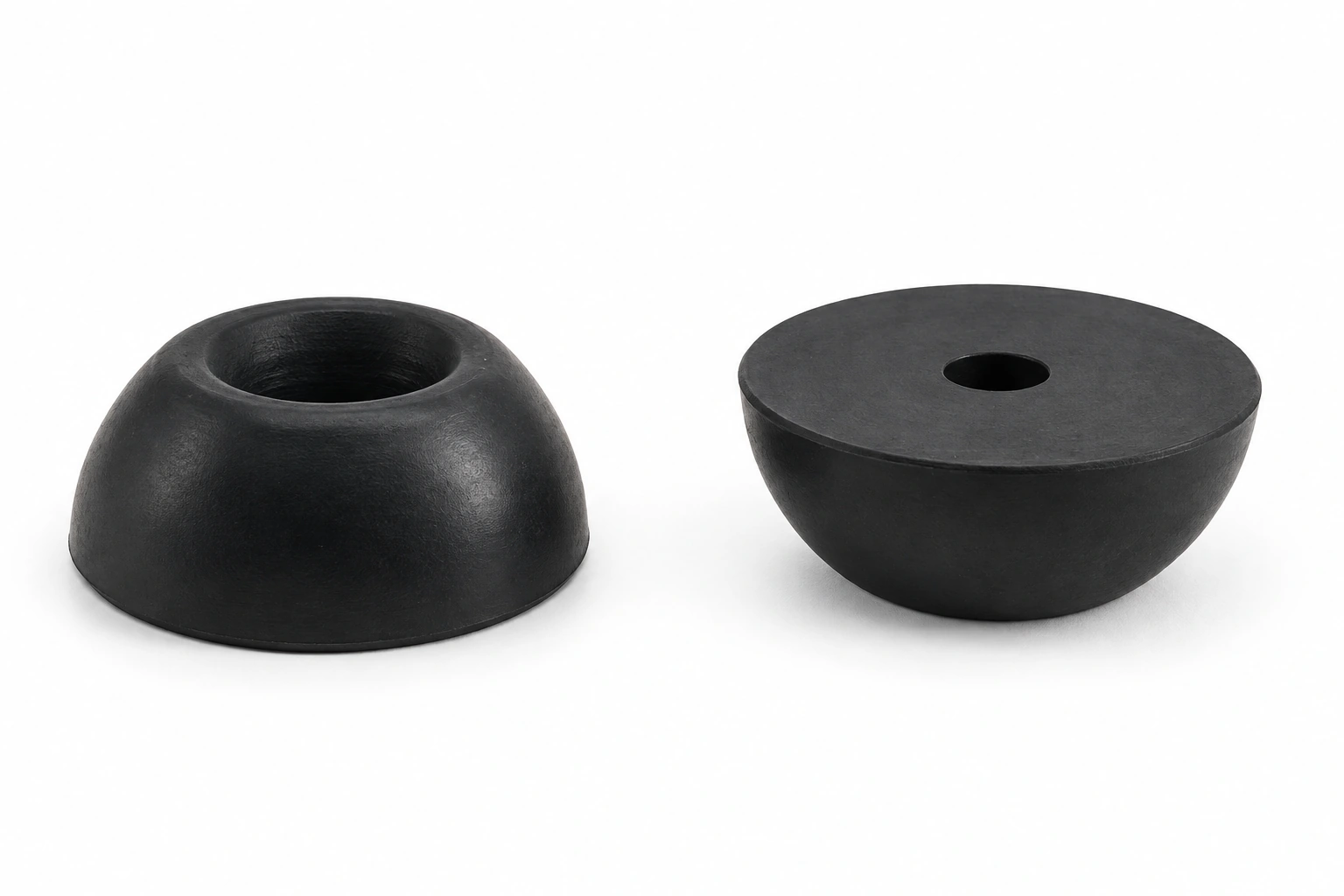
Hemispherical Rubber Bumper
Compare OD, H, A, B and C in mm using the hemispherical-bumper drawing.
Rubber Tips
Compare A, B and C in mm using the open round-tip drawing. Check the mating leg dimensions and seating depth.
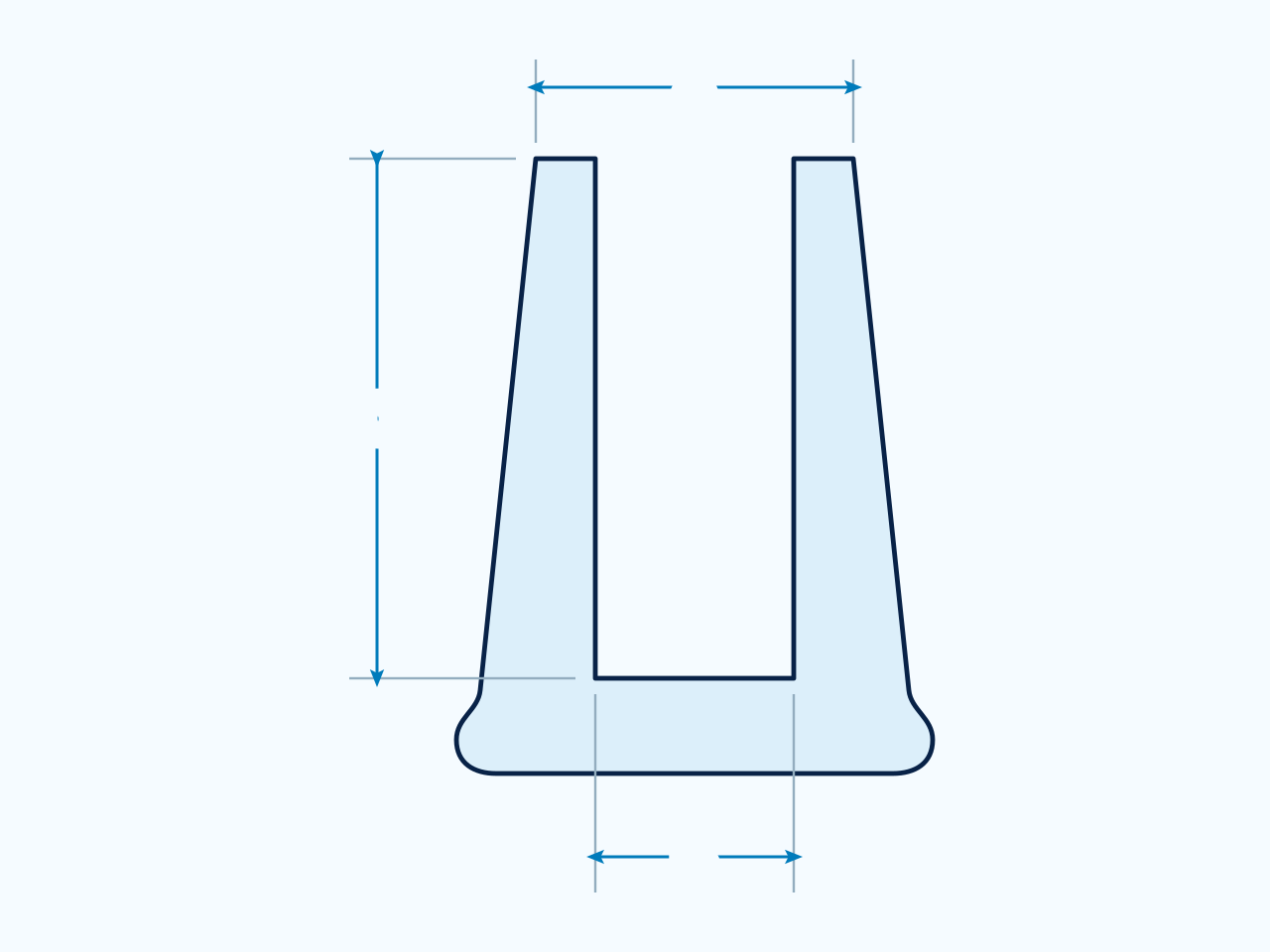
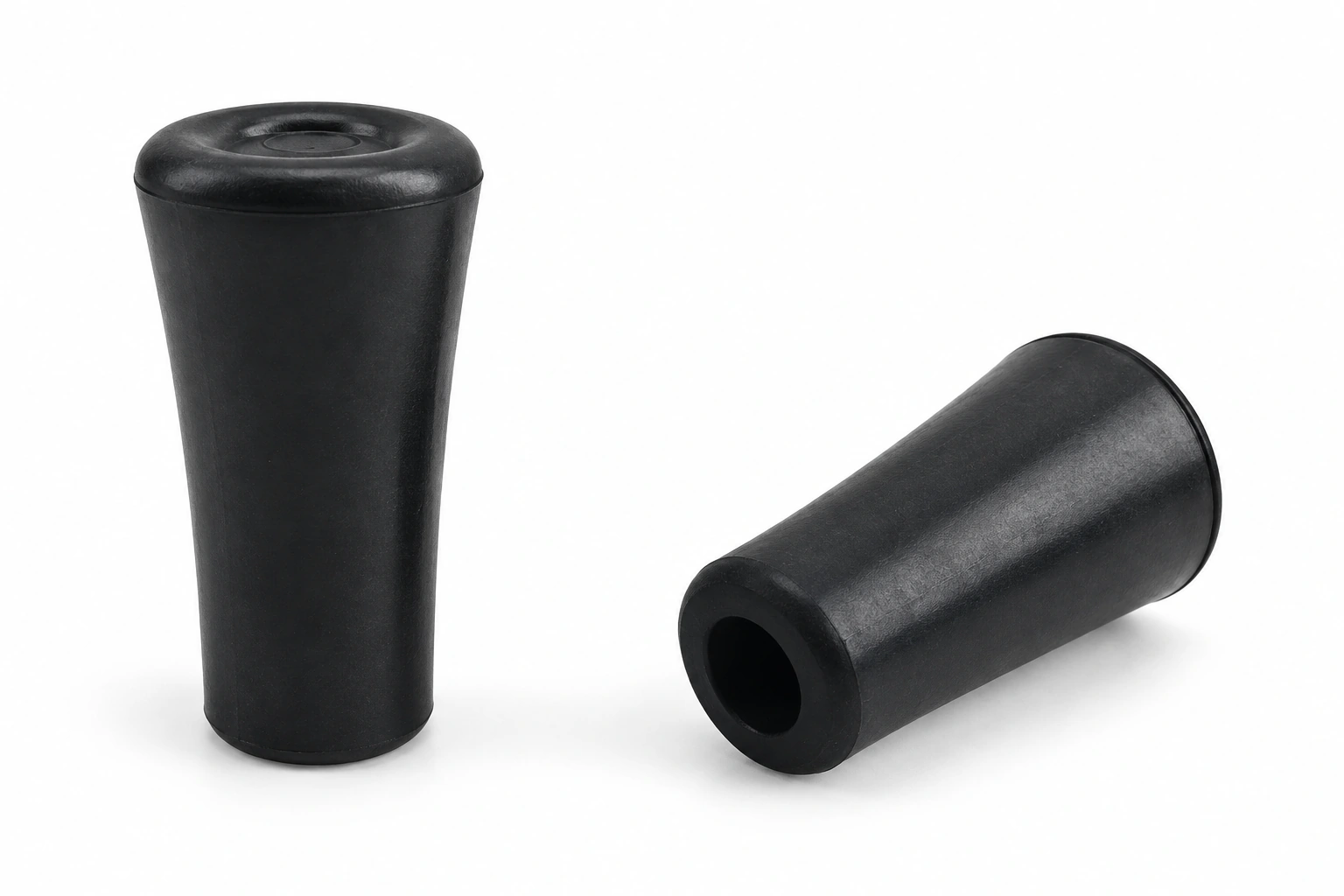
Rectangular rubber feet for chairs
Compare A, B and C in mm using the rectangular-tip drawing. Check both sides of the mating leg and the seating depth.
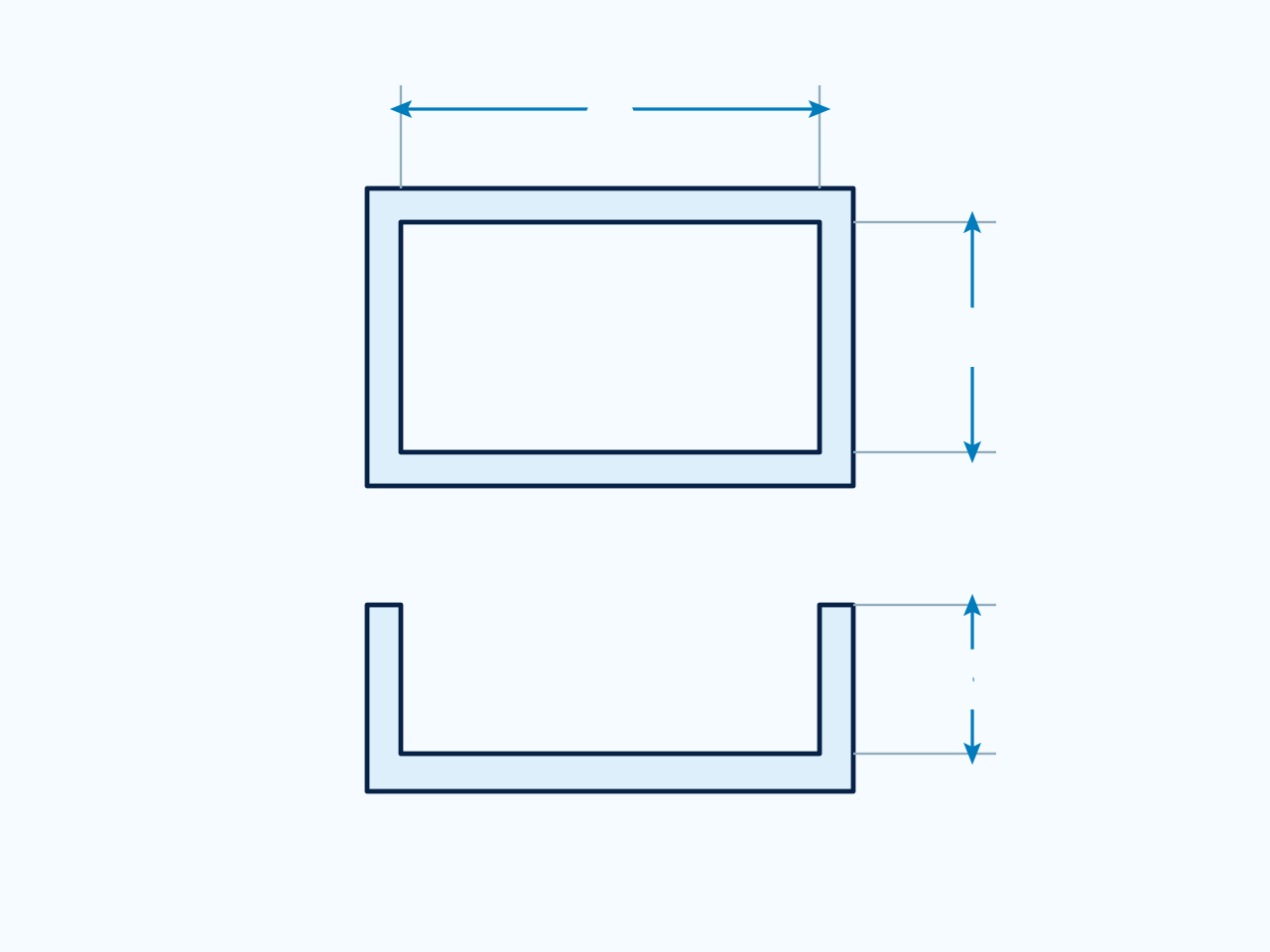
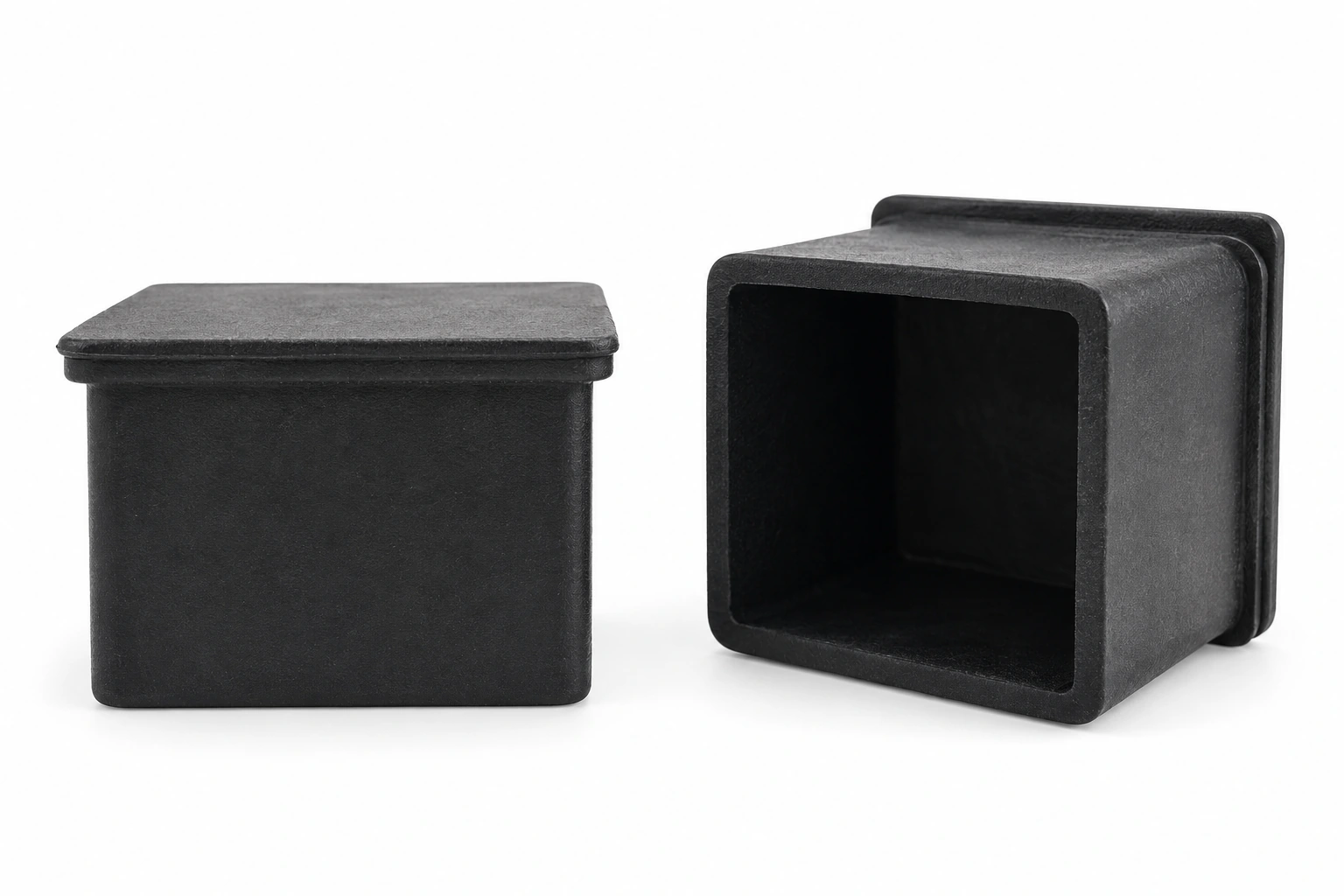
Rubber Feet For Chairs
Compare A, B, C and D in mm using the square-tip drawing. Check the mating leg profile and seating depth.
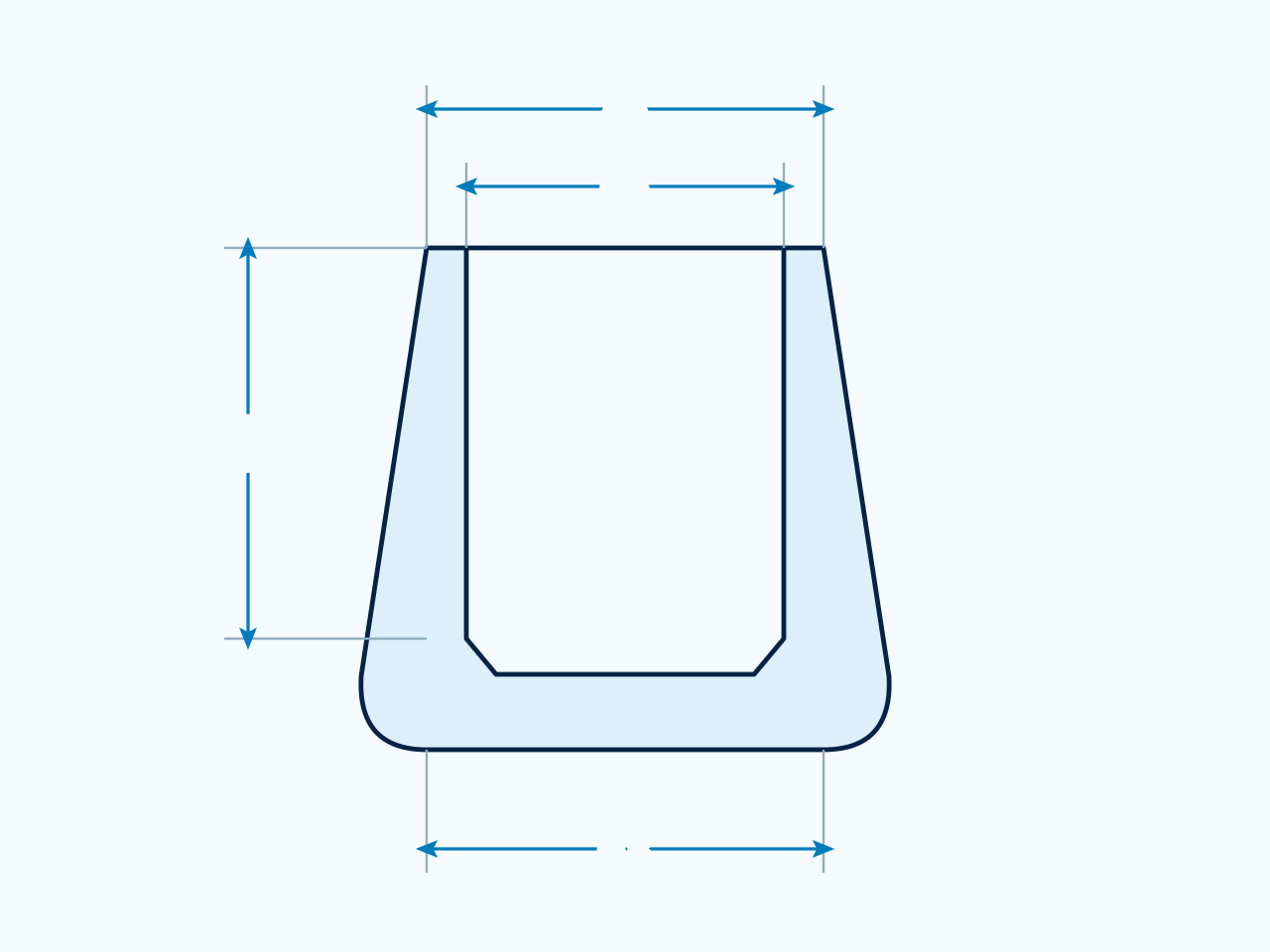
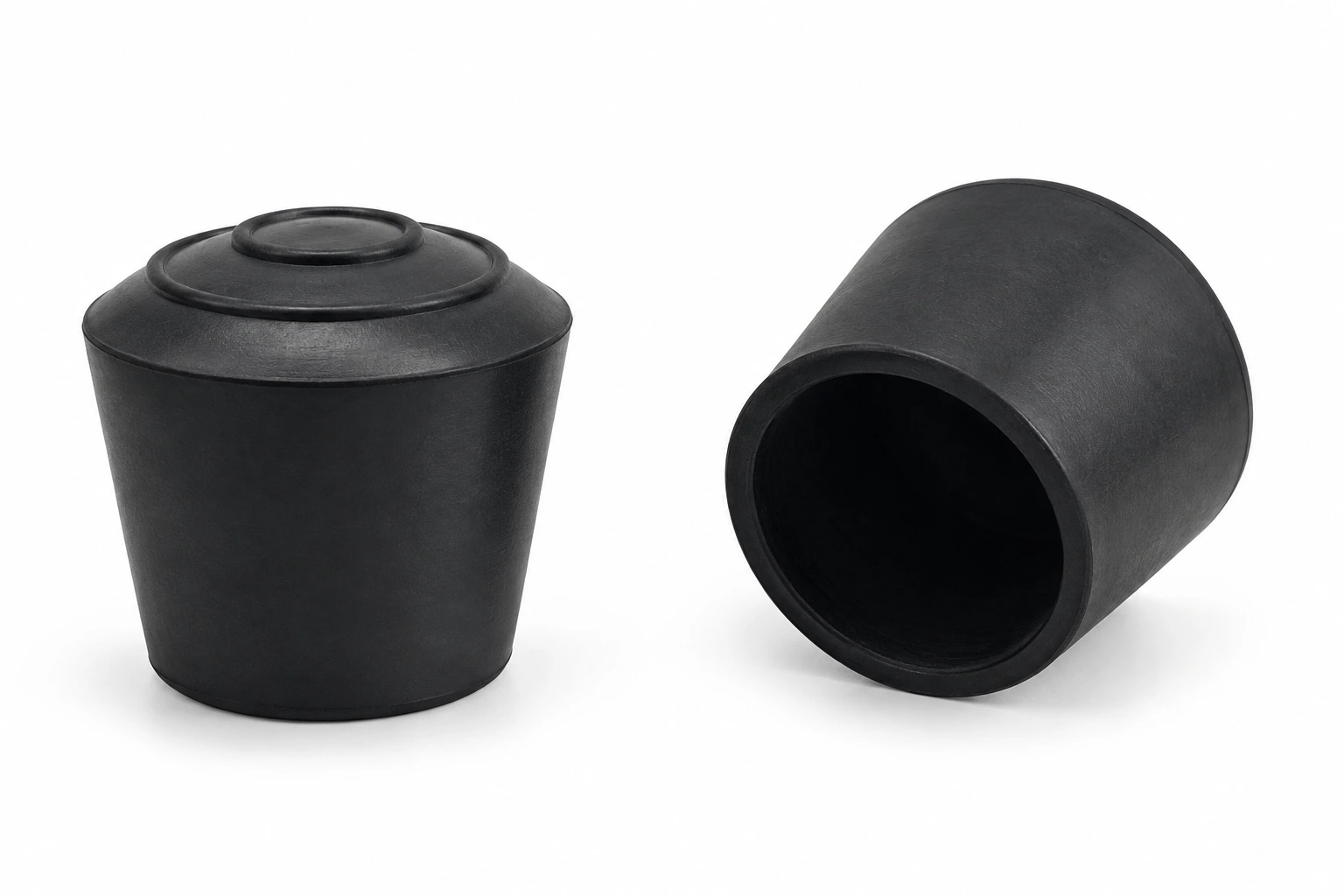
Need a different size? Share your drawing, mating dimensions and intended use to discuss a suitable part.
Discuss Your RequirementsProduct specifications
- Product form
- Resilient contact stop
- Application focus
- Electronic equipment bases, glass table supports and cabinet or door contact points. Size the part against the selected assembly.
- Dimensions to confirm
- Contact-face area, projection and mounting geometry. Match these to electronic equipment bases and glass table supports.
- Visibility
- Define the required visibility through the finished wall and approve appearance using a sample of the ordered thickness.
- Profiles discussed
- Square profiles and rectangular profiles. Select the profile that matches the mating part and dimension that section explicitly.
- Installation discussed
- Adhesive bonding. Identify the chosen retention method and the surface or hardware it engages.
- Contact surface
- Marble. Check marking, grip and movement on the actual finish under load.
- Glass contact
- Define the contact footprint, glass thickness and load; check local pressure and marking on a sample assembly.
- Attachment options
- Adhesive attachment is discussed. Define the bonded substrate, preparation and loaded contact area before selecting a backing.
- Working clearance
- Define the closing gap, contact direction and compression available at the stop.
Need a quote or a custom part?
Send your requirements, drawings or samples to discuss standard and custom silicone rubber parts.
Email us[email protected]