
Elastomeric Isolators
This type of isolation has a wide application and is most often used in apartments, houses, garages, music studios, etc. This is the best isolation from noise, machine operation, and loud music – especially if you live in an apartment building. Elastomeric isolators can save you in such situations from frequent arguments with neighbors. Airborne noise is the noise of sound waves that appear in the air. This can be a loud conversation, music, street noise or industrial noise, etc. To fight this type of noise, you can build very thick walls or use more modern methods – such as masonry with cavities filled with thermal insulation materials. This is the most obvious way to fight noise. When we talk about good sound isolation – the most sound are building materials that have a lower density such as ceramic brick, wood, or construction foam.
Elastomeric isolators are frequently used to suppress the noise. By using a combination of hard, semi-rigid, and soft types of elastomeric isolators, we can achieve very good results in the fight against this type of discomfort.
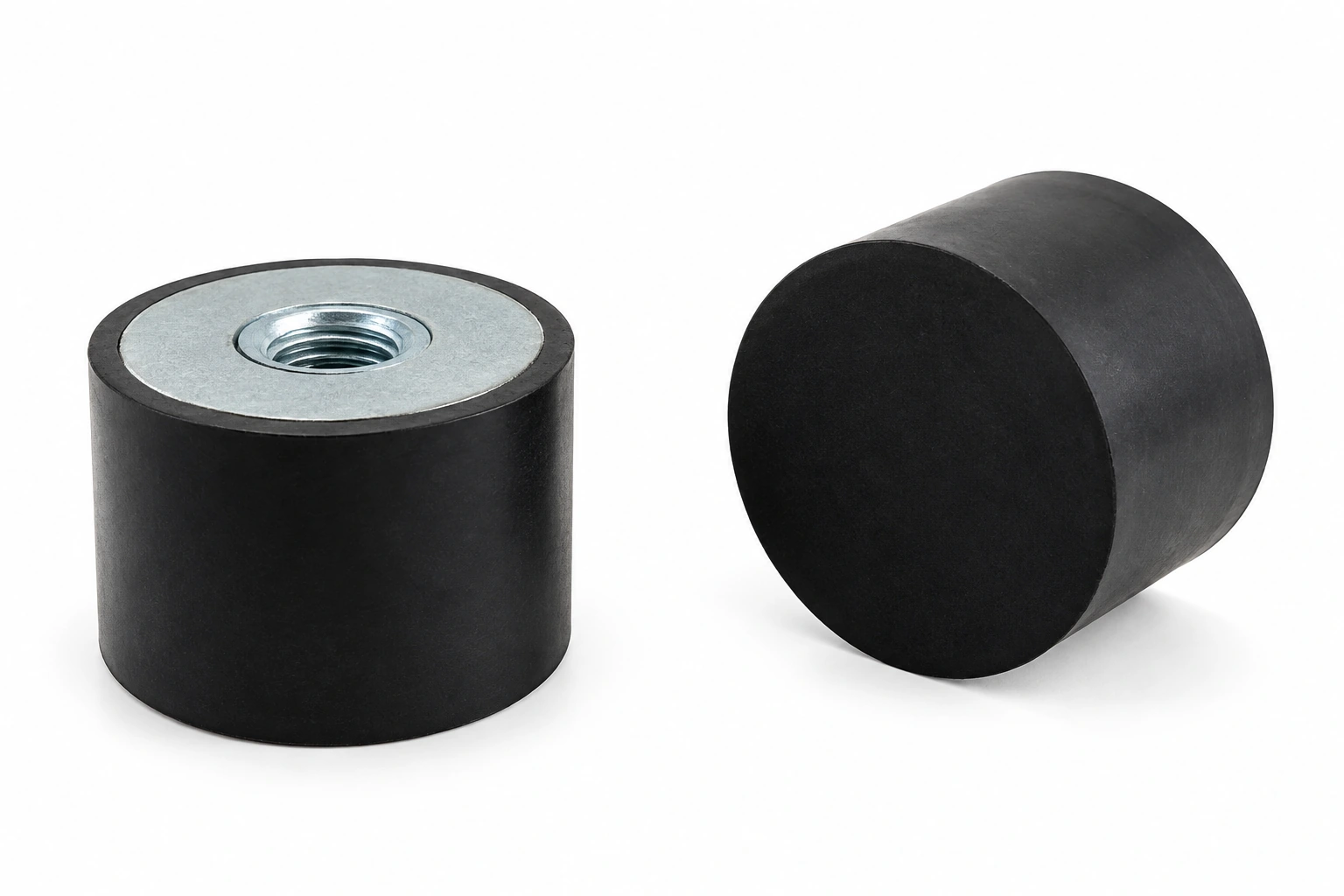
If you are already determined to get rid of unnecessary noise or vibrations – then slowly take matters into your own hands and get one of the existing elastomeric isolators. Such insulators give the greatest effect in the fight against vibration or unwanted sounds. Their features include different modes of elasticity, as well as internal damping. They can also be made to be fixed or can be mounted in different places.
When it comes to materials, the greatest effect in the fight against airborne noise and vibration is given by the use of a mixture of granular natural cork and synthetic rubber. It is used as a base for all types of both wall and floor coverings – however, additional protection from moisture is needed. If you have already decided to install one of the elastomeric insulators, it is best to call in experts and get professional advice and a recommendation on which insulator to use before starting work on the insulation.
Vibration Mount Size Catalog
Compare five mounting arrangements using the matching drawing, thread and dimensional data. Load and compression columns retain their stated units; confirm operating conditions for your installation.
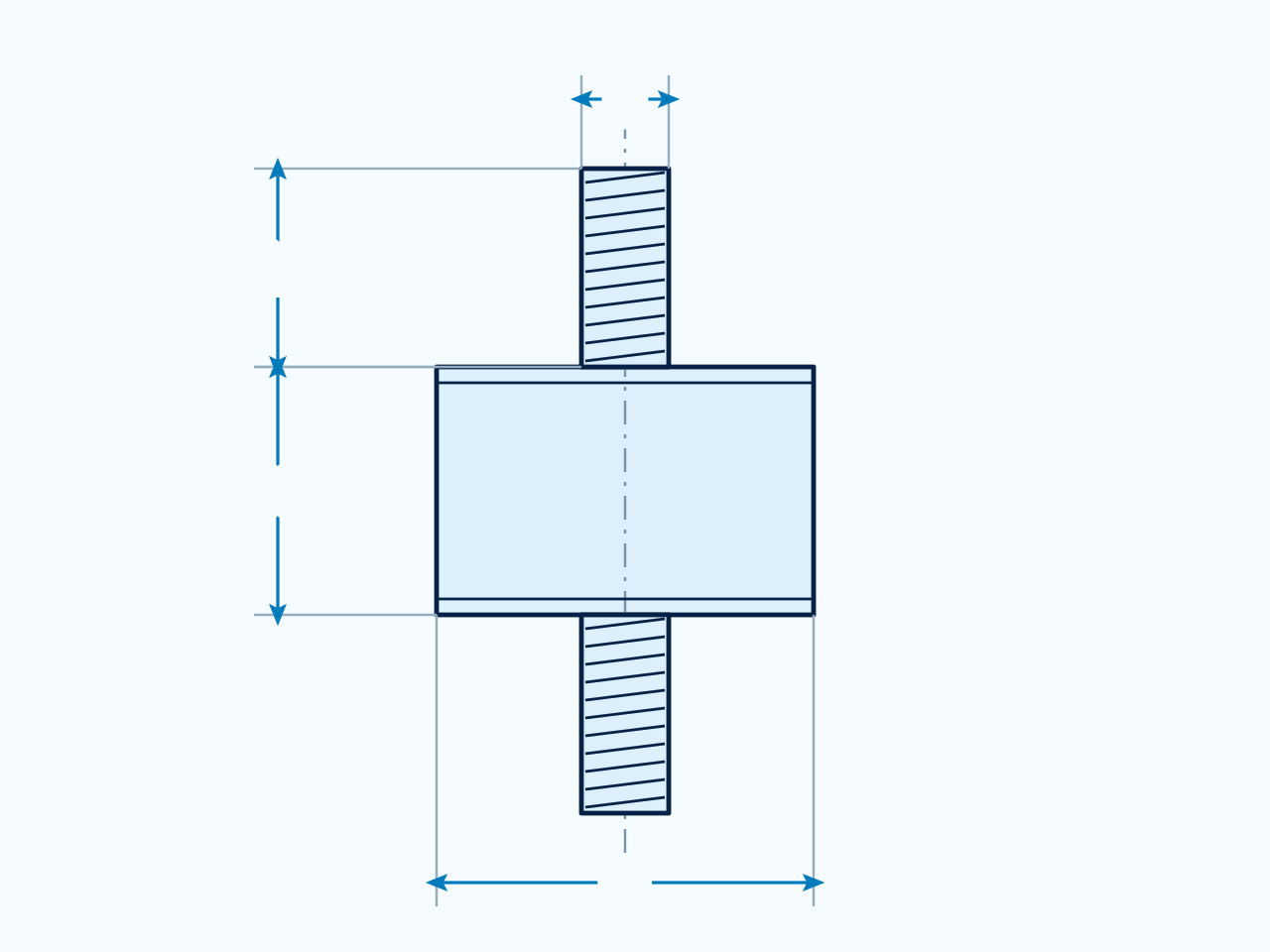
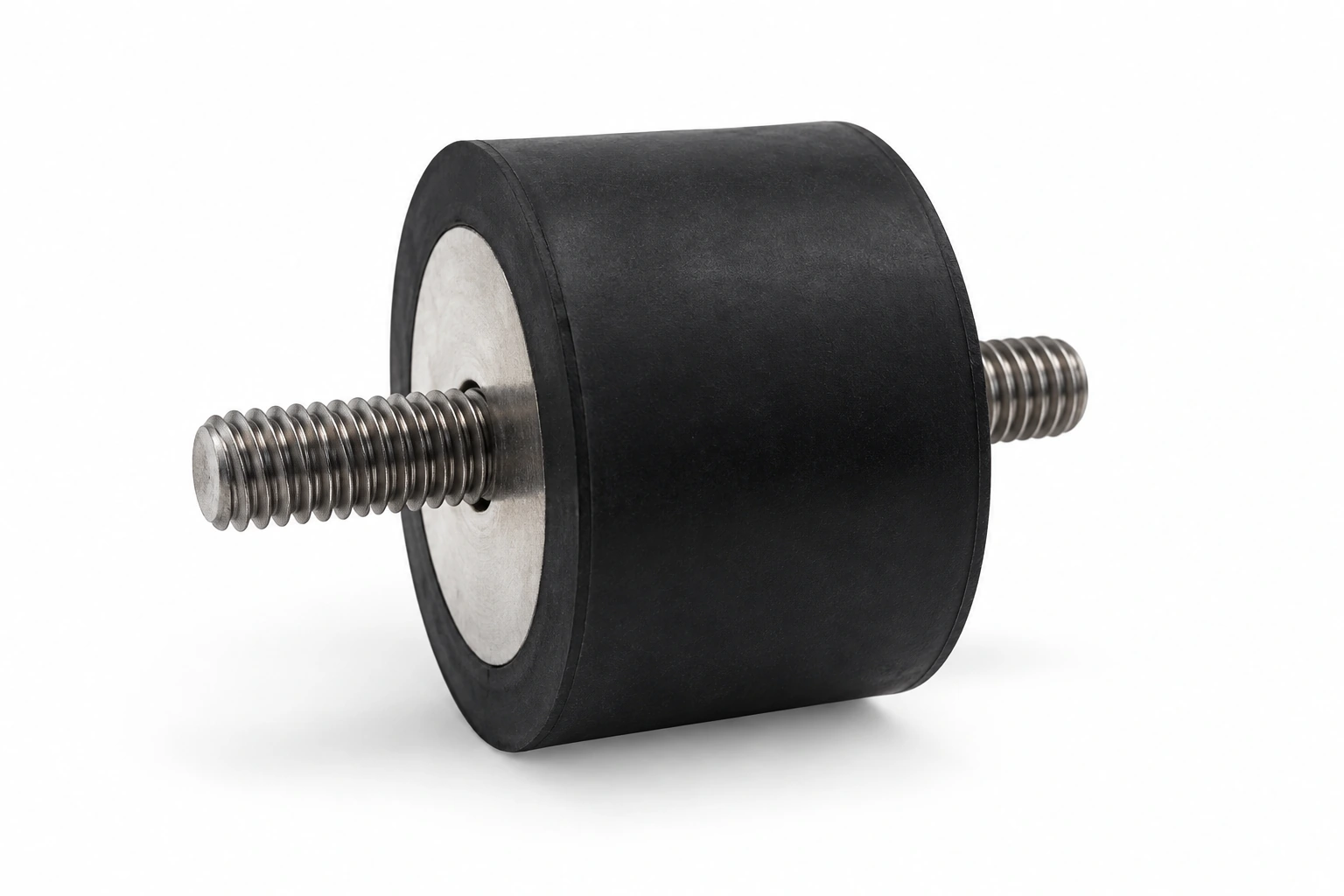
Vibration Damping Mounts A
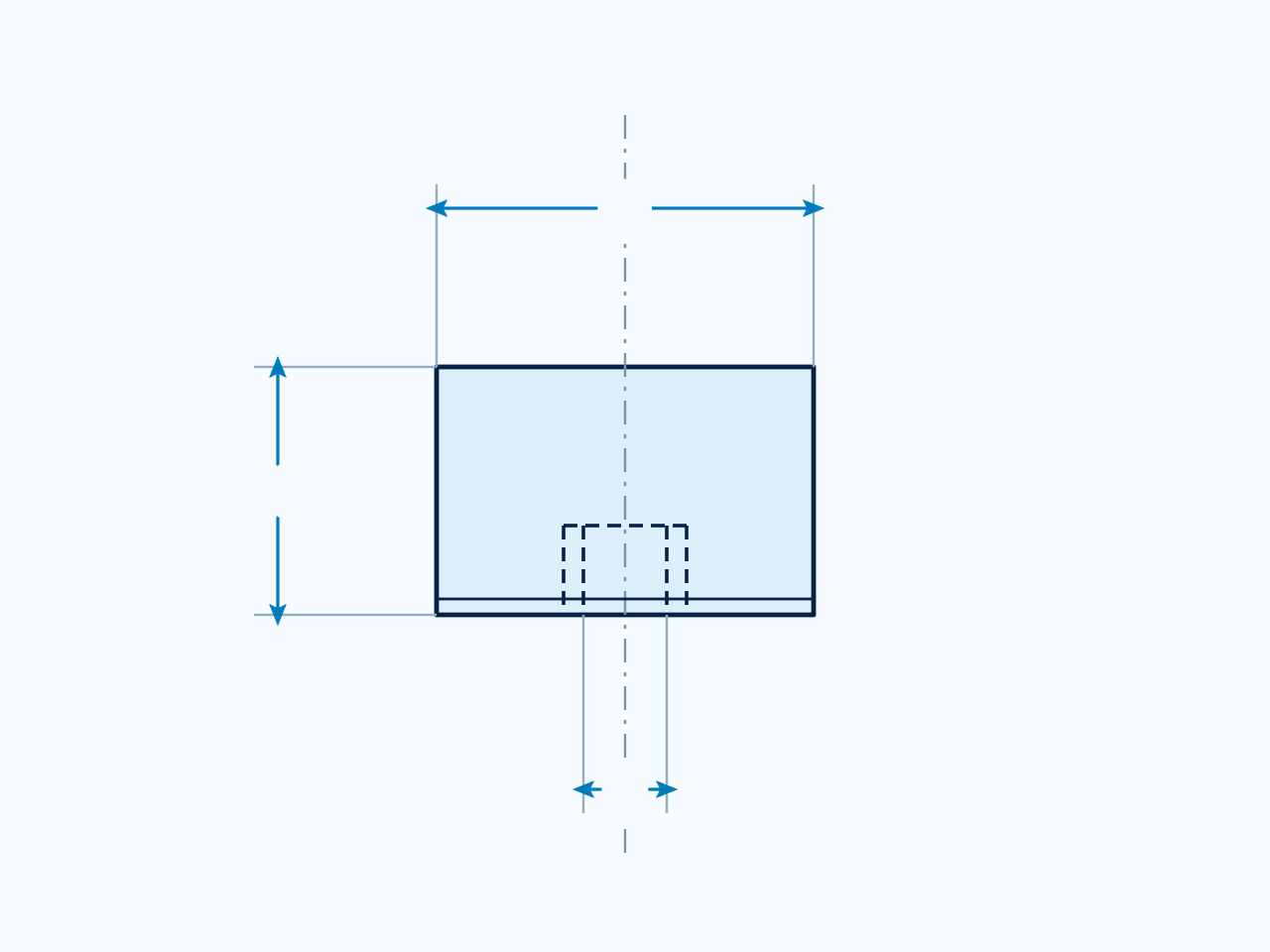
Match D, H and thread d to the drawing, including stud length L. Dimensions are in mm; thread designations, load in kg and compression in mm follow the table headings. Confirm load direction and operating conditions for your installation.
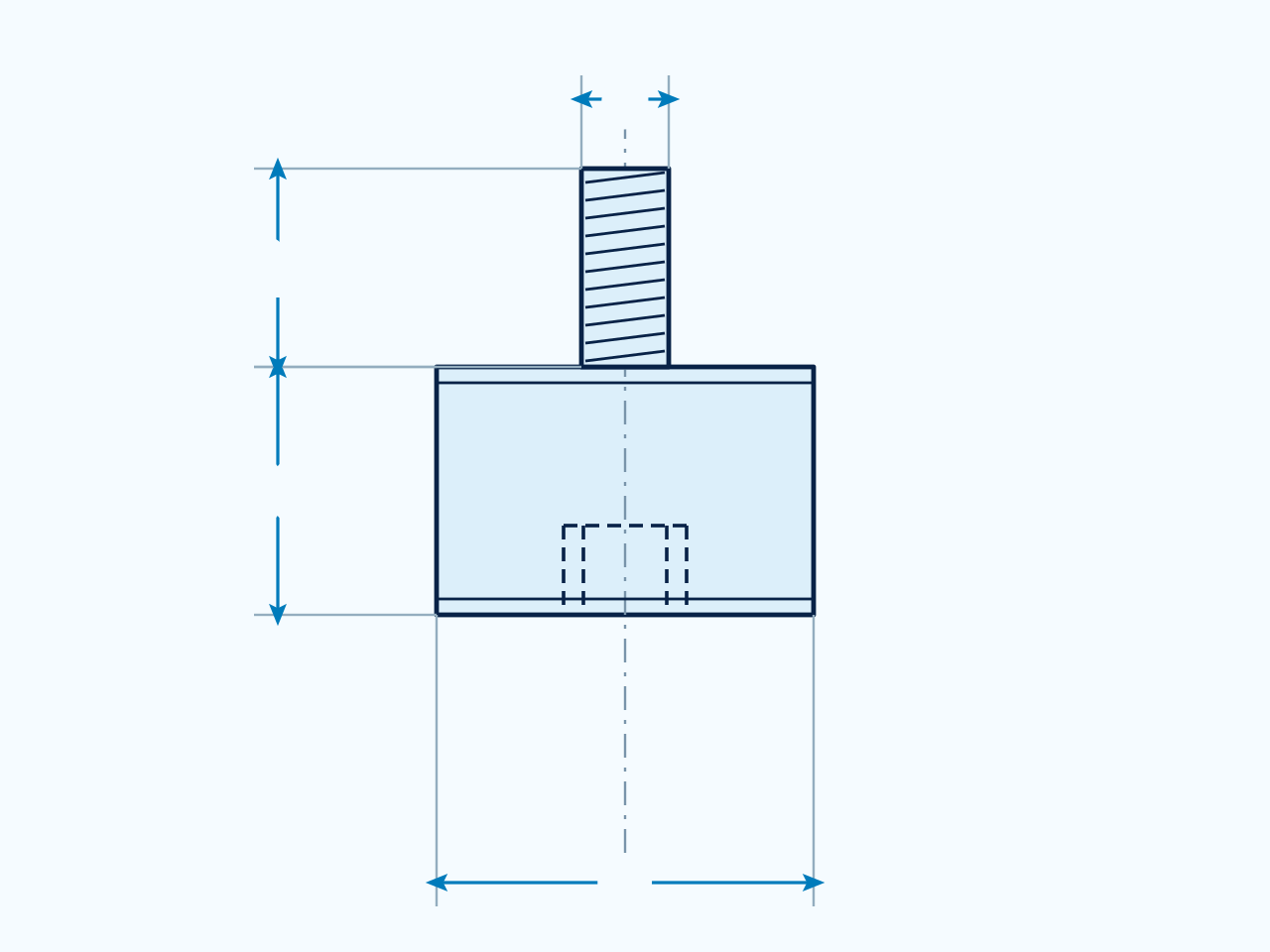
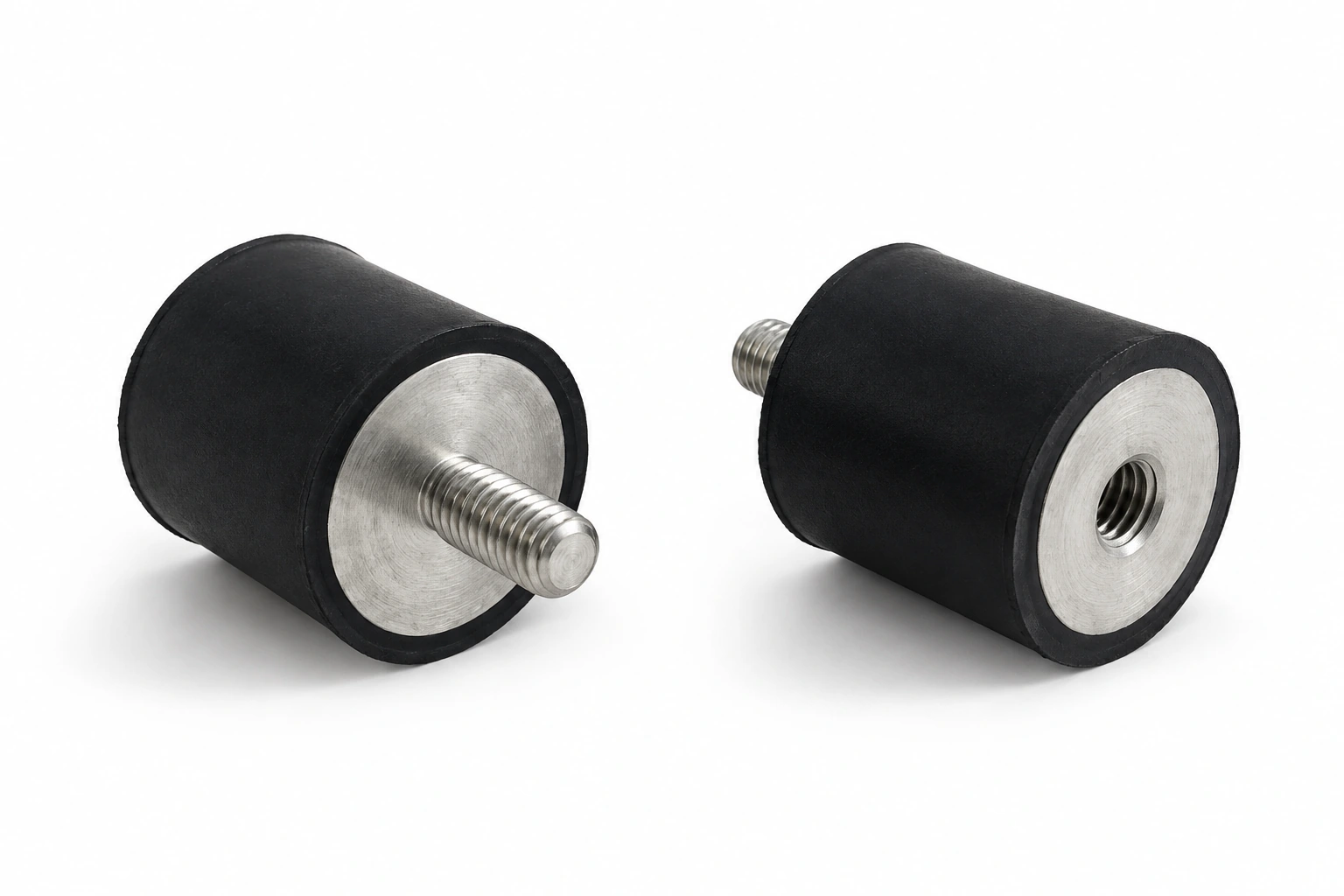
Anti-Vibration Rubber Mounts B
Match D, H and thread d to the drawing, including stud length L. Dimensions are in mm; thread designations, load in kg and compression in mm follow the table headings. Confirm load direction and operating conditions for your installation.
Vibration Isolators C
Match D, H and thread d to the drawing. Dimensions are in mm; thread designations, load in kg and compression in mm follow the table headings. Confirm load direction and operating conditions for your installation.
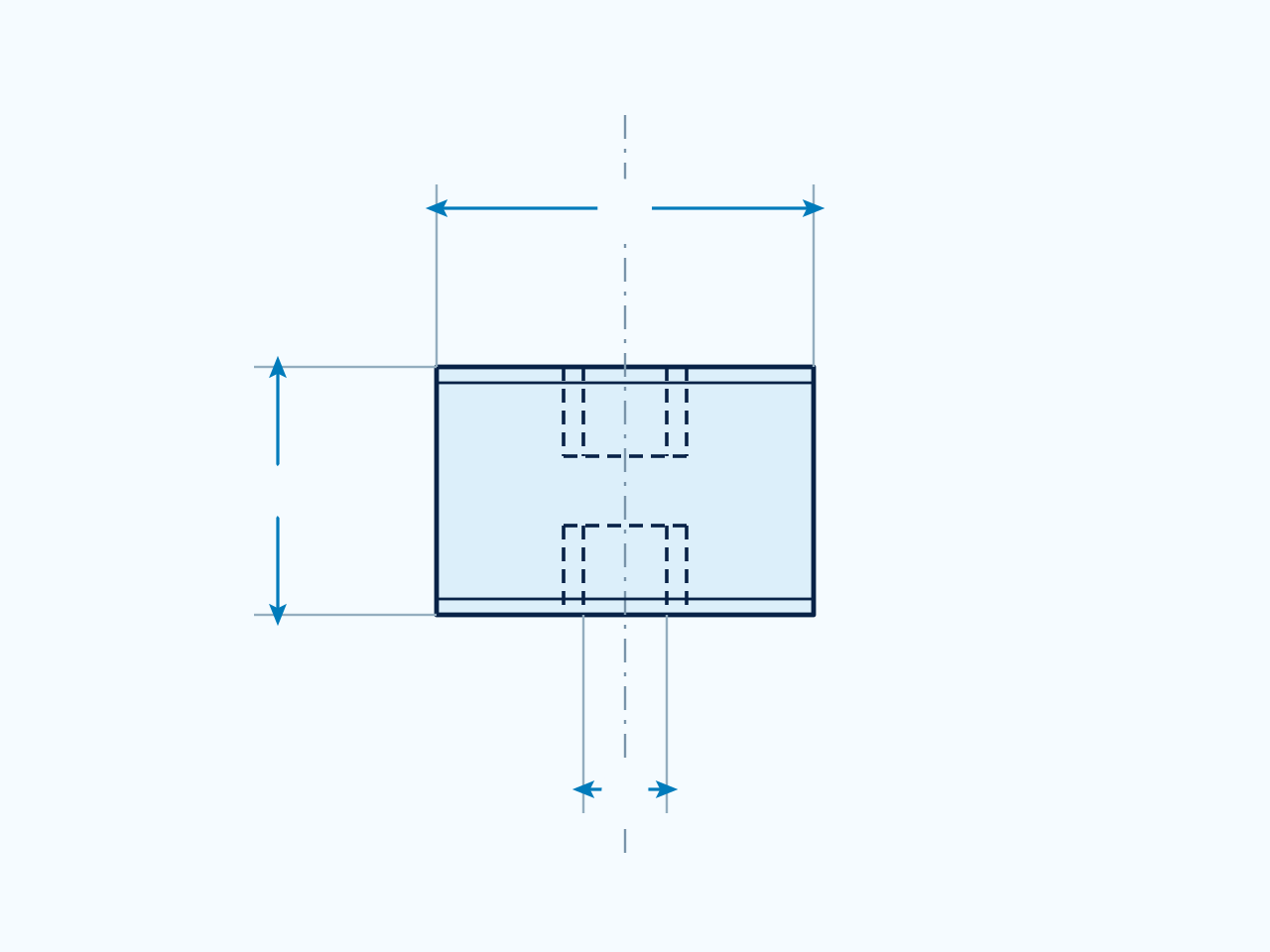
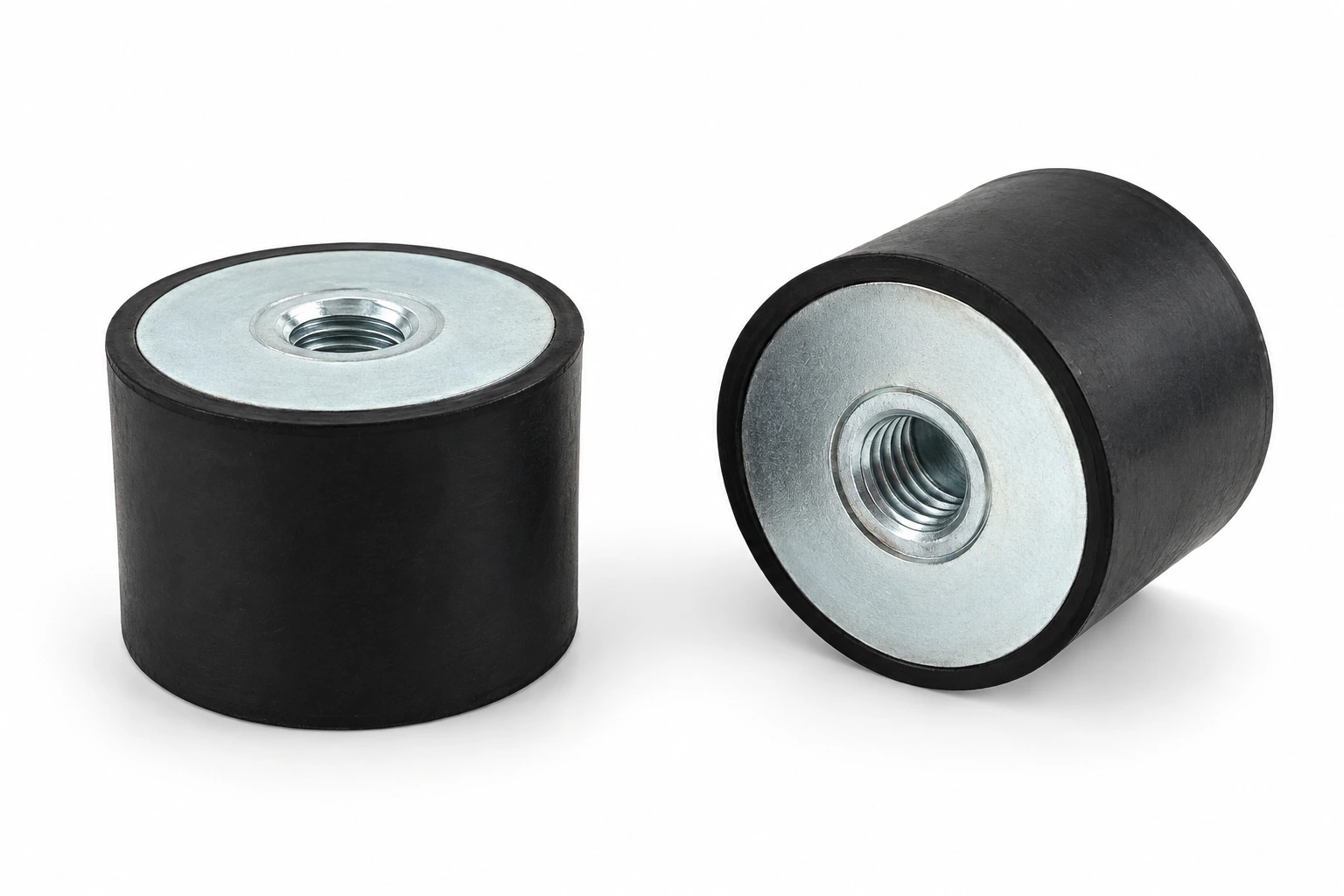
Rubber Mountings D
Match D, H and thread d to the drawing, including stud length L. Dimensions are in mm; thread designations, load in kg and compression in mm follow the table headings. Confirm load direction and operating conditions for your installation.
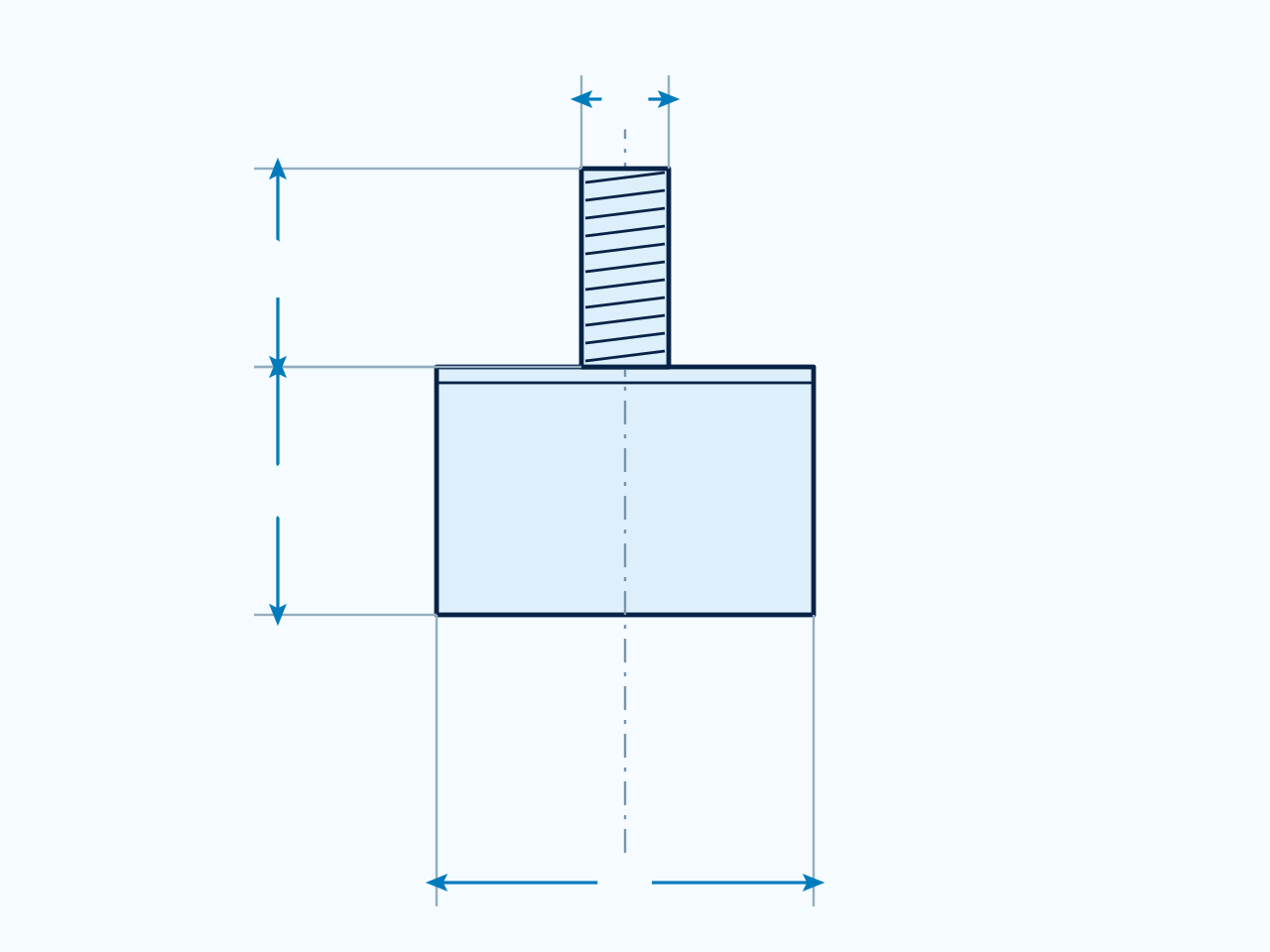
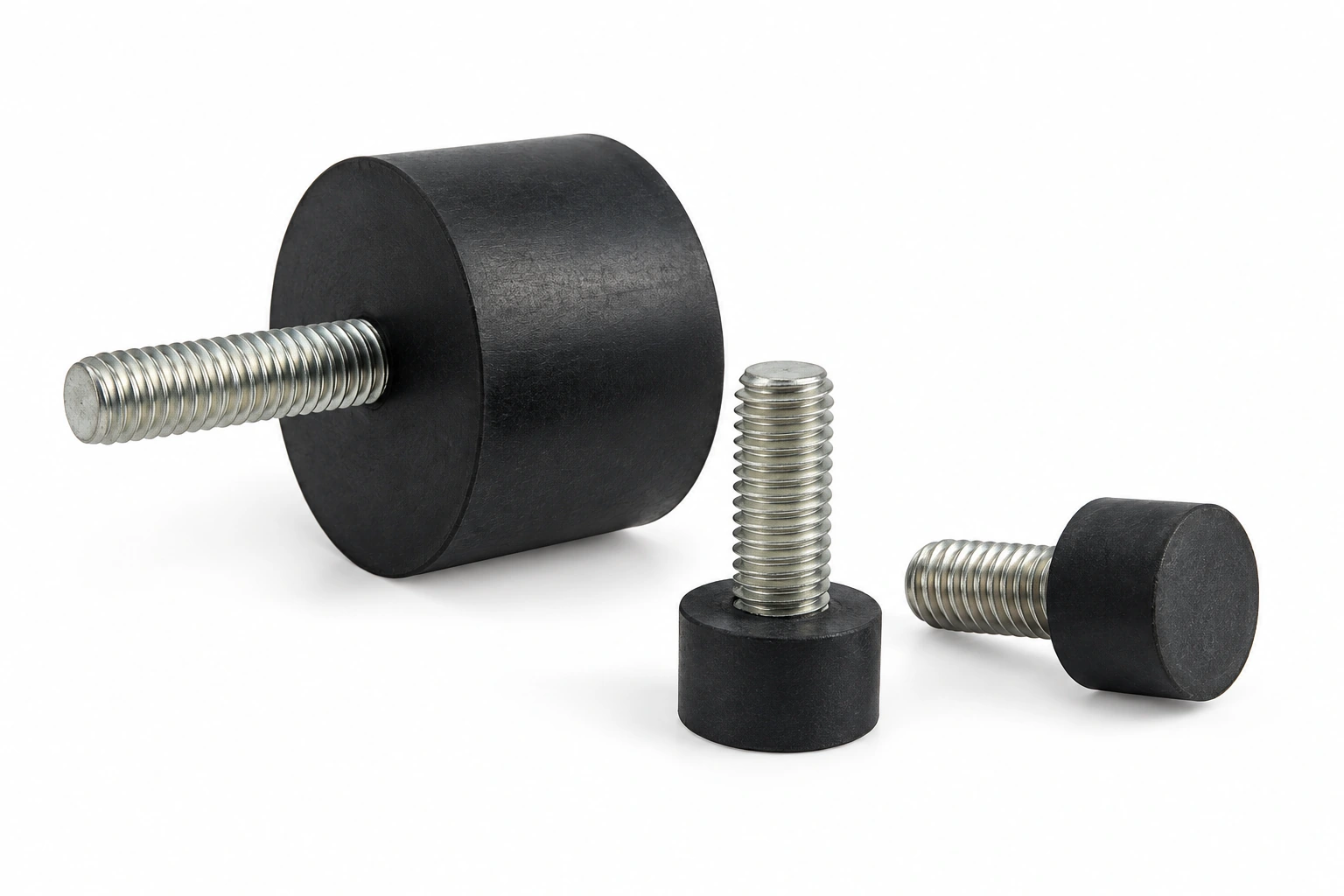
Rubber Vibration Mounts E
Match D, H and thread d to the drawing. Dimensions are in mm; thread designations, load in kg and compression in mm follow the table headings. Confirm load direction and operating conditions for your installation.
Need a different size? Share your drawing, mating dimensions and intended use to discuss a suitable part.
Discuss Your RequirementsProduct specifications
- Product form
- Elastomer mount between a vibrating assembly and its support
- Dimensions to confirm
- Free and loaded heights, attachment spacing and body envelope.
- Exposure to evaluate
- Moisture. Validate the selected material under the combined conditions.
- Isolation objectives
- Steady vibration and structure-borne noise. Define a measurable acceptance target on the supported assembly.
- Dynamic selection
- Use the load per mount, excitation frequency and allowed movement to select the mount.
Need a quote or a custom part?
Send your requirements, drawings or samples to discuss standard and custom silicone rubber parts.
Email us[email protected]