
Electric conductive rubber tubing
Rubber tubing is being one of the most versatile items that find a place in various industries. They are even present in our homes in the shape of our water hoses, and wire protection purposes such as electrical sleeving. In the industries, these items are mostly being used to protect wiring from wear and tear on sharp surrounding surfaces and heat. However, with all the possible modifications that can be done to the rubber, there are many advanced applications.
For example, in a situation where there is a present electrical current, there can be sparks that can cause hazardous situations. that is where we require special electric conductive rubber tubing. They are used in various industries, such as machinery manufacturing, military, astronomic industry, and many more. The conductive rubber tube is used to completely seal the medium that runs through them, which can be liquids, gasses, or wiring. Besides the protection from the surrounding electricity, these tubings offer protective measures against electromagnetic interferences.
The material that this tubing is being produced from is not a regular rubber. Using the development of science, people have learned that combining rubber with conductive materials can bring these benefits to us. Although there are many techniques in doing that, usually the rubber is being infused with a conductor, or there are cylinders that are being combined with the rubber that coats the inner portion. Before you get to the ordering process, make sure that you get the correct measurements. Check the connections, and get the tubing with the appropriate lumen. If you have a problem finding the right size, we can create a custom tube for you. For electric conductive rubber tubing, include the required electrical properties, dimensions and operating conditions in your project specification.
Rubber Hose Size Catalog
Compare tube bore, outside diameter and available wall thickness. Confirm material compatibility and operating requirements for the selected hose.
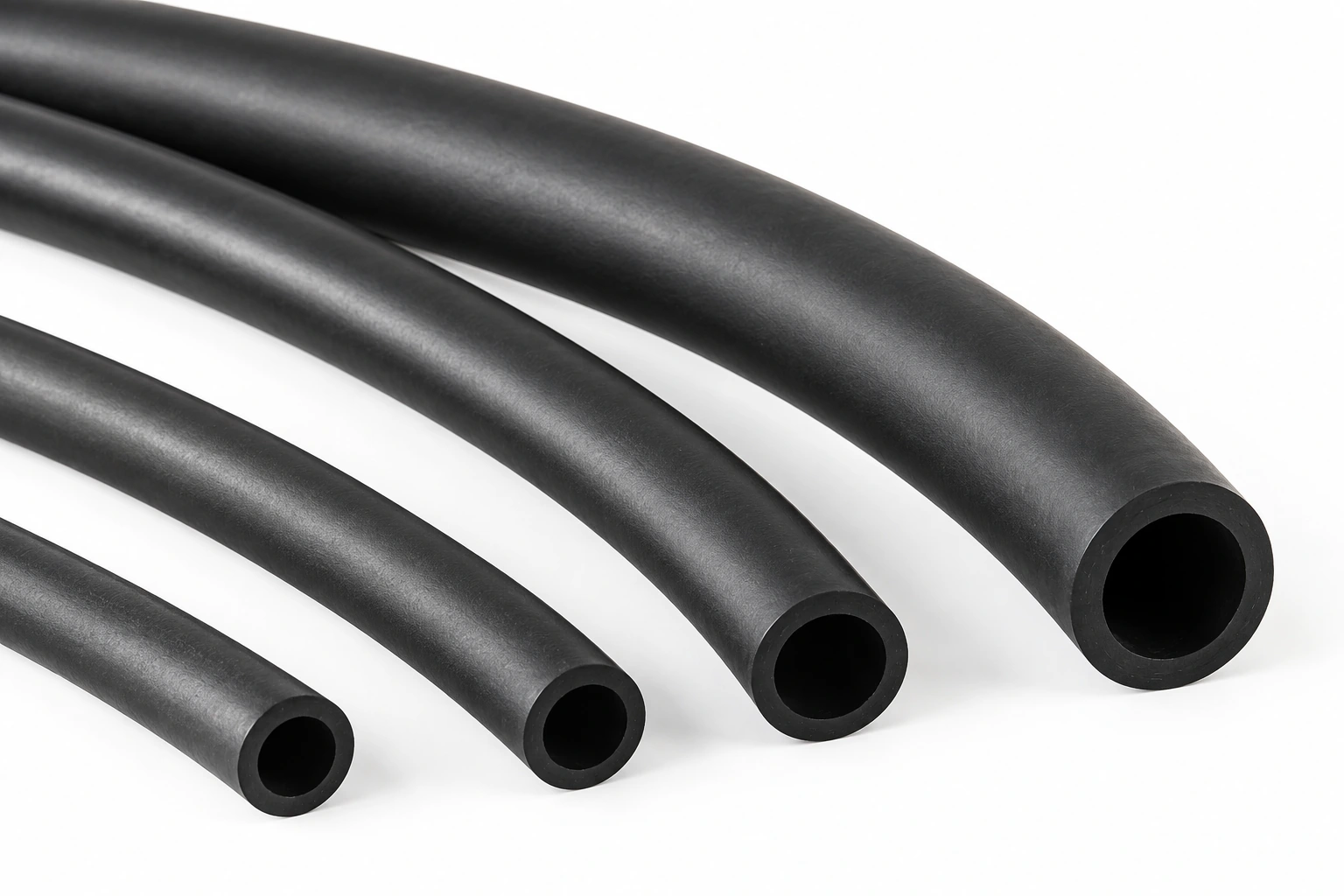
Rubber Hose
Compare Inside Diameter and Outside Diameter in mm. The cross-section drawing identifies the bore and outside diameter; confirm the selected tube material and service requirements.

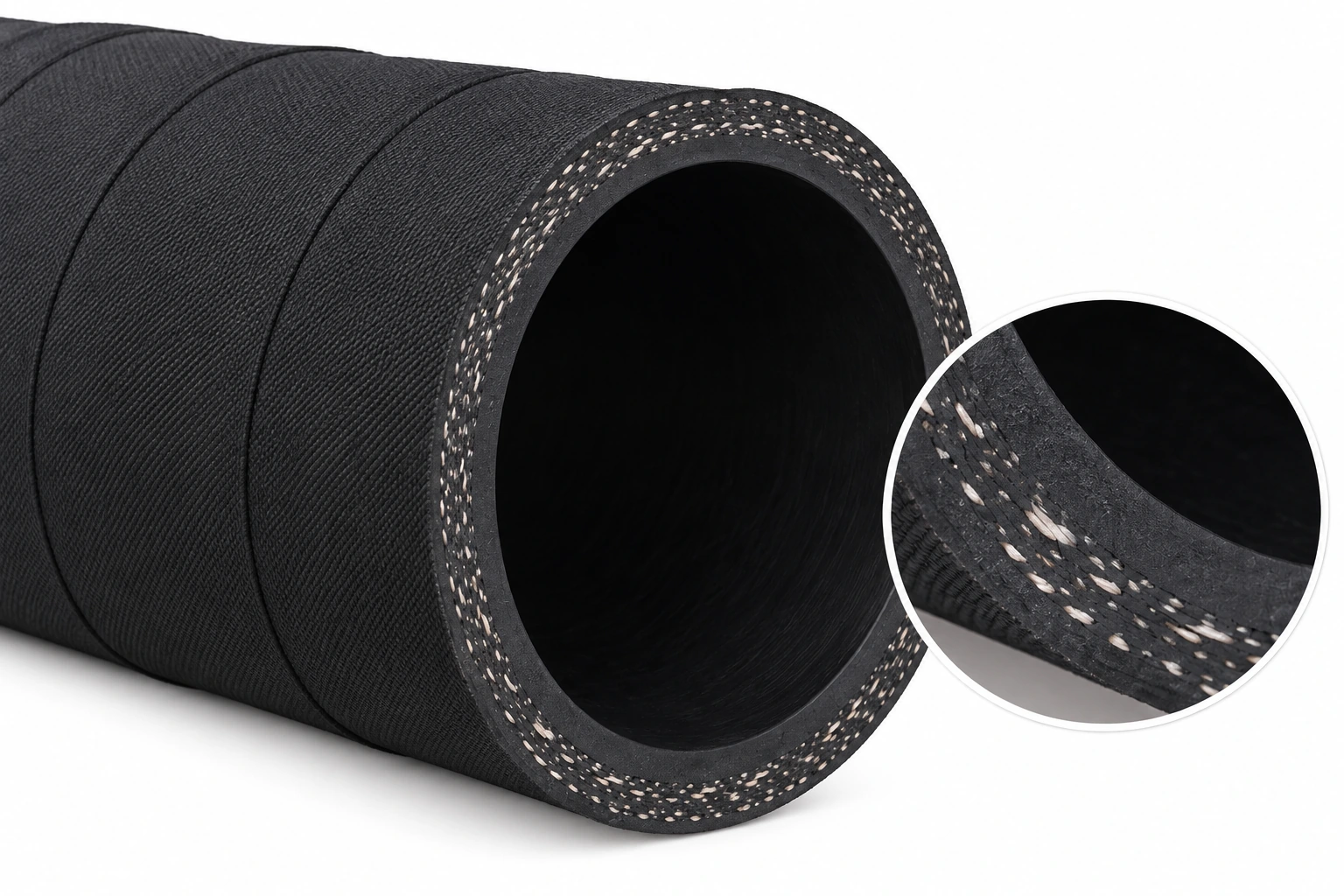
Fluororubber Hose
Compare Inside Diameter and Outside Diameter in mm. The cross-section drawing identifies the bore and outside diameter; confirm the selected tube material and service requirements.
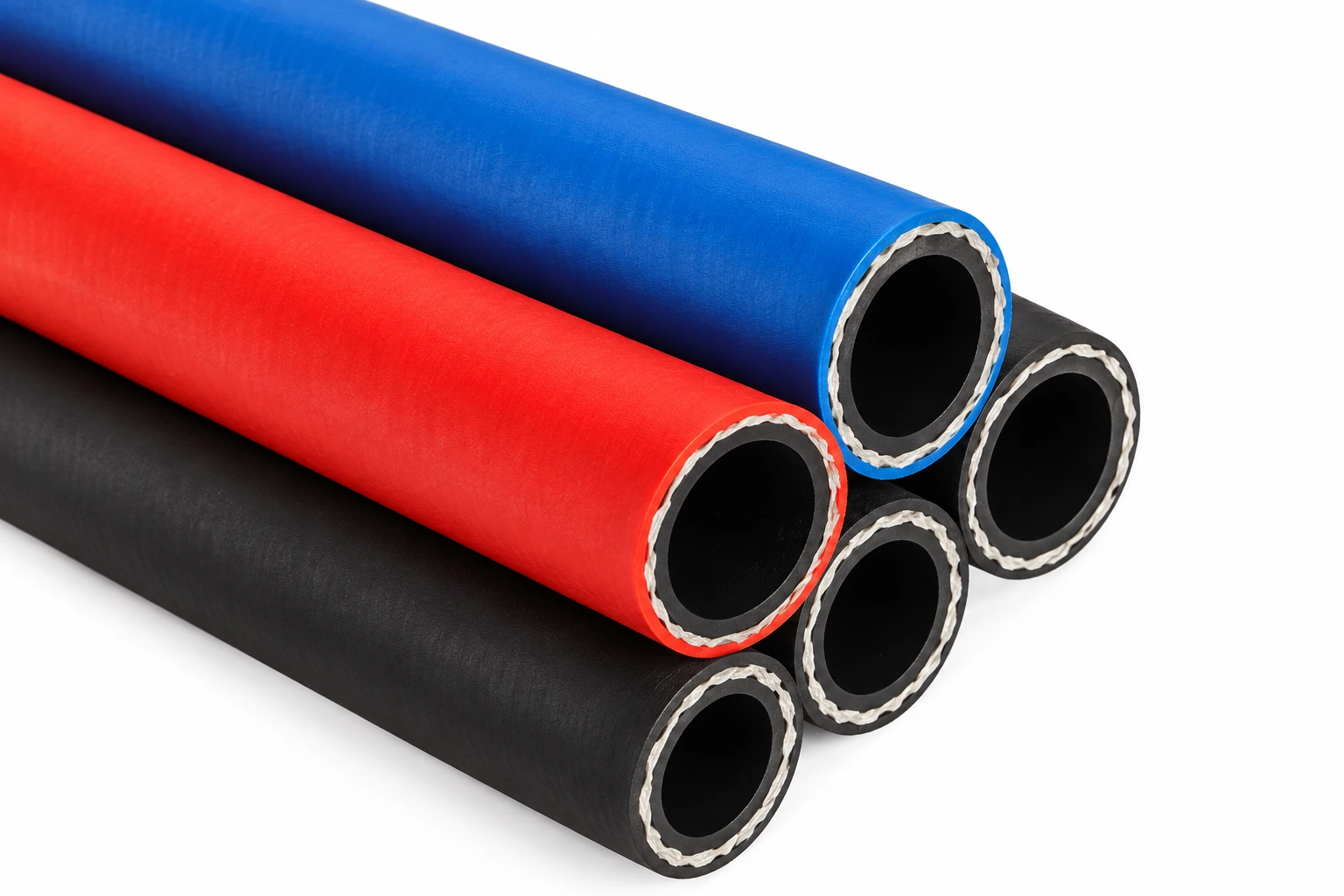
Colourful rubber high pressure hose
Compare Inside Diameter and Outside Diameter in mm, together with the listed Thickness and Colour. The cross-section drawing identifies the bore and outside diameter; confirm the selected tube material and service requirements.
Need a different size? Share your drawing, mating dimensions and intended use to discuss a suitable part.
Discuss Your RequirementsProduct specifications
- Product form
- Hollow elastomer tubing for a fitted line or sleeve
- Application focus
- Cable sleeving and industrial fluid lines. Size the part against the selected assembly.
- Dimensions to confirm
- Inside diameter, outside diameter, wall thickness and cut length. Match these to cable sleeving and industrial fluid lines.
- Electrical function
- Set the required resistance range, electrode arrangement and test method for the finished geometry.
- Contact conditions
- Water: define concentration, temperature and contact time, then check compatibility with the chosen compound.
- Line layout
- Check bend radius, unsupported spans and clearance at both connections.
Need a quote or a custom part?
Send your requirements, drawings or samples to discuss standard and custom silicone rubber parts.
Email us[email protected]