
Food grade high temp silicone rubber tubing
Food grade high temp silicone rubber tubing is one of the most versatile types of tubing you can find on the market. Rubber tubing is generally a type of product that can be used for a wide variety of purposes, but food grade high temp silicone rubber tubing is especially versatile, and we will explain why. Rubber tubing is used in homes, in laboratories, and we also can’t think of an industry that doesn’t use rubber tubing. In laboratories you will often find rubber tubing where it is used for handling gas or fluids at different pressures. The type of rubber tubing we are talking about here is absolutely ideal for food processing, whether we are talking about the food industry or local breweries.
In order for rubber to come into contact with food or beverages without compromising quality and safety, a special type of silicone must be used – food grade silicone. Food grade silicone is approved by various relevant institutions such as the FDA for food contact. Also food grade high temp silicone rubber tubing is the best choice for food processing because it can withstand very high temperatures. As food processing in most cases involves high temperatures, many other types of rubber would melt while high temp silicone can withstand temperatures over 250 degrees. In the short term, it can be exposed to temperatures close to 300 degrees, and it can also withstand very low temperatures, which is important due to the freezing process.
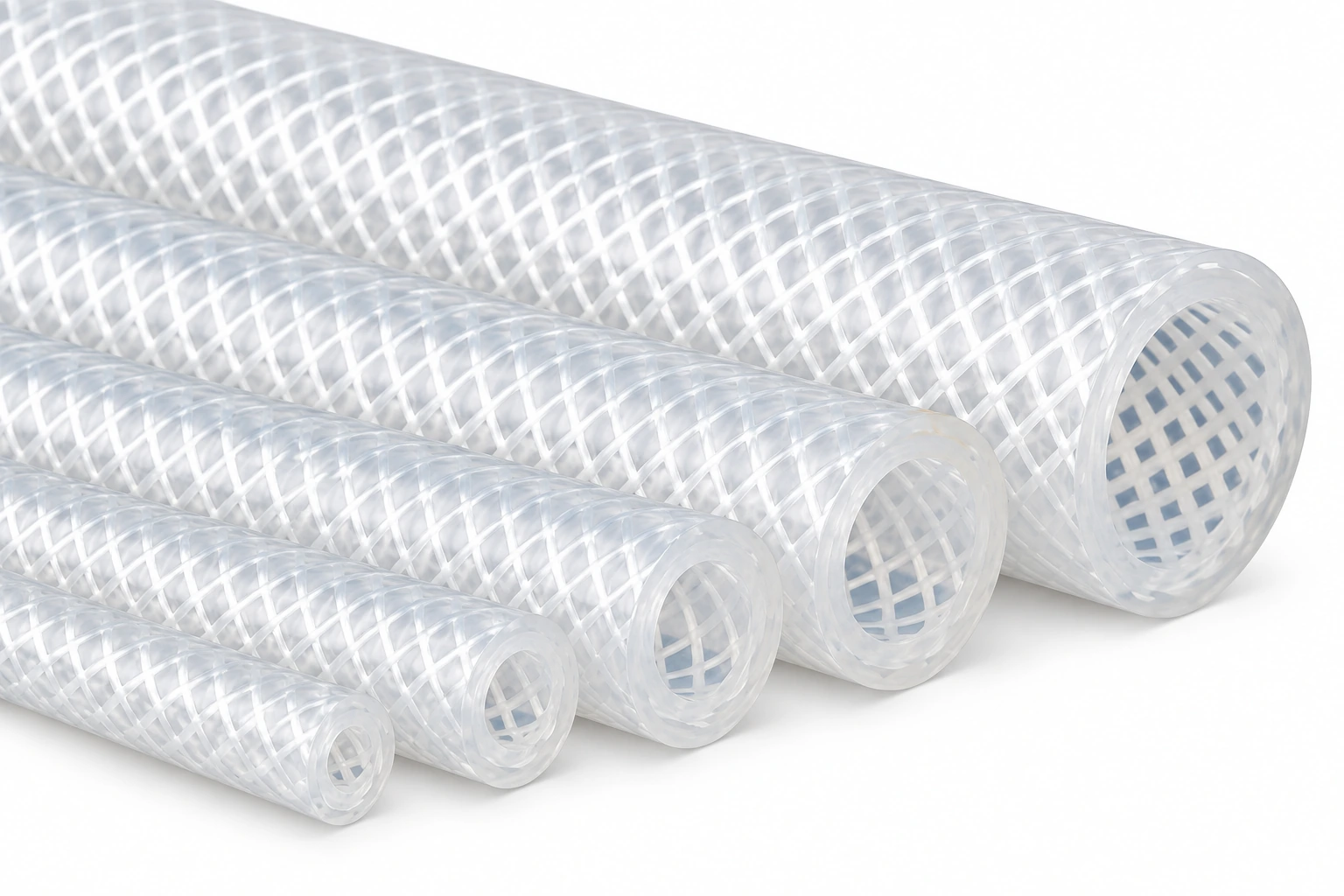
Silicone has many other positive characteristics, and it is also very often transparent, which allows you to see through it what is happening inside. You should keep in mind that tear strength is not as good as when you buy natural rubber tubing, so be more careful when you handle silicone rubber tubing. We are not saying silicon is fragile, just it is not as strong as some other types of rubber, so it should be used accordingly.
Silicone Tubing Size Catalog
Compare inside diameter, outside diameter and listed wall thickness across silicone tube ranges. Confirm the material grade and application requirements for the selected part.
Food grade silicone tube
Compare Inside Diameter and Outside Diameter in mm, together with the listed Thickness and Colour. The cross-section drawing identifies the bore and outside diameter; confirm the selected tube material and service requirements.

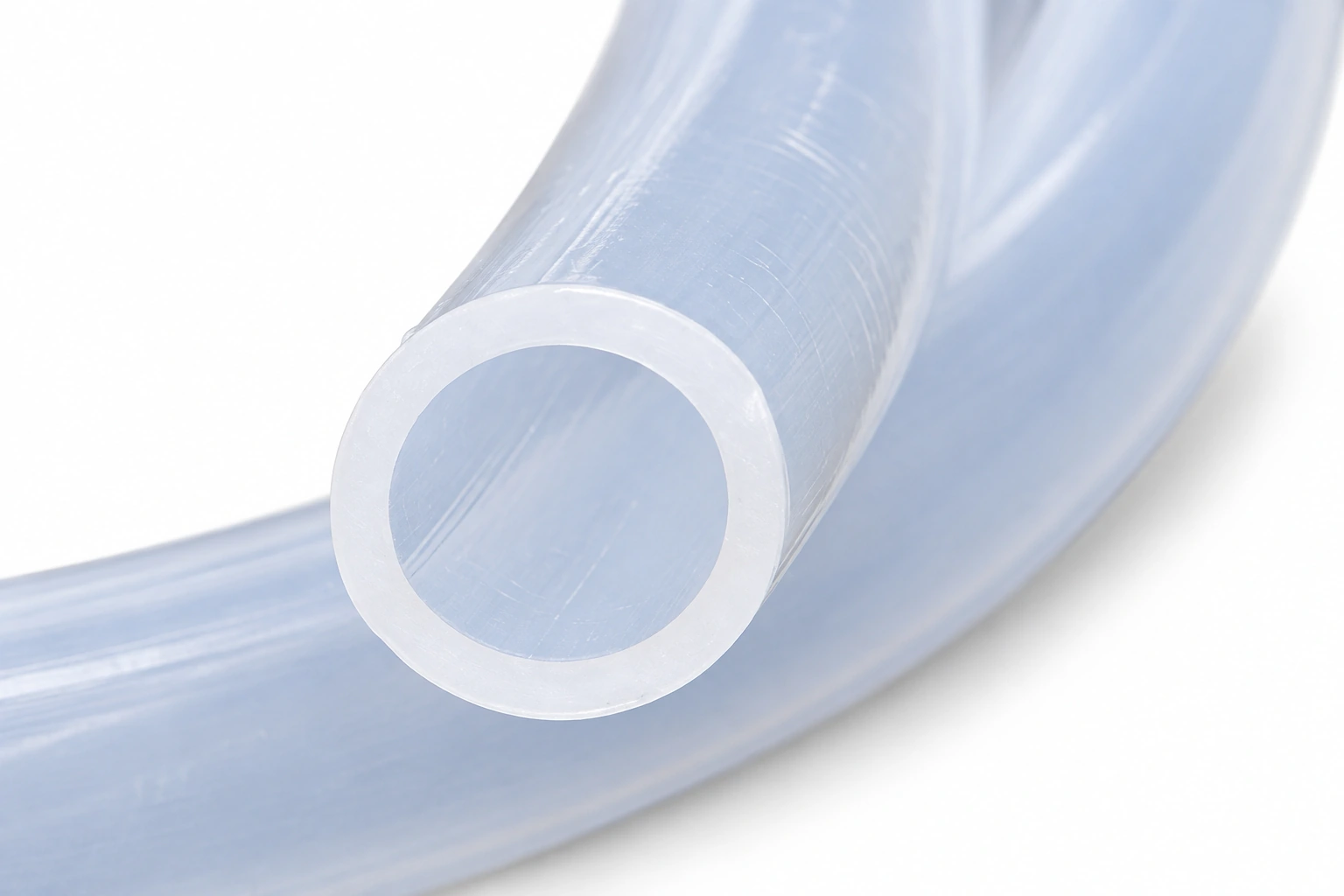
Black silicone tubing
Compare Inside Diameter and Outside Diameter in mm, together with the listed Thickness and Colour. The cross-section drawing identifies the bore and outside diameter; confirm the selected tube material and service requirements.
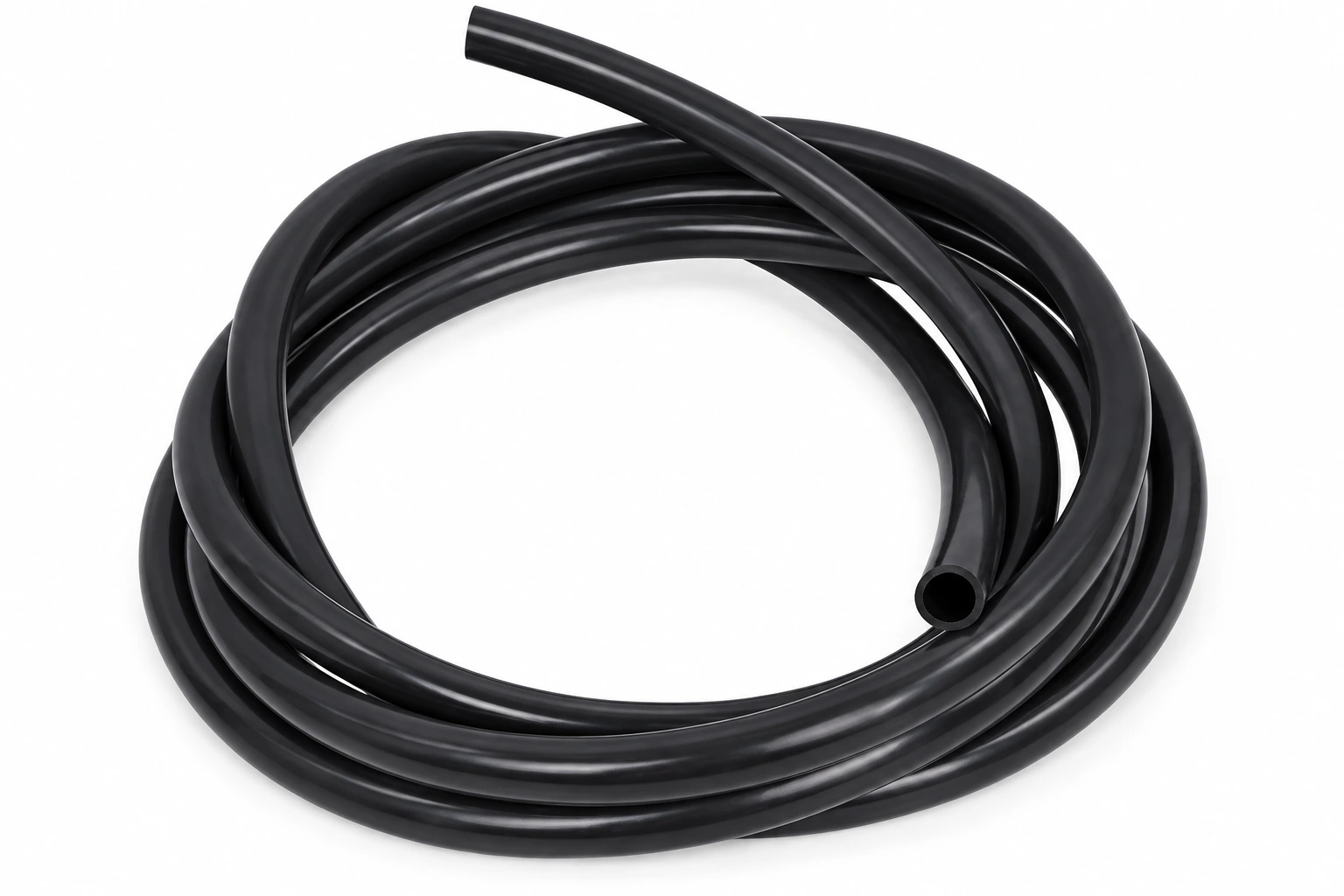
Industrial silicone tube
Compare Inside Diameter and Outside Diameter in mm, together with the listed Thickness and Colour. The cross-section drawing identifies the bore and outside diameter; confirm the selected tube material and service requirements.
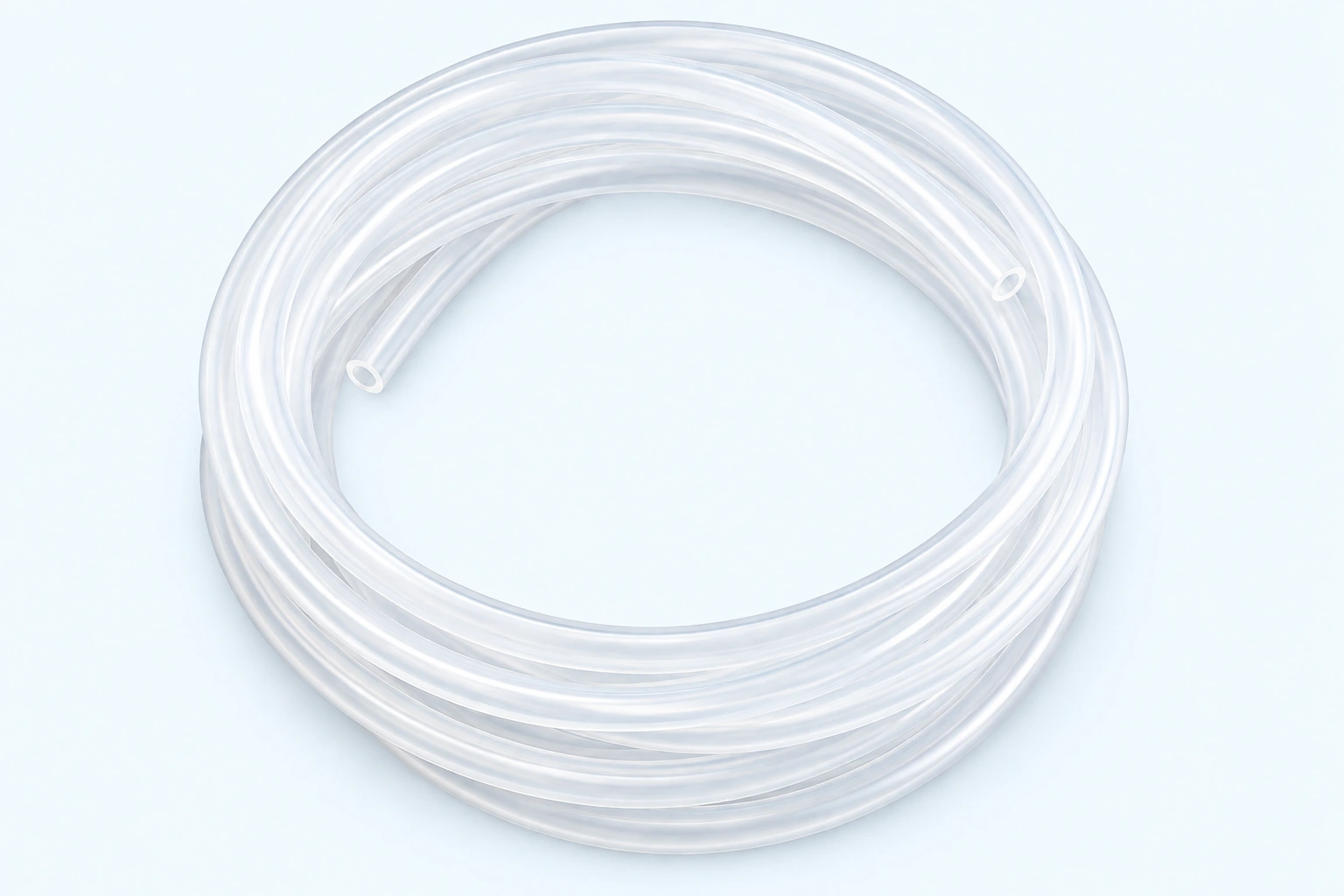
Colourful silicone braided tube
Compare Inside Diameter and Outside Diameter in mm, together with the listed Thickness and Colour. The cross-section drawing identifies the bore and outside diameter; confirm the selected tube material and service requirements.
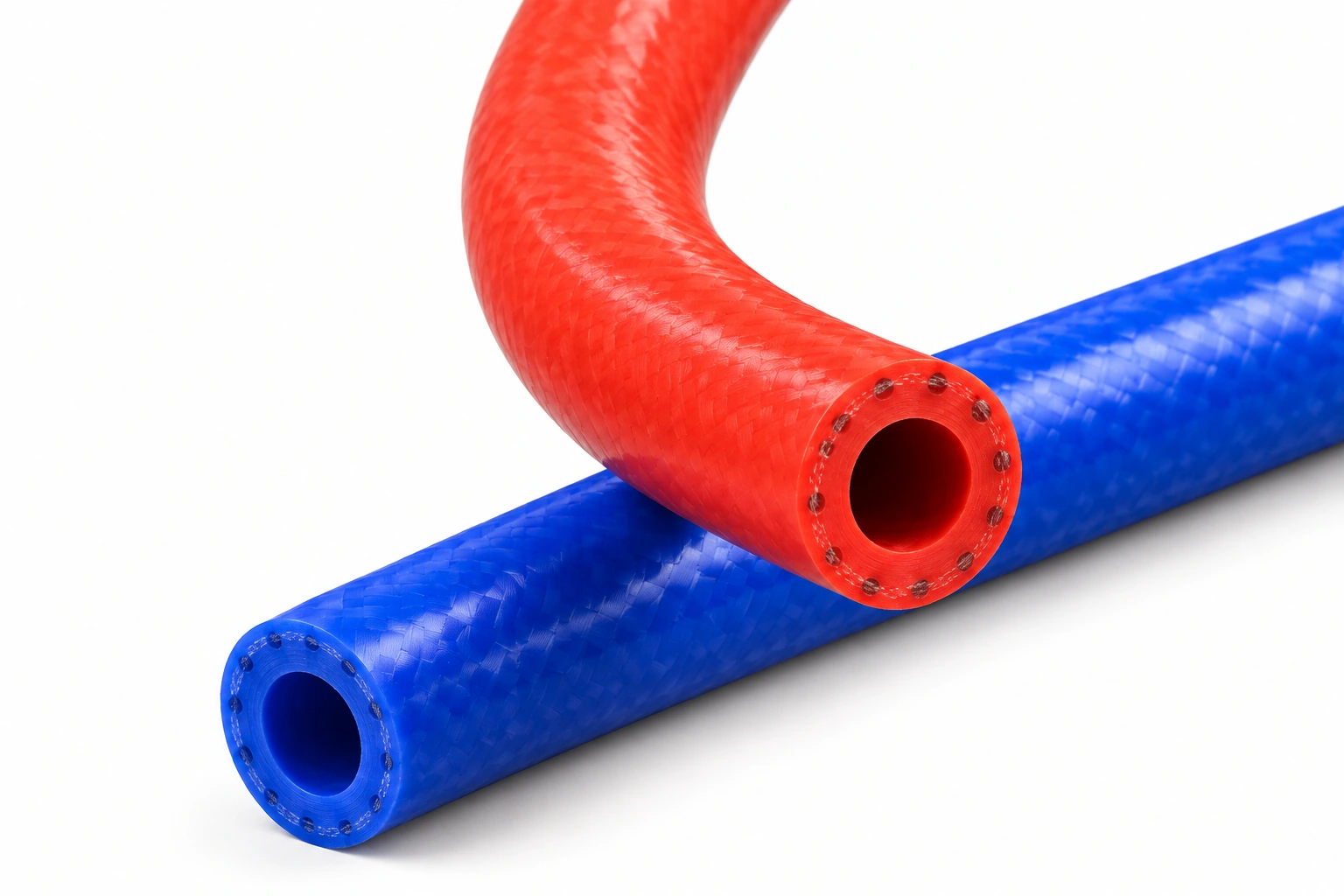
Food grade silicone braided tube
Compare Inside Diameter and Outside Diameter in mm, together with the listed Thickness and Colour. The cross-section drawing identifies the bore and outside diameter; confirm the selected tube material and service requirements.
Need a different size? Share your drawing, mating dimensions and intended use to discuss a suitable part.
Discuss Your RequirementsProduct specifications
- Product form
- Hollow elastomer tubing for a fitted line or sleeve
- Material
- Silicone. Specify the compound grade for the selected service.
- Application focus
- Food-processing equipment, laboratory connections and brewing equipment. Size the part against the selected assembly.
- Dimensions to confirm
- Inside diameter, outside diameter, wall thickness and cut length. Match these to food-processing equipment and laboratory connections.
- Food-contact qualification
- Identify the food, contact time and cleaning cycle; obtain documentation for the selected finished compound and intended use.
- Thermal duty
- Define continuous exposure, short peaks and cycle time; establish the usable limit for the selected compound and assembly.
- Contact conditions
- Food ingredients and other gases: define concentration, temperature and contact time, then check compatibility with the chosen compound.
- Line layout
- Check bend radius, unsupported spans and clearance at both connections.
Need a quote or a custom part?
Send your requirements, drawings or samples to discuss standard and custom silicone rubber parts.
Email us[email protected]