
Food grade rubber tubing
Food grade rubber tubing is in most cases made of silicone. There are some other food safe, FDA approved options and this includes tubing made of polyurethane, polyethylene and PVC, although it must first be checked whether the material is really safe for close contact with food or not. The same is the case with silicone. Not every silicone is food grade, because the silicone that contains any chemical fillers or byproducts, as well as anything that could potentially be toxic, is not food grade.
Food grade silicone has numerous benefits and is therefore so popular in the food industry. Every type of food industry, as well as the juices, alcoholic beverages and other beverages industries could not function without food grade rubber tubing. Of course, the first benefit of food grade silicone is that it will not impair the taste, safety or chemical composition of any food. In addition to the obvious advantage, resistance to extreme temperatures must be mentioned. It is very resistant to any damage caused by extremely high temperatures, which is important for the food industry because most food must be heat-treated. Not only is it resistant to damage from very high temperatures, but the chemical stability is excellent, so even that will not change after prolonged exposure to high temperatures and will always remain a food grade.
Food grade rubber tubing is eco-friendly and is also very easy to use as it is lightweight. It is odorless so as not to affect the food in that way. The food industry requires numerous different sizes to food grade rubber tubing and that is why we make whatever size the client requests. Choose a unique diameter as well as wall thickness for your needs. We offer a large number of sizes, so it is very possible that you will find a suitable one among our sizes, but even if you do not find it, it is not a problem, because we will do what you need.
Rubber Hose Size Catalog
Compare tube bore, outside diameter and available wall thickness. Confirm material compatibility and operating requirements for the selected hose.
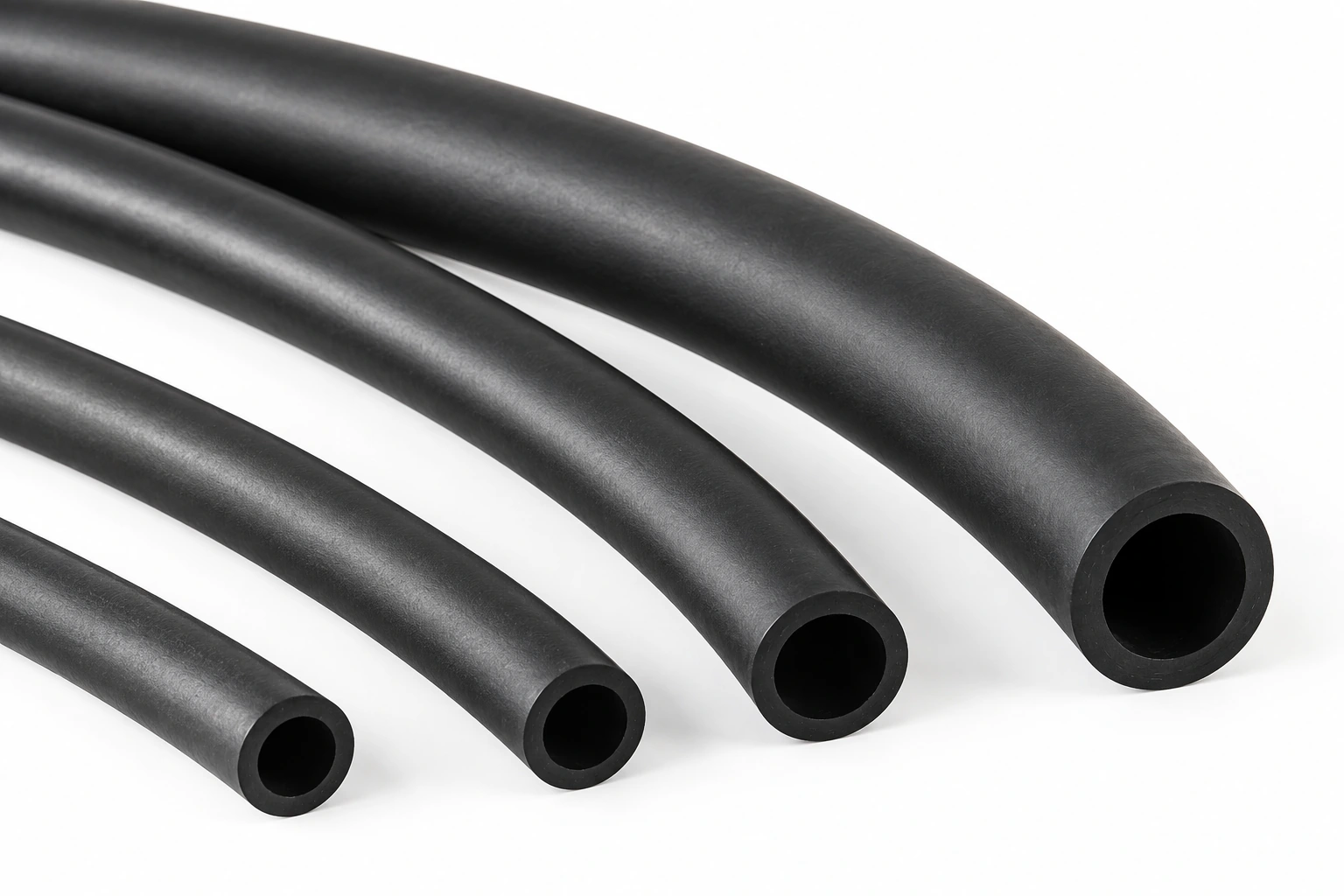
Rubber Hose
Compare Inside Diameter and Outside Diameter in mm. The cross-section drawing identifies the bore and outside diameter; confirm the selected tube material and service requirements.

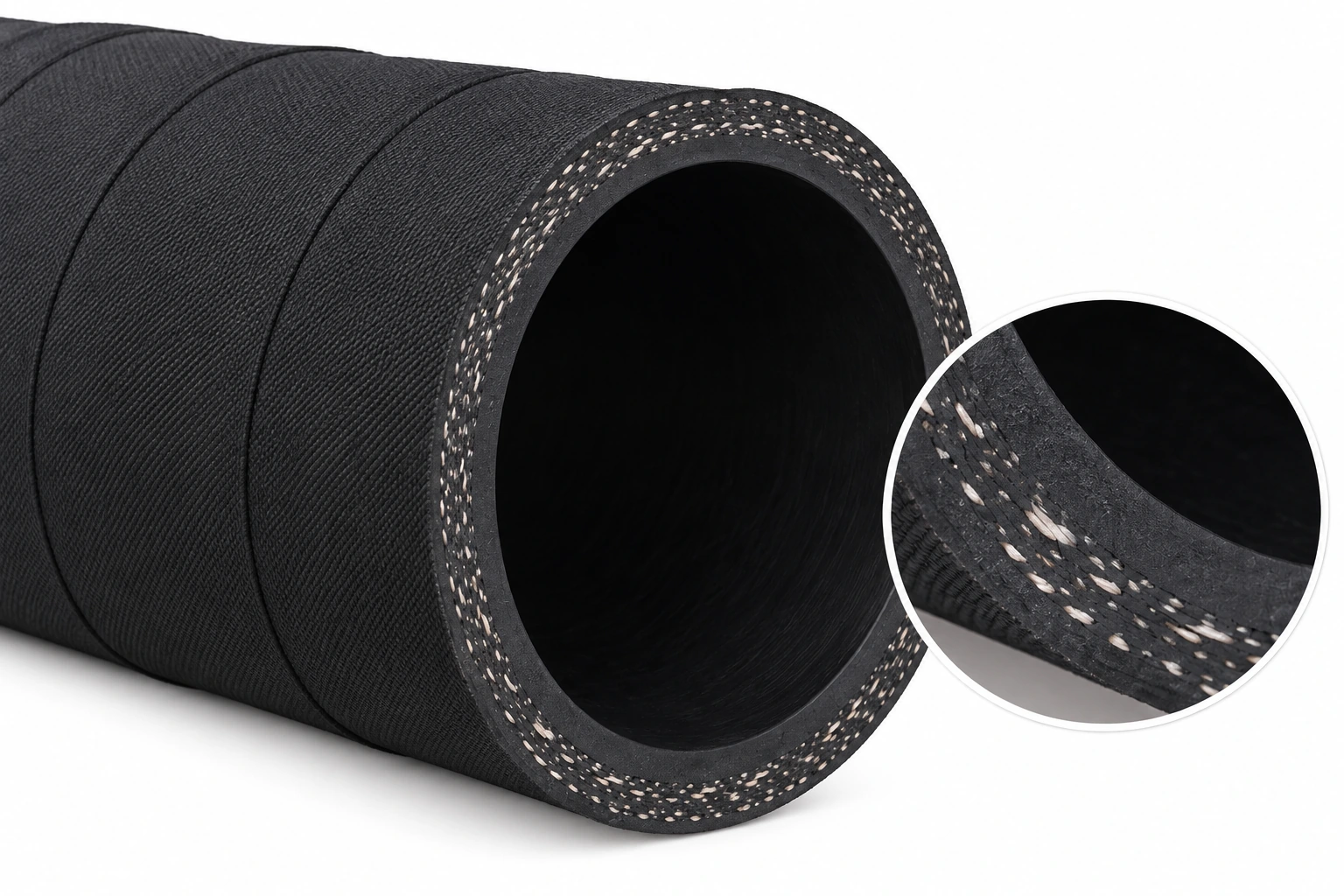
Fluororubber Hose
Compare Inside Diameter and Outside Diameter in mm. The cross-section drawing identifies the bore and outside diameter; confirm the selected tube material and service requirements.
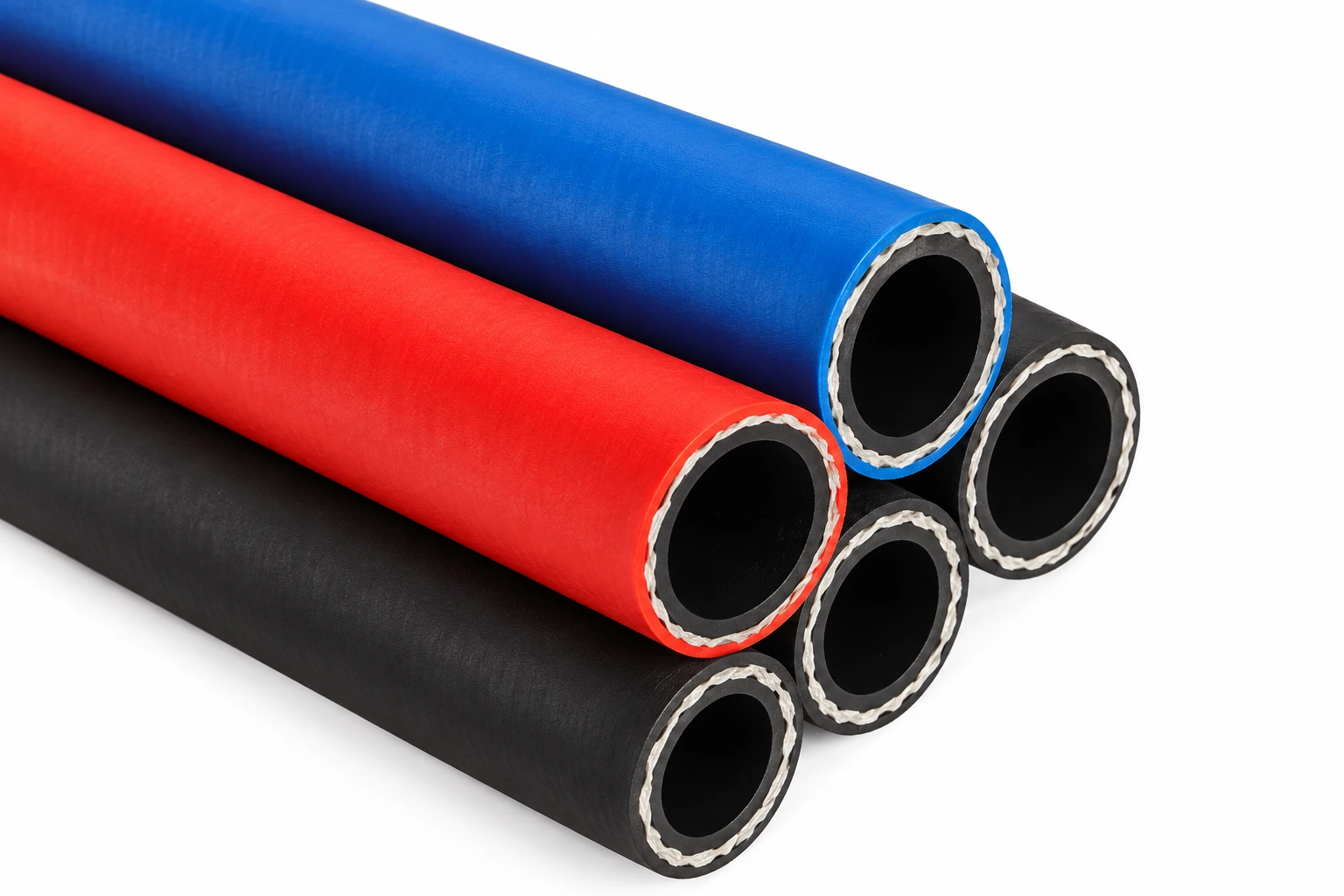
Colourful rubber high pressure hose
Compare Inside Diameter and Outside Diameter in mm, together with the listed Thickness and Colour. The cross-section drawing identifies the bore and outside diameter; confirm the selected tube material and service requirements.
Need a different size? Share your drawing, mating dimensions and intended use to discuss a suitable part.
Discuss Your RequirementsProduct specifications
- Product form
- Hollow elastomer tubing for a fitted line or sleeve
- Material options discussed
- Silicone and PVC. Choose one formulation for the actual contact and loading conditions.
- Application focus
- Food-processing equipment. Size the part against the selected assembly.
- Dimensions to confirm
- Inside diameter, outside diameter, wall thickness and cut length. Match these to food-processing equipment.
- Food-contact qualification
- Identify the food, contact time and cleaning cycle; obtain documentation for the selected finished compound and intended use.
- Contact conditions
- Food ingredients and juices: define concentration, temperature and contact time, then check compatibility with the chosen compound.
- Exposure to evaluate
- Heat and cold cycling. Validate the selected material under the combined conditions.
- Line layout
- Check bend radius, unsupported spans and clearance at both connections.
Need a quote or a custom part?
Send your requirements, drawings or samples to discuss standard and custom silicone rubber parts.
Email us[email protected]