
Hardness scale silicone tubing
Not every silicone tubing is the same, although most of them are quite similar when we think of the main properties like temperature resistance and chemical stability and non-reactivity. Almost every silicone tube can withstand temperatures as high as 270 degrees Celsius, as well as freezing negative 70 degrees Celsius. Additionally, almost every silicone tube is non-toxic, non-reactive, and can hold its ground against some of the most abrasive chemicals, like acids, at all times. Silicone tubing will also protect whatever it is that is running through it, as long as the silicone tubing itself is not damaged or compromised. To make sure you get the right tubing for the application, you should consider a hardness scale silicone tubing is rated against.
The hardness of the silicone represents how easily or how heavily the silicone deforms under physical pressure or compression. A hardness scale silicone tubing is graded upon is measured using the Shore durometer test. Durometer is another term of hardness. When it comes to testing the hardness of the silicone tubing, the test is fairly simple. It entails a small cone that is pressed against the surface of the silicone. Then, test operators measure how deep the cone has sunk into the silicone, and that is the measure of the silicone hardness. Naturally, the cone sinks into the softer silicone a lot easier.
Generally speaking, silicone is tested with Shore Durometer A test, assigning the “Shore A” value between 0 to 100 to a tube. Most of the time, silicone tubing gets graded somewhere between 25 and 80 Shore A. To put this into perspective, Shore 25 would be something as soft as a rubber band, and Shore 80 would be similar to the rubber sole of your shoe. Granted, none of those are made of silicone, but it is a good example of how soft or hard silicone tubes can be.
Silicone Tubing Size Catalog
Compare inside diameter, outside diameter and listed wall thickness across silicone tube ranges. Confirm the material grade and application requirements for the selected part.
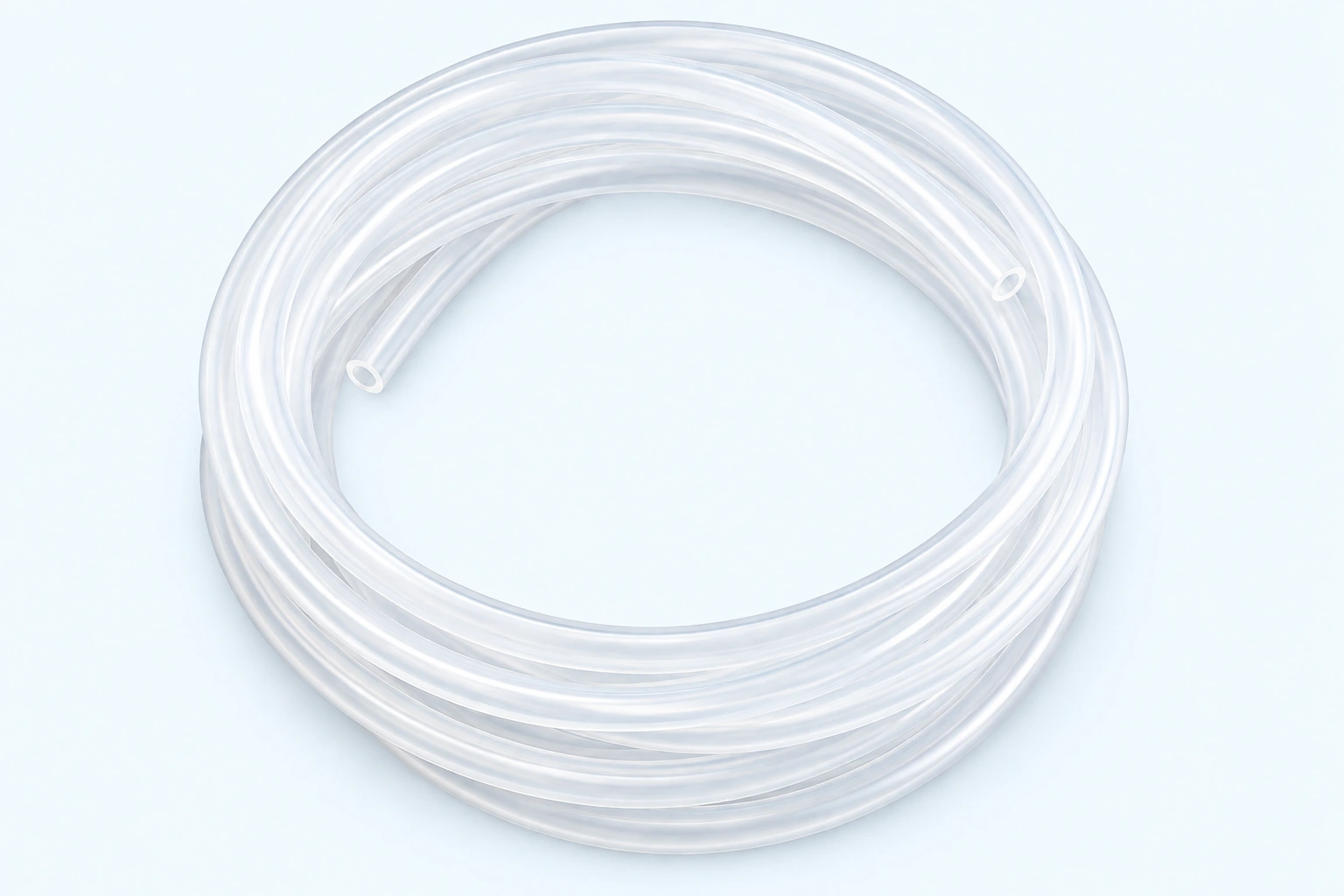
Food grade silicone tube
Compare Inside Diameter and Outside Diameter in mm, together with the listed Thickness and Colour. The cross-section drawing identifies the bore and outside diameter; confirm the selected tube material and service requirements.

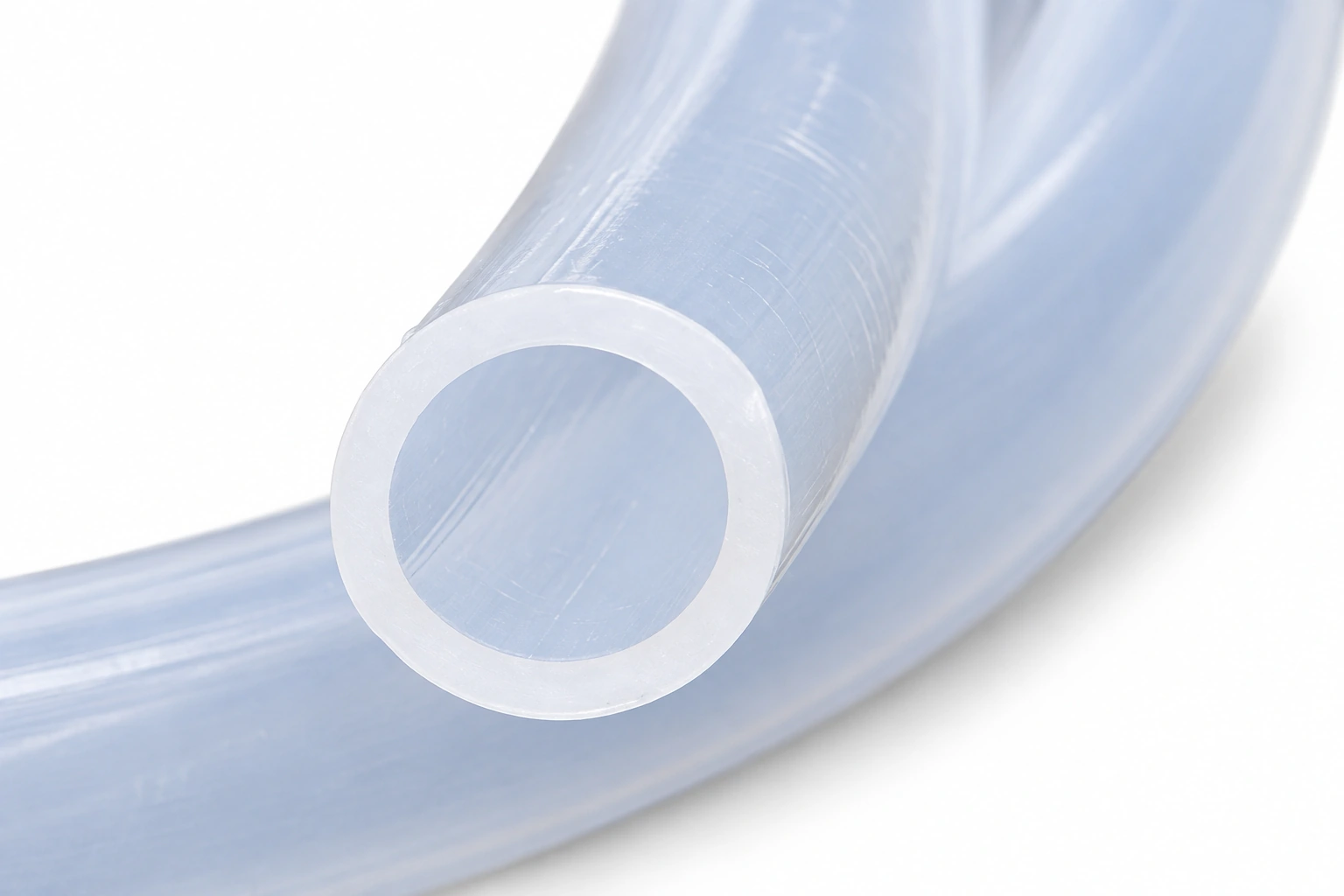
Black silicone tubing
Compare Inside Diameter and Outside Diameter in mm, together with the listed Thickness and Colour. The cross-section drawing identifies the bore and outside diameter; confirm the selected tube material and service requirements.
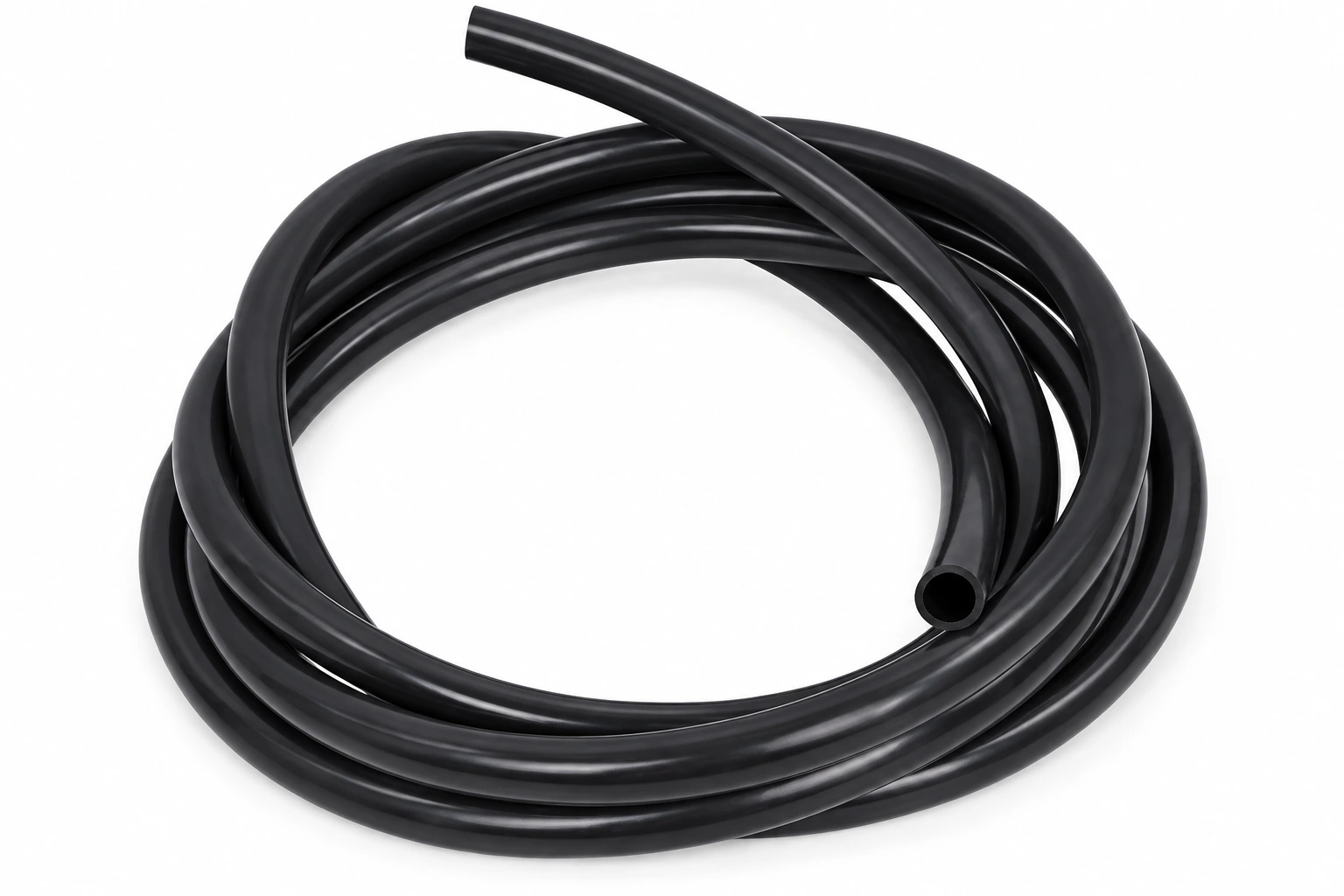
Industrial silicone tube
Compare Inside Diameter and Outside Diameter in mm, together with the listed Thickness and Colour. The cross-section drawing identifies the bore and outside diameter; confirm the selected tube material and service requirements.
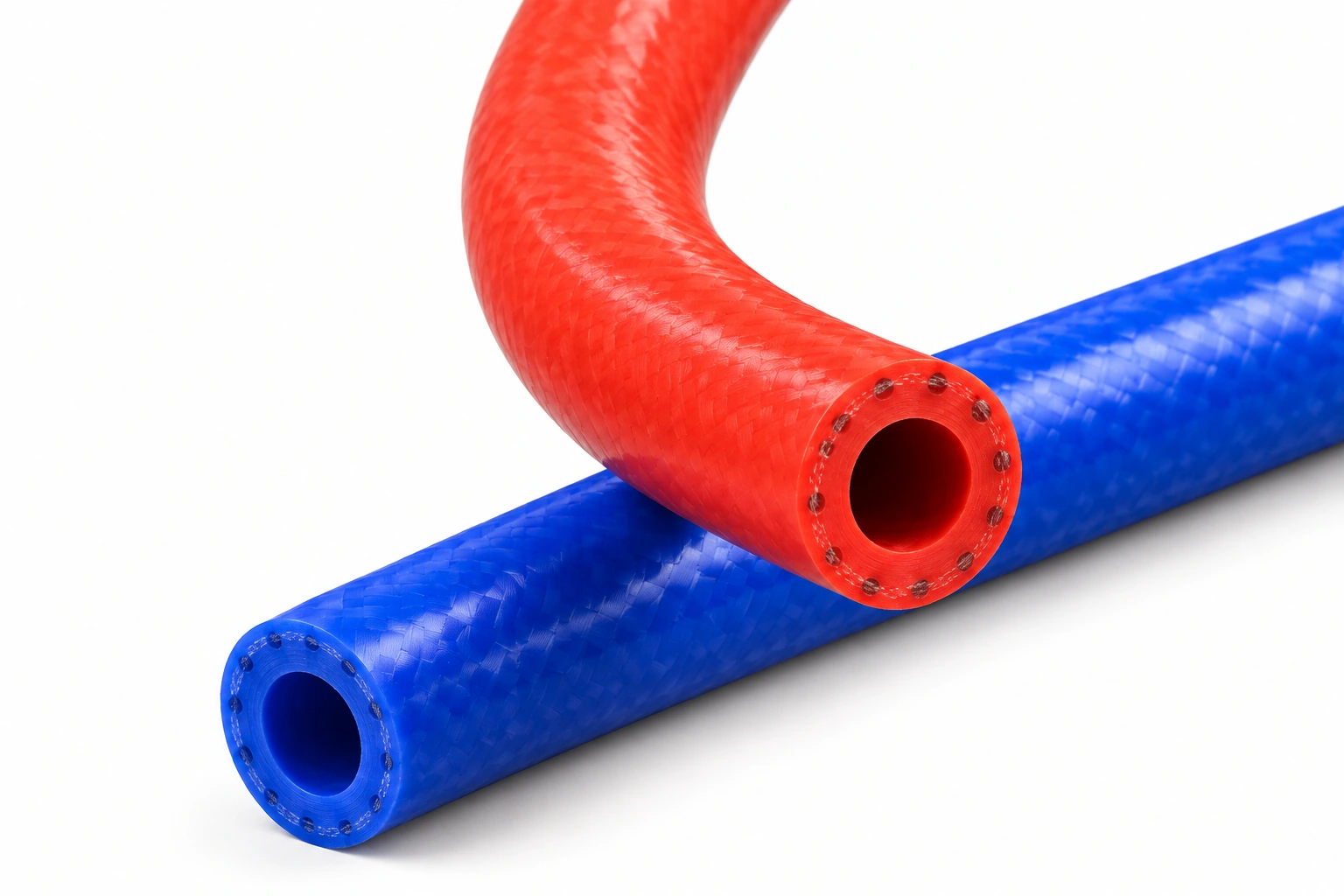
Colourful silicone braided tube
Compare Inside Diameter and Outside Diameter in mm, together with the listed Thickness and Colour. The cross-section drawing identifies the bore and outside diameter; confirm the selected tube material and service requirements.
Food grade silicone braided tube
Compare Inside Diameter and Outside Diameter in mm, together with the listed Thickness and Colour. The cross-section drawing identifies the bore and outside diameter; confirm the selected tube material and service requirements.
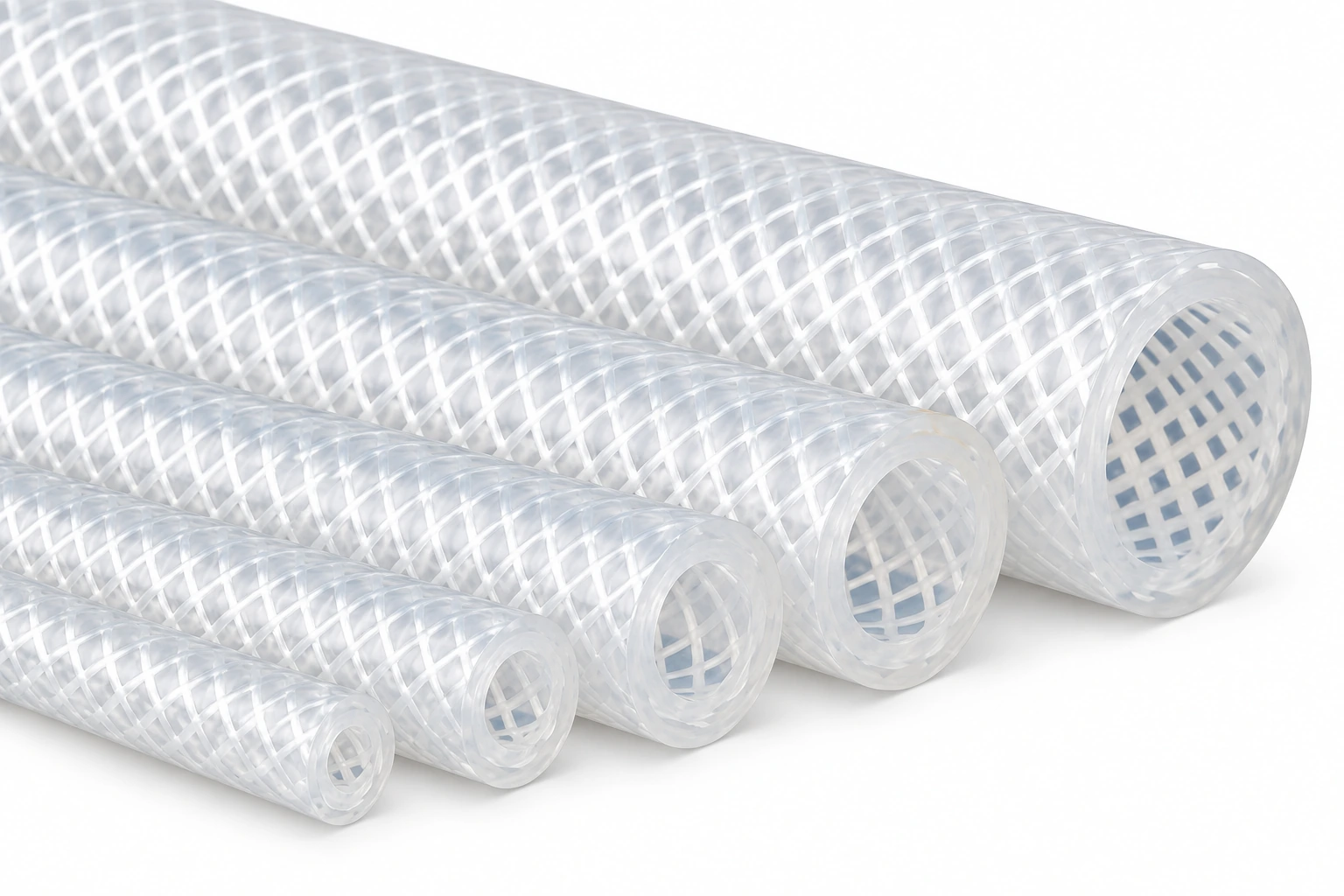
Need a different size? Share your drawing, mating dimensions and intended use to discuss a suitable part.
Discuss Your RequirementsProduct specifications
- Product form
- Hollow elastomer tubing for a fitted line or sleeve
- Material
- Silicone. Specify the compound grade for the selected service.
- Dimensions to confirm
- Inside diameter, outside diameter, wall thickness and cut length.
- Contact conditions
- Acids: define concentration, temperature and contact time, then check compatibility with the chosen compound.
- Exposure to evaluate
- Rubbing or abrasion. Validate the selected material under the combined conditions.
- Line layout
- Check bend radius, unsupported spans and clearance at both connections.
Need a quote or a custom part?
Send your requirements, drawings or samples to discuss standard and custom silicone rubber parts.
Email us[email protected]