
Industrial rubber tubing
Industrial rubber tubing is one of the things that are useful in pretty much all areas. It doesn’t matter if you work in the food, chemical or automotive industries – you will surely benefit from using these attachments. Their primary industrial use is for the transfer of liquids and gases, especially in situations where it is necessary to handle fluids of very high or low temperatures. Rubber is one of the few materials that is resistant enough to allow unobstructed fluid flow without damaging it in any way. The benefits of using rubber tubing are so great that people have gone a step further and started to apply them in their homes for various purposes.
If you are looking for industrial rubber tubing that will meet your expectations and allow you to smoothly transfer liquids and gases within the various machines and devices in our offer you can find a large selection. If you want to find the right products for yourself as soon as possible, it is a good idea to contact us, and we will help you figure out what size, diameter, color and overall design industrial rubber tubing would be best fit.
To be clear, fluid transfer is not the only use of rubber tubings in industrial conditions. Due to their practical properties and high resistance to mechanical influences (pressure, friction, bending and other actions of mechanical force), rubbet tubing is often used for coating wires and cables. When wires pass over rough surfaces, the risk of damage and loss of their function increases, not to mention the danger to the safety of employees or members of the household. You want your wires to be fully protected to prevent unwanted consequences, and to that end industrial rubber tubing can be of paramount importance. In addition to mechanical force, these objects are very resistant to other physical factors: sunlight, oxygen, extreme temperatures and many others.
Rubber Hose Size Catalog
Compare tube bore, outside diameter and available wall thickness. Confirm material compatibility and operating requirements for the selected hose.
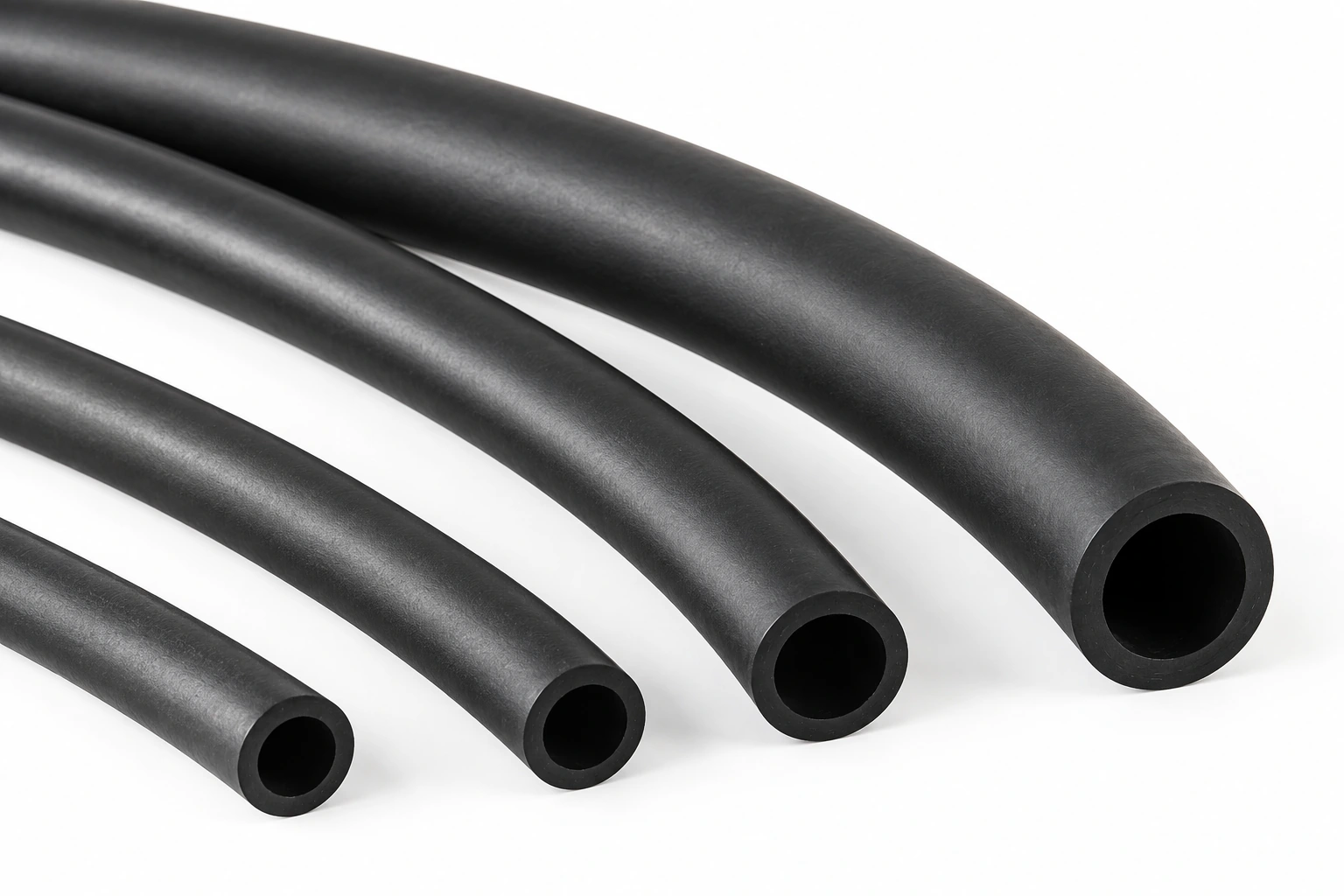
Rubber Hose
Compare Inside Diameter and Outside Diameter in mm. The cross-section drawing identifies the bore and outside diameter; confirm the selected tube material and service requirements.

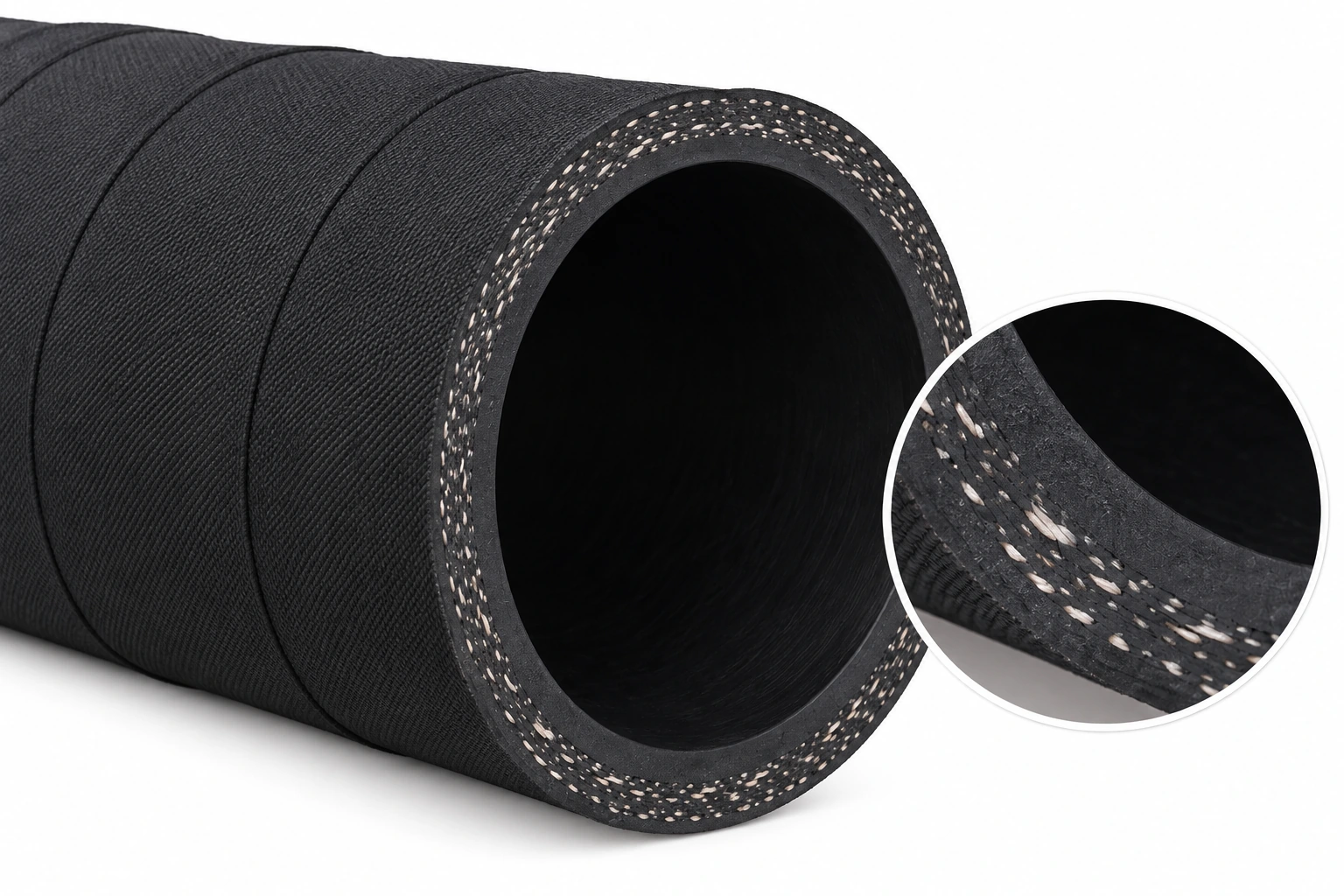
Fluororubber Hose
Compare Inside Diameter and Outside Diameter in mm. The cross-section drawing identifies the bore and outside diameter; confirm the selected tube material and service requirements.
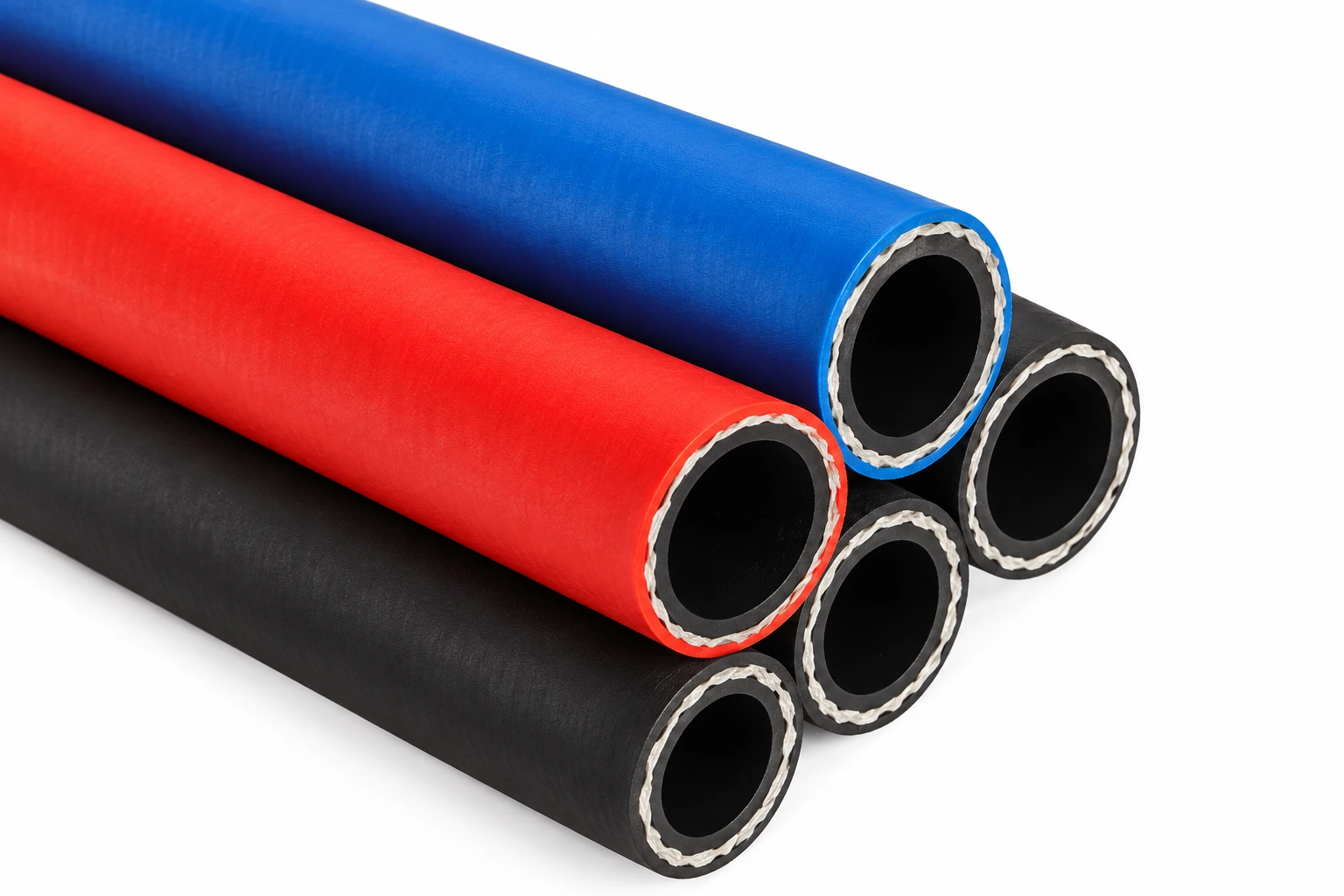
Colourful rubber high pressure hose
Compare Inside Diameter and Outside Diameter in mm, together with the listed Thickness and Colour. The cross-section drawing identifies the bore and outside diameter; confirm the selected tube material and service requirements.
Need a different size? Share your drawing, mating dimensions and intended use to discuss a suitable part.
Discuss Your RequirementsProduct specifications
- Product form
- Hollow elastomer tubing for a fitted line or sleeve
- Application focus
- Industrial fluid lines, food-processing equipment, vehicle hose runs and cable sleeving. Size the part against the selected assembly.
- Dimensions to confirm
- Inside diameter, outside diameter, wall thickness and cut length. Match these to industrial fluid lines and food-processing equipment.
- Contact conditions
- Food ingredients and oxygen: define concentration, temperature and contact time, then check compatibility with the chosen compound.
- Exposure to evaluate
- Heat and cold cycling and sunlight or UV. Validate the selected material under the combined conditions.
- Line layout
- Check bend radius, unsupported spans and clearance at both connections.
Need a quote or a custom part?
Send your requirements, drawings or samples to discuss standard and custom silicone rubber parts.
Email us[email protected]