
Laboratory rubber tubing
In case you work in the chemical industry, you have probably come across rubber tubings that are often used to transport various liquids and gases. The same is the case in laboratory conditions where rubber tubes have the same role as part of different devices and machines. Since fluids with different degrees of reactivity and different temperatures are used in the laboratory, it is necessary to use tubings that have a sufficiently high resistance and ensure the smooth flow of chemical reactions and technological operations. If you are looking for laboratory rubber tubing with specific properties, then it can be challenging for you to figure out where you can find a product that suits you.
So you will be glad to hear that our company has a huge selection of laboratory rubber tubing, so you can certainly find the ones that suit you. We make laboratory rubber tubing of different dimensions, colors, transparency and overall design, and we can also adapt the properties of tubing to your individual needs. Rubber is a material well known for its resistance to both chemical and physical influences, so you won’t have to worry about its chemical reactivity or damage under the influence of UV rays, oxygen, ozone and other physical influences.
Another amazing feature is the resistance to extremely high and extremely low temperatures, which is often one of the important requirements for laboratory rubber tubing because it develops high temperatures when performing chemical reactions. In such circumstances, the use of materials other than rubber is out of the question, as it is pretty much the only one insensitive to such conditions and ensures uninterrupted fluid flow, even when it comes to extremely low or high temperatures. The properties of rubber can be further optimized by the addition of certain additives, which is another advantageous property of laboratory rubber tubing.
Rubber Hose Size Catalog
Compare tube bore, outside diameter and available wall thickness. Confirm material compatibility and operating requirements for the selected hose.
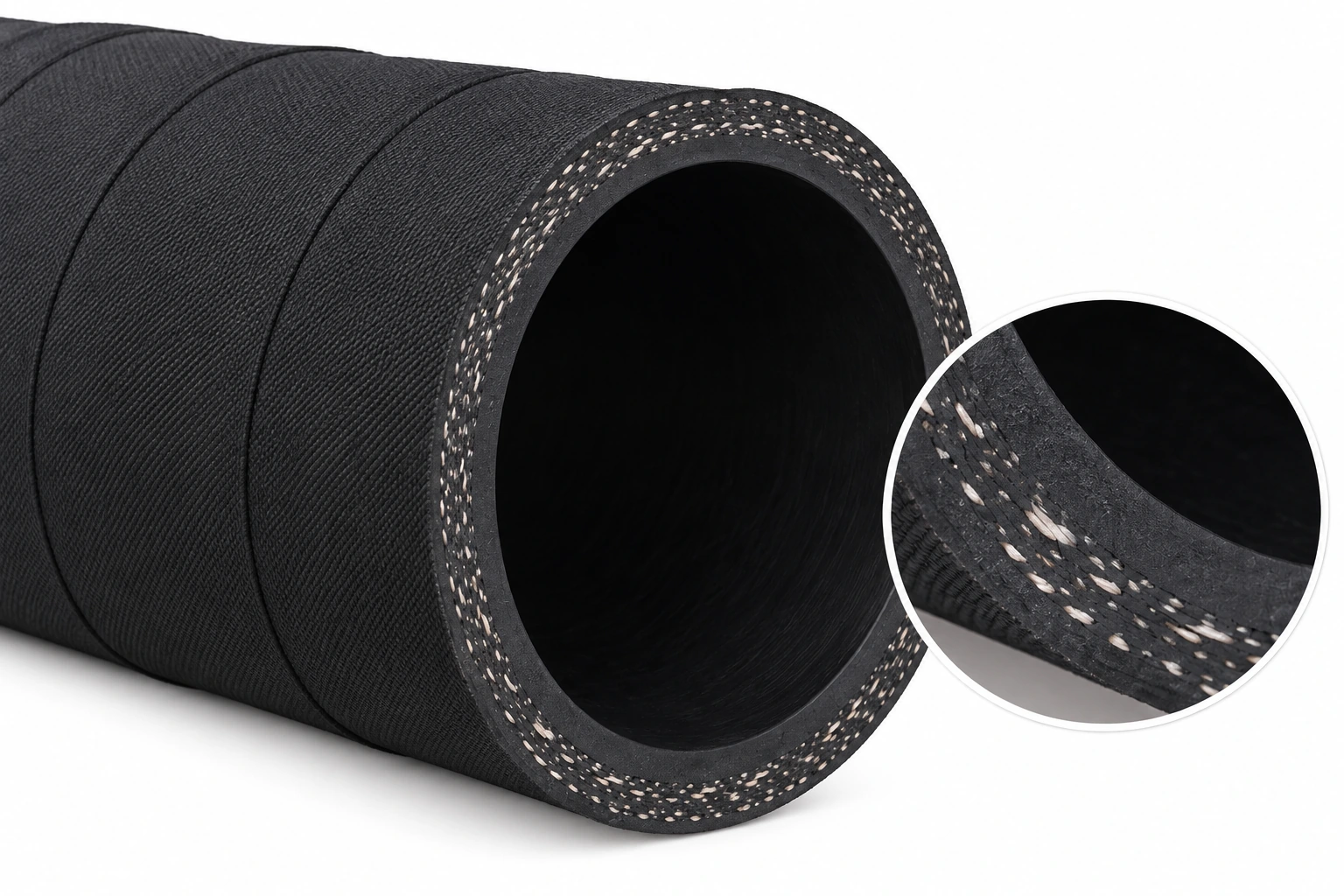
Rubber Hose
Compare Inside Diameter and Outside Diameter in mm. The cross-section drawing identifies the bore and outside diameter; confirm the selected tube material and service requirements.

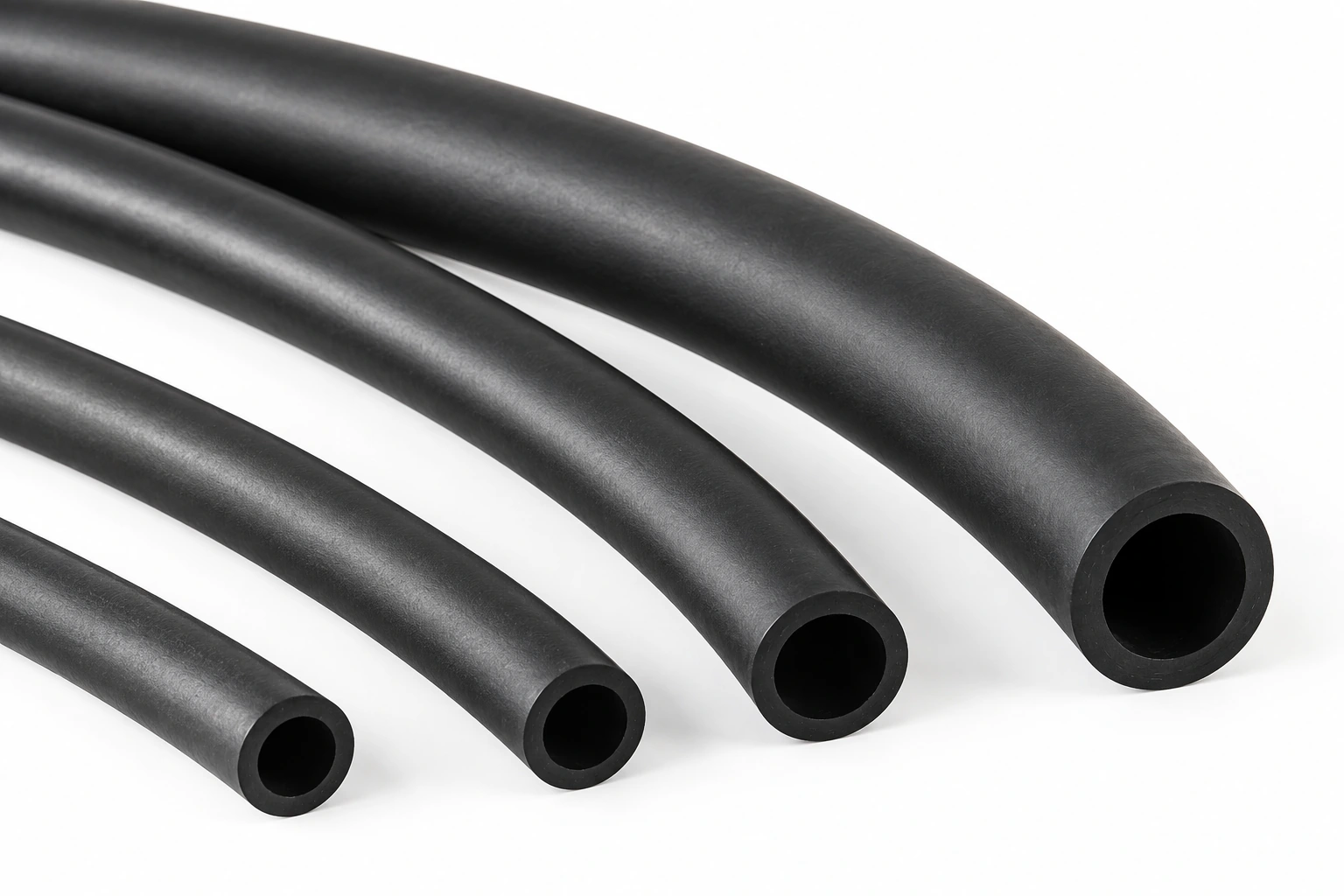
Fluororubber Hose
Compare Inside Diameter and Outside Diameter in mm. The cross-section drawing identifies the bore and outside diameter; confirm the selected tube material and service requirements.
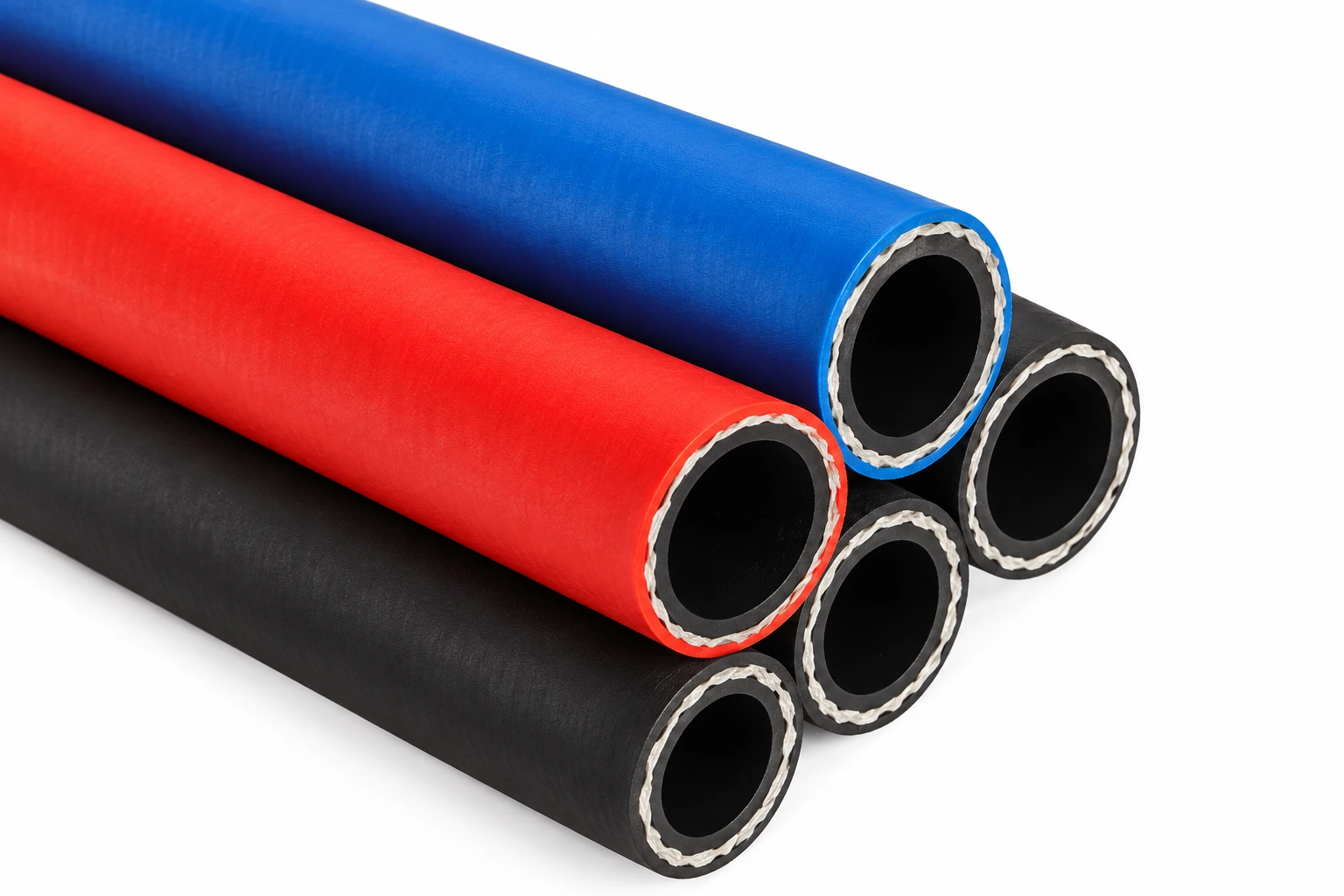
Colourful rubber high pressure hose
Compare Inside Diameter and Outside Diameter in mm, together with the listed Thickness and Colour. The cross-section drawing identifies the bore and outside diameter; confirm the selected tube material and service requirements.
Need a different size? Share your drawing, mating dimensions and intended use to discuss a suitable part.
Discuss Your RequirementsProduct specifications
- Product form
- Hollow elastomer tubing for a fitted line or sleeve
- Application focus
- Laboratory connections. Size the part against the selected assembly.
- Dimensions to confirm
- Inside diameter, outside diameter, wall thickness and cut length. Match these to laboratory connections.
- Contact conditions
- Oxygen: define concentration, temperature and contact time, then check compatibility with the chosen compound.
- Exposure to evaluate
- Sunlight or UV and ozone. Validate the selected material under the combined conditions.
- Line layout
- Check bend radius, unsupported spans and clearance at both connections.
Need a quote or a custom part?
Send your requirements, drawings or samples to discuss standard and custom silicone rubber parts.
Email us[email protected]