
Push-In Rubber Bumpers
We already know that rubber is a material that has a wide application. Today, rubber is used in many industries in which small parts made of this material can be of special importance. Many of these seemingly small and insignificant parts are in fact indispensable parts of some larger system. We can take the car industry as a pretty good example. Today, the application of parts such as push-in rubber bumpers is extremely wide. Today, we use these bumpers as an integral part of the automotive industry – but also in other areas in which these small parts have their significant role.
Push-in rubber bumpers have a simple but very important purpose. Namely, they are simply the best choice when you need sealing and protection of open places, that is, holes. They look like rubber plugs that need to be fitted in order to seal a certain opening. We can see them almost every day when we open the hood of our car. You will see them on the oil or water hoses. In fact, their unique purpose is to prevent the flow of water, oil, air, etc. However, what is very important are the dimensions of such rubber bumpers.
Today, push-in rubber bumpers are made in different dimensions, and, according to the purpose for which they will be used. These dimensions and the design of such bumpers must follow certain standards. This is a guarantee that the push-in rubber bumpers will fit well into the opening for which they are intended. In addition to standard sizes, these rubber bumpers are now also available in custom sizes.
When it comes to the shapes in which they come, we can find them in several styles. However, the most common are those with a round head or those with spikes. Their application is most visible in the car and truck industry – but they are also used in various types of appliances, and even as door guards, etc. Their simple application makes them very popular, sought after on the market, and widespread in almost all industries.
Rubber Feet & Bumper Size Catalog
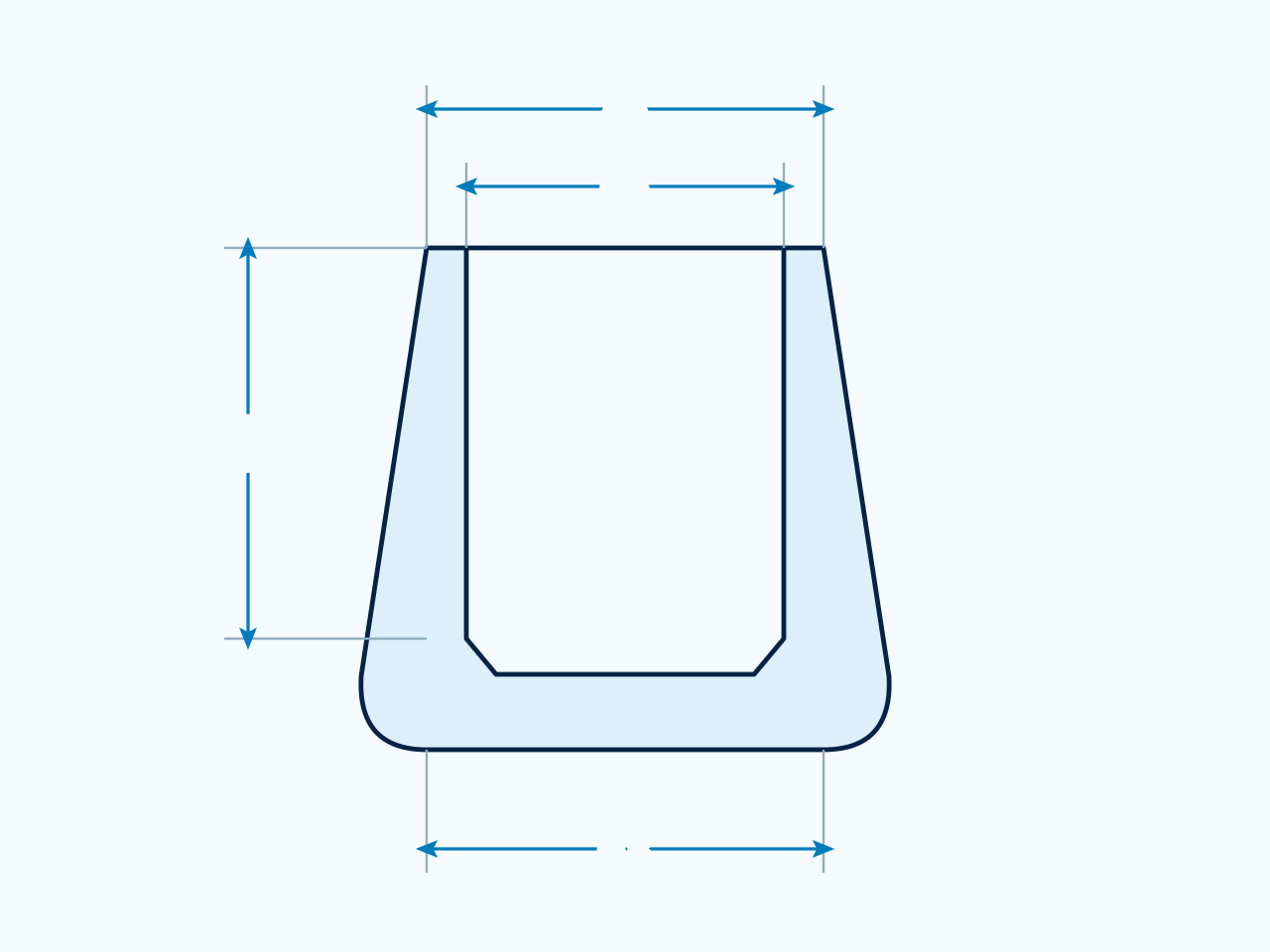
Compare mounting style, overall size and recess dimensions. Each profile uses its own drawing and column meanings.
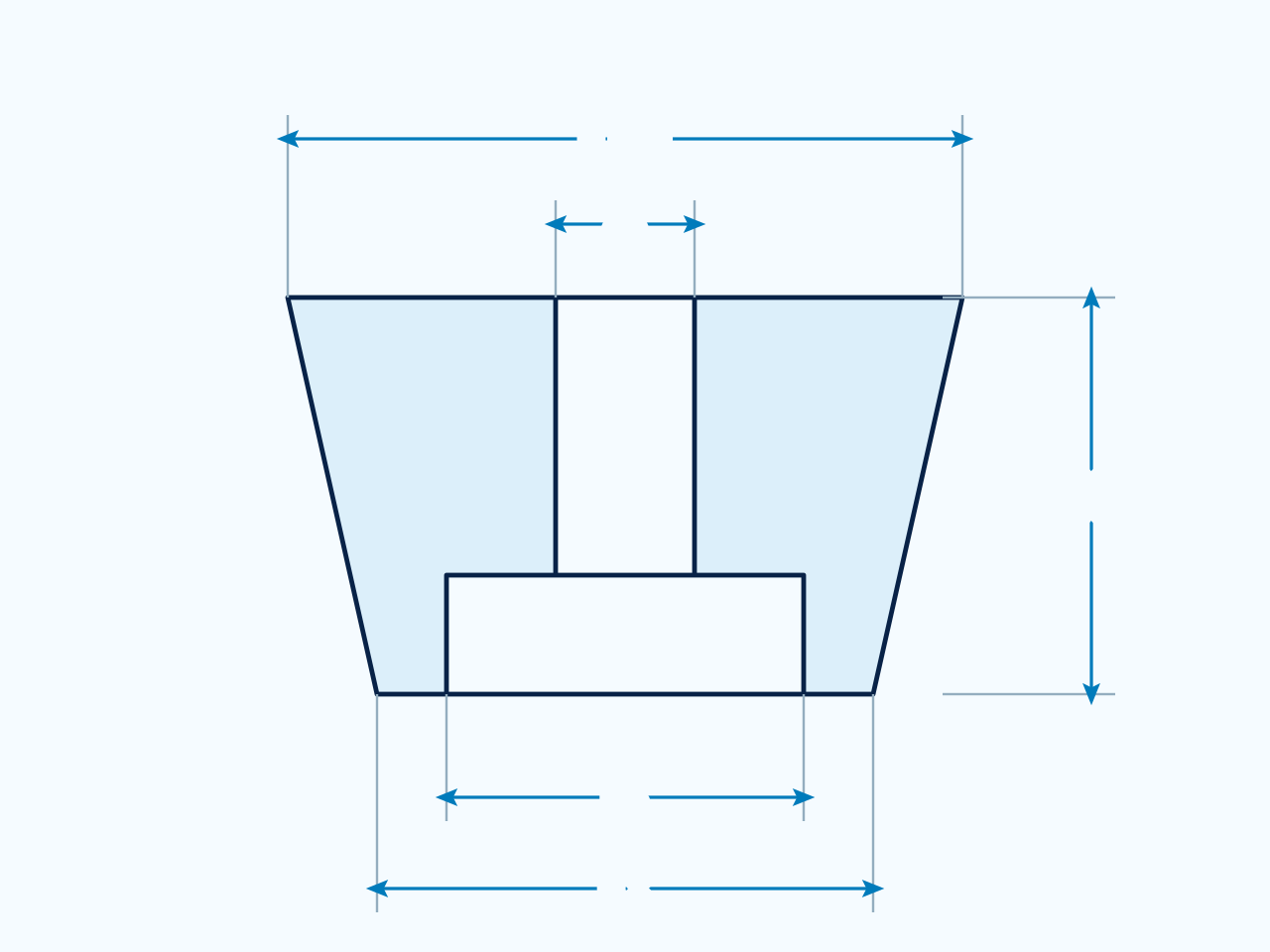
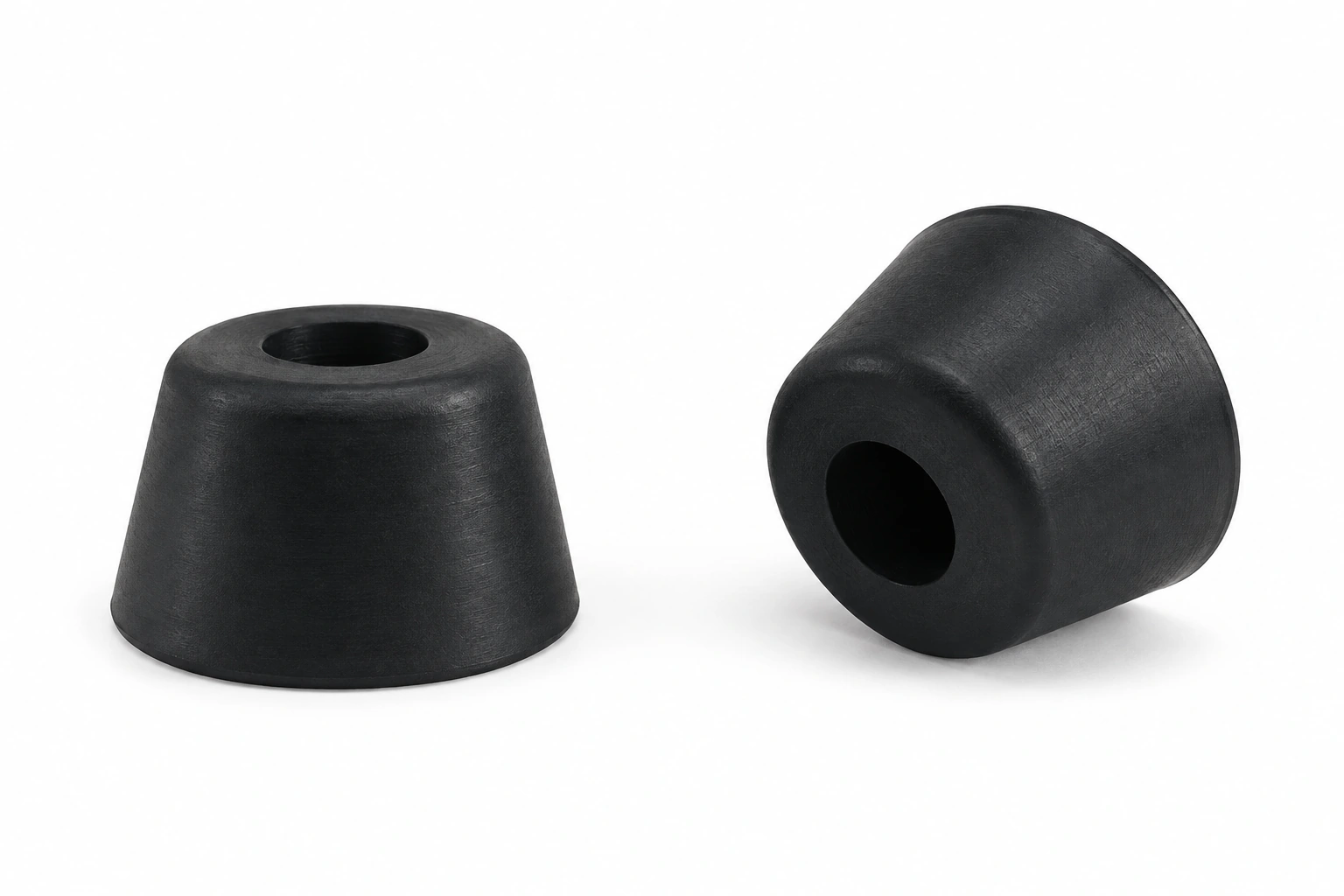
Recess Rubber Bumper
Compare OD, H, A, B and C in mm. C indicates the outer base dimension on this bumper profile, not the recess depth.
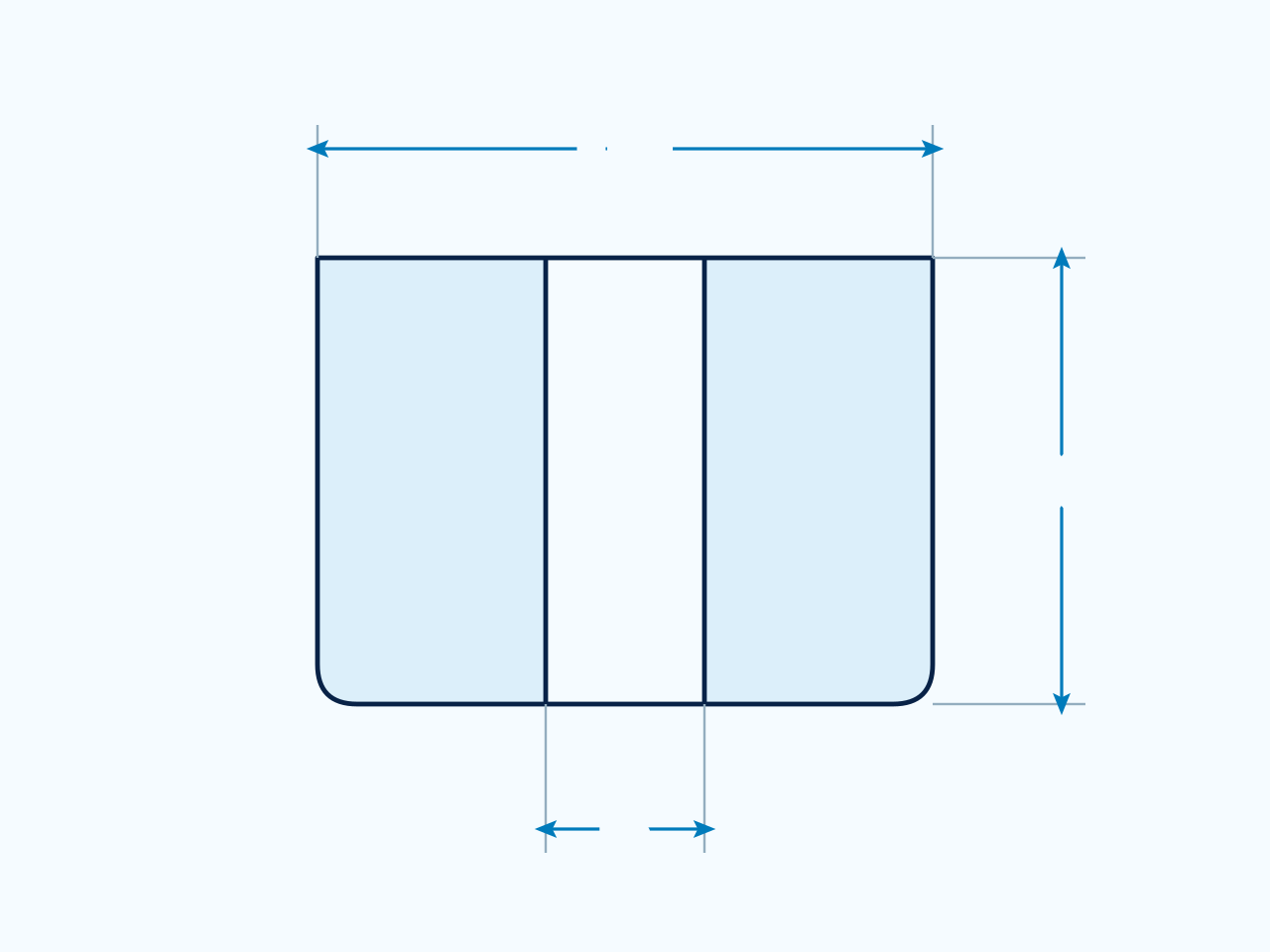
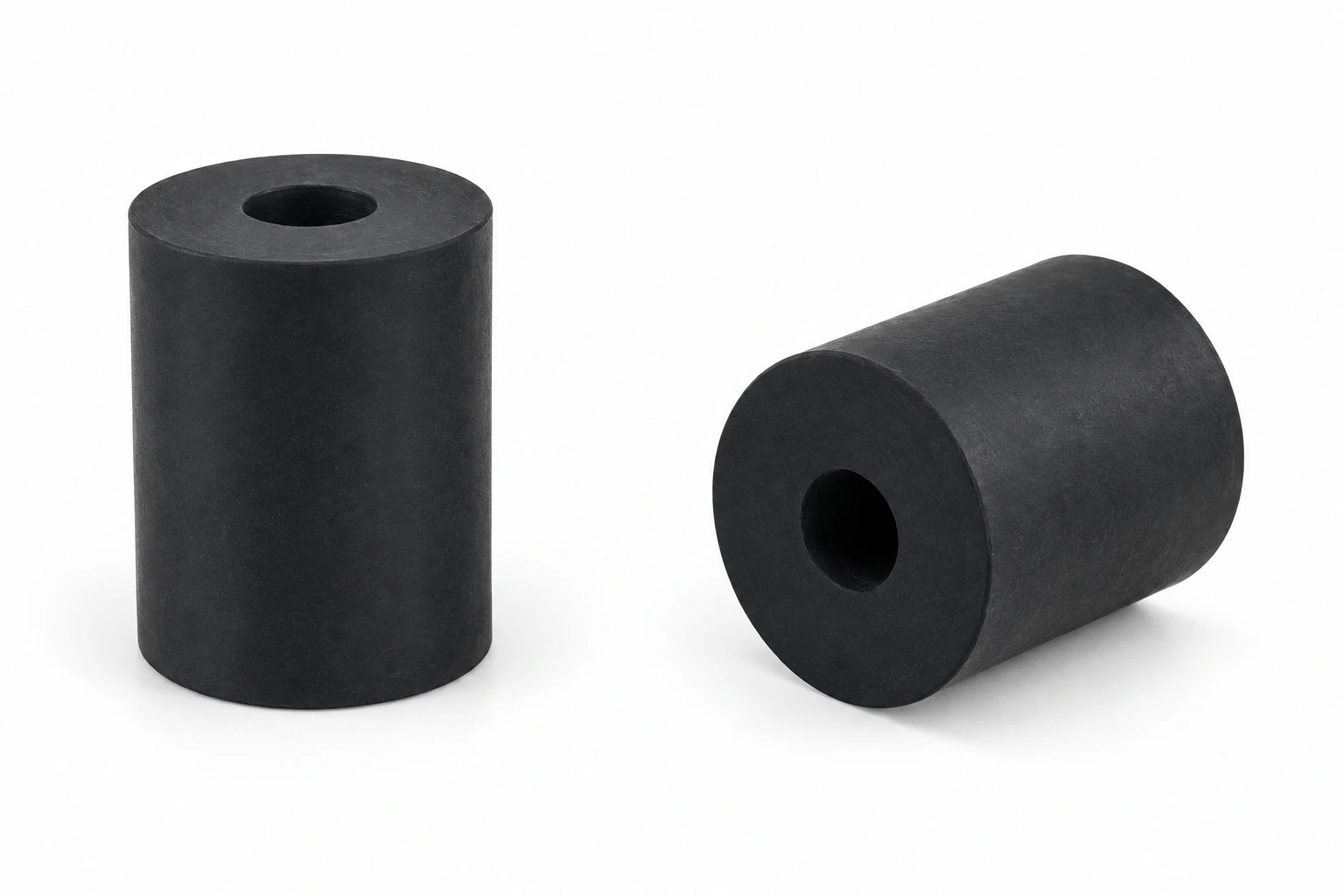
Cylindrical Rubber Feet
Compare OD, H and B in mm using the cylindrical-foot drawing. Material and colour remain listed separately.
Recess Rubber Feet
Compare OD, H, A, B and C in mm. C indicates the recess depth on this feet profile.
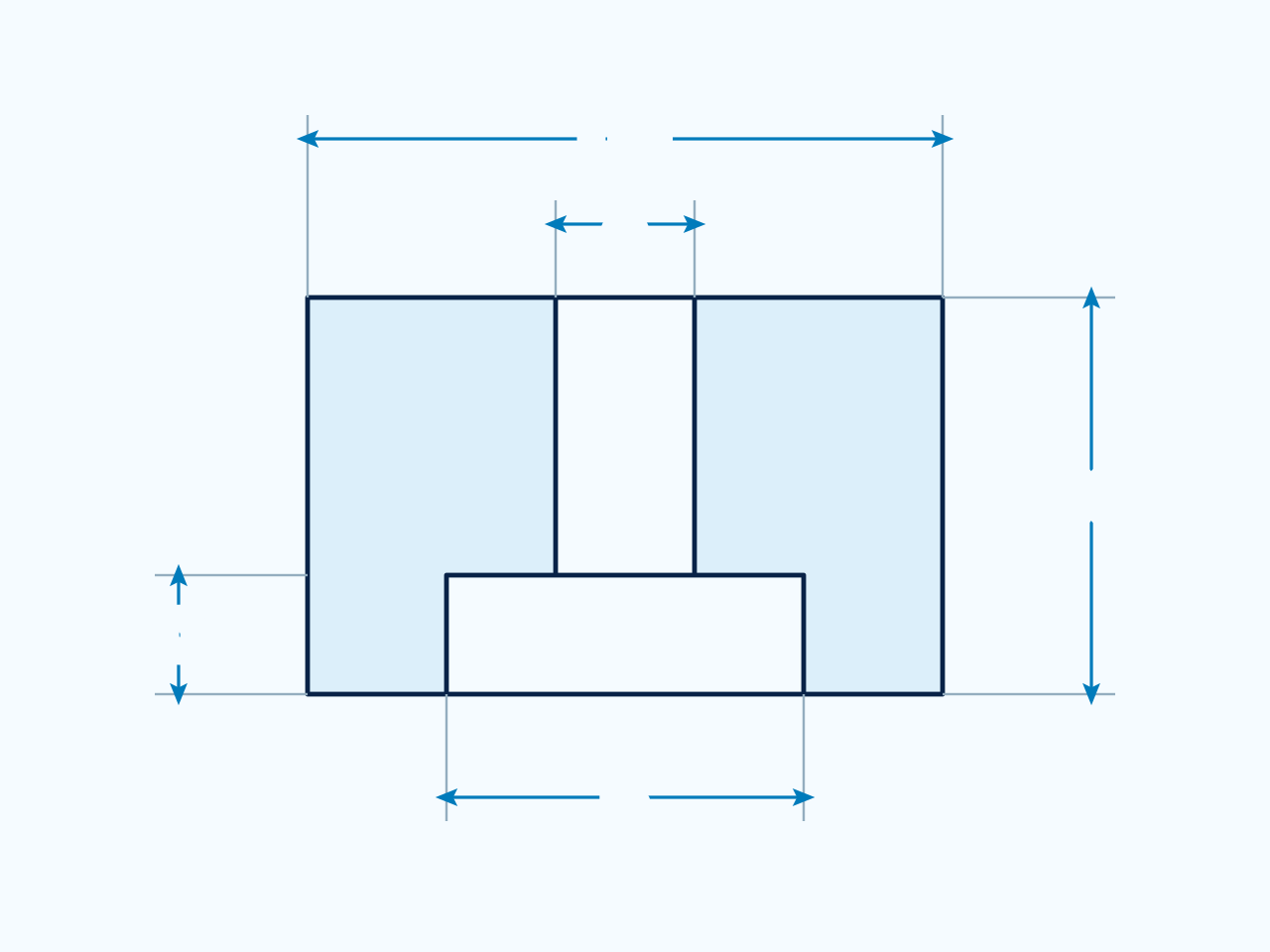
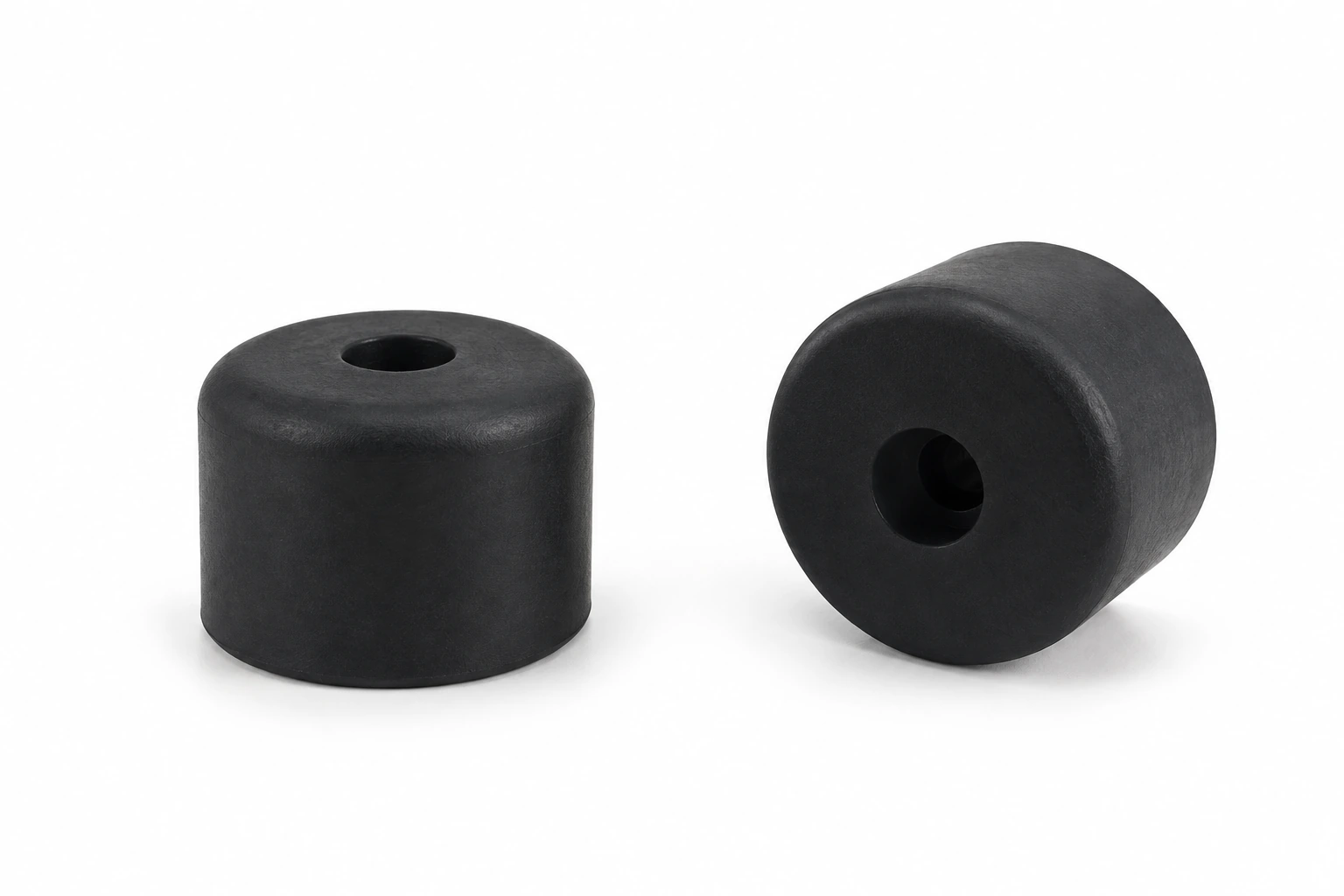
Hemispherical Rubber Bumper
Compare OD, H, A, B and C in mm using the hemispherical-bumper drawing.
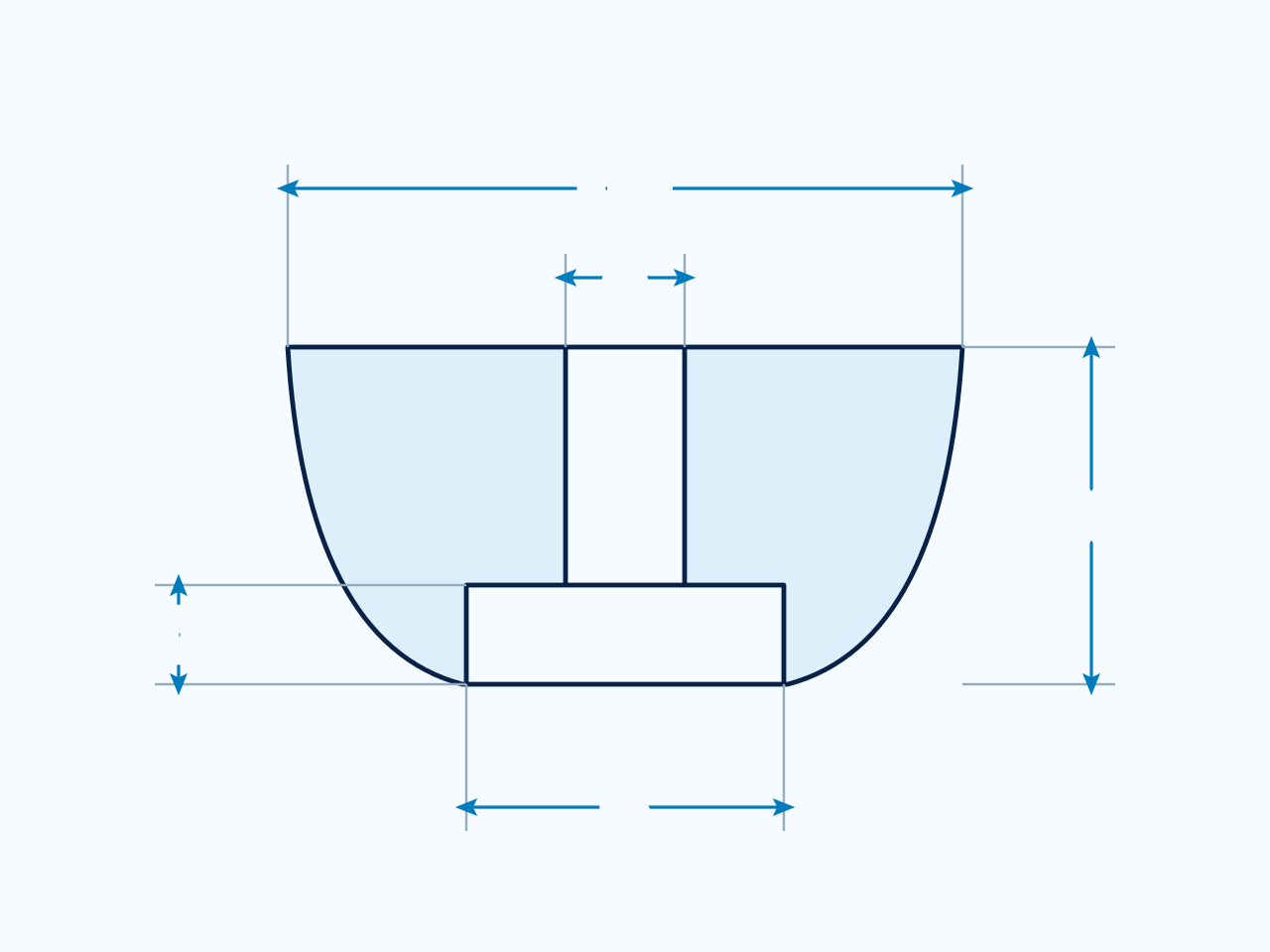
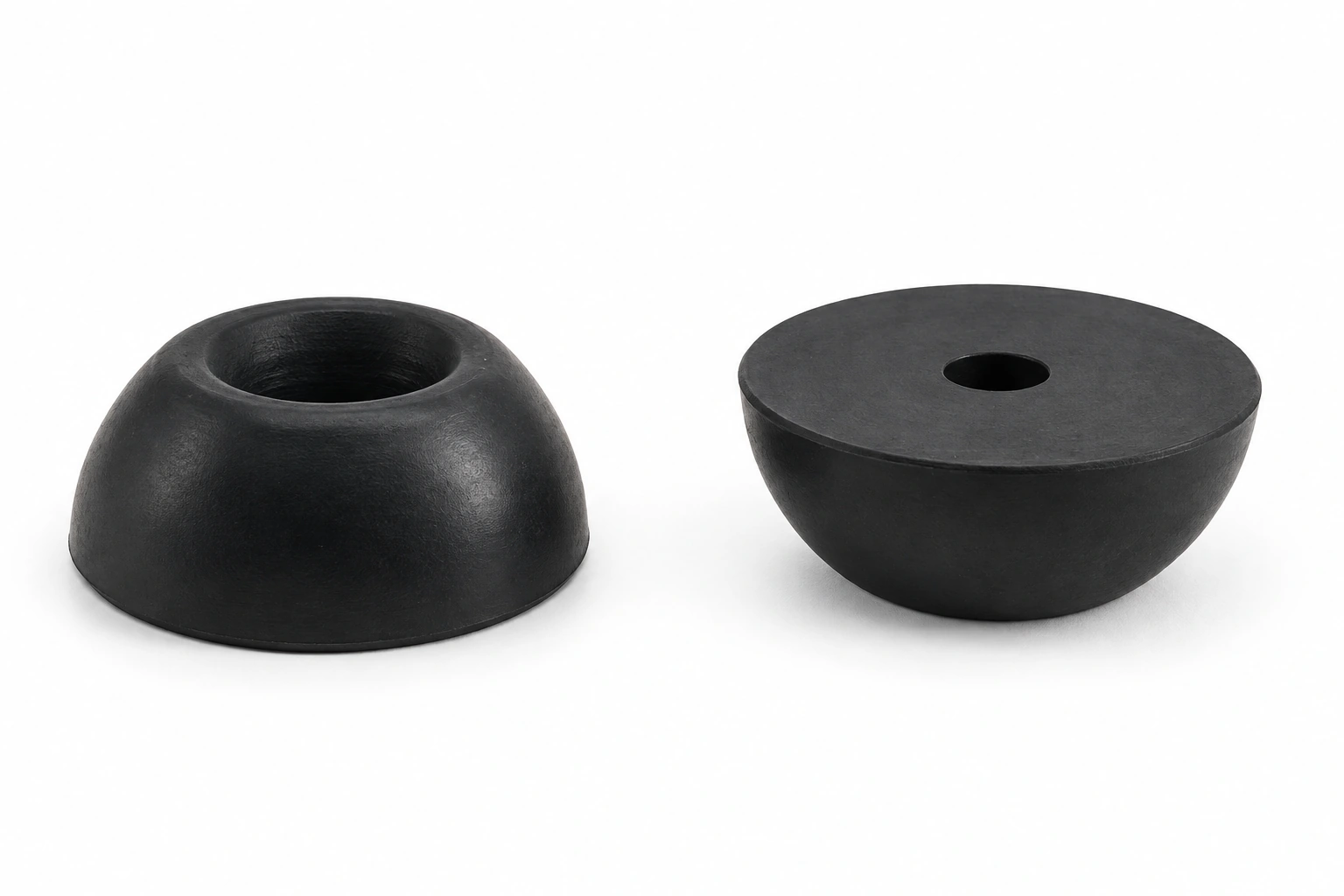
Rubber Tips
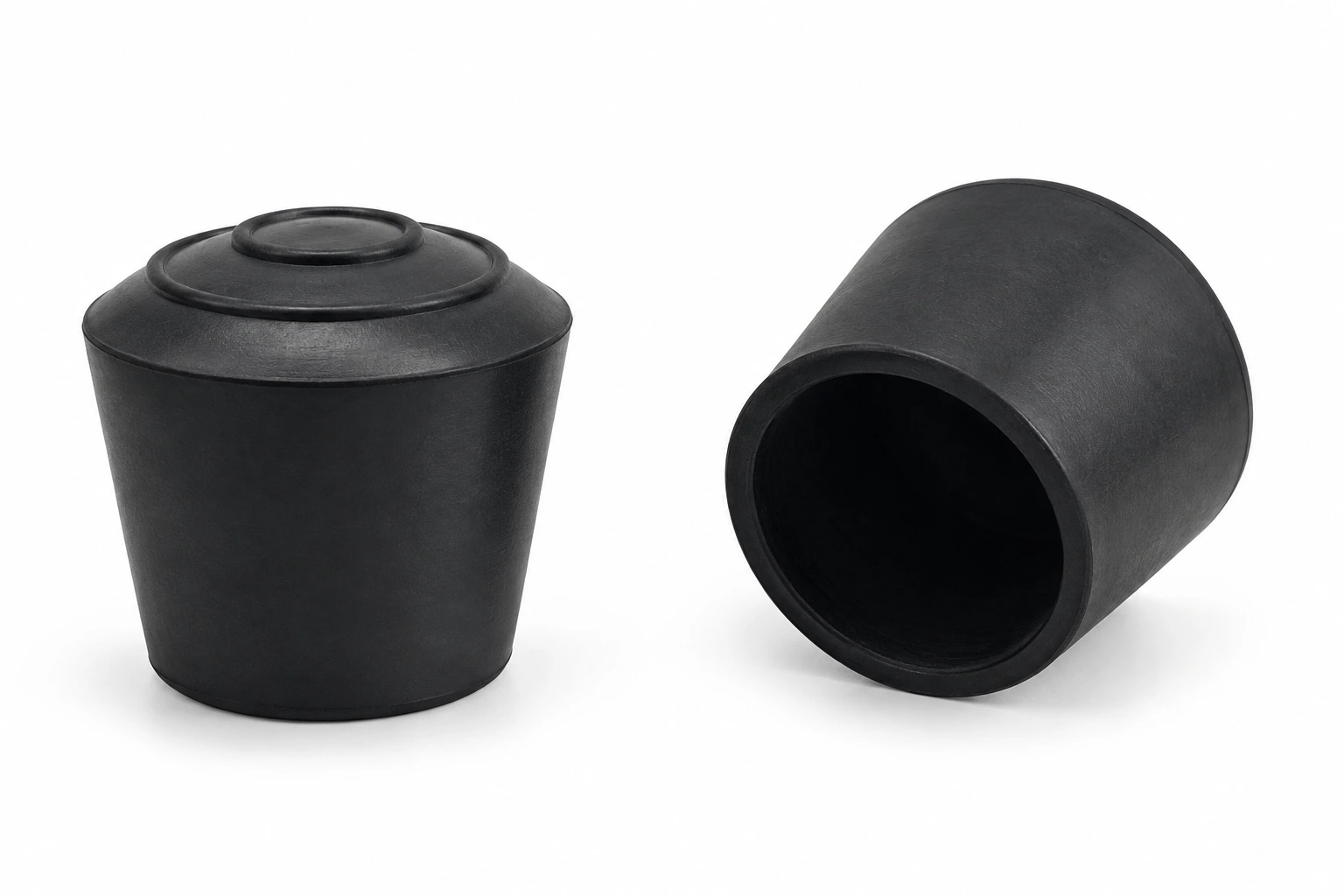
Compare A, B and C in mm using the open round-tip drawing. Check the mating leg dimensions and seating depth.
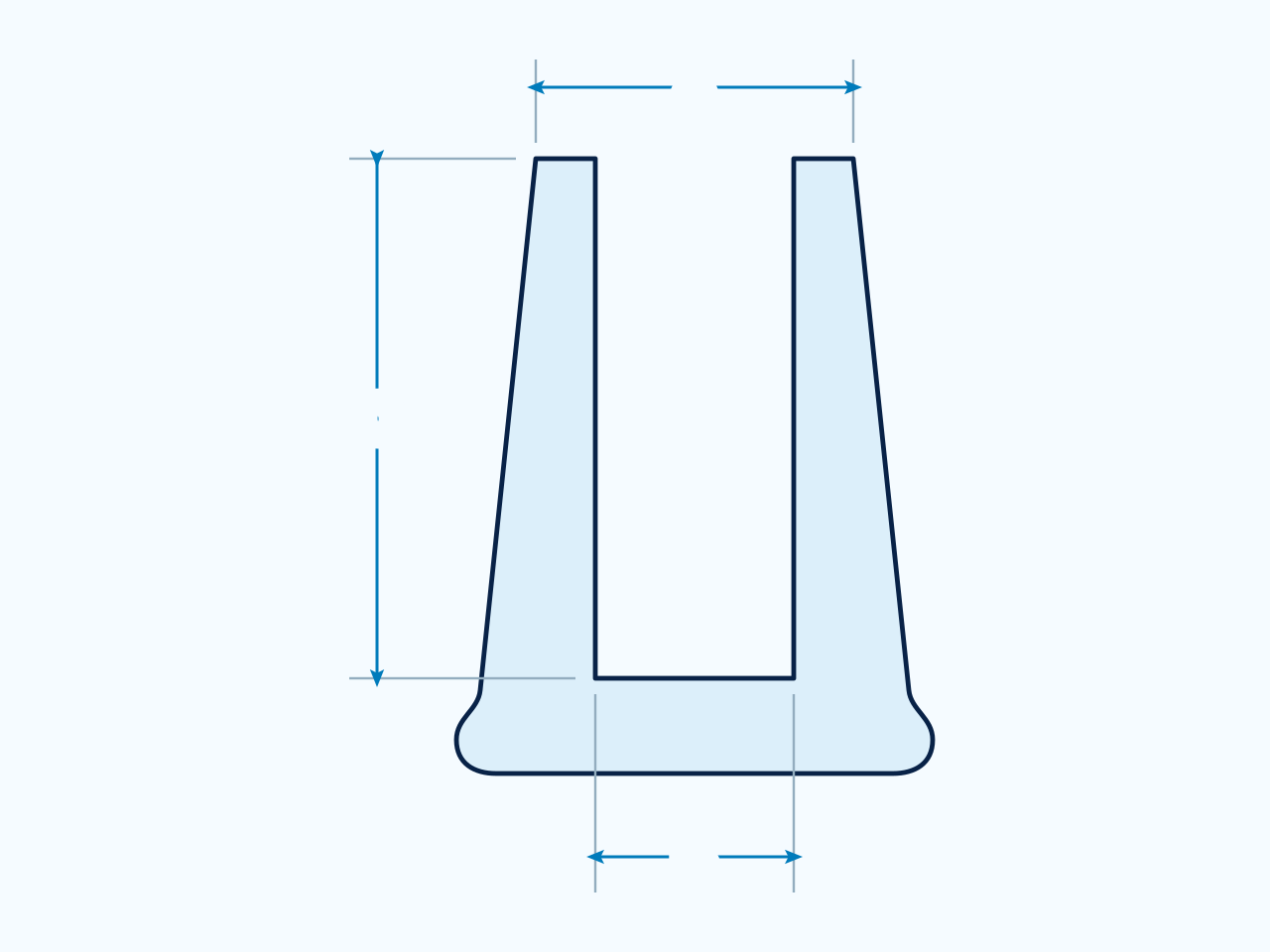
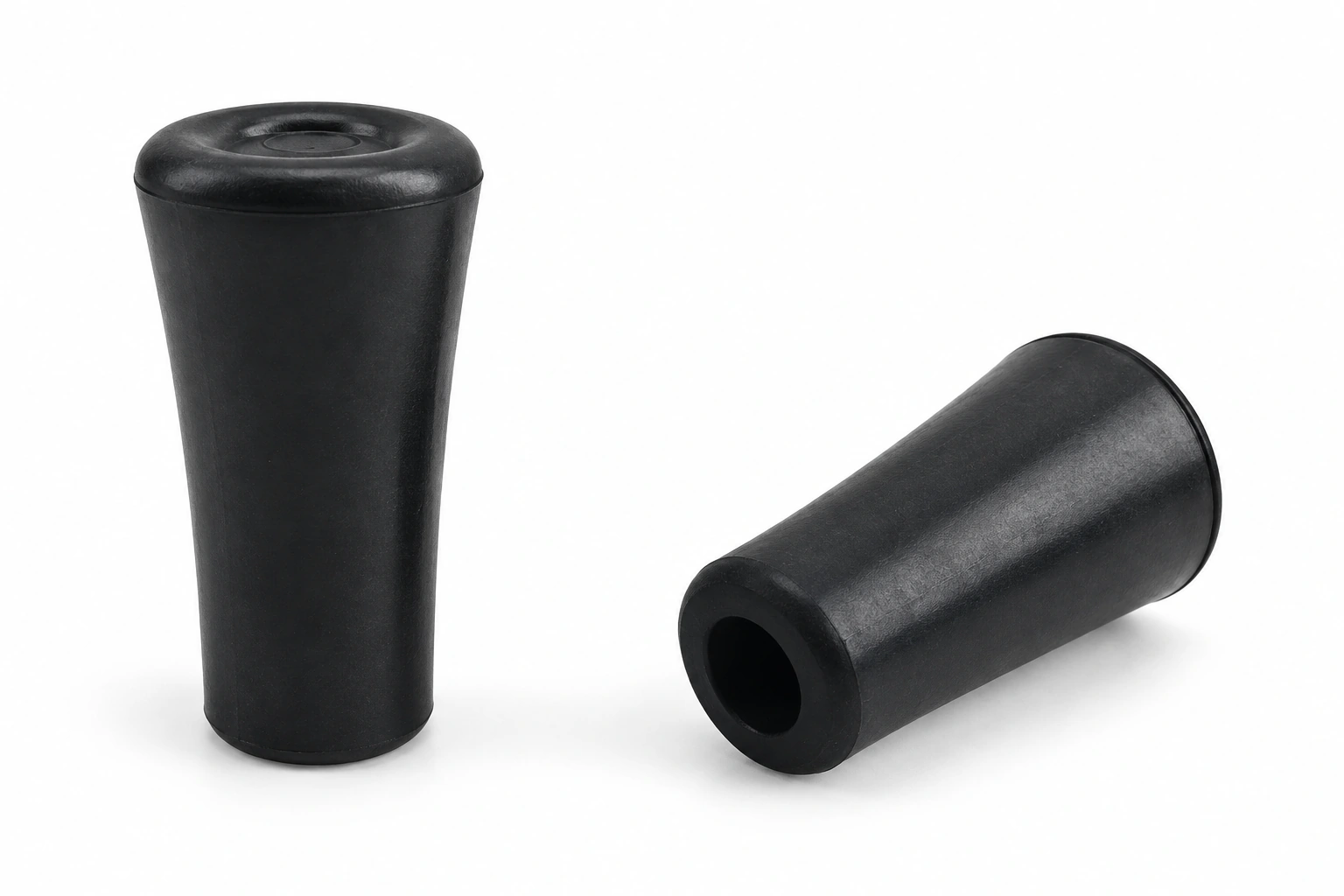
Rectangular rubber feet for chairs
Compare A, B and C in mm using the rectangular-tip drawing. Check both sides of the mating leg and the seating depth.
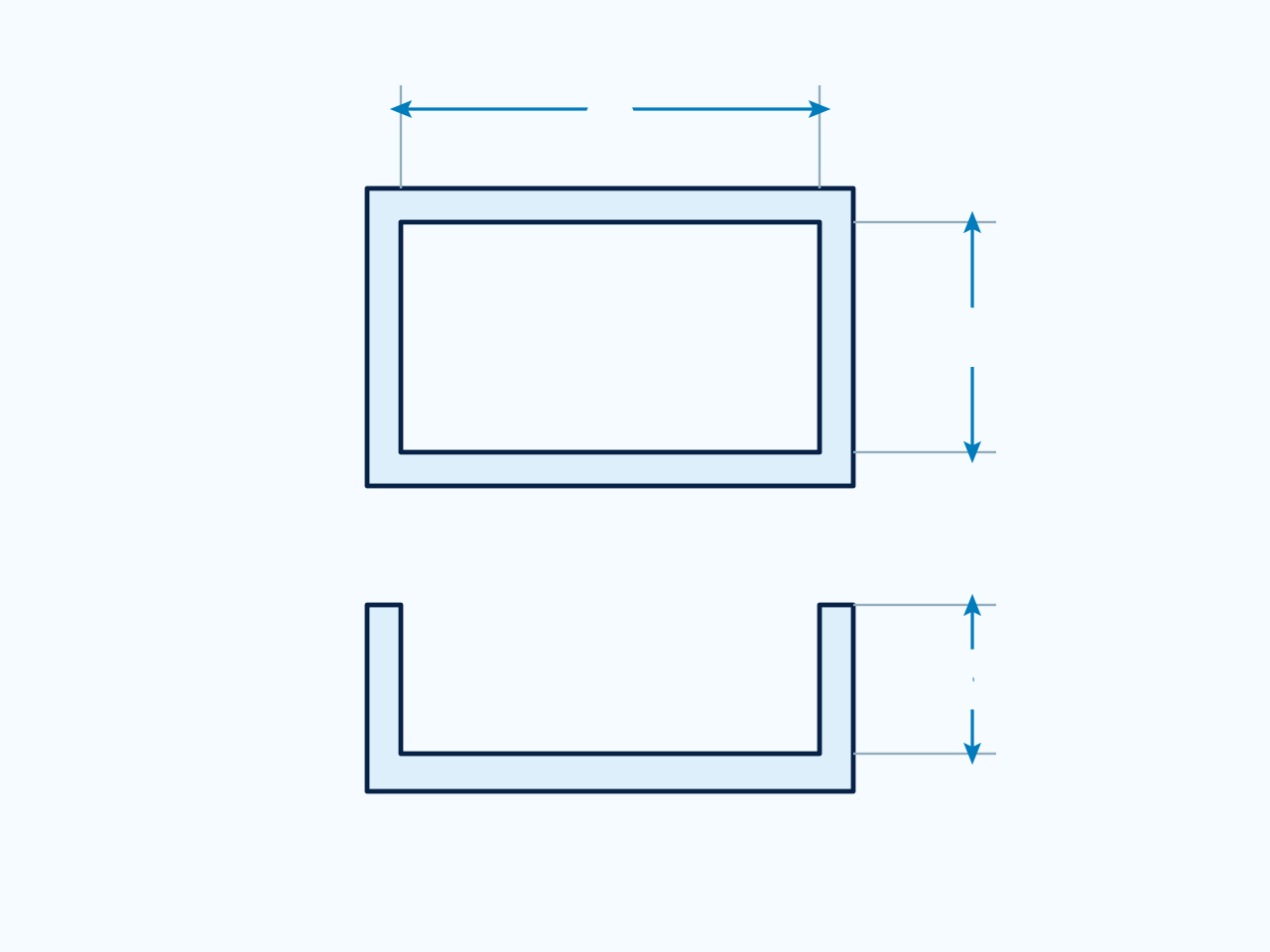
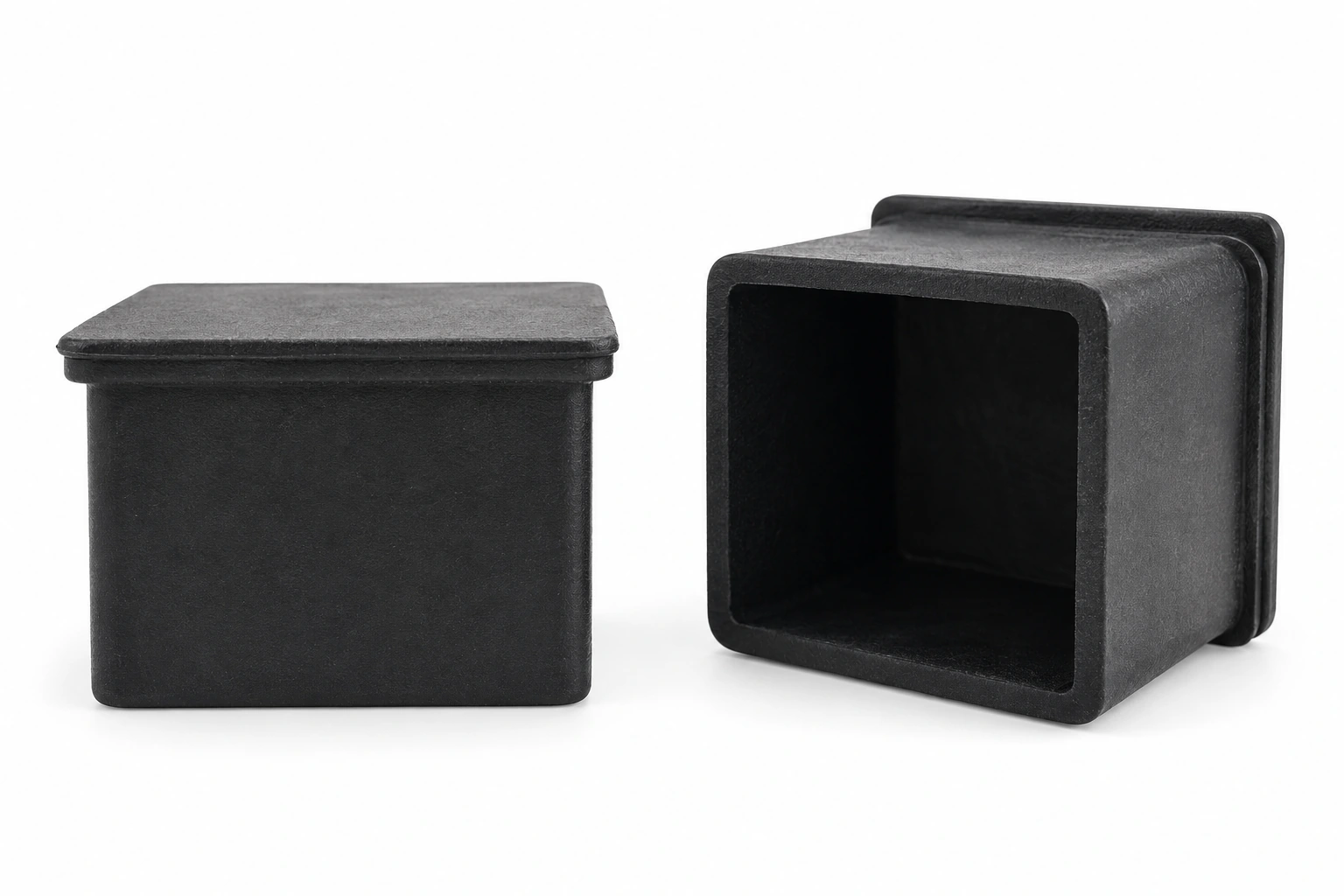
Rubber Feet For Chairs
Compare A, B, C and D in mm using the square-tip drawing. Check the mating leg profile and seating depth.
Need a different size? Share your drawing, mating dimensions and intended use to discuss a suitable part.
Discuss Your RequirementsProduct specifications
- Product form
- Resilient contact stop
- Application focus
- Cabinet or door contact points. Size the part against the selected assembly.
- Dimensions to confirm
- Contact-face area, projection and mounting geometry.
- Push-in retention
- Dimension the stem, retaining shoulder and mounting hole; check installation force in the actual panel thickness.
- Profiles discussed
- Round profiles. Select the profile that matches the mating part and dimension that section explicitly.
- Exposure to evaluate
- Oil splash. Validate the selected material under the combined conditions.
- Working clearance
- Define the closing gap, contact direction and compression available at the stop.
Need a quote or a custom part?
Send your requirements, drawings or samples to discuss standard and custom silicone rubber parts.
Email us[email protected]