
Push In Rubber Feet
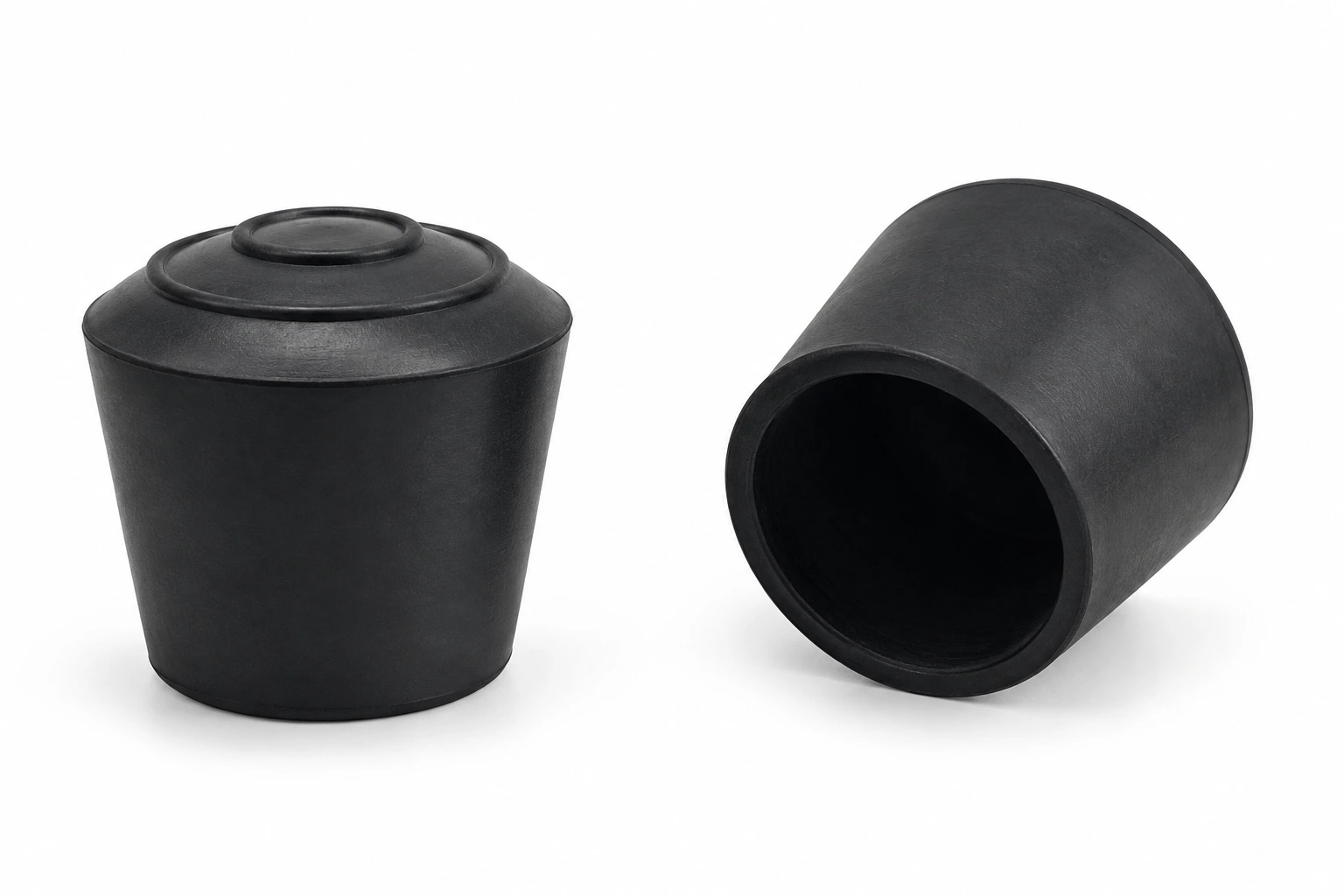
Rubber seems to be a material that is an almost inexhaustible source of ideas for producing small parts that can mean a lot to us. Today, many things are made of rubber, including some small parts of appliances, equipment, or machines, and vehicles. Although quite small in their size – these parts can sometimes be very important when it comes to the functioning of the entire system such as an industrial machine or a car. Some of these parts are push-in rubber feet. Probably most of you have never even thought about how important a small rubber part that looks a bit like a cork can have in reality.
This tiny rubber part can be used in many industries, but also within the household. Its basic role is to adhere well to a particular substrate. Sometimes they also serve to close openings that should not be in contact with any surface. Push-in rubber feet are most often made of classic polyurethane rubber – and can be made in several styles, variations, and sizes. Sometimes they can be combined with an adhesive base as well. Therefore, today we also have self-adhesive rubber feet.
Their easy way of application is the best feature of such products. So the whole job you have when using push-in rubber feet only takes a few seconds. Their application is widespread in many industries. However, we often use them in our households. You may not have paid enough attention so far, but you will see these tiny rubber parts very often placed on the bottom of small household appliances – allowing them to adhere better to the surface. Also, those who have glass tables in the house know very well how much this small part contributes to their safety. Namely, push-in rubber feet are used as rubber feet for glass tables preventing the glass surface from slipping. Also, they are often used as plugs or guards on many home appliances, but also inside large industries such as the auto industry.
Rubber Feet & Bumper Size Catalog
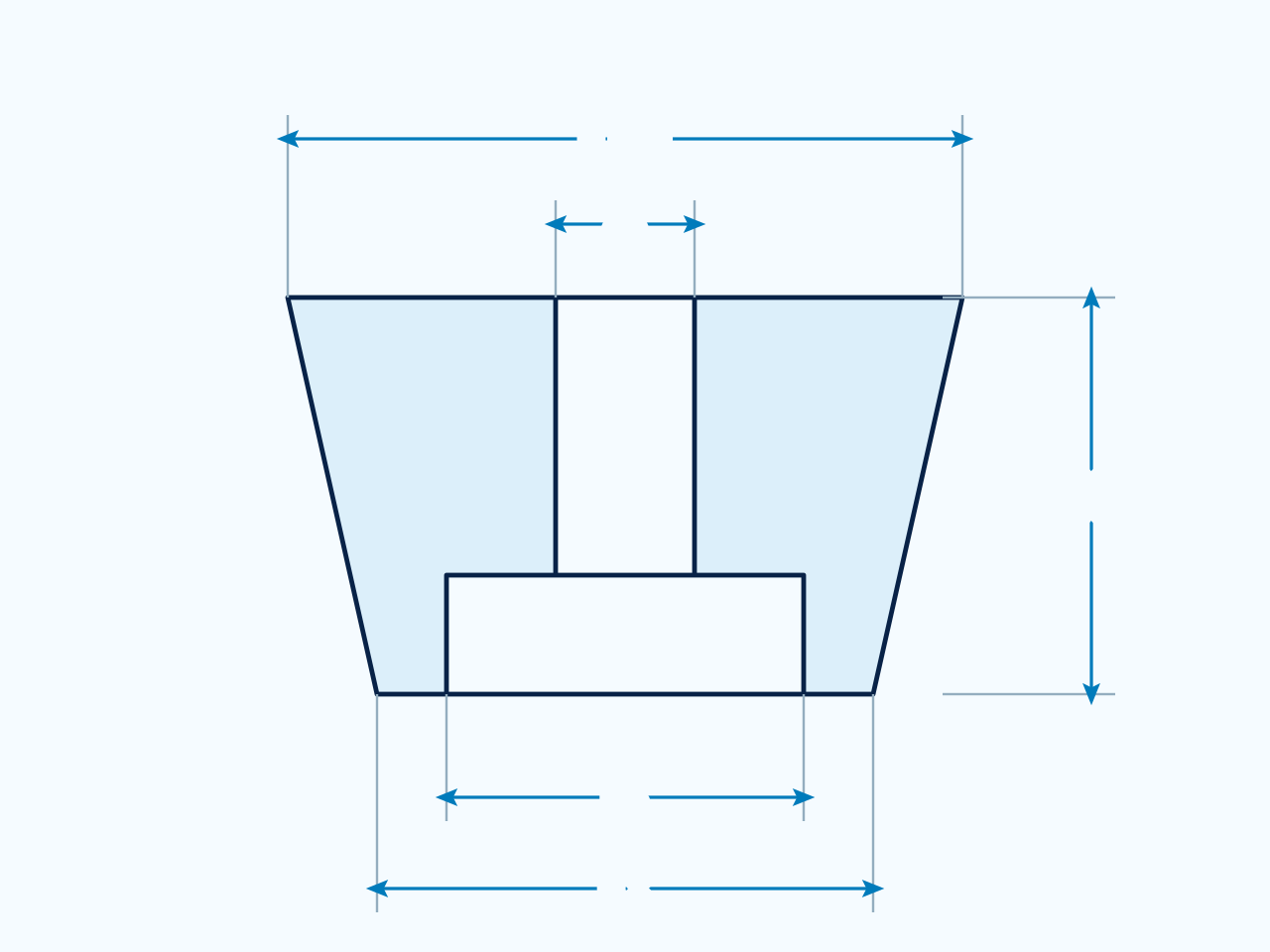
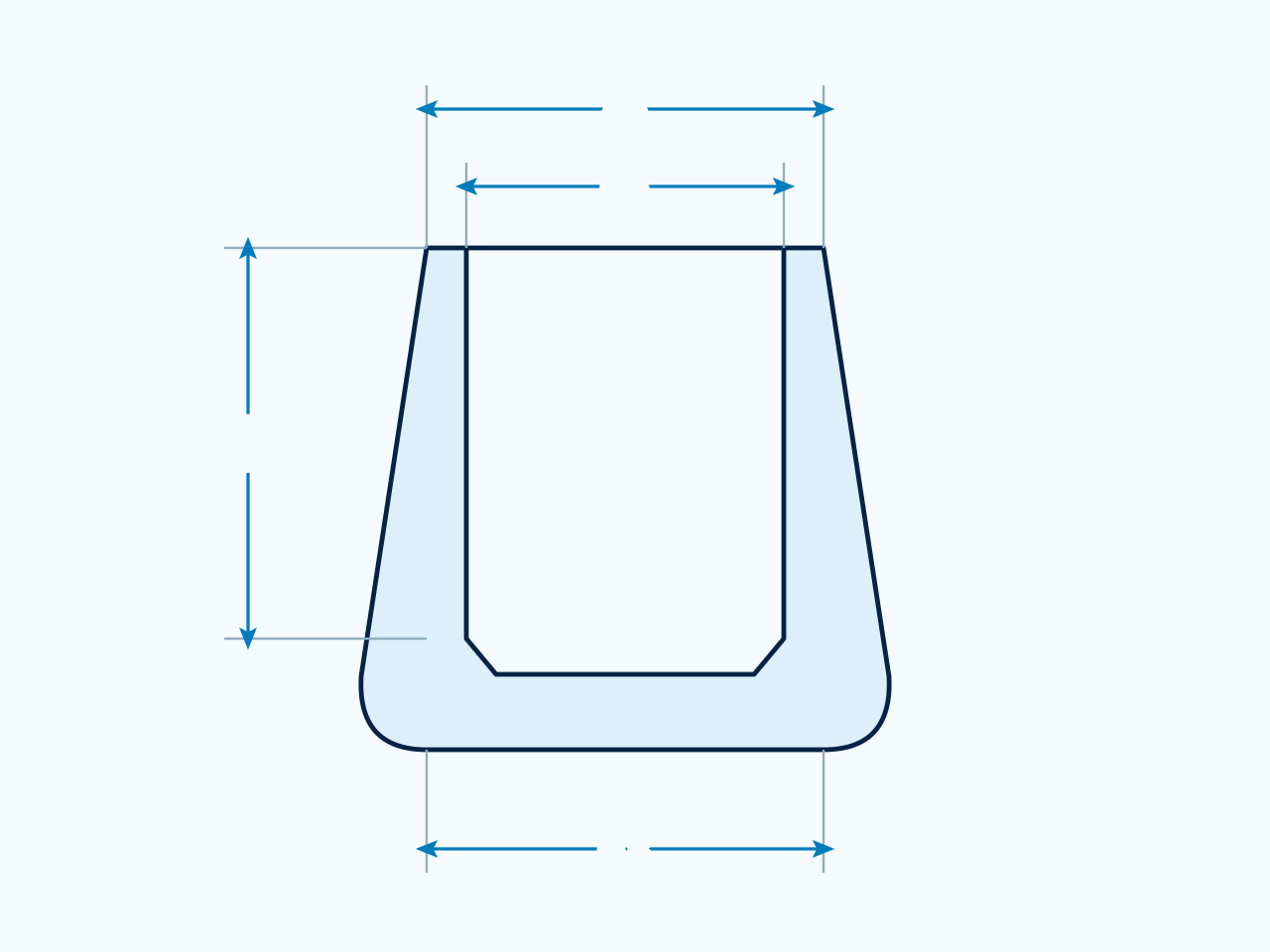
Compare mounting style, overall size and recess dimensions. Each profile uses its own drawing and column meanings.
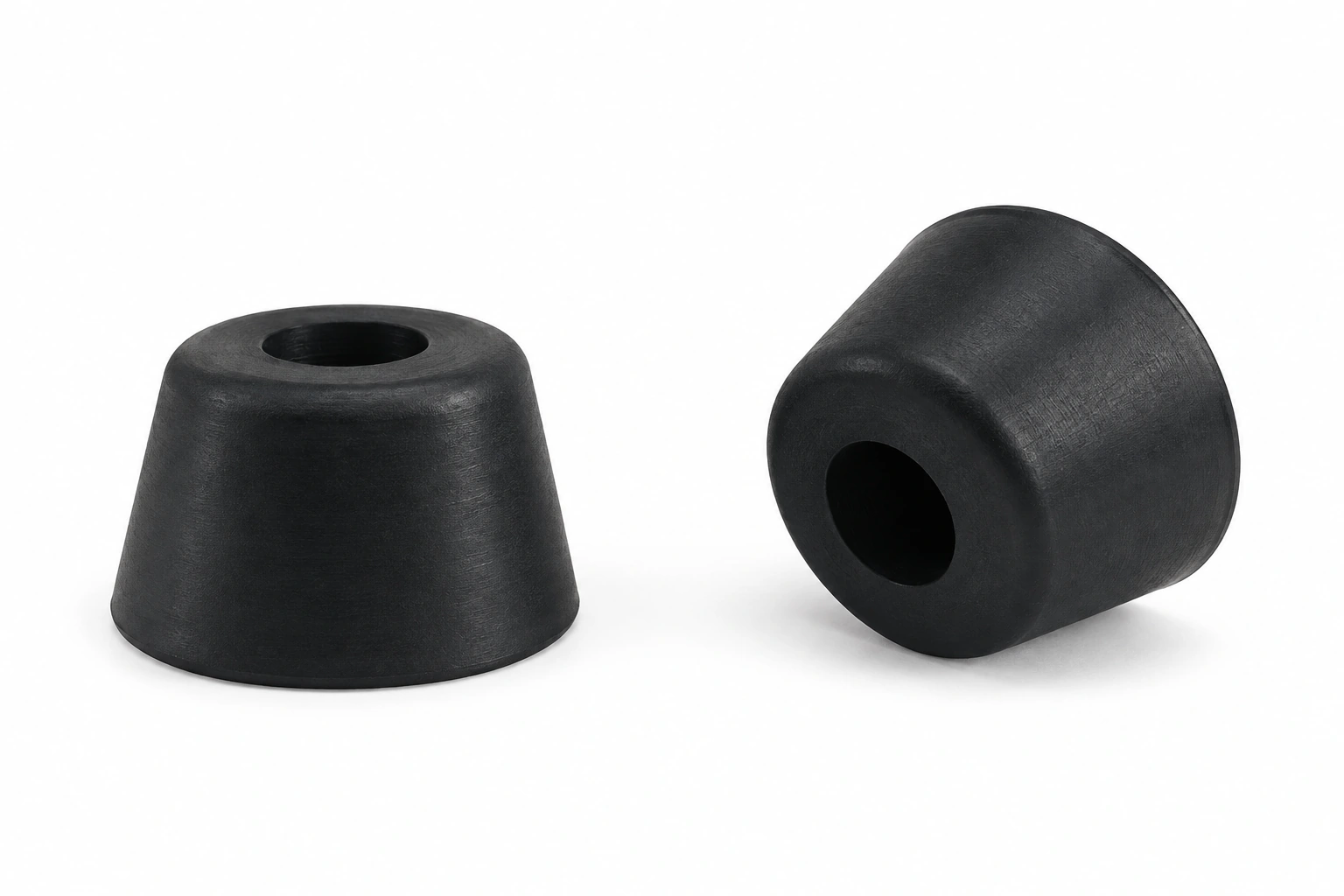
Recess Rubber Bumper
Compare OD, H, A, B and C in mm. C indicates the outer base dimension on this bumper profile, not the recess depth.
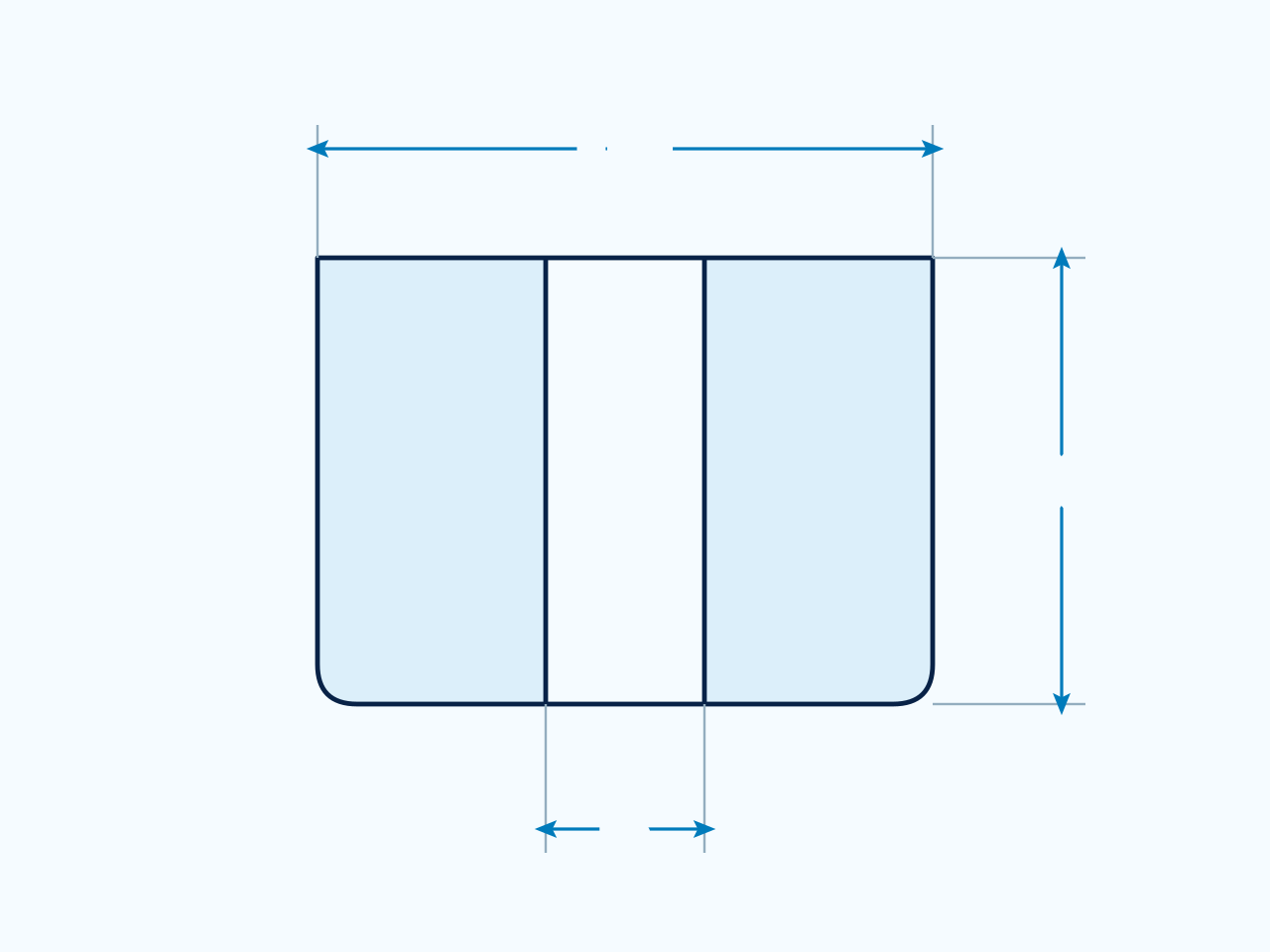
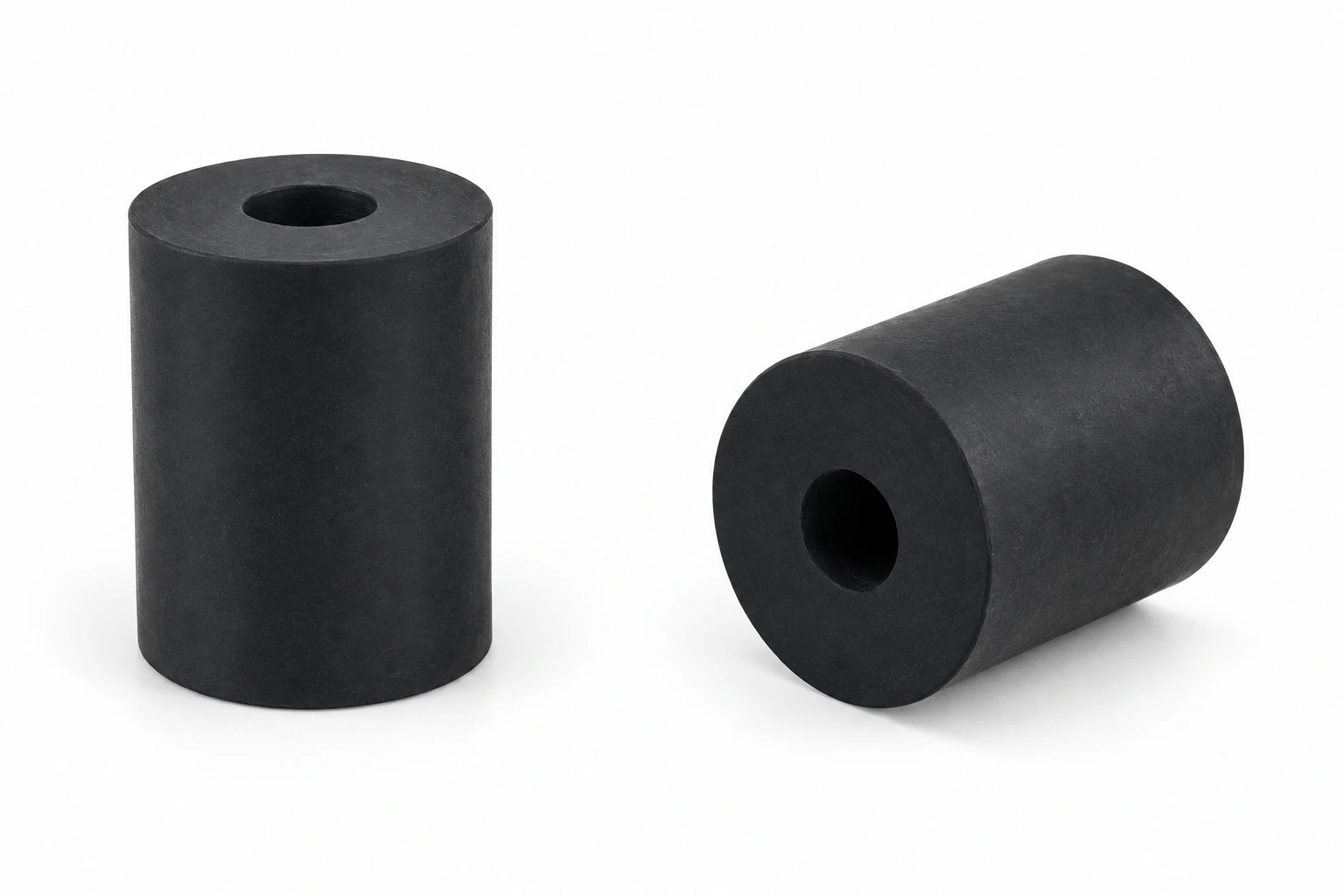
Cylindrical Rubber Feet
Compare OD, H and B in mm using the cylindrical-foot drawing. Material and colour remain listed separately.
Recess Rubber Feet
Compare OD, H, A, B and C in mm. C indicates the recess depth on this feet profile.
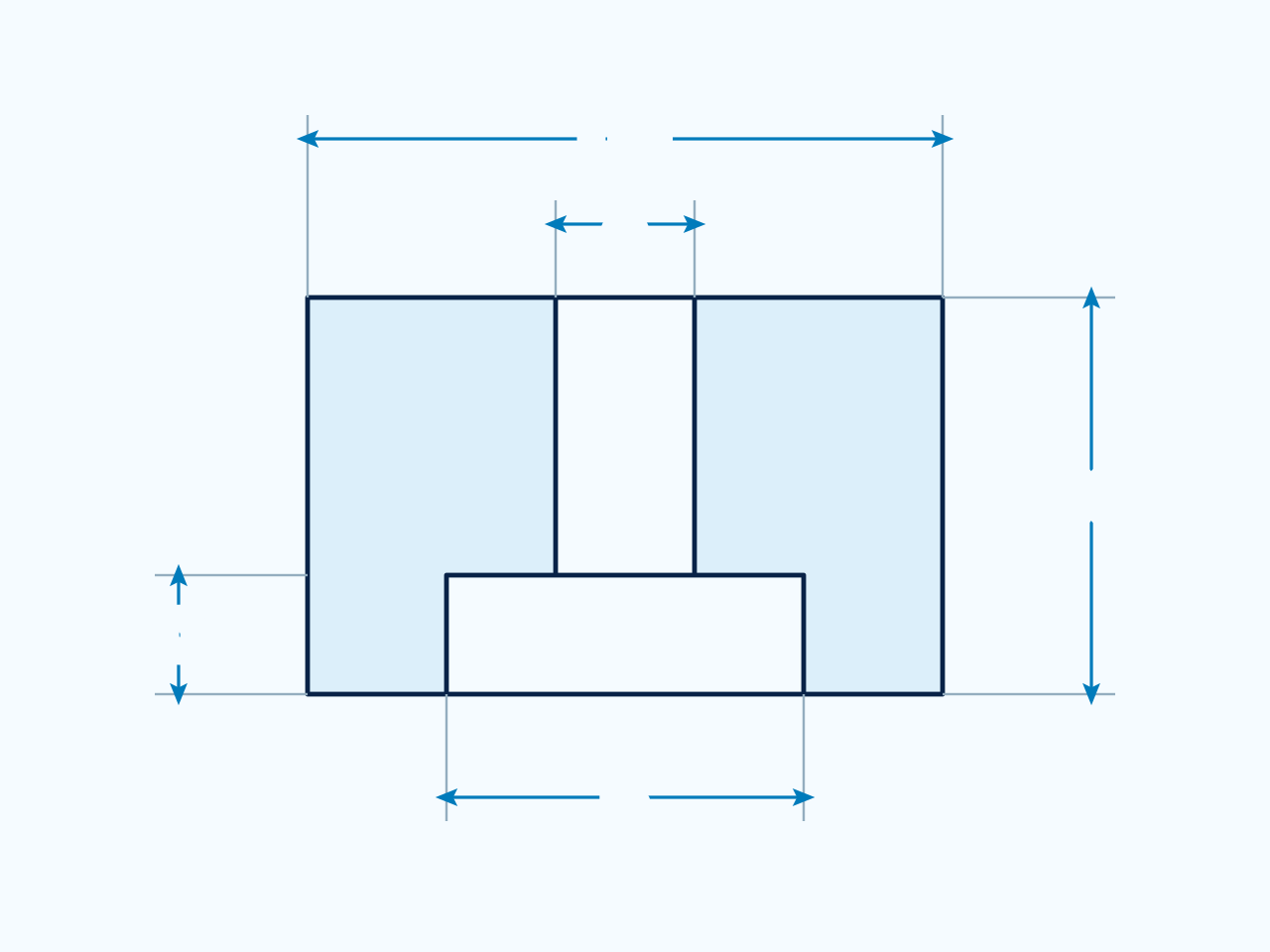
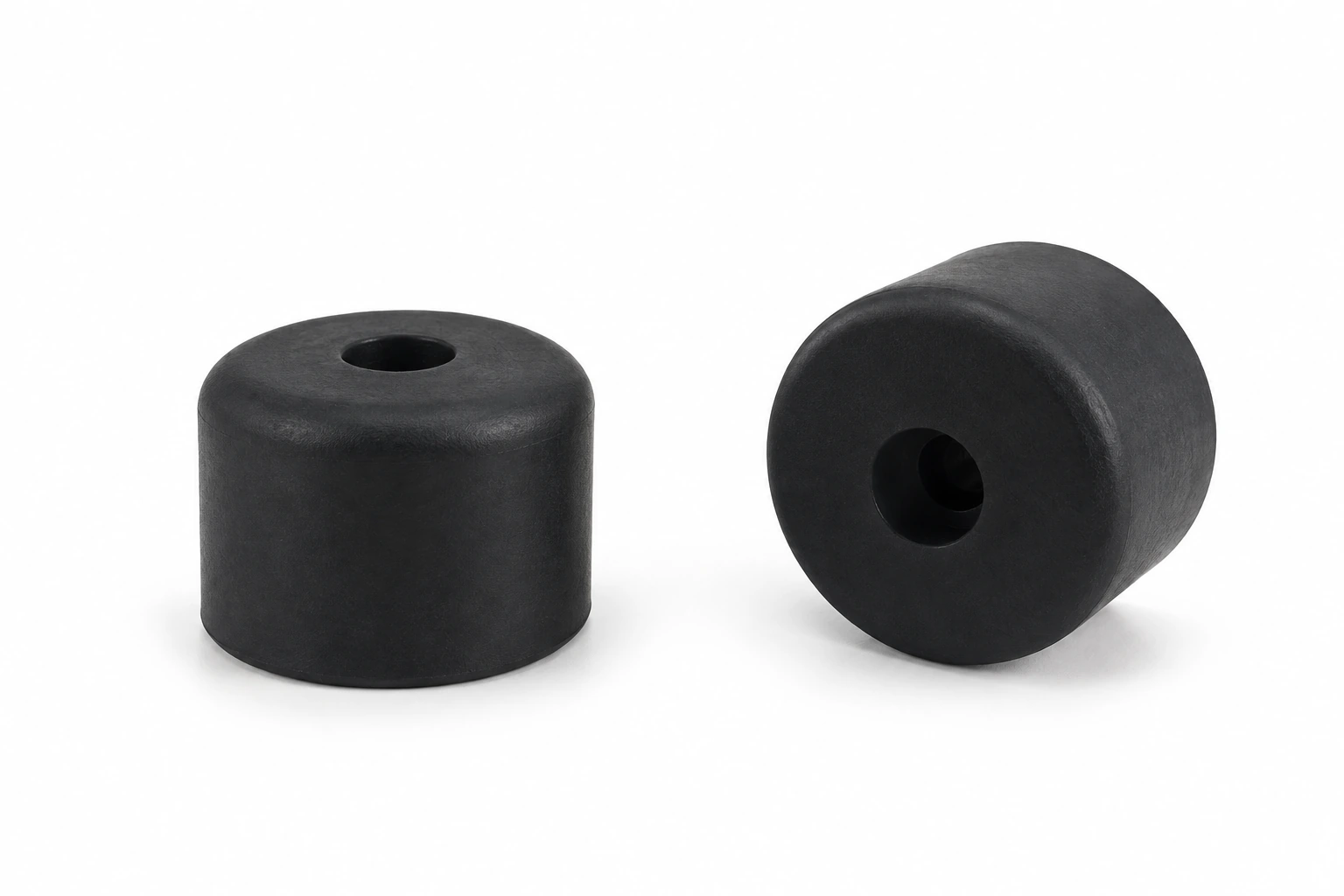
Hemispherical Rubber Bumper
Compare OD, H, A, B and C in mm using the hemispherical-bumper drawing.
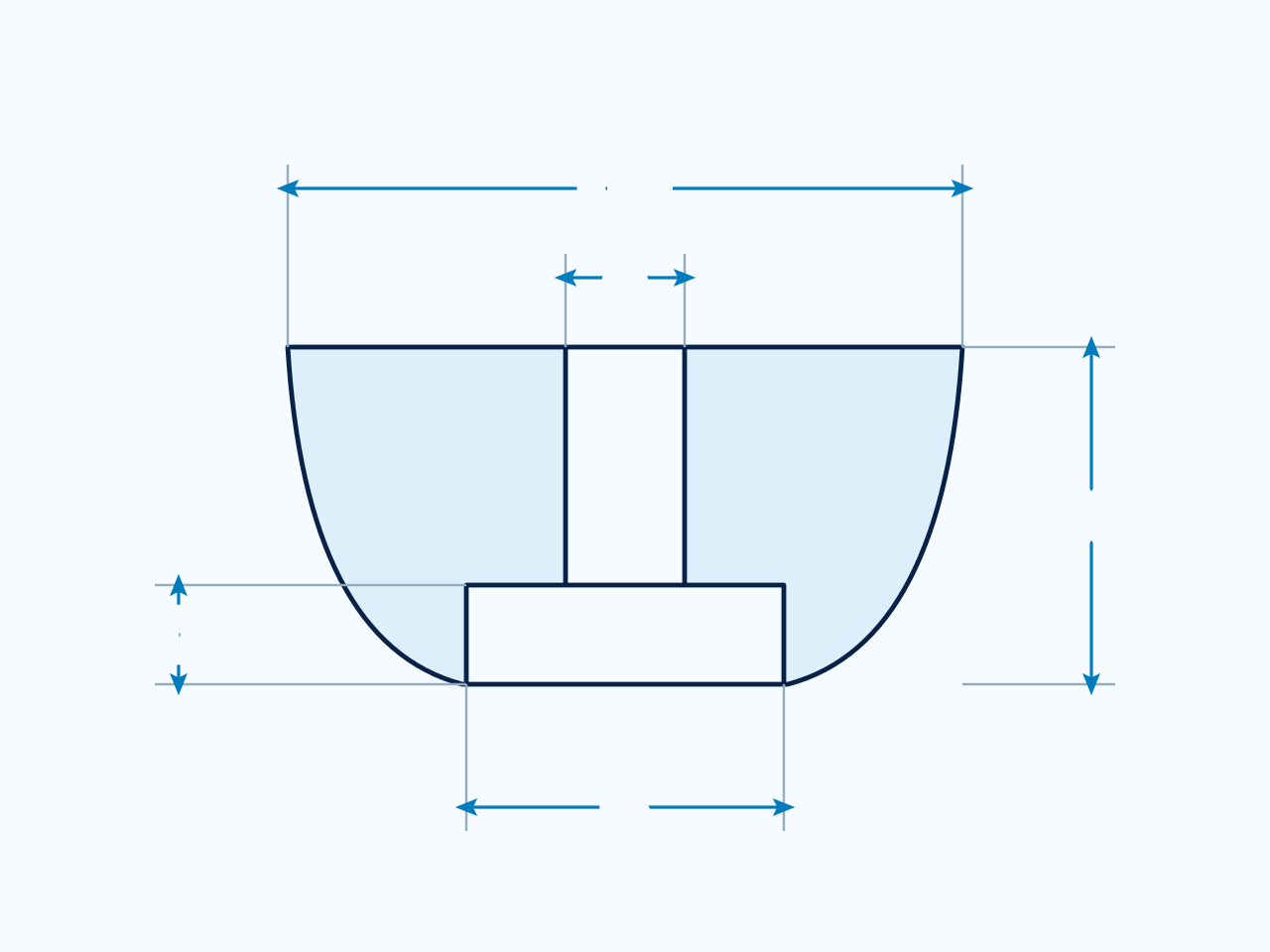
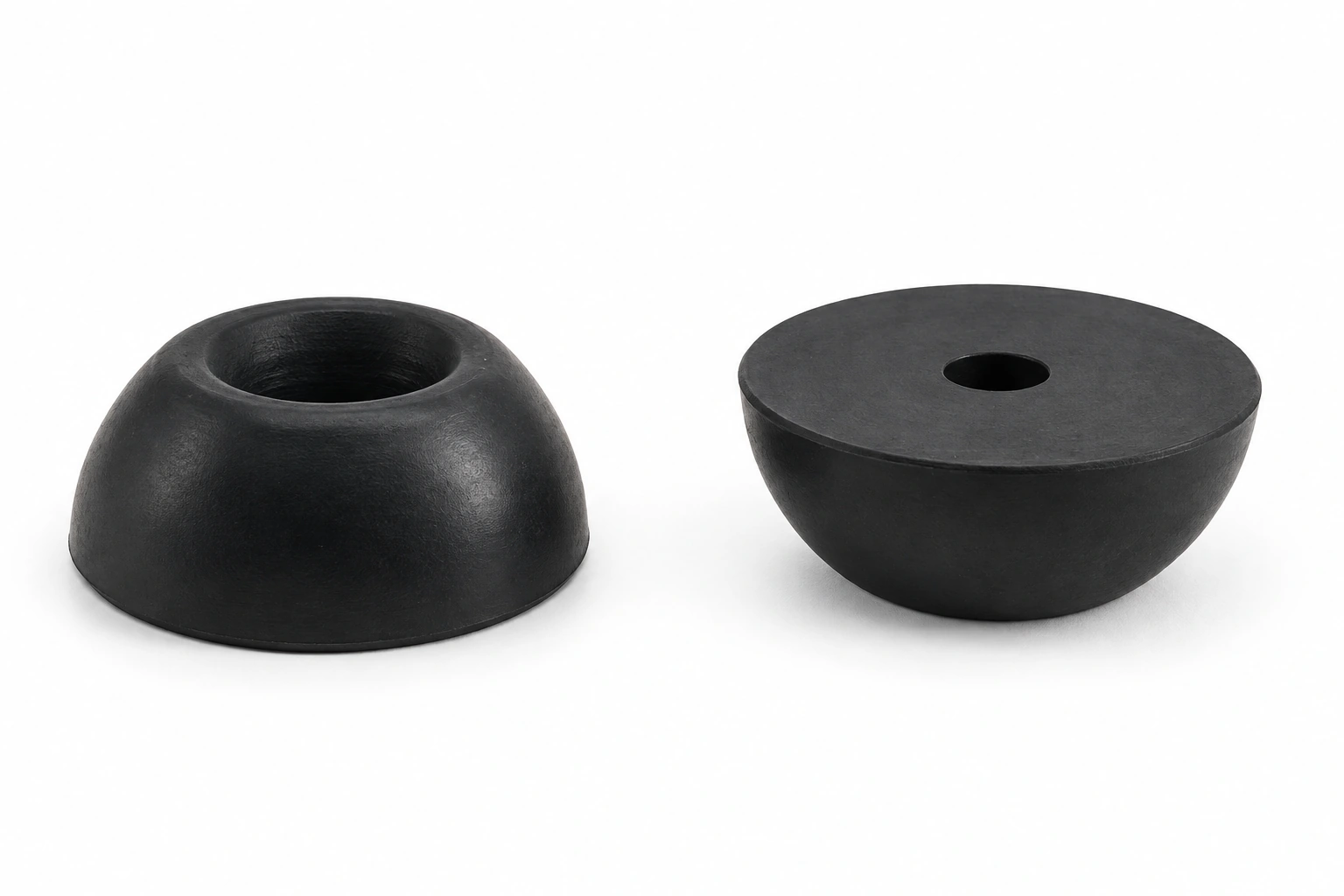
Rubber Tips
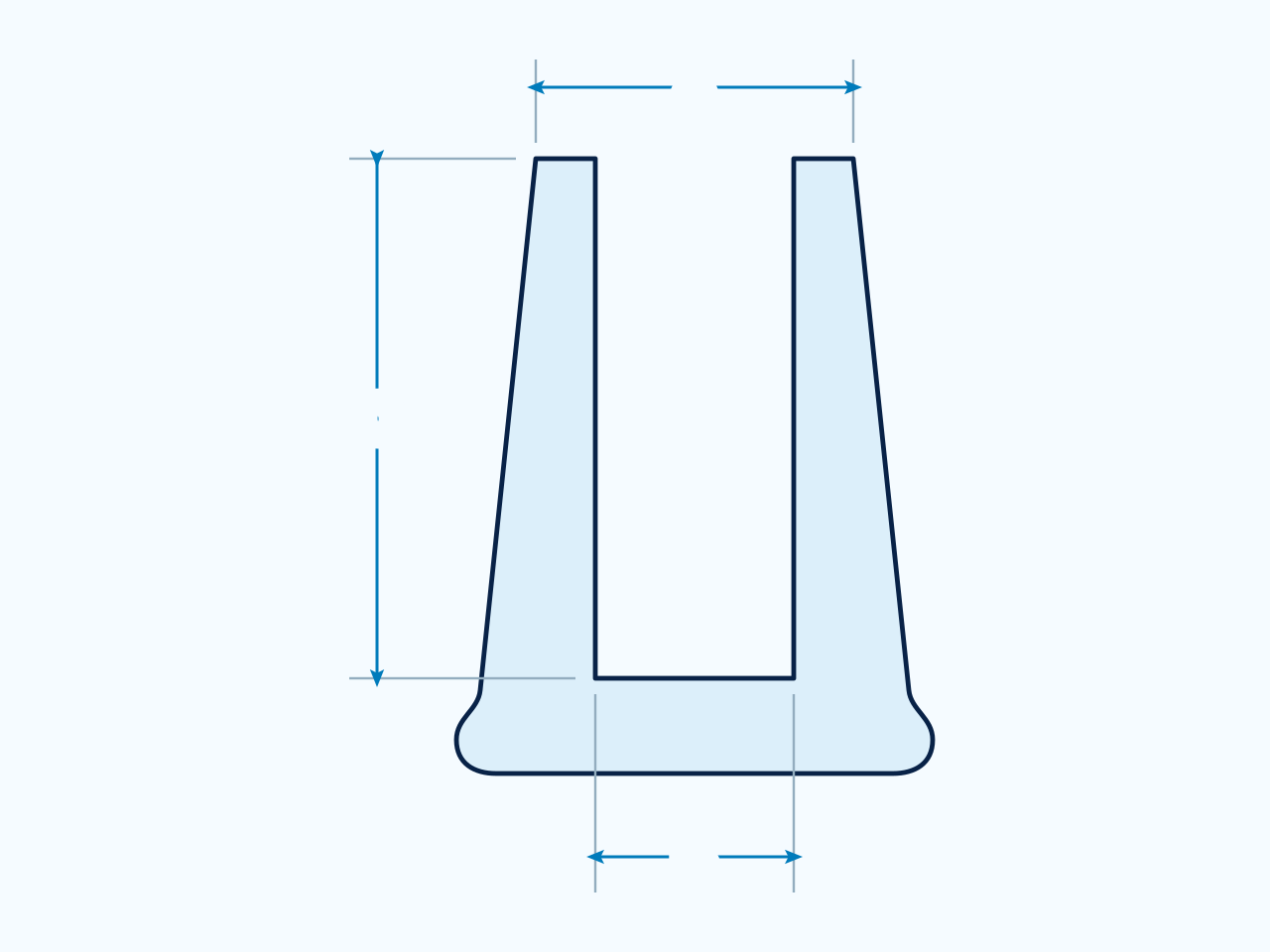
Compare A, B and C in mm using the open round-tip drawing. Check the mating leg dimensions and seating depth.
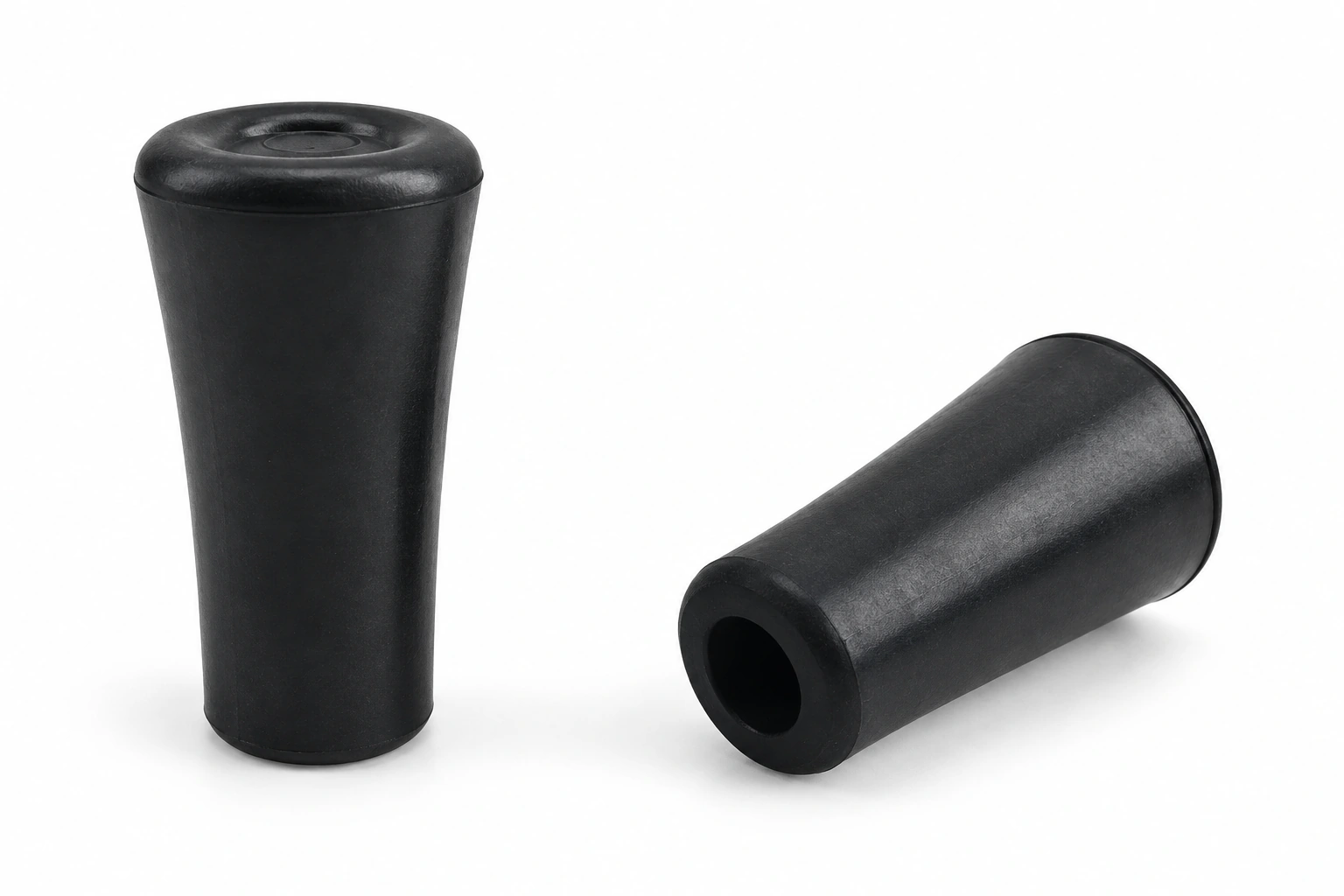
Rectangular rubber feet for chairs
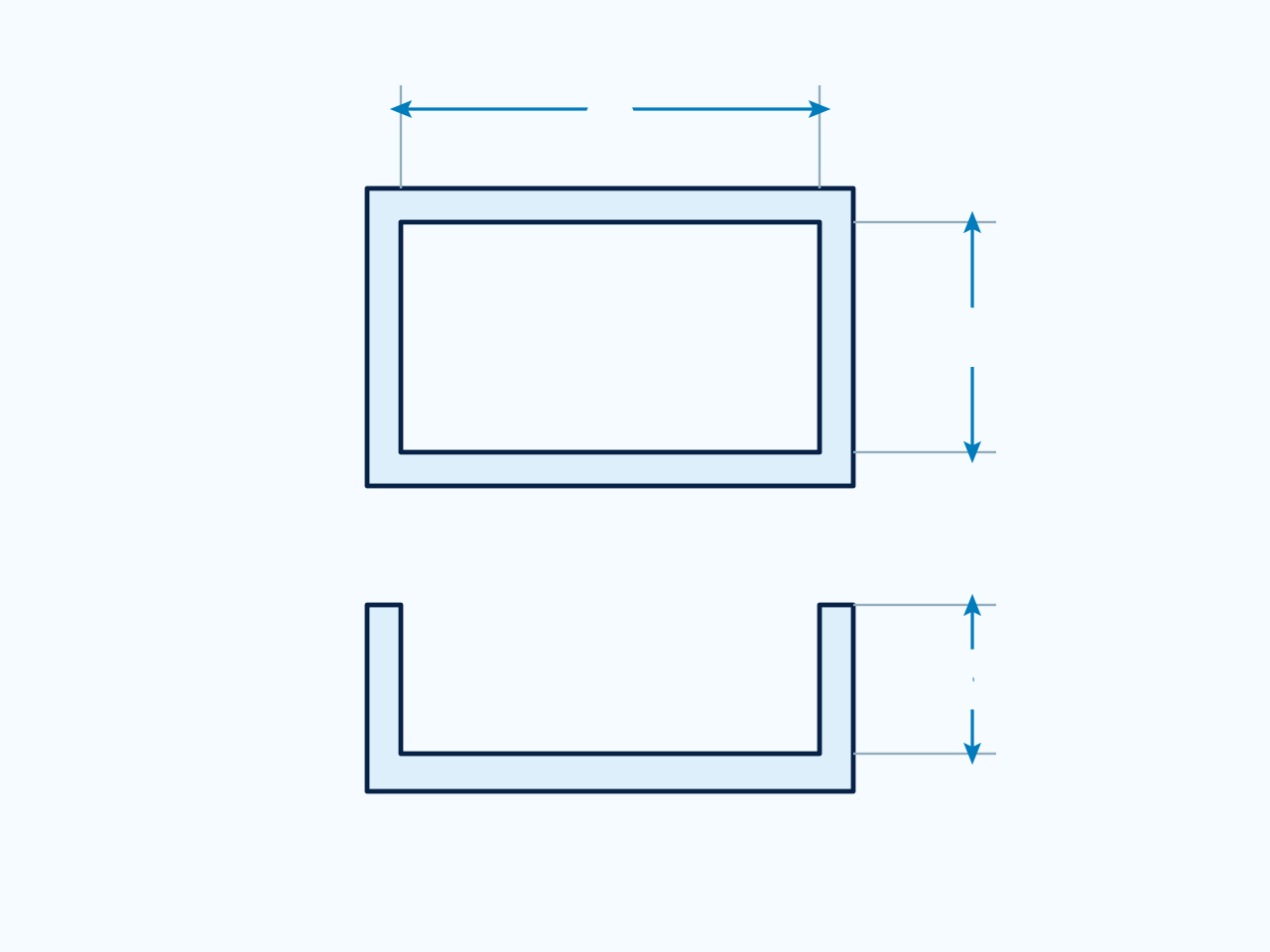
Compare A, B and C in mm using the rectangular-tip drawing. Check both sides of the mating leg and the seating depth.
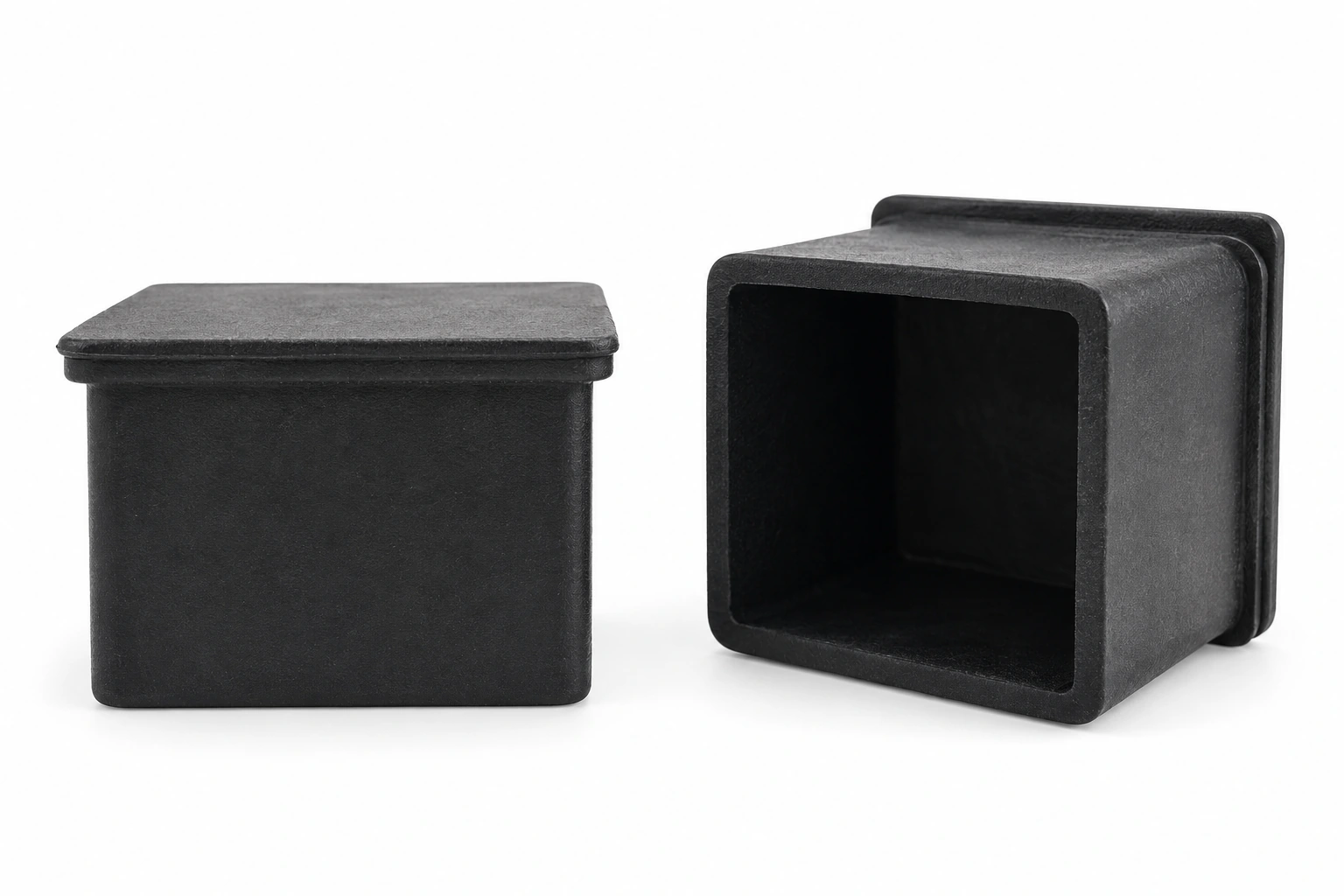
Rubber Feet For Chairs
Compare A, B, C and D in mm using the square-tip drawing. Check the mating leg profile and seating depth.
Need a different size? Share your drawing, mating dimensions and intended use to discuss a suitable part.
Discuss Your RequirementsProduct specifications
- Product form
- Resilient support foot for an equipment or furniture base
- Application focus
- Household appliances and glass table supports. Size the part against the selected assembly.
- Dimensions to confirm
- Footprint, installed height and attachment position. Match these to household appliances.
- Push-in retention
- Dimension the stem, retaining shoulder and mounting hole; check installation force in the actual panel thickness.
- Installation discussed
- Adhesive bonding. Identify the chosen retention method and the surface or hardware it engages.
- Glass contact
- Define the contact footprint, glass thickness and load; check local pressure and marking on a sample assembly.
- Attachment options
- Adhesive attachment is discussed. Define the bonded substrate, preparation and loaded contact area before selecting a backing.
- Support loading
- Determine the load at each foot and check the resulting compression and stability.
Need a quote or a custom part?
Send your requirements, drawings or samples to discuss standard and custom silicone rubber parts.
Email us[email protected]