
Rigid silicone tubing
Rigid silicone tubing is one of the two types of tubing that is available, when we talk about that feature. We offer flexible and rigid silicone tubing, both very popular with our clients because in many cases you need both. For example, laboratories need both types, as do many others. Also, rigid tubing is used for fuel, oil, coolant, hydraulic and many other purposes. Rigid silicone tubing is mostly installed where it has stationary applications, which means that it will stay in place for a long time, while flexible tubing is the choice of those who often move tubing from one place to another.
Rigid tubing has significantly higher hardness than flexible, which is logical, because it is necessary that rigid silicone tubing resist against permanent deformation, and this is only possible with rubber with high hardness. Hardness is expressed in Shore A. Also, the elongation expressed in percent is low, because rigid tubing must retain its basic shape. So when ordering rigid silicone tubing, think carefully about where you will use it and for what purpose.
Tubing is available in many different colors. Customers opt for different colors to make it easier to distinguish tubing, so it is very useful to order multi-color or transparent on the other hand, to have an insight into what is happening inside. In addition to a large number of different colors, rigid silicone tubing is also available in plenty of different sizes. Most customers first check the diameter. Inside diameter suggests how much flow will be through the tubing. Don’t forget to choose the right length, because as we mentioned, elongation is not a feature of rigid tubing, so you have to choose the right size right away.
If you are going to use rigid silicone tubing for contact with food, then choose food grade silicone, and for contact with chemicals choose tubing with thicker walls.
Silicone Tubing Size Catalog
Compare inside diameter, outside diameter and listed wall thickness across silicone tube ranges. Confirm the material grade and application requirements for the selected part.
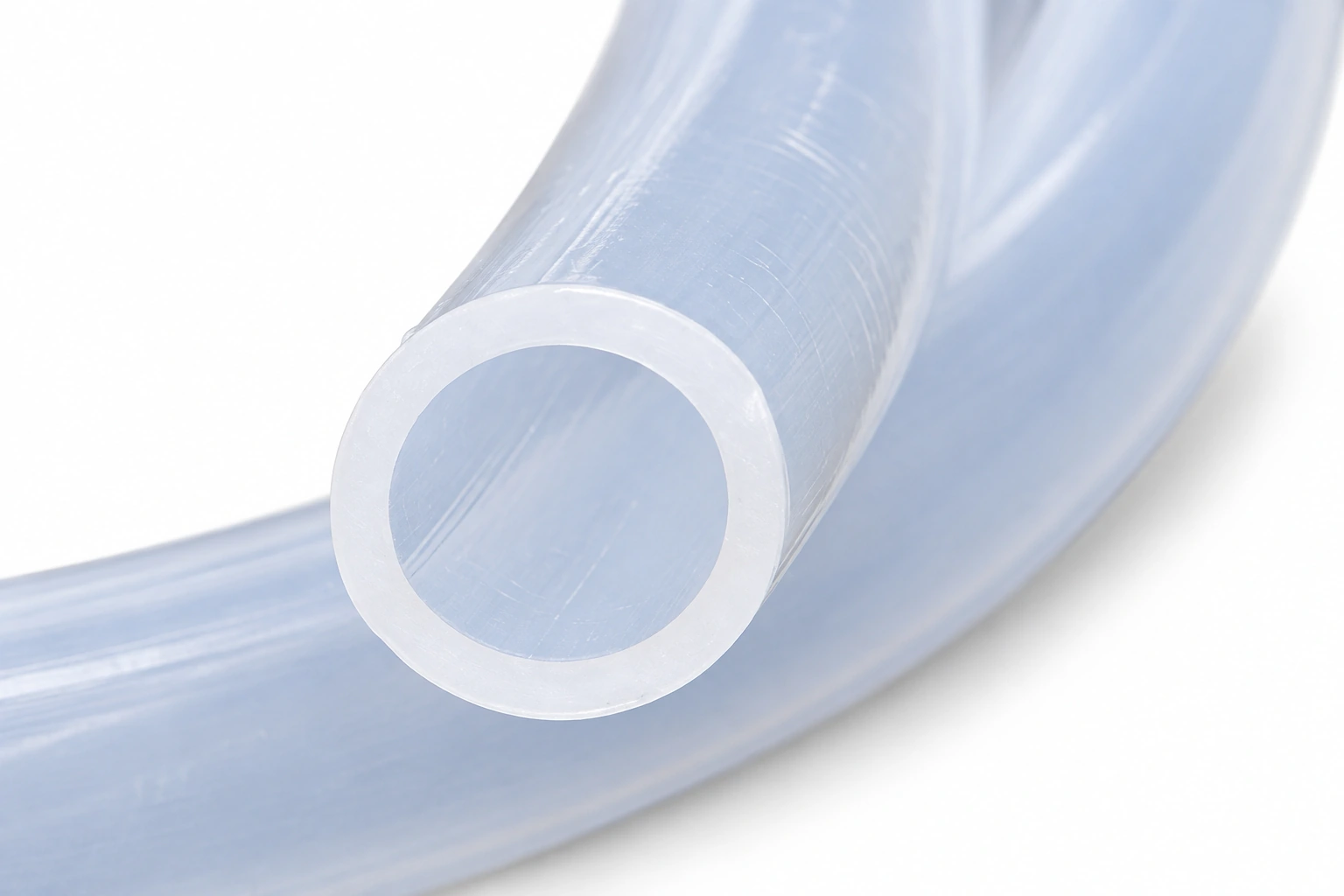
Food grade silicone tube
Compare Inside Diameter and Outside Diameter in mm, together with the listed Thickness and Colour. The cross-section drawing identifies the bore and outside diameter; confirm the selected tube material and service requirements.

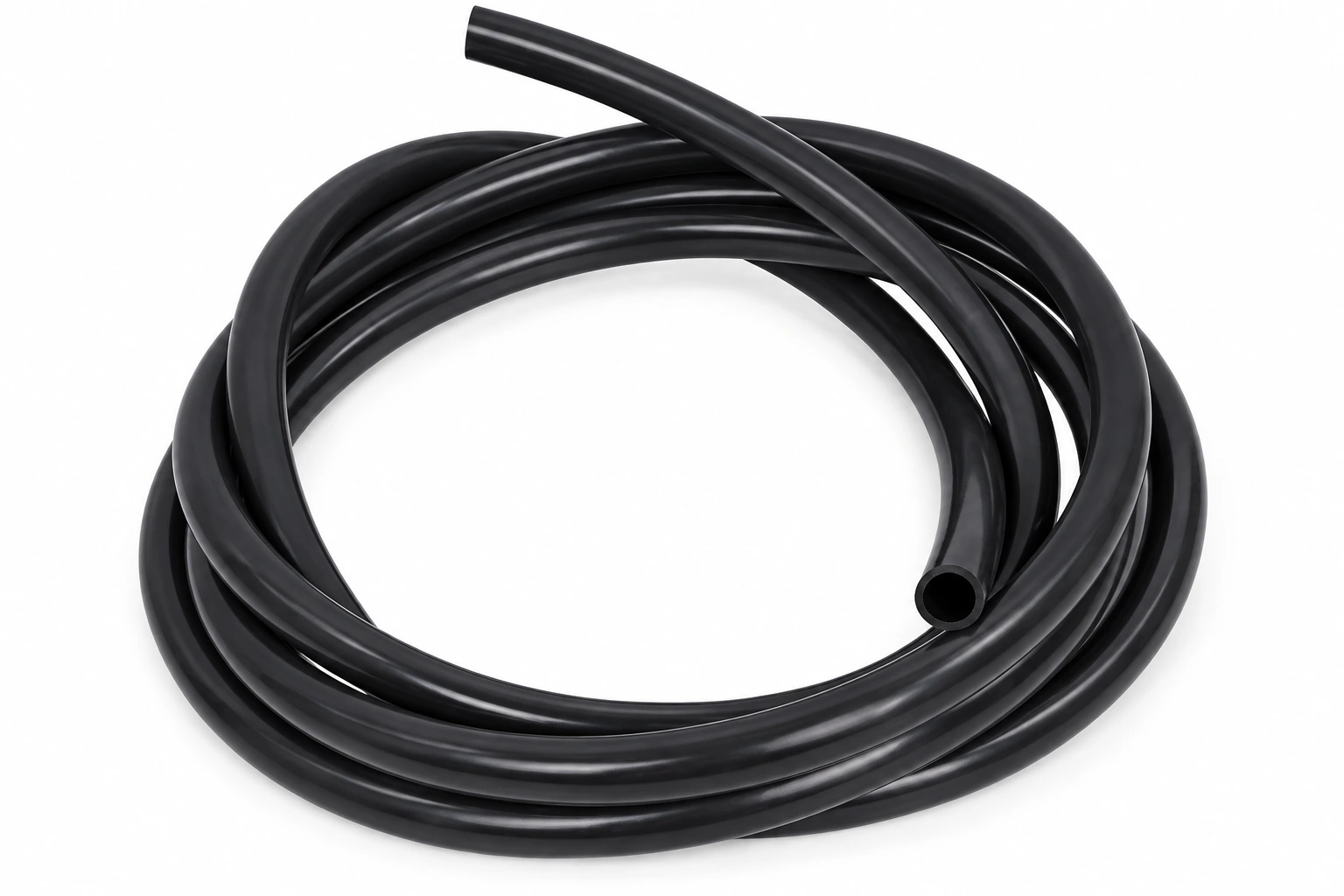
Black silicone tubing
Compare Inside Diameter and Outside Diameter in mm, together with the listed Thickness and Colour. The cross-section drawing identifies the bore and outside diameter; confirm the selected tube material and service requirements.
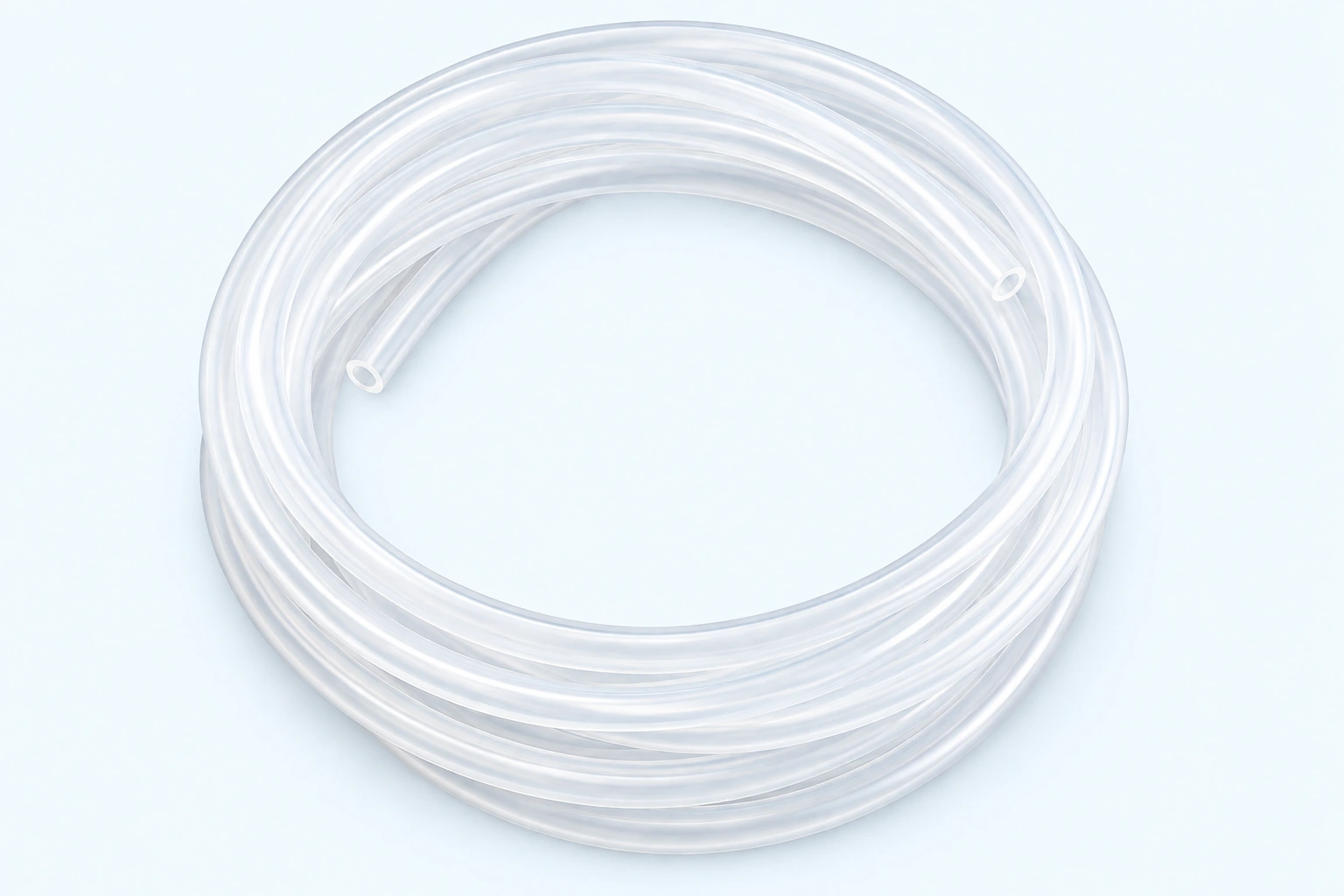
Industrial silicone tube
Compare Inside Diameter and Outside Diameter in mm, together with the listed Thickness and Colour. The cross-section drawing identifies the bore and outside diameter; confirm the selected tube material and service requirements.
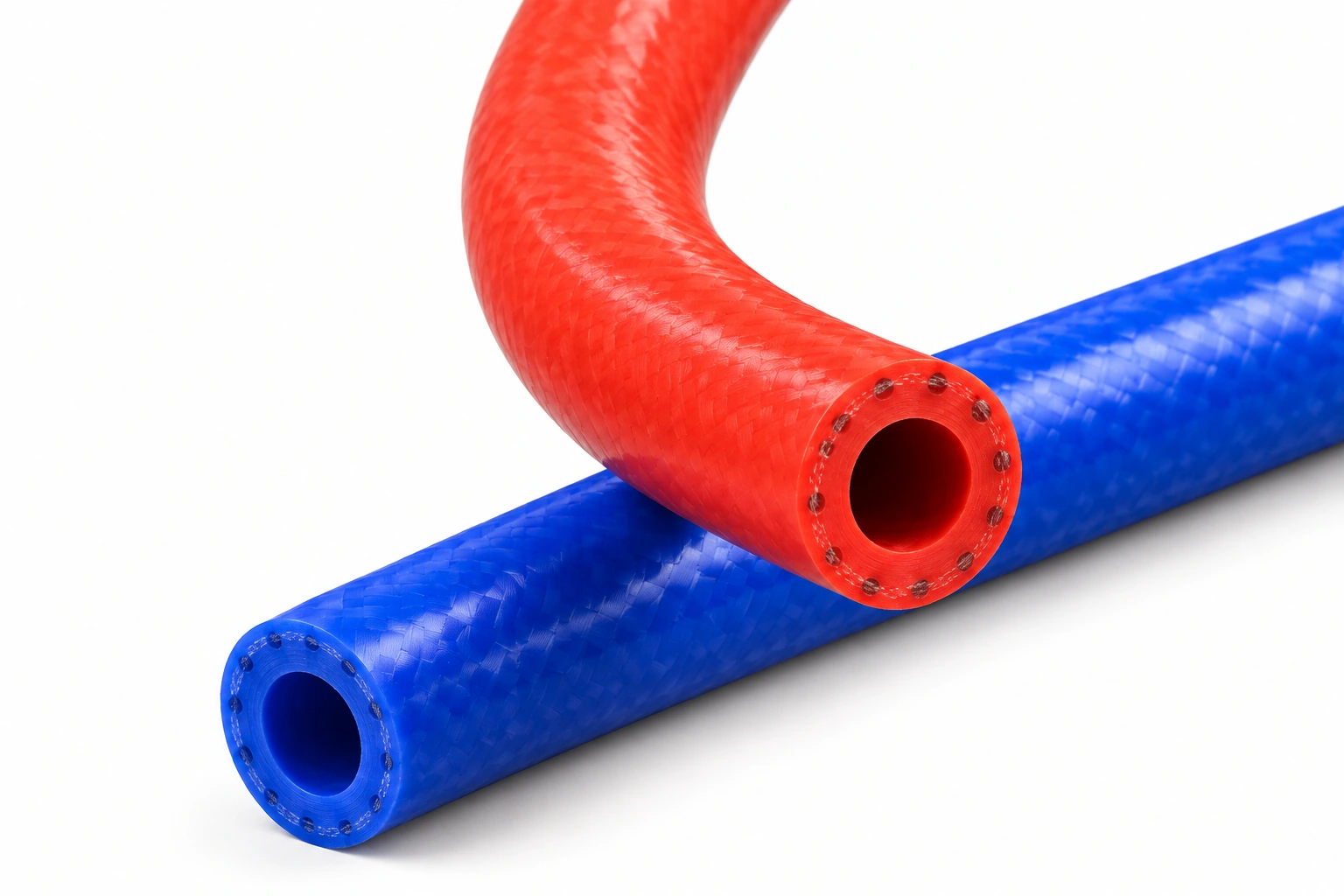
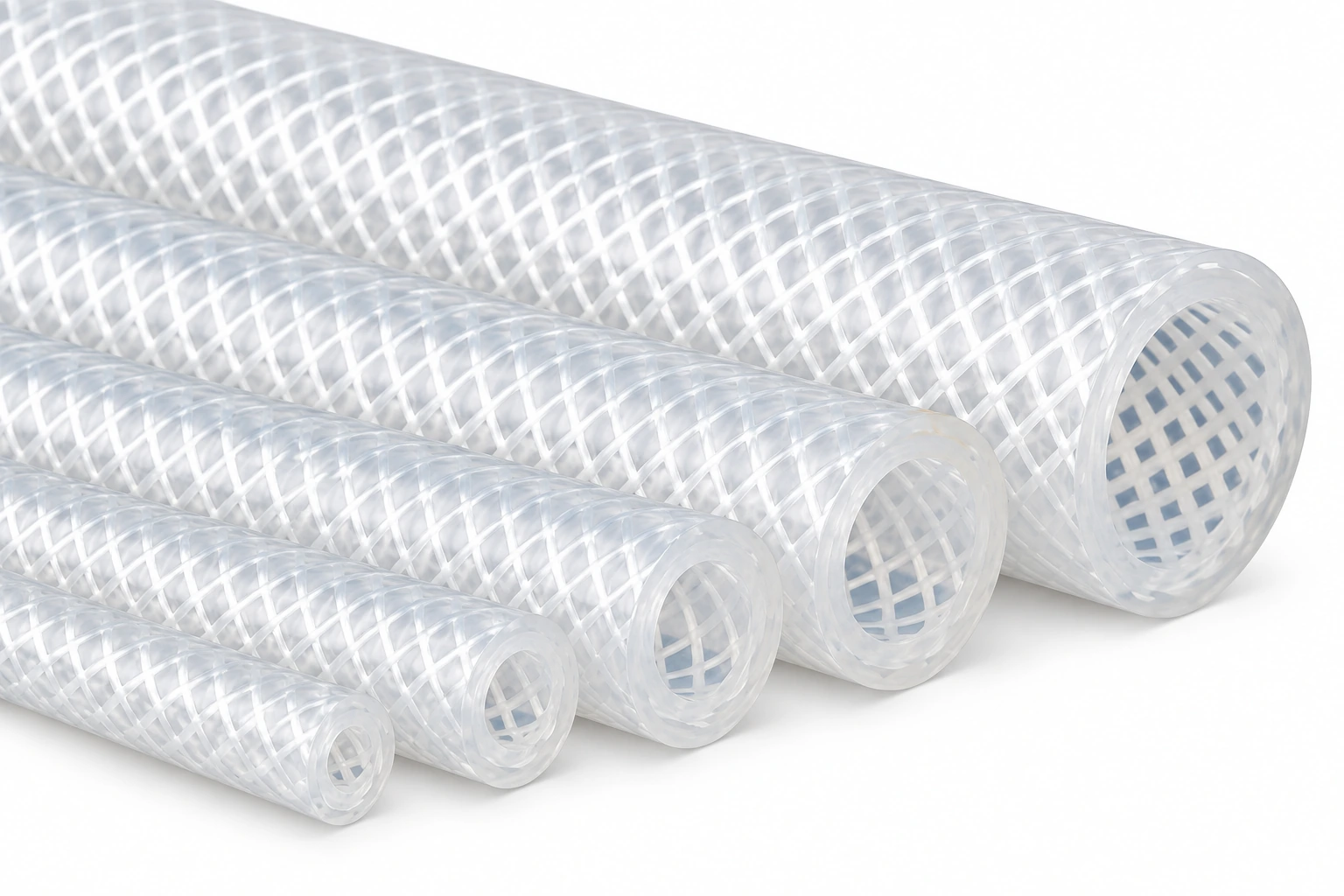
Colourful silicone braided tube
Compare Inside Diameter and Outside Diameter in mm, together with the listed Thickness and Colour. The cross-section drawing identifies the bore and outside diameter; confirm the selected tube material and service requirements.
Food grade silicone braided tube
Compare Inside Diameter and Outside Diameter in mm, together with the listed Thickness and Colour. The cross-section drawing identifies the bore and outside diameter; confirm the selected tube material and service requirements.
Need a different size? Share your drawing, mating dimensions and intended use to discuss a suitable part.
Discuss Your RequirementsProduct specifications
- Product form
- Hollow elastomer tubing for a fitted line or sleeve
- Material
- Silicone. Specify the compound grade for the selected service.
- Application focus
- Laboratory connections and food-processing equipment. Size the part against the selected assembly.
- Dimensions to confirm
- Inside diameter, outside diameter, wall thickness and cut length. Match these to laboratory connections.
- Stiffness
- Define the allowable deformation and hardness; a rigid or hard description alone is not a numerical material specification.
- Contact conditions
- Fuel, lubricating oil, hydraulic fluid and food ingredients: define concentration, temperature and contact time, then check compatibility with the chosen compound.
- Exposure to evaluate
- Oil splash. Validate the selected material under the combined conditions.
- Line layout
- Check bend radius, unsupported spans and clearance at both connections.
Need a quote or a custom part?
Send your requirements, drawings or samples to discuss standard and custom silicone rubber parts.
Email us[email protected]