
Rubber bumpers with threaded stud
The rubber bumpers with threaded stud are small accessories that are used to minimize the risk of damage, provide support, and to keep the equipment safe during work. They can be installed in private households, or they can be utilized in production processes, heavy-duty equipment, or industry-specific fields. These items are extremely durable and work well under pressure. The physical properties of the rubber ensure durability and they will not be affected even when exposed to harsh elements, moisture, chemicals, or extreme temperature.
The threaded stud ensures vibration isolation and it is great when it comes to shock absorption. The difference between these units and the regular bumpers is first the way they are designed and they are also a better solution for specific projects. They are much more practical and easier to install, and if you need additional protection for your equipment, then you should choose the rubber bumpers with threaded stud.
They provide effective isolation, and if you want the best result for your project, you need to pay attention to the exact model and dimensions of the units. We can help you pick the right size of the rubber bumpers with threaded stud, and if you need to make any adjustments or changes in the color, size, or even type of rubber that you need, we can help you out with it. Note that these units can also be uses as a leveling foot, they can be implemented as bumpers only, but their main purpose is to control the noise that comes when your equipment comes in contact with the floor or items around it. They are also used to provide protection that comes from forces caused by compression. The rubber bumpers with threaded stud are resistant to corrosion, it serves as a barrier between two parts of the equipment or the surrounding items, and they are extremely easy to install, remove, and maintain.
Rubber Feet & Bumper Size Catalog
Compare mounting style, overall size and recess dimensions. Each profile uses its own drawing and column meanings.
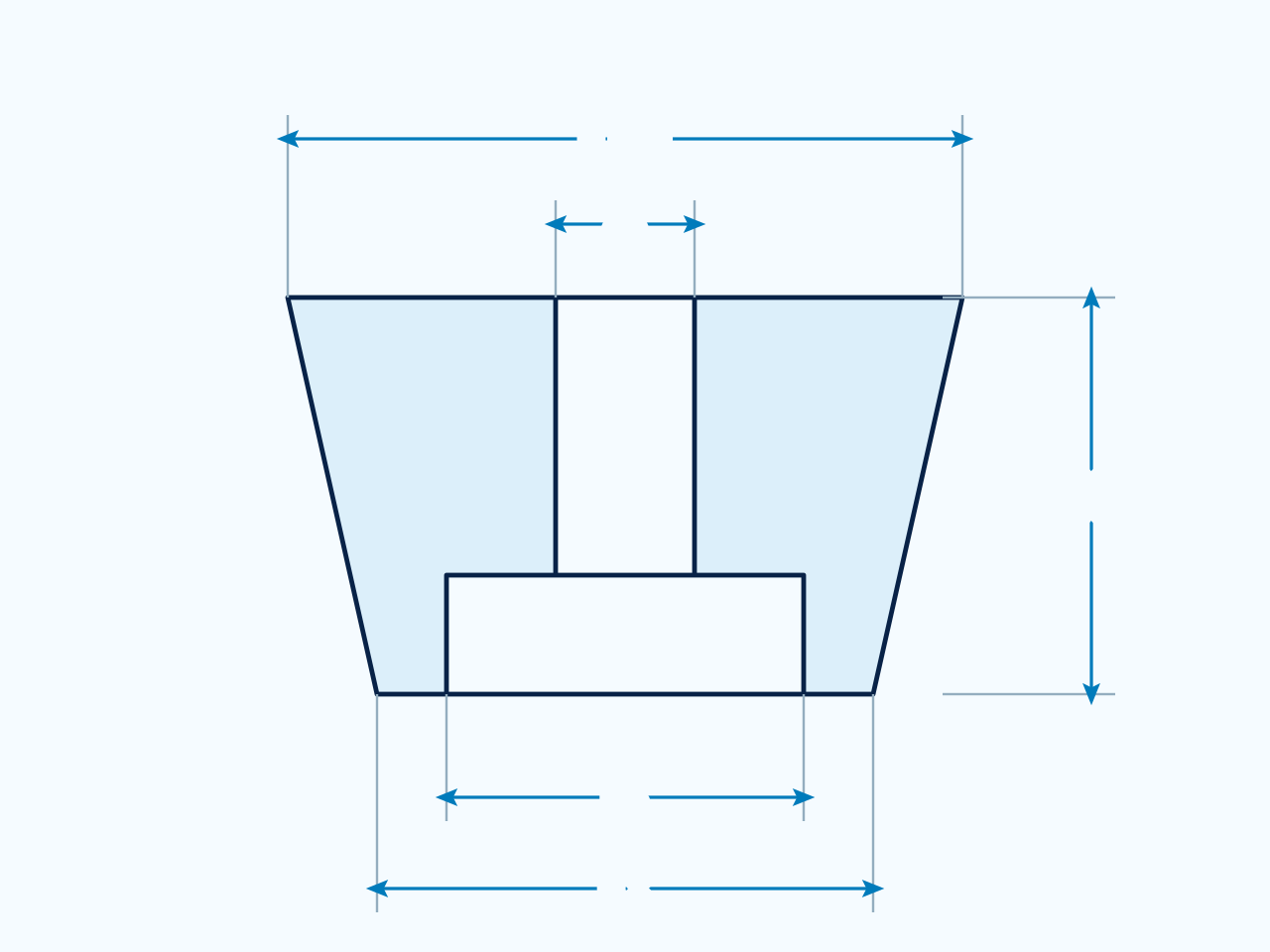
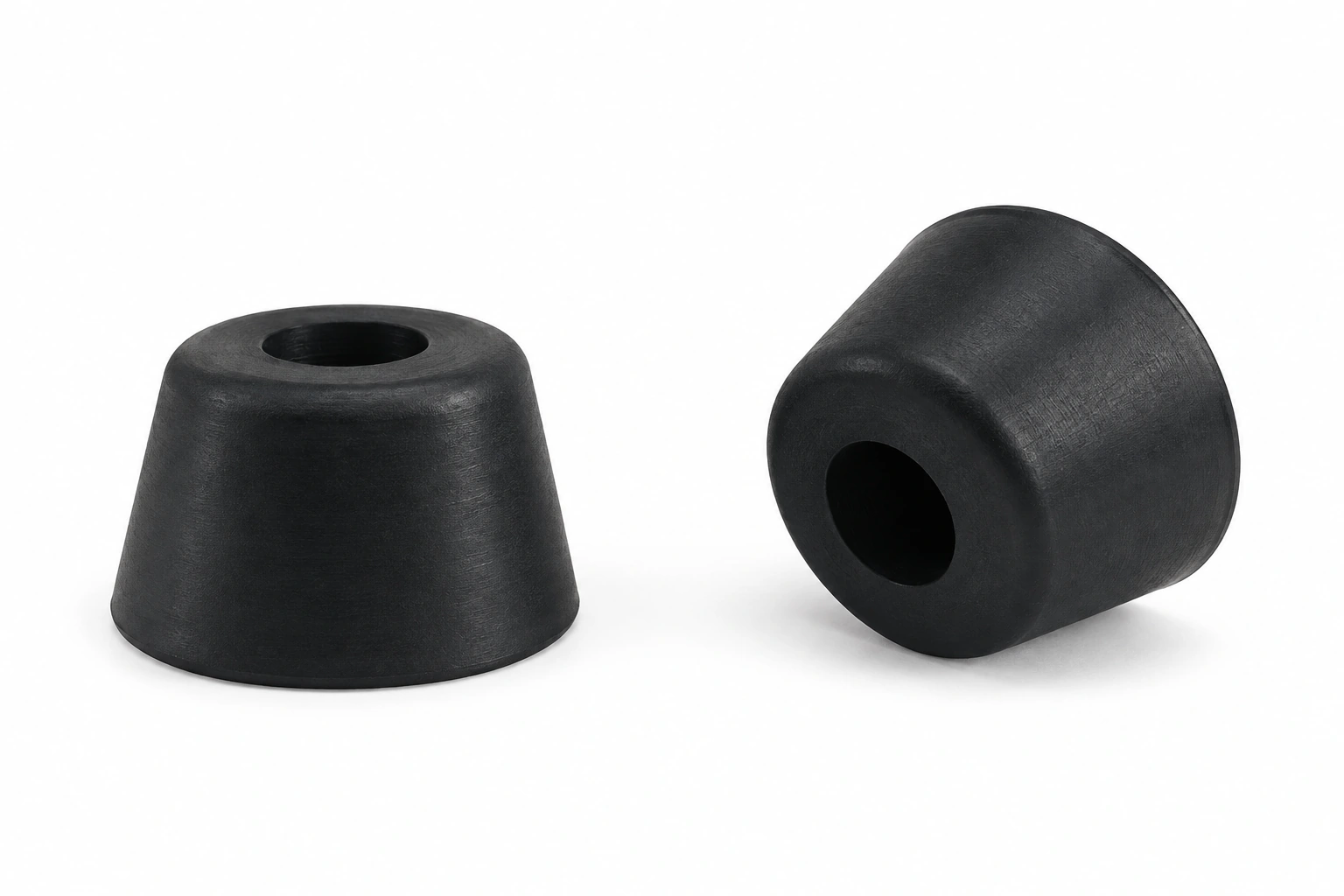
Recess Rubber Bumper
Compare OD, H, A, B and C in mm. C indicates the outer base dimension on this bumper profile, not the recess depth.
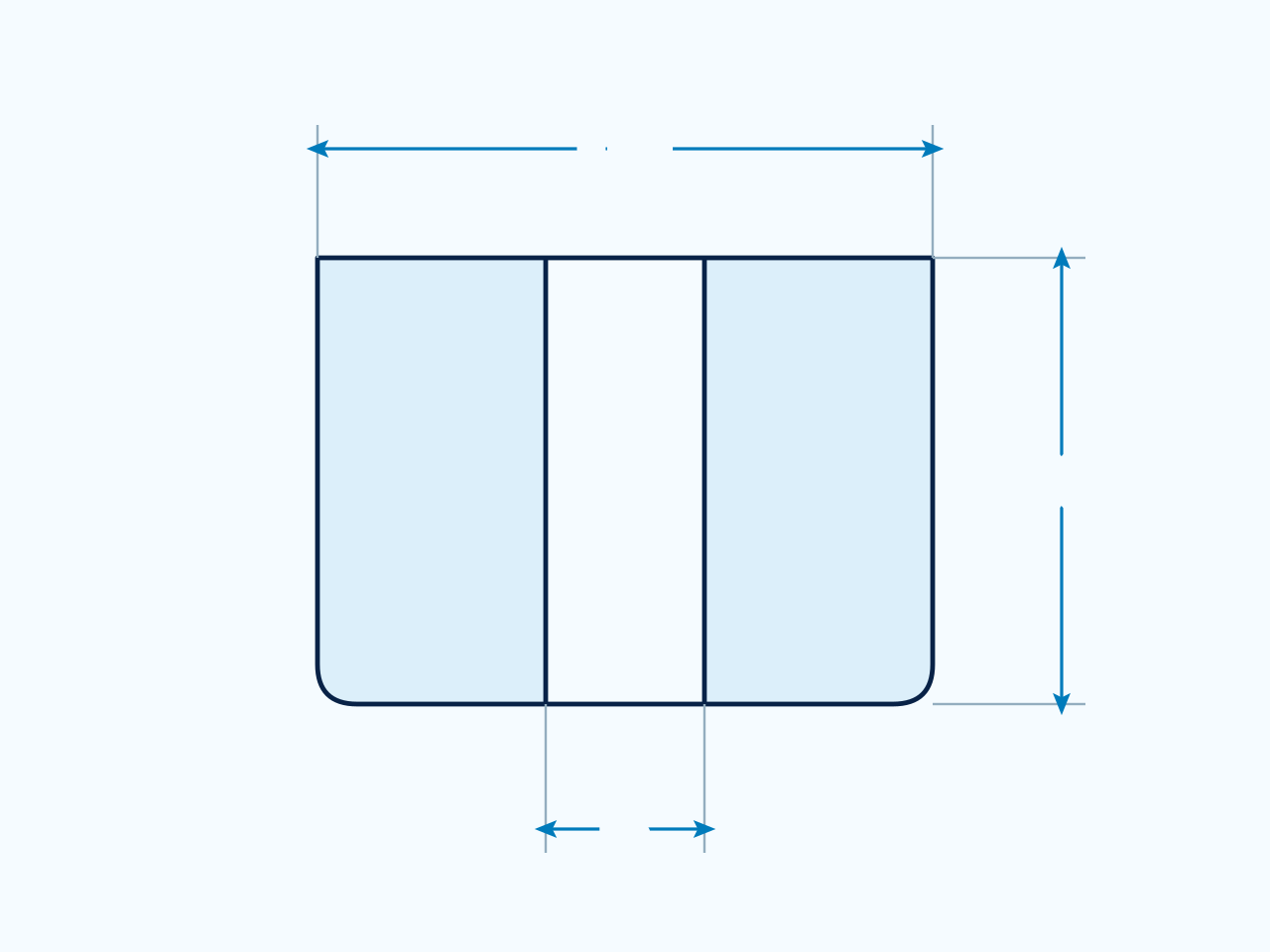
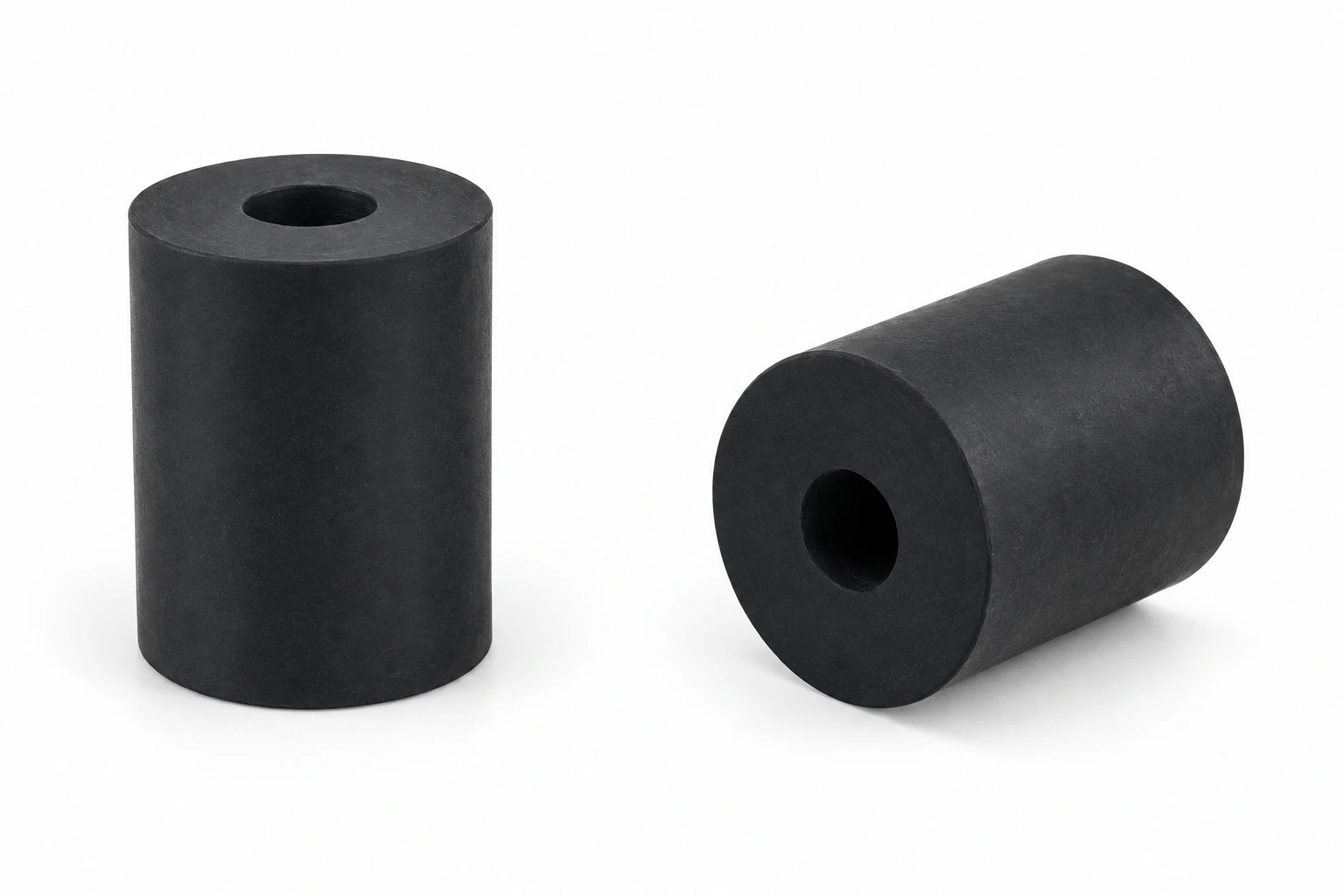
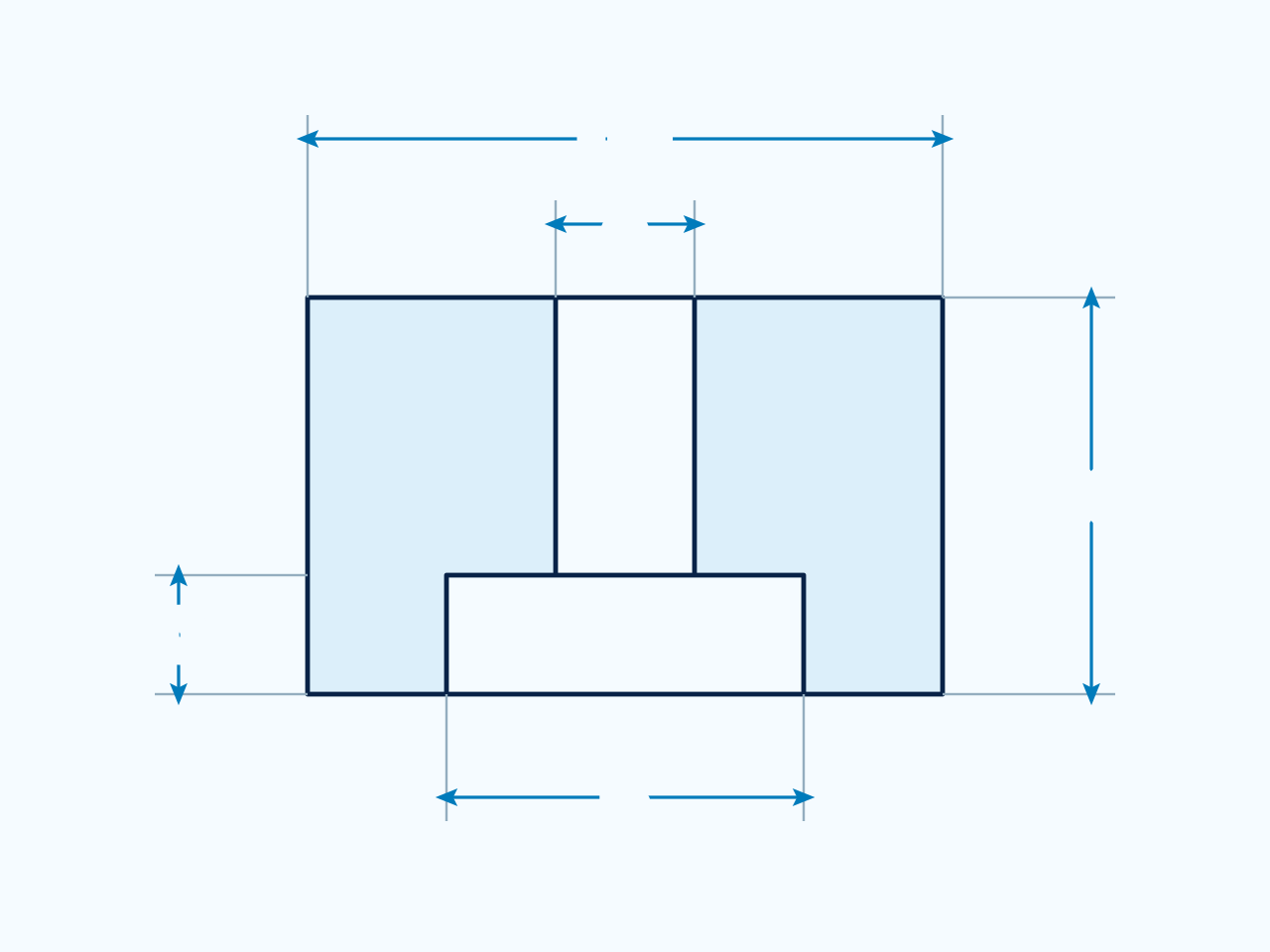
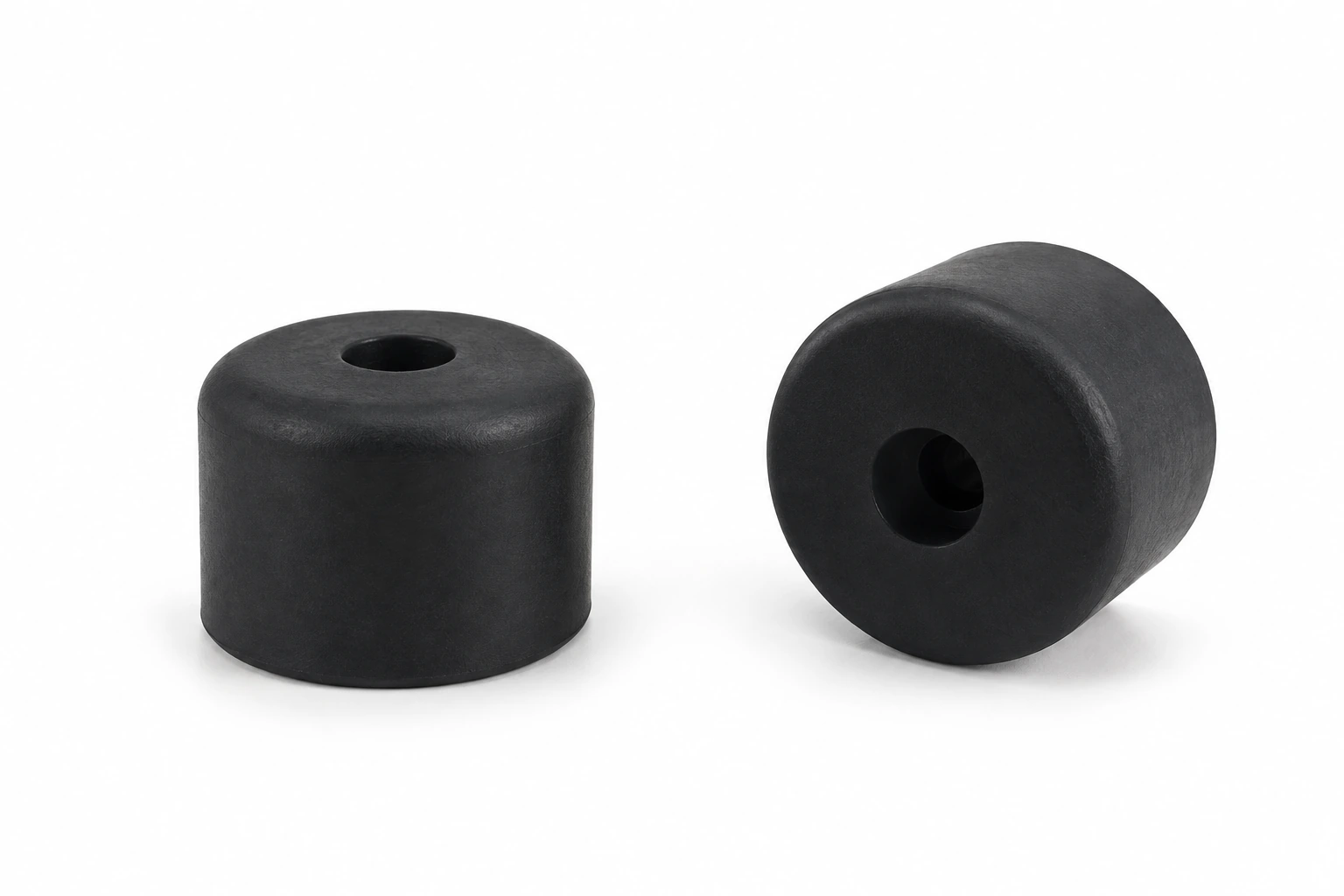
Cylindrical Rubber Feet
Compare OD, H and B in mm using the cylindrical-foot drawing. Material and colour remain listed separately.
Recess Rubber Feet
Compare OD, H, A, B and C in mm. C indicates the recess depth on this feet profile.
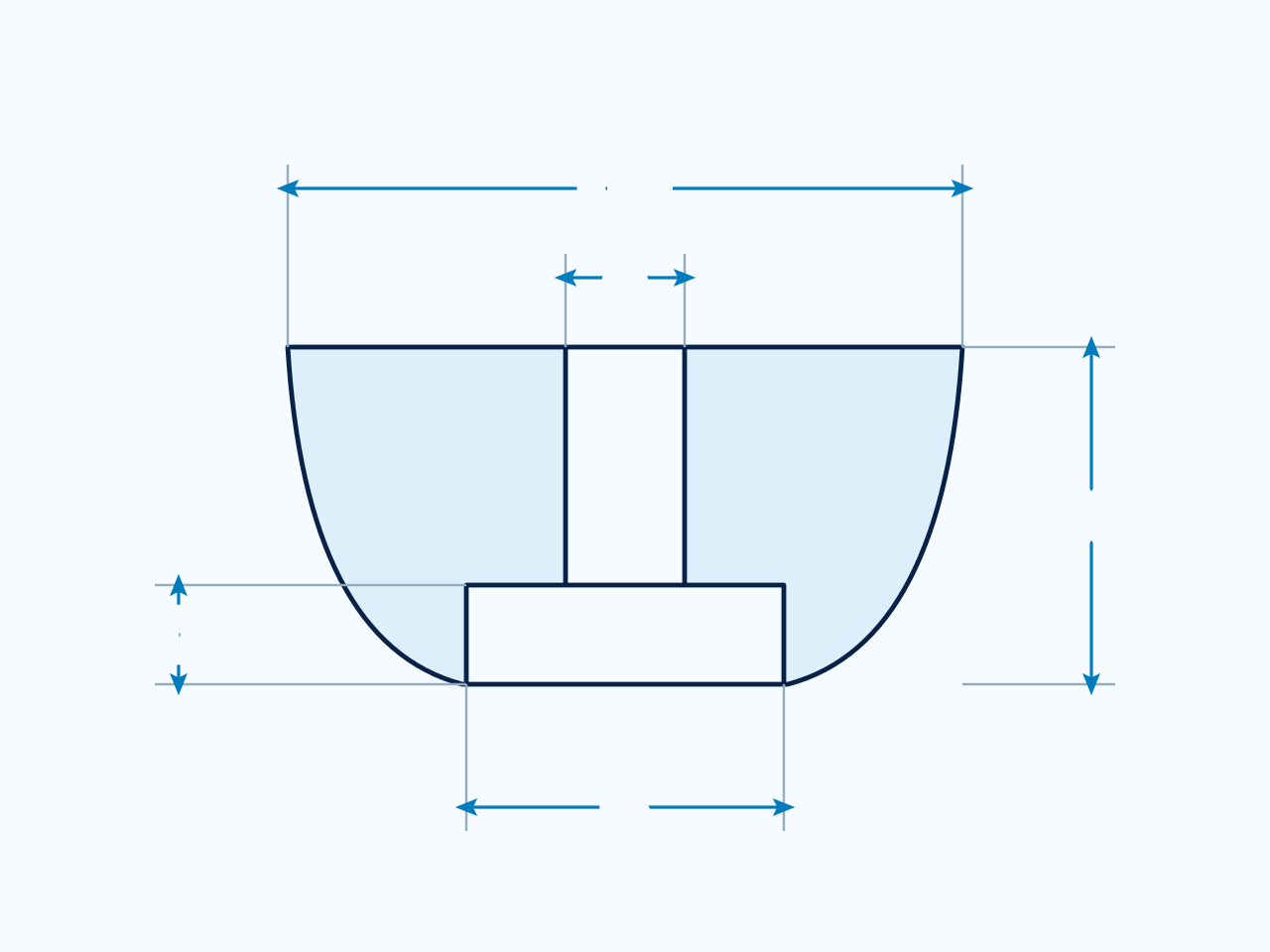
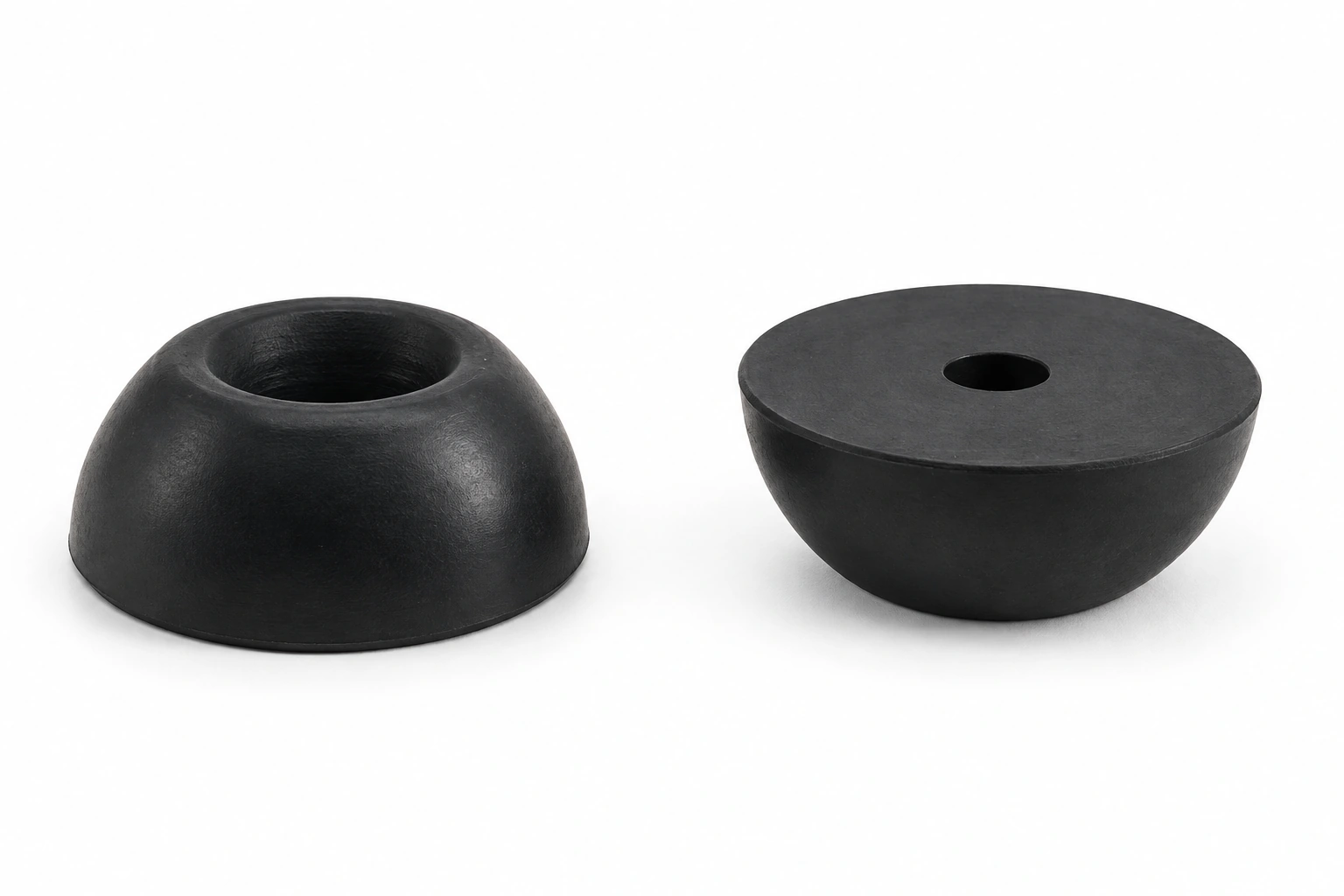
Hemispherical Rubber Bumper
Compare OD, H, A, B and C in mm using the hemispherical-bumper drawing.
Rubber Tips
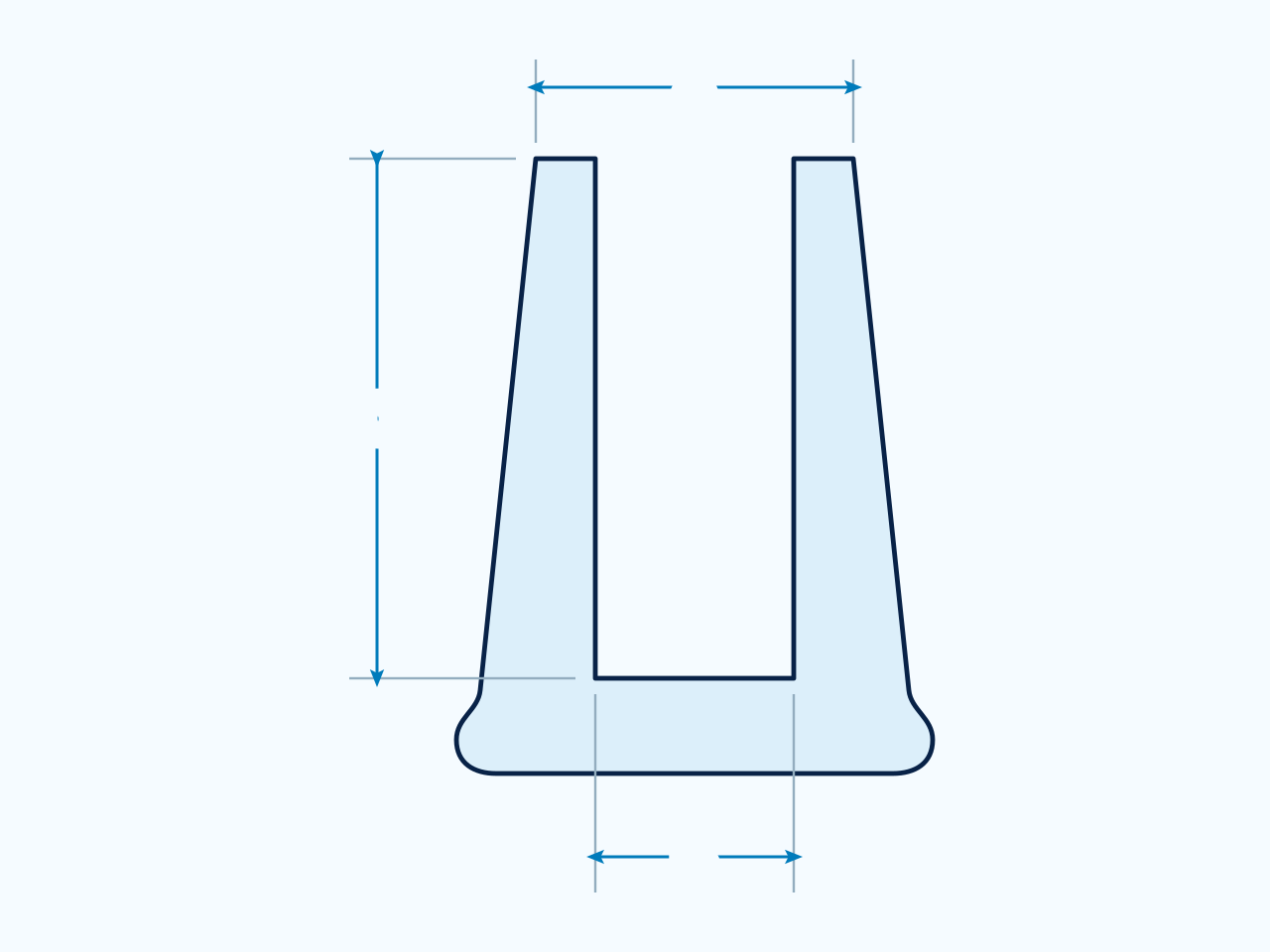
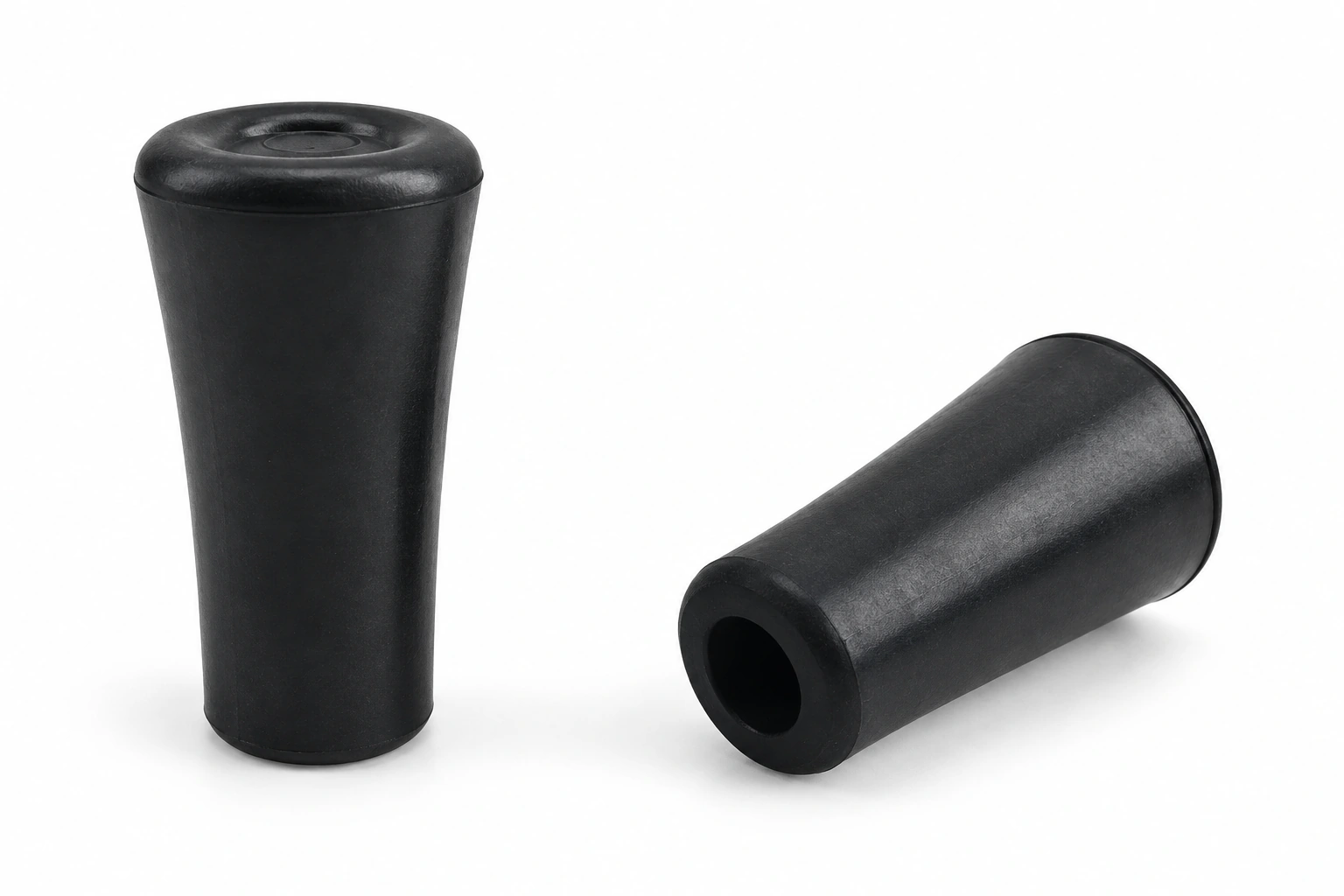
Compare A, B and C in mm using the open round-tip drawing. Check the mating leg dimensions and seating depth.
Rectangular rubber feet for chairs
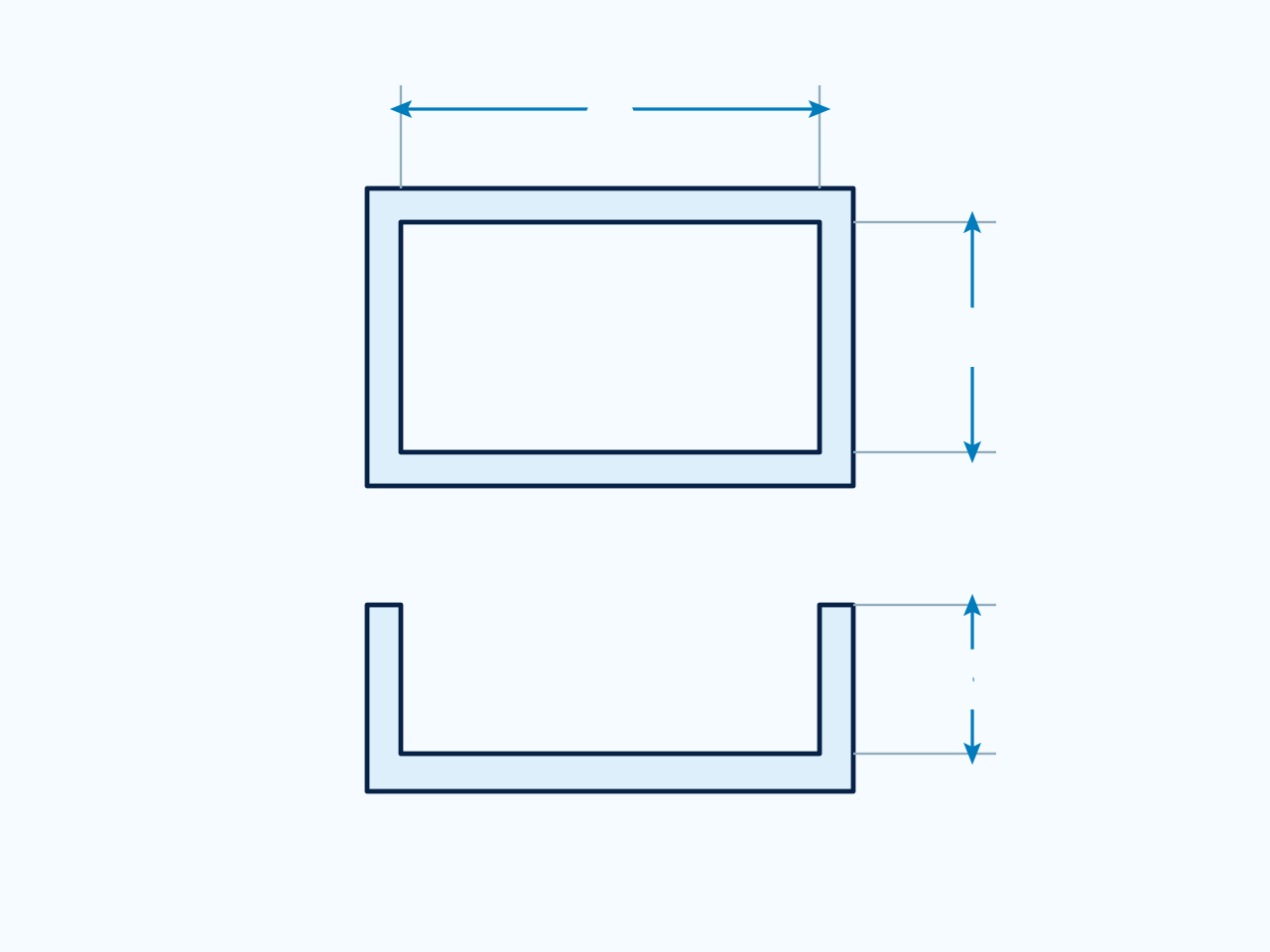
Compare A, B and C in mm using the rectangular-tip drawing. Check both sides of the mating leg and the seating depth.
Rubber Feet For Chairs
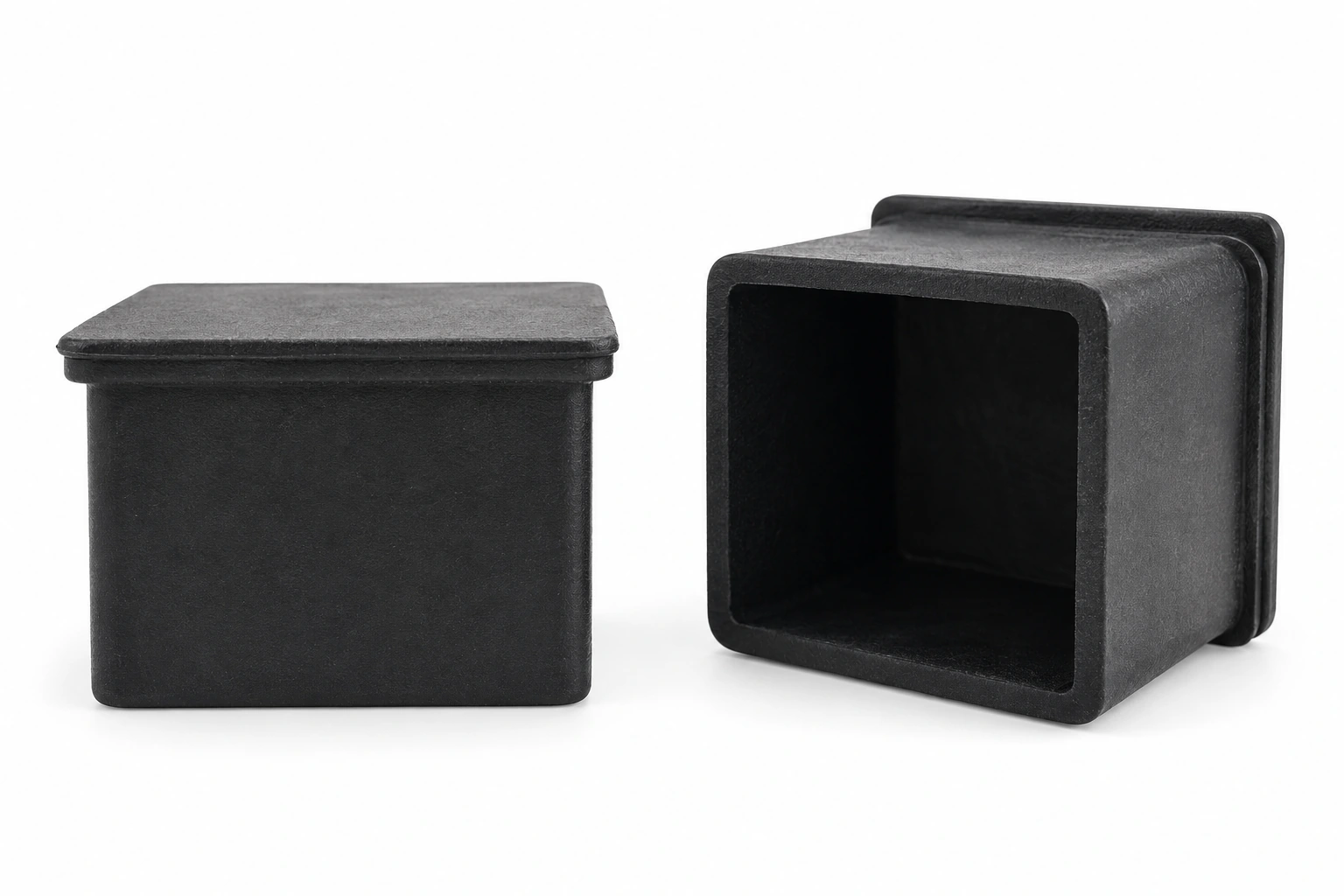
Compare A, B, C and D in mm using the square-tip drawing. Check the mating leg profile and seating depth.
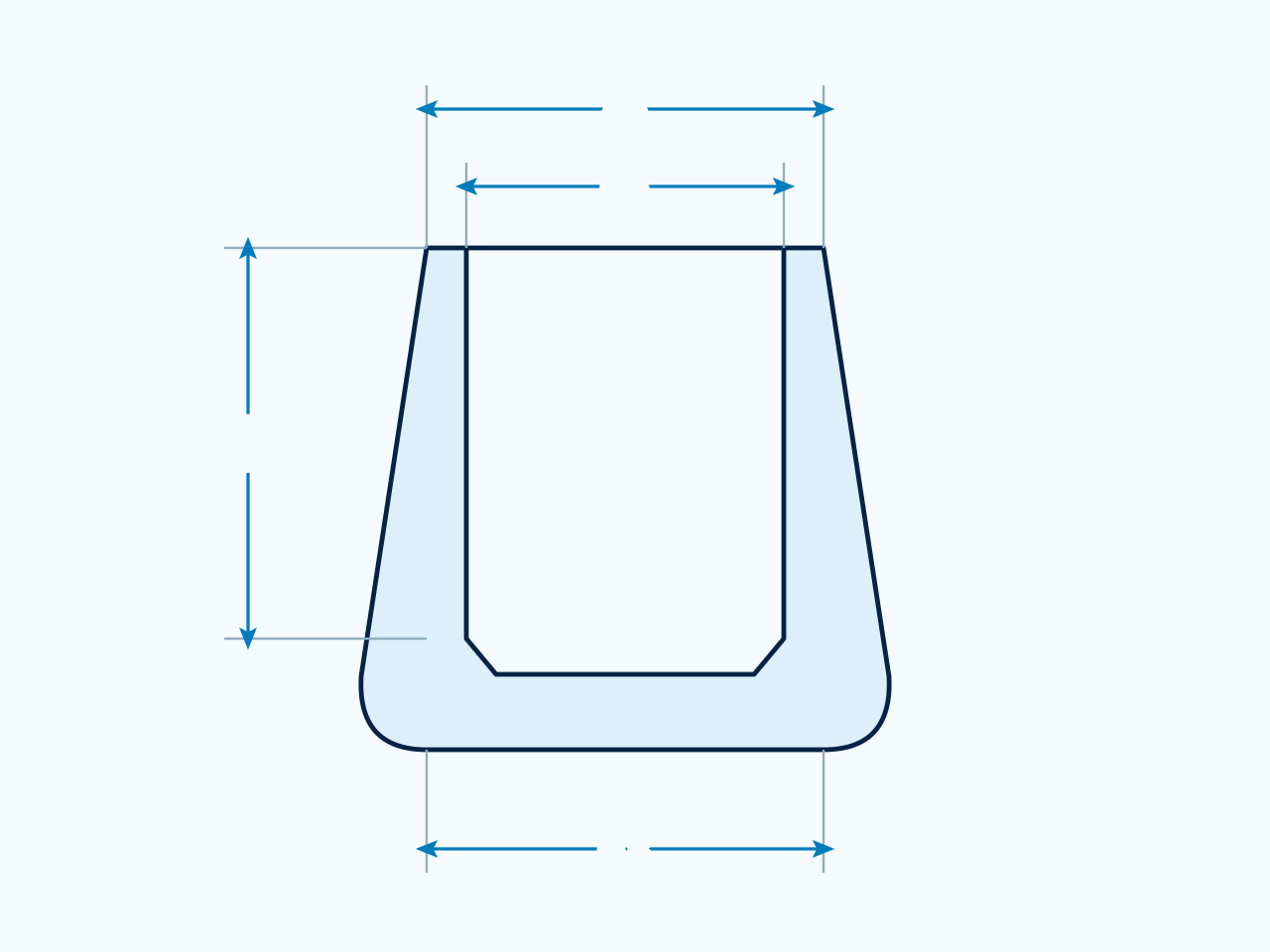
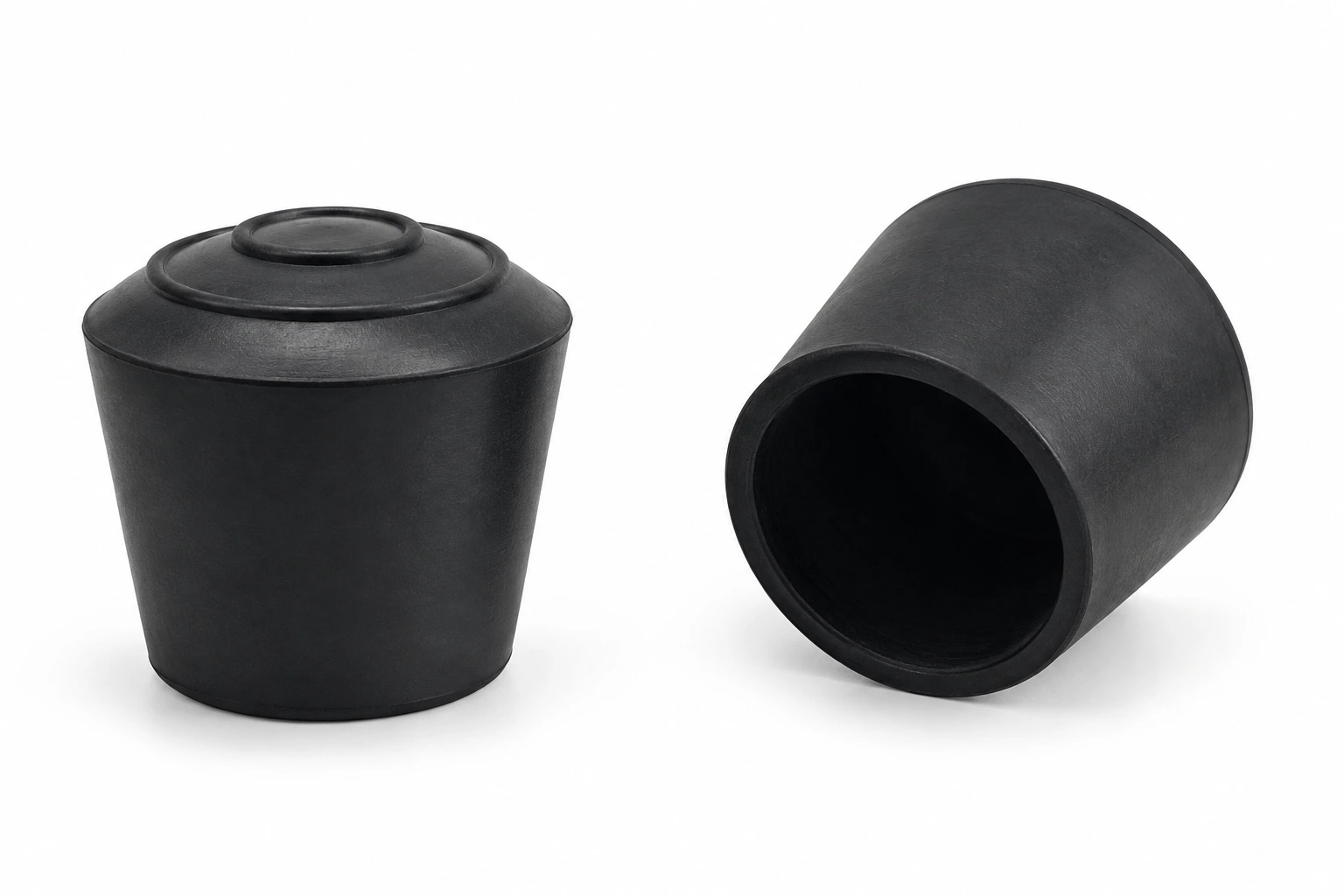
Need a different size? Share your drawing, mating dimensions and intended use to discuss a suitable part.
Discuss Your RequirementsProduct specifications
- Product form
- Resilient contact stop
- Dimensions to confirm
- Contact-face area, projection and mounting geometry.
- Stud connection
- Specify the external thread, protruding length and any required wrenching or locking arrangement.
- Fastening
- Define thread size, pitch, engagement and clearance; identify whether the hardware is molded in or fitted separately.
- Exposure to evaluate
- Heat and cold cycling and moisture. Validate the selected material under the combined conditions.
- Working clearance
- Define the closing gap, contact direction and compression available at the stop.
Need a quote or a custom part?
Send your requirements, drawings or samples to discuss standard and custom silicone rubber parts.
Email us[email protected]