
Rubber bung plug
Having a perfectly functional laboratory is really essential to make the experiments as precise as possible. Other than the glass equipment like eprouvettes and flasks you will need other materials too. Metal equipment is really important too like stands, metal rods for stirring, and also containers for water baths. Since you want to measure everything to make your experiment flawless you will need scales for grams and pipettes for milliliters. If you are making more complex experiments, you will need tubes to connect more equipment one to another especially when you are distilling. That is when rubber bung plugs come into play.
What is their purpose? Well, they are made to seal an opening either from a bottle, eprouvette, flask, or other types of equipment that holds some kind of liquid in there. They are cylindrical-shaped objects that are giving good waterproofing and are also great dust repellants. That is a big priority when working with chemicals. The rubber bung plugs can be made from different materials but mostly they are made from synthetic rubbers since they offer good temperature resistance.
They can come with a hole if you need to insert a pipe to connect it with other elements in order for the liquid or gas to be sealed in a circle. There can be two holes if you need to make the transfer of materials in the glass. For example, you pour liquid from one hole, the container is getting heated up and gas escapes from the other hole. Also, if there is only one hole you can put measuring objects in it like a temperature indicator to measure the solution’s temperature. If you are not sure how you are going to use the rubber bung plug, you can buy one without holes and you can drill them if you need them along the way.
Stopper & Plug Size Catalog
Compare four stopper profiles and check the selected part dimensions against your opening and available depth. Each profile has its own drawing and dimension meanings.
Custom colors are available to your Pantone color code. Include the code in your inquiry.
RST T-Shaped Plugs
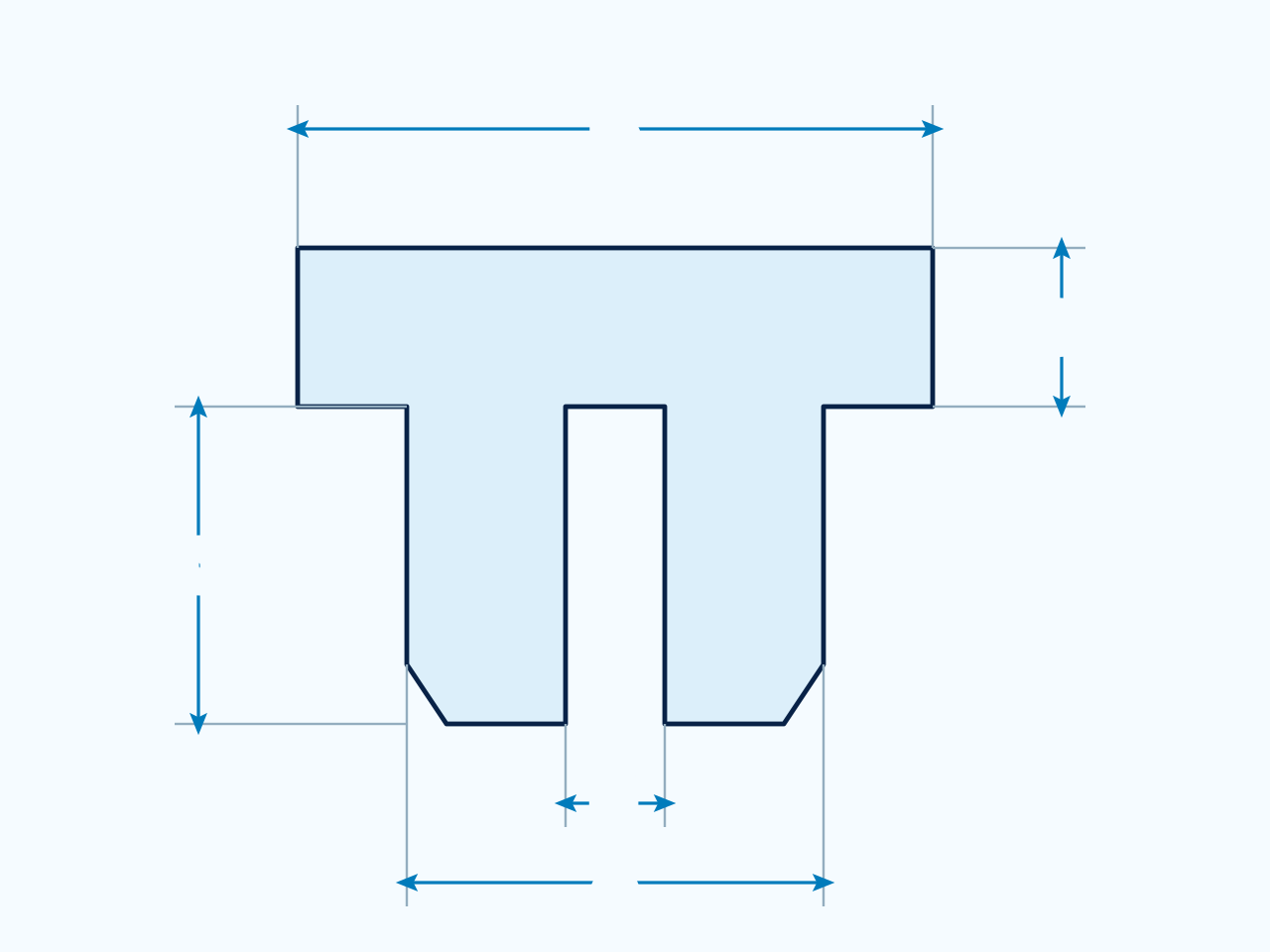
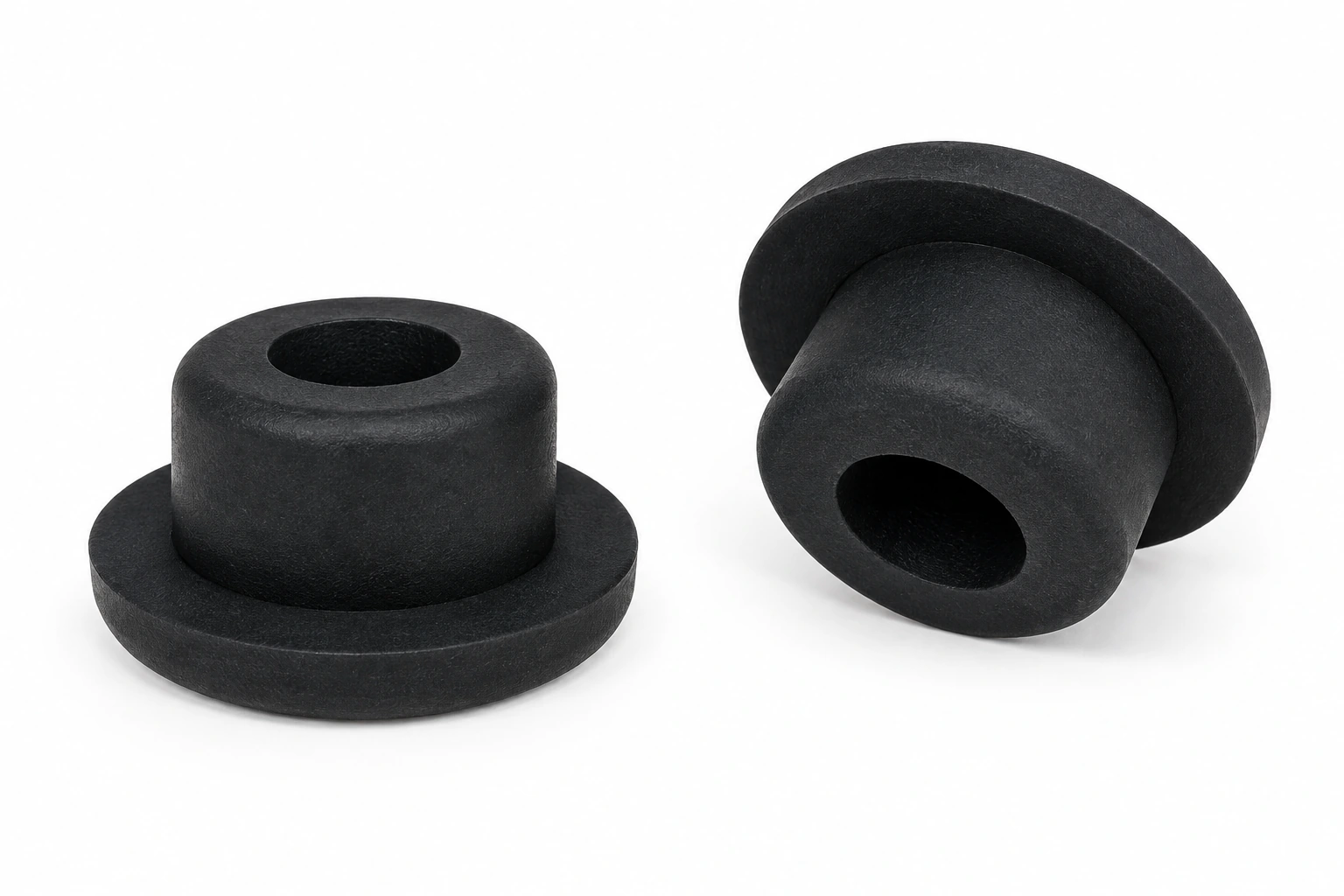
Match stem diameter A, flange diameter B, stem length C and flange thickness D. E refers to the underside recess; use the selected row and approved drawing to confirm the actual profile.
RSA Tapered Corks
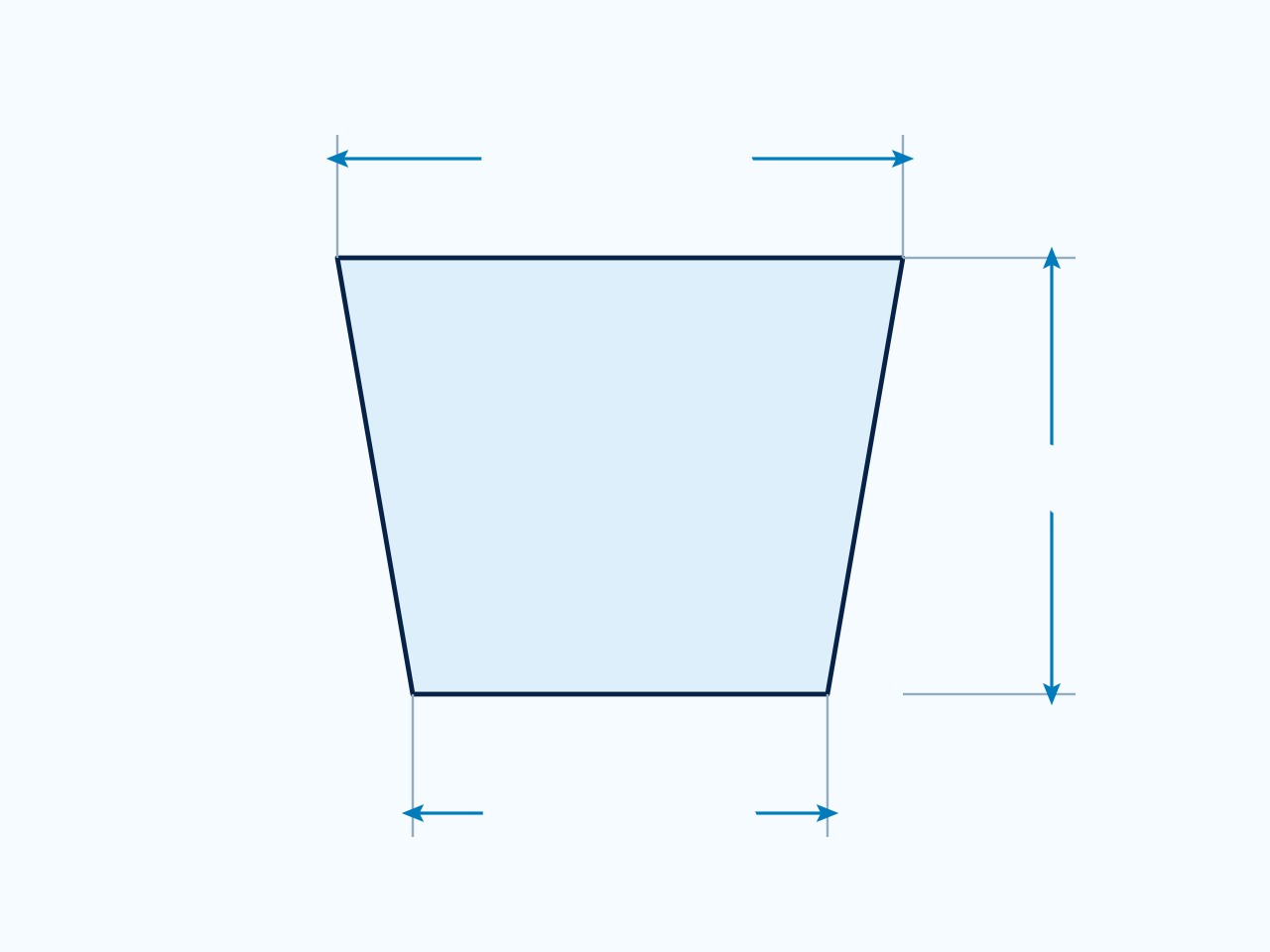
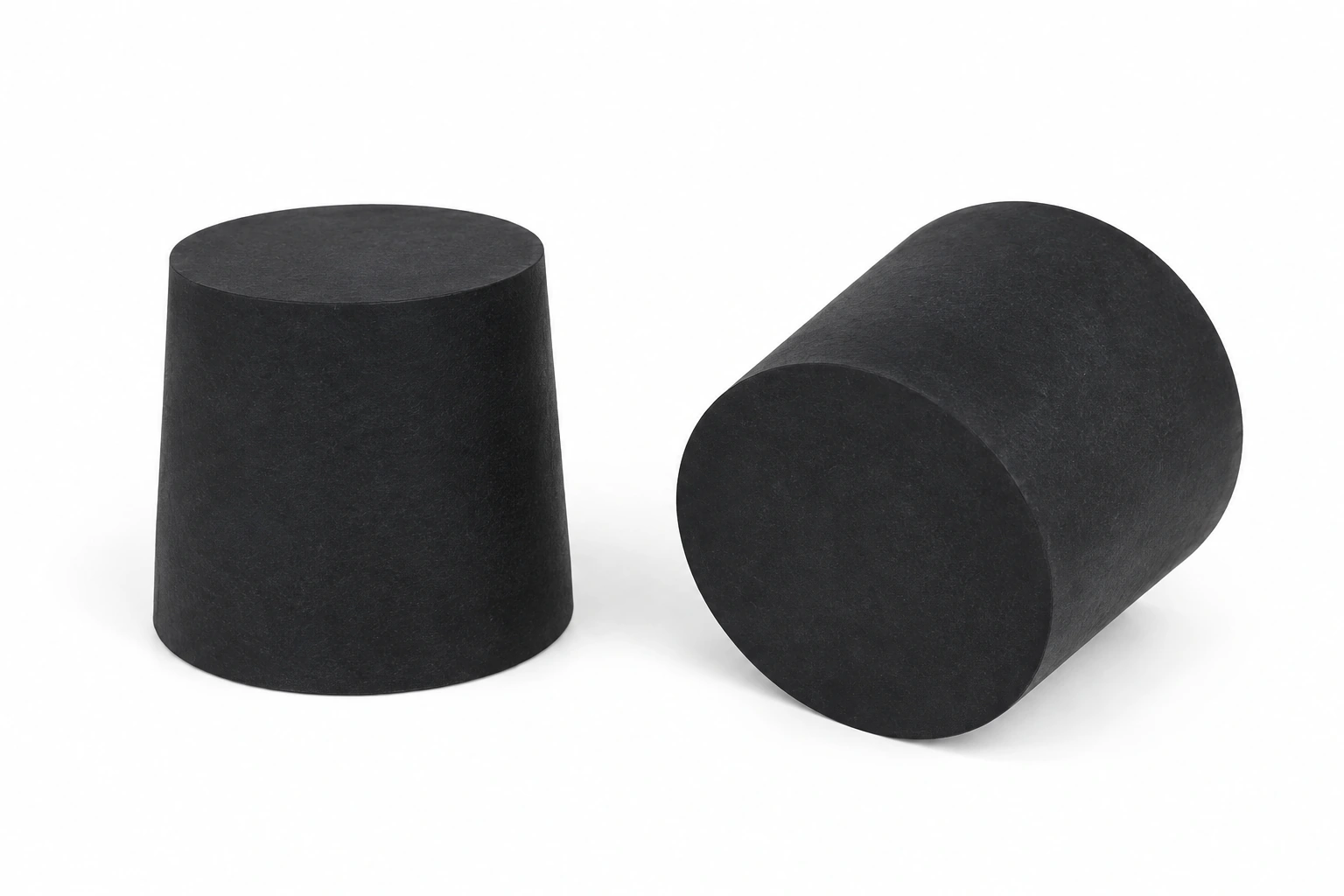
Compare large-end diameter A, small-end diameter B and Height, in mm. The mating bore and required seating depth determine where the taper contacts the opening.
RSB Undercut Plugs
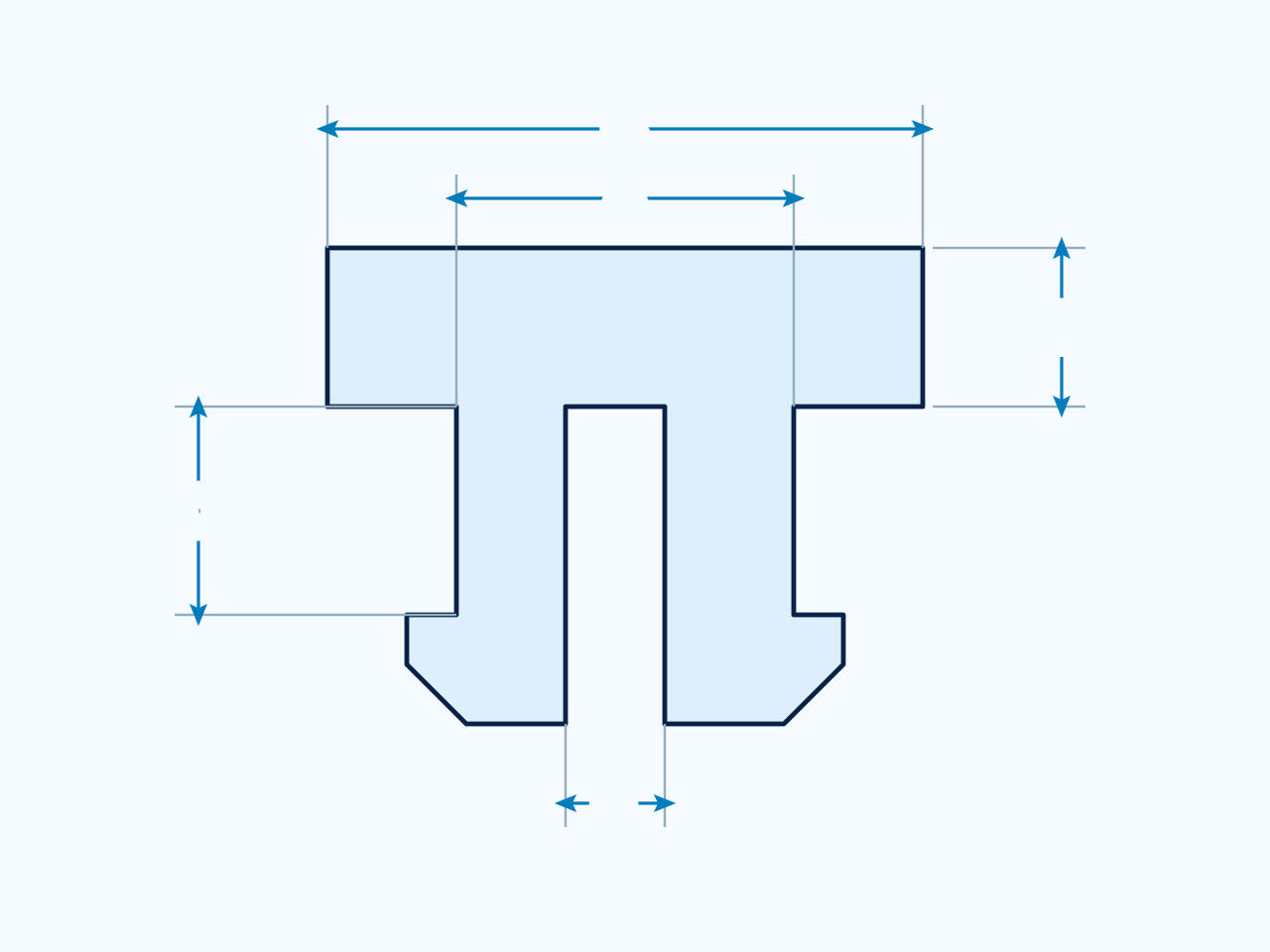
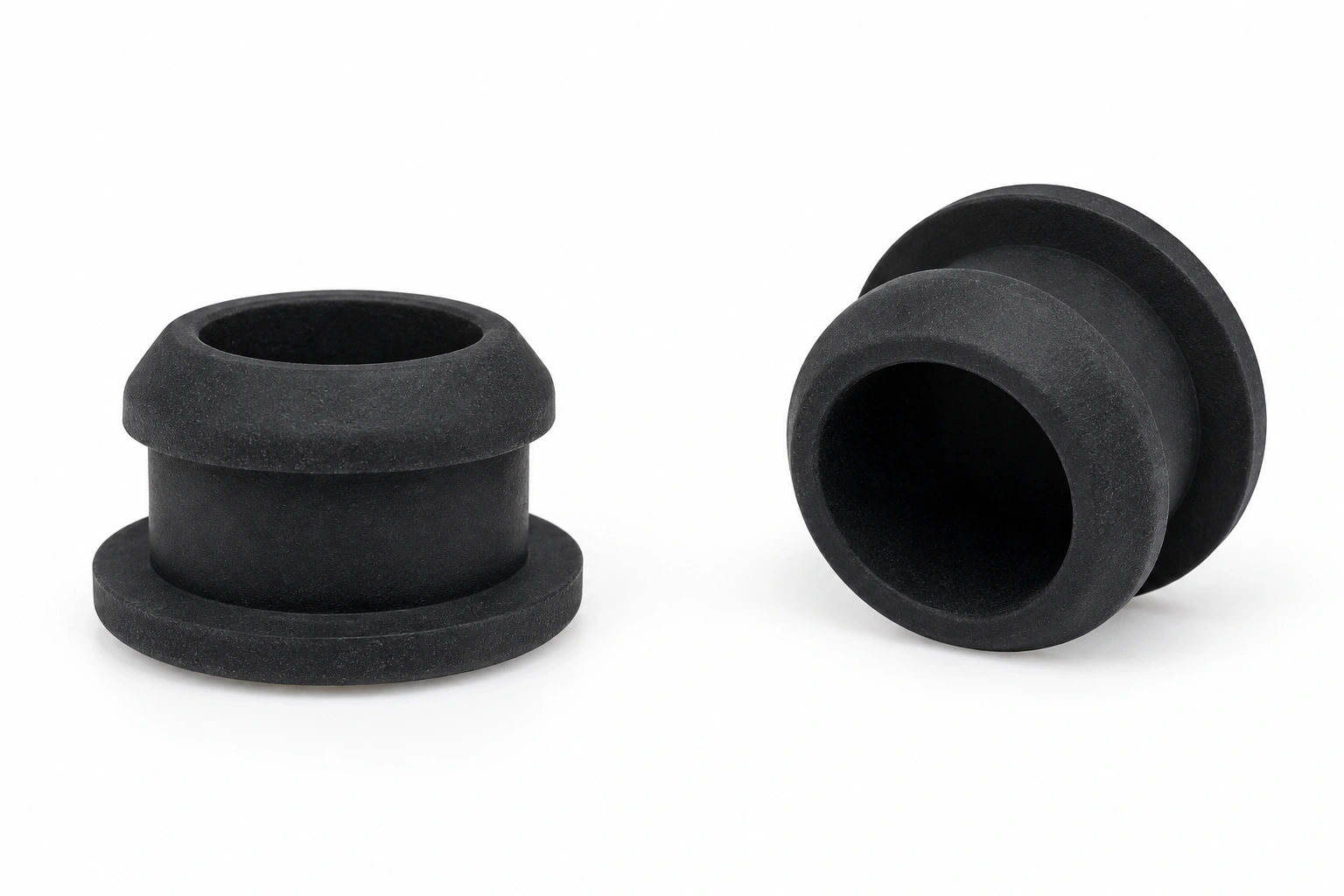
Compare neck diameter A, flange diameter B, flange-to-lip distance C and flange thickness D. Check panel thickness and rear clearance. E refers to the underside recess.
RSD T-Shaped Stoppers
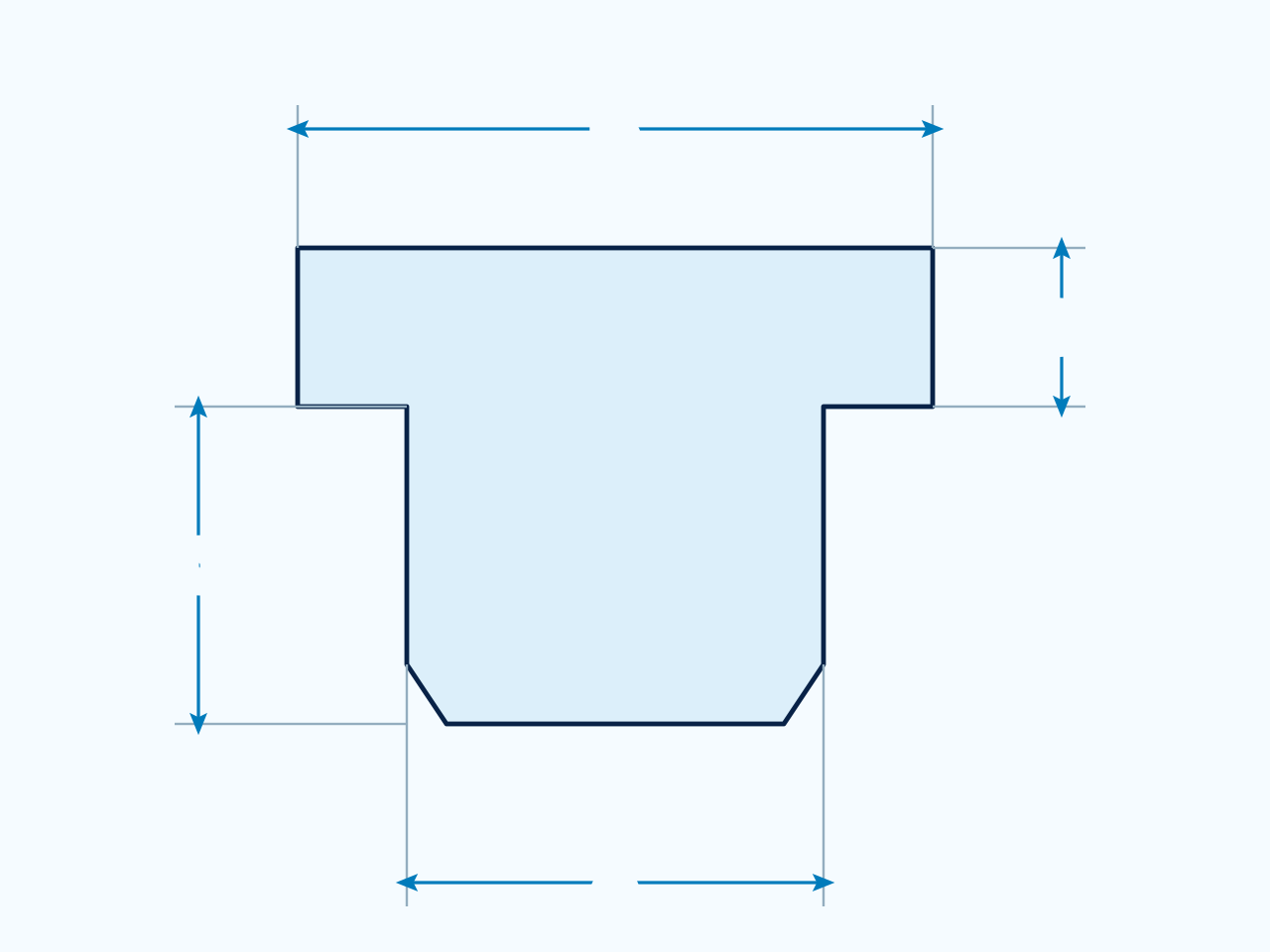
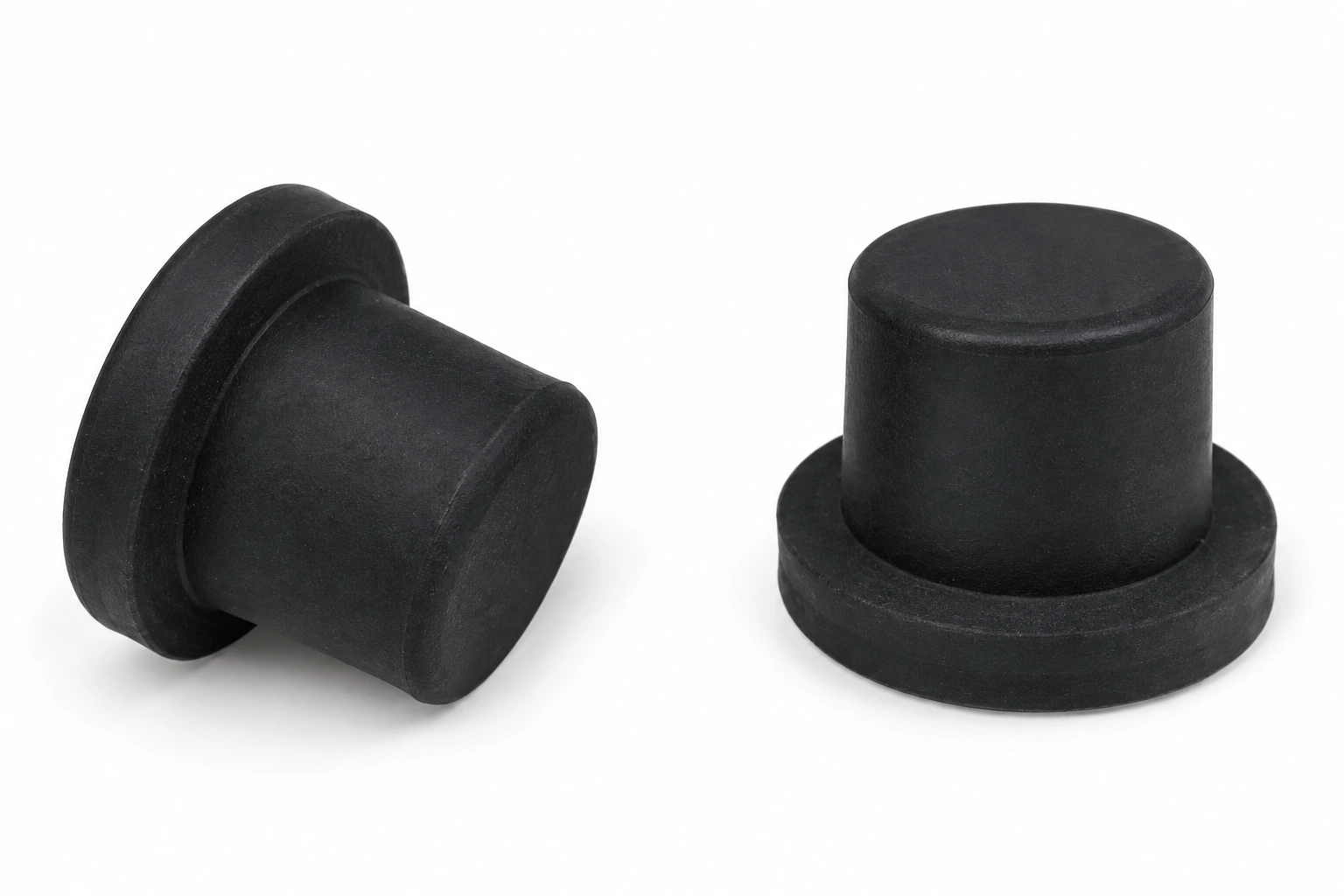
Compare stem diameter A, flange diameter B, stem length C and head thickness D, in mm. Check the seating surface and available depth as well as the hole diameter.
Need a different fit? Share the opening dimensions, mating profile and intended use for a custom size.
Discuss Your RequirementsProduct specifications
- Product form
- Removable closure fitted inside an opening
- Application focus
- Laboratory vessels, laboratory flasks and bottle necks. Size the part against the selected assembly.
- Dimensions to confirm
- Opening diameter, closure profile, insertion depth and exposed grip. Match these to laboratory vessels and laboratory flasks.
- Profiles discussed
- Cylindrical sections. Select the profile that matches the mating part and dimension that section explicitly.
- Contact conditions
- Water and other gases: define concentration, temperature and contact time, then check compatibility with the chosen compound.
- Exposure to evaluate
- Dust or debris. Validate the selected material under the combined conditions.
- Seating check
- Check the sealing contact around the opening and the force needed for insertion and removal.
Need a quote or a custom part?
Send your requirements, drawings or samples to discuss standard and custom silicone rubber parts.
Email us[email protected]