
Rubber Cap For Pipes
There are pretty much numerous use case scenarios for rubber caps. You can use them to protect the wooden floors from scratches by placing them on the bottom of the chair or table legs, you can place them on the bottom of the sofa legs, but you can also use them as protective devices for ends of various pipes of various shares.
A rubber cap for pipes is a very versatile product. Not only will it protect the opening of a pipe, but it will also provide a waterproof seal to the pipe, which is actually the main use-case scenario for this product. Plumbers are very keen on these products because it allows them to waterproof the connections between the pipes. But, you do not have to be a plumber to use a rubber cap for pipes. You can do it all by yourself. These are very easy to use and install. You simply put them over an opening, and if you have chosen the corresponding size, the rubber cap will create a nice, snug, waterproof seal. In some instances, the cap will come with a tightening ring around it, so you can seal a pipe opening even better.
A rubber cap for pipes can be made from different materials, and it can be designed in various ways. Not all pipes are used for the same purpose. Therefore, we have to manufacture all kinds of rubber caps for pipes. As far as options go, rubber caps are mostly circular in shape, as most pipes are, but when it comes to rubber materials – you have a lot more options. Starting from natural rubber, over nitrile and neoprene, and all the way to silicone – we manufacture rubber caps for pipes from all different kids of rubber, so that you can use them wherever you want to.
Rubber Cap Size Catalog
Compare the internal and external dimensions of rubber caps against the part being covered.
Custom colors are available to your Pantone color code. Include the code in your inquiry.
Rubber Caps-RSE
Compare A (inner diameter), B (outer diameter), C (inner depth) and D (total height), in mm.
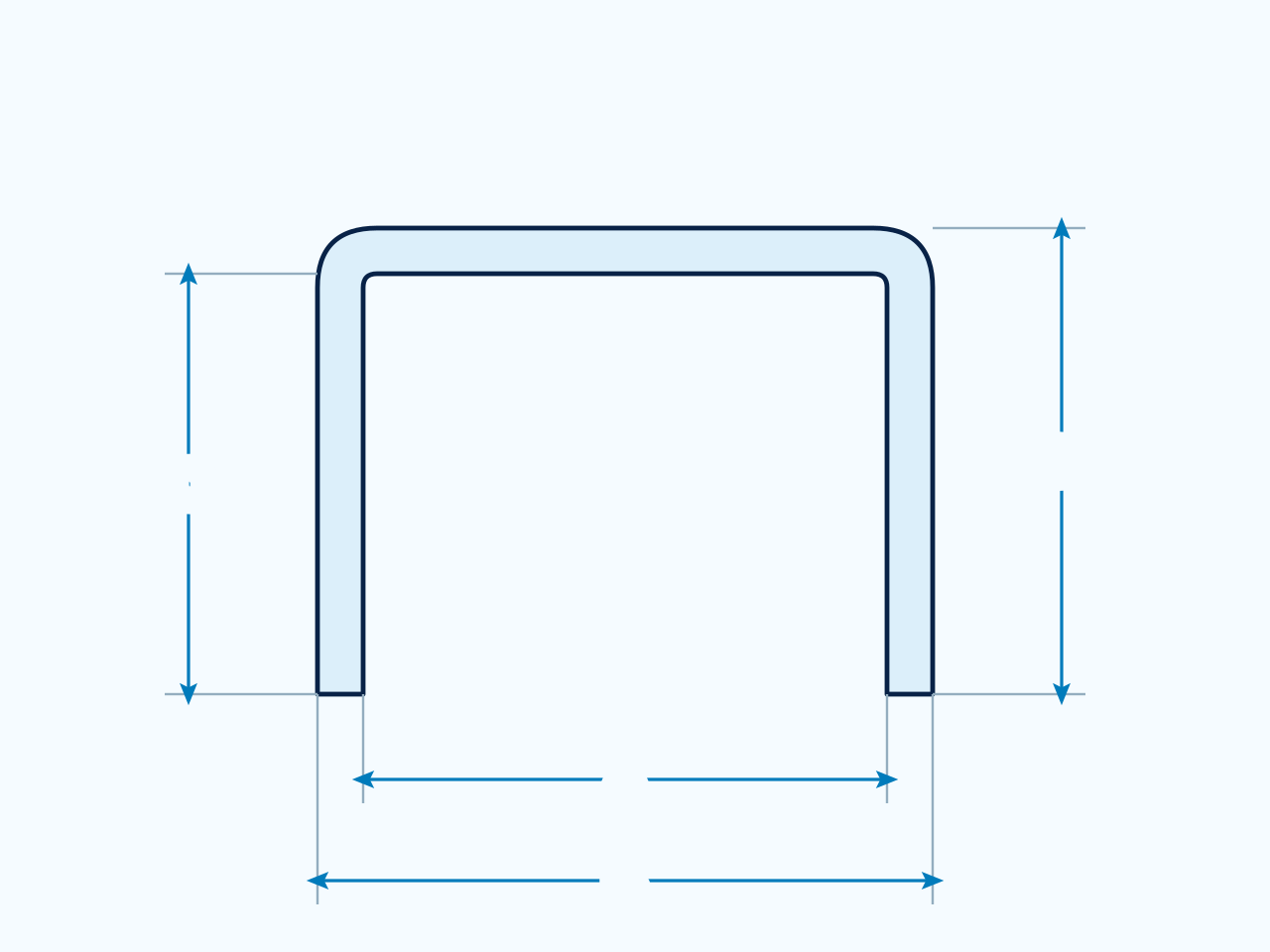
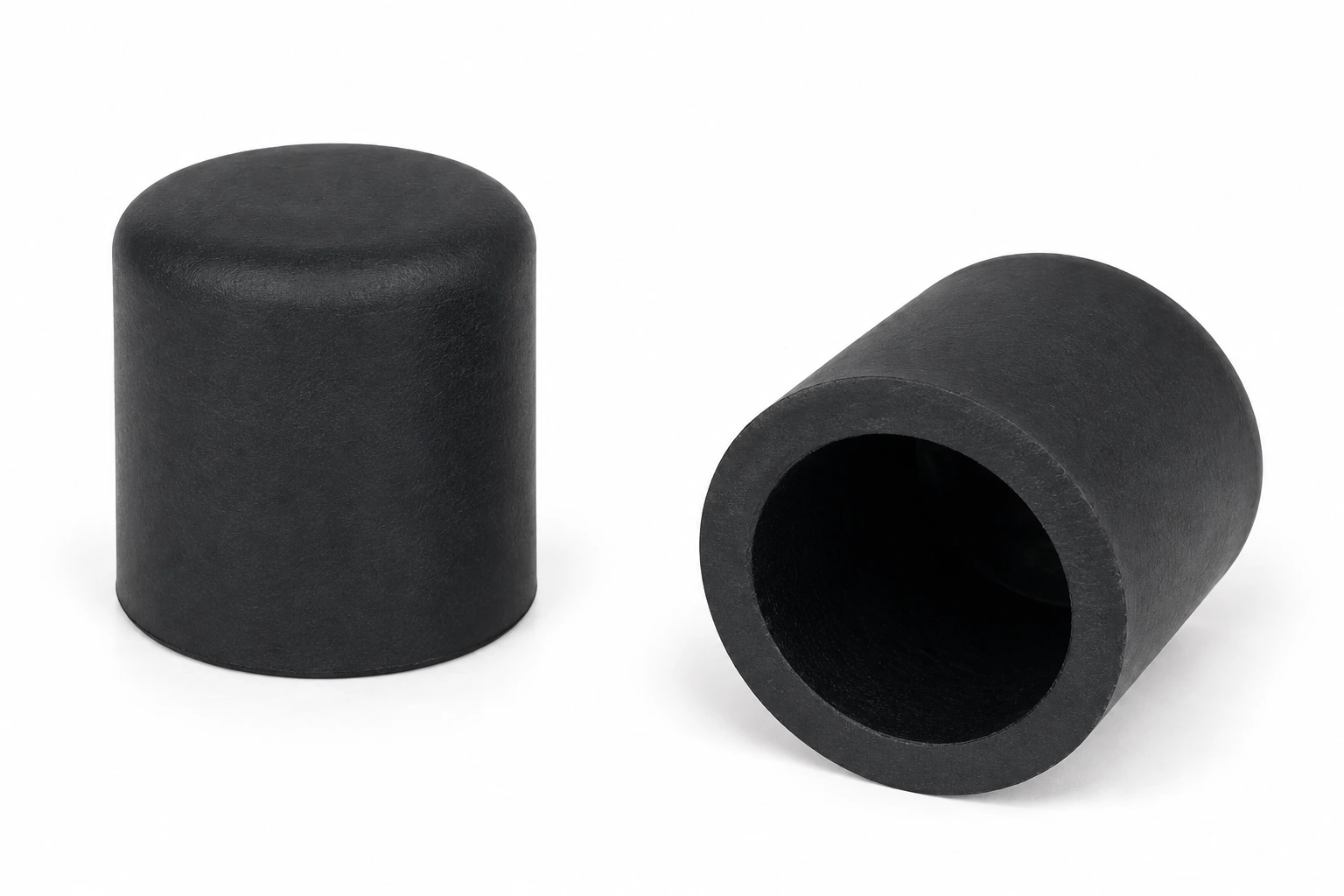
Need a different size? Share your drawing, mating dimensions and intended use to discuss a suitable part.
Discuss Your RequirementsProduct specifications
- Product form
- Protective cover fitted over a component end
- Material options discussed
- Silicone, NBR, chloroprene rubber (CR) and natural rubber / latex. Choose one formulation for the actual contact and loading conditions.
- Application focus
- Pipe or conduit ends. Size the part against the selected assembly.
- Dimensions to confirm
- Mating outside dimensions, cover depth, cavity and wall thickness. Match these to pipe or conduit ends.
- Profiles discussed
- Round profiles. Select the profile that matches the mating part and dimension that section explicitly.
- Cover retention
- Check the installed overlap and pull-off force on the actual end profile.
Need a quote or a custom part?
Send your requirements, drawings or samples to discuss standard and custom silicone rubber parts.
Email us[email protected]