
Rubber Caps Guide
Rubber caps find their use in various technical and non-technical applications. These caps are perfect for concealing holes, sealing off containers, especially those containing sensitive materials or chemicals, and as furniture or leg caps to avoid abrasion upon contact. In most households, rubber table leg caps are widely used. They help in either leveling all the table legs or reducing friction when you slide the table along the floor. The portion of the table or the bottom doesn’t get scratched. They’re available in numerous colors, sizes, and shapes. You can still get custom-made rubber table leg caps to exactly fit the dimensions of your table or furniture.
The rubber caps can be fabricated with various materials. Still, silicone, EPDM (Ethylene Propylene Diene Monomer) rubber, and vinyl are generally used to make them. Each type of rubber cap has its own defining characteristics. Silicone rubber caps are primarily used in high-temperature environments. EPDM rubber caps are used when several caps are required as they’re usually cheap. Vinyl caps are used to make airtight seals or in environments where high flexibility is desired.
Rubber caps can also be classified as per their purposes. Paint rubber caps can be used in the packaging of paints. Thread rubber caps can be used for thread protection. And rubber table leg caps are used to protect furniture such as chairs and tables by attaching the caps at the bottom.
Rubber caps are compatible with a lot of appliances and materials. They are suitable for electrical appliances, kitchen appliances, vehicles, furniture, especially their legs, wardrobe cabinets, store fixtures, tin shutters, metallic fences, etc. Their high compatibility with these appliances can be credited to their desirable properties of oil resistance, water resistance, ice resistance, temperature resistance, chemical resistance, and the capability to retain their shape even under high pressure.
All dimensions are in mm
Rubber Cap Size Catalog
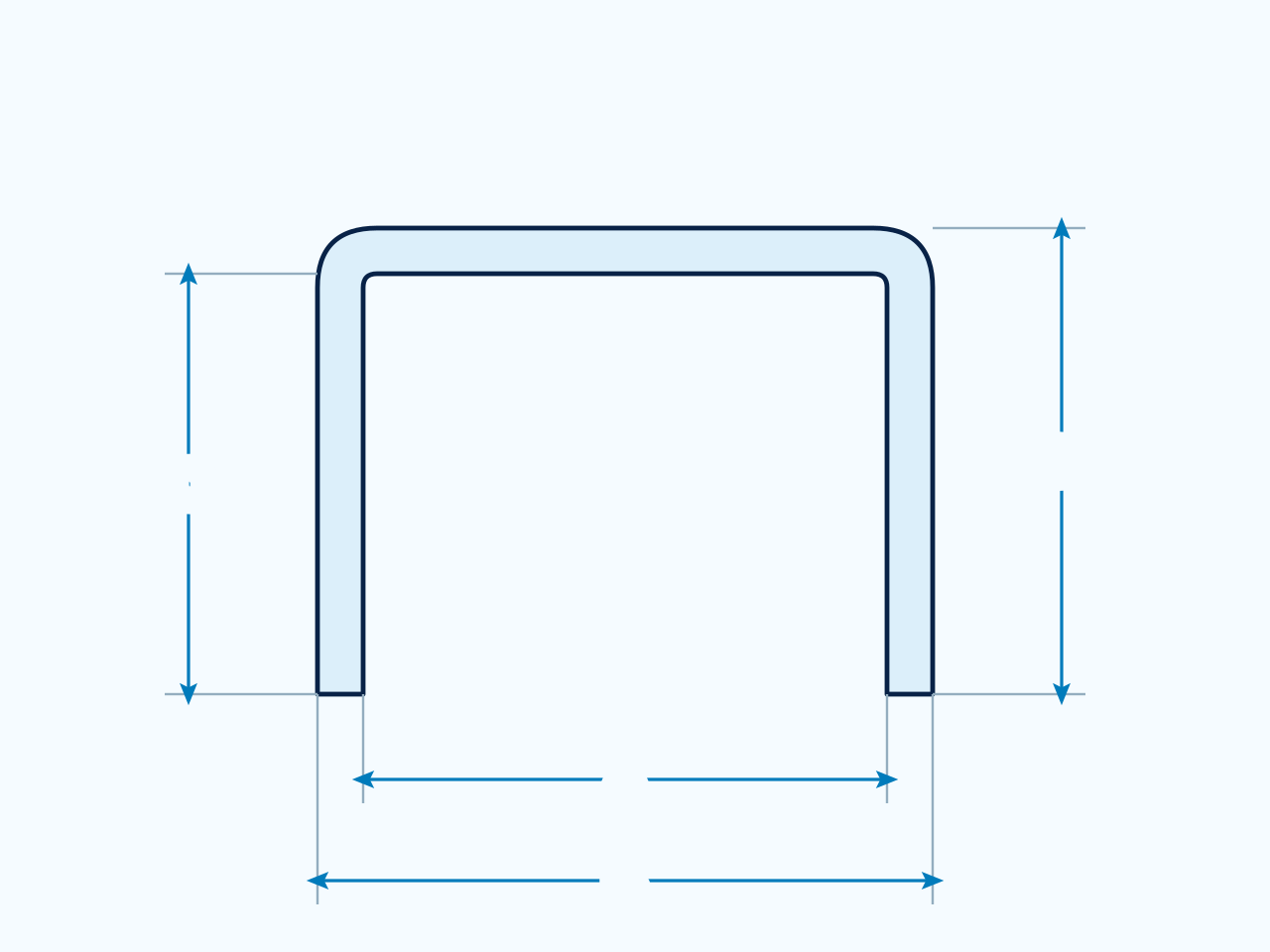
Compare the internal and external dimensions of rubber caps against the part being covered.
Custom colors are available to your Pantone color code. Include the code in your inquiry.
Rubber Caps-RSE
Compare A (inner diameter), B (outer diameter), C (inner depth) and D (total height), in mm.
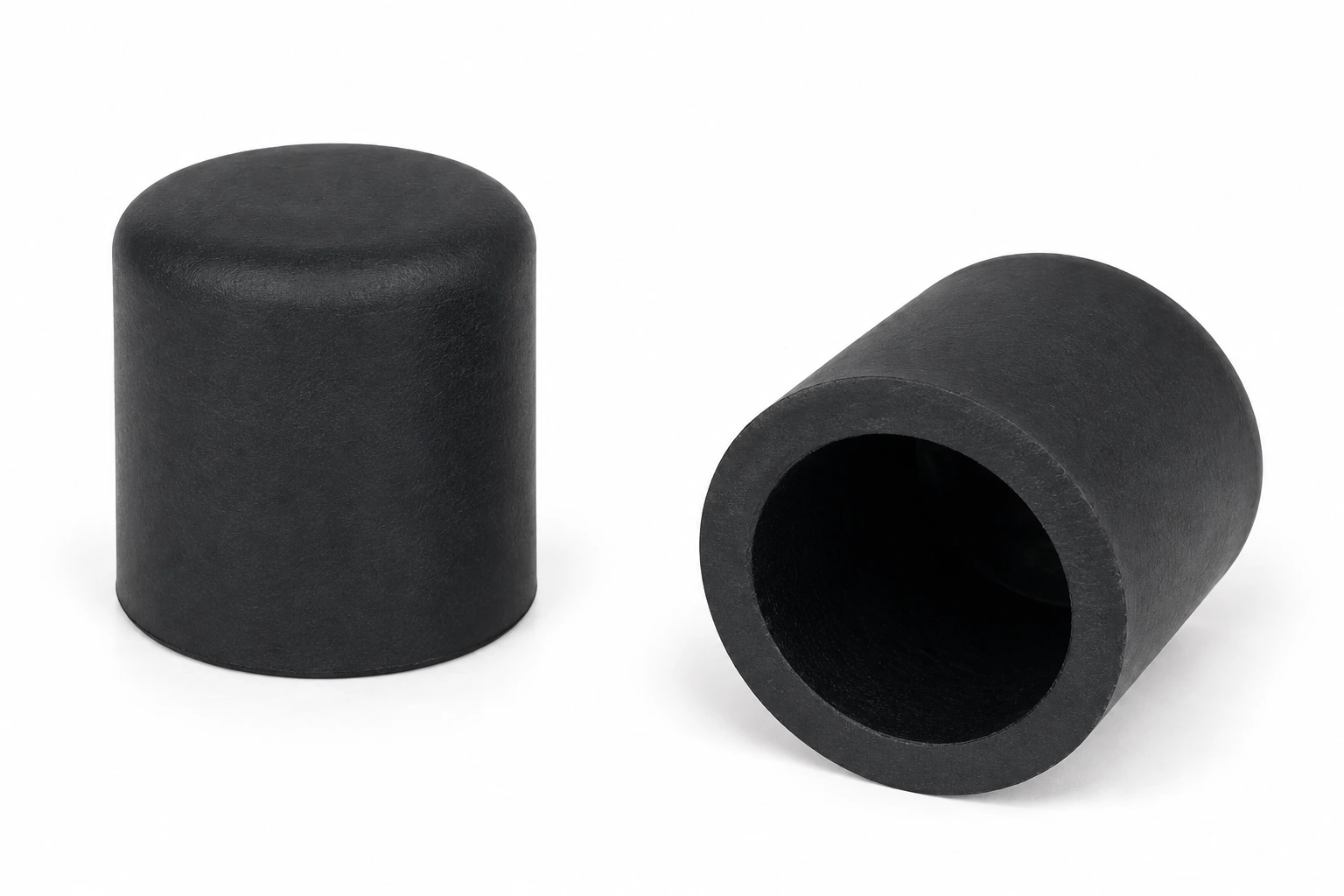
Need a different size? Share your drawing, mating dimensions and intended use to discuss a suitable part.
Discuss Your RequirementsProduct specifications
- Product form
- Protective cover fitted over a component end
- Material options discussed
- Silicone and EPDM. Choose one formulation for the actual contact and loading conditions.
- Dimensions to confirm
- Mating outside dimensions, cover depth, cavity and wall thickness.
- Exposure to evaluate
- Rubbing or abrasion and oil splash. Validate the selected material under the combined conditions.
- Cover retention
- Check the installed overlap and pull-off force on the actual end profile.
Need a quote or a custom part?
Send your requirements, drawings or samples to discuss standard and custom silicone rubber parts.
Email us[email protected]