
Rubber chair feet caps
Rubber chair feet caps you should use it on every chair you have and on every piece of furniture that has legs, like armchairs and tables. When installing rubber chair feet caps you will be sure that you will not scratch your floor when moving furniture, and especially pay attention to your floor if it is wooden parquet. Also, the disgusting sound that is generated when you move the furniture will no longer be heard. In addition, rubber chair feet caps serve to keep chairs and other furniture from slipping.
What is great about rubber chair feet caps is that they are designed so that you can install them directly without having to glue or attach them in any other way. But that is why it is very important for them to be tight fit, because otherwise they will fall off. You have to pay attention to the size, because it can’t be approximately the right size, but it has to be perfect. There are 4 pieces of rubber chair feet caps that you need to measure as well as measure what you are going to install rubber chair feet caps on and then buy the right size. If you can’t find the right size, which is usually the case if you have custom made furniture that is not the usual size, then you can also order custom made rubber chair feet caps. Then you will know that they fit perfectly.
Also, you can choose the material from which the rubber chair feet caps will be made, as well as the hardness, which is usually between 30 and 85 Shore A, and in this case it is better to be harder due to durability. You can choose white, black or some other color, which fits into the design of your room. EPDM / NR / SBR / CR / Silicone are available and all are eco-friendly and everything is made according to compliances.
Rubber Feet & Bumper Size Catalog
Compare mounting style, overall size and recess dimensions. Each profile uses its own drawing and column meanings.
Recess Rubber Bumper
Compare OD, H, A, B and C in mm. C indicates the outer base dimension on this bumper profile, not the recess depth.
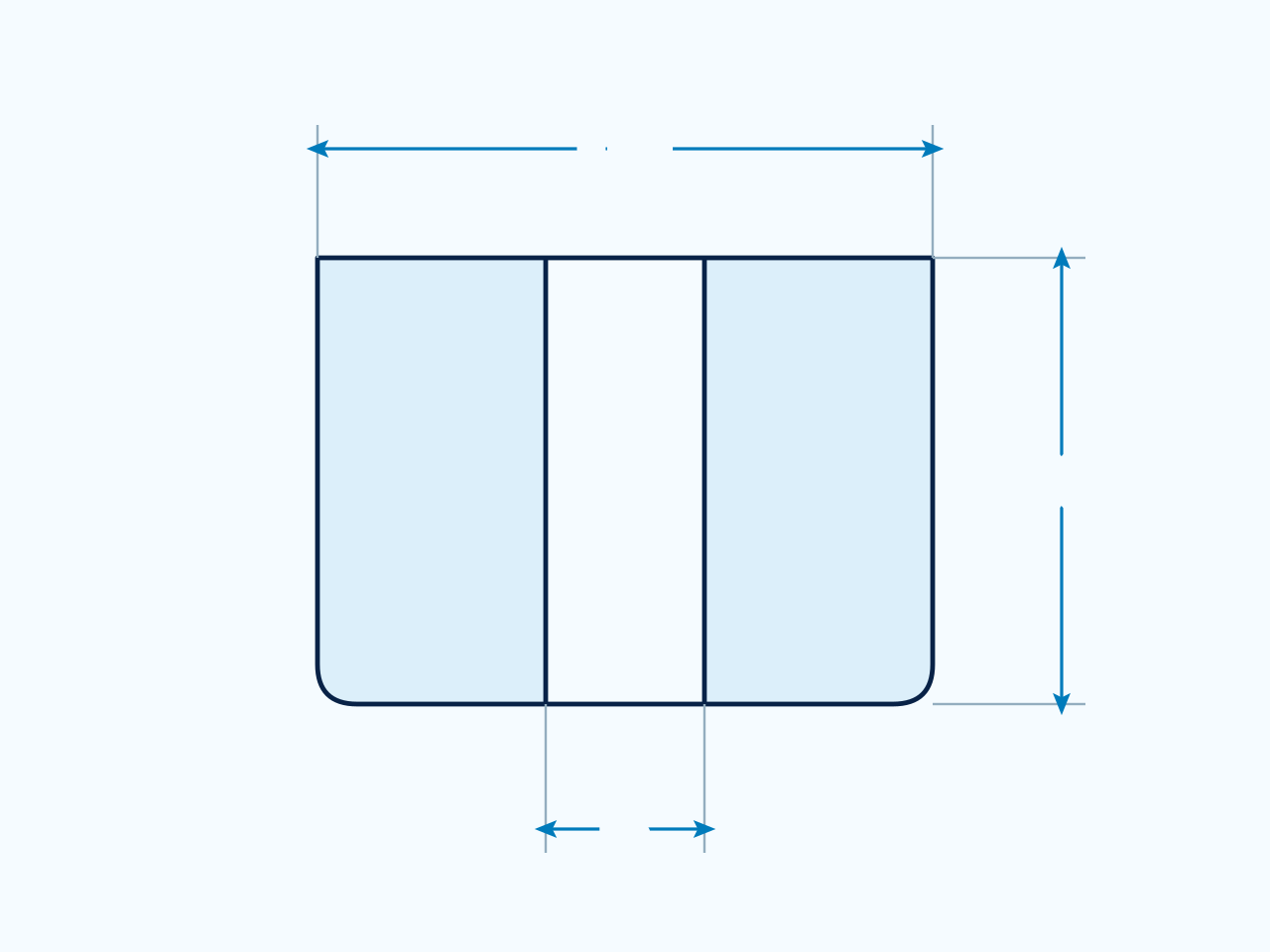
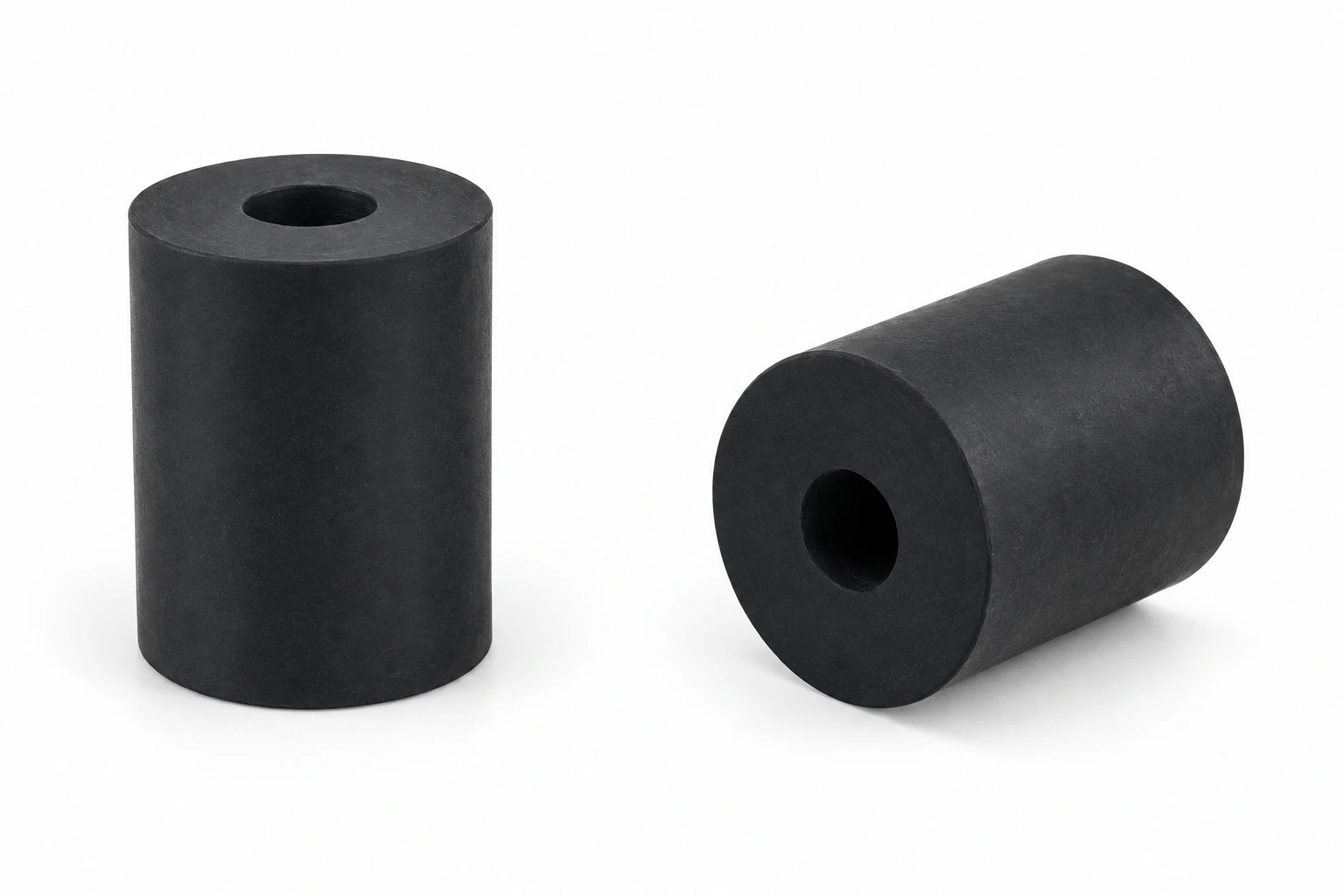
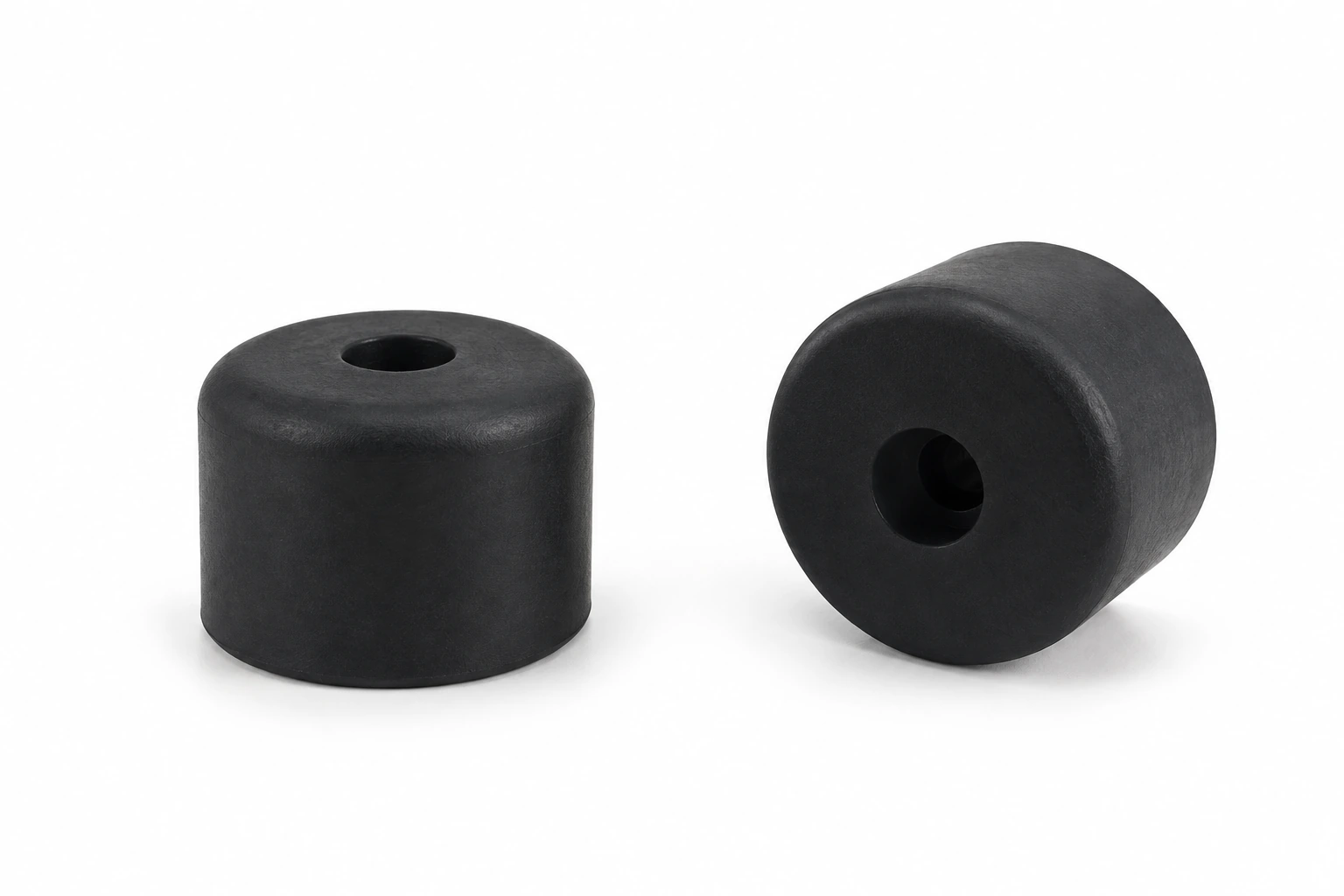
Cylindrical Rubber Feet
Compare OD, H and B in mm using the cylindrical-foot drawing. Material and colour remain listed separately.
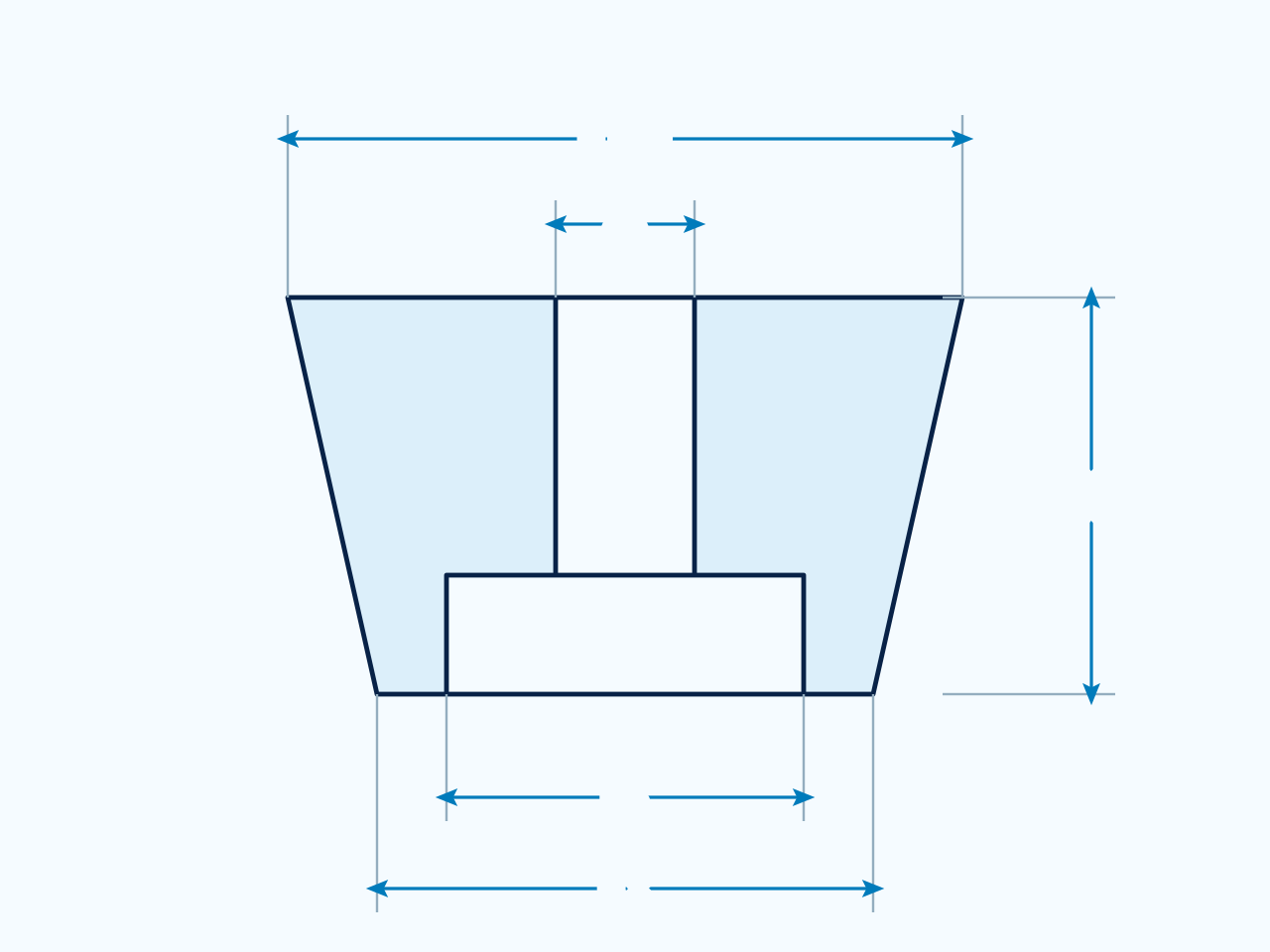
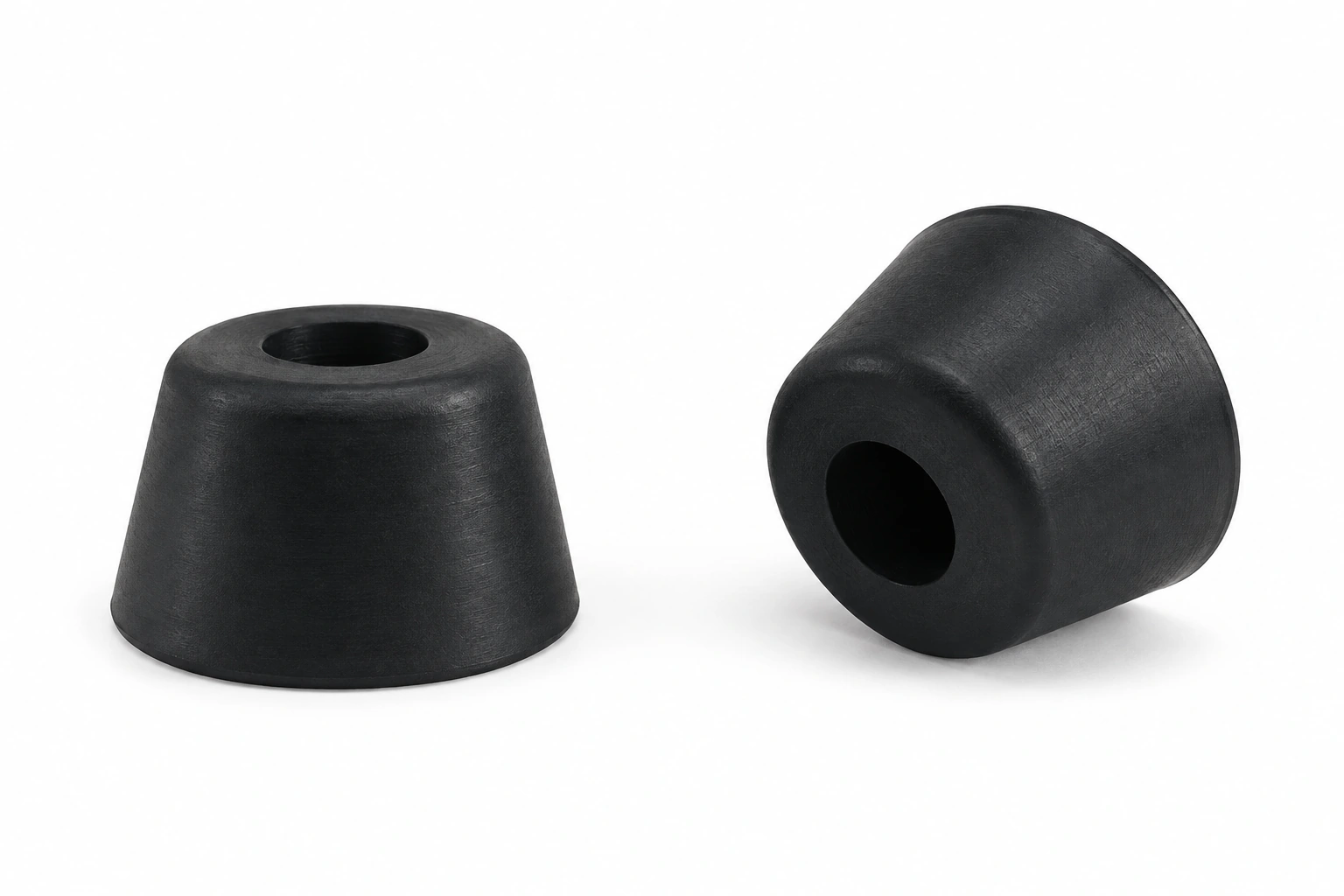
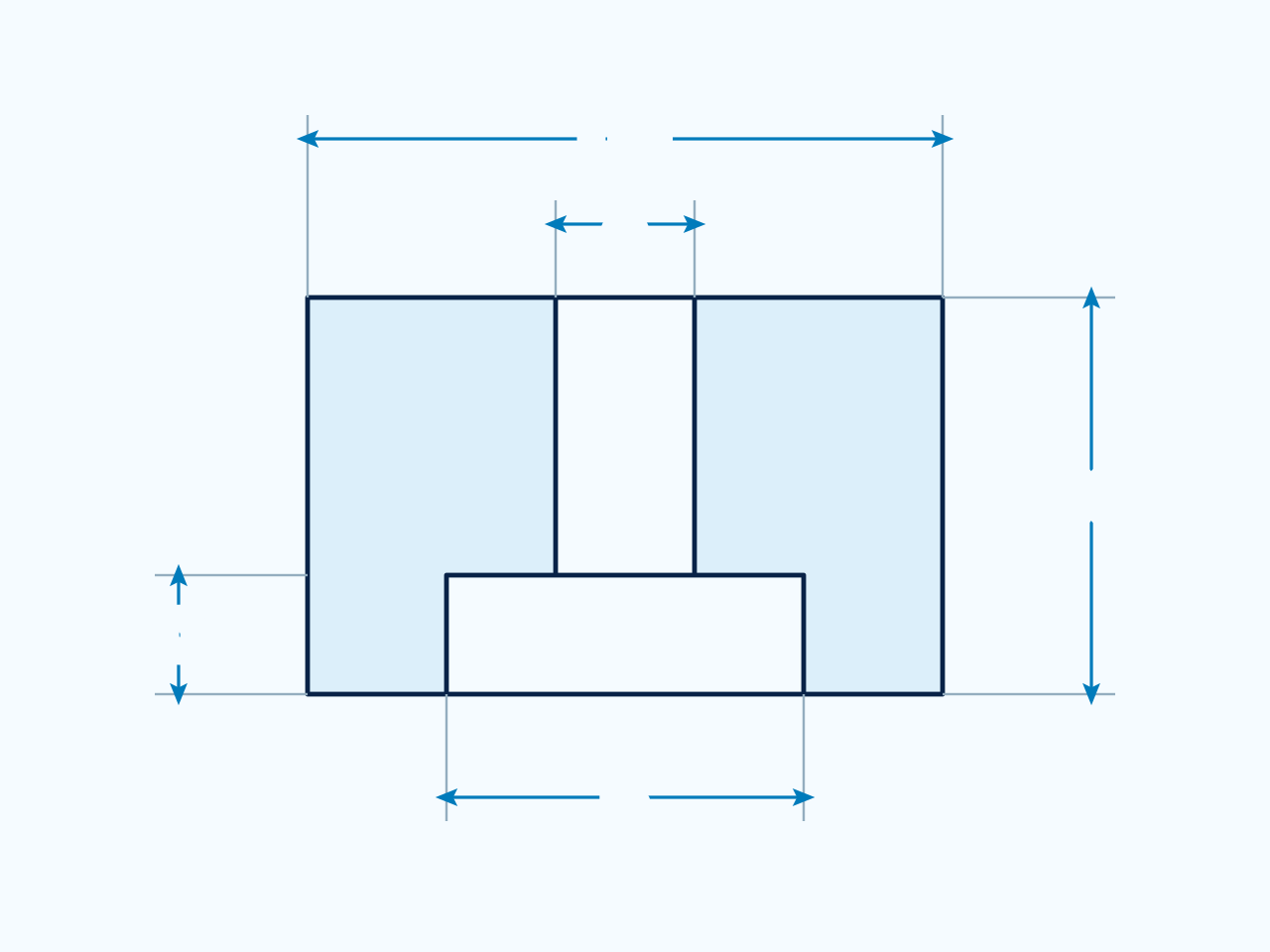
Recess Rubber Feet
Compare OD, H, A, B and C in mm. C indicates the recess depth on this feet profile.
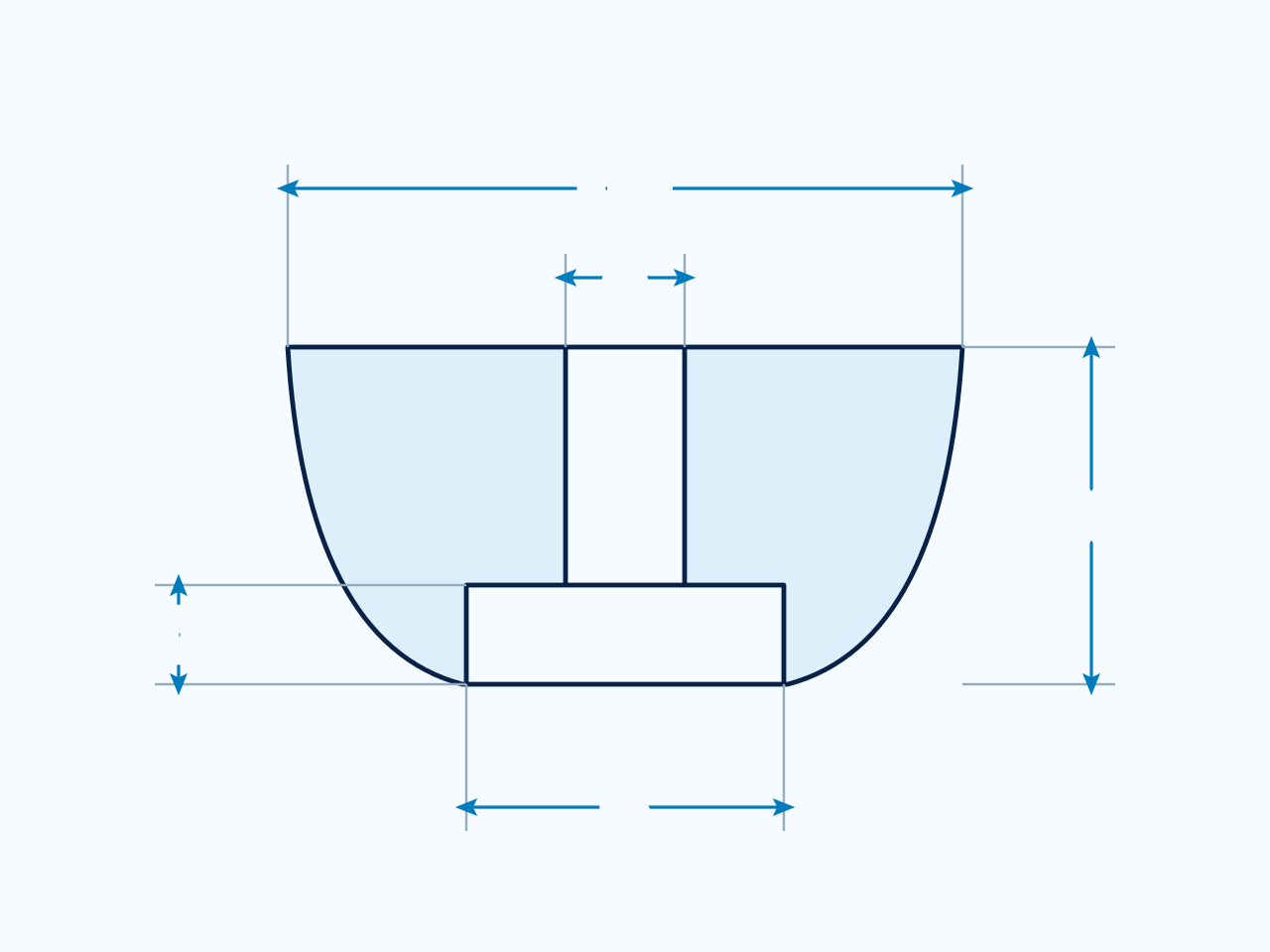
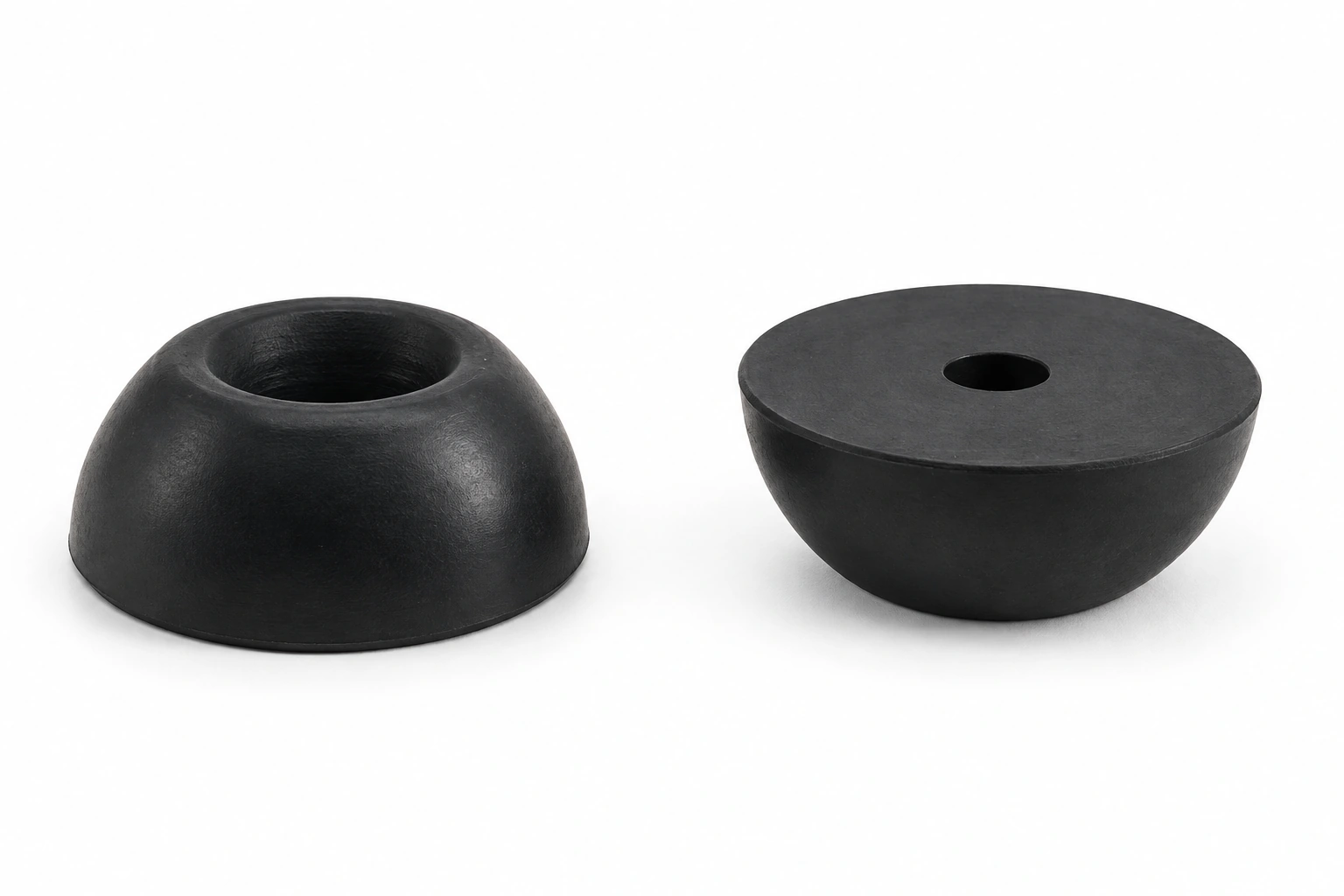
Hemispherical Rubber Bumper
Compare OD, H, A, B and C in mm using the hemispherical-bumper drawing.
Rubber Tips
Compare A, B and C in mm using the open round-tip drawing. Check the mating leg dimensions and seating depth.
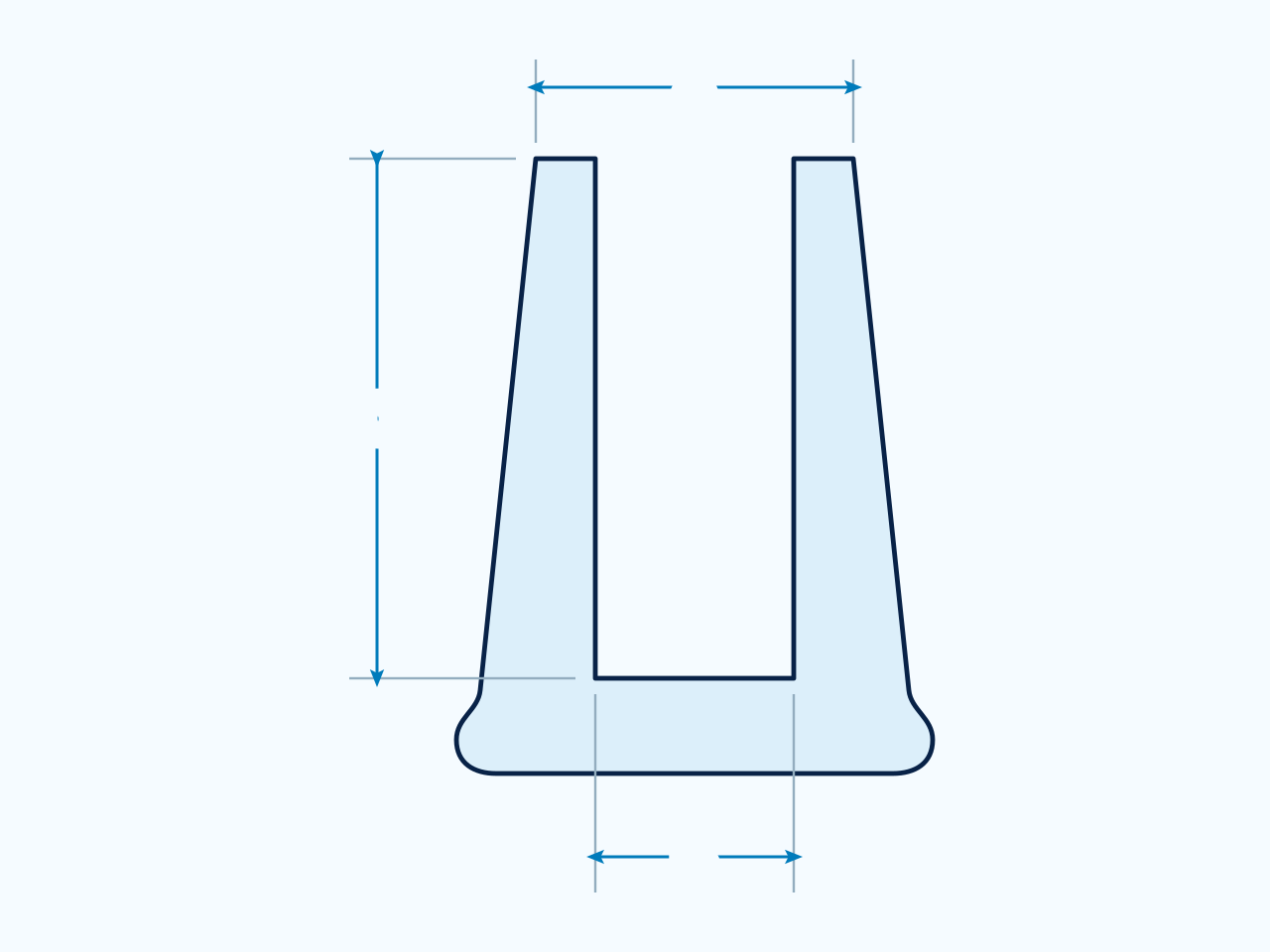
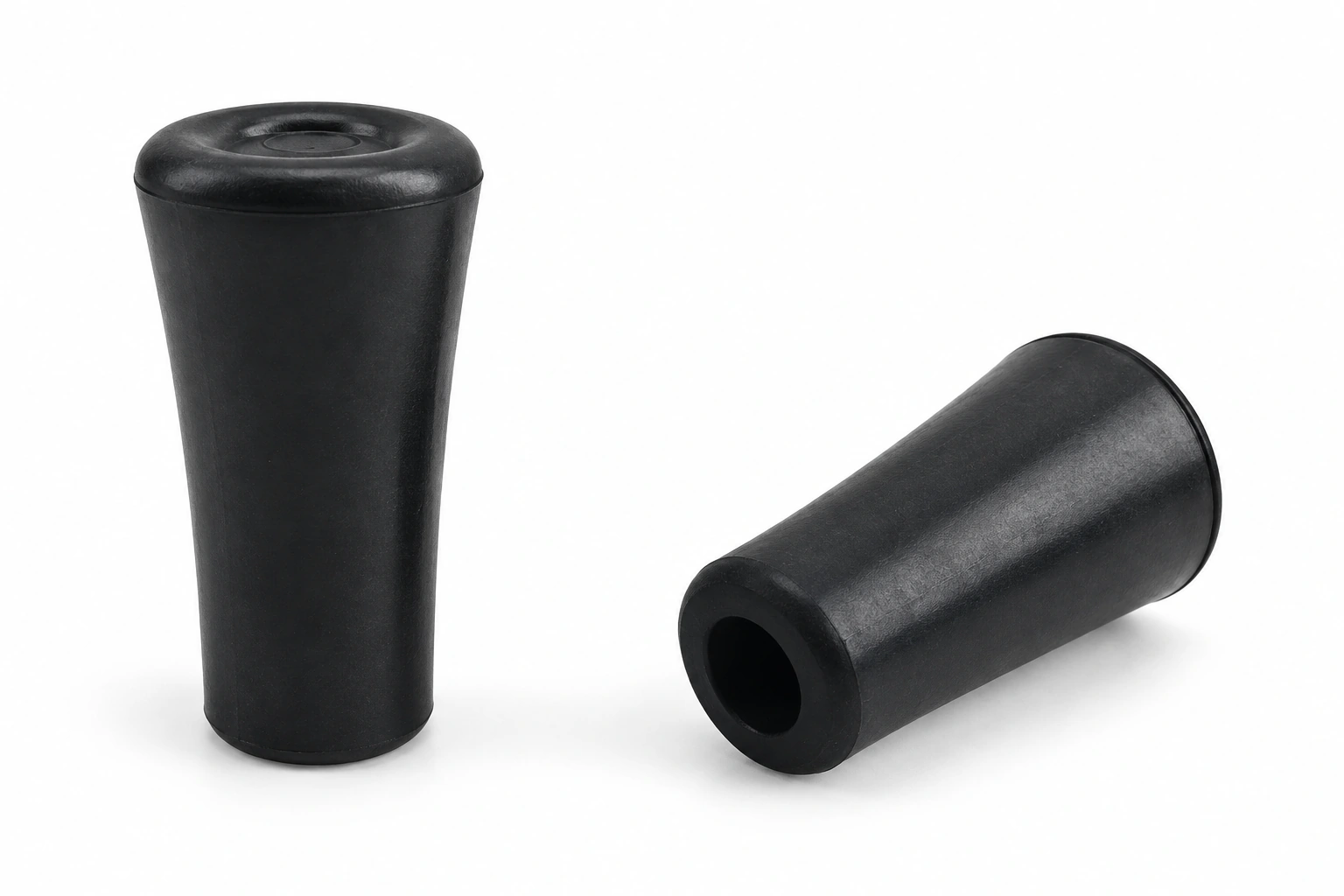
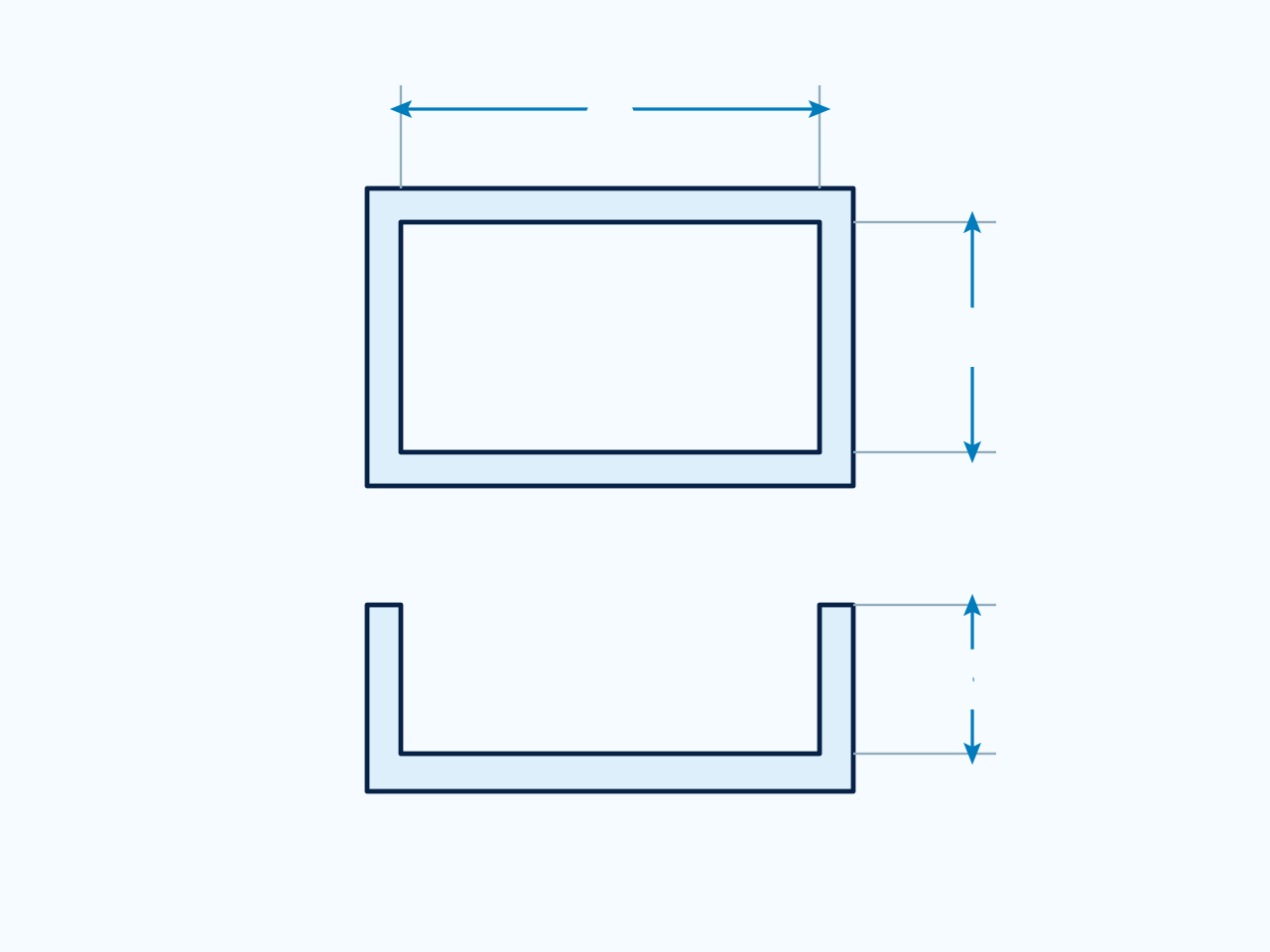
Rectangular rubber feet for chairs
Compare A, B and C in mm using the rectangular-tip drawing. Check both sides of the mating leg and the seating depth.
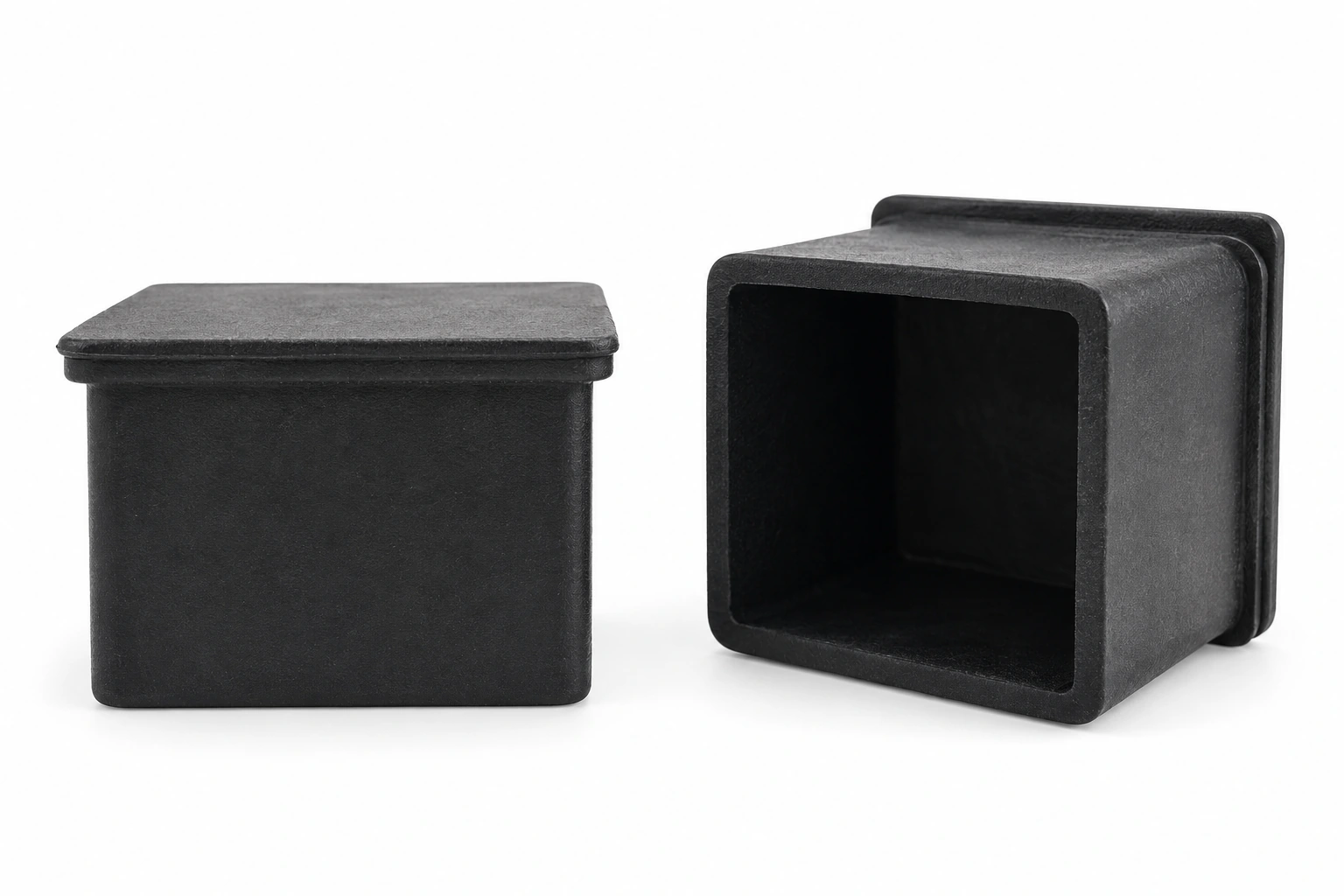
Rubber Feet For Chairs
Compare A, B, C and D in mm using the square-tip drawing. Check the mating leg profile and seating depth.
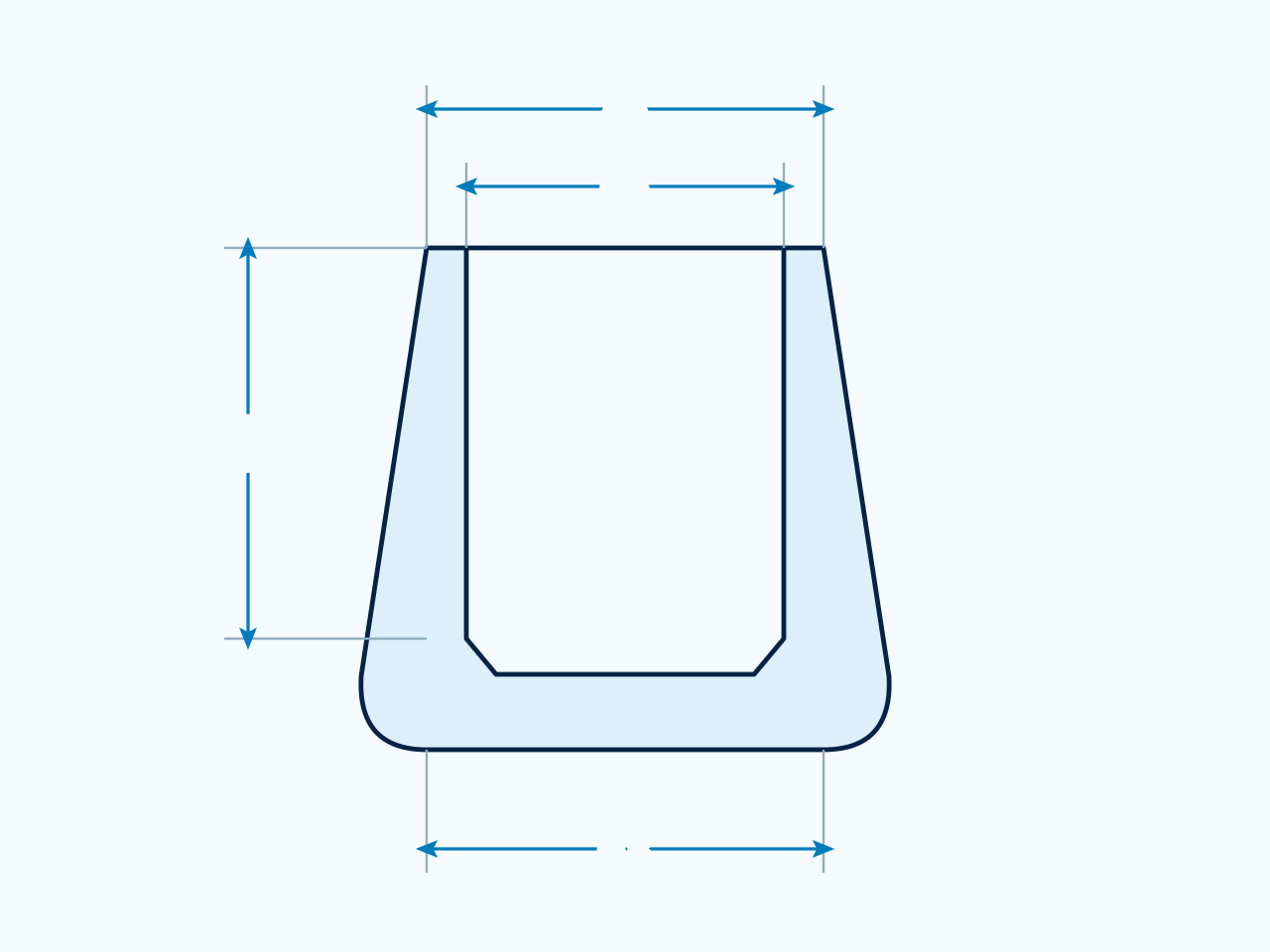
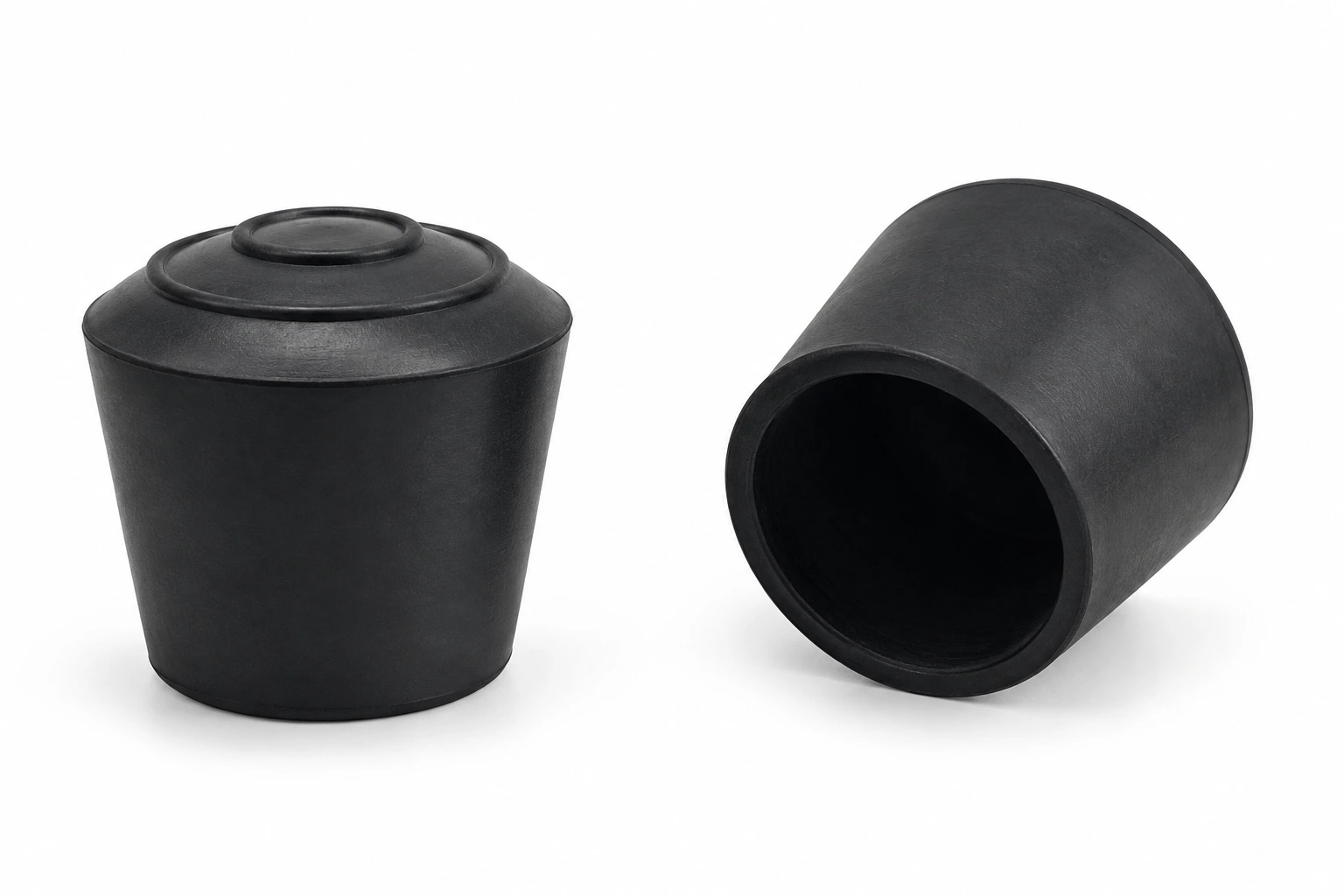
Need a different size? Share your drawing, mating dimensions and intended use to discuss a suitable part.
Discuss Your RequirementsProduct specifications
- Product form
- Furniture-leg tip with a resilient floor-contact face
- Material options discussed
- Silicone, EPDM and SBR. Choose one formulation for the actual contact and loading conditions.
- Application focus
- Chair legs, table legs and wooden furniture legs. Size the part against the selected assembly.
- Dimensions to confirm
- Leg-end profile, cap cavity, engagement depth and contact-face area. Match these to chair legs and table legs.
- Installation discussed
- Adhesive bonding. Identify the chosen retention method and the surface or hardware it engages.
- Contact surface
- Parquet. Check marking, grip and movement on the actual finish under load.
- Attachment options
- Adhesive attachment is discussed. Define the bonded substrate, preparation and loaded contact area before selecting a backing.
- Loaded seating
- Check that the contact face sits evenly on the floor with the furniture loaded.
Need a quote or a custom part?
Send your requirements, drawings or samples to discuss standard and custom silicone rubber parts.
Email us[email protected]