
Rubber chair feet caps
Rubber chair feet caps are installed on the feet of tables, chairs and their other furniture that has a similar shape. As practically every piece of furniture is a different size, then usually rubber chair feet caps cannot be removed from some old chair and installed on a new chair, but you need new rubber chair feet caps. The main purposes of rubber chair feet caps are anti-slip protection, to prevent scratching the floor and to reduce or completely neutralize noise when dragging chairs. When determining which dimension you want to order, you need to pay attention to 4 parts. These 4 parts of chair feet caps are length. height but not complete but only the height that can be used, which means the complete height subtracted from the floor thickness of rubber chair feet caps and two diameters. The outside diameter and the inner diameter obtained by subtracting the entire diameter from the wall thickness.
Once you have chosen a size or more size, if you are ordering a number of rubber chair feet caps for all the furniture you have in your home, office, restaurant or anywhere, it’s time to decide on the material. If you need advice, you can always contact us and we will advise you which material is ideal for you. For example, silicone is rarely used in this case because its chemical stability and ability to withstand long exposure to extreme temperatures in 99% is not significant, but much more significant is tear strength where natural rubber dominates, but there are others suitable rubber materials, such as Chloroprene rubber and Polyurethane. Hardness varies from 30-85 Shore A.
You can also choose a color to match the color of the furniture or the entire interior. The most common are black, white or some others according to the Pantone NO #.
Rubber Feet & Bumper Size Catalog
Compare mounting style, overall size and recess dimensions. Each profile uses its own drawing and column meanings.
Recess Rubber Bumper
Compare OD, H, A, B and C in mm. C indicates the outer base dimension on this bumper profile, not the recess depth.
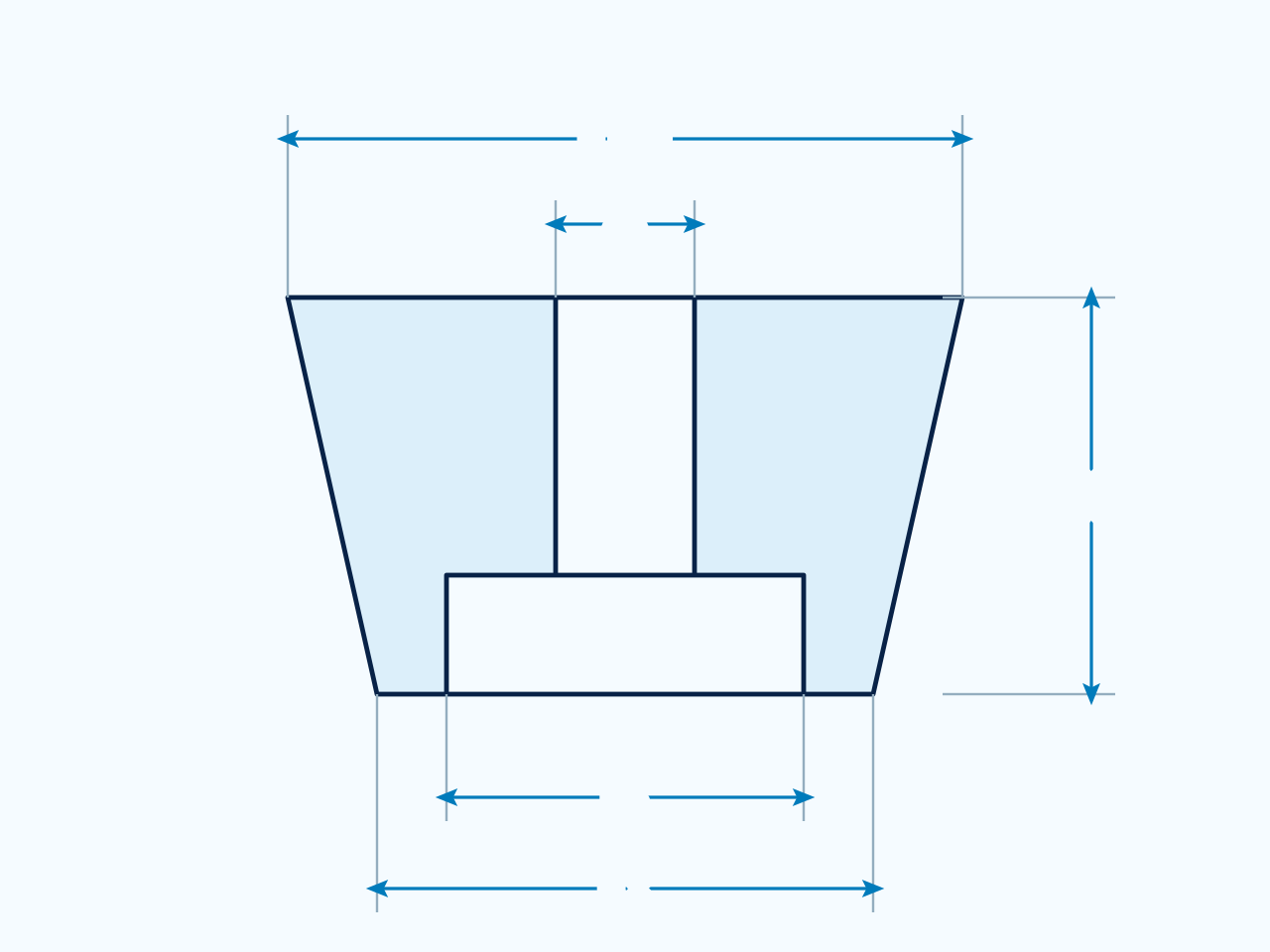
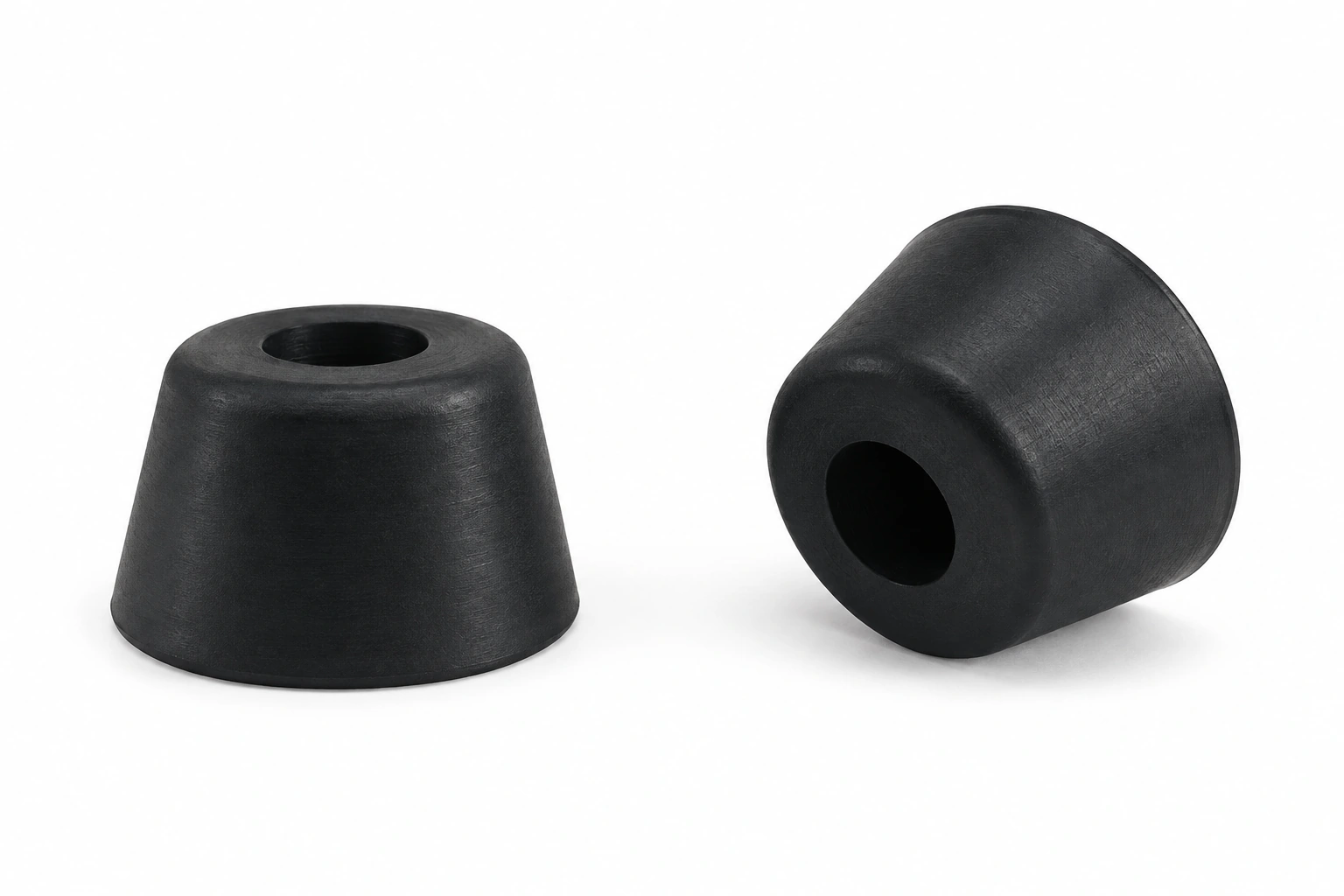
Cylindrical Rubber Feet
Compare OD, H and B in mm using the cylindrical-foot drawing. Material and colour remain listed separately.
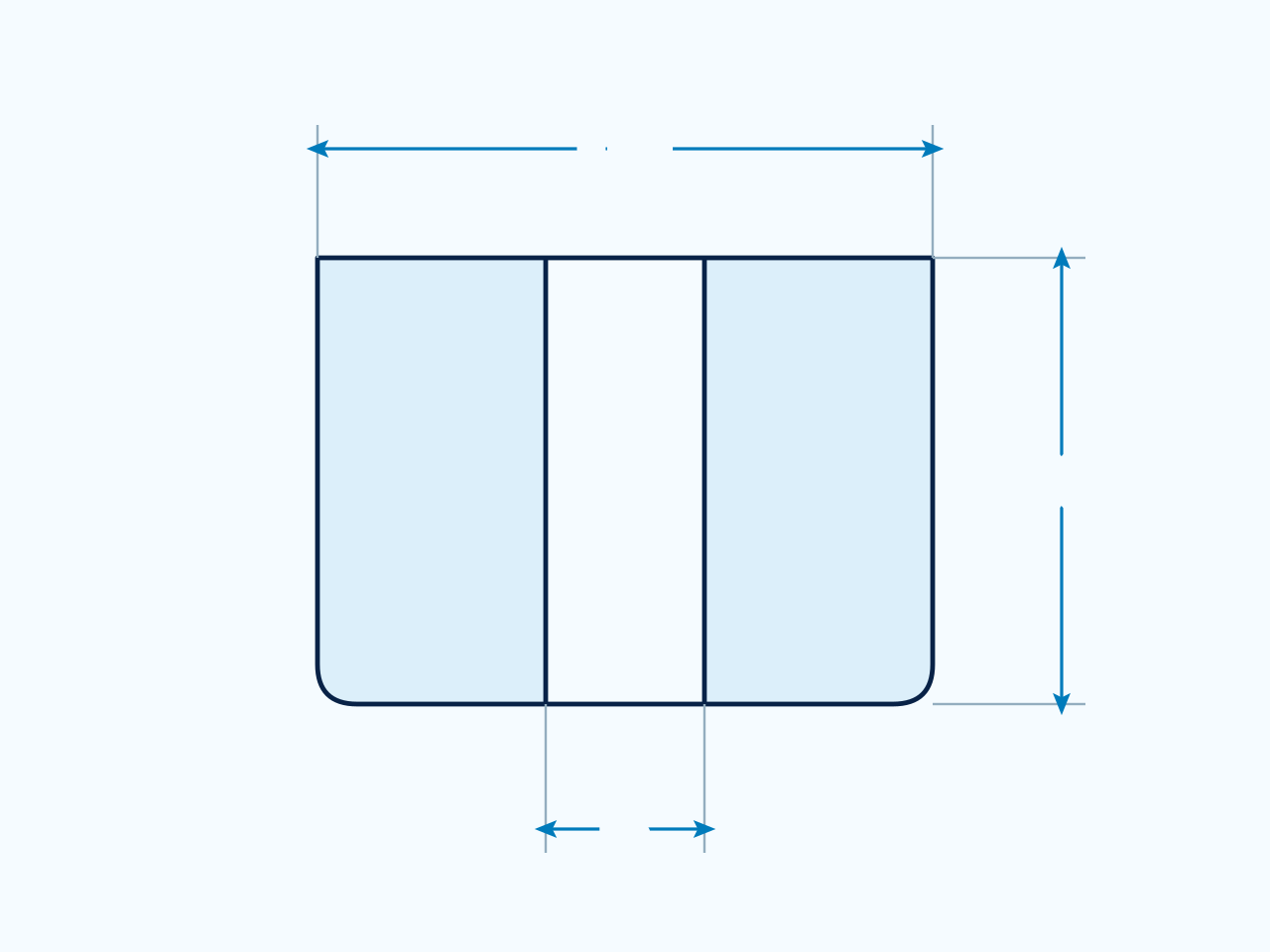
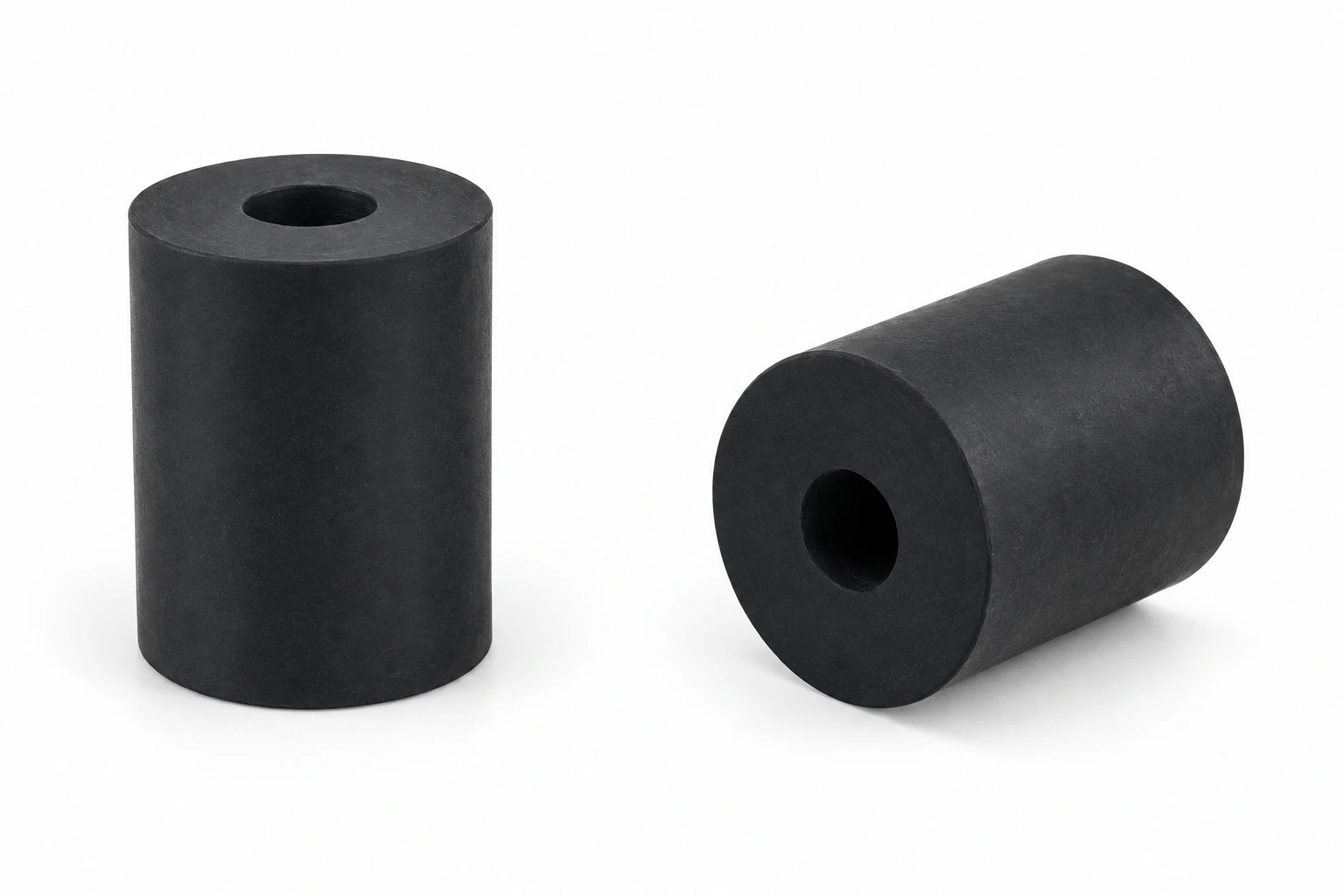
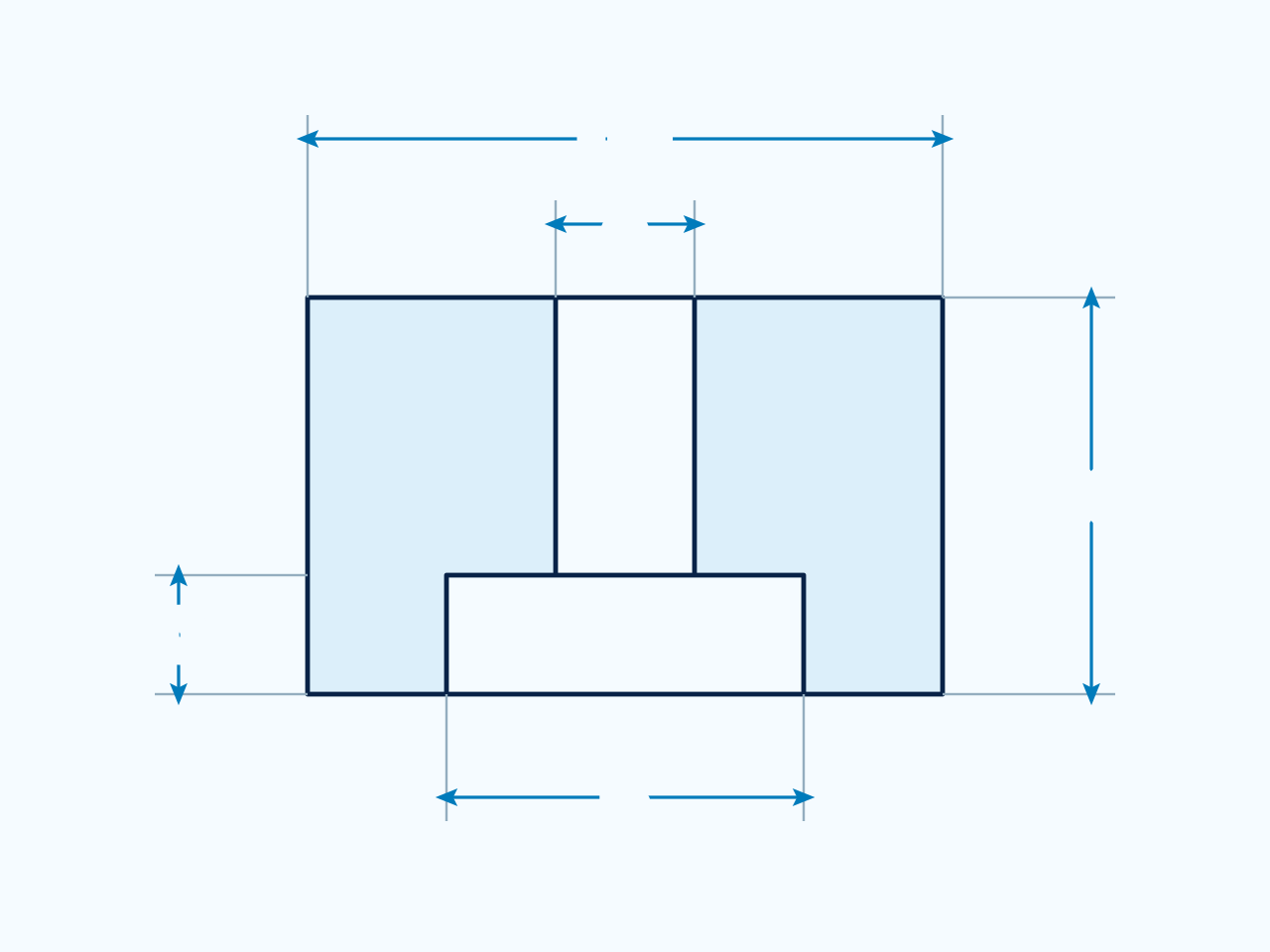
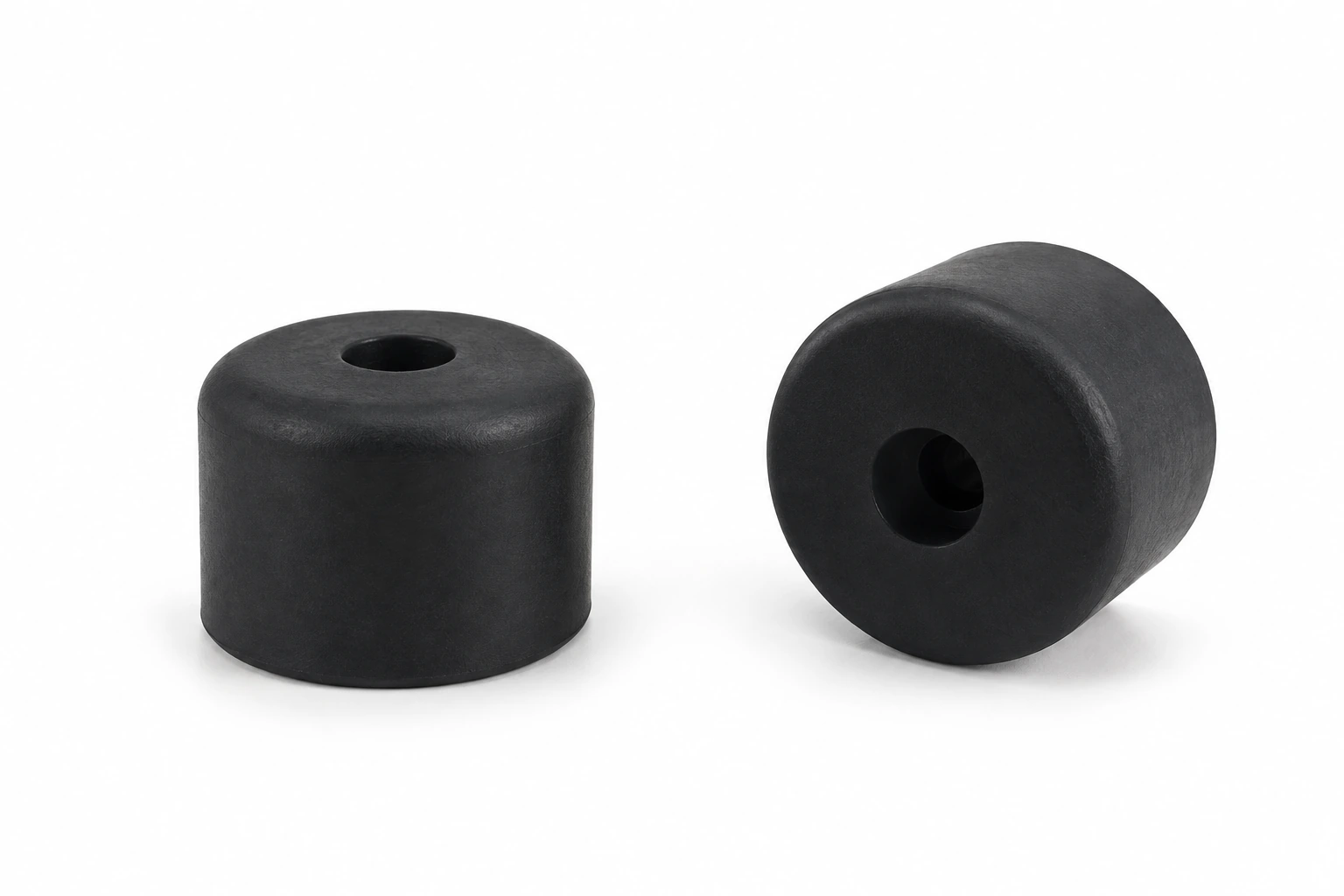
Recess Rubber Feet
Compare OD, H, A, B and C in mm. C indicates the recess depth on this feet profile.
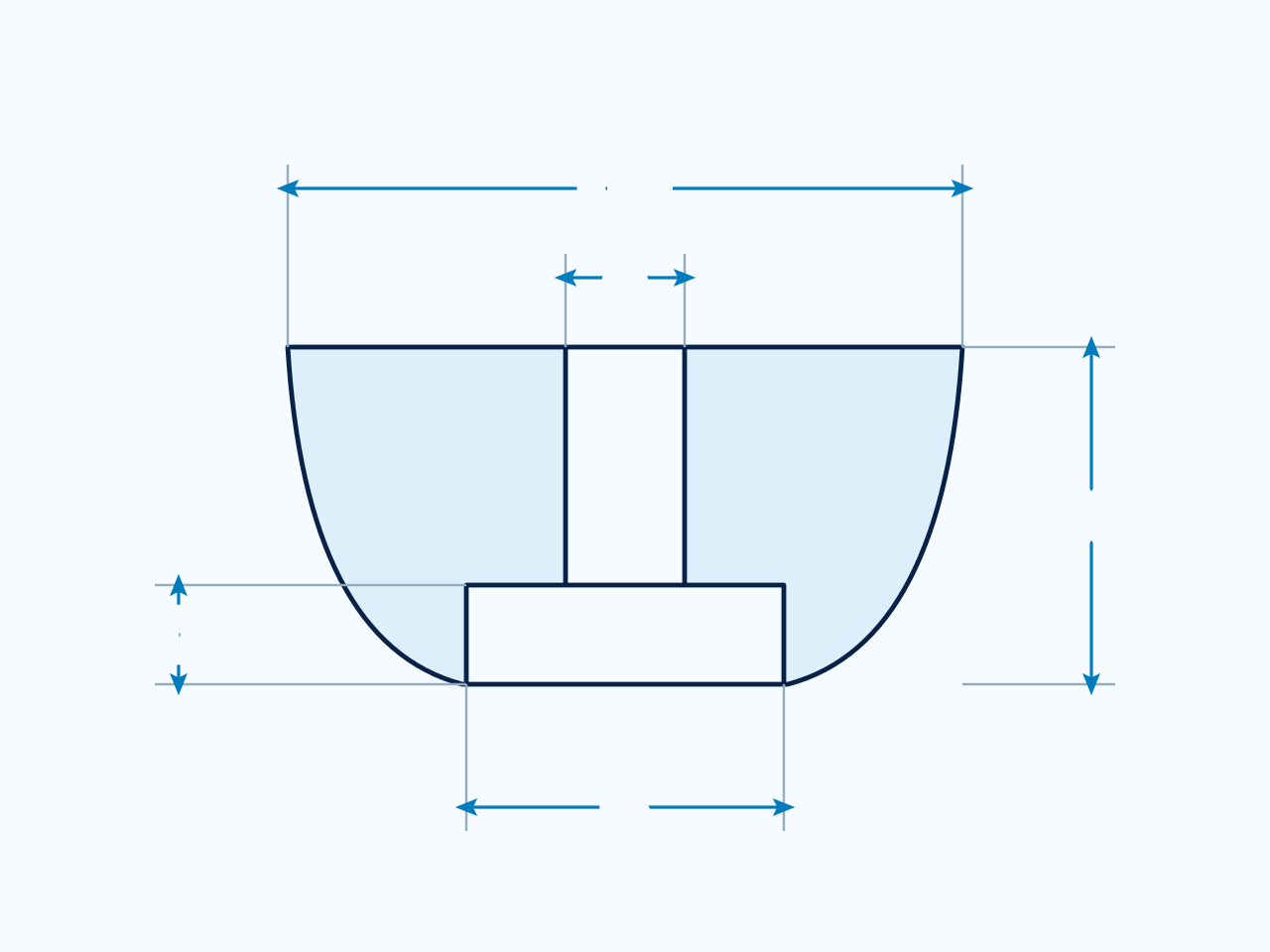
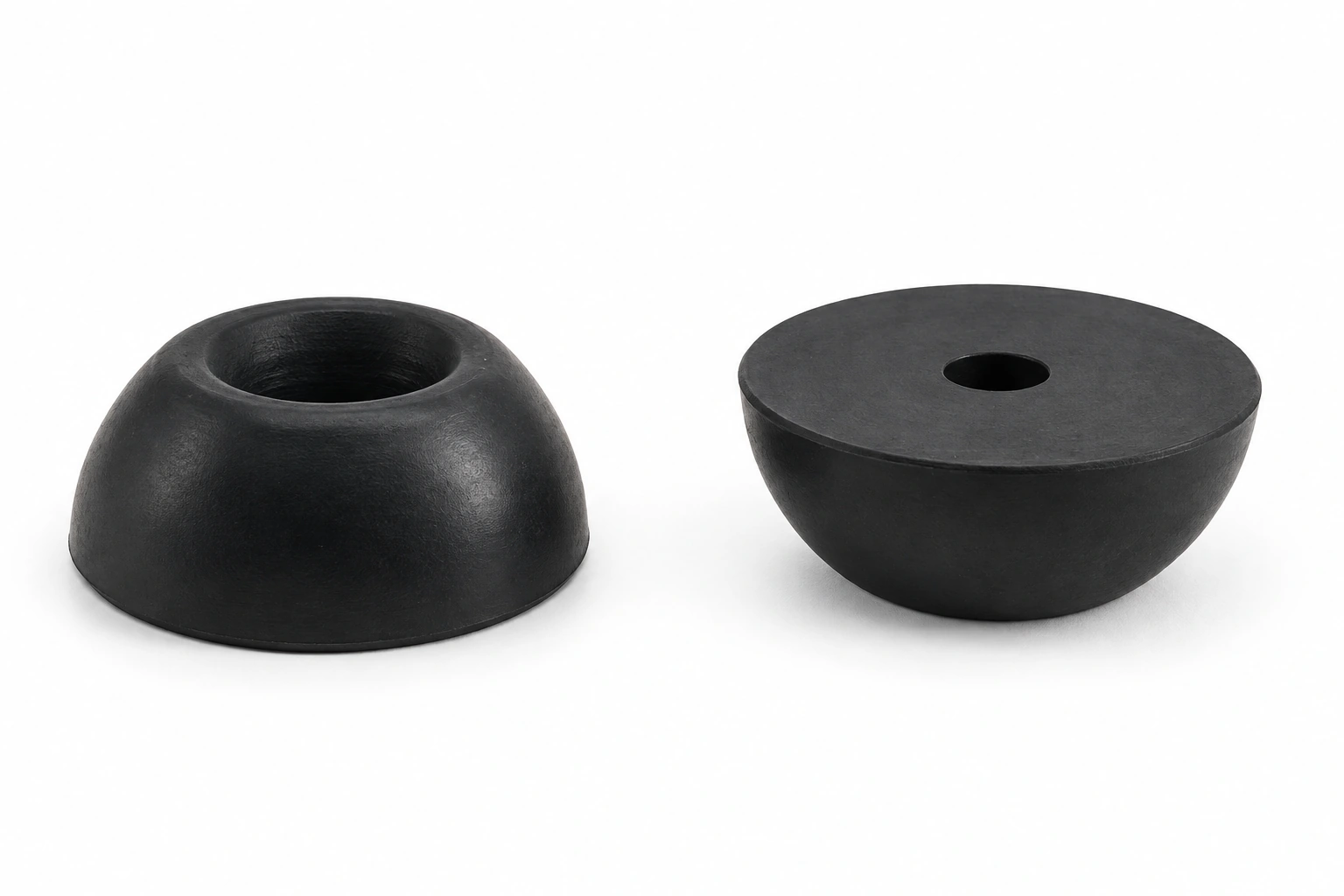
Hemispherical Rubber Bumper
Compare OD, H, A, B and C in mm using the hemispherical-bumper drawing.
Rubber Tips
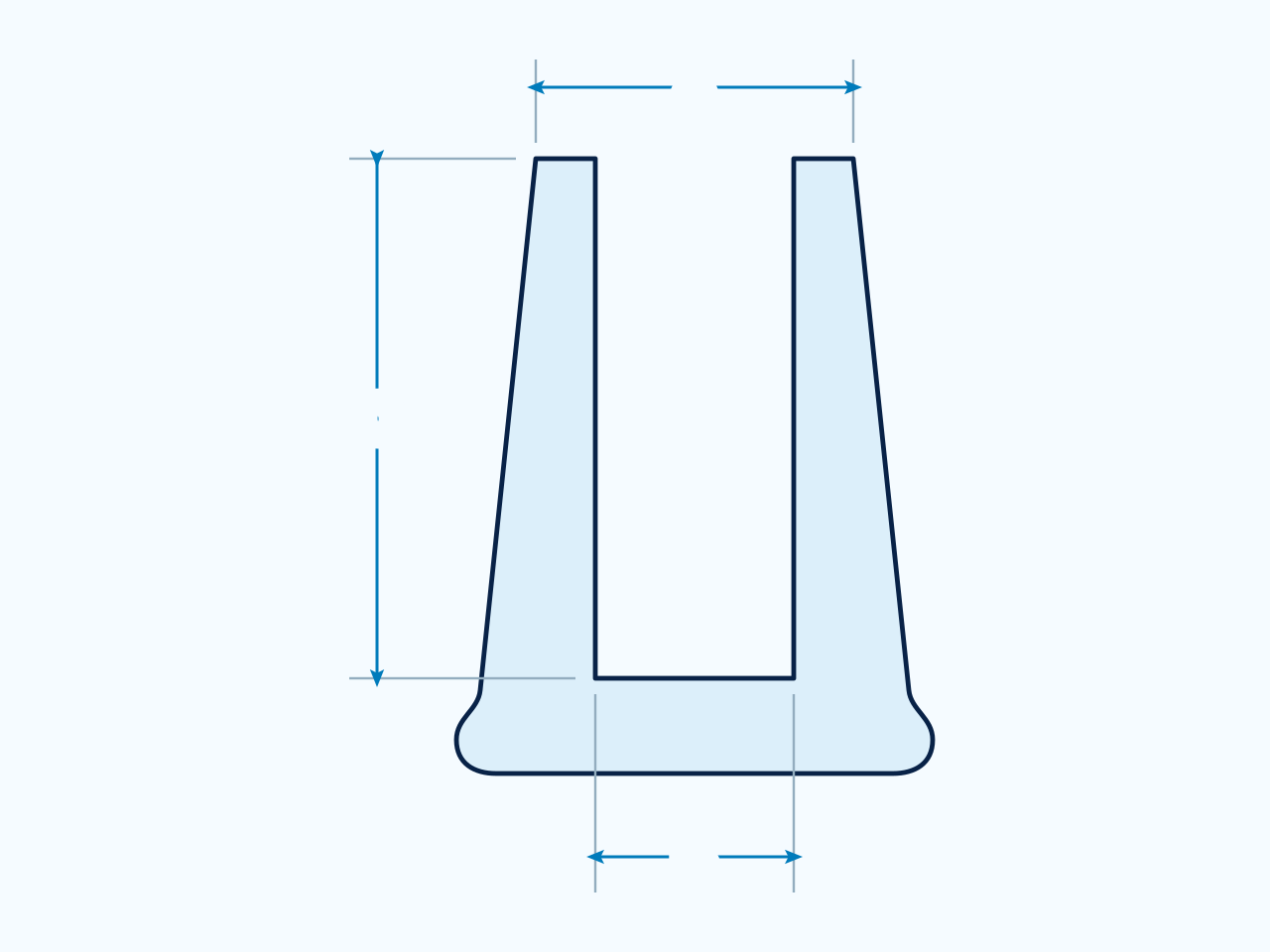
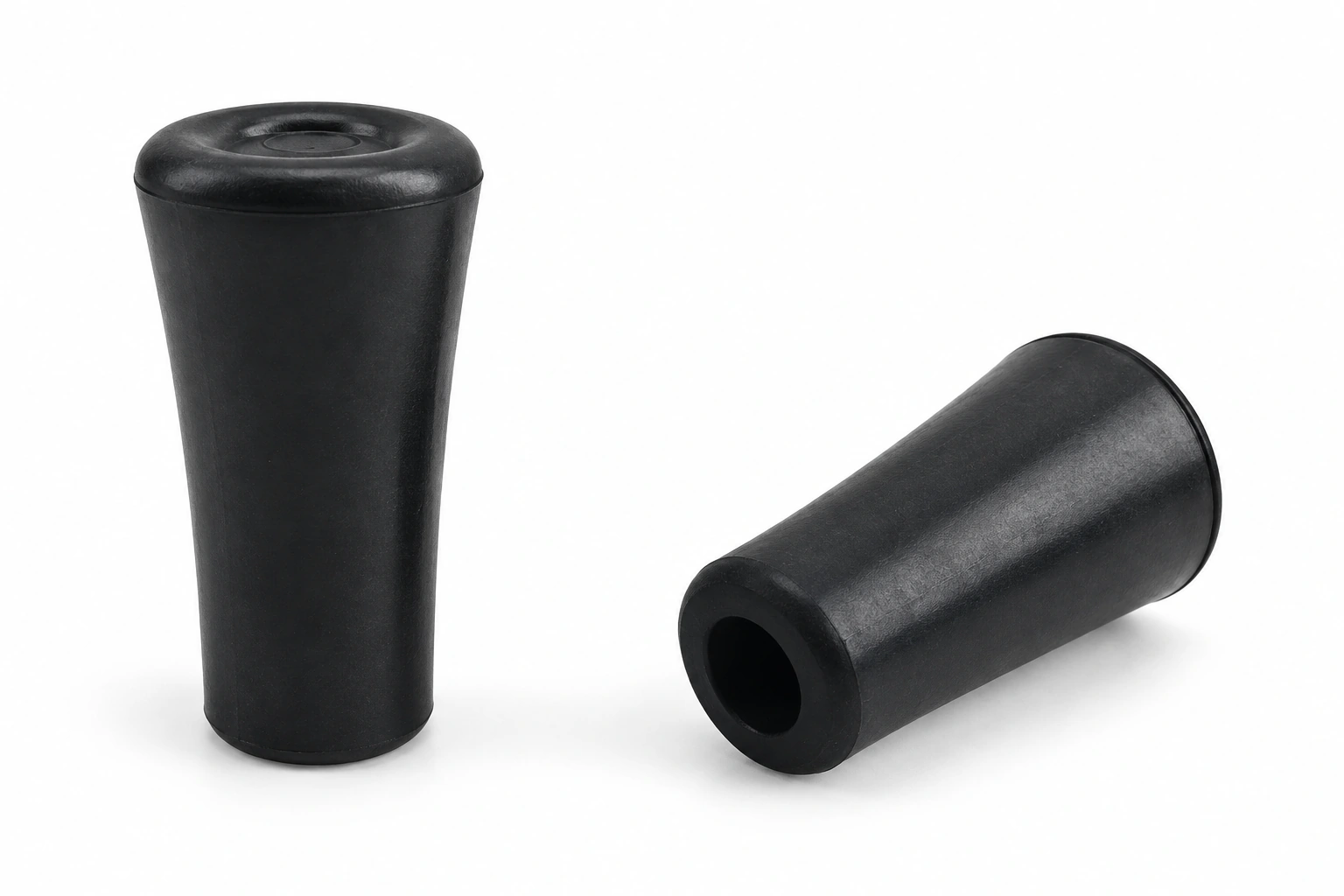
Compare A, B and C in mm using the open round-tip drawing. Check the mating leg dimensions and seating depth.
Rectangular rubber feet for chairs
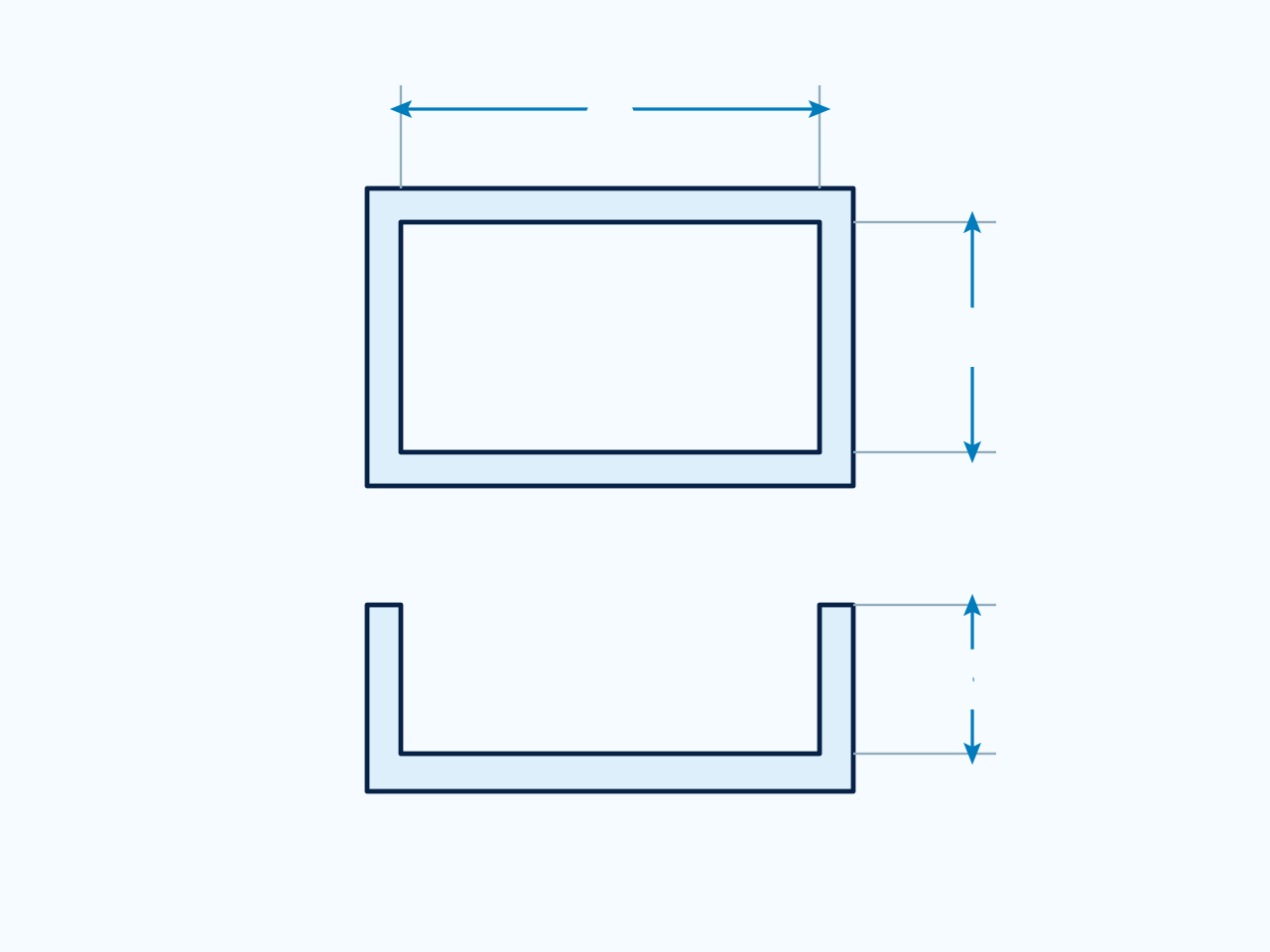
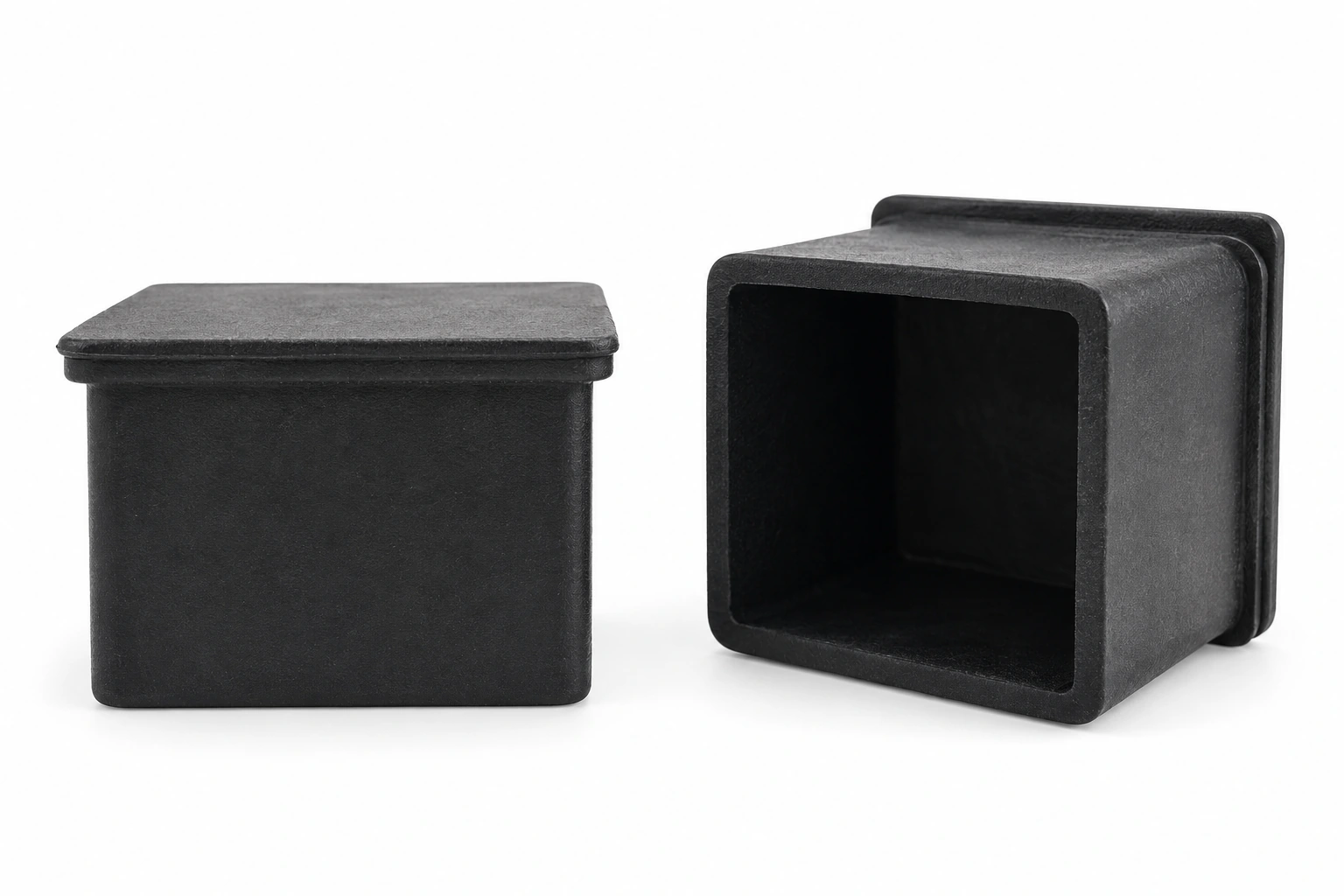
Compare A, B and C in mm using the rectangular-tip drawing. Check both sides of the mating leg and the seating depth.
Rubber Feet For Chairs
Compare A, B, C and D in mm using the square-tip drawing. Check the mating leg profile and seating depth.
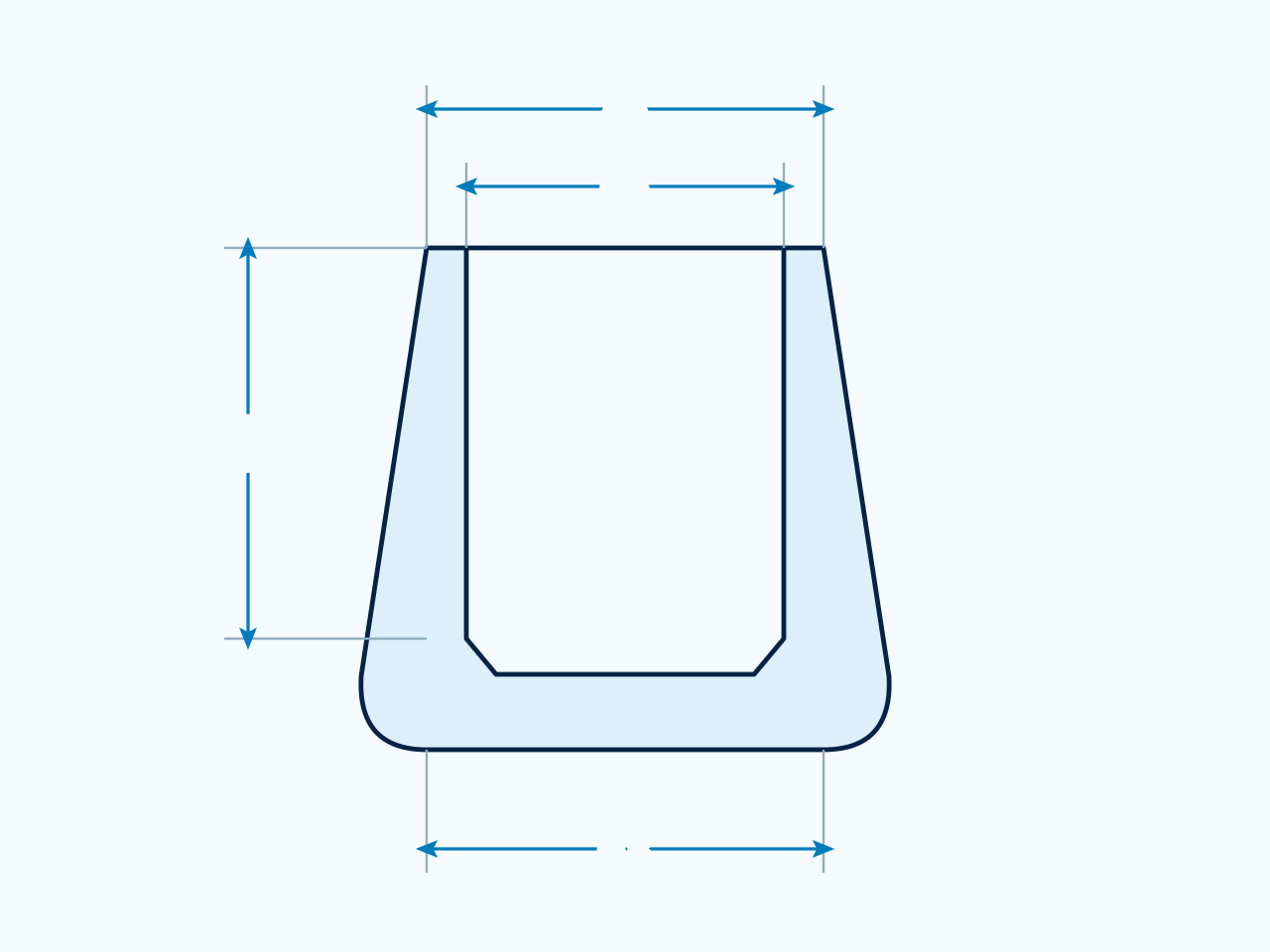
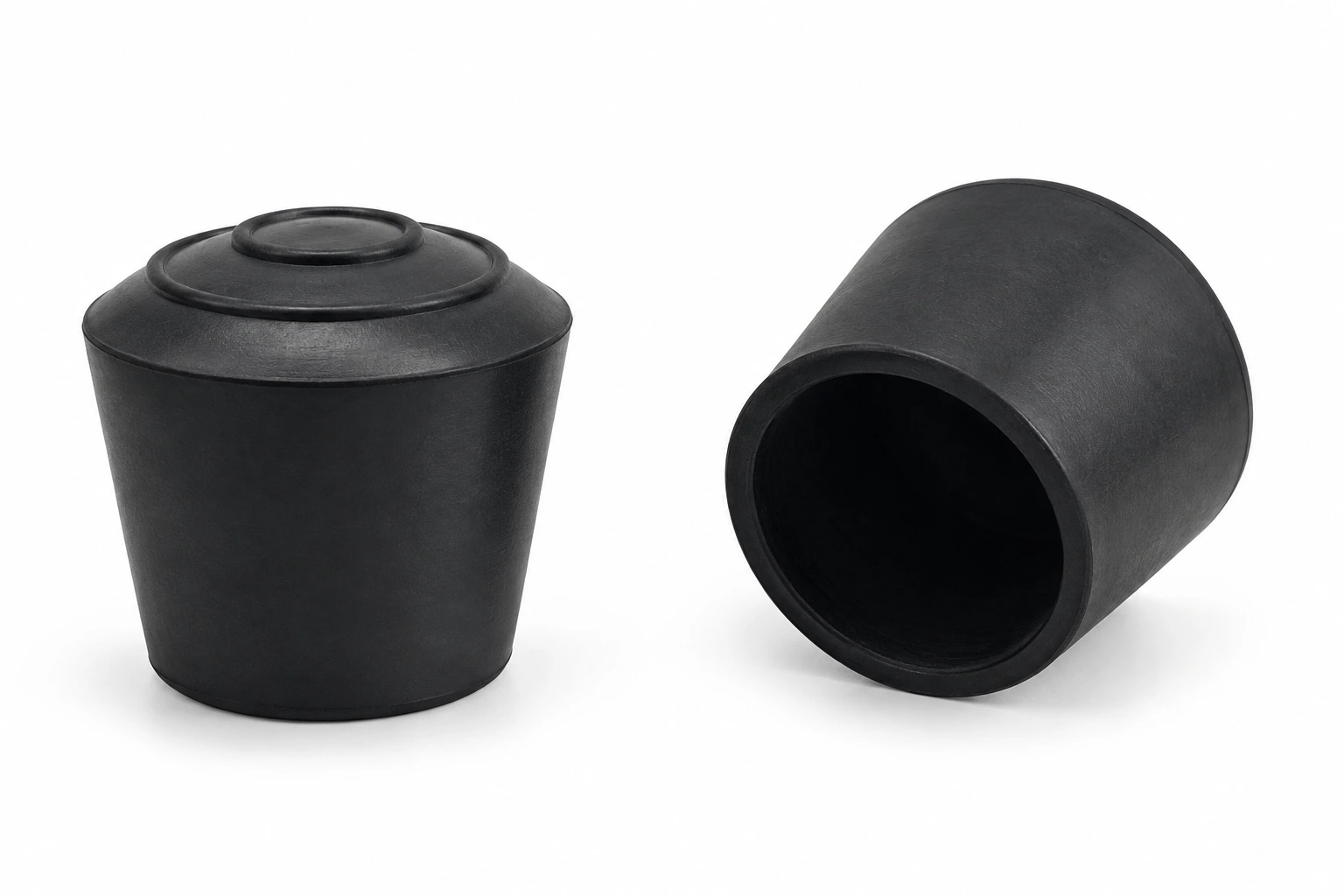
Need a different size? Share your drawing, mating dimensions and intended use to discuss a suitable part.
Discuss Your RequirementsProduct specifications
- Product form
- Furniture-leg tip with a resilient floor-contact face
- Material options discussed
- Silicone, chloroprene rubber (CR) and natural rubber / latex. Choose one formulation for the actual contact and loading conditions.
- Application focus
- Chair legs and table legs. Size the part against the selected assembly.
- Dimensions to confirm
- Leg-end profile, cap cavity, engagement depth and contact-face area. Match these to chair legs and table legs.
- Exposure to evaluate
- Heat and cold cycling. Validate the selected material under the combined conditions.
- Loaded seating
- Check that the contact face sits evenly on the floor with the furniture loaded.
Need a quote or a custom part?
Send your requirements, drawings or samples to discuss standard and custom silicone rubber parts.
Email us[email protected]