
Rubber electric motor mounts
You have surely noticed that when you buy a used vehicle, after some time the vibrations that come out of the motor are more and more felt throughout the whole car. That is a sign that you will have to check the mounts to see if they are worn out or there is another problem. You can check that when you turn on the motor when it is cold and see if it moves more than it should, or you can feel the movements while driving if they are spreading across the vehicle.
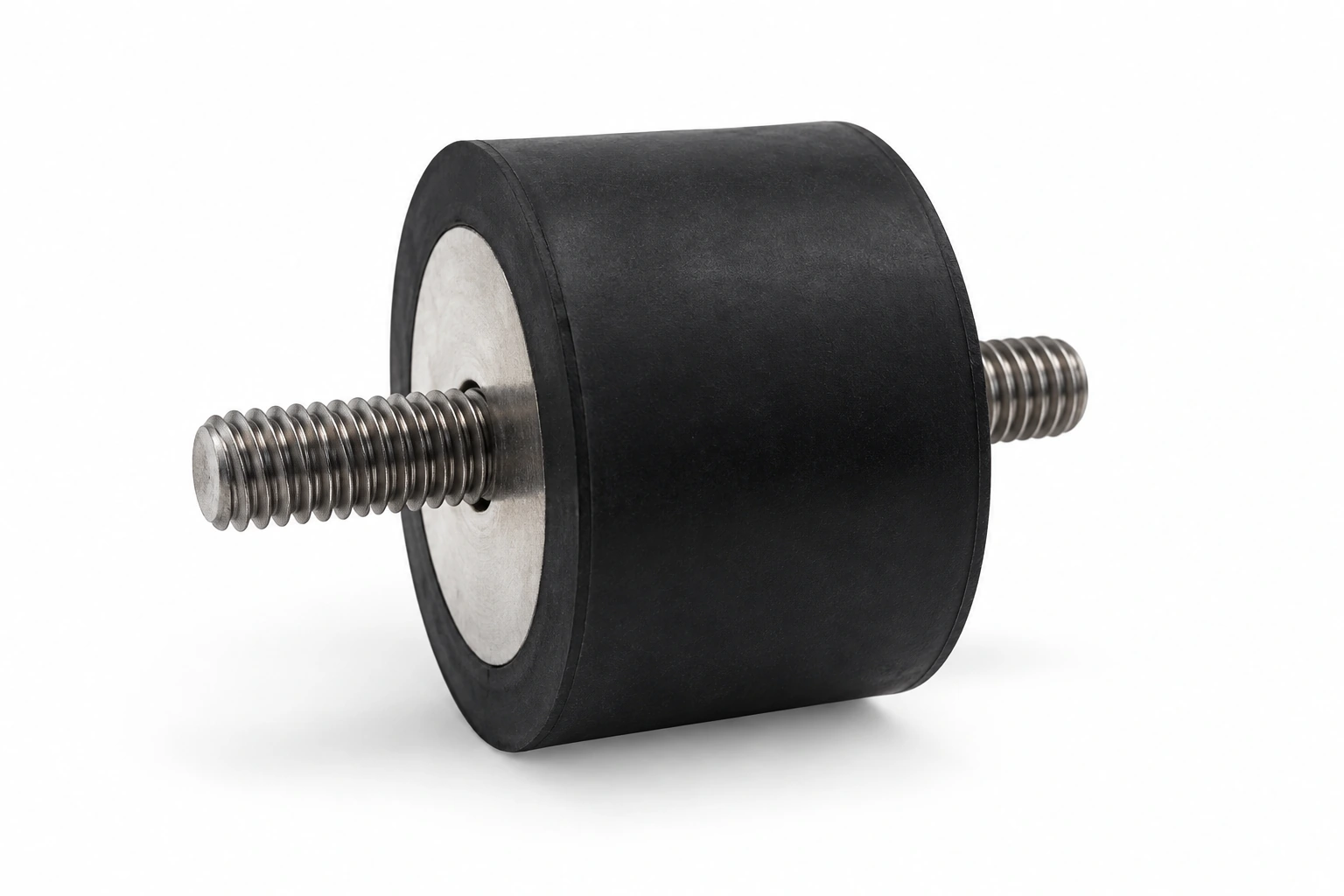
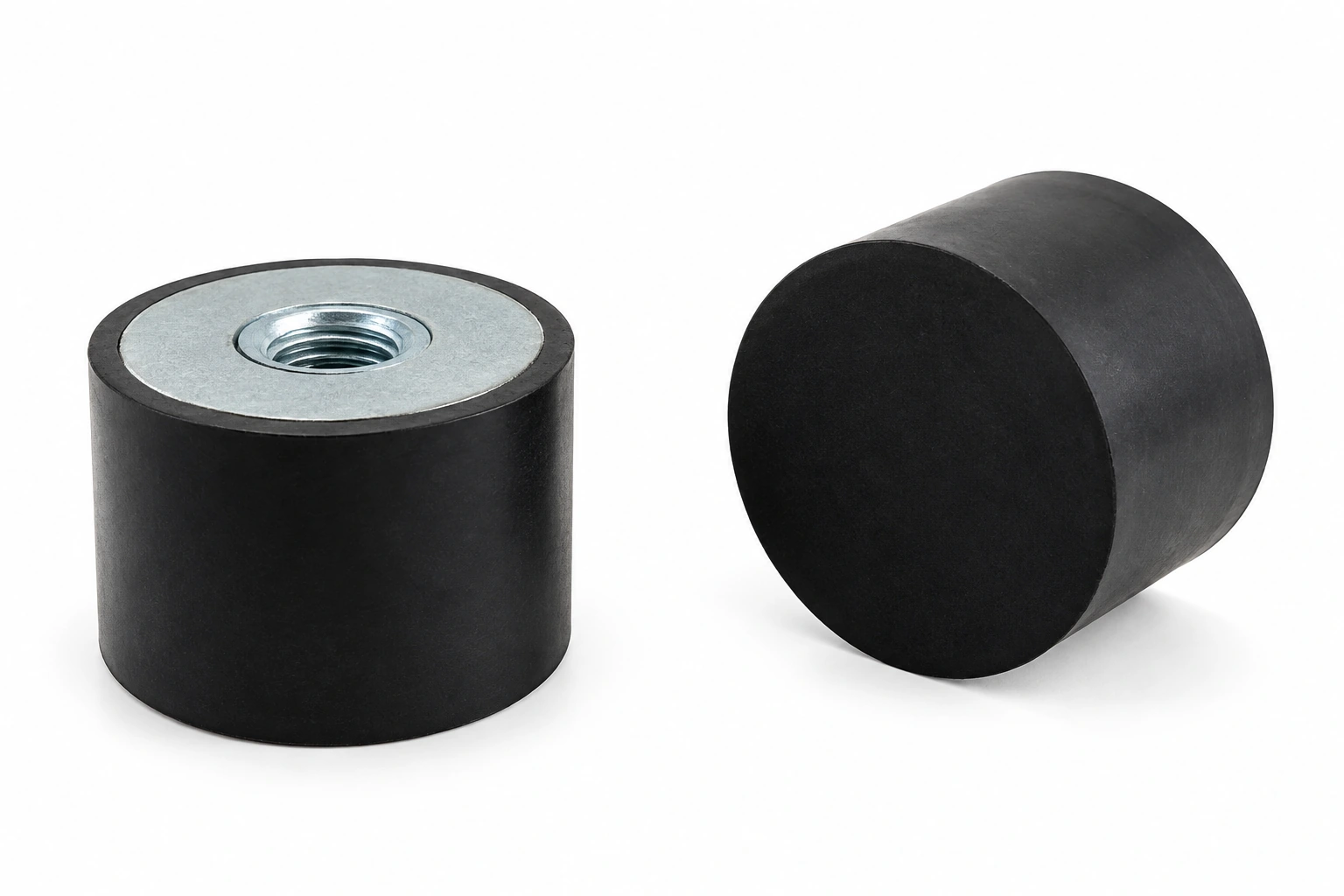
These rubber electric motor mounts are basically a part that goes between the motor and the base of the vehicle and their whole purpose is to prevent unwanted movements or vibrations. They look like a cylinder with two rods that are meant for connecting the motor to the base and tightening them down. The medium that is responsible for this is the rubber because of the many qualities that it has like being sturdy, but at the same time soft so it is elastic and it can absorb all the movements that are caused by the regular work of the motor.
Every motor and every vehicle has its own shape and size of rubber electric motor mounts so you will have to specifically choose one so it fits properly. If you get the wrong one you will not be able to install it at all, or you will install it but it will not serve the purpose and you will still feel the movements of it. It is highly recommended to replace them when the time comes so you can prevent damage on the surrounding parts, and most importantly prevent damage on the motor so you can use it for a longer period of time without needing to fix problems that would’ve not to happen otherwise.
Vibration Mount Size Catalog
Compare five mounting arrangements using the matching drawing, thread and dimensional data. Load and compression columns retain their stated units; confirm operating conditions for your installation.
Vibration Damping Mounts A
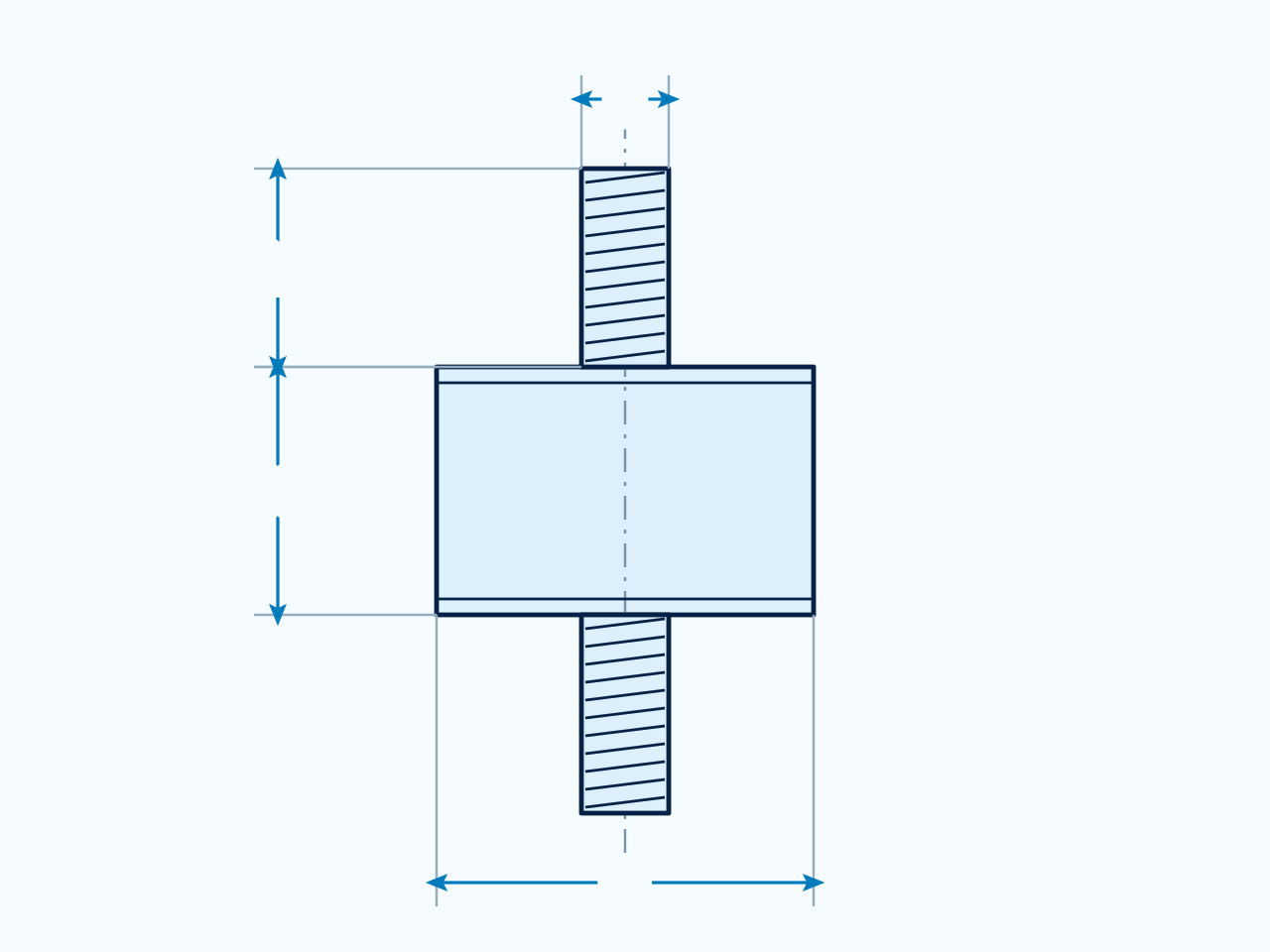
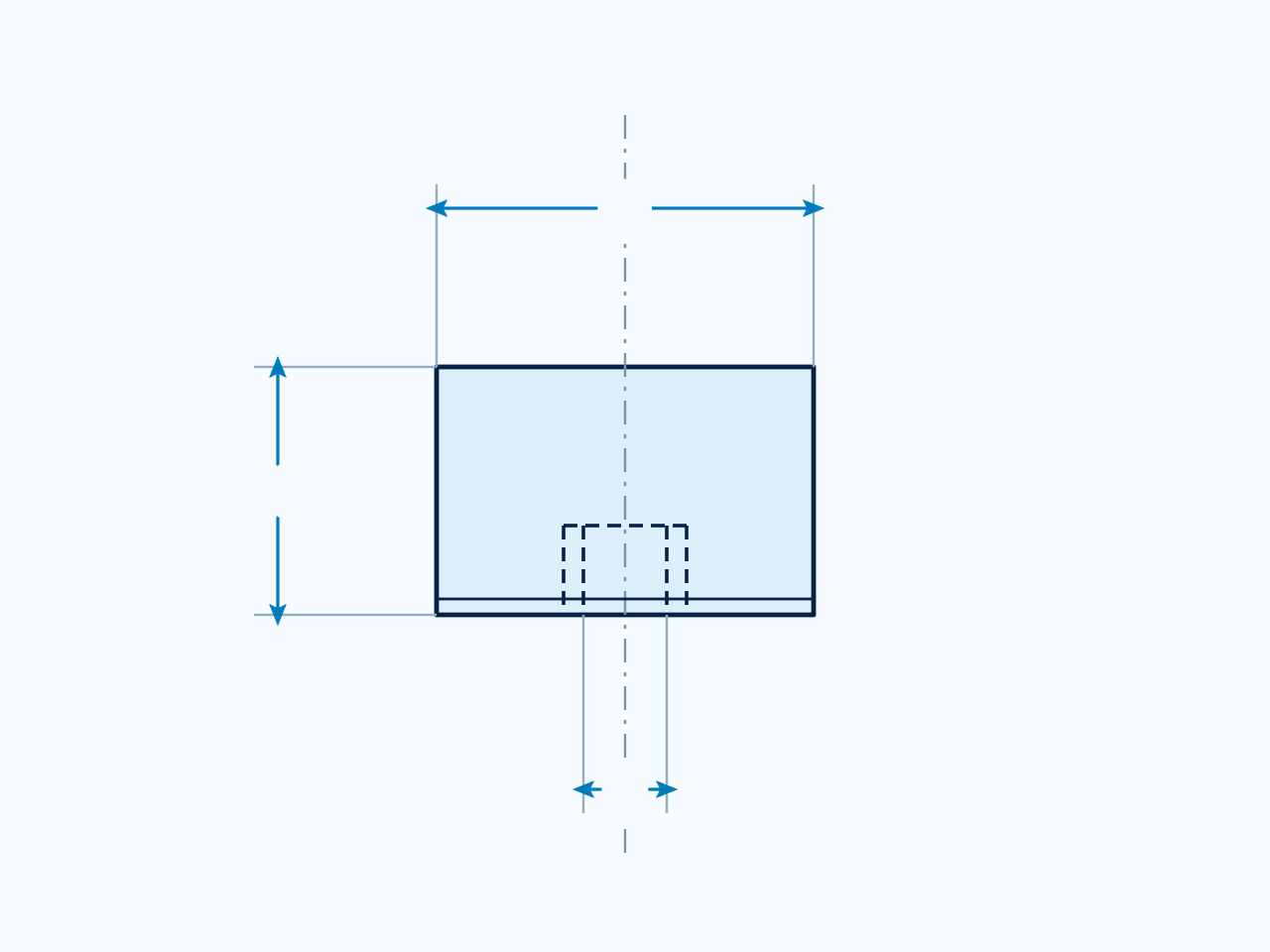
Match D, H and thread d to the drawing, including stud length L. Dimensions are in mm; thread designations, load in kg and compression in mm follow the table headings. Confirm load direction and operating conditions for your installation.
Anti-Vibration Rubber Mounts B
Match D, H and thread d to the drawing, including stud length L. Dimensions are in mm; thread designations, load in kg and compression in mm follow the table headings. Confirm load direction and operating conditions for your installation.
Vibration Isolators C
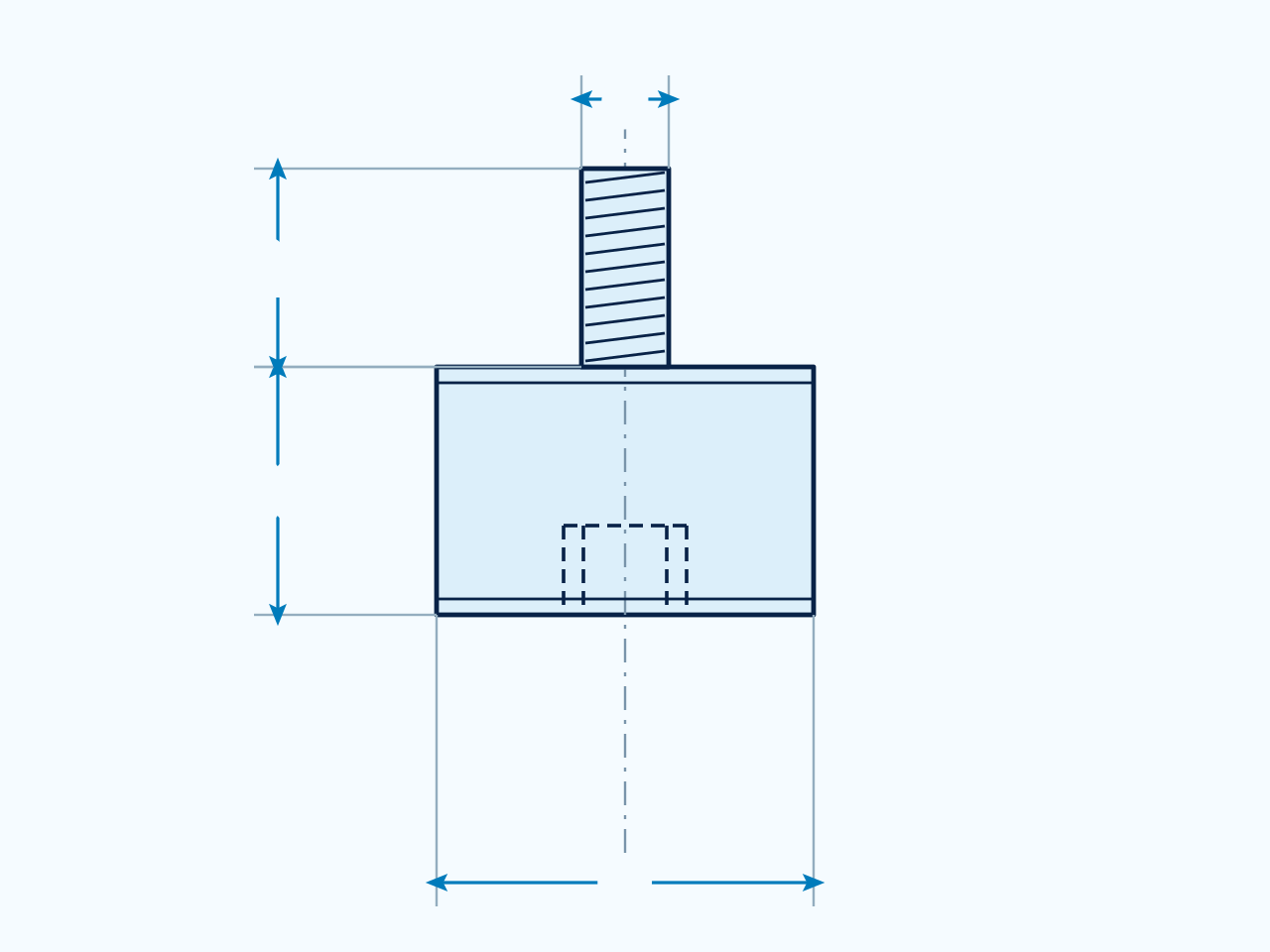
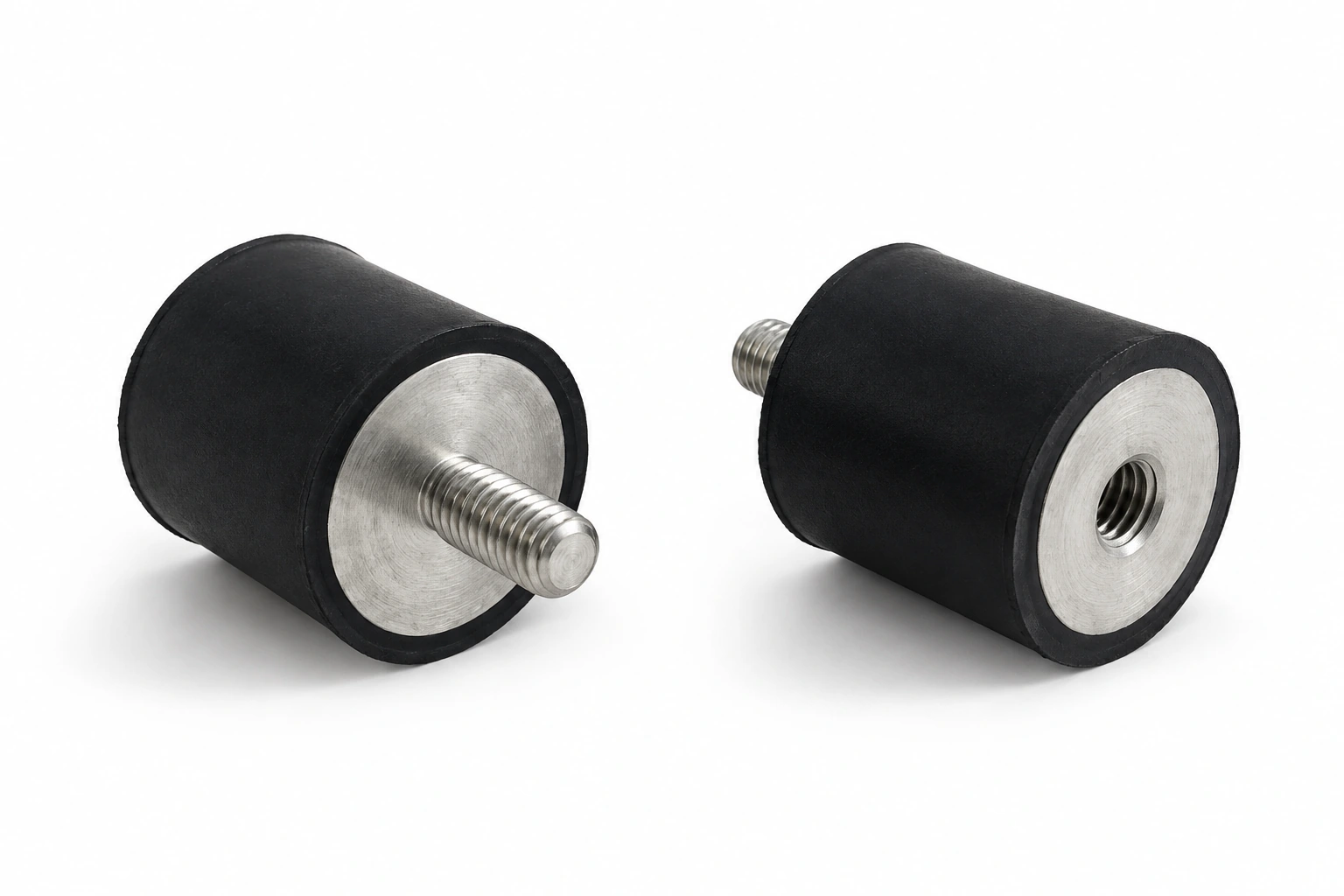
Match D, H and thread d to the drawing. Dimensions are in mm; thread designations, load in kg and compression in mm follow the table headings. Confirm load direction and operating conditions for your installation.
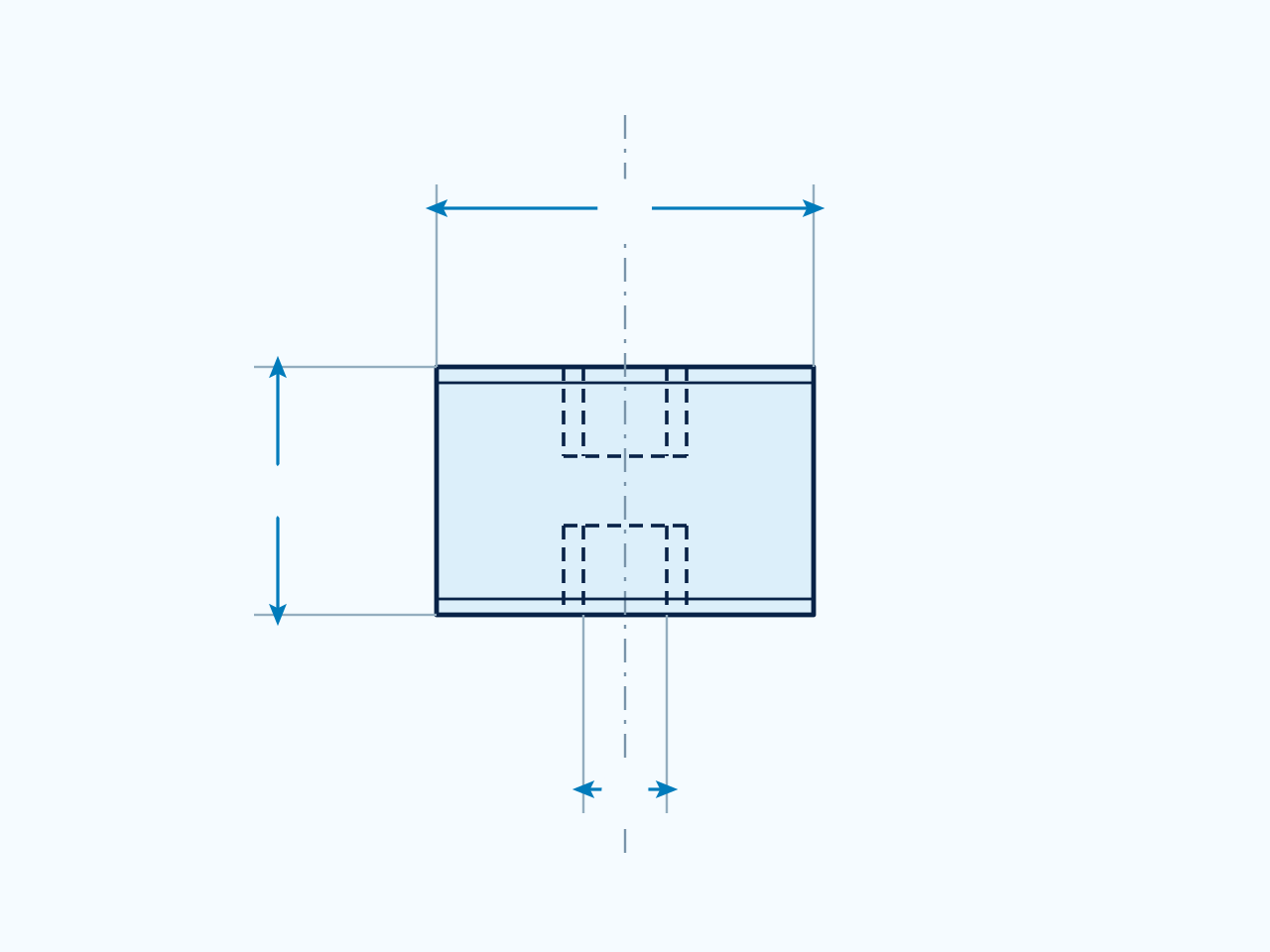
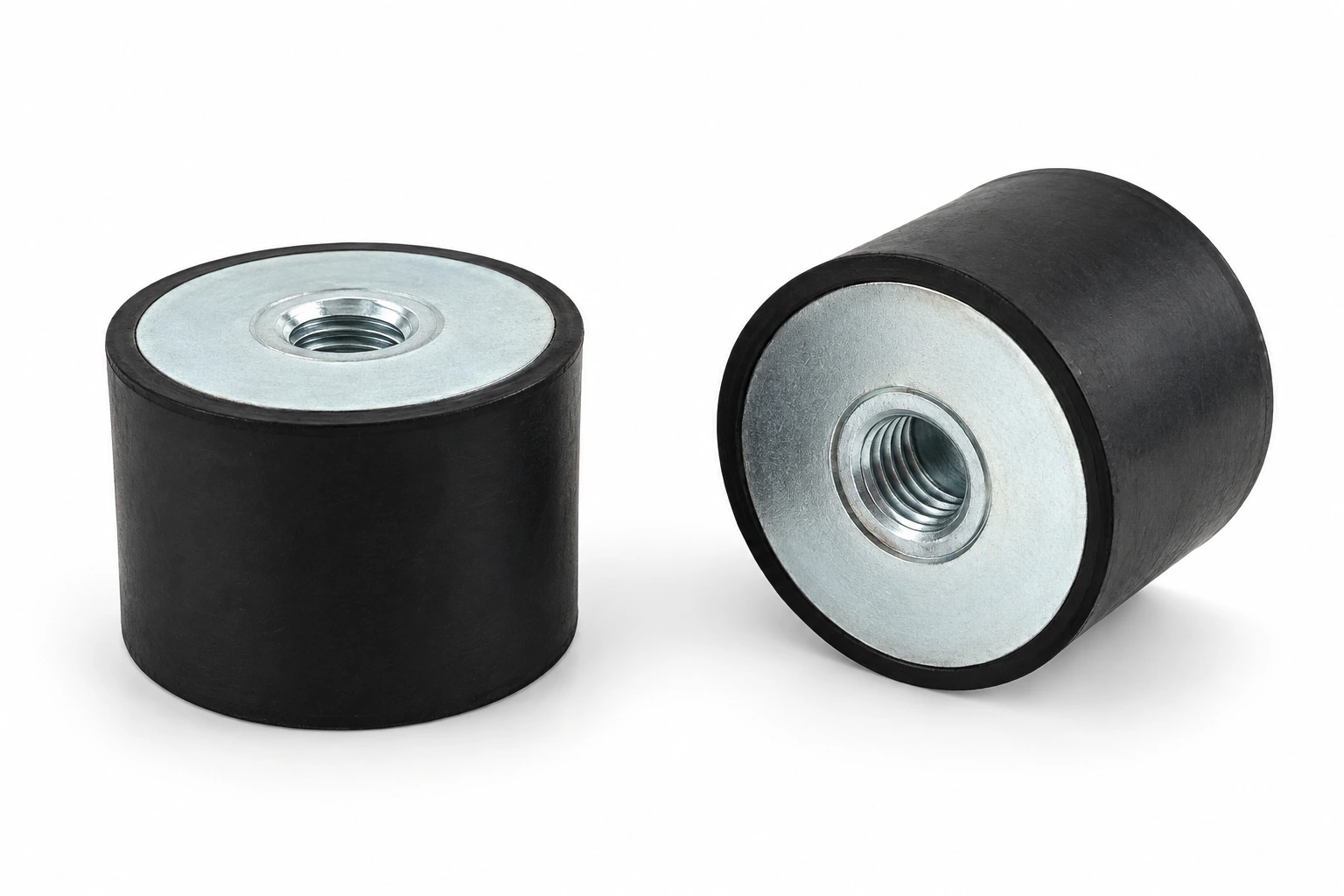
Rubber Mountings D
Match D, H and thread d to the drawing, including stud length L. Dimensions are in mm; thread designations, load in kg and compression in mm follow the table headings. Confirm load direction and operating conditions for your installation.
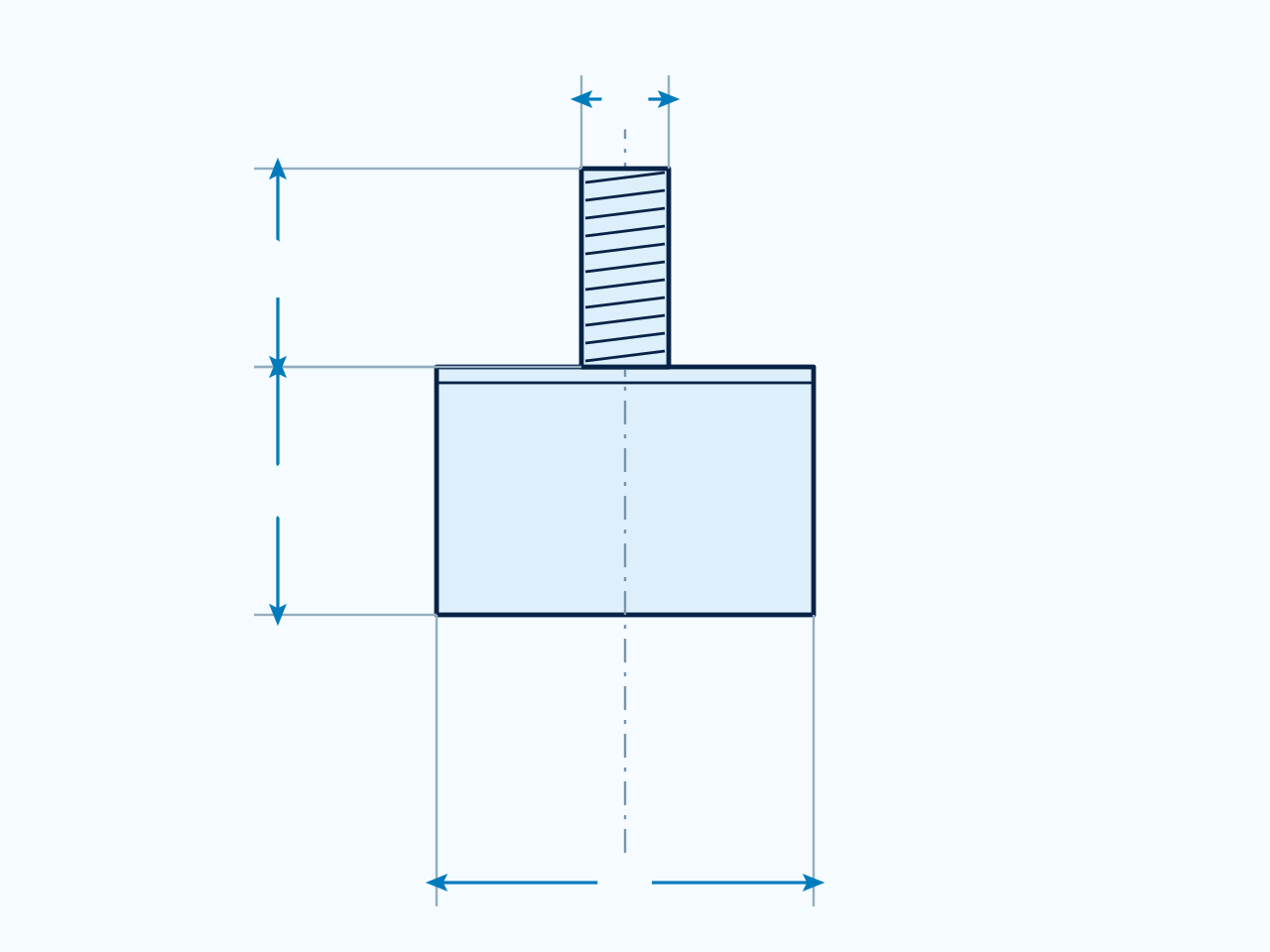
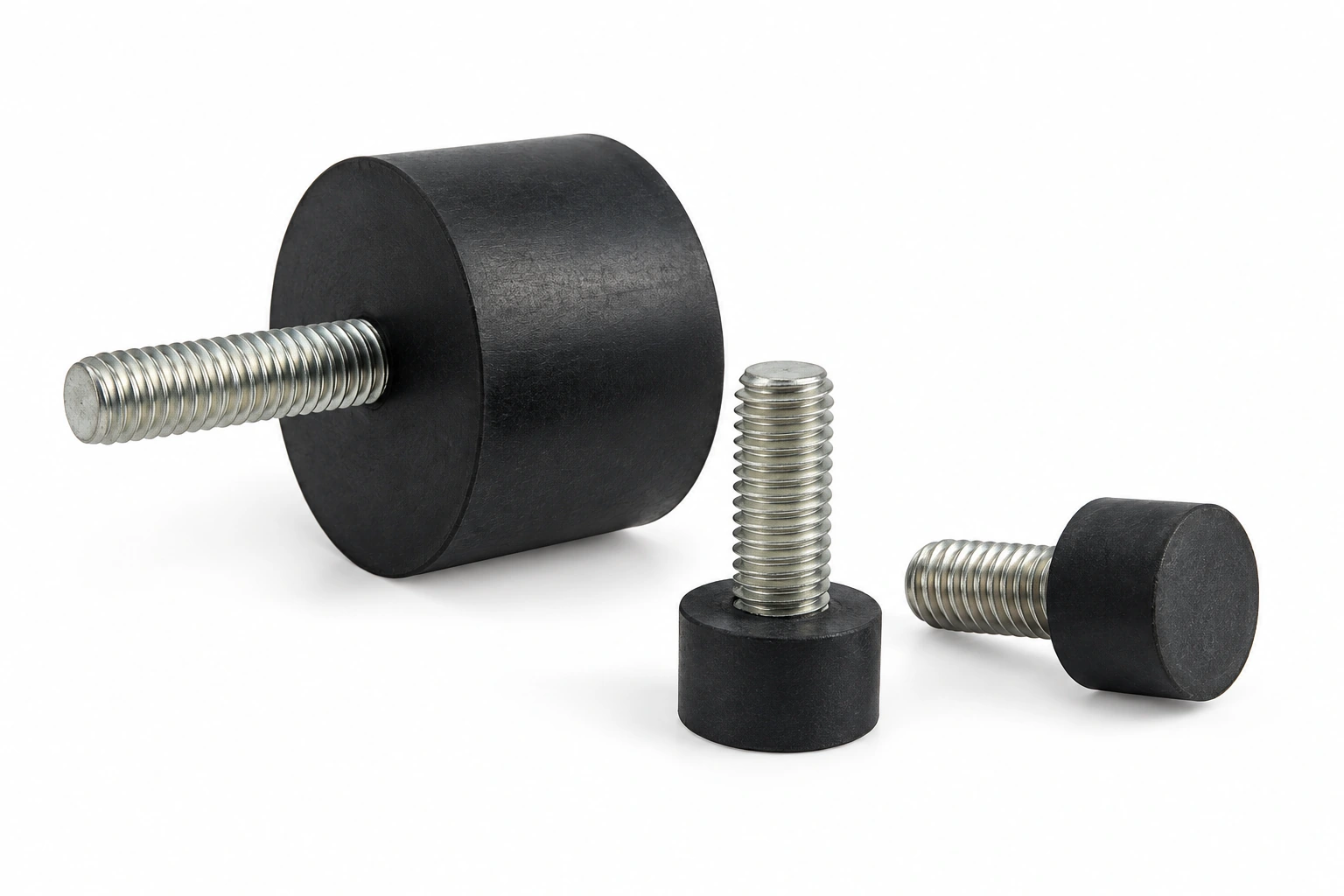
Rubber Vibration Mounts E
Match D, H and thread d to the drawing. Dimensions are in mm; thread designations, load in kg and compression in mm follow the table headings. Confirm load direction and operating conditions for your installation.
Need a different size? Share your drawing, mating dimensions and intended use to discuss a suitable part.
Discuss Your RequirementsProduct specifications
- Product form
- Elastomer mount between a vibrating assembly and its support
- Application focus
- Electric motors. Size the part against the selected assembly.
- Dimensions to confirm
- Free and loaded heights, attachment spacing and body envelope. Match these to electric motors.
- Isolation objectives
- Steady vibration. Define a measurable acceptance target on the supported assembly.
- Dynamic selection
- Use the load per mount, excitation frequency and allowed movement to select the mount.
Need a quote or a custom part?
Send your requirements, drawings or samples to discuss standard and custom silicone rubber parts.
Email us[email protected]