
rubber flask stopper
A rubber flask stopper is a cylindrical item that is meant to be placed inside glass lab containers, like flasks for example. They are a really important piece of equipment because they let you control the experiment properly, and because of the sealing effect that they cause. If you have certain volatile substances, it is required to have such a stopper to avoid toxication and prevent the chemical to be compensated.
They come in various options, depending on what you need them for. Firstly, we have completely closed stoppers that are meant to be used for sealing purposes. Secondly, we have the ones that come with one hole. They come in handy when you have to measure the exact temperature during the experiment or measure the pH value. Lastly, we have the flask stoppers with two holes. They are meant to be used for closed systems where one substance comes from the first hole, and a second substance goes away through the second hole. You can choose the right option depending on your needs. However, if you are not sure what you will use them for, you can get closed stoppers and drill them later on if needed.
The material that lets them be used in such scenarios is rubber. It can fit snugly in the neck of the flasks and offers sealant effects. In addition, there can be special rubbers made to withstand all the chemicals so they don’t damage quickly. Heat resistance is another benefit that this material has, so it can be reused when sterilized properly using an autoclave. However, to be able to use the rubber flask stopper, you will need to get the correct size. That is why is it important to get the right dimensions of the holes on your flasks and find them on our list. In case you have a different request, our firm can produce special flask stoppers for your project.
Stopper & Plug Size Catalog
Compare four stopper profiles and check the selected part dimensions against your opening and available depth. Each profile has its own drawing and dimension meanings.
Custom colors are available to your Pantone color code. Include the code in your inquiry.
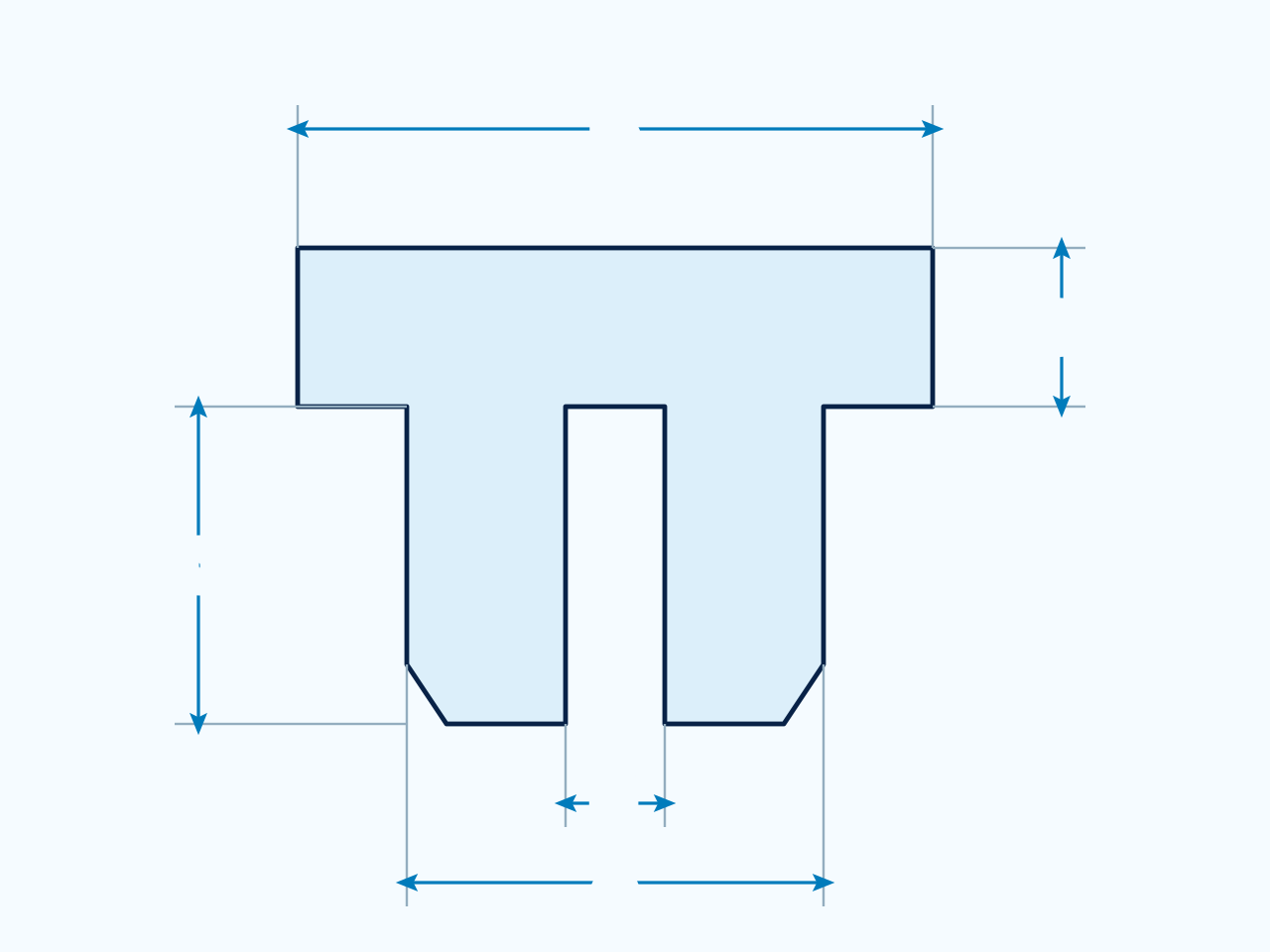
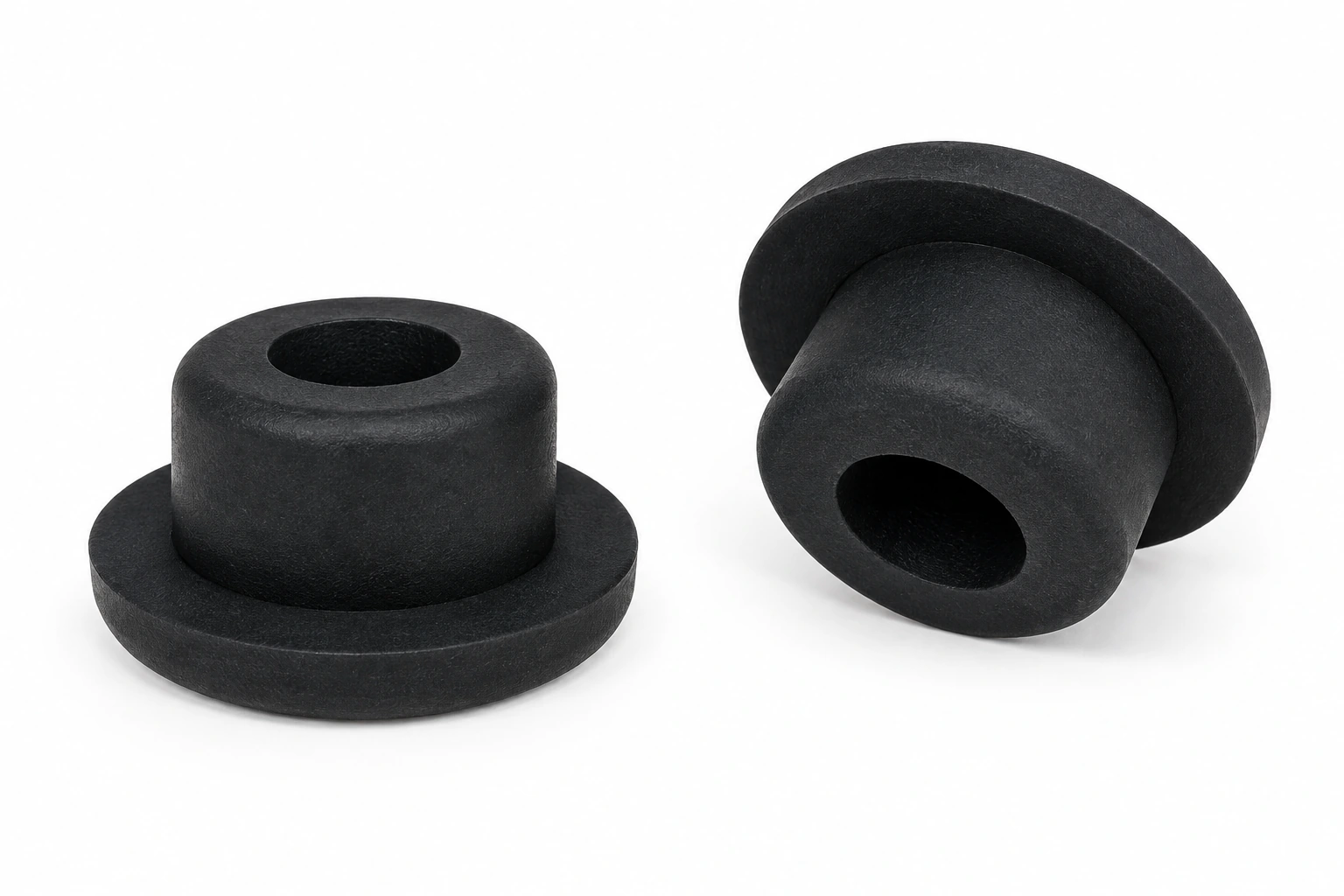
RST T-Shaped Plugs
Match stem diameter A, flange diameter B, stem length C and flange thickness D. E refers to the underside recess; use the selected row and approved drawing to confirm the actual profile.
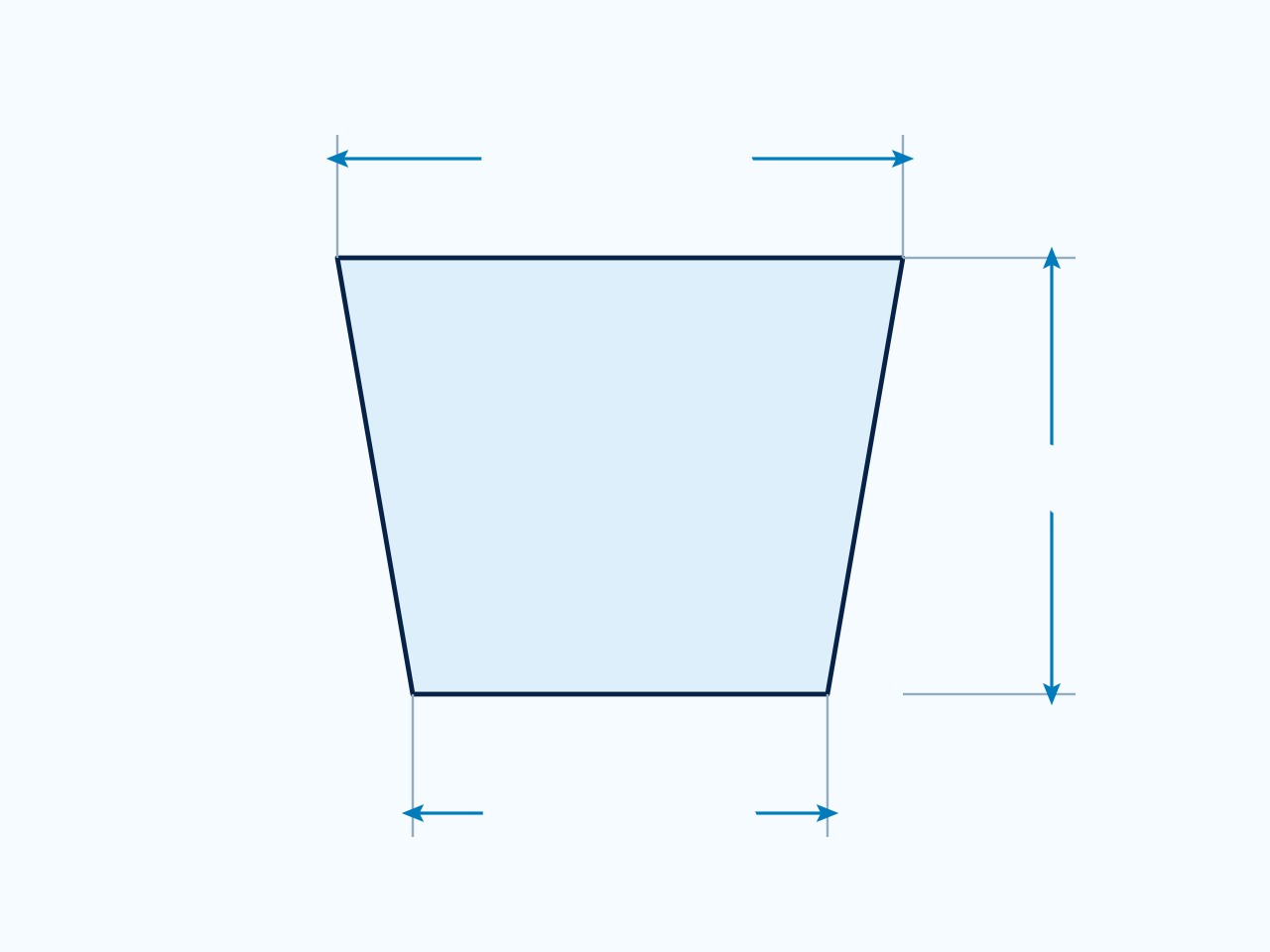
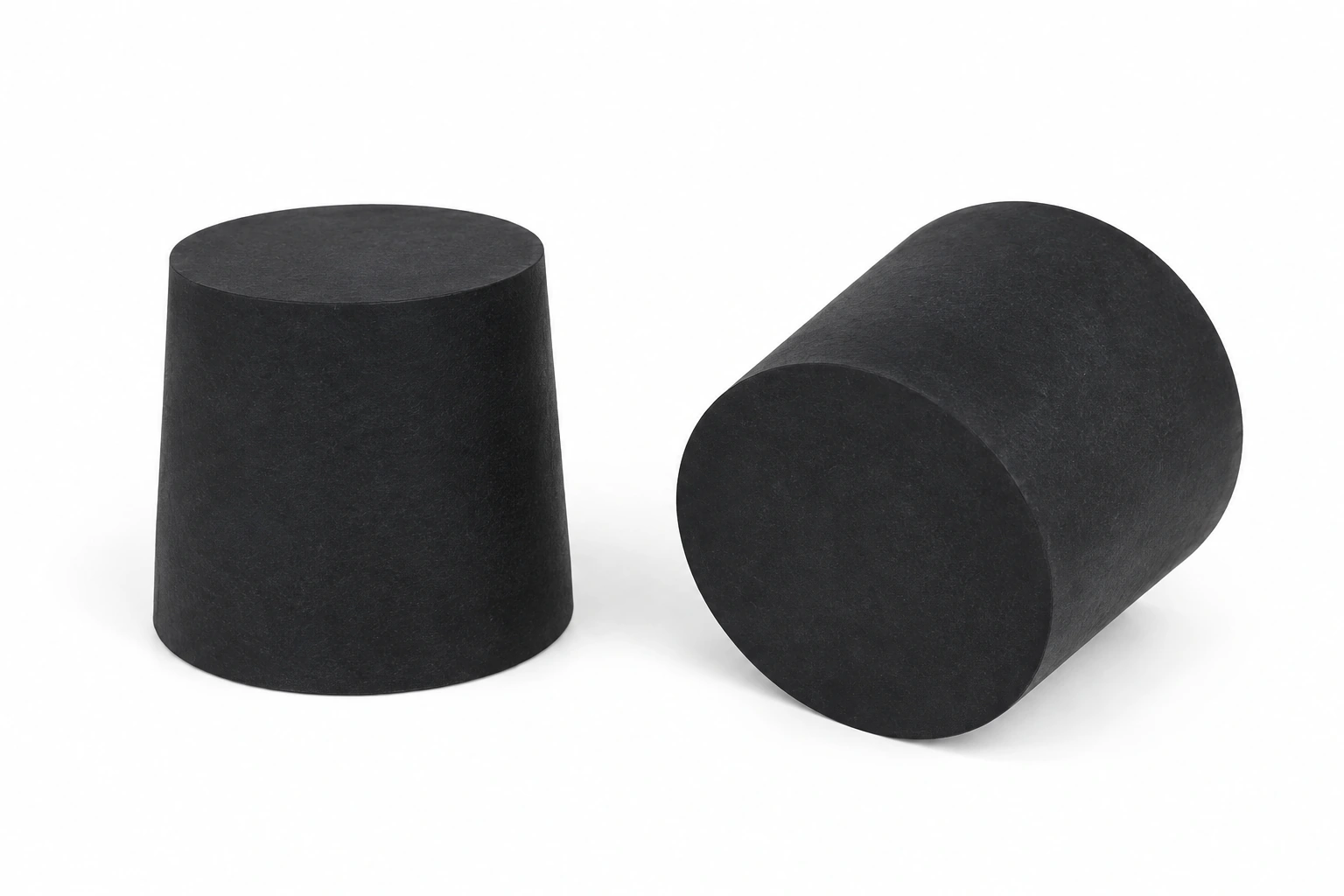
RSA Tapered Corks
Compare large-end diameter A, small-end diameter B and Height, in mm. The mating bore and required seating depth determine where the taper contacts the opening.
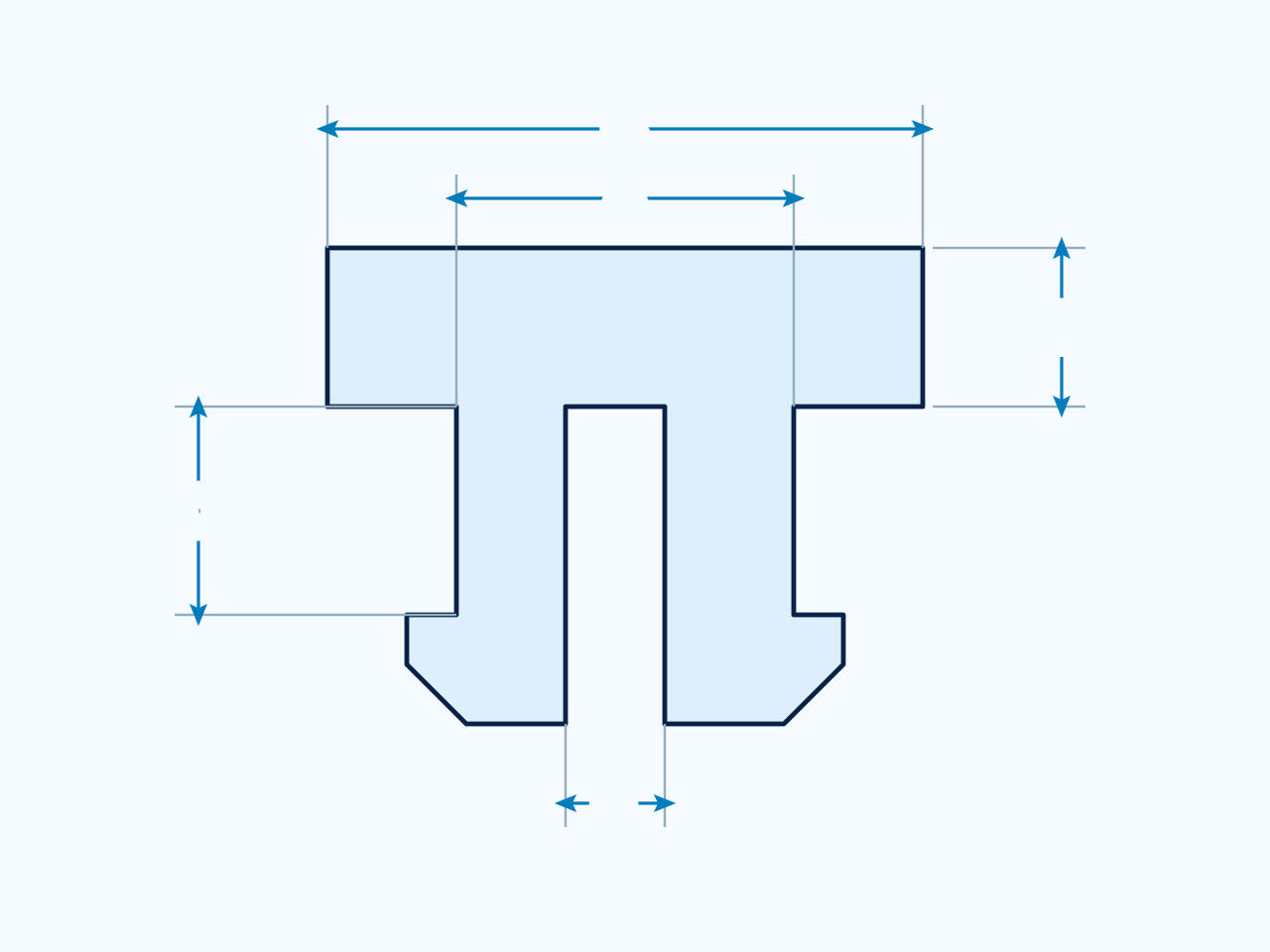
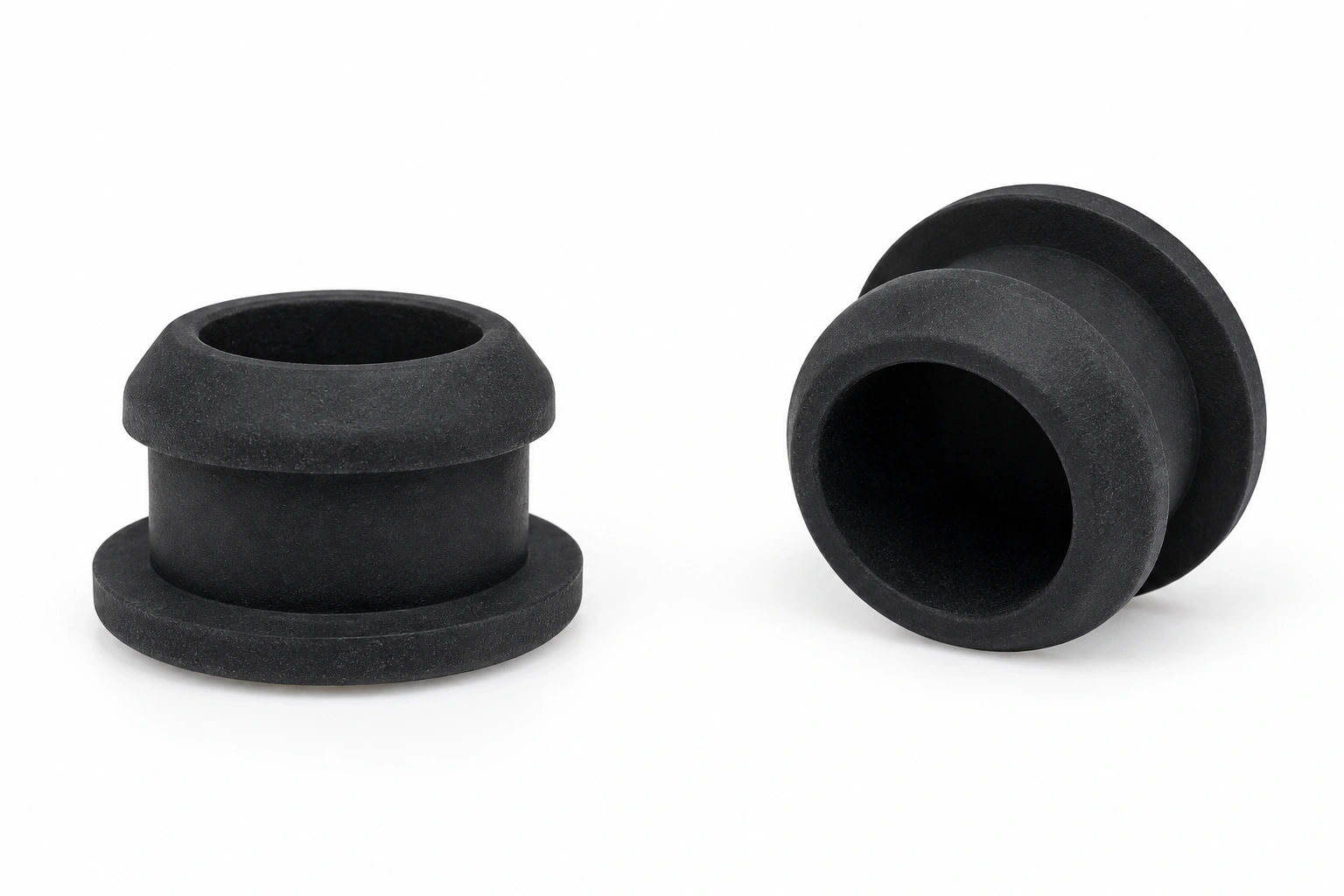
RSB Undercut Plugs
Compare neck diameter A, flange diameter B, flange-to-lip distance C and flange thickness D. Check panel thickness and rear clearance. E refers to the underside recess.
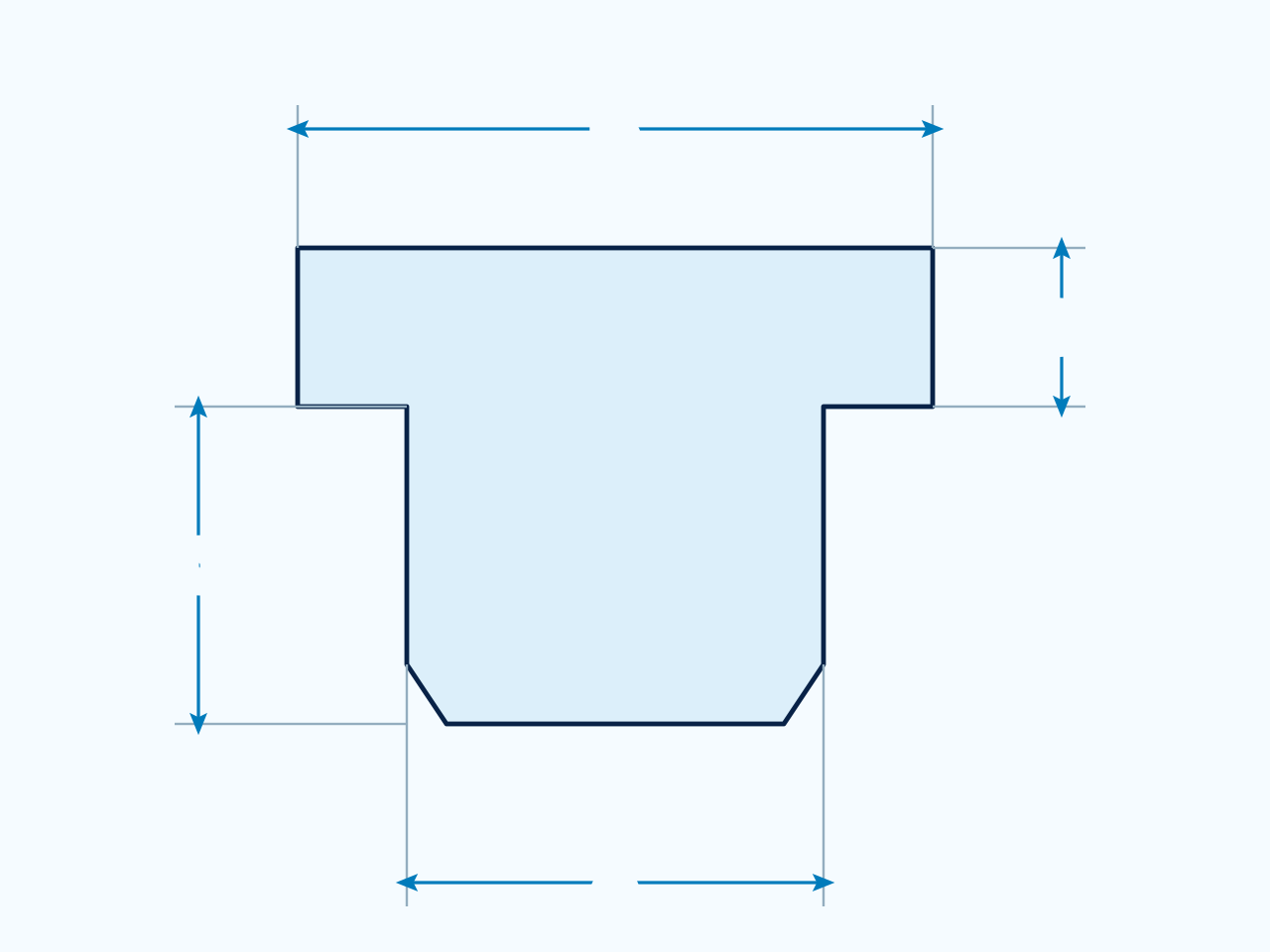
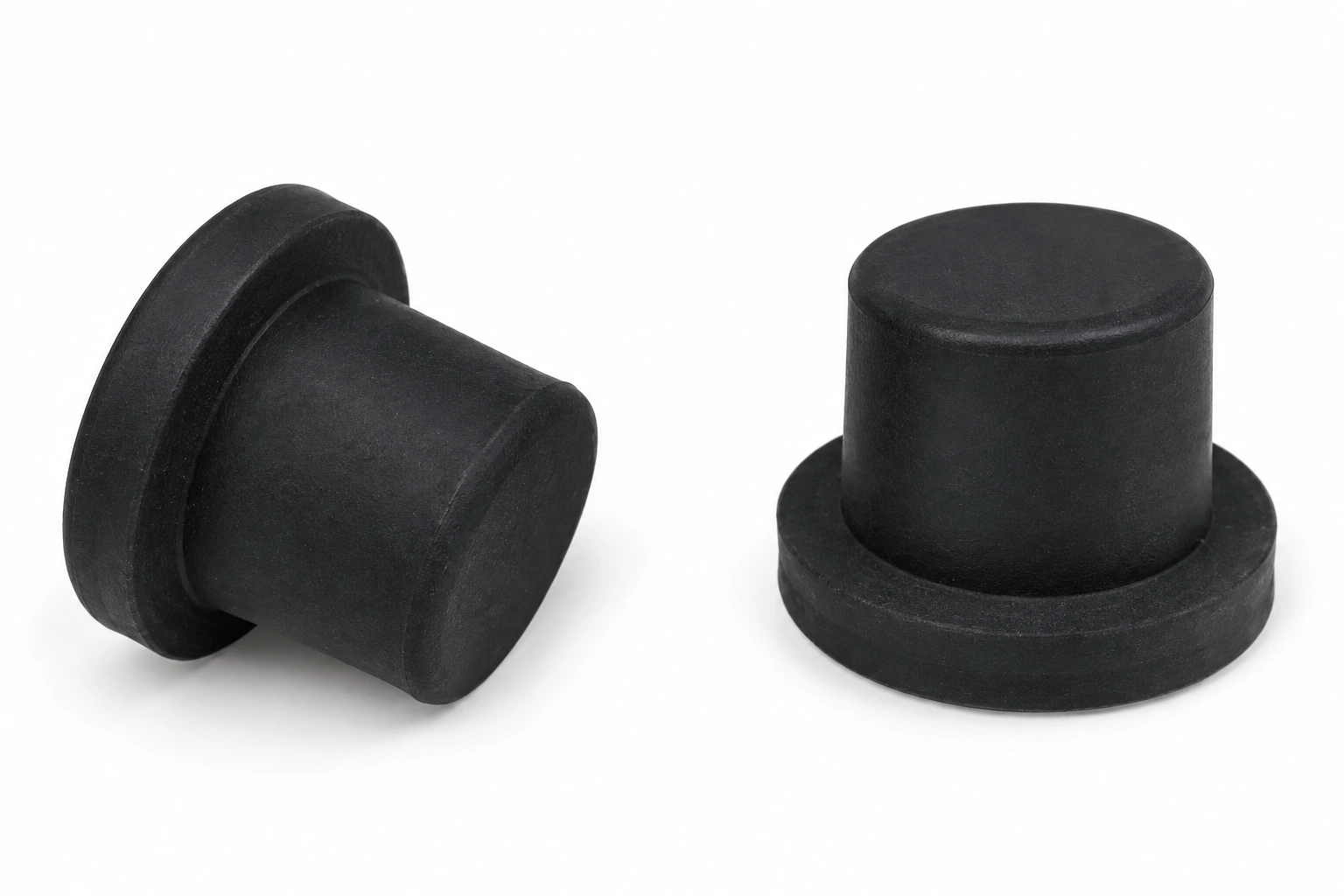
RSD T-Shaped Stoppers
Compare stem diameter A, flange diameter B, stem length C and head thickness D, in mm. Check the seating surface and available depth as well as the hole diameter.
Need a different fit? Share the opening dimensions, mating profile and intended use for a custom size.
Discuss Your RequirementsProduct specifications
- Product form
- Removable closure fitted inside an opening
- Application focus
- Laboratory flasks. Size the part against the selected assembly.
- Dimensions to confirm
- Opening diameter, closure profile, insertion depth and exposed grip. Match these to laboratory flasks.
- Profiles discussed
- Cylindrical sections. Select the profile that matches the mating part and dimension that section explicitly.
- Cleaning and reuse
- Specify the cleaning or sterilization cycle discussed for the application, including temperature, duration and permitted reuse.
- Seating check
- Check the sealing contact around the opening and the force needed for insertion and removal.
Need a quote or a custom part?
Send your requirements, drawings or samples to discuss standard and custom silicone rubber parts.
Email us[email protected]