
Rubber latex tubing
There are virtually dozens of different kinds of rubber tubing. You can make tubes and hoses from natural rubber, neoprene, silicone, FKM, EPDM, nitrile, latex and so on. Today, we are going to discuss rubber latex tubing. Unlike most of the other tubing, rubber latex tubing could have a different purpose than just conveying liquids and gases from point A to point B. Due to its brilliant tensile and elongation abilities, latex rubber tubing can be used in a variety of scenarios, environments, and applications.
Once processed, latex is pretty much outright impressive. As we said, it is very elastic and responsive, making it naturally resilient to wear and tear due to frequent elongating, bending, or pressing. This level of resilience made latex tubing extremely popular in more than one industry. Used anywhere from automotive to the medical industry, rubber latex tubing has also found a way into our everyday lives. For instance, if you have an elastic band at home, the one that you used to use to work out, chances are, the insides of it are made from latex. Latex is used with such equipment because it is basically tear-resistant unless put under an immense amount of stress. However, there is one thing that rubber latex tubing can’t handle, and that’s high temperature. Low temperatures aren’t a threat to a latex rubber tube, but if it gets too toasty – latex might start to melt.
As far types of rubber latex tubing are concerned – there are virtually endless. These things come in various types, shapes, and colours, although the latter isn’t as important as the other two. Now, since there are so many latex tubes you can choose from, we’d advise that you learn how to differentiate the types by their inner or outer diameter, purpose, and so on.
Rubber Hose Size Catalog
Compare tube bore, outside diameter and available wall thickness. Confirm material compatibility and operating requirements for the selected hose.
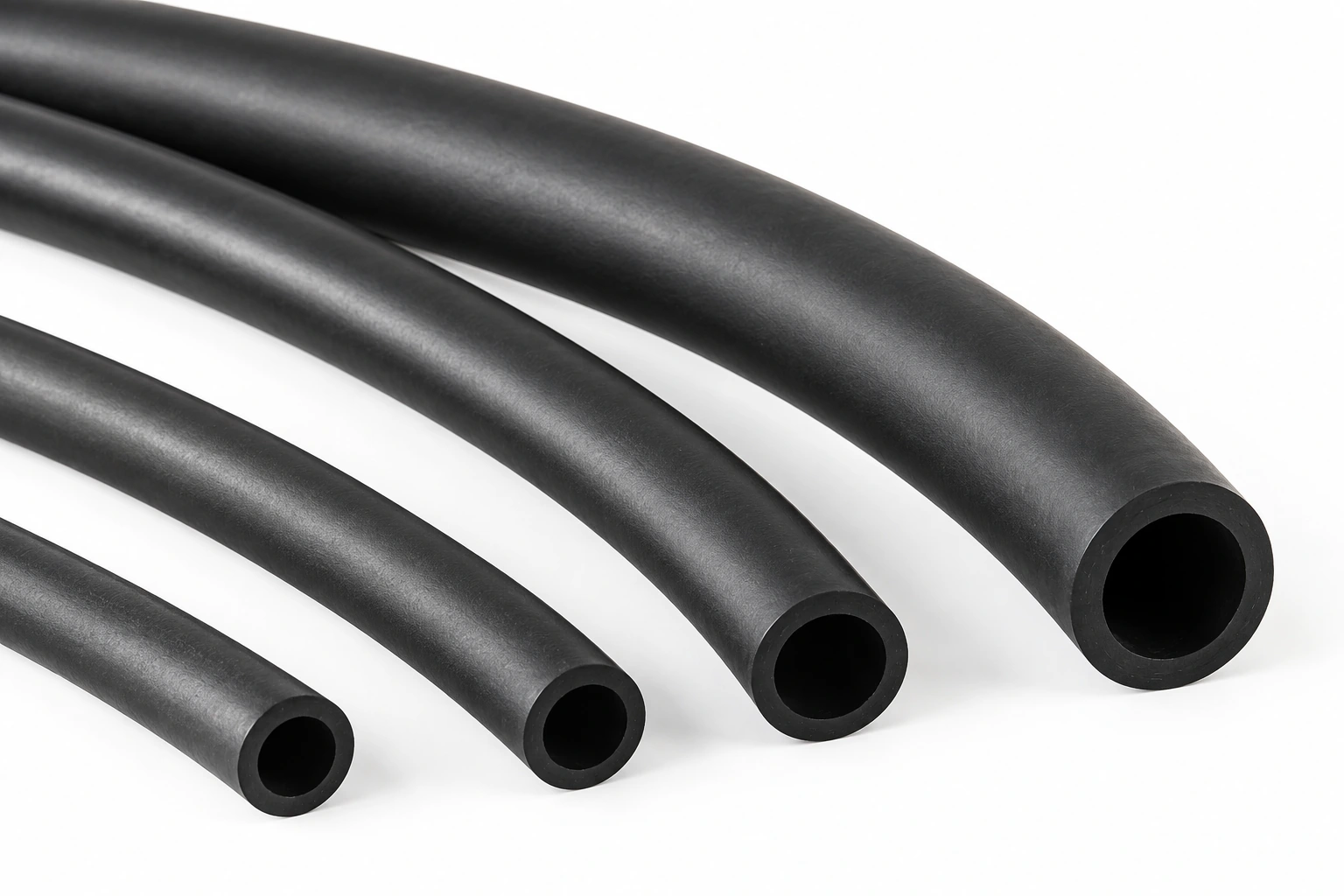
Rubber Hose
Compare Inside Diameter and Outside Diameter in mm. The cross-section drawing identifies the bore and outside diameter; confirm the selected tube material and service requirements.

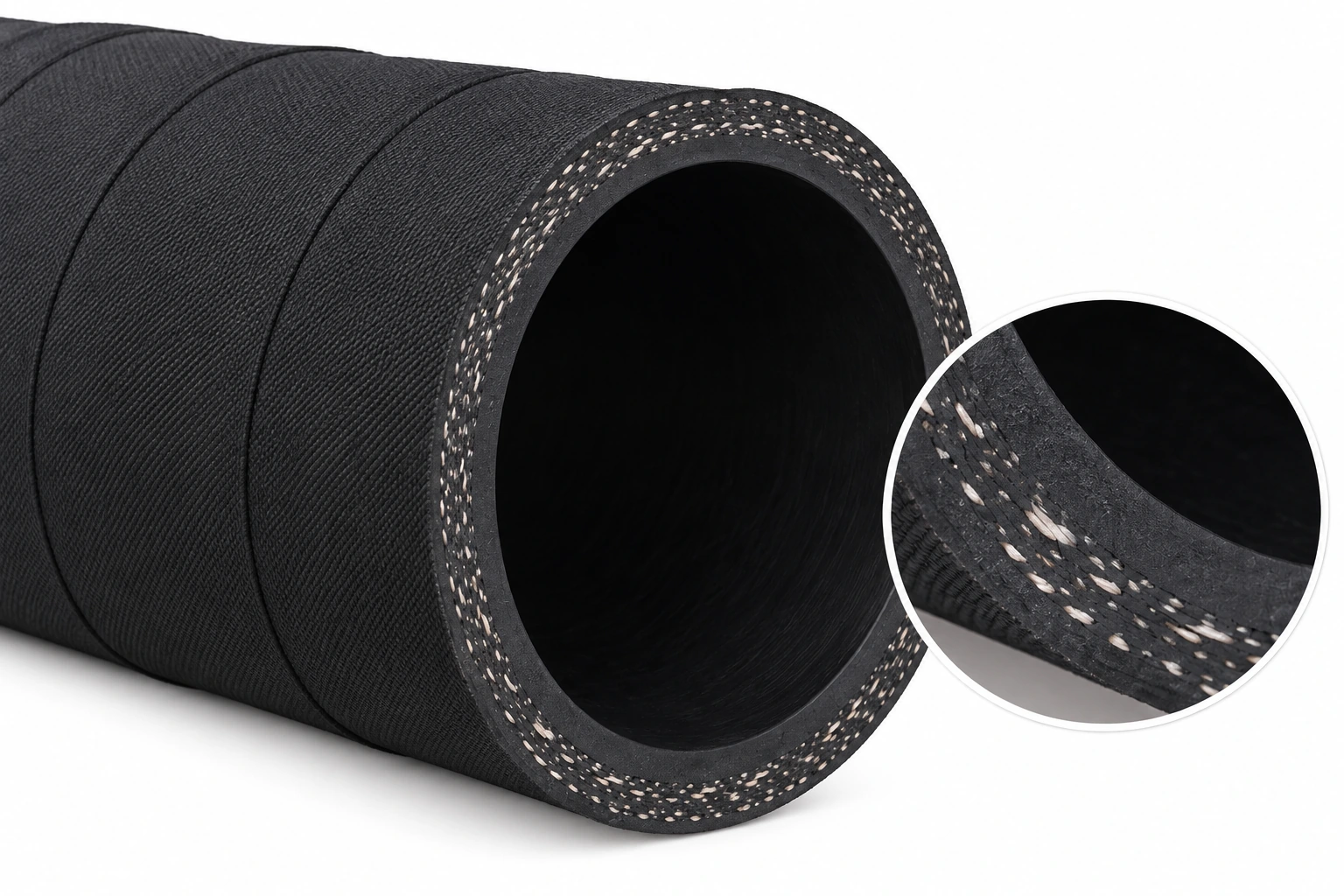
Fluororubber Hose
Compare Inside Diameter and Outside Diameter in mm. The cross-section drawing identifies the bore and outside diameter; confirm the selected tube material and service requirements.
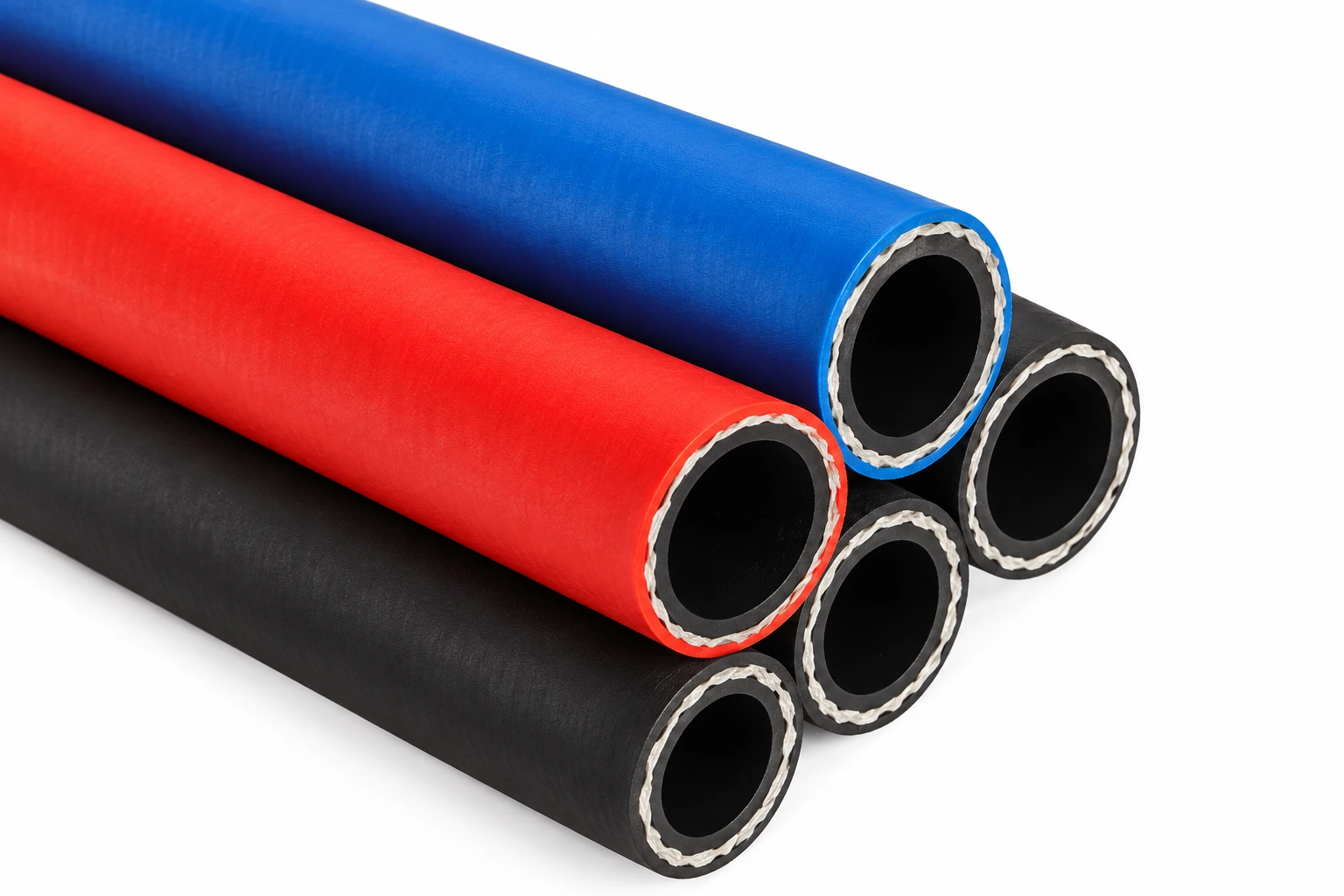
Colourful rubber high pressure hose
Compare Inside Diameter and Outside Diameter in mm, together with the listed Thickness and Colour. The cross-section drawing identifies the bore and outside diameter; confirm the selected tube material and service requirements.
Need a different size? Share your drawing, mating dimensions and intended use to discuss a suitable part.
Discuss Your RequirementsProduct specifications
- Product form
- Hollow elastomer tubing for a fitted line or sleeve
- Material
- Natural rubber / latex. Specify the compound grade for the selected service.
- Application focus
- Vehicle hose runs and medical-device assemblies. Size the part against the selected assembly.
- Dimensions to confirm
- Inside diameter, outside diameter, wall thickness and cut length. Match these to vehicle hose runs and medical-device assemblies.
- Contact conditions
- Other gases: define concentration, temperature and contact time, then check compatibility with the chosen compound.
- Line layout
- Check bend radius, unsupported spans and clearance at both connections.
Need a quote or a custom part?
Send your requirements, drawings or samples to discuss standard and custom silicone rubber parts.
Email us[email protected]