
Rubber Mounts And Isolators
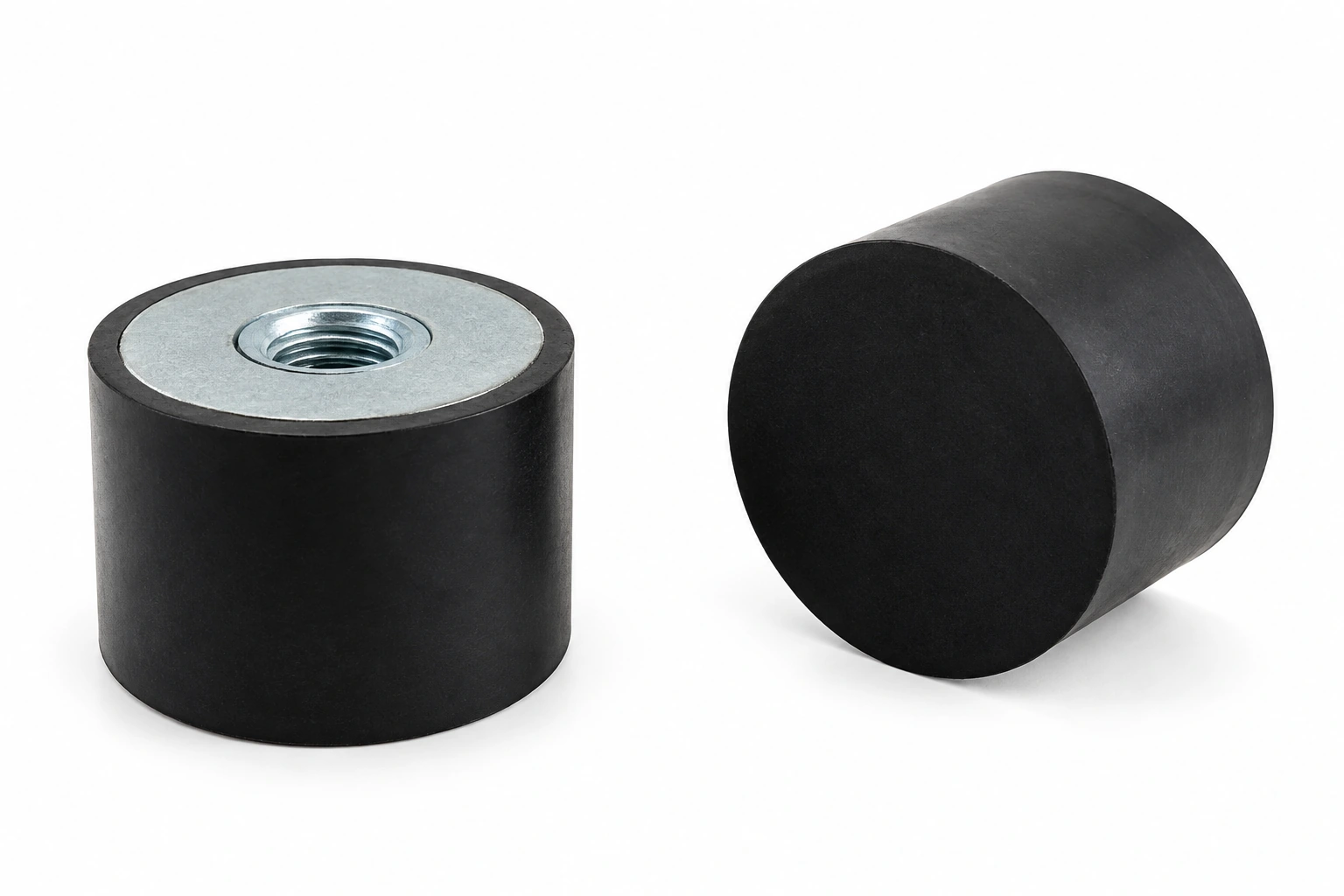
Rubber mounts and isolators introduce a resilient connection between a vibrating assembly and its support. Their geometry and loading determine how the rubber deforms. A mount used in compression should not be assumed to carry the same load when pulled or loaded sideways.
Set the load per mount, attachment details and available movement before selecting a design. The support frame and equipment must remain stable as the mounts deflect. Where several mounts are used, consider the center of gravity and mounting positions rather than dividing the total weight equally without checking the layout.
Isolation performance depends on the relationship between the equipment’s vibration and the supported assembly’s dynamic behavior. It is not a universal percentage for rubber mounts. Check the installed system across its operating conditions, including rigid connections that can carry vibration around the isolators.
Vibration Mount Size Catalog
Compare five mounting arrangements using the matching drawing, thread and dimensional data. Load and compression columns retain their stated units; confirm operating conditions for your installation.
Vibration Damping Mounts A
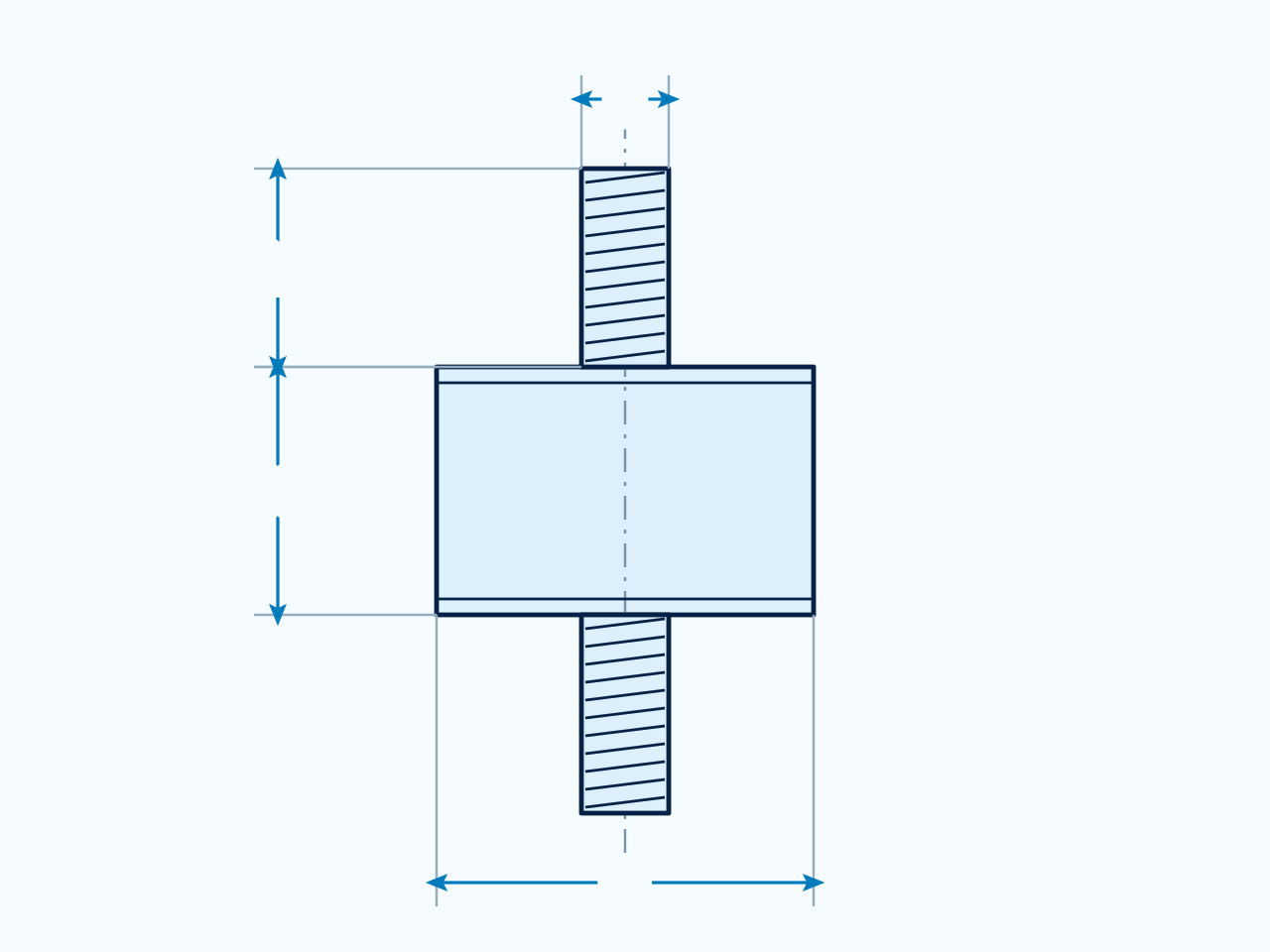
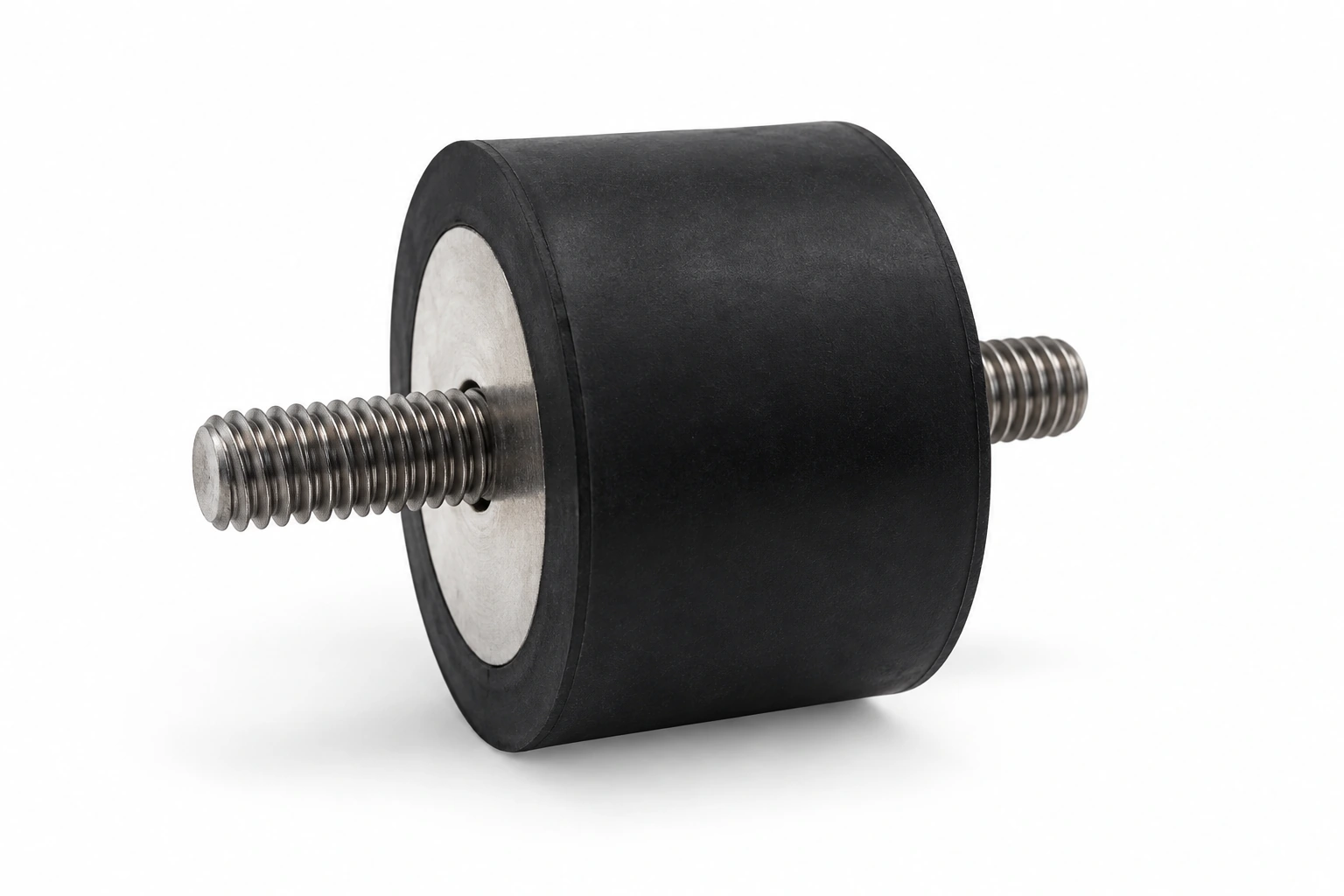
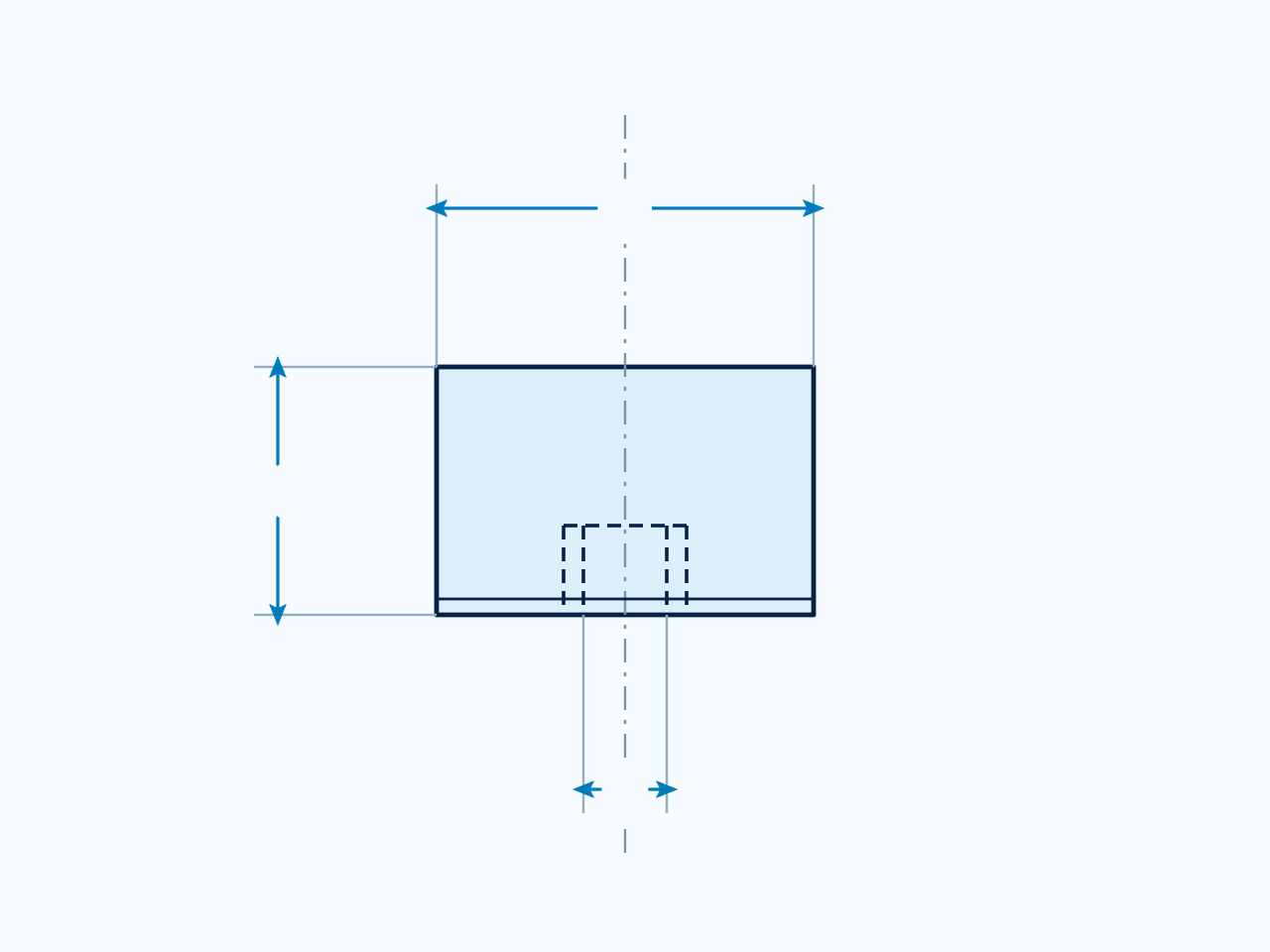
Match D, H and thread d to the drawing, including stud length L. Dimensions are in mm; thread designations, load in kg and compression in mm follow the table headings. Confirm load direction and operating conditions for your installation.
Anti-Vibration Rubber Mounts B
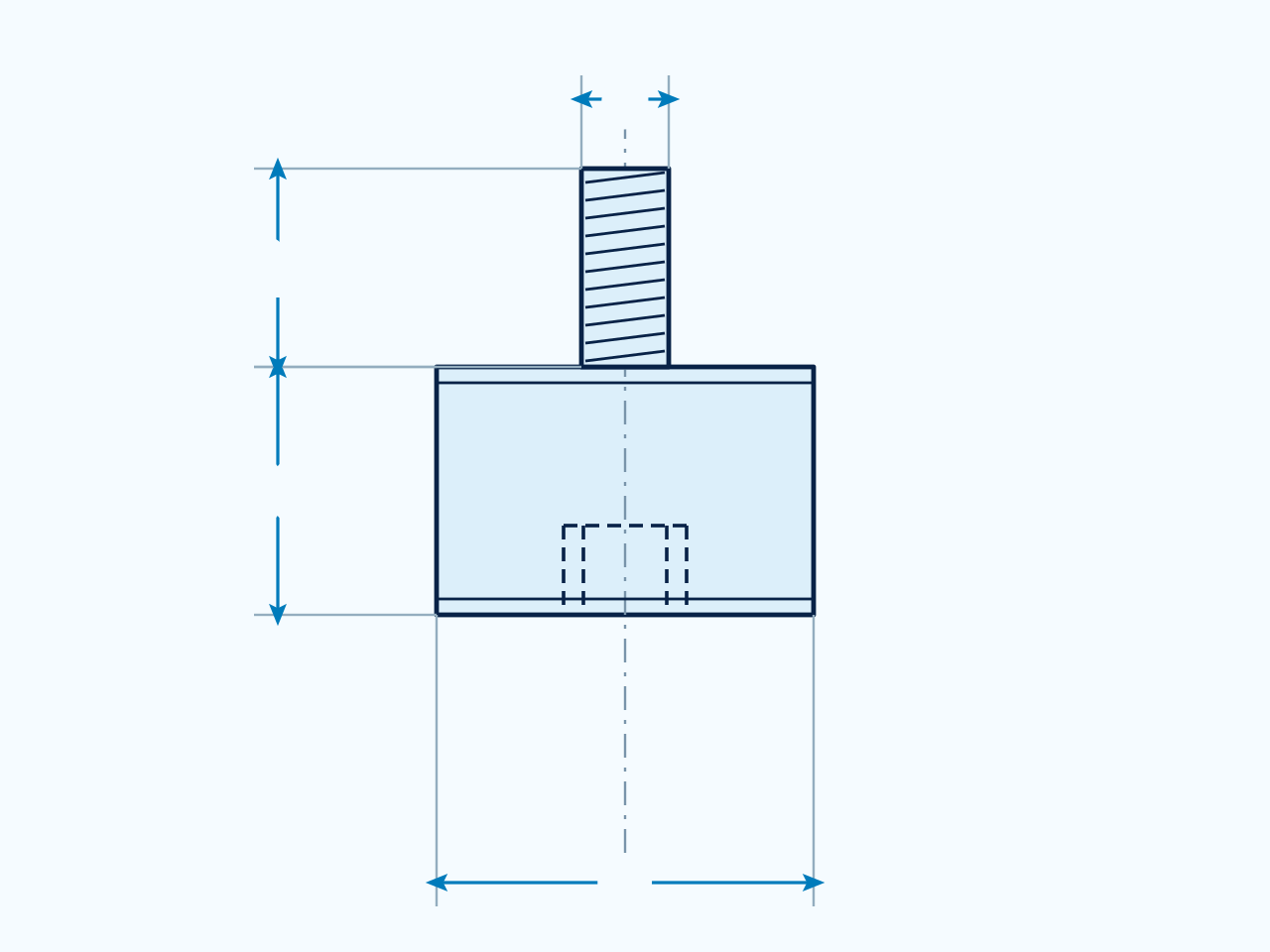
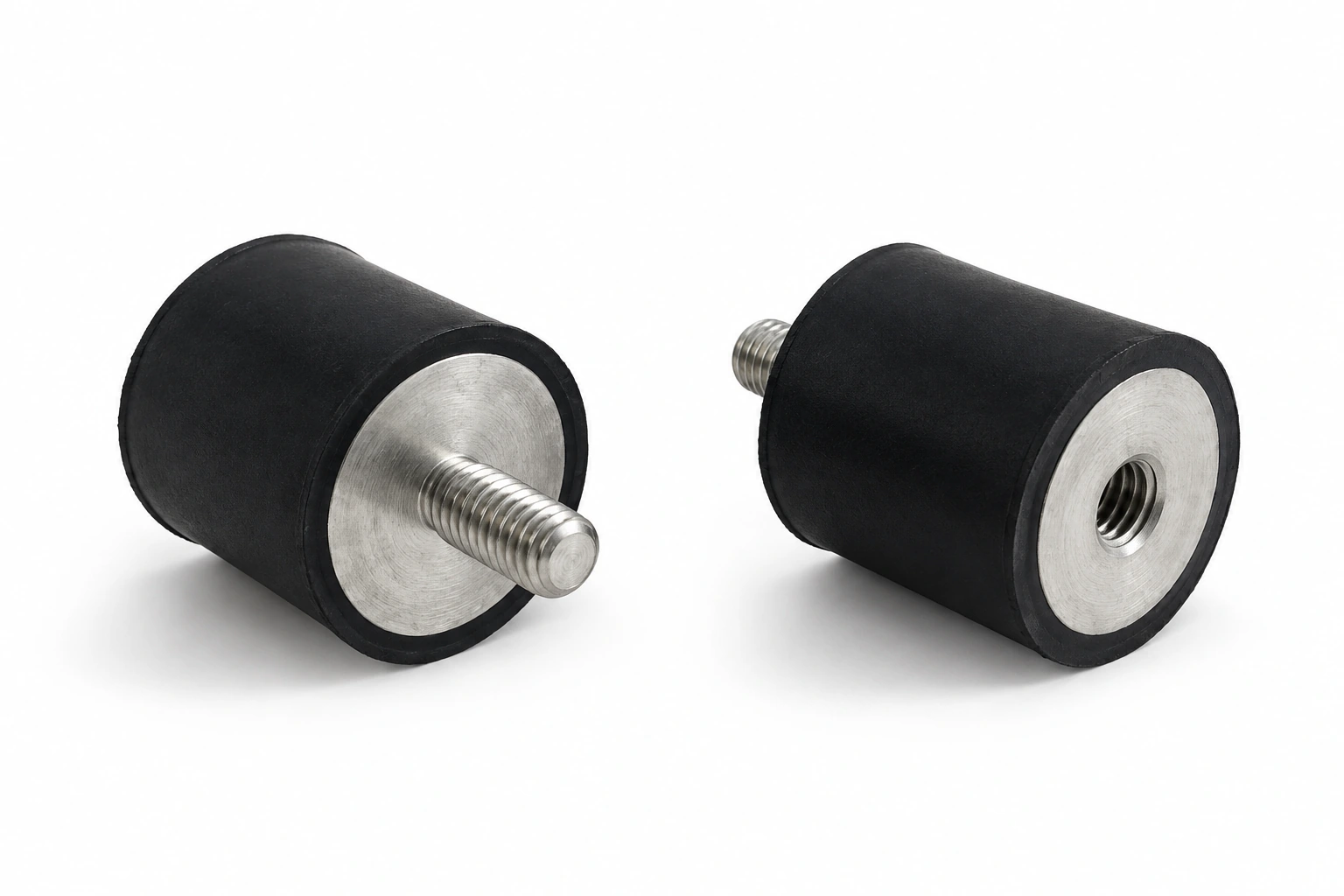
Match D, H and thread d to the drawing, including stud length L. Dimensions are in mm; thread designations, load in kg and compression in mm follow the table headings. Confirm load direction and operating conditions for your installation.
Vibration Isolators C
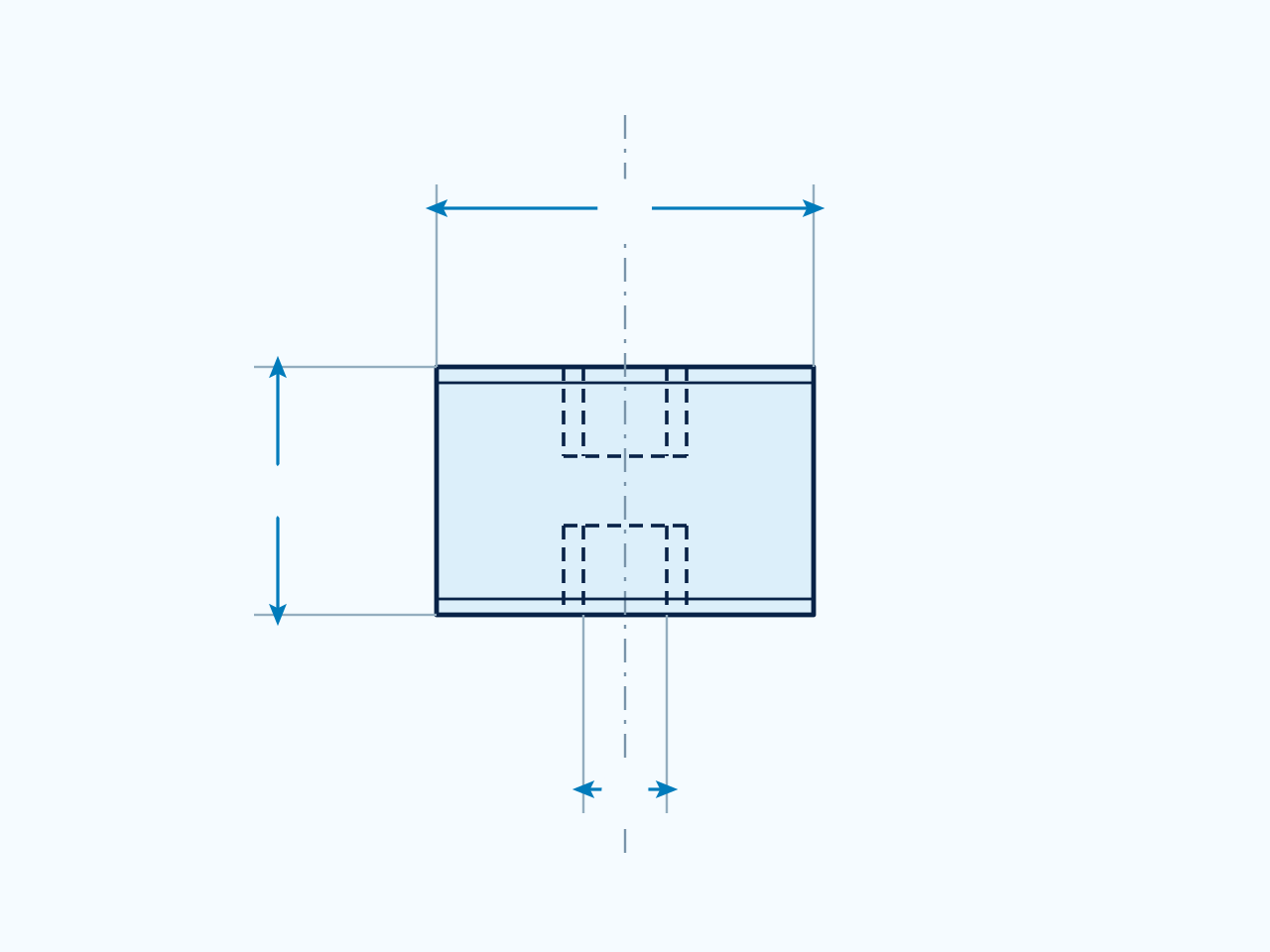
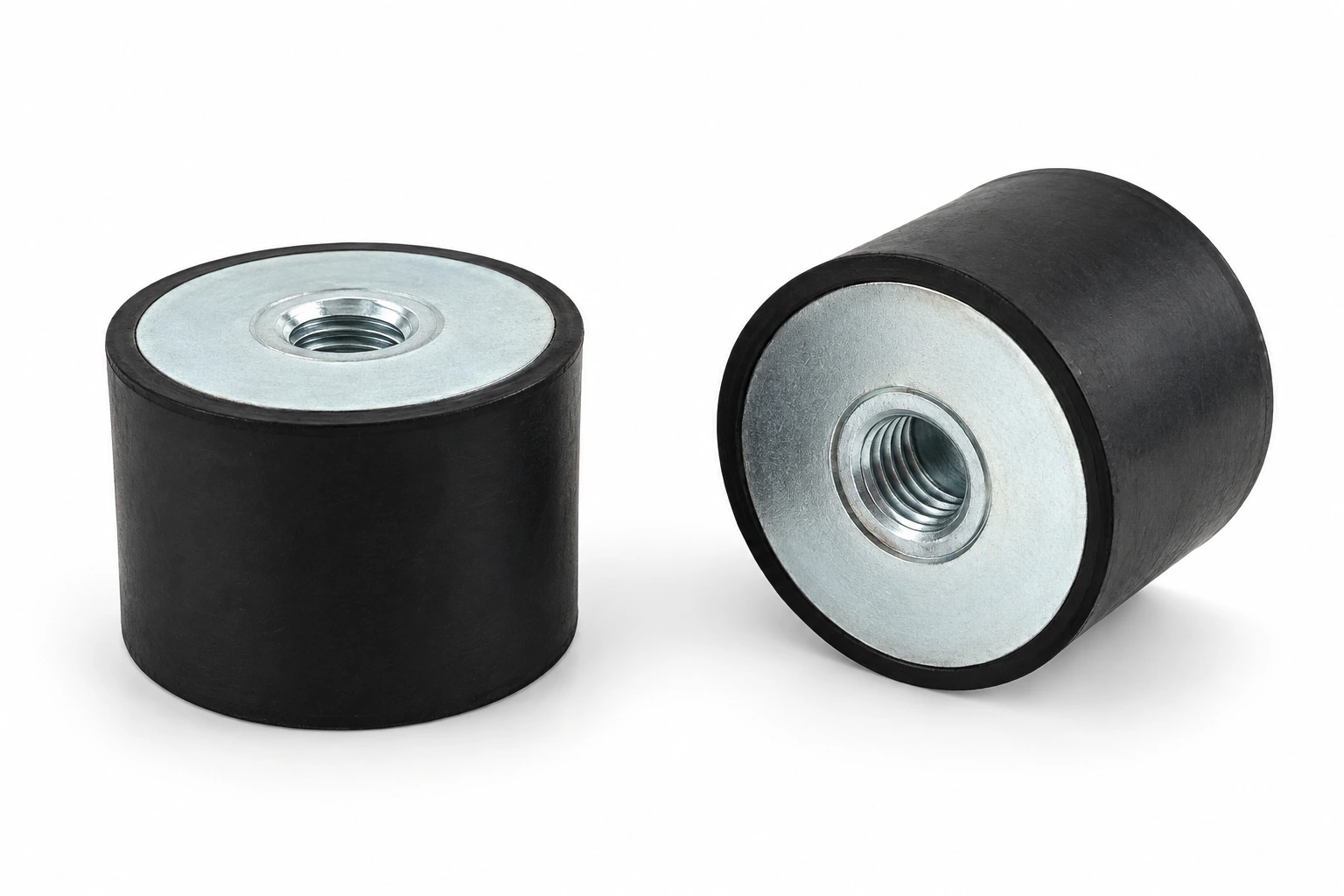
Match D, H and thread d to the drawing. Dimensions are in mm; thread designations, load in kg and compression in mm follow the table headings. Confirm load direction and operating conditions for your installation.
Rubber Mountings D
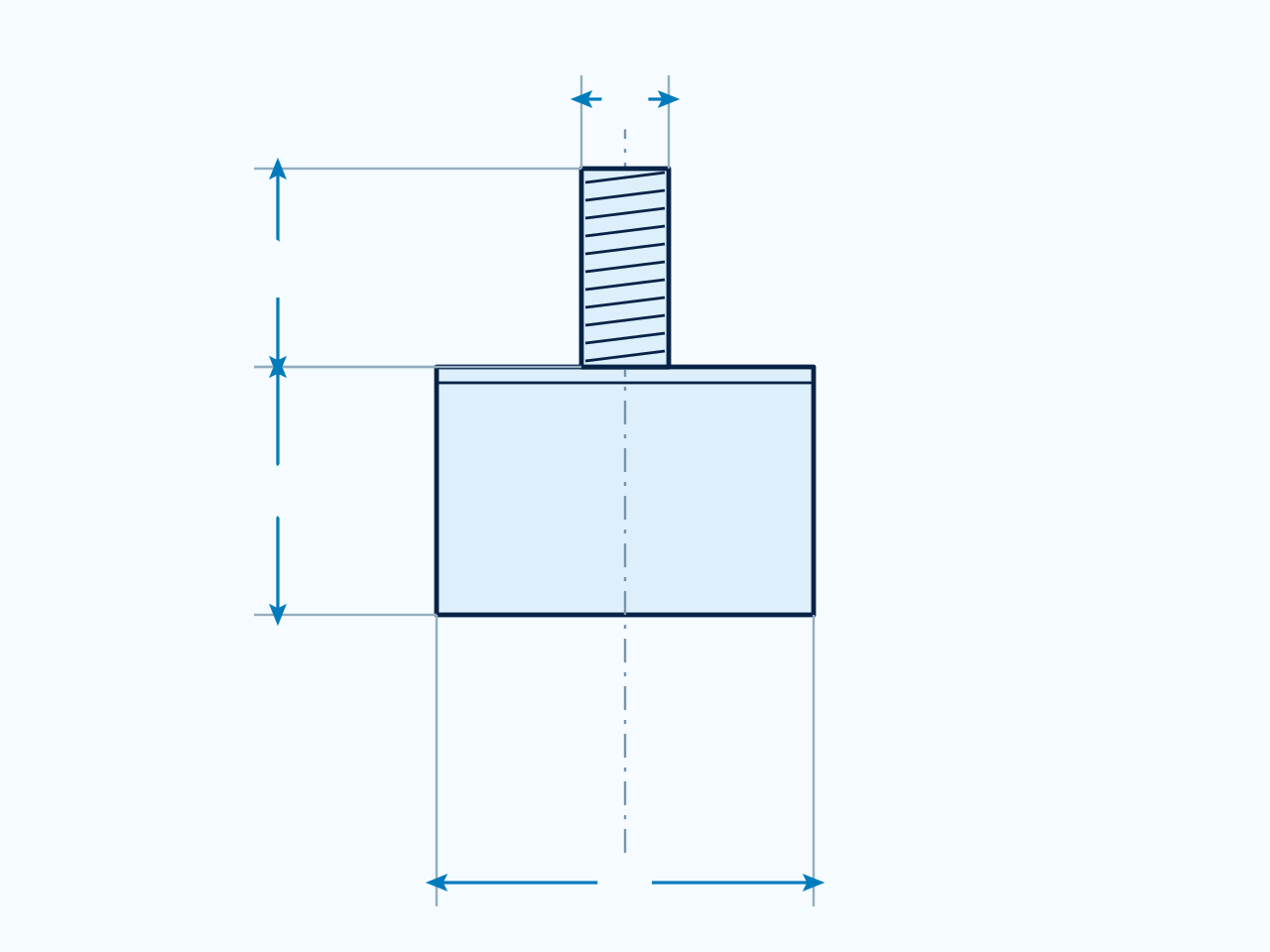
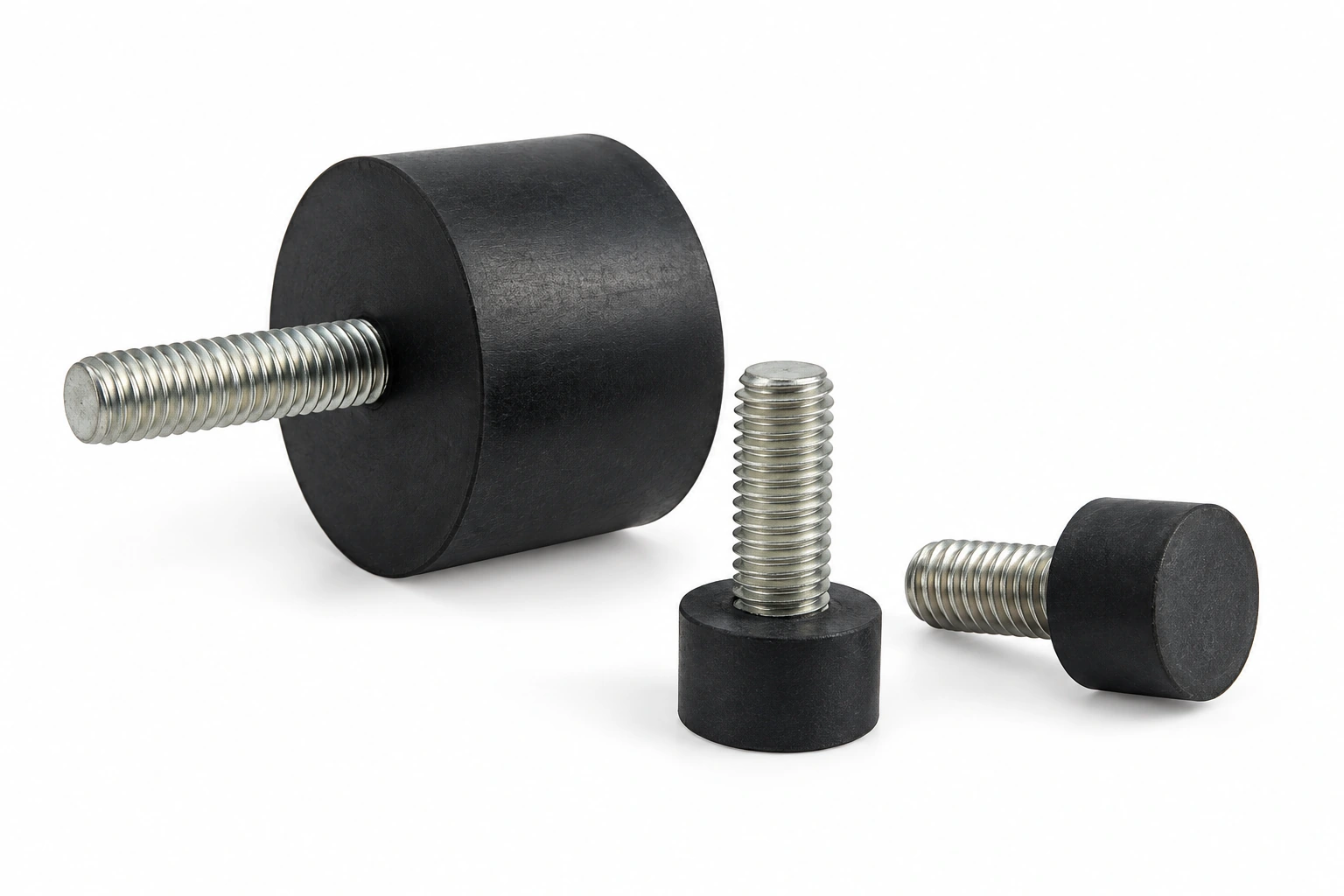
Match D, H and thread d to the drawing, including stud length L. Dimensions are in mm; thread designations, load in kg and compression in mm follow the table headings. Confirm load direction and operating conditions for your installation.
Rubber Vibration Mounts E
Match D, H and thread d to the drawing. Dimensions are in mm; thread designations, load in kg and compression in mm follow the table headings. Confirm load direction and operating conditions for your installation.
Need a different size? Share your drawing, mating dimensions and intended use to discuss a suitable part.
Discuss Your RequirementsProduct specifications
- Product form
- Rubber mount forming a resilient connection to a support.
- Loading direction
- Distinguish compression, tension and sideways loading.
- Support layout
- Use center of gravity and mount positions to determine individual loads.
- Travel envelope
- Check equipment stability, loaded height and permitted deflection.
- Transmission assessment
- Evaluate operating vibration and any rigid paths around the isolators.
Need a quote or a custom part?
Send your requirements, drawings or samples to discuss standard and custom silicone rubber parts.
Email us[email protected]