
Rubber Mounts With Studs
We have been manufacturing rubber products for a long time, and we are pleased to say we have a lot of satisfied and recurring customers. We can provide you with virtually any rubber device, including, but not exclusive to, rubber mounts with studs. If you know anything about motors and vibration, you know just how integral rubber mounts with studs actually are. This little piece of rubber and carbon steel can make a difference between your car starting and working properly to being completely ruined beyond repair.
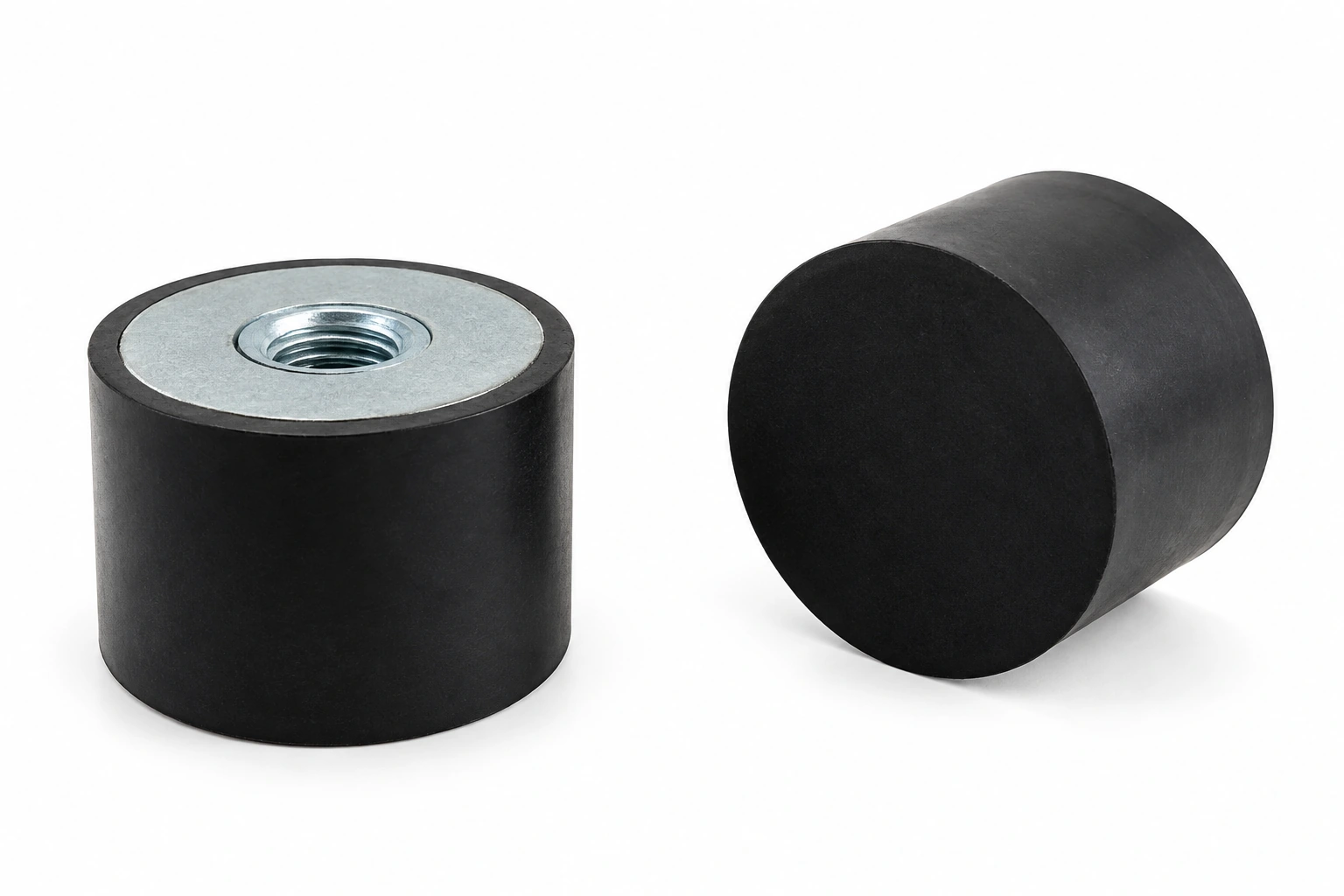
We provide a wide selection of rubber mounts with studs. They come in all kinds of shapes, types and sizes so that you can find the one that fits your needs perfectly. As they are made from rubber, they are not only incredibly good at absorbing vibrations and shock, but they are also very resistant to oil, fuel, abrasions, chemicals, ozone and UV radiation, which is why these are very popular in the automotive industry. Most commonly, rubber mounts with studs come in the form of cylindrical mounts, with carbon steel studs protruding from each side. In most cases, the rubber part of the mount is made from natural rubber, but they can also be made from SBR, Neoprene, Silicone gel, Silicone rubber, Sorbothane, synthetic rubber and Urethane. Each of these has its own purpose, even though most of them do quite similar things, yet depending on the environment and the particular application, some are better suited for the job than others.
As we’ve said, these are commonly found in the automotive industry, in vehicles that use ICE engines. What it does is dampens and absorbs the vibration first and foremost, but also, it acts as a bridge between pieces of equipment, helps reduce noise and adds to the structural integrity of the entire motor.
Vibration Mount Size Catalog
Compare five mounting arrangements using the matching drawing, thread and dimensional data. Load and compression columns retain their stated units; confirm operating conditions for your installation.
Vibration Damping Mounts A
Match D, H and thread d to the drawing, including stud length L. Dimensions are in mm; thread designations, load in kg and compression in mm follow the table headings. Confirm load direction and operating conditions for your installation.
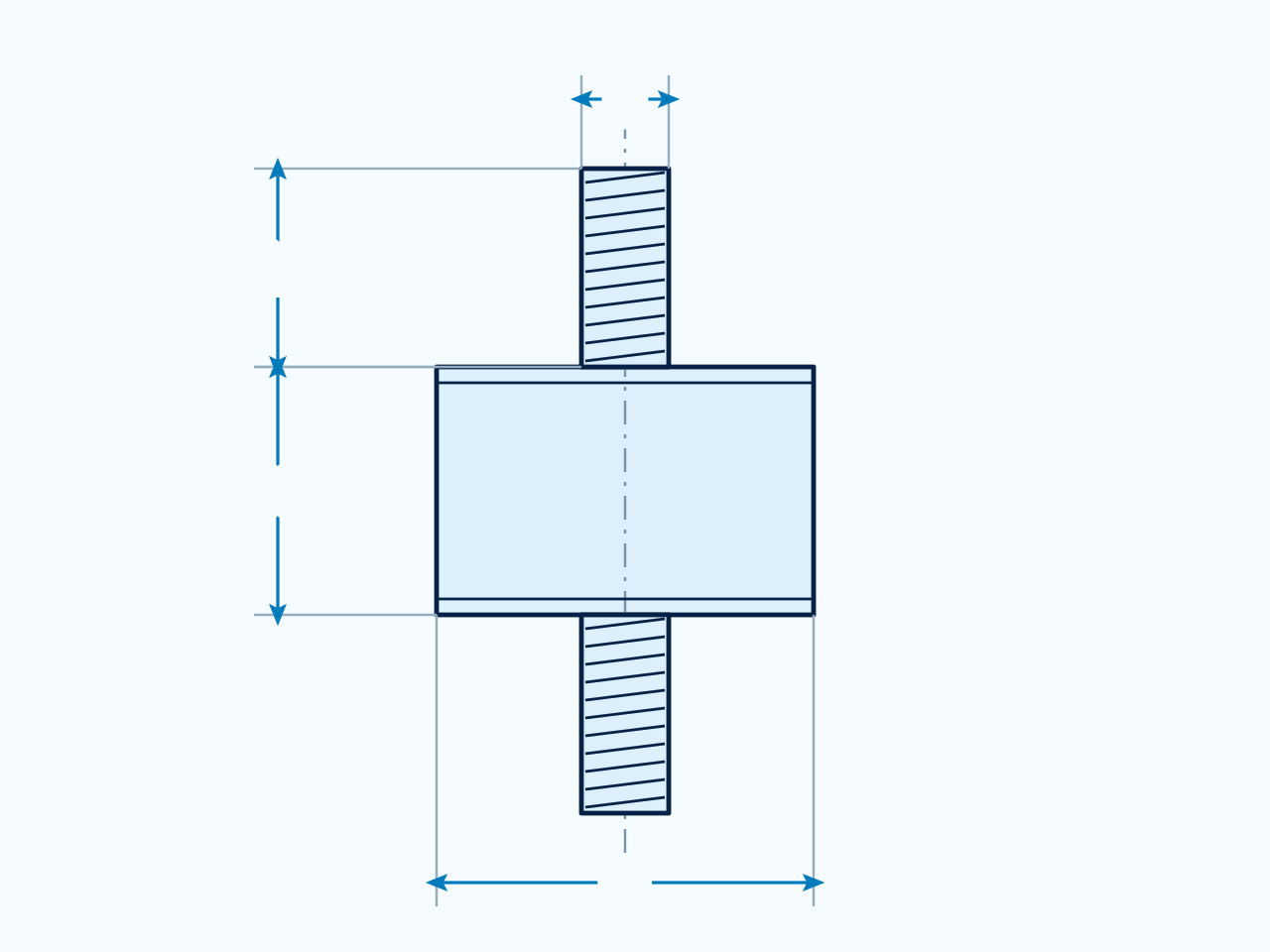
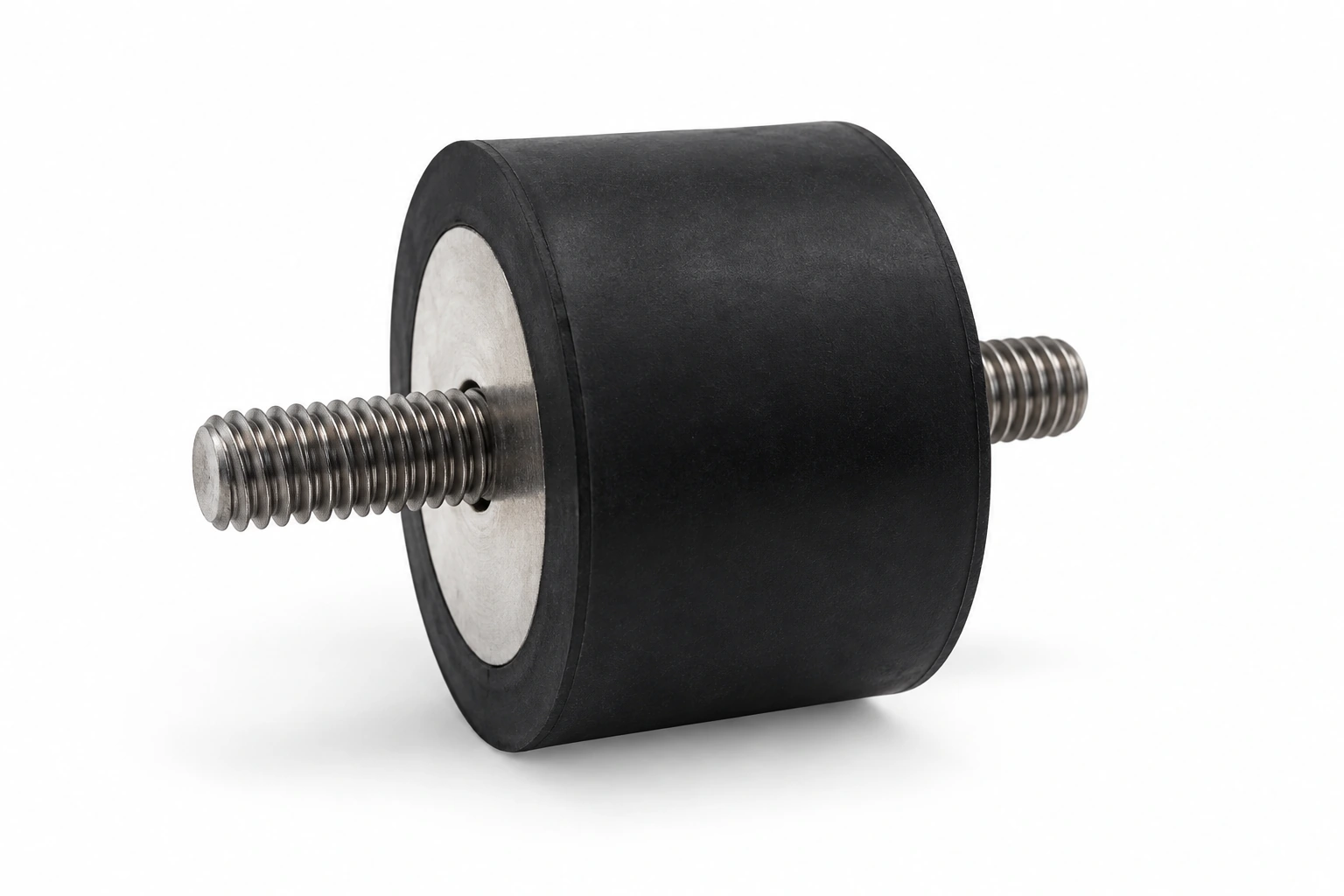
Anti-Vibration Rubber Mounts B
Match D, H and thread d to the drawing, including stud length L. Dimensions are in mm; thread designations, load in kg and compression in mm follow the table headings. Confirm load direction and operating conditions for your installation.
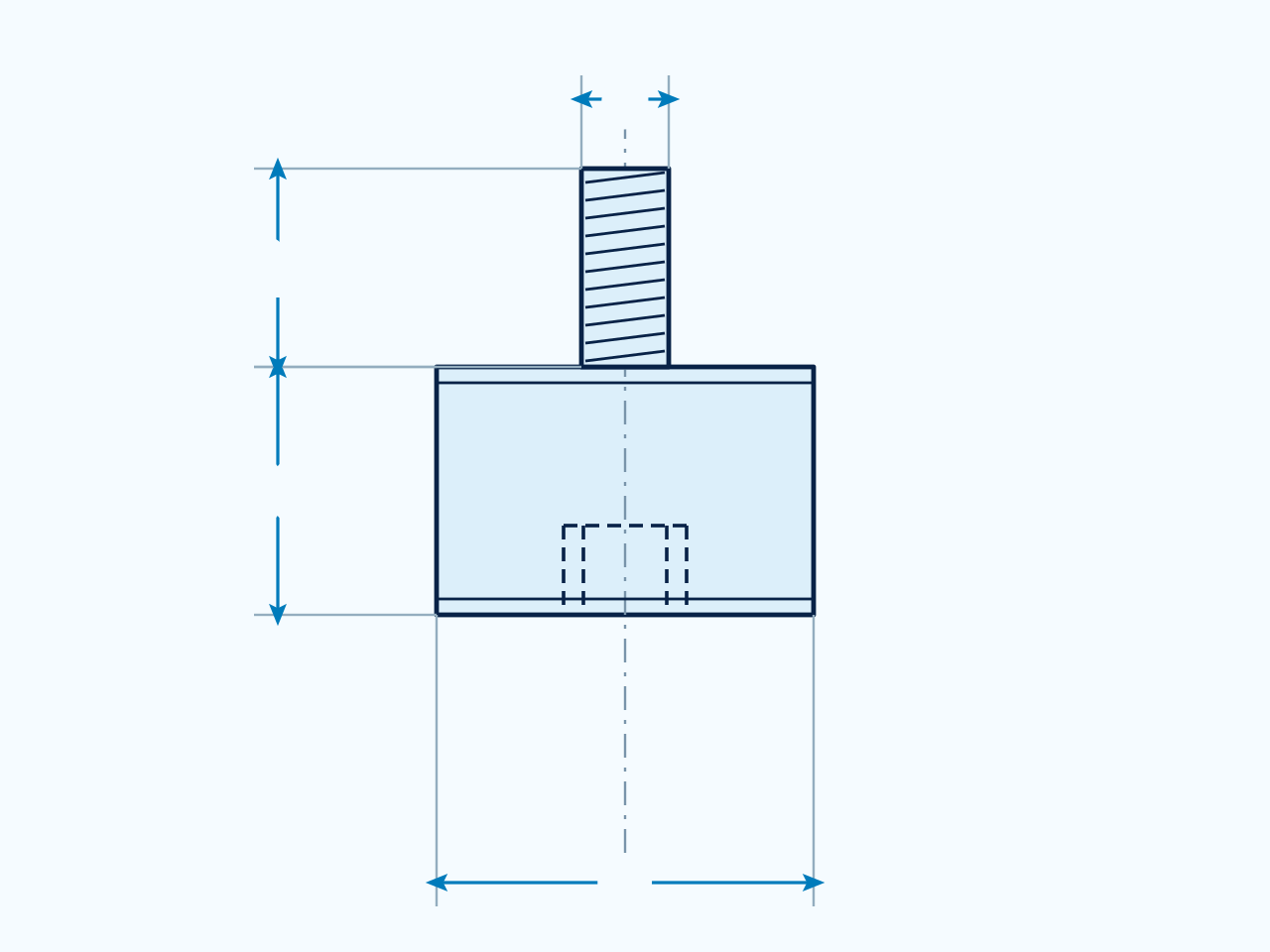
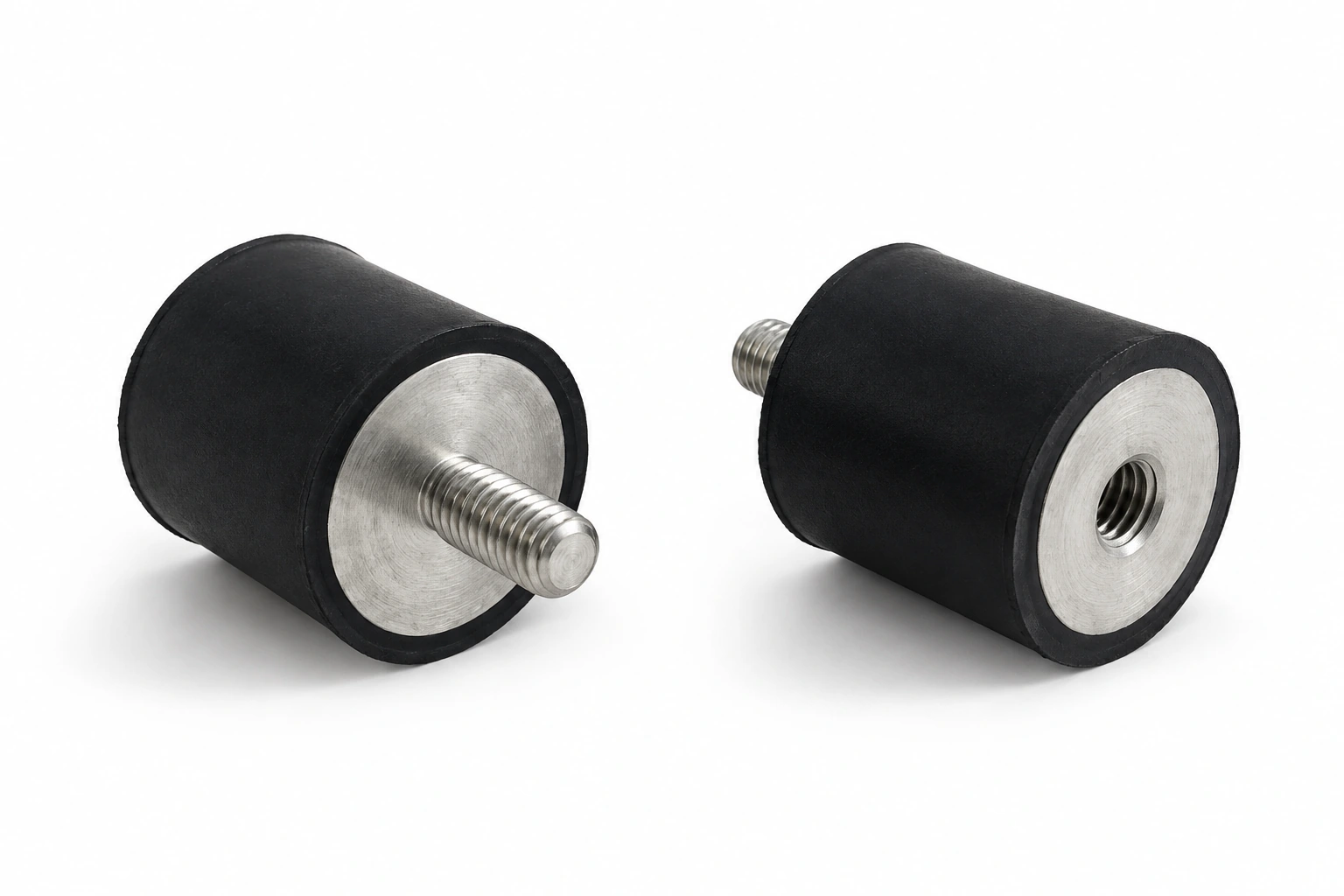
Vibration Isolators C
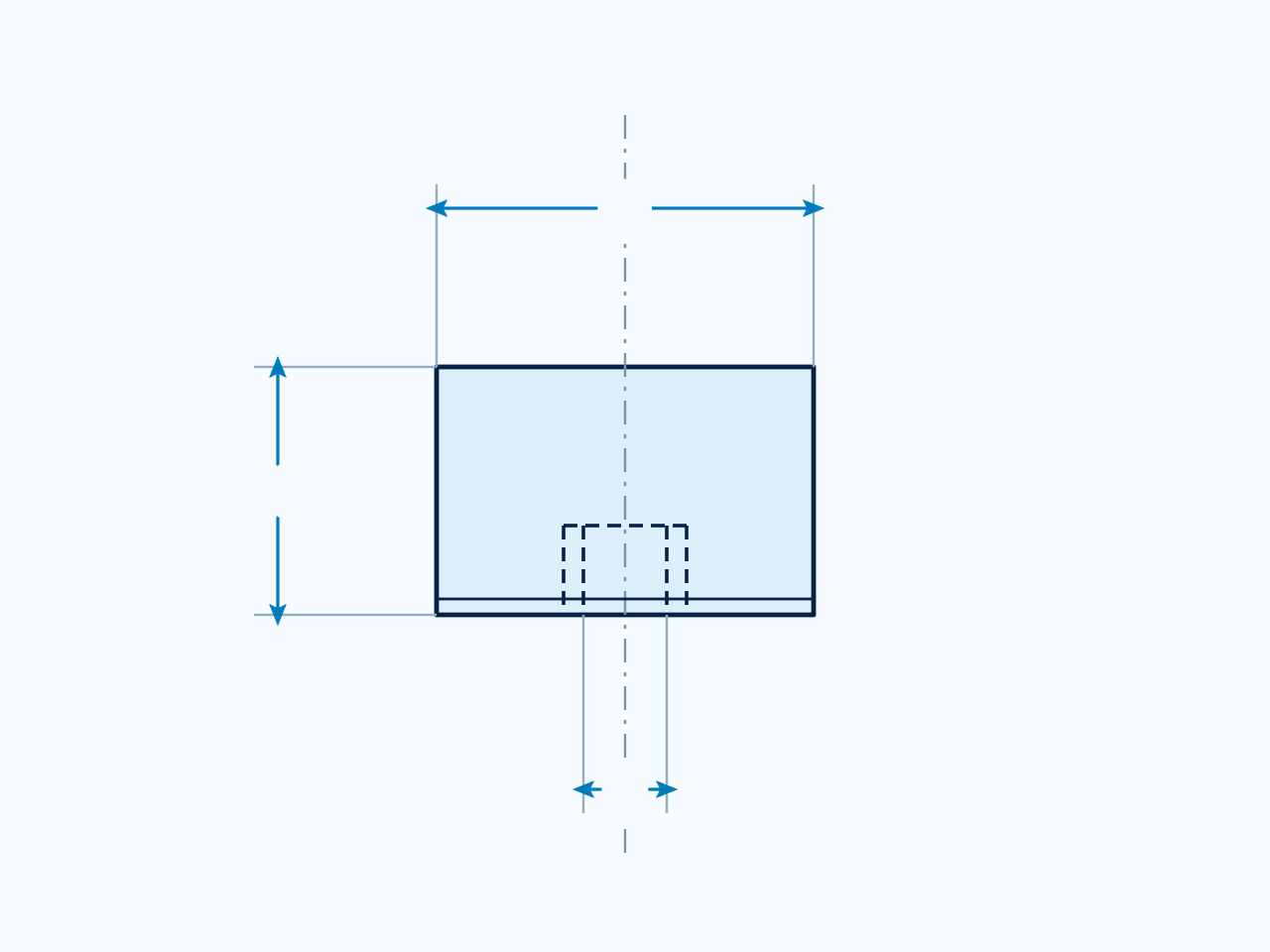
Match D, H and thread d to the drawing. Dimensions are in mm; thread designations, load in kg and compression in mm follow the table headings. Confirm load direction and operating conditions for your installation.
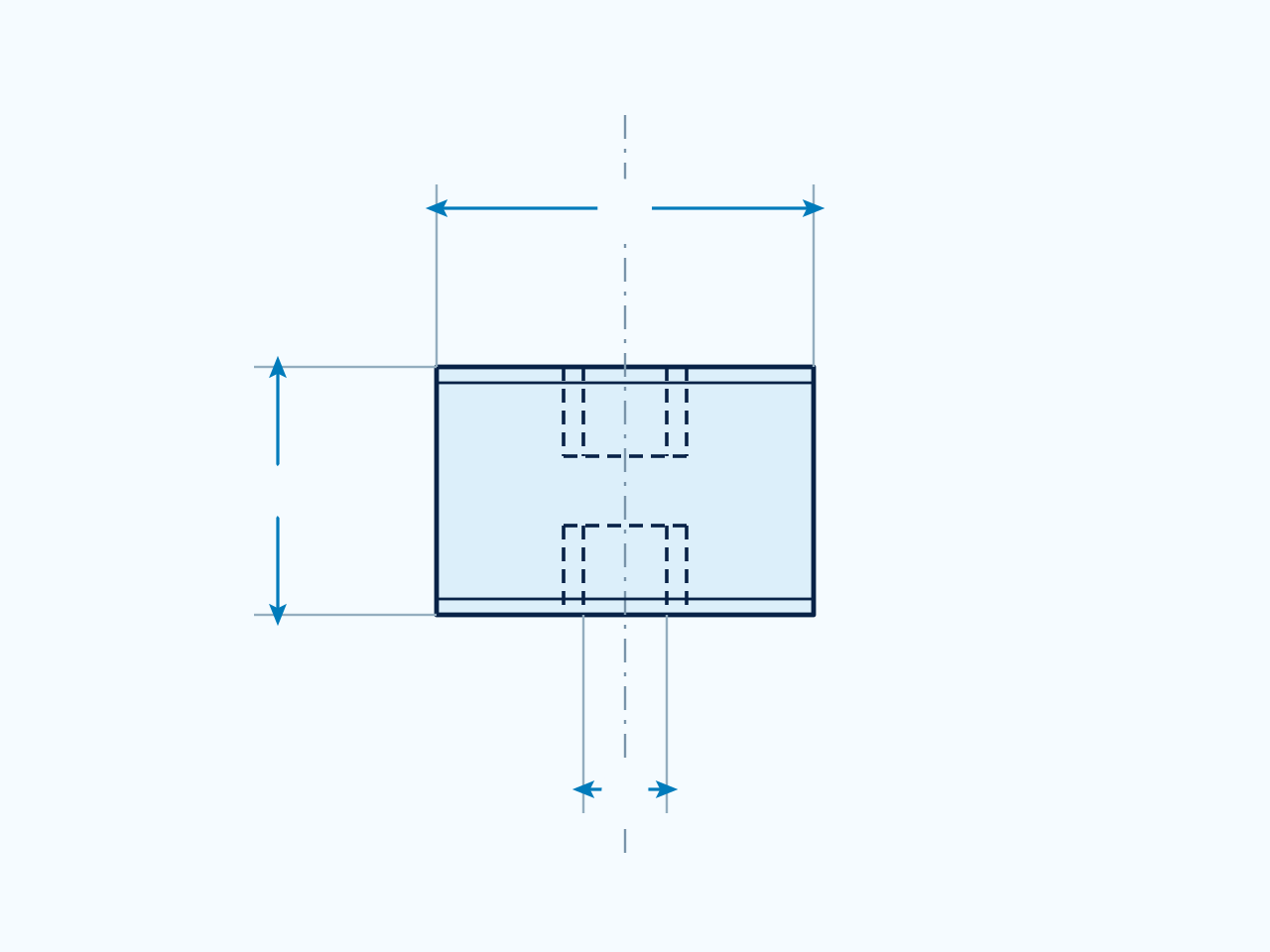
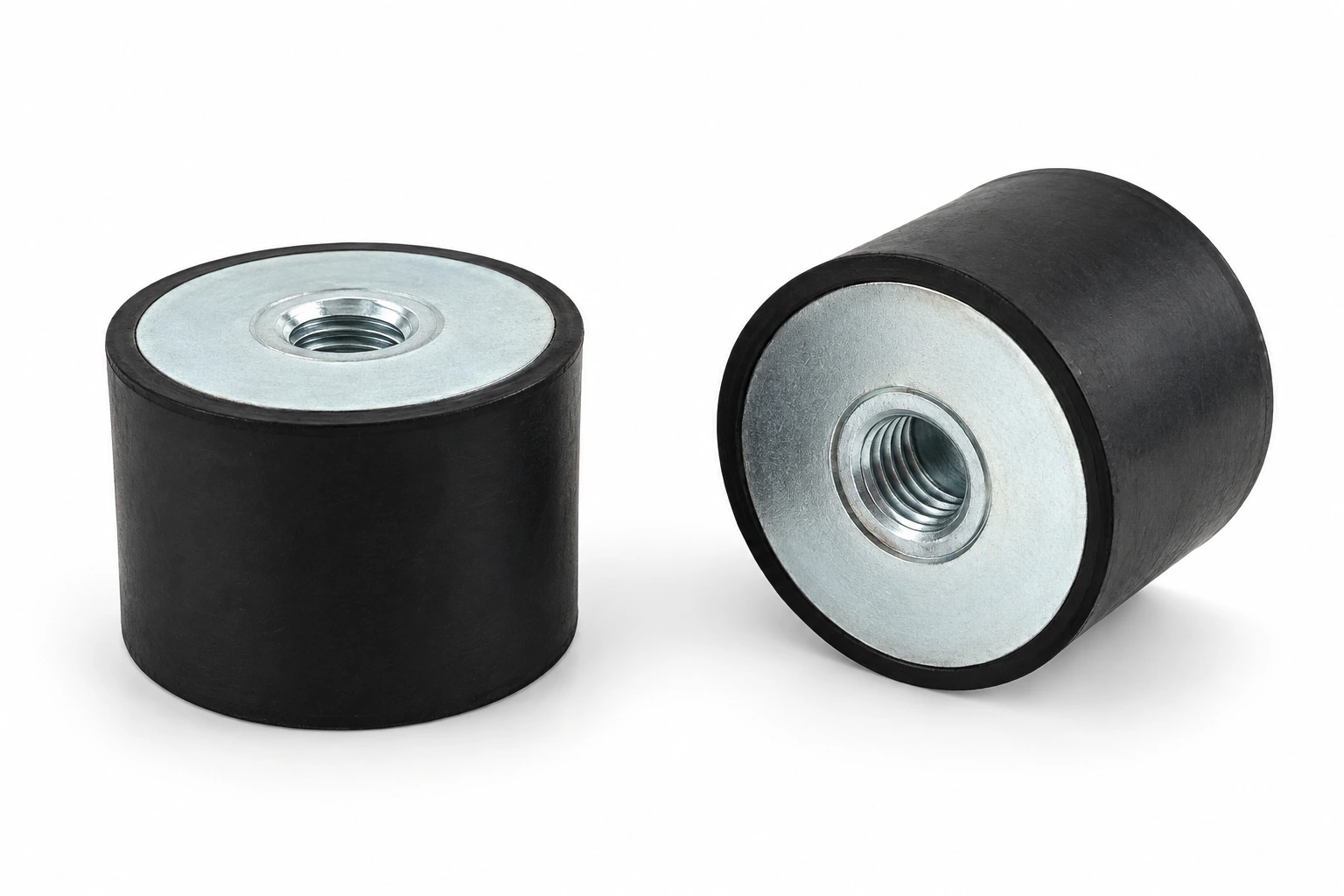
Rubber Mountings D
Match D, H and thread d to the drawing, including stud length L. Dimensions are in mm; thread designations, load in kg and compression in mm follow the table headings. Confirm load direction and operating conditions for your installation.
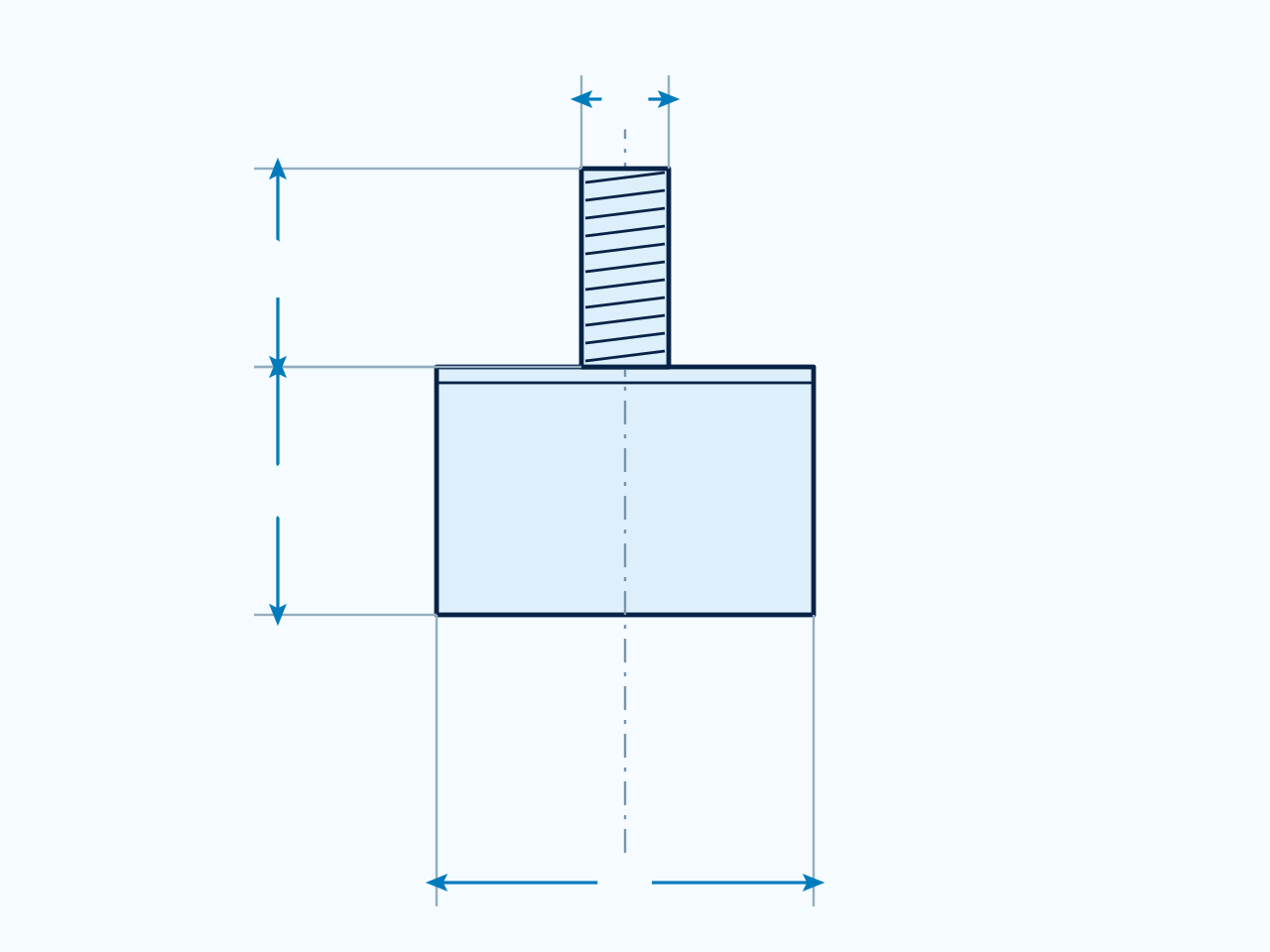
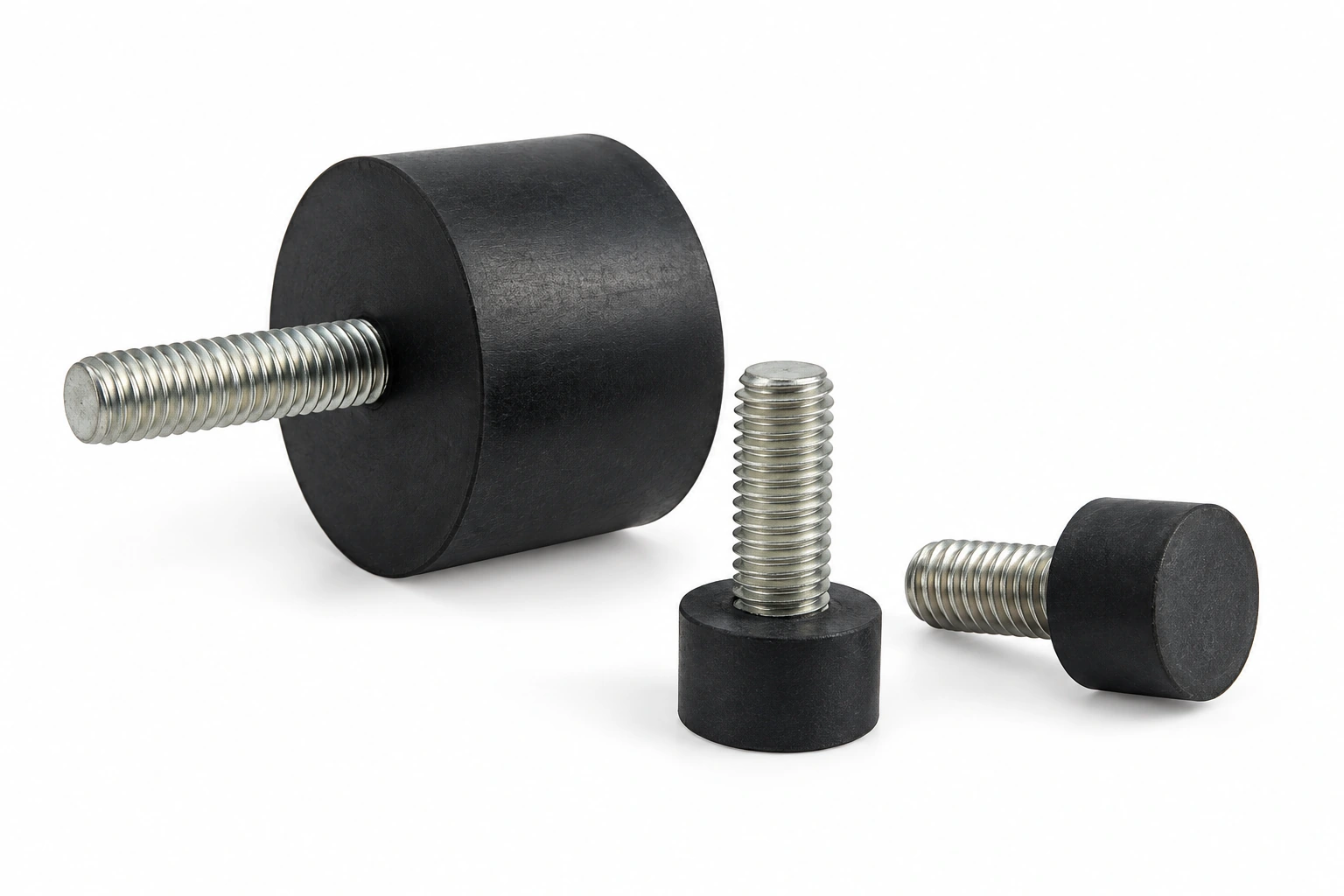
Rubber Vibration Mounts E
Match D, H and thread d to the drawing. Dimensions are in mm; thread designations, load in kg and compression in mm follow the table headings. Confirm load direction and operating conditions for your installation.
Need a different size? Share your drawing, mating dimensions and intended use to discuss a suitable part.
Discuss Your RequirementsProduct specifications
- Product form
- Elastomer mount between a vibrating assembly and its support
- Material options discussed
- Silicone, chloroprene rubber (CR), natural rubber / latex and SBR. Choose one formulation for the actual contact and loading conditions.
- Application focus
- Electric motors and engines. Size the part against the selected assembly.
- Dimensions to confirm
- Free and loaded heights, attachment spacing and body envelope. Match these to electric motors.
- Stud connection
- Specify the external thread, protruding length and any required wrenching or locking arrangement.
- Fastening
- Define thread size, pitch, engagement and clearance; identify whether the hardware is molded in or fitted separately.
- Exposure to evaluate
- Sunlight or UV, ozone and oil splash. Validate the selected material under the combined conditions.
- Isolation objectives
- Steady vibration, impact or shock and structure-borne noise. Define a measurable acceptance target on the supported assembly.
- Construction discussed
- Threaded studs and cylindrical bodies. Detail the chosen arrangement and all mating hardware on the drawing.
- Dynamic selection
- Use the load per mount, excitation frequency and allowed movement to select the mount.
Need a quote or a custom part?
Send your requirements, drawings or samples to discuss standard and custom silicone rubber parts.
Email us[email protected]