
Rubber pipe
Rubber products are a part of everyday life for many people. For instance, rubber is used in tires, pipes, toy dolls, agricultural machinery, and medical equipment. Today, we’re going to focus on the pipes. More precisely – rubber pipes. Rubber pipes are made from a variety of materials, and many types exist for specific uses. Different types of rubber pipe are used for agricultural applications like irrigation, construction and industrial purposes like gas and chemical transmission lines or gas distribution transport. The most common type of rubber pipe are thick-walled pipelines that resist corrosion and have improved mechanical properties such as pressure rating or strength, which help protect the tubing from damage and reduce maintenance time.
There are many different types of rubber pipes. These include latex, neoprene, nitrile, natural rubber, silicone, FKM, EPDM, and many, many others. The need for these many different rubber pipes has arisen from many different use case scenarios and applications across various industries. A rubber pipe can be found in a medical facility, a research laboratory, inside of an air-conditioning machine, in the back of the fridge, under the car hood, inside of your home’s walls, so on and so forth. With all these applications, we needed to make sure we manufacture as many different pipes from as many different materials as possible. Some of them are better at withholding pressure, while the others are better at being resistant to wear and tear or abrasives. Also, some rubber pipes are used for work in extremely cold environments, while the others are used in extremely hot ones.
On top of all that, a rubber pipe can be made to be really, really tiny, or very very big. In fact, some rubber pipes are as small as 1 mm in diameter, while some can be more than a meter wide.
Rubber Hose Size Catalog
Compare tube bore, outside diameter and available wall thickness. Confirm material compatibility and operating requirements for the selected hose.
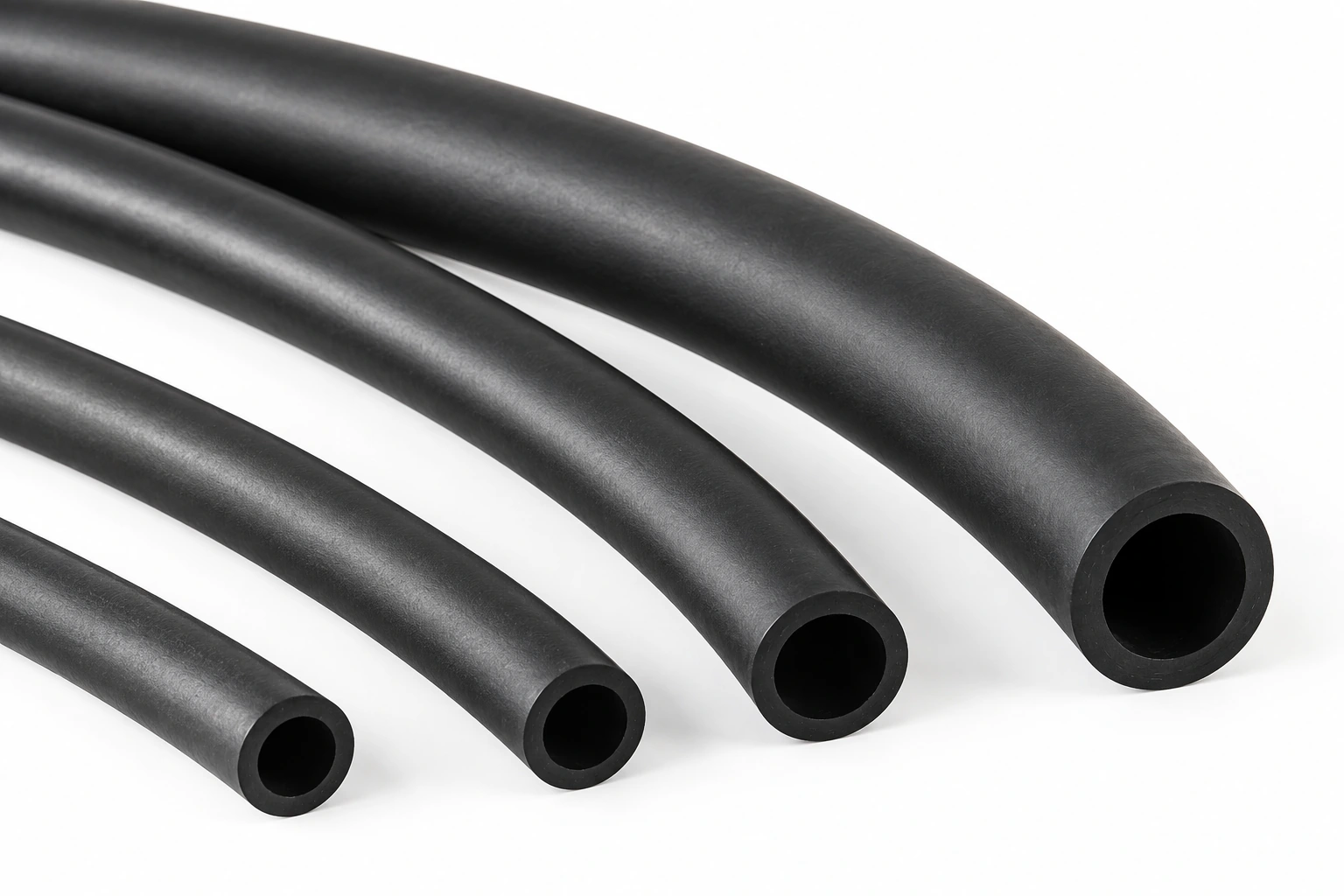
Rubber Hose
Compare Inside Diameter and Outside Diameter in mm. The cross-section drawing identifies the bore and outside diameter; confirm the selected tube material and service requirements.

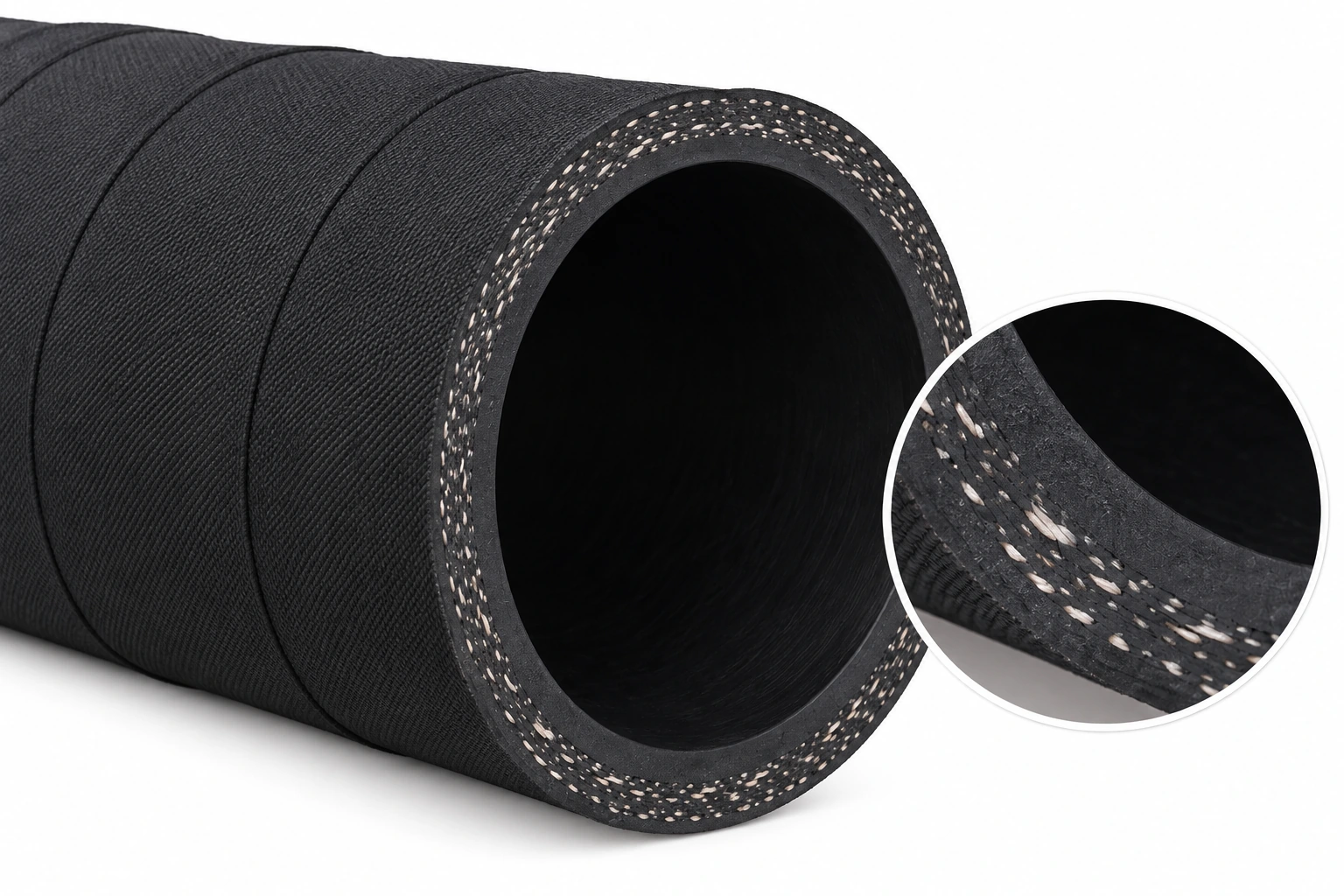
Fluororubber Hose
Compare Inside Diameter and Outside Diameter in mm. The cross-section drawing identifies the bore and outside diameter; confirm the selected tube material and service requirements.
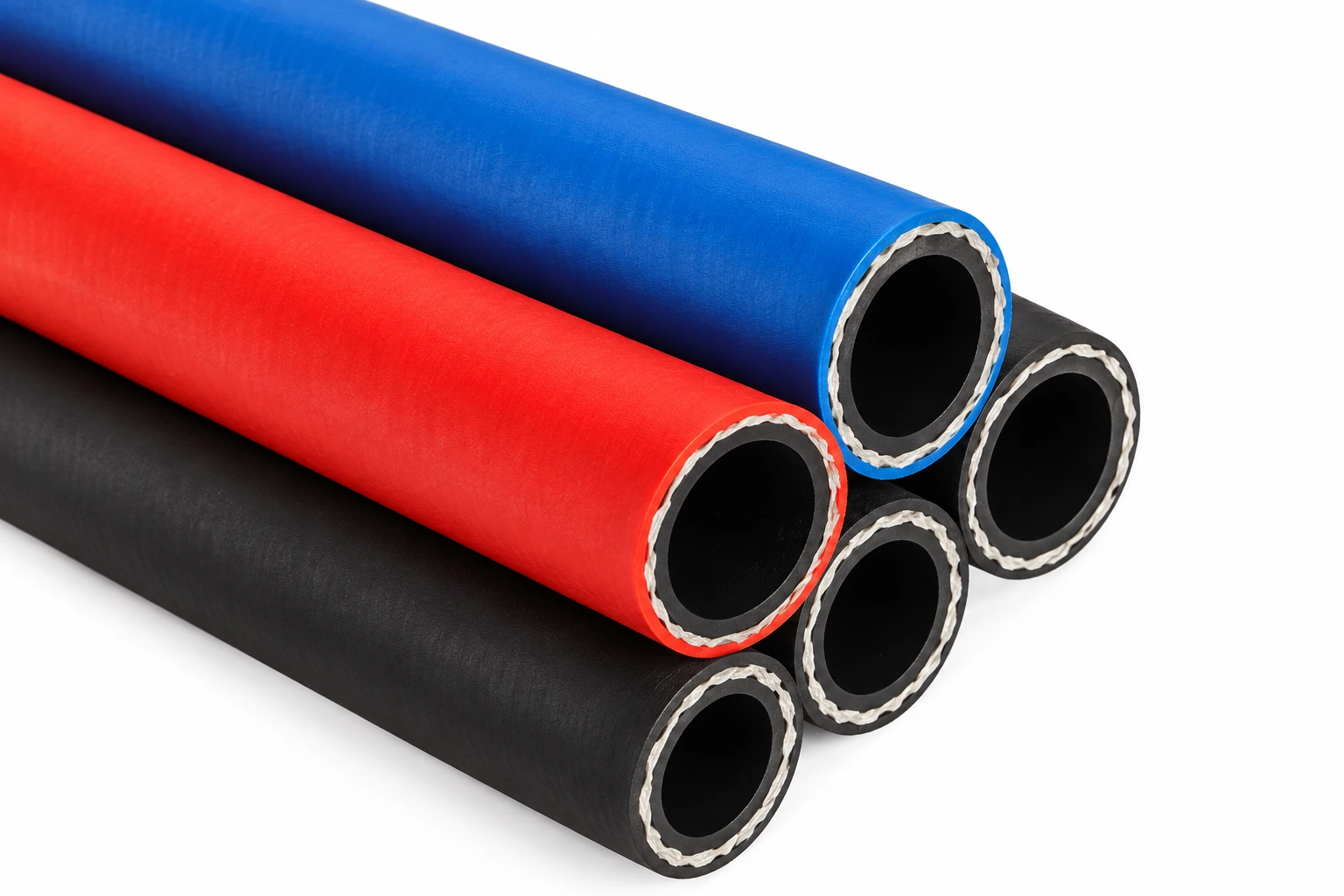
Colourful rubber high pressure hose
Compare Inside Diameter and Outside Diameter in mm, together with the listed Thickness and Colour. The cross-section drawing identifies the bore and outside diameter; confirm the selected tube material and service requirements.
Need a different size? Share your drawing, mating dimensions and intended use to discuss a suitable part.
Discuss Your RequirementsProduct specifications
- Product form
- Hollow elastomer tubing for a fitted line or sleeve
- Material options discussed
- Silicone, NBR, EPDM, chloroprene rubber (CR), FKM and natural rubber / latex. Choose one formulation for the actual contact and loading conditions.
- Application focus
- Medical-device assemblies, irrigation lines, industrial fluid lines and laboratory connections. Size the part against the selected assembly.
- Dimensions to confirm
- Inside diameter, outside diameter, wall thickness and cut length. Match these to medical-device assemblies and irrigation lines.
- Contact conditions
- Other gases and air: define concentration, temperature and contact time, then check compatibility with the chosen compound.
- Line layout
- Check bend radius, unsupported spans and clearance at both connections.
Need a quote or a custom part?
Send your requirements, drawings or samples to discuss standard and custom silicone rubber parts.
Email us[email protected]