
rubber plugs for holes
We have been perfecting the craft of making rubber plugs for holes for so many years that competition uses our models as an example of how the final product should both look and perform. Therefore, feel free to ask our support team about any potential ambiguities that you might have about rubber plugs for holes, because they will gladly offer you a piece of their mind and appoint you to the right direction. Rubber plugs for holes are not envisaged to enhance any type of hole, moreover, you would use this type of rubber gadget to protect and insulate specific openings. In a nutshell, they protect the conducted material from friction, impurities, humidity, and other external factors that would otherwise compromise the wellbeing of the conduct.
In order not repeat other people’s mistakes, we advise you to focus on determining the right size for your future rubber plugs for holes. Namely, anything but the exact match would fail to deliver the aforementioned features, so you would not only waste your money, but also your time on ordering another model. Anyway, if you struggle with finding the right way to measure the diameter of the opening and determining which type of rubber plugs for holes would suit your needs best, send us a message and we will jump to the rescue as soon as possible.
Besides determining the right size, we would like to draw your attention to the materialization of rubber plugs for holes, since different raw materials used in production potentiate distinctive features. Even though we are proud on products from our standard offer, bear in mind you can have a word when potential adjustments are in question. For example, some of our clients require rubber plugs for holes that perform flawlessly when exposed to extremely hot temperatures, and we do nothing else but deliver according to their instructions. Thus, feel free to speak your mind, because we will both listen to and materialize your plan.
Stopper & Plug Size Catalog
Compare four stopper profiles and check the selected part dimensions against your opening and available depth. Each profile has its own drawing and dimension meanings.
Custom colors are available to your Pantone color code. Include the code in your inquiry.
RST T-Shaped Plugs
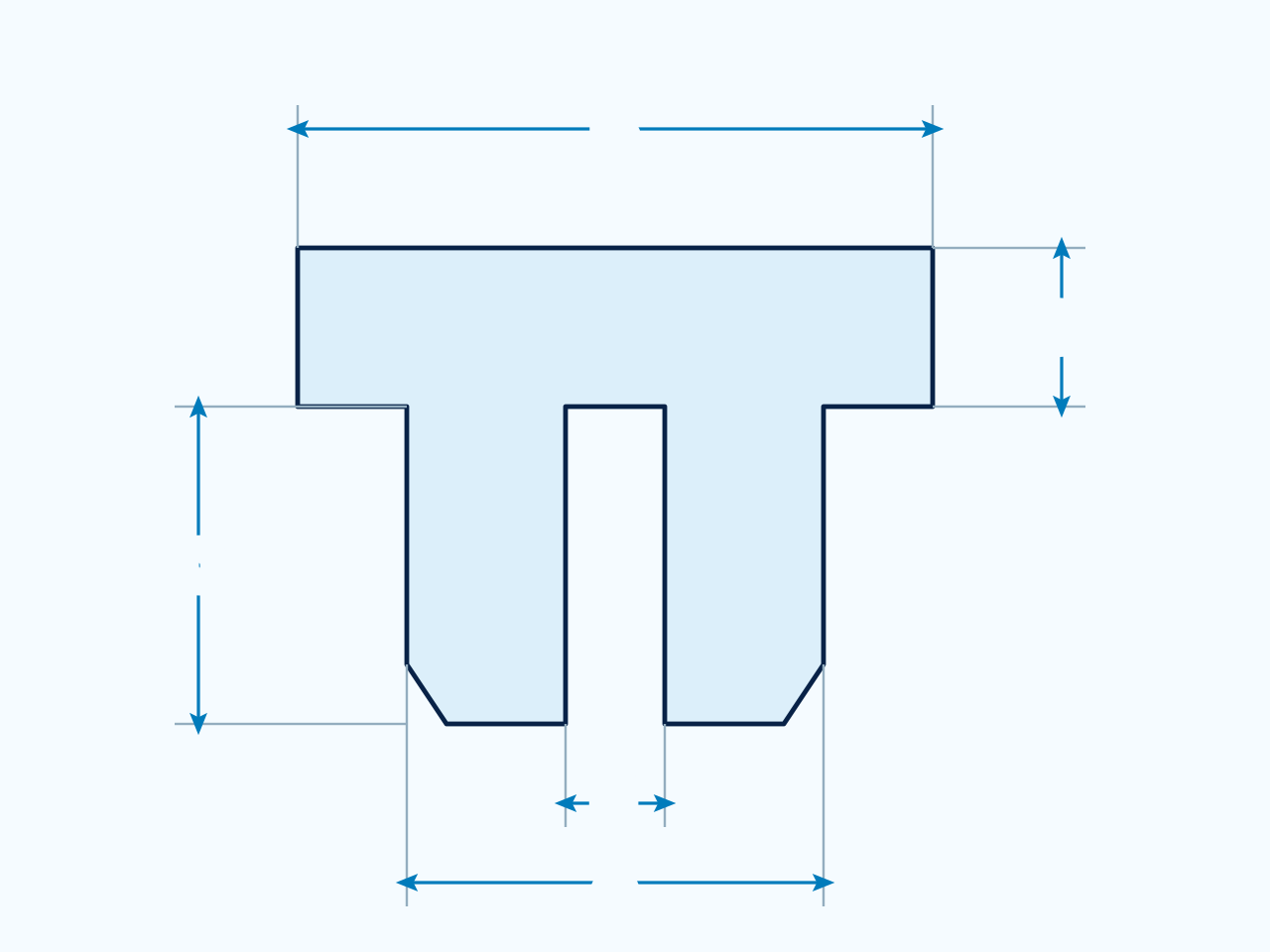
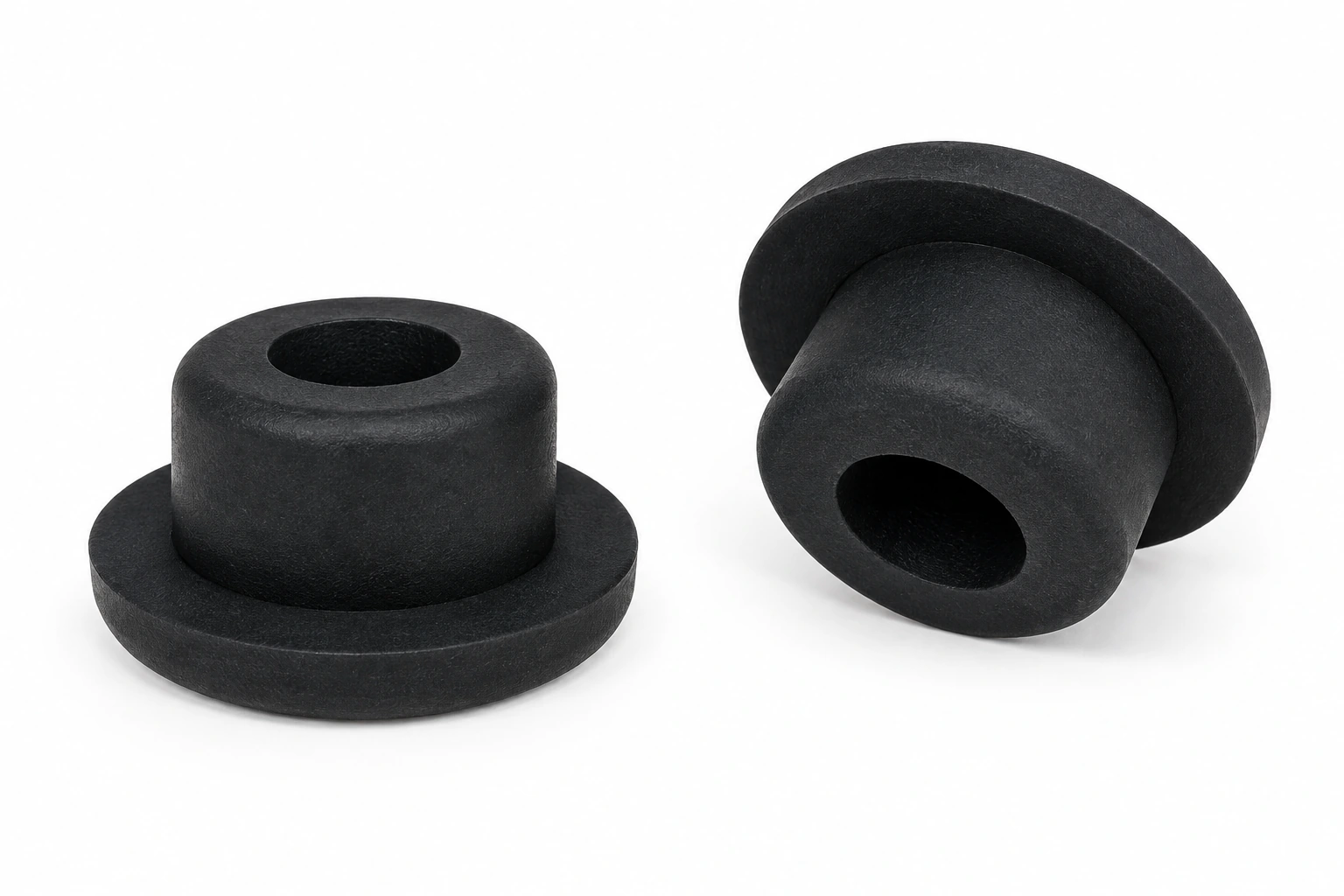
Match stem diameter A, flange diameter B, stem length C and flange thickness D. E refers to the underside recess; use the selected row and approved drawing to confirm the actual profile.
RSA Tapered Corks
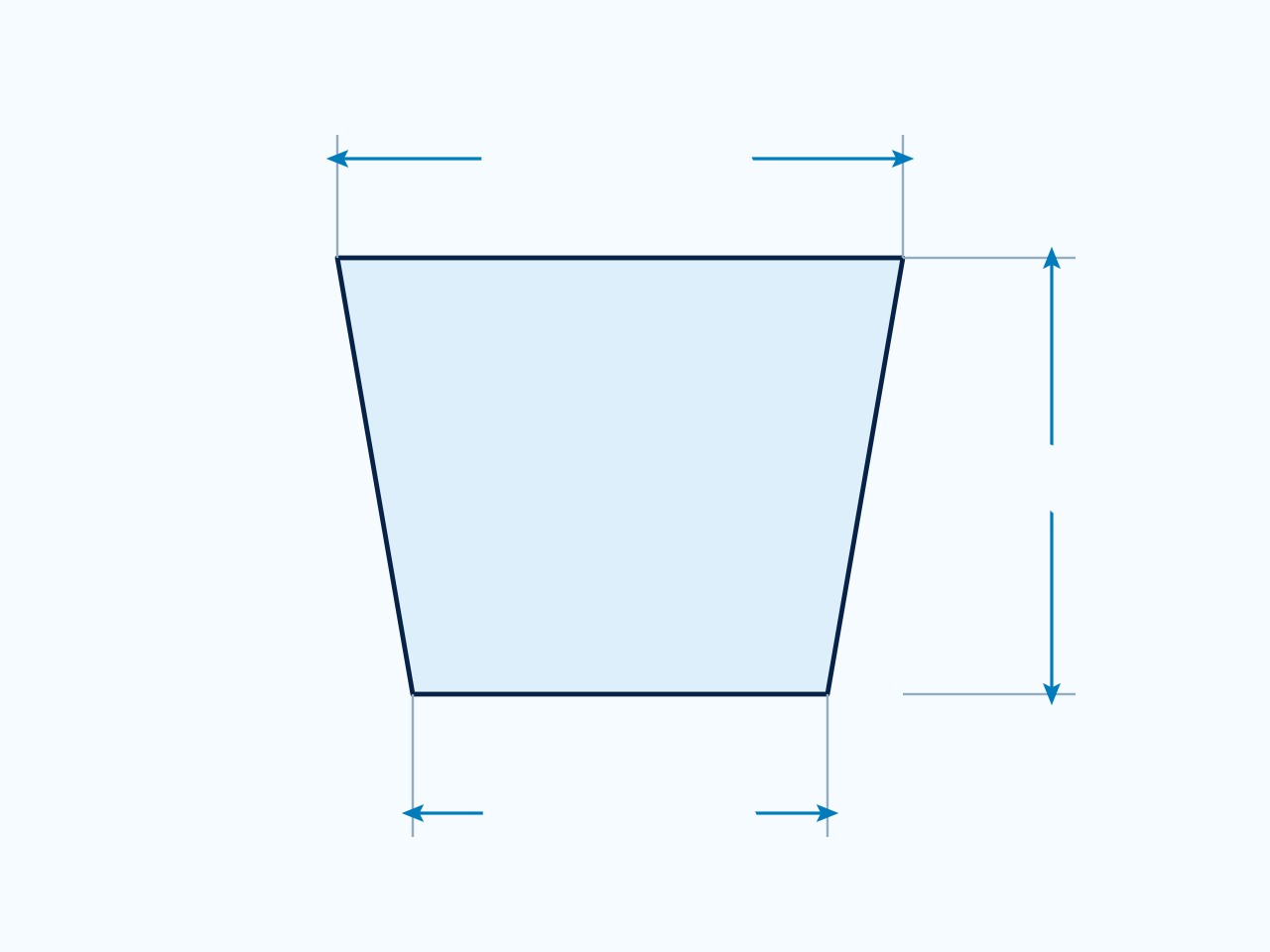
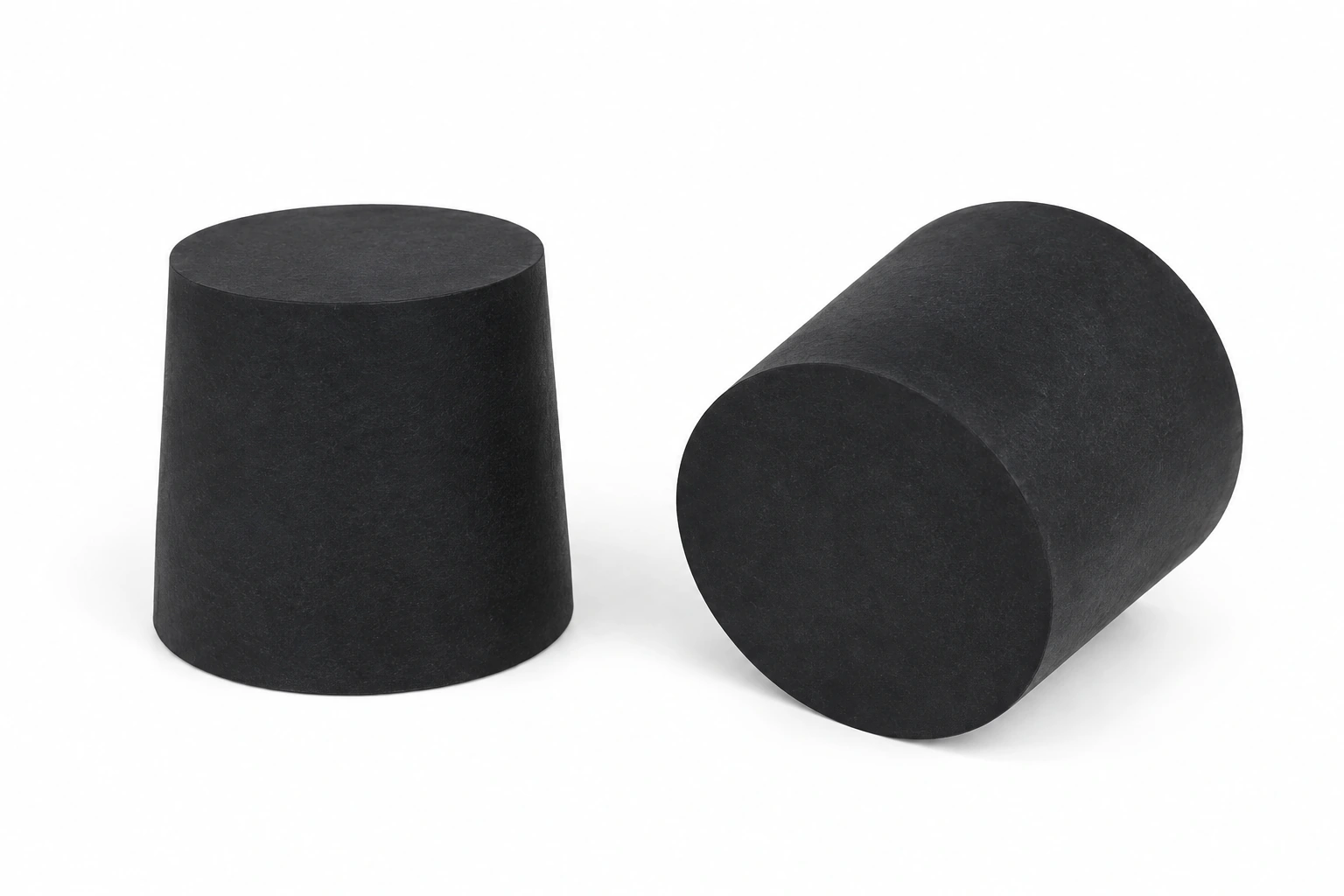
Compare large-end diameter A, small-end diameter B and Height, in mm. The mating bore and required seating depth determine where the taper contacts the opening.
RSB Undercut Plugs
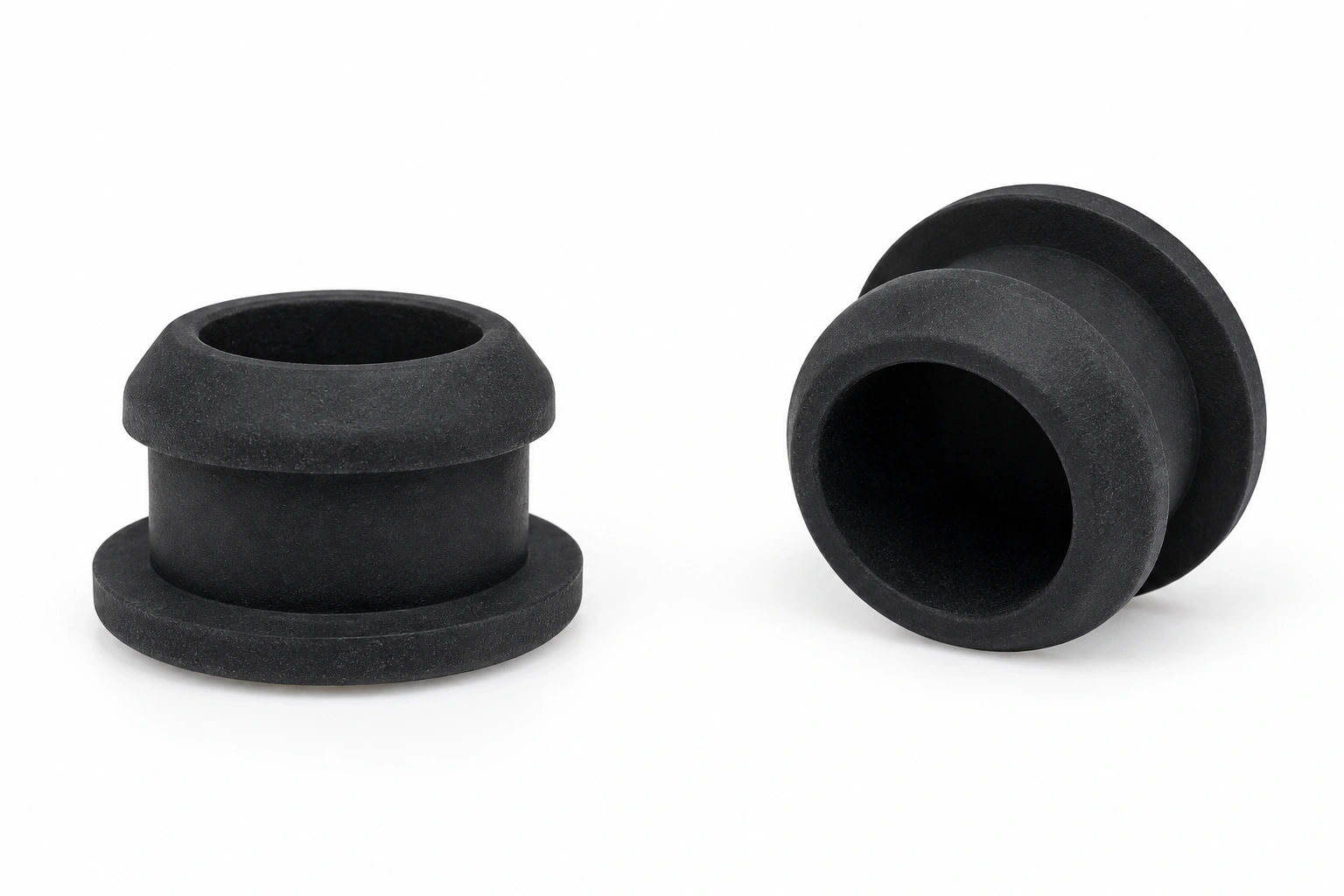
Compare neck diameter A, flange diameter B, flange-to-lip distance C and flange thickness D. Check panel thickness and rear clearance. E refers to the underside recess.
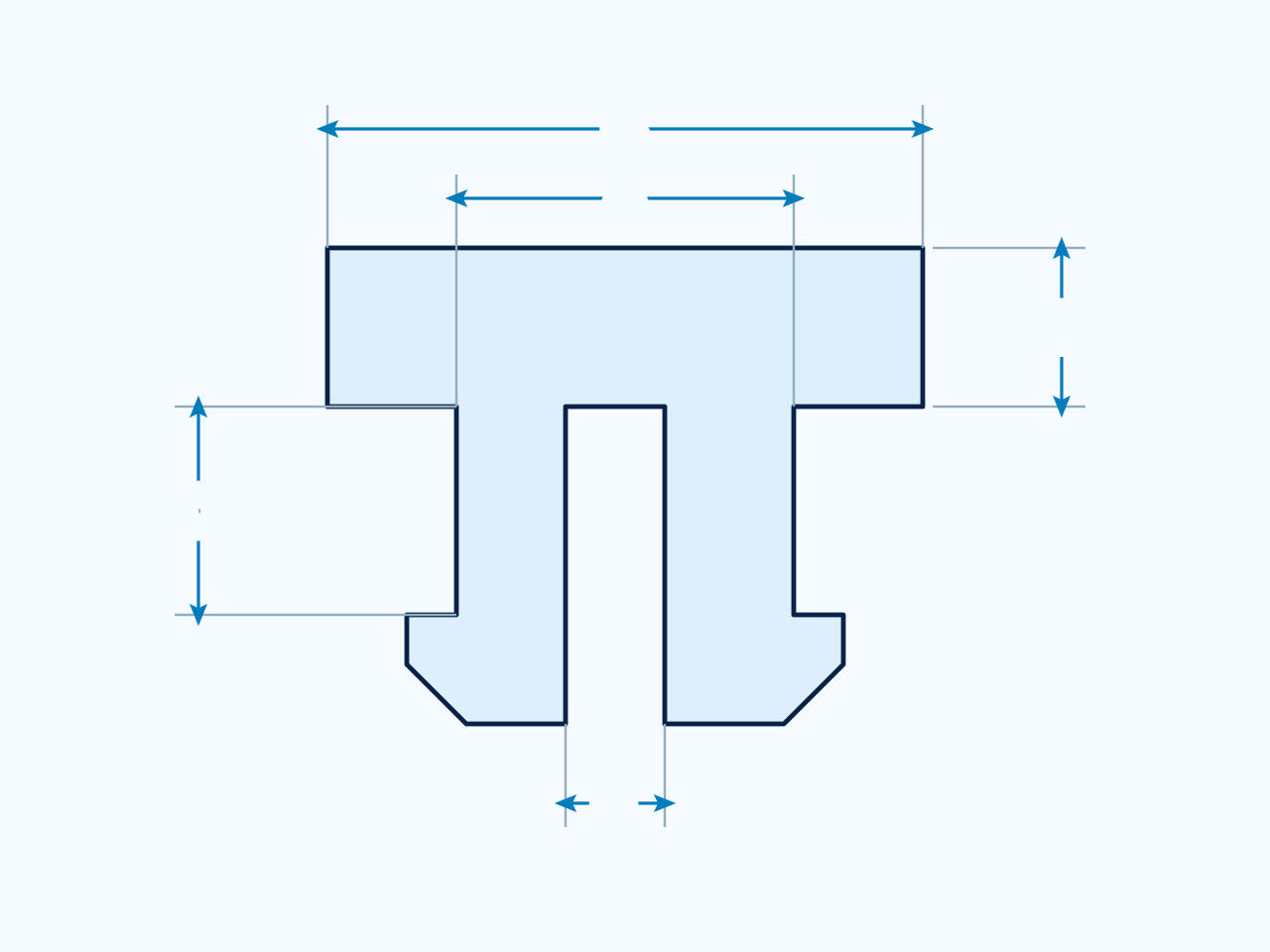
RSD T-Shaped Stoppers
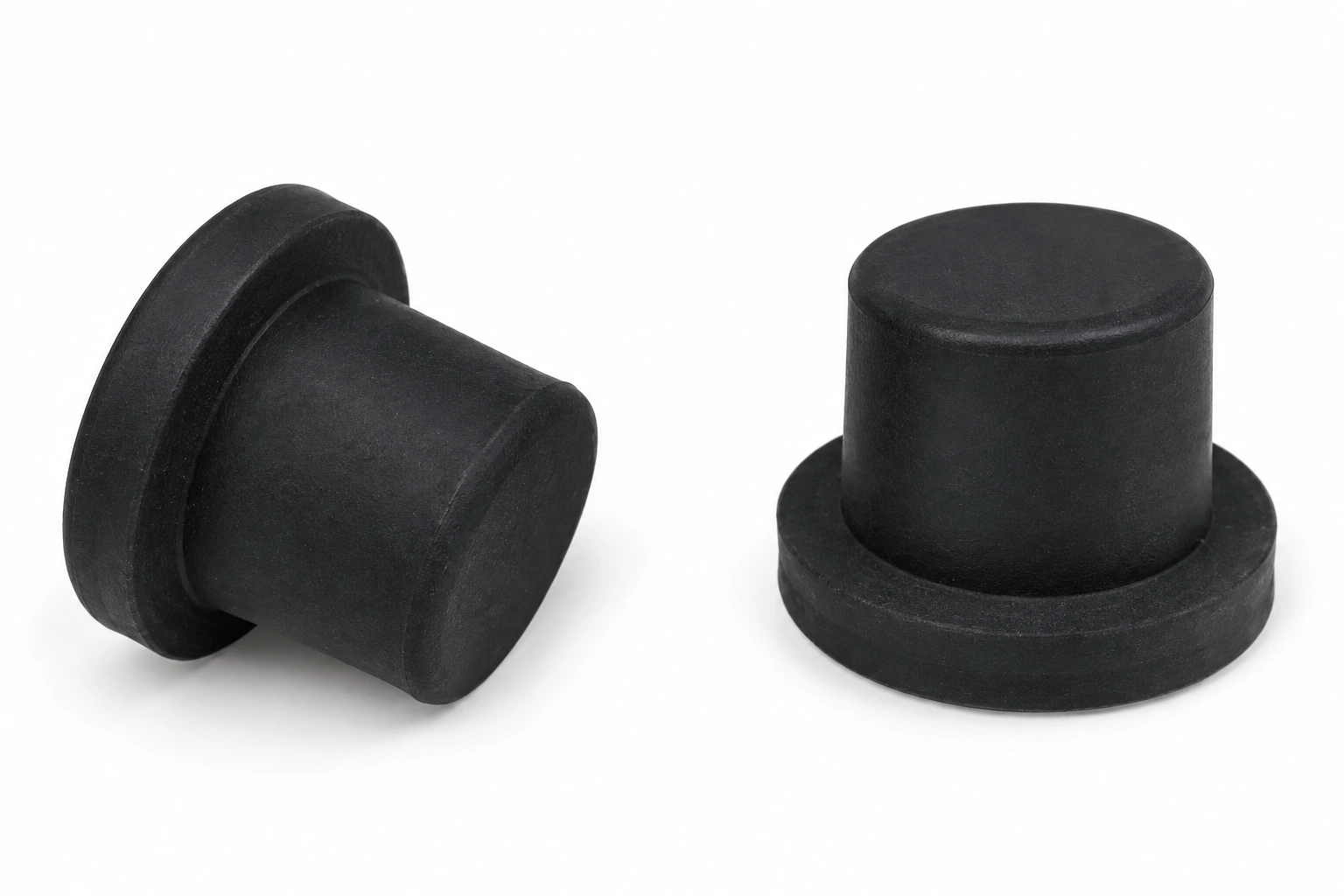
Compare stem diameter A, flange diameter B, stem length C and head thickness D, in mm. Check the seating surface and available depth as well as the hole diameter.
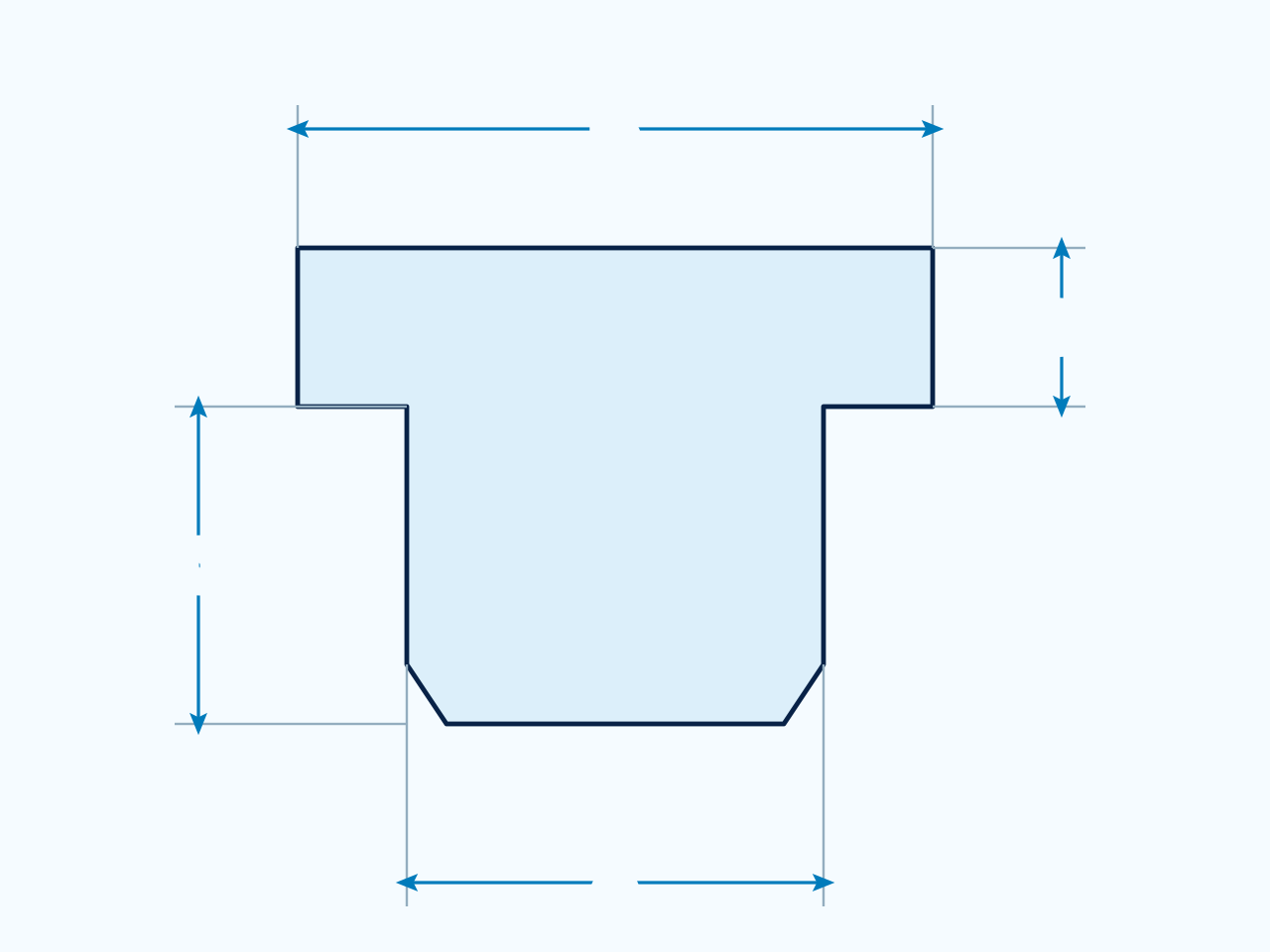
Need a different fit? Share the opening dimensions, mating profile and intended use for a custom size.
Discuss Your RequirementsProduct specifications
- Product form
- Blanking insert for an unused panel opening
- Dimensions to confirm
- Opening profile, panel thickness, retaining groove and head overlap.
- Exposure to evaluate
- Moisture. Validate the selected material under the combined conditions.
- Panel engagement
- Seat the head against the panel and check retention at the actual cut edge.
- Opening function
- Confirm a closed blanking plug versus a pass-through insert. Where material passes through, dimension that passage and the contact that protects it from rubbing.
Need a quote or a custom part?
Send your requirements, drawings or samples to discuss standard and custom silicone rubber parts.
Email us[email protected]