
Rubber protective caps
Rubber protective caps cover exposed ends such as studs, bolts or tube ends. They provide a resilient contact surface and can help keep debris away from the covered area. The cap must match the end profile and remain attached under the handling expected at that location.
Measure the maximum outside dimension of the exposed part and the length that needs covering. A push-on cap grips differently from a threaded cap, so identify the fixing arrangement before choosing a size. Threads inside a cap must match the mating thread; they are not a standard feature of every rubber cover.
Check that the exposed end cannot bottom out against a thin cap wall and that the cover does not obstruct adjacent components. Choose the rubber for the temperature, weather and cleaning conditions. Recheck the cap after installation and replace it if it loosens, splits or no longer covers the intended surface.
Rubber Cap Size Catalog
Compare the internal and external dimensions of rubber caps against the part being covered.
Custom colors are available to your Pantone color code. Include the code in your inquiry.
Rubber Caps-RSE
Compare A (inner diameter), B (outer diameter), C (inner depth) and D (total height), in mm.
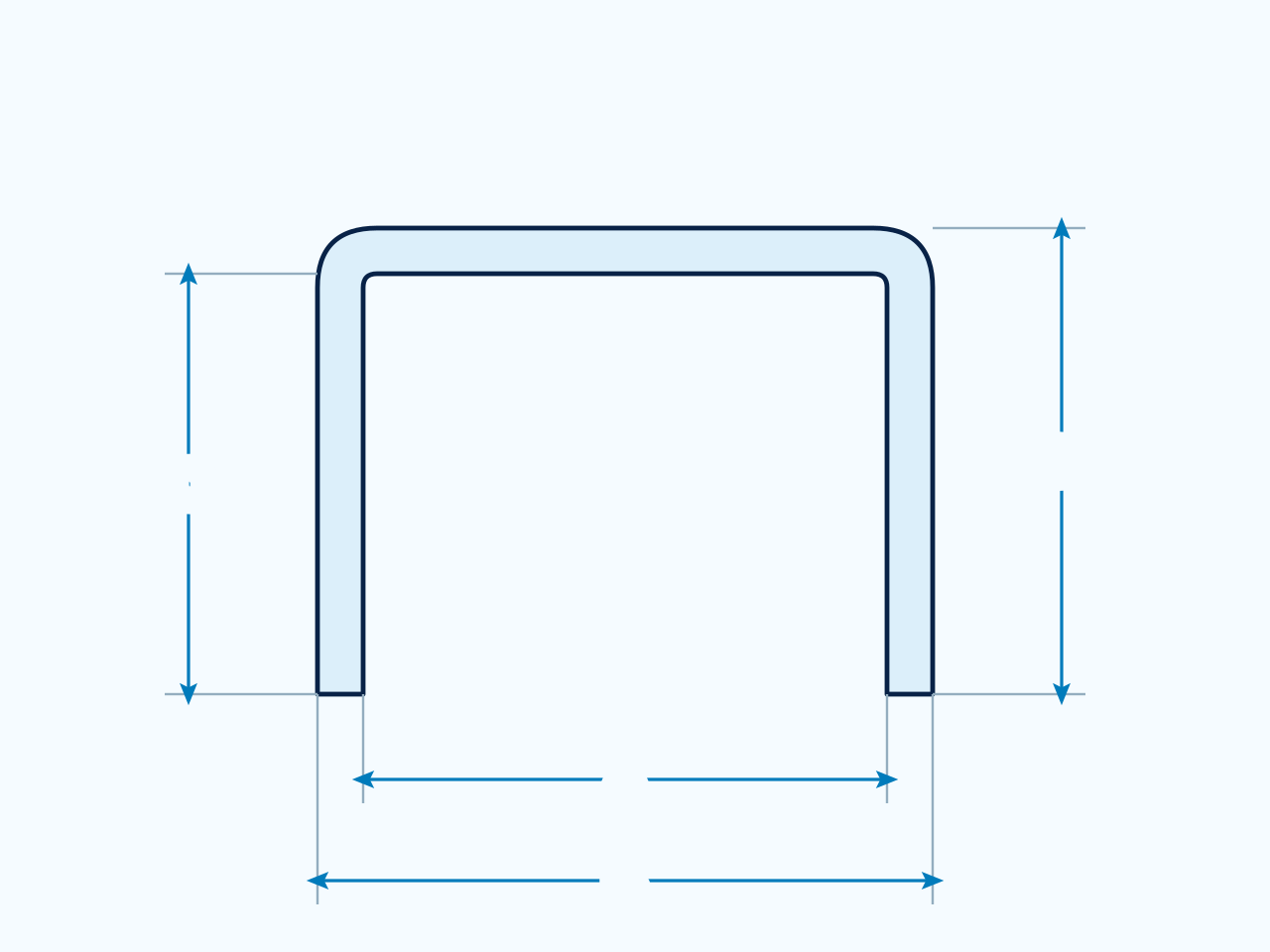
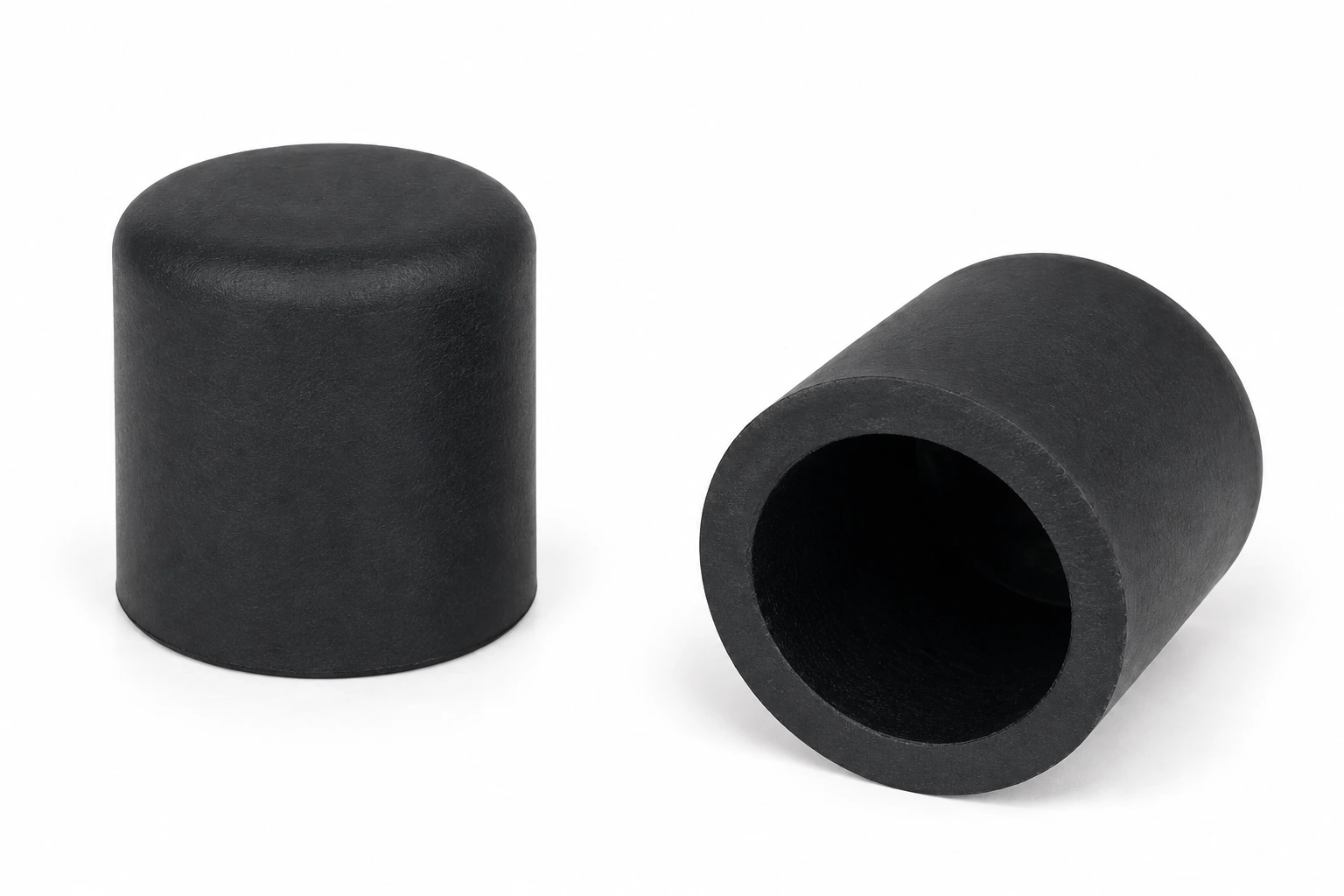
Need a different size? Share your drawing, mating dimensions and intended use to discuss a suitable part.
Discuss Your RequirementsProduct specifications
- Product form
- Protective cap over an exposed stud, bolt or tube end.
- Cover dimensions
- Maximum mating outside dimension, covered length and usable cavity depth.
- Attachment
- Distinguish push-on retention from a matched internal thread.
- Clearance
- Prevent the exposed end from bottoming out against a thin wall or obstructing adjacent parts.
- Service inspection
- Check for loosening, splits and loss of coverage.
Need a quote or a custom part?
Send your requirements, drawings or samples to discuss standard and custom silicone rubber parts.
Email us[email protected]