
Rubber shock mounting
If there is one common problem that all major industries in the world suffer from, especially car industries, it is vibrations in their machines. While short term vibrations are nothing to worry about, long term vibrations that occur as soon as a machine turns on are extremely harmful for the industry’s equipment. These vibrations can cause severe internal damage to delicate components and there is also the chance of small components falling out of the place.
Manufacturers need something that can control these vibrations at their source and ensure they don’t go as far as to damage the sensitive equipment inside the machine. Problem is, there aren’t many effective isolators out there that can help you out. However, there is one component that can not only meet all of the manufacturers’ demands, but also provide them with a solution that is cost-effective and affordable – our rubber shock mountings.
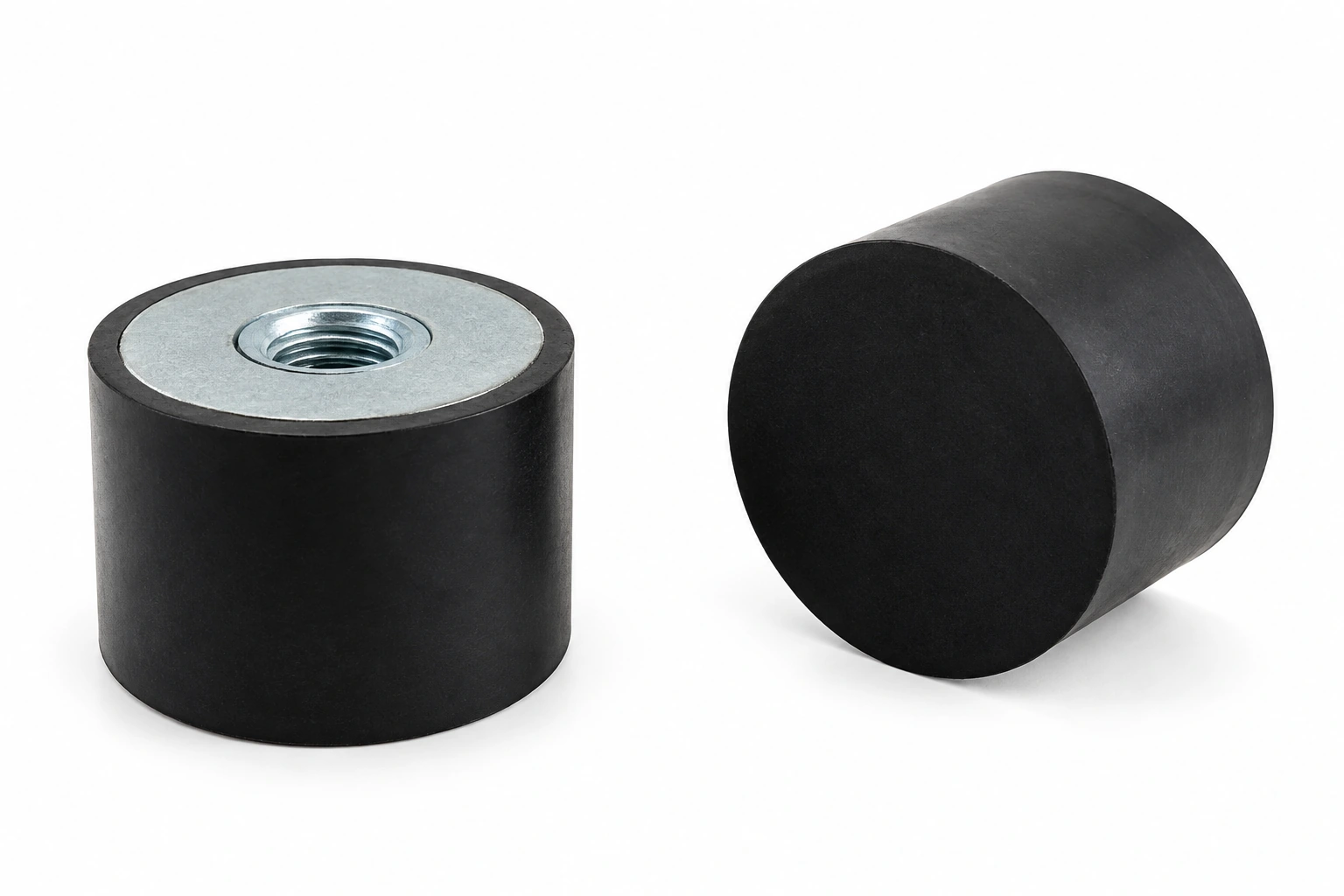
Our rubber shock mountings are one of the best vibration isolators out there. They inhibit all types of vibrations on their exact source to ensure that they don’t spread too further and damage parts and sensitive components. Our rubber shock mountings protect your machine from getting structural damage from vibrations and also maintain its integrity. It works in a lot of industrial applications but has the most effectiveness in the automobile industry.
It protects the front bumpers on standard vehicles, acts as crane buffers and is also used in military applications at times. Our rubber shock mountings do all this by absorbing all vibration waves and deflecting the waves inside it. If you are looking for reliable rubber shock mountings then look no more than our own rubber shock mountings which we provide at the lowest rate possible.
The quality of our rubber shock mountings is guaranteed by us as one of the leading rubber product manufacturers in the world.
Vibration Mount Size Catalog
Compare five mounting arrangements using the matching drawing, thread and dimensional data. Load and compression columns retain their stated units; confirm operating conditions for your installation.
Vibration Damping Mounts A
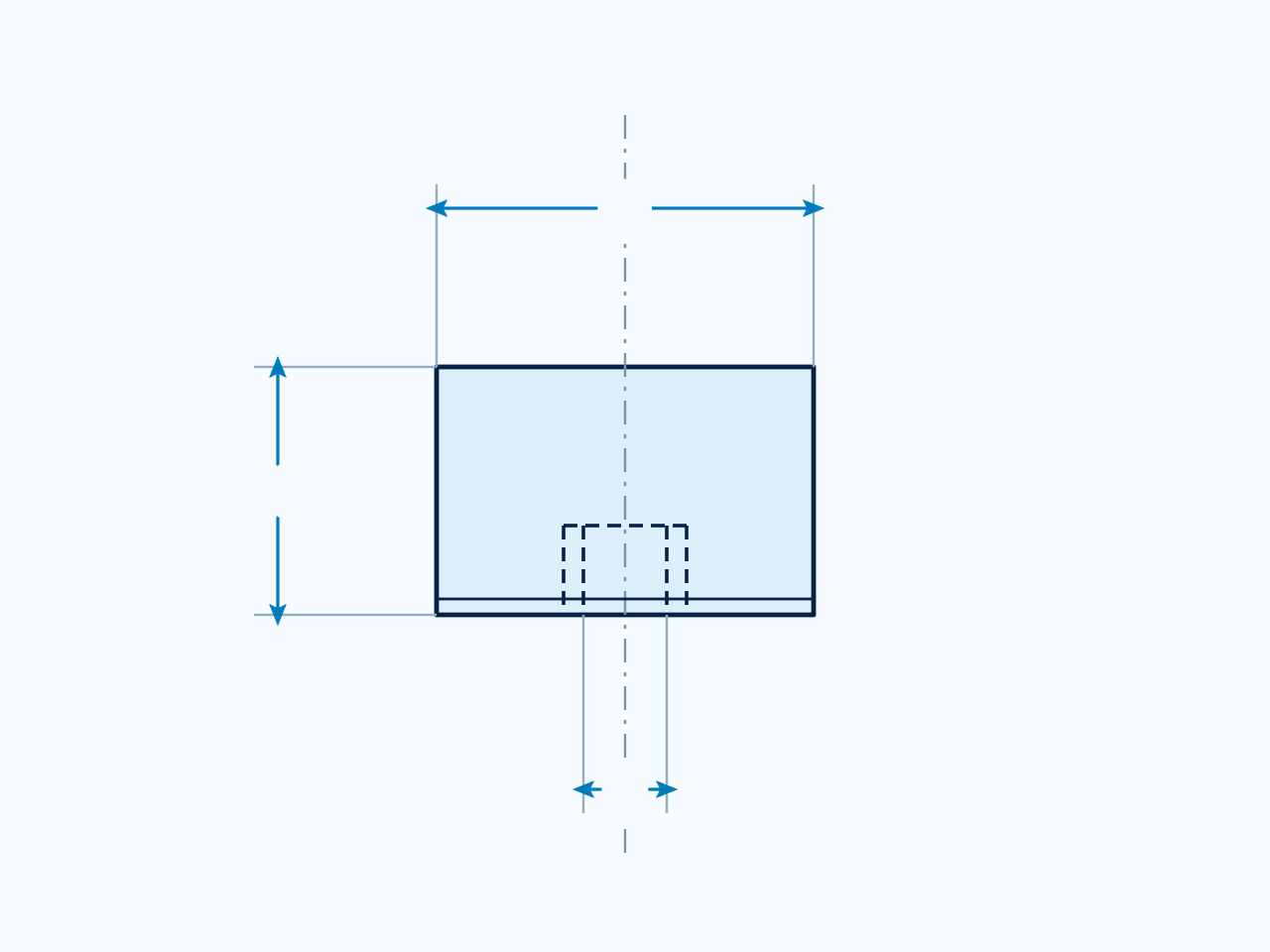
Match D, H and thread d to the drawing, including stud length L. Dimensions are in mm; thread designations, load in kg and compression in mm follow the table headings. Confirm load direction and operating conditions for your installation.
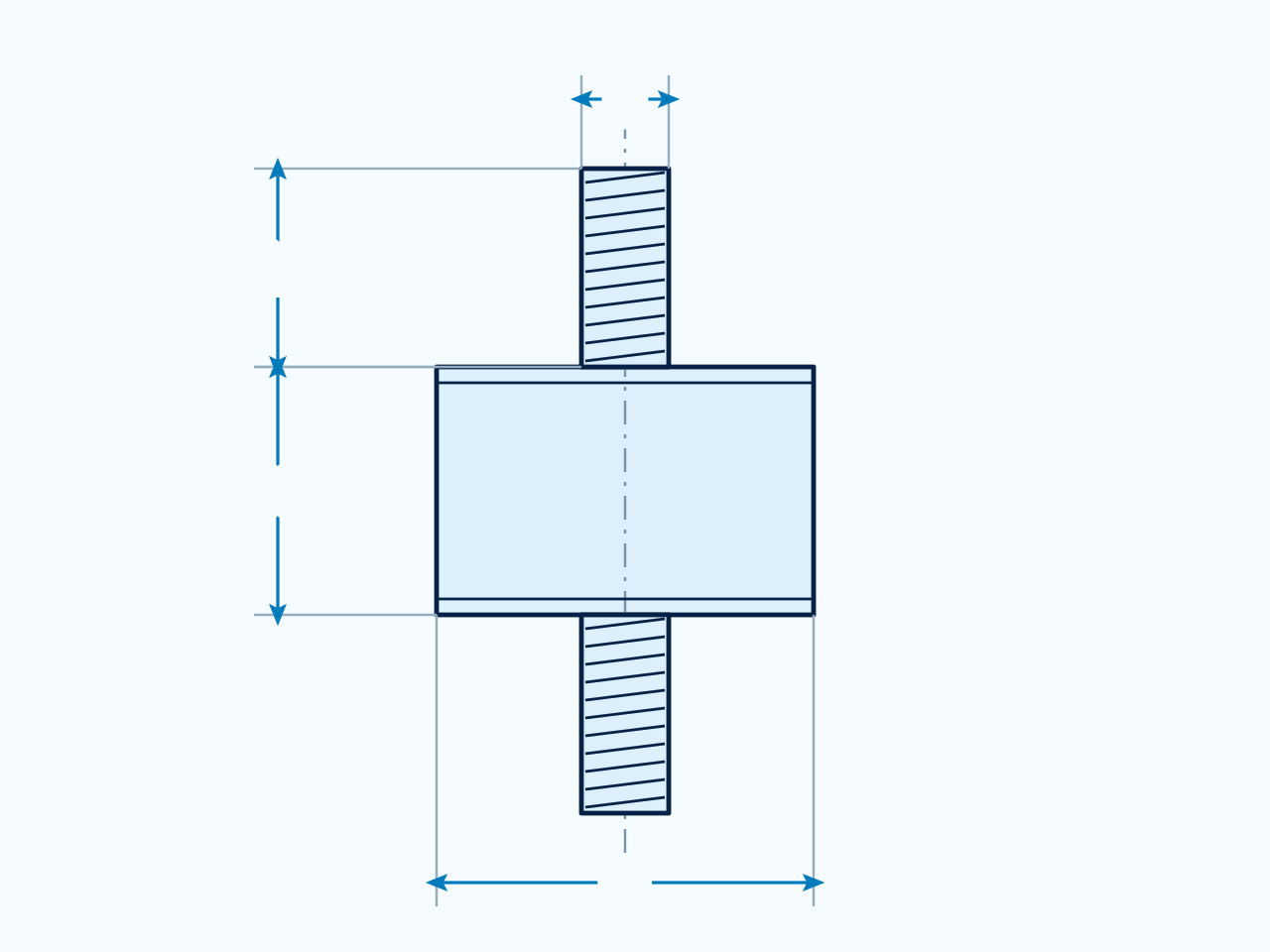
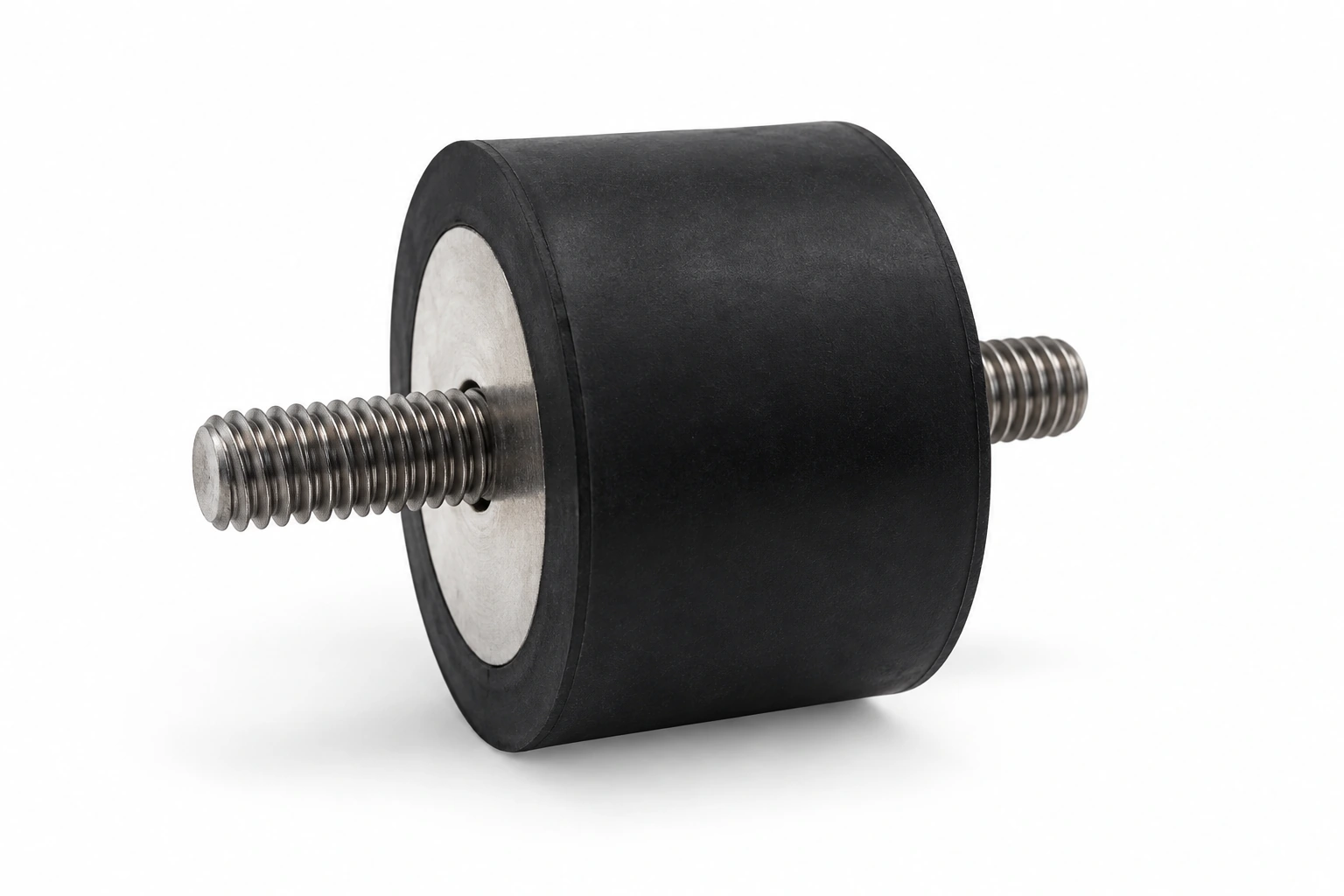
Anti-Vibration Rubber Mounts B
Match D, H and thread d to the drawing, including stud length L. Dimensions are in mm; thread designations, load in kg and compression in mm follow the table headings. Confirm load direction and operating conditions for your installation.
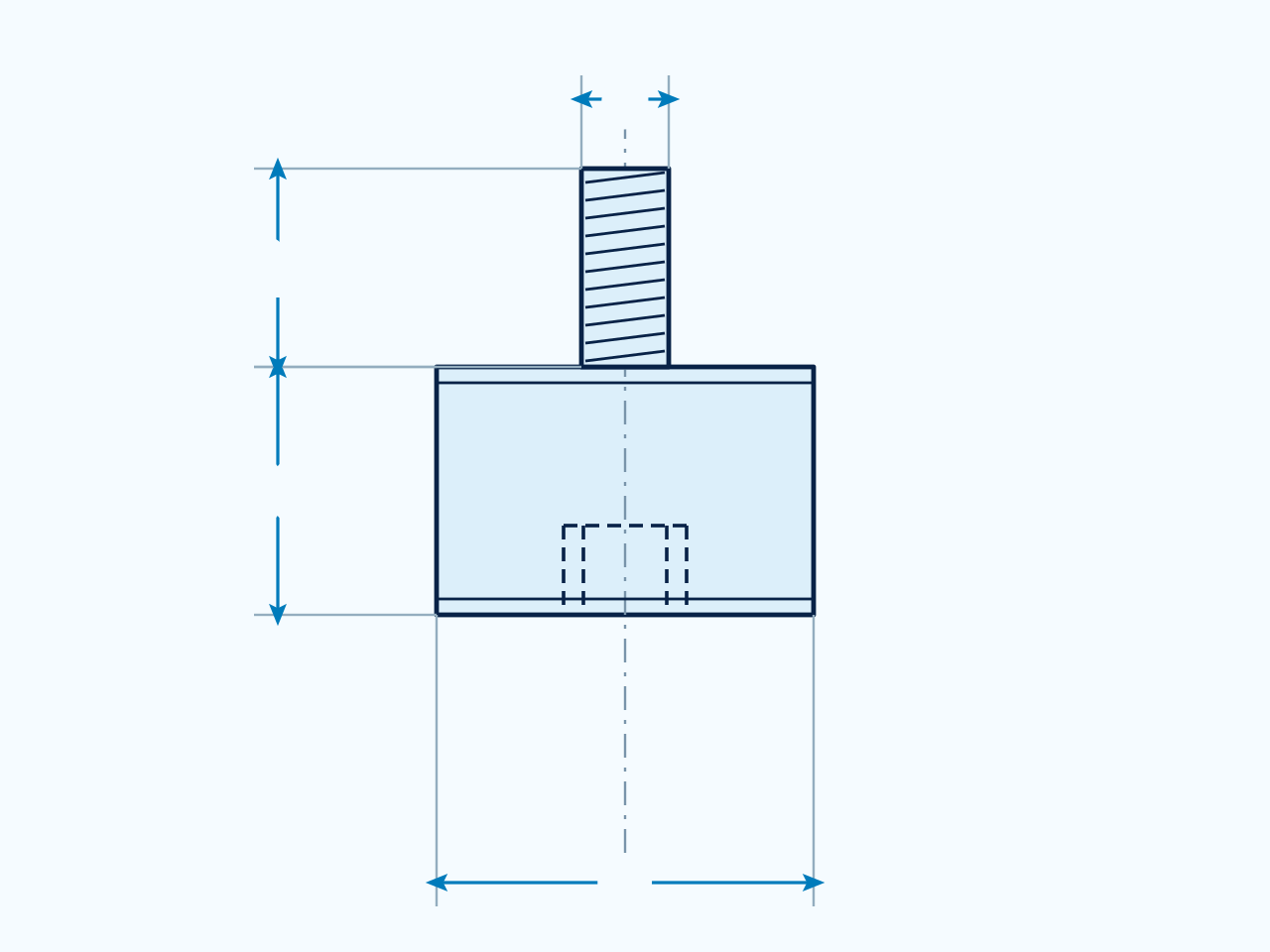
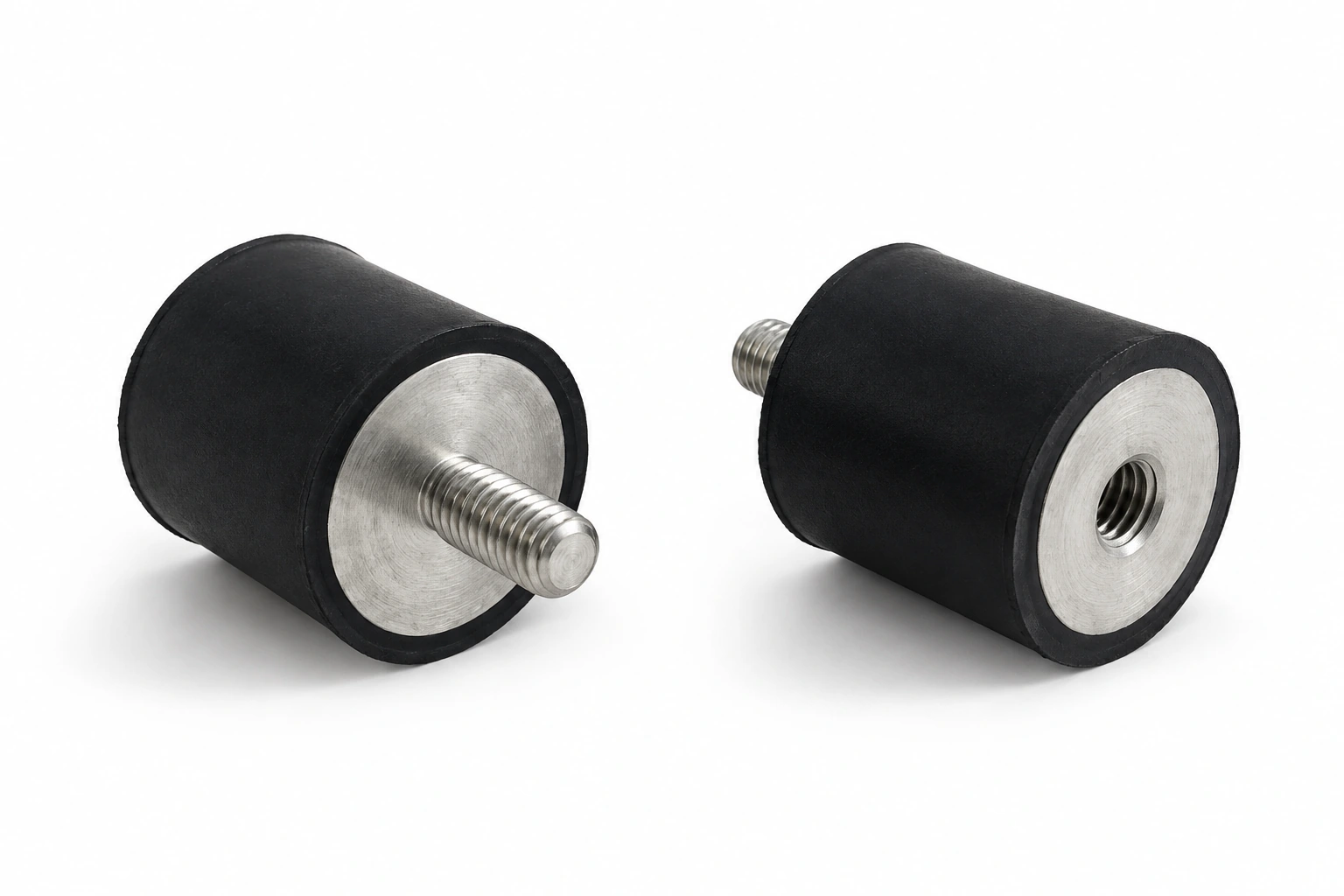
Vibration Isolators C
Match D, H and thread d to the drawing. Dimensions are in mm; thread designations, load in kg and compression in mm follow the table headings. Confirm load direction and operating conditions for your installation.
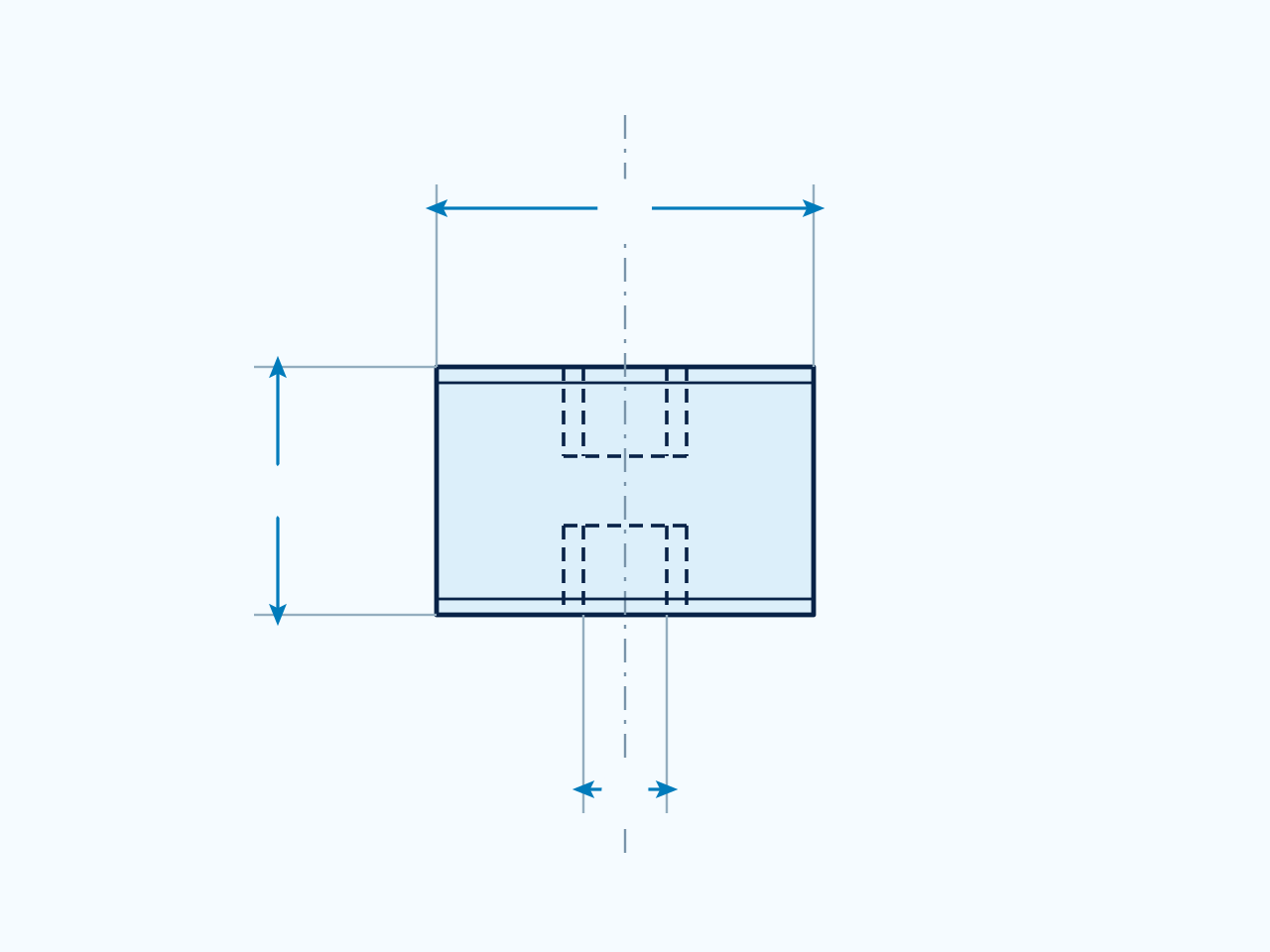
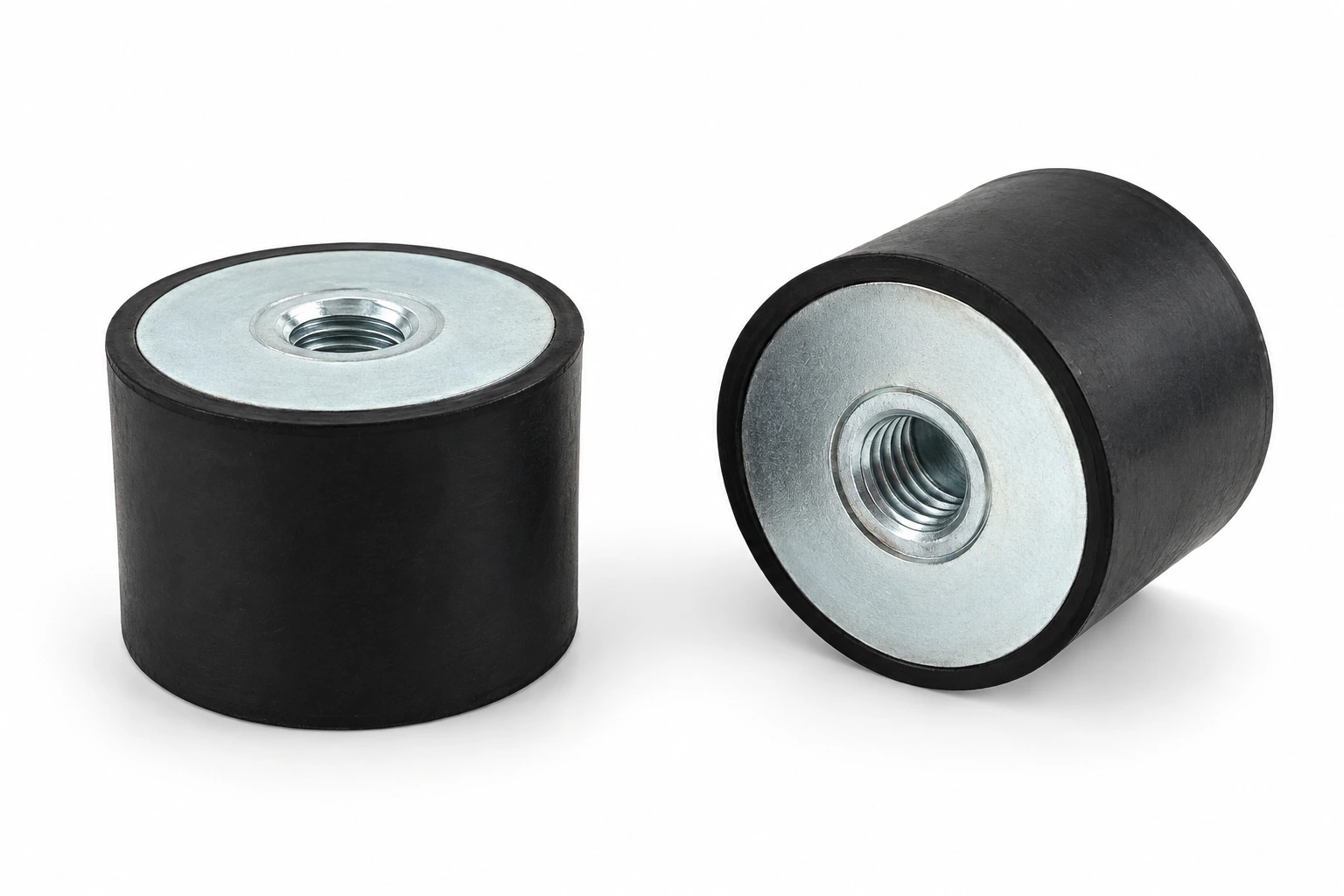
Rubber Mountings D
Match D, H and thread d to the drawing, including stud length L. Dimensions are in mm; thread designations, load in kg and compression in mm follow the table headings. Confirm load direction and operating conditions for your installation.
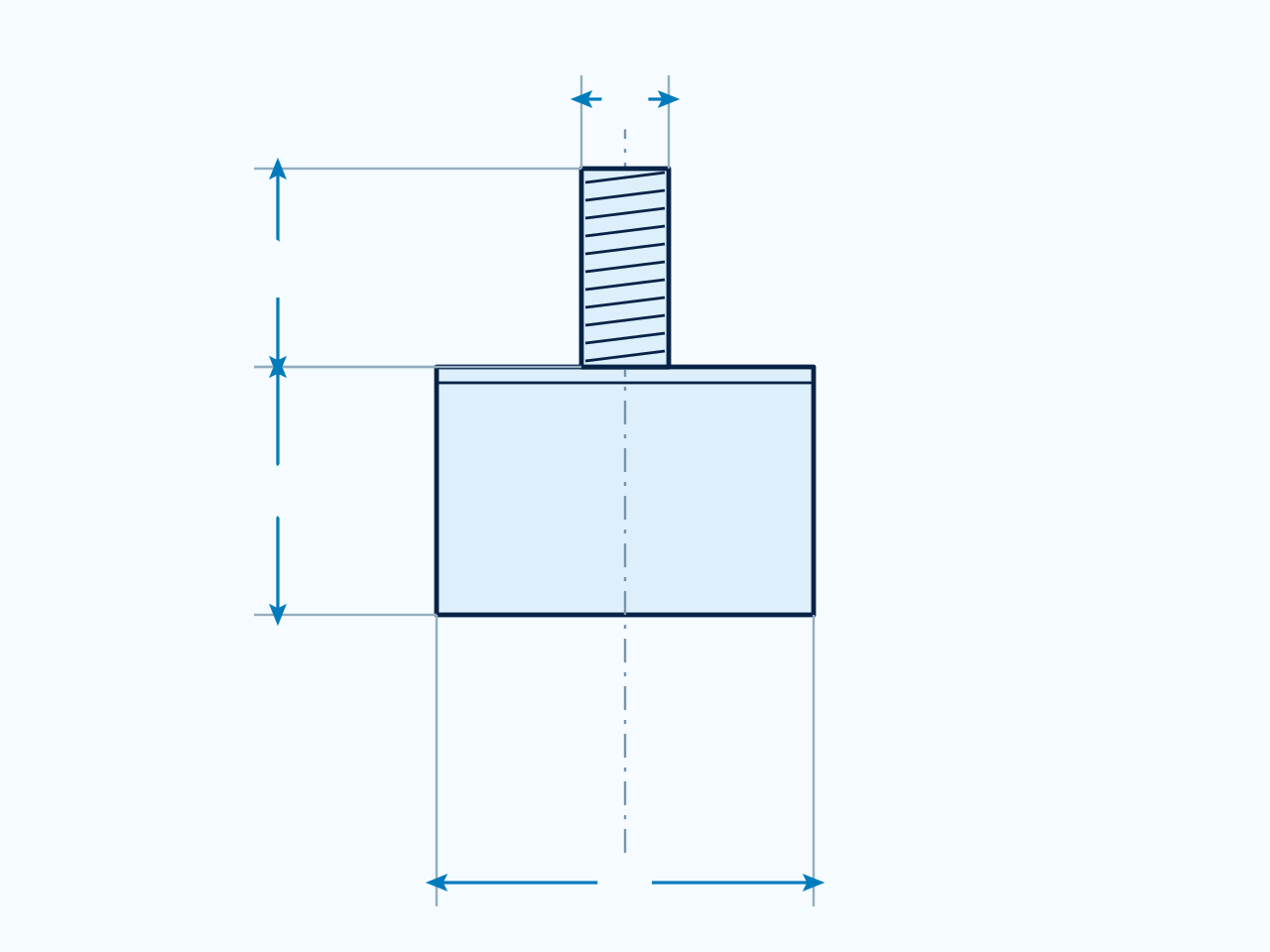
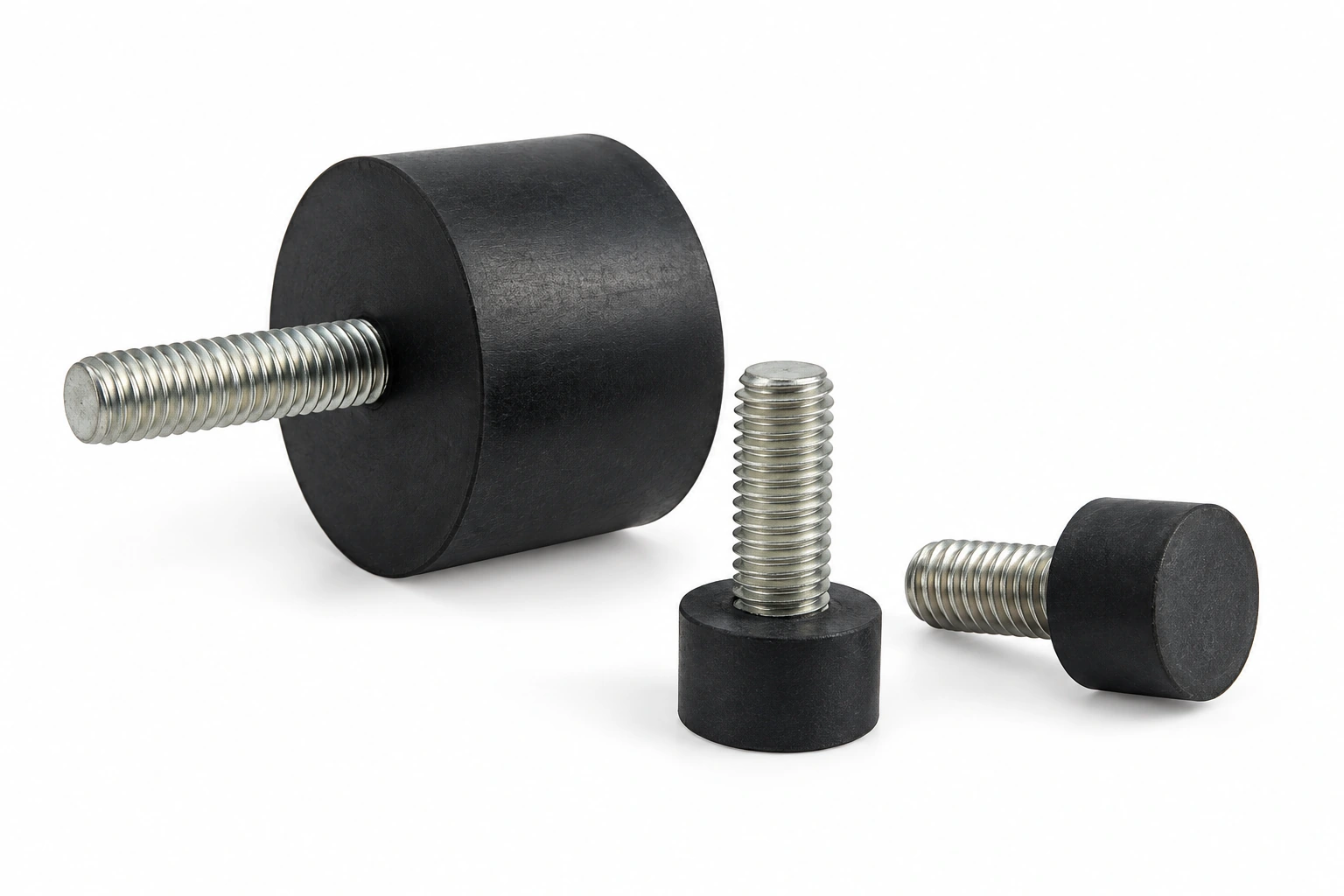
Rubber Vibration Mounts E
Match D, H and thread d to the drawing. Dimensions are in mm; thread designations, load in kg and compression in mm follow the table headings. Confirm load direction and operating conditions for your installation.
Need a different size? Share your drawing, mating dimensions and intended use to discuss a suitable part.
Discuss Your RequirementsProduct specifications
- Product form
- Elastomer mount between a vibrating assembly and its support
- Dimensions to confirm
- Free and loaded heights, attachment spacing and body envelope.
- Transient load
- Define the impact direction, peak load and available travel separately from the steady vibration requirement.
- Isolation objectives
- Steady vibration and impact or shock. Define a measurable acceptance target on the supported assembly.
- Dynamic selection
- Use the load per mount, excitation frequency and allowed movement to select the mount.
- Operating cycle
- Define the start-up, steady-running and shutdown conditions and verify transmitted vibration throughout that cycle.
Need a quote or a custom part?
Send your requirements, drawings or samples to discuss standard and custom silicone rubber parts.
Email us[email protected]