
rubber stopper hole
Plastic stoppers generally serve to securely close glass bottles or other dishes in which certain contents would be safely stored. They are made in different shapes and sizes. They can be with or without threads and with or without holes in the top. Plugs with one hole or a few of them are used quite often, although the first association with a plastic plug in the flat one, without a hole. Hole plugs have a slightly more specific purpose and are not used too much in the household as is the case with flat plugs. Rubber stopper holes are most often produced in a conical shape. In this way, their universality is enabled, or better said, this cap can close any bottle or container that has differences in the width of the opening in a few millimeters.
Rubber stopper holes are carefully built and designed to make an air chamber and thus ensure a secure seal. In this way, fermentation and quality gas exchange are provided. You can be sure that nothing can get to the stored content even though there is a millimeter hole on it. However, on the other hand, this opening allows you to take a part of the stored liquid with a syringe or a certain hose without having to open the bottle completely. In this way, oxidation and loss of quality substances from the content itself are prevented. Also, if you need to constantly measure the temperature of the contents of the bottle, these plugs allow you to smoothly push the tip of the thermometer through the cap. As the rubber from which the plug is made is quite flexible, it is possible to expand and contract it, all as needed. With this cap, you can be sure that you have a great product because it is resistant to chemicals and their vapors, different oils, but also large temperature differences.
Stopper & Plug Size Catalog
Compare four stopper profiles and check the selected part dimensions against your opening and available depth. Each profile has its own drawing and dimension meanings.
Custom colors are available to your Pantone color code. Include the code in your inquiry.
RST T-Shaped Plugs
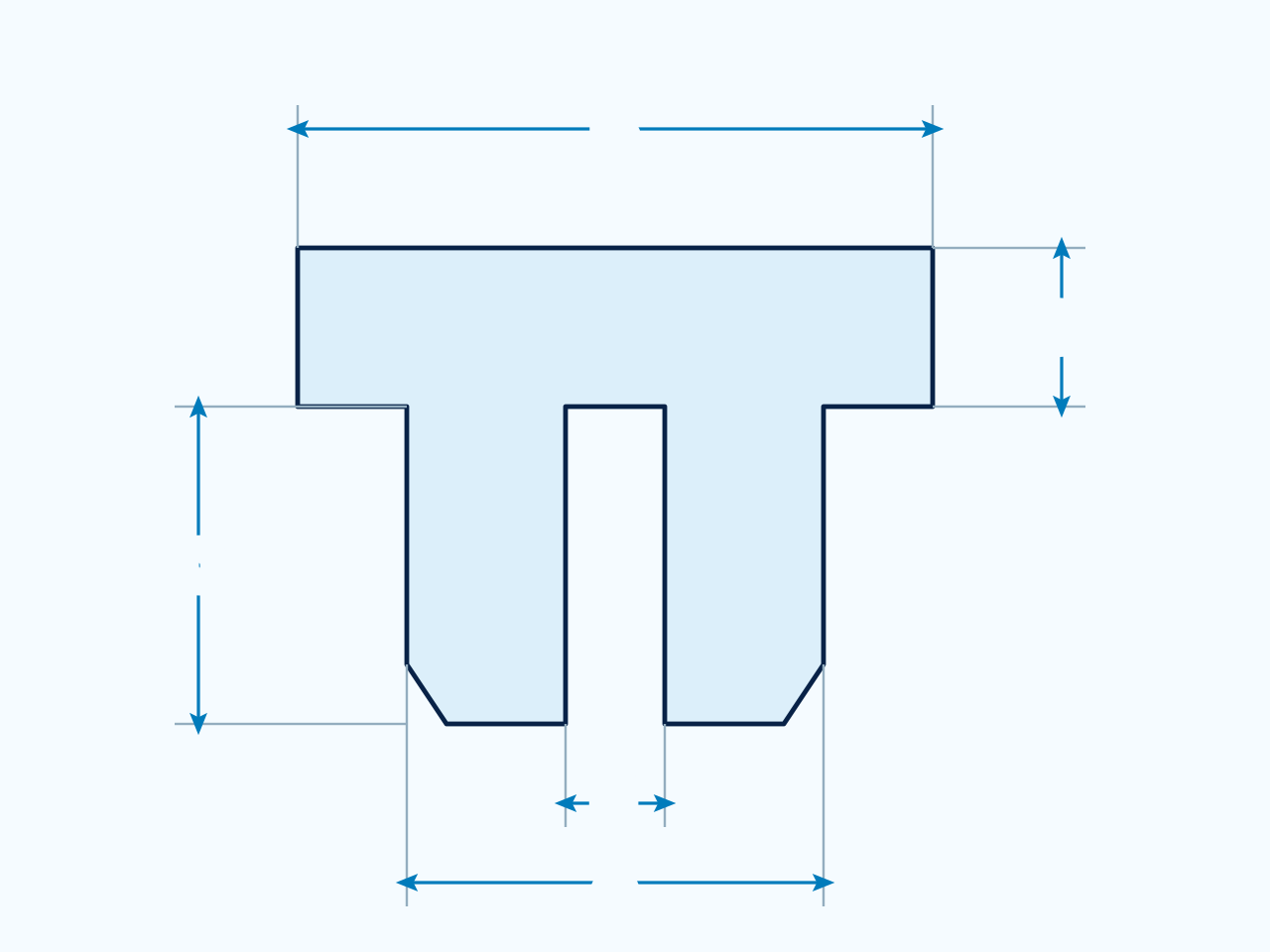
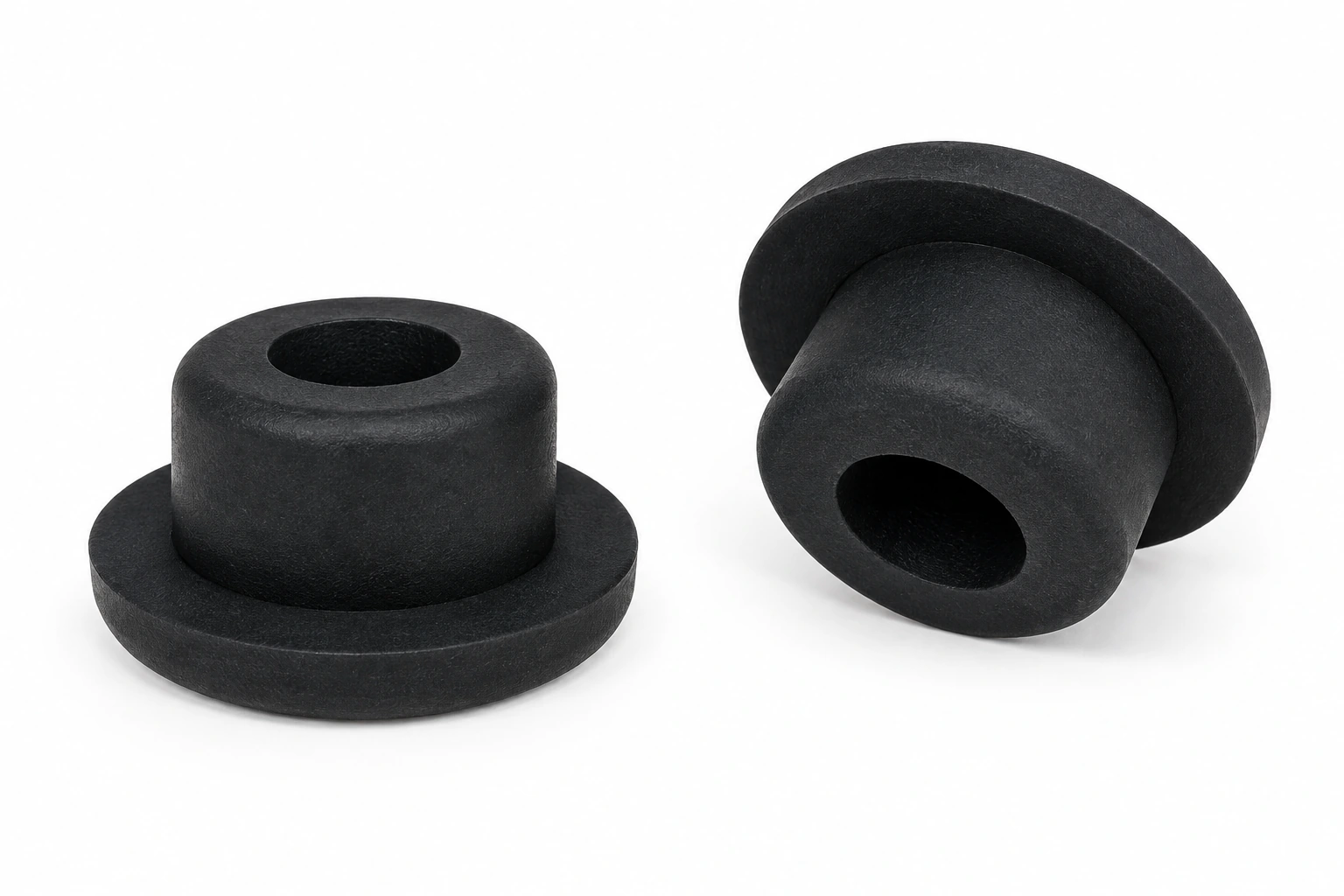
Match stem diameter A, flange diameter B, stem length C and flange thickness D. E refers to the underside recess; use the selected row and approved drawing to confirm the actual profile.
RSA Tapered Corks
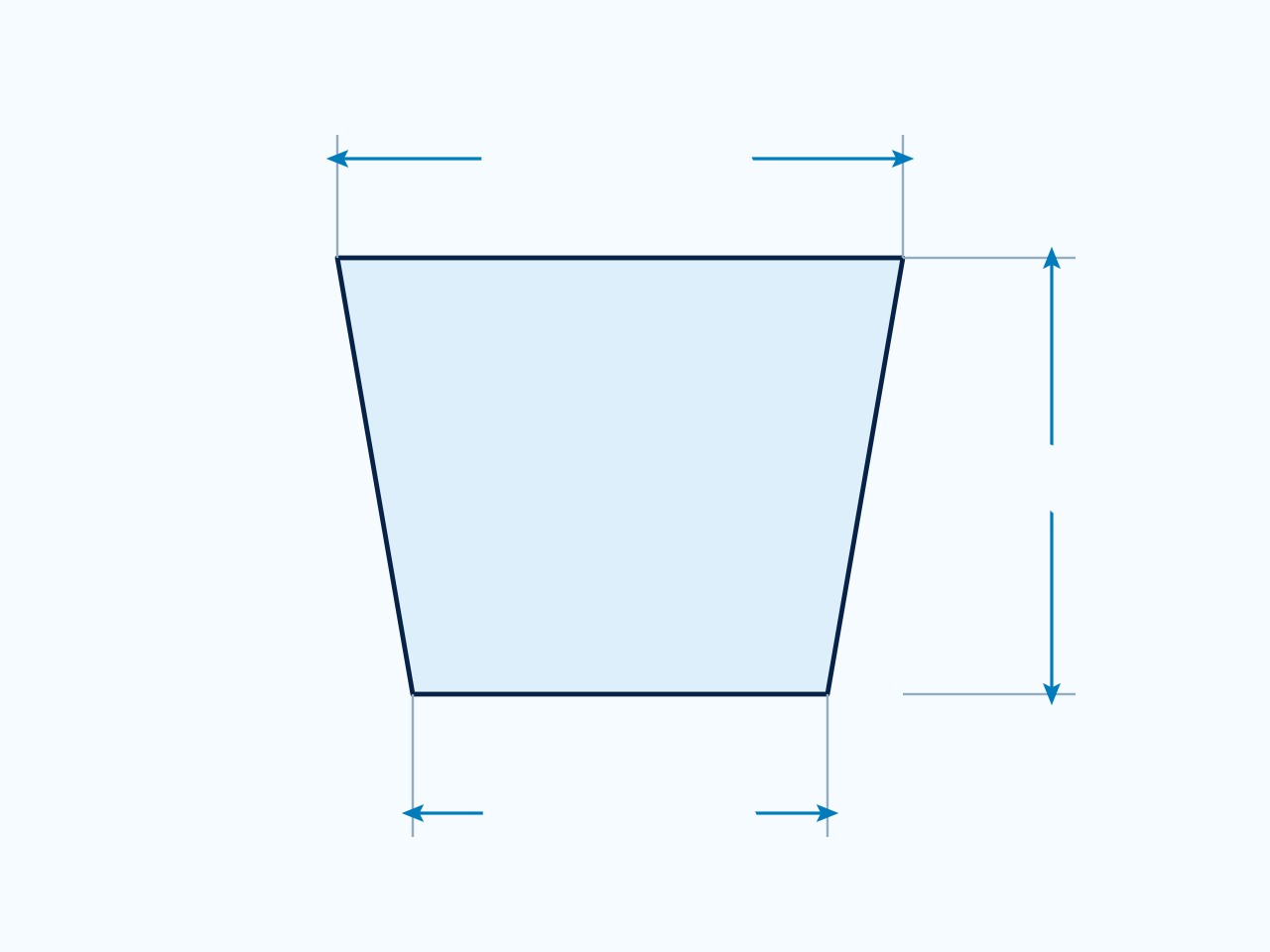
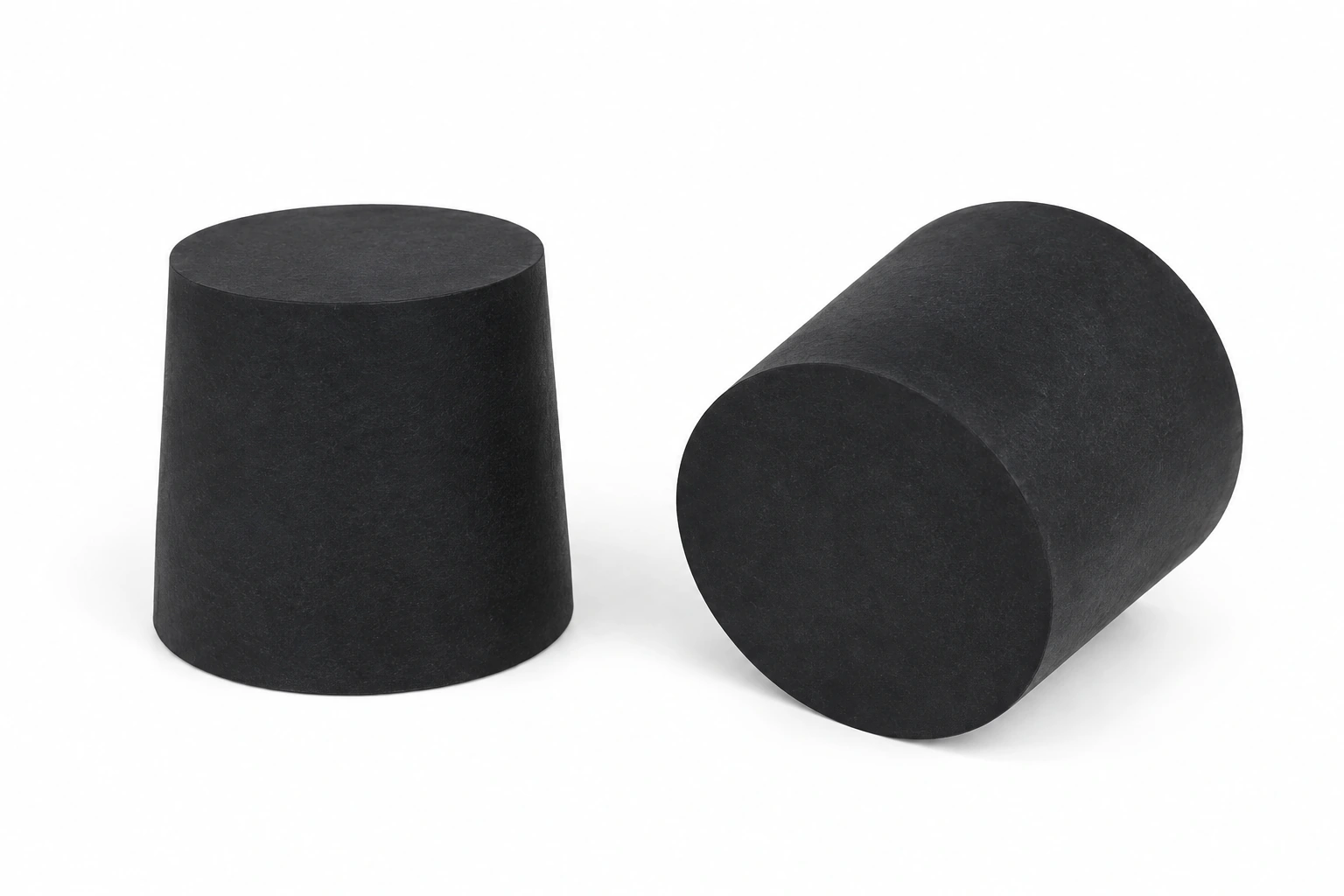
Compare large-end diameter A, small-end diameter B and Height, in mm. The mating bore and required seating depth determine where the taper contacts the opening.
RSB Undercut Plugs
Compare neck diameter A, flange diameter B, flange-to-lip distance C and flange thickness D. Check panel thickness and rear clearance. E refers to the underside recess.
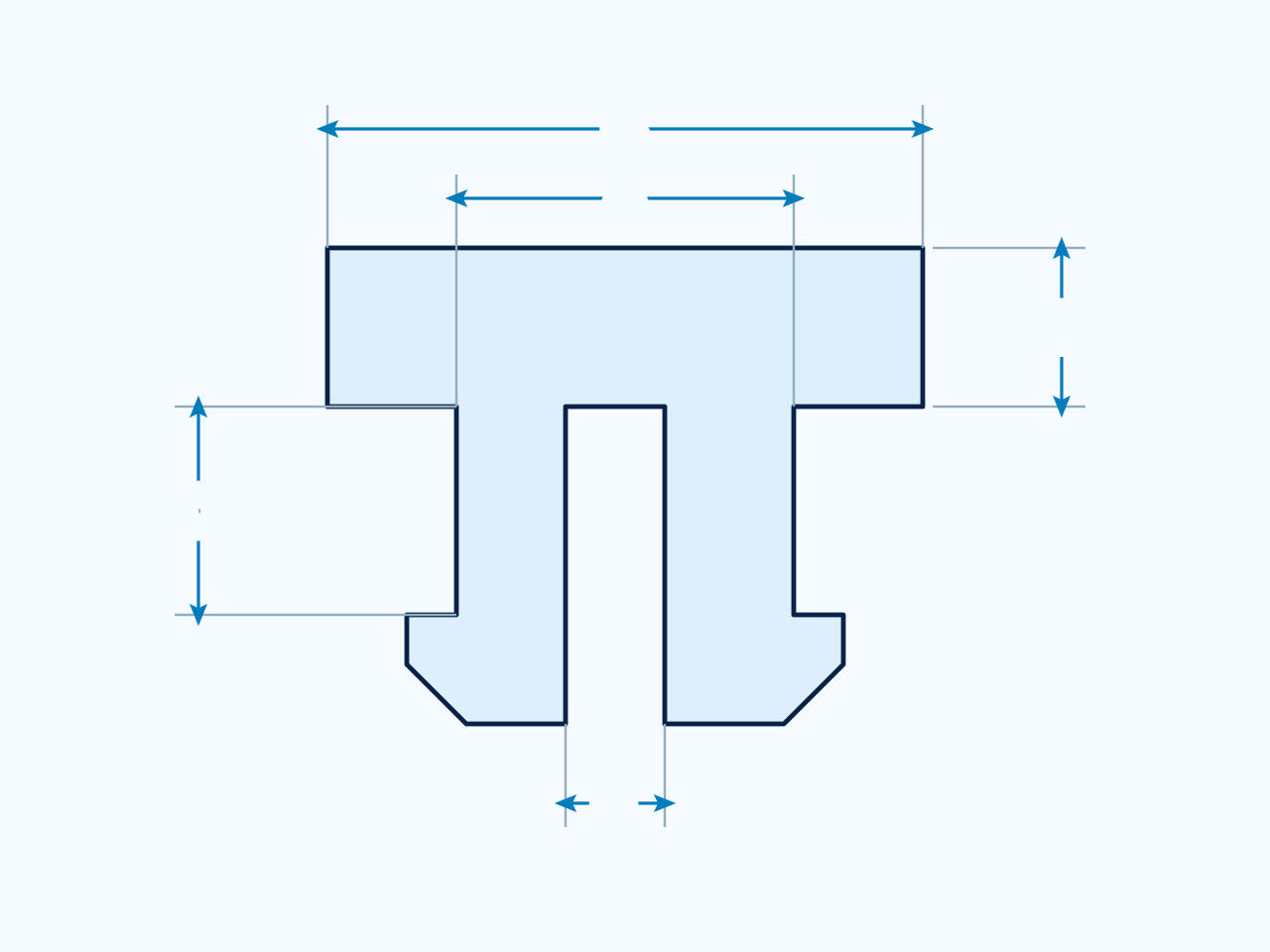
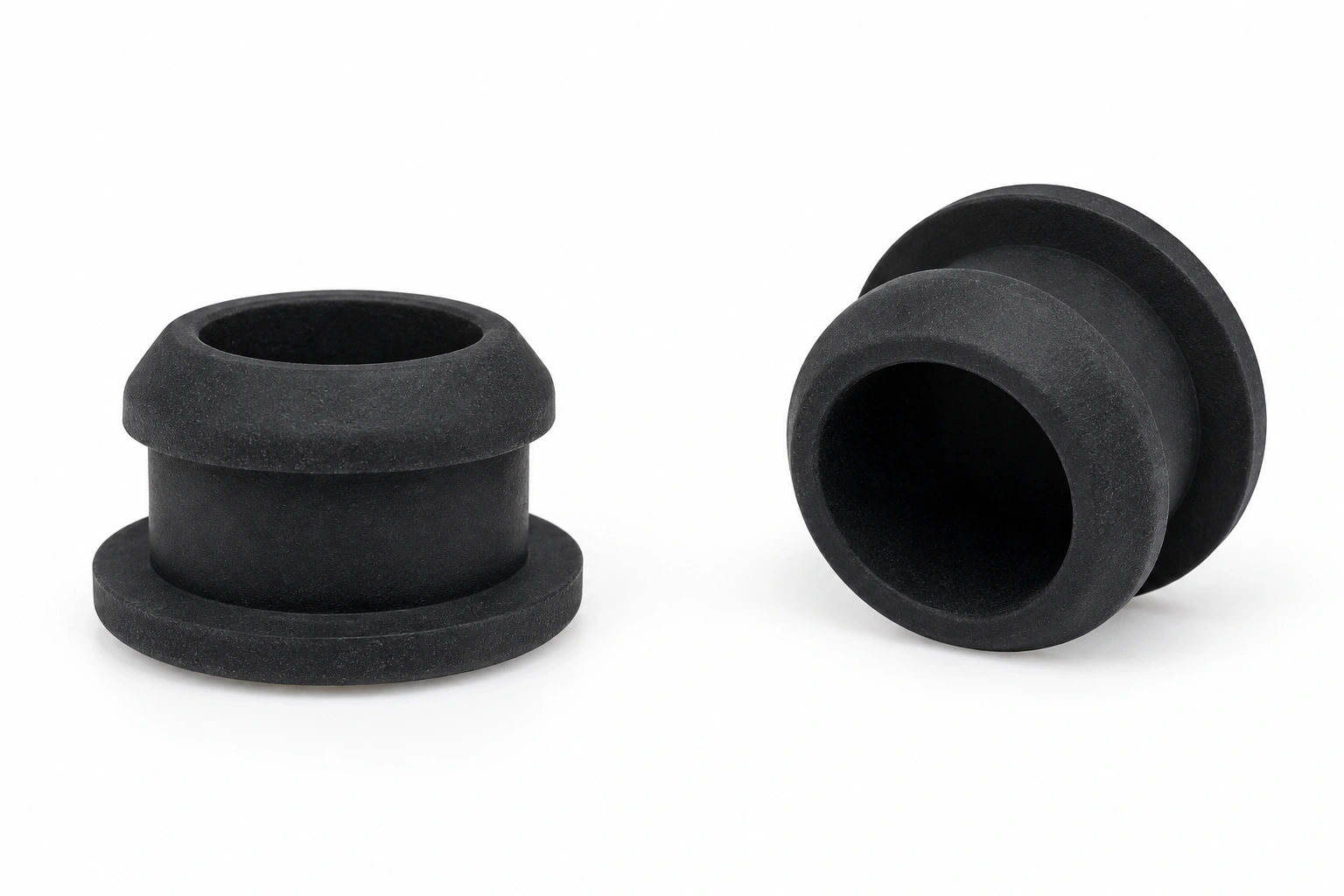
RSD T-Shaped Stoppers
Compare stem diameter A, flange diameter B, stem length C and head thickness D, in mm. Check the seating surface and available depth as well as the hole diameter.
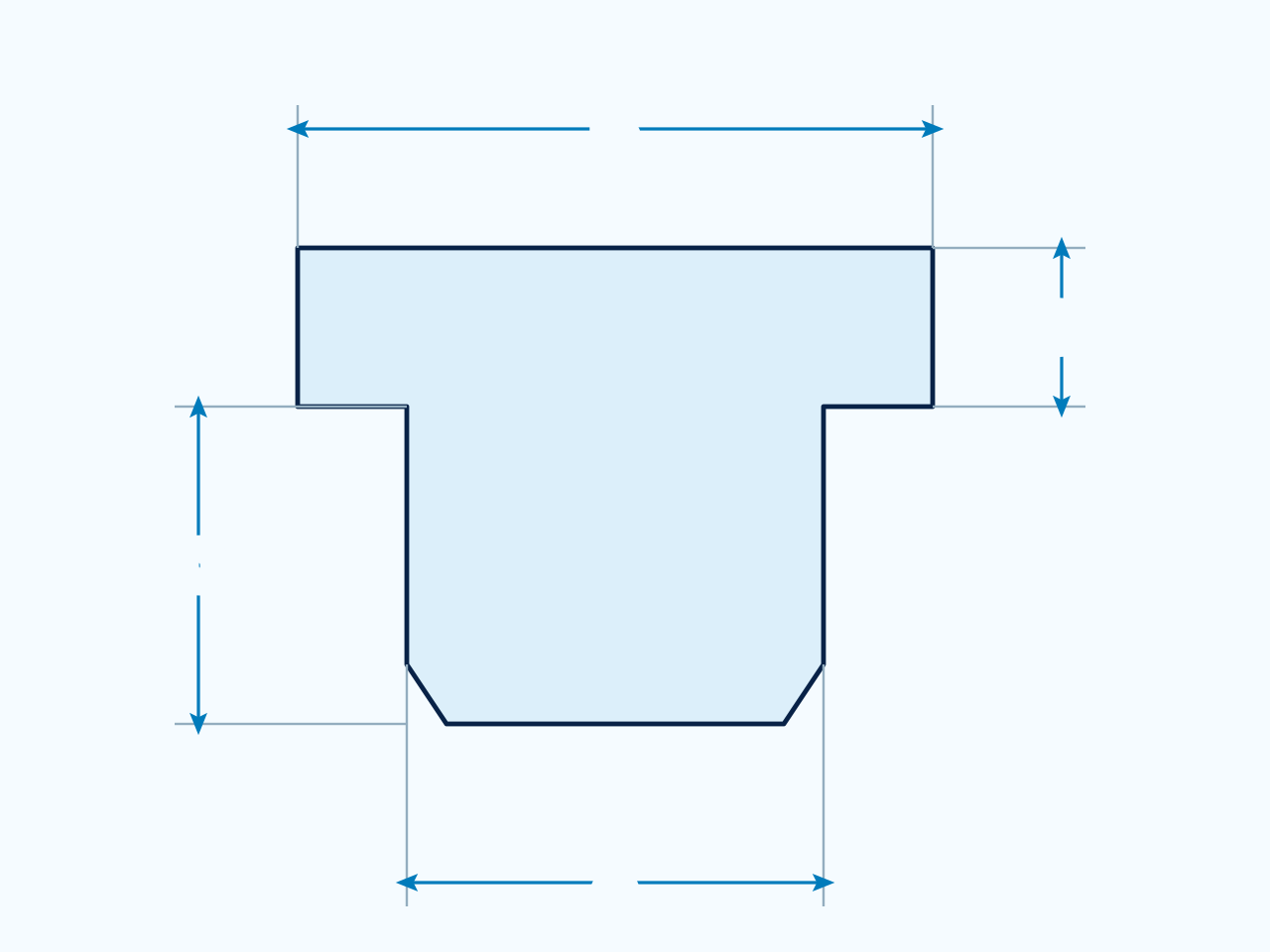
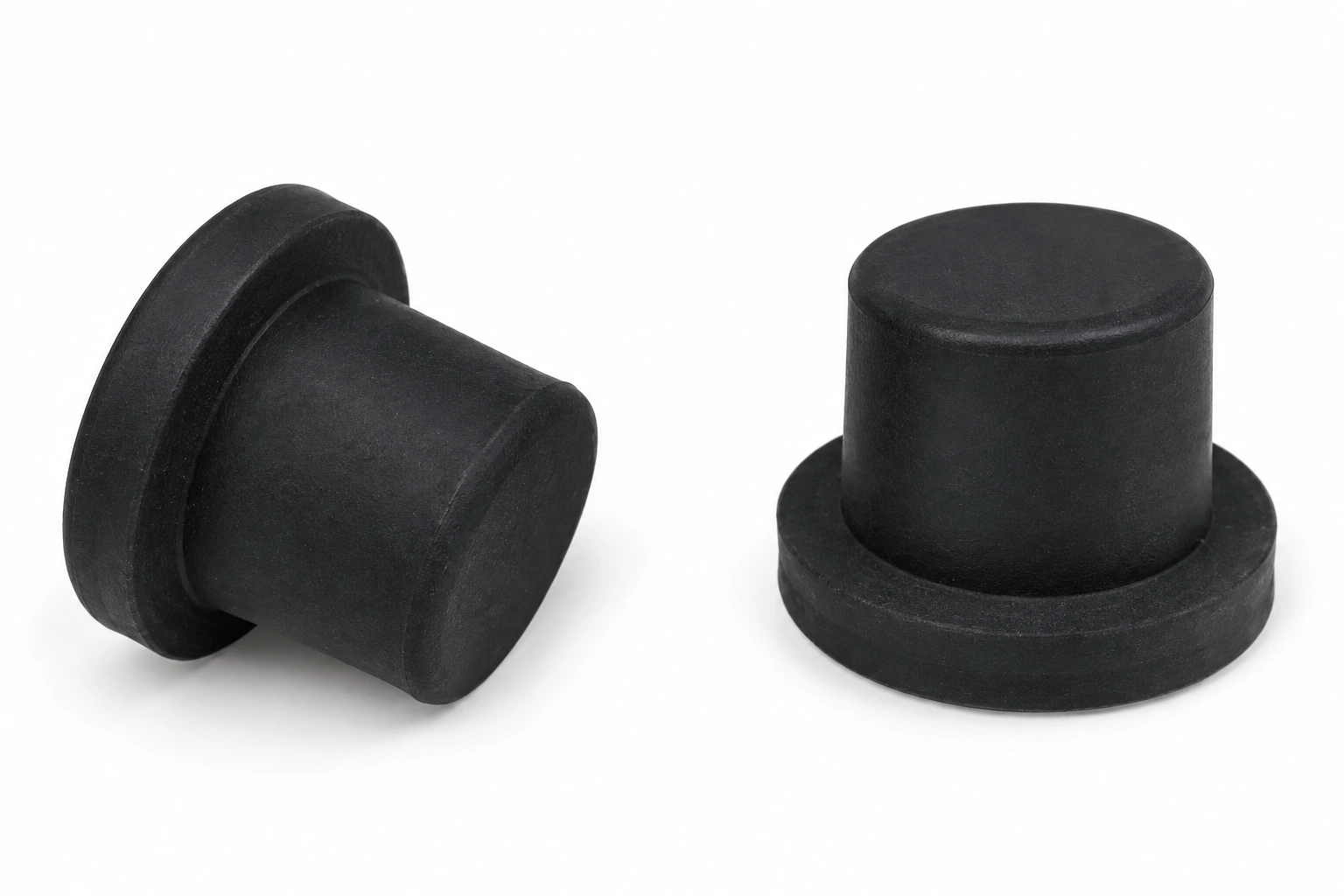
Need a different fit? Share the opening dimensions, mating profile and intended use for a custom size.
Discuss Your RequirementsProduct specifications
- Product form
- Removable closure fitted inside an opening
- Application focus
- Bottle necks. Size the part against the selected assembly.
- Dimensions to confirm
- Opening diameter, closure profile, insertion depth and exposed grip. Match these to bottle necks.
- Profiles discussed
- Tapered sections. Select the profile that matches the mating part and dimension that section explicitly.
- Contact conditions
- Air, other gases and lubricating oil: define concentration, temperature and contact time, then check compatibility with the chosen compound.
- Exposure to evaluate
- Heat and cold cycling and oil splash. Validate the selected material under the combined conditions.
- Seating check
- Check the sealing contact around the opening and the force needed for insertion and removal.
Need a quote or a custom part?
Send your requirements, drawings or samples to discuss standard and custom silicone rubber parts.
Email us[email protected]