
Rubber tube cap
Rubber tube cap allow the sections of tubes or pipes to adapt to their installation space, size, or shape. Suppose you need tubing or piping of more length than the installation space. In that case, you’ll need to cut it into smaller segments and connect them into a suitable network of pipes or tubes. To interconnect such a tubing network, we need tube caps, which are chiefly made of rubber but can also be made of other substances like plastic or steel. Additionally, suppose the pipe or tube structuring needs to be laid out in an area with dead-ends at a corner. In that case, you’ll need a 90° restructuring, which also requires tube caps. Arubber tube capalso helps regulate the flow of liquid coursing through the tubes or pipes. If not for these caps, it would be impossible for the liquid to flow around sharp turns, steep angles, or sharp corners.
Therubber tube caps can be attached to tubes or pipes either via slip fit;
that is, using sheaths that slip or fit into one another, or threads;
that is, screwing and fastening the different pieces together, they form a connection. Connectors can be classified as male or female, depending on whether they fit inside the tubes or outside (making lines inside them).
If the tubes are made of plastic, both slip fit and threaded tube caps are used. However, if the tubes or pipes are made of metal, only a threadedrubber tube capis used.
On top of that, different sealers are used to seal off the connections made by threaded and slip-fitrubber tube caps. Threaded tube caps are usually sealed with a regular plumber’s tape wrapped firmly over the joint. In contrast, slip-fit tube caps are filled with a fast-drying cement to fix the connecting joint in place. Thus, it is essential to choose the type of tube caps before using them to lay out your tubing structure because threaded caps can be disassembled easily by removing the tape and unscrewing,
but slip fit tube caps permanently connect the tubing structure and can’t be disassembled.
All dimensions are in mm
Rubber Cap Size Catalog
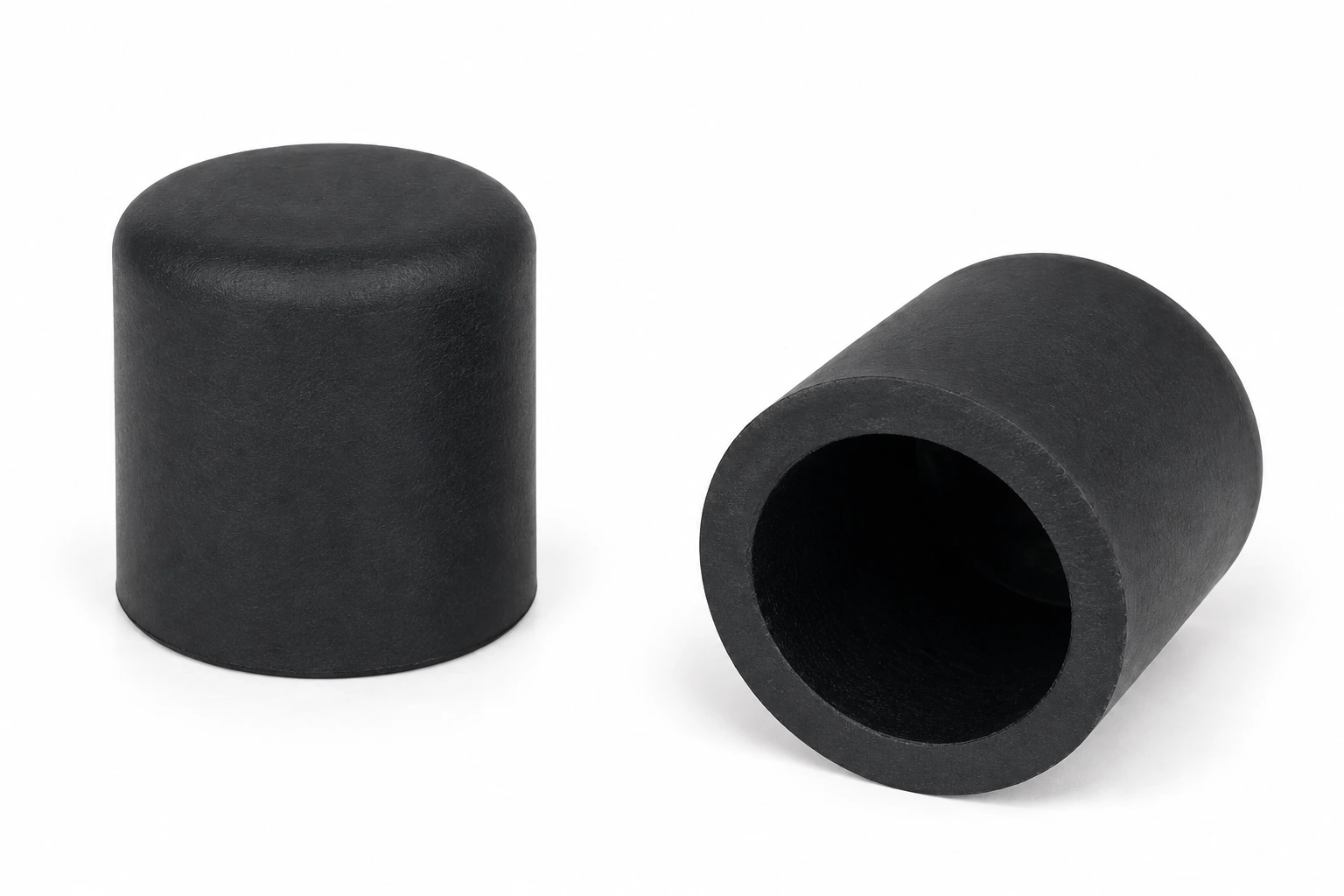
Compare the internal and external dimensions of rubber caps against the part being covered.
Custom colors are available to your Pantone color code. Include the code in your inquiry.
Rubber Caps-RSE
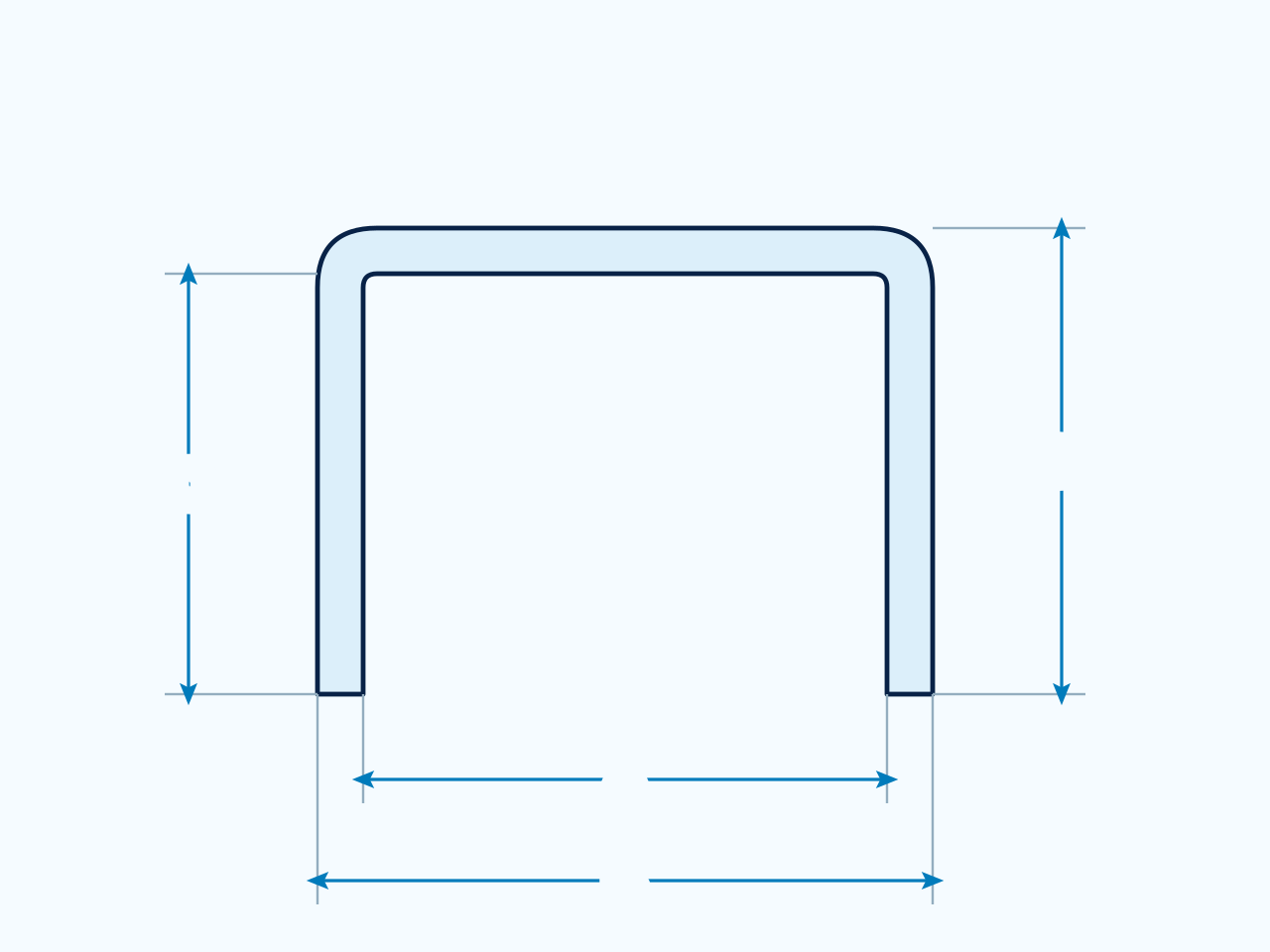
Compare A (inner diameter), B (outer diameter), C (inner depth) and D (total height), in mm.
Need a different size? Share your drawing, mating dimensions and intended use to discuss a suitable part.
Discuss Your RequirementsProduct specifications
- Product form
- Protective cover fitted over a component end
- Application focus
- Pipe or conduit ends. Size the part against the selected assembly.
- Dimensions to confirm
- Mating outside dimensions, cover depth, cavity and wall thickness. Match these to pipe or conduit ends.
- Cover retention
- Check the installed overlap and pull-off force on the actual end profile.
Need a quote or a custom part?
Send your requirements, drawings or samples to discuss standard and custom silicone rubber parts.
Email us[email protected]