
Rubber Tube End Caps
The rubber tube end caps are usually used for pipes that carry water or some liquid that has to be made non-leak able. These rubber tube caps are also being used to make the gas safe from leakage.
They are being designed in different sizes because they are being used in many various things.
Many companies make sure that they made the caps with every kind of diameter to be fixed at any diameter.
The large buyer of the rubber tube end caps is the manufacturing companies because they required it for many purposes. They needed it for every kind of diameter so that the gases and oil do not leak from anywhere.
Usually, the water tankers carry a vast amount of water in them. They have to drop the water in the water tanks of the homes. So sometimes you have seen that their wolves get rusted. The water starts to leak from the tanker, so these rubber tube end caps are used to make the water safe from leakage.As you can see nowadays, metal pipes are being used to fit the houses’ water lines and are being replaced with plastic pipes.These rubber tube end caps make the work easier for every plumber or owner because they can use the rubber tube end caps at the starting or at the end of the pipe where it is being required.It doesn’t require any extra work because they come in different sizes as well. It is more reliable than the metal end caps because the metal caps are usually tough to find and are not long-lasting. Still, the?rubber tube end caps are durable and can be easily found in the market.
All dimensions are in mm
Rubber Cap Size Catalog
Compare the internal and external dimensions of rubber caps against the part being covered.
Rubber Caps-RSE
Compare A (inner diameter), B (outer diameter), C (inner depth) and D (total height), in mm.
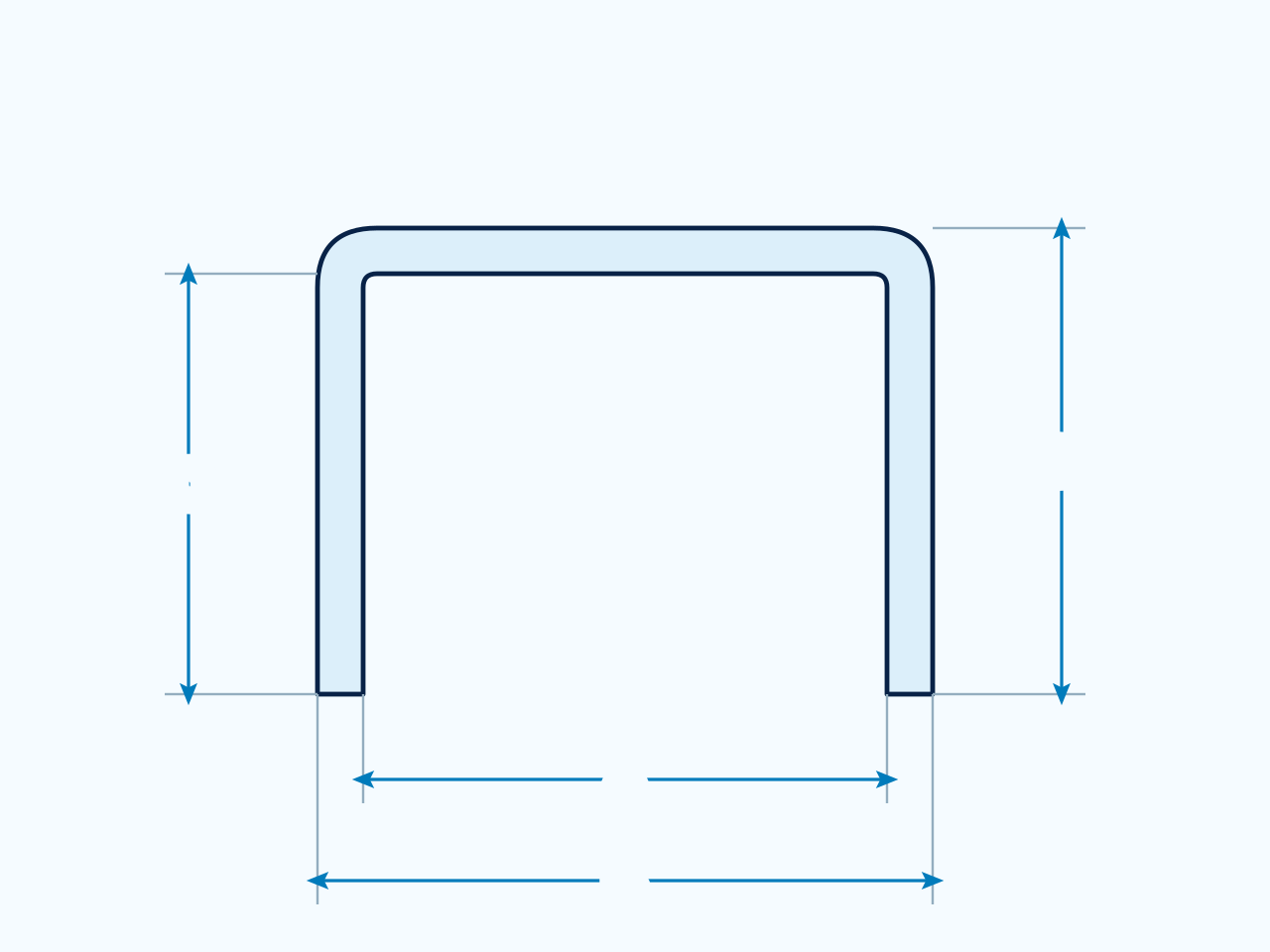
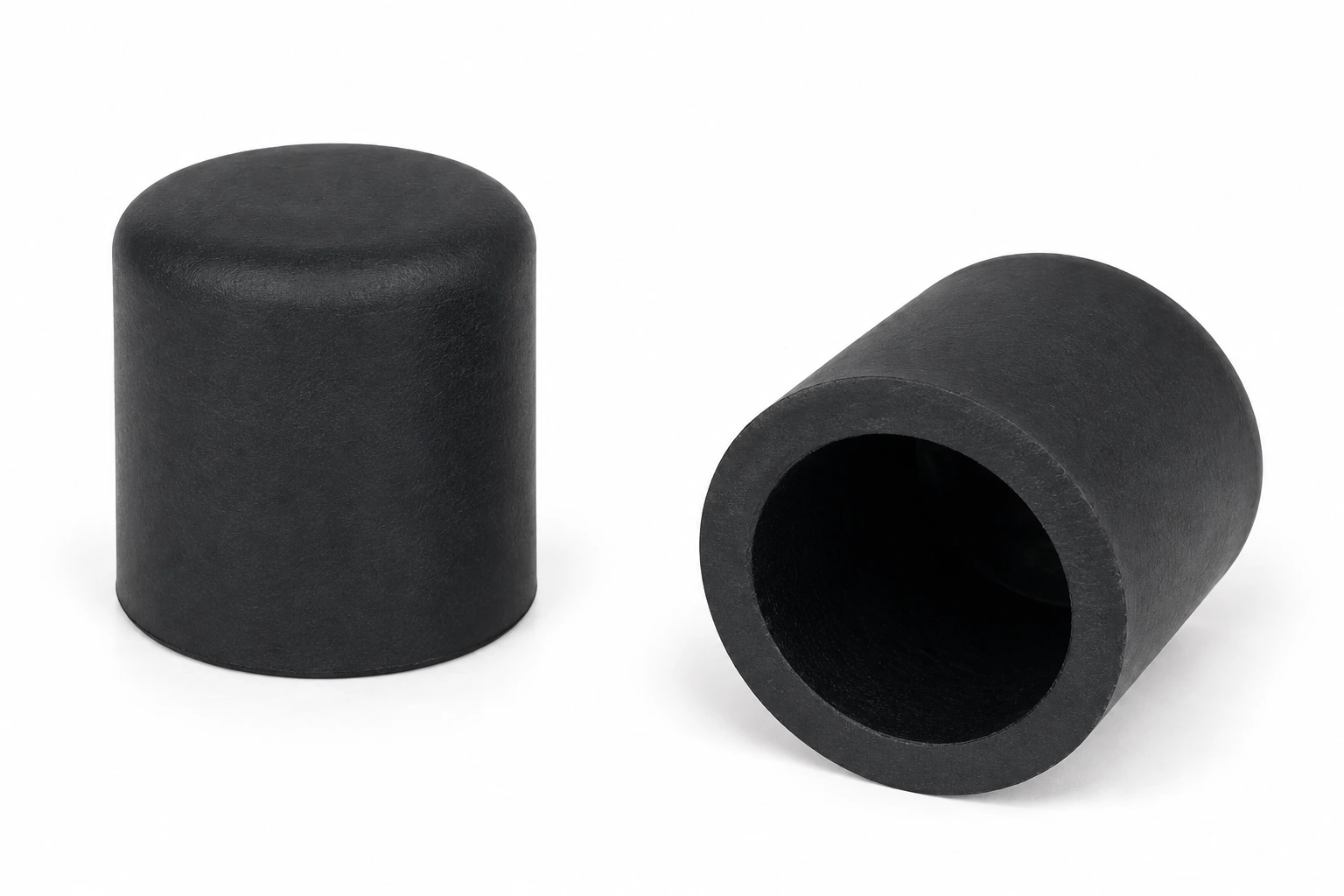
Need a different size? Share your drawing, mating dimensions and intended use to discuss a suitable part.
Discuss Your RequirementsProduct specifications
- Product form
- Protective cover fitted over a component end
- Application focus
- Pipe or conduit ends. Size the part against the selected assembly.
- Dimensions to confirm
- Mating outside dimensions, cover depth, cavity and wall thickness. Match these to pipe or conduit ends.
- Exposure to evaluate
- Oil splash. Validate the selected material under the combined conditions.
- Cover retention
- Check the installed overlap and pull-off force on the actual end profile.
Need a quote or a custom part?
Send your requirements, drawings or samples to discuss standard and custom silicone rubber parts.
Email us[email protected]