
Rubber vacuum hose tubing
Rubber vacuum hose tubing is an item that is being used in vacuum systems, especially in vehicles and machinery manufacturing businesses. They can withstand all the pressure that is being built up as well as the liquids inside. So, besides the pressure, they offer great water and dust resistance. However, to make these items work right, you will need to fit them perfectly because otherwise there will be air coming inside ruining the vacuum formation. These items can be made from various materials. However, the rubber is most commonly being used because of its characteristics, and the ability to be easily modified and upgraded.
The difference between regular rubber hoses and rubber vacuum hose tubing is their elasticity and the thickness of their walls. These characteristics are essential for the functioning of these systems since the pressure has to be endured. In case the vacuum tubing needs to be placed near a heat source, the rubber can be modified using synthetics polymers into a product that withstands heat better. In-vehicle production and other various industries, the vacuum hose tubing is being smooth since its length is being fixed. While on other machines, the hose can be wavy, with all of the circles helping it increase its length if needed.
Depending on the diameter of its lumen, these products are being separated into hoses for larger ones and tubing for tinier objects. There are myths that you can stretch the tube in case you have bought a smaller one. However, that is not true, and you should always make sure that you get the correct tube dimension. While there are standard openings, you should still do a step forward and measure the connection points. That way, you will be sure that you have gotten the correct vacuum hose that will suit your project.
Rubber Hose Size Catalog
Compare tube bore, outside diameter and available wall thickness. Confirm material compatibility and operating requirements for the selected hose.
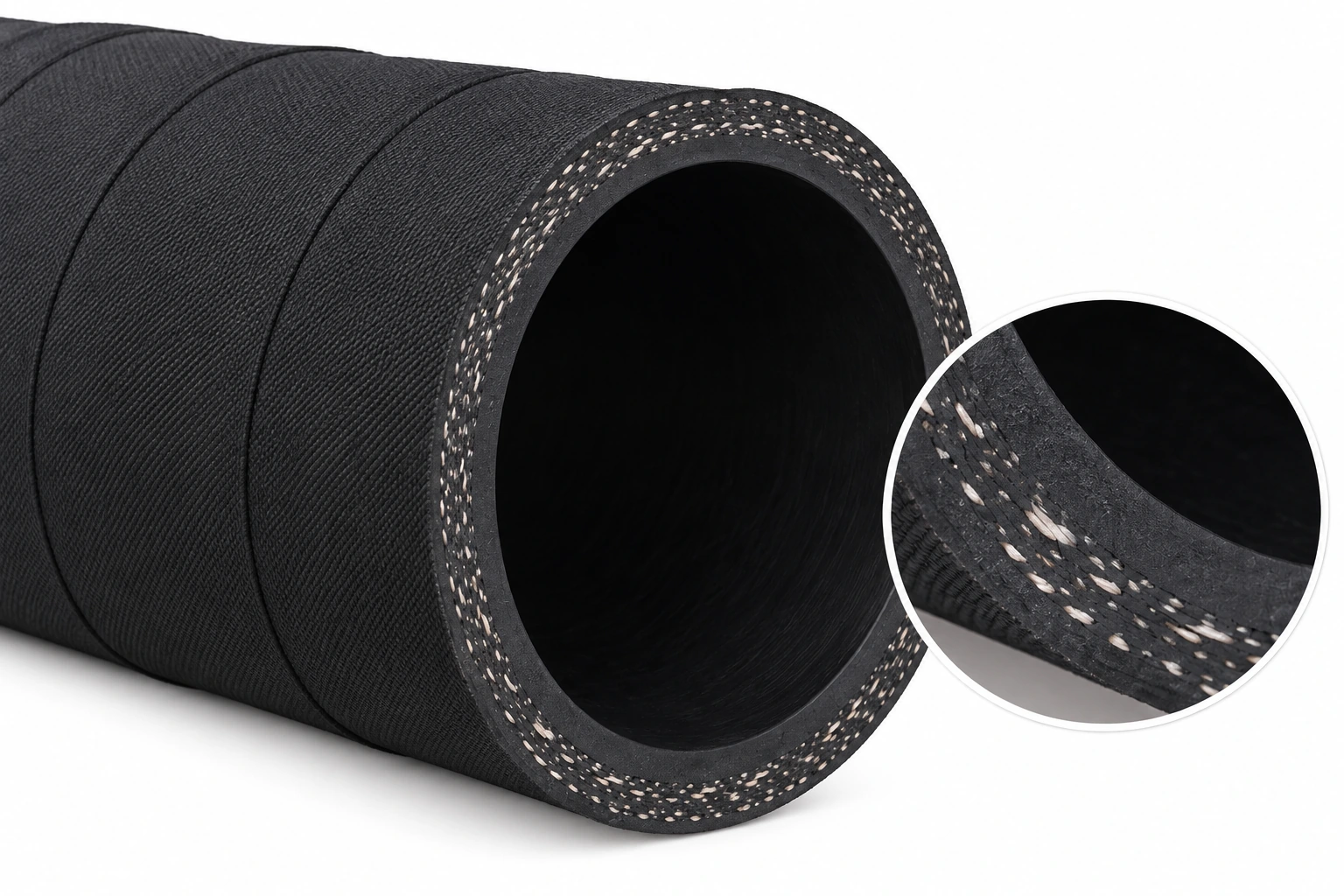
Rubber Hose
Compare Inside Diameter and Outside Diameter in mm. The cross-section drawing identifies the bore and outside diameter; confirm the selected tube material and service requirements.

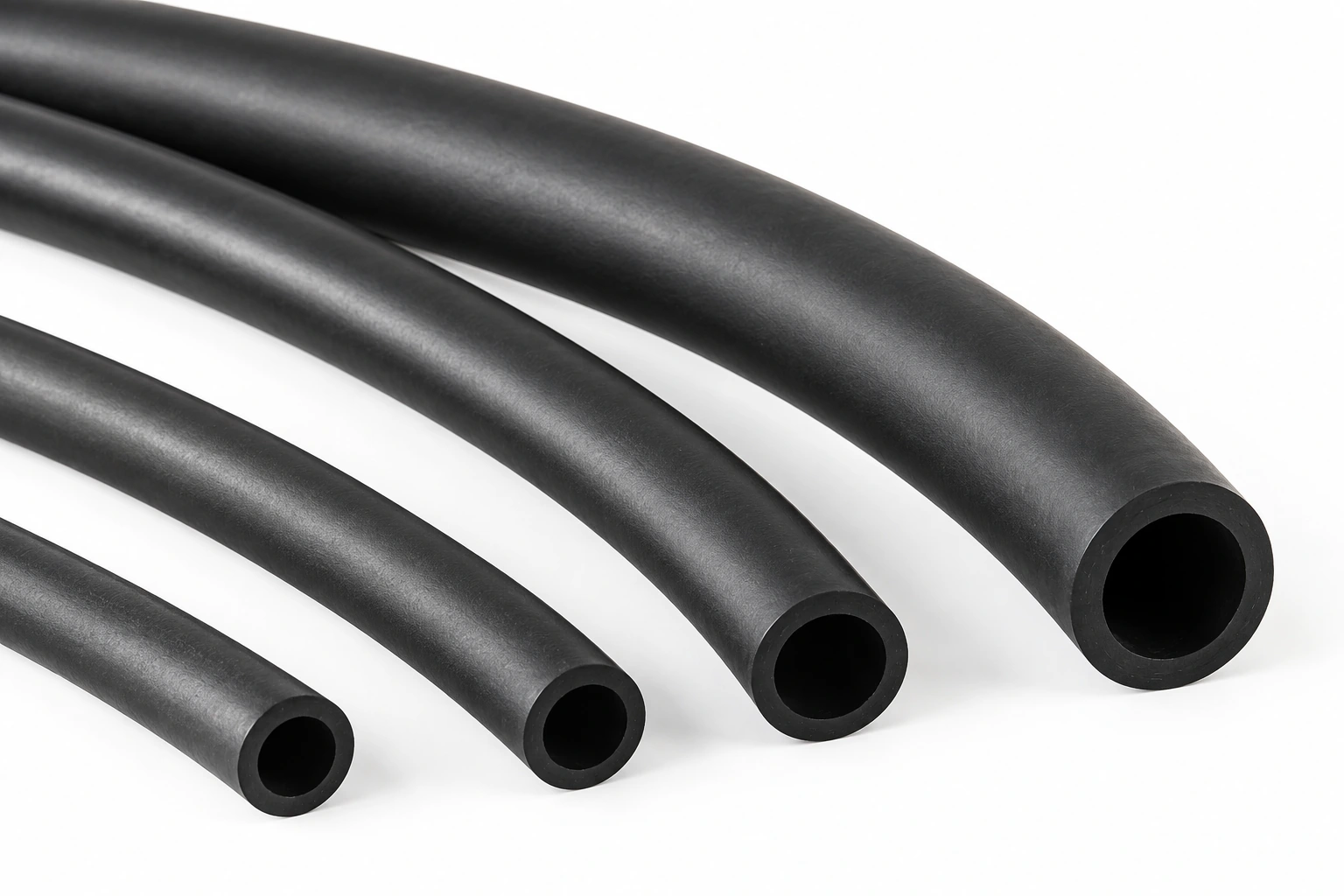
Fluororubber Hose
Compare Inside Diameter and Outside Diameter in mm. The cross-section drawing identifies the bore and outside diameter; confirm the selected tube material and service requirements.
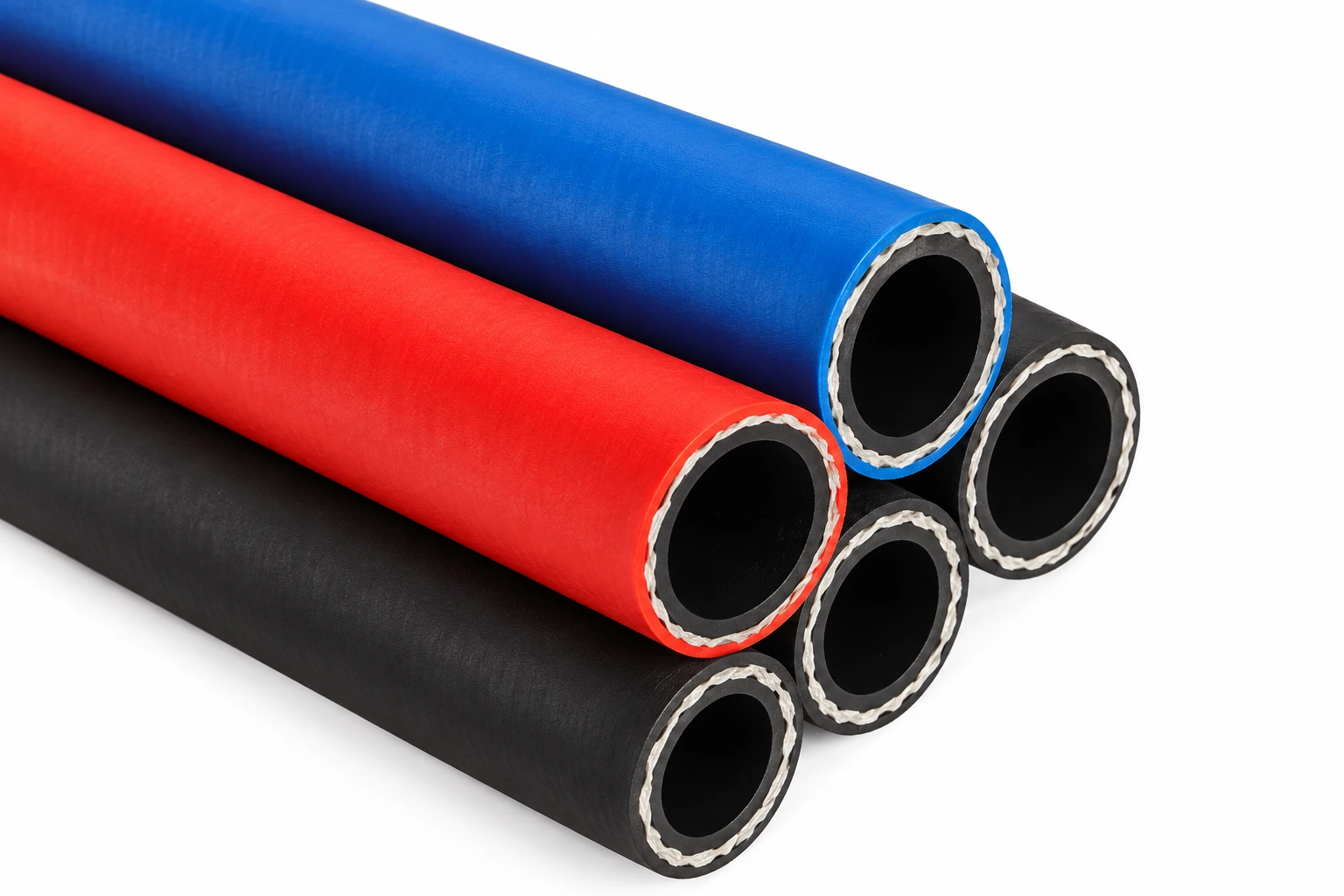
Colourful rubber high pressure hose
Compare Inside Diameter and Outside Diameter in mm, together with the listed Thickness and Colour. The cross-section drawing identifies the bore and outside diameter; confirm the selected tube material and service requirements.
Need a different size? Share your drawing, mating dimensions and intended use to discuss a suitable part.
Discuss Your RequirementsProduct specifications
- Product form
- Hollow elastomer tubing for a fitted line or sleeve
- Application focus
- Vehicle hose runs and industrial fluid lines. Size the part against the selected assembly.
- Dimensions to confirm
- Inside diameter, outside diameter, wall thickness and cut length. Match these to vehicle hose runs and industrial fluid lines.
- Vacuum duty
- Specify absolute pressure, hold time and temperature; check bore collapse at the installed bend radius.
- Contact conditions
- Water and air: define concentration, temperature and contact time, then check compatibility with the chosen compound.
- Exposure to evaluate
- Dust or debris. Validate the selected material under the combined conditions.
- Line layout
- Check bend radius, unsupported spans and clearance at both connections.
Need a quote or a custom part?
Send your requirements, drawings or samples to discuss standard and custom silicone rubber parts.
Email us[email protected]