
Rubber vibration dampener
While most vibration isolators get the job done of isolating vibration waves and making them deflect inside the component, they are not the best component for use this way. There are several manufacturers in the world that are still using vibration isolators to keep your device away from vibration. The problem with that is that vibration isolators can break apart easily as they are designed to accommodate the vibrations between two parts.
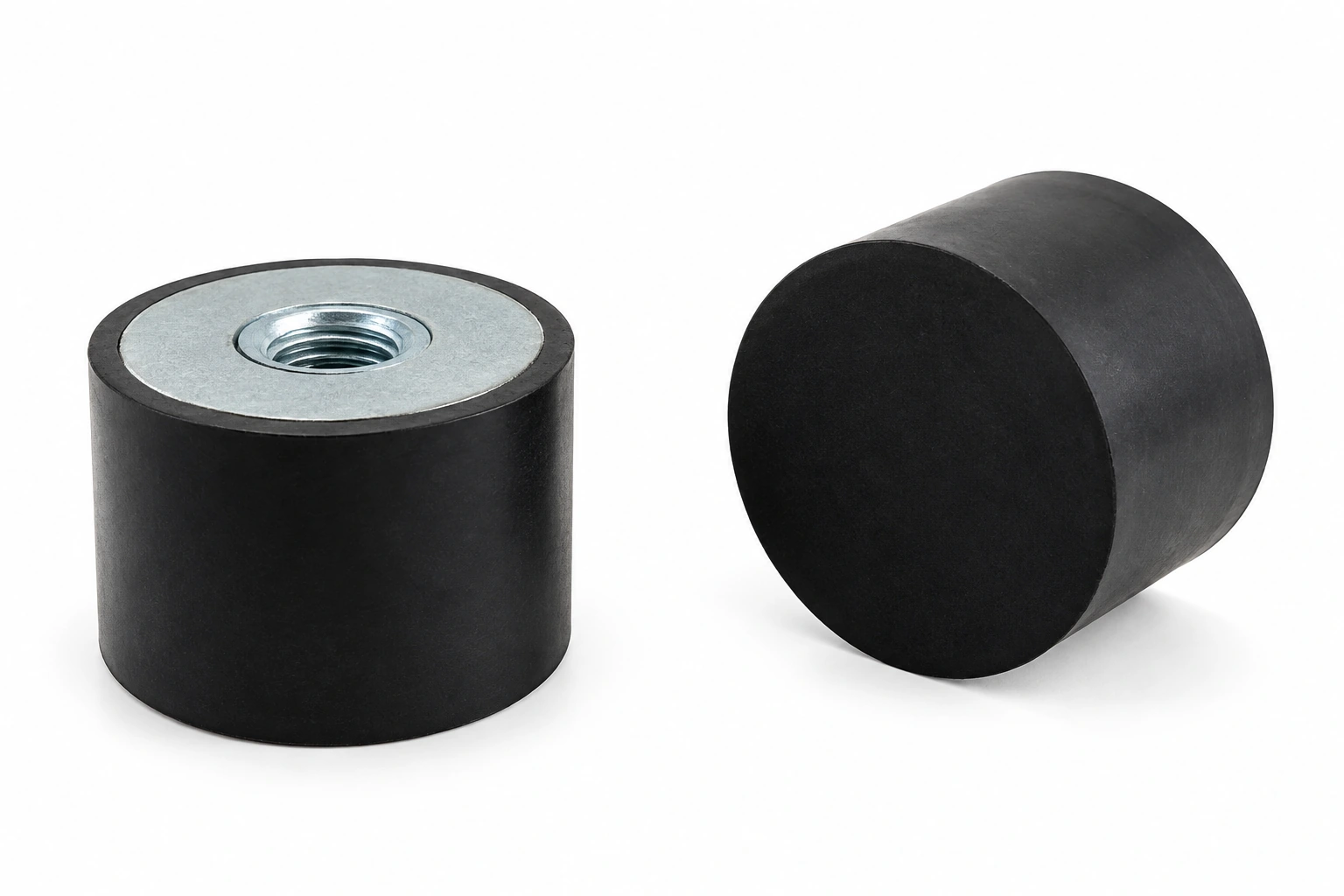
Most manufacturers who obtain an isolator often end up getting the wrong isolator device because they are unaware that they should have gone for another component instead. There is, in fact, another isolator device which can not only serve the requirements of most manufacturers easily but also provide them with security. This component is our rubber vibration dampener, a part that is specially designed to work in high-working environments to inhibit vibrations.
Our rubber vibration dampener is made from one of the highest quality of rubbers that is designed in such a way that it can control vibrations within a constantly working environment. Our rubber vibration dampeners are also considerably different from standard isolators in functioning. Unlike the isolators that can absorb vibrations from both sides, a rubber vibration dampener will absorb all the vibrations from the machine and then redirect it to the environment.
Our rubber vibration dampeners are often used to absorb vibrations from one side and then release the energy in a different form for dissipation to ensure that the vibrations generated in electrical components and machines stay at a minimum. While most of our rubber vibration dampeners have the ability to inhibit vibrations and vibration frequency waves, we can also create special custom rubber vibration dampeners for you as per your preference.
The quality of our rubber vibration dampeners is unparalleled because we are one of the leading rubber product manufacturers in the world.
Vibration Mount Size Catalog
Compare five mounting arrangements using the matching drawing, thread and dimensional data. Load and compression columns retain their stated units; confirm operating conditions for your installation.
Vibration Damping Mounts A
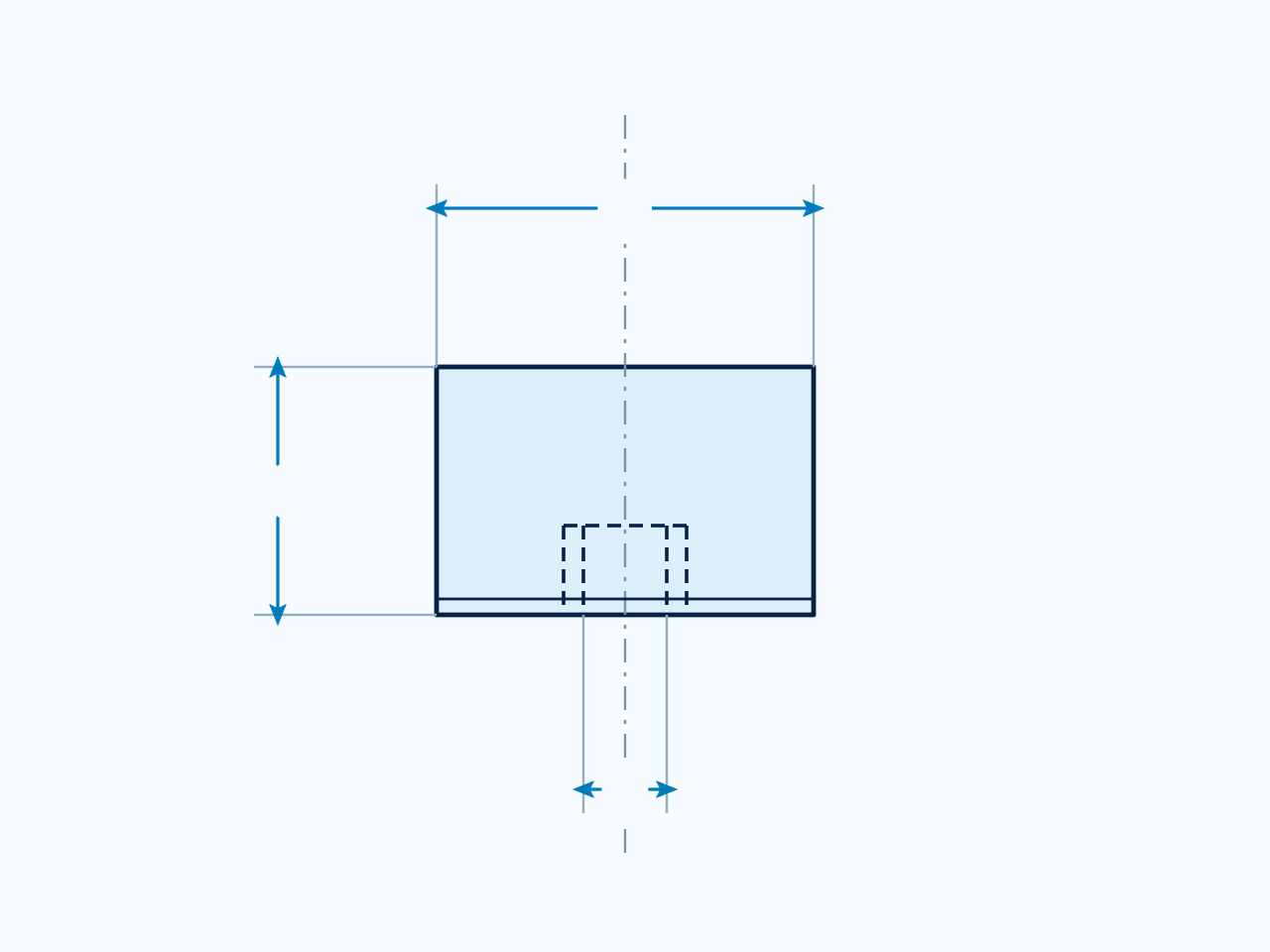
Match D, H and thread d to the drawing, including stud length L. Dimensions are in mm; thread designations, load in kg and compression in mm follow the table headings. Confirm load direction and operating conditions for your installation.
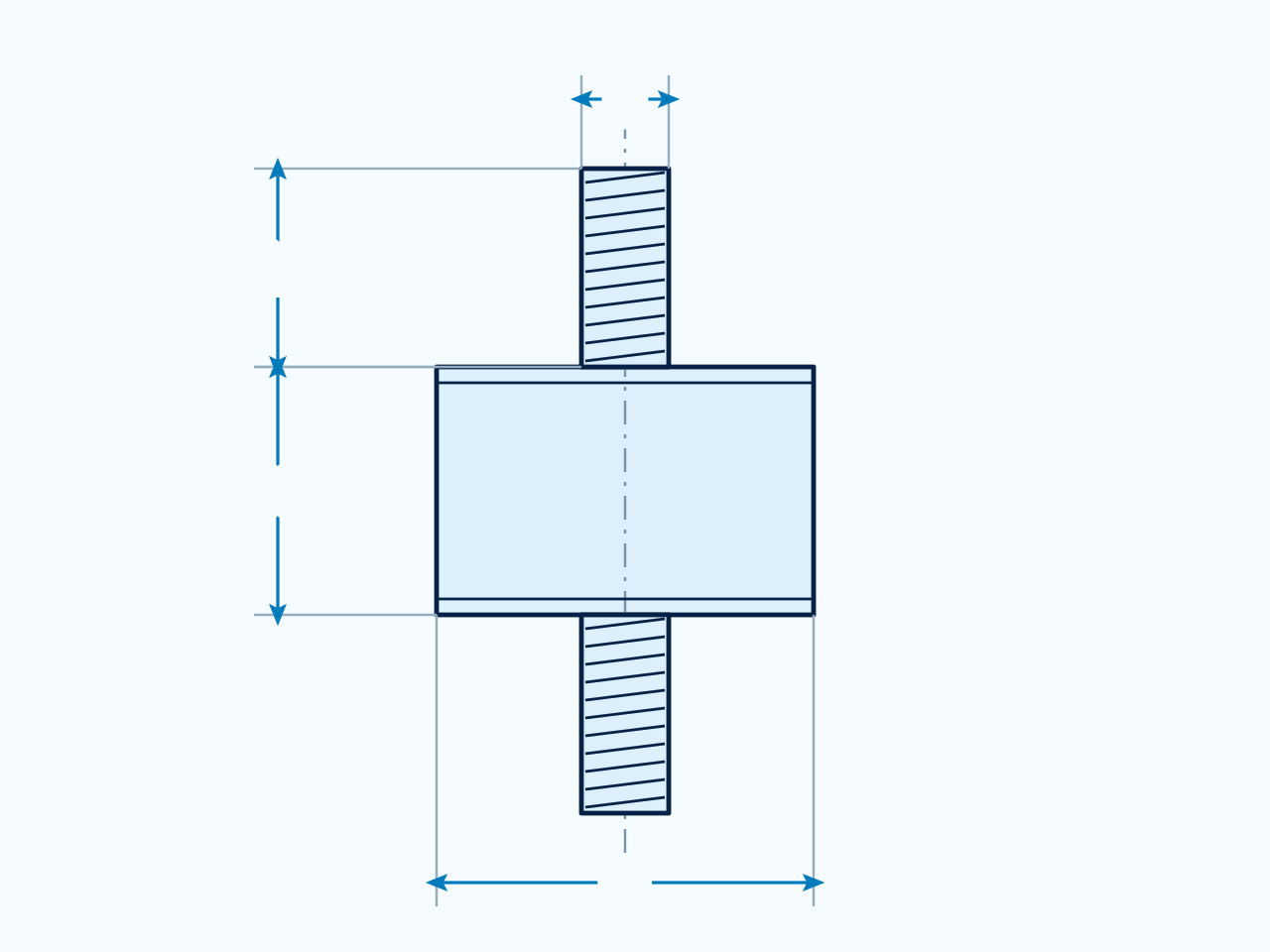
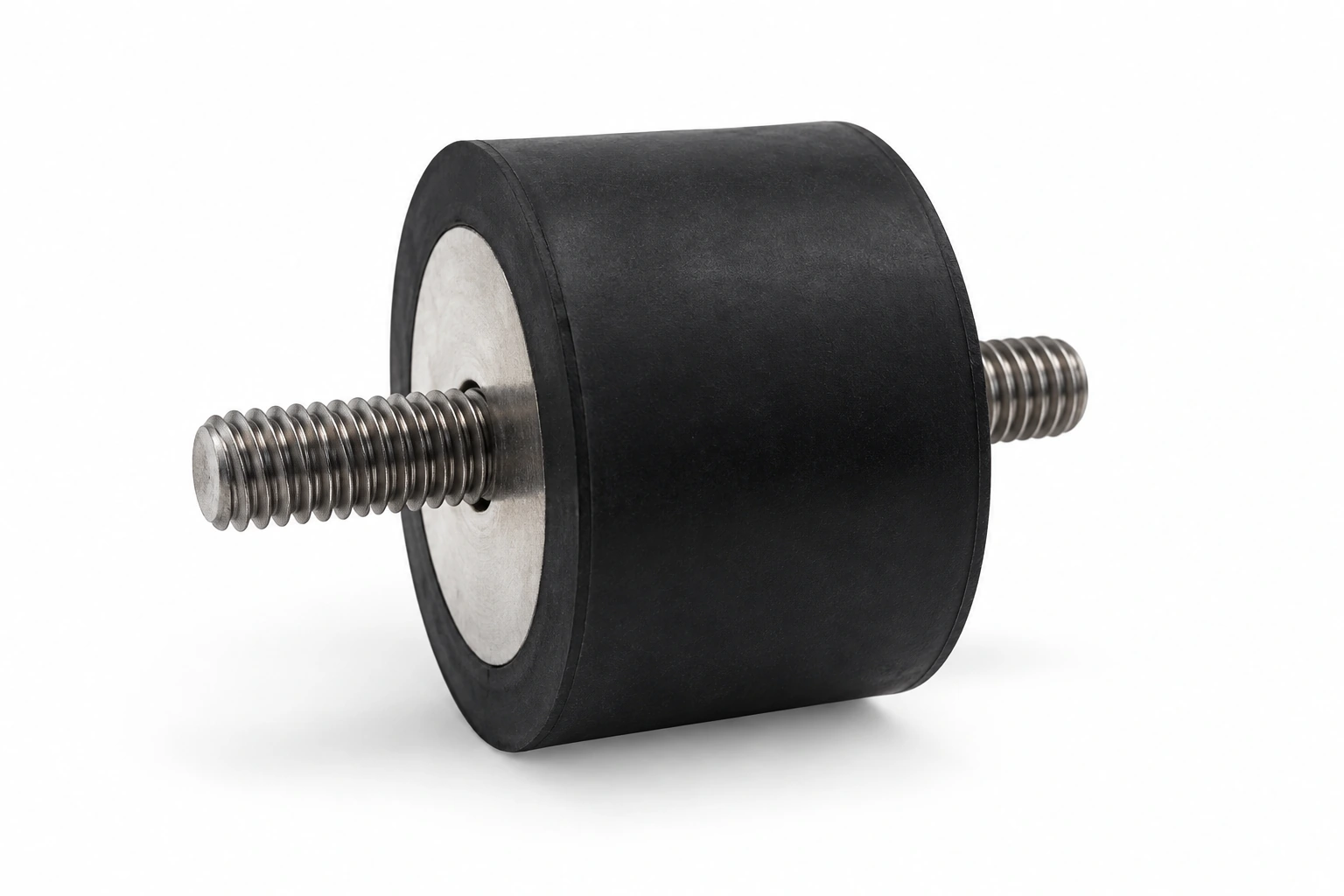
Anti-Vibration Rubber Mounts B
Match D, H and thread d to the drawing, including stud length L. Dimensions are in mm; thread designations, load in kg and compression in mm follow the table headings. Confirm load direction and operating conditions for your installation.
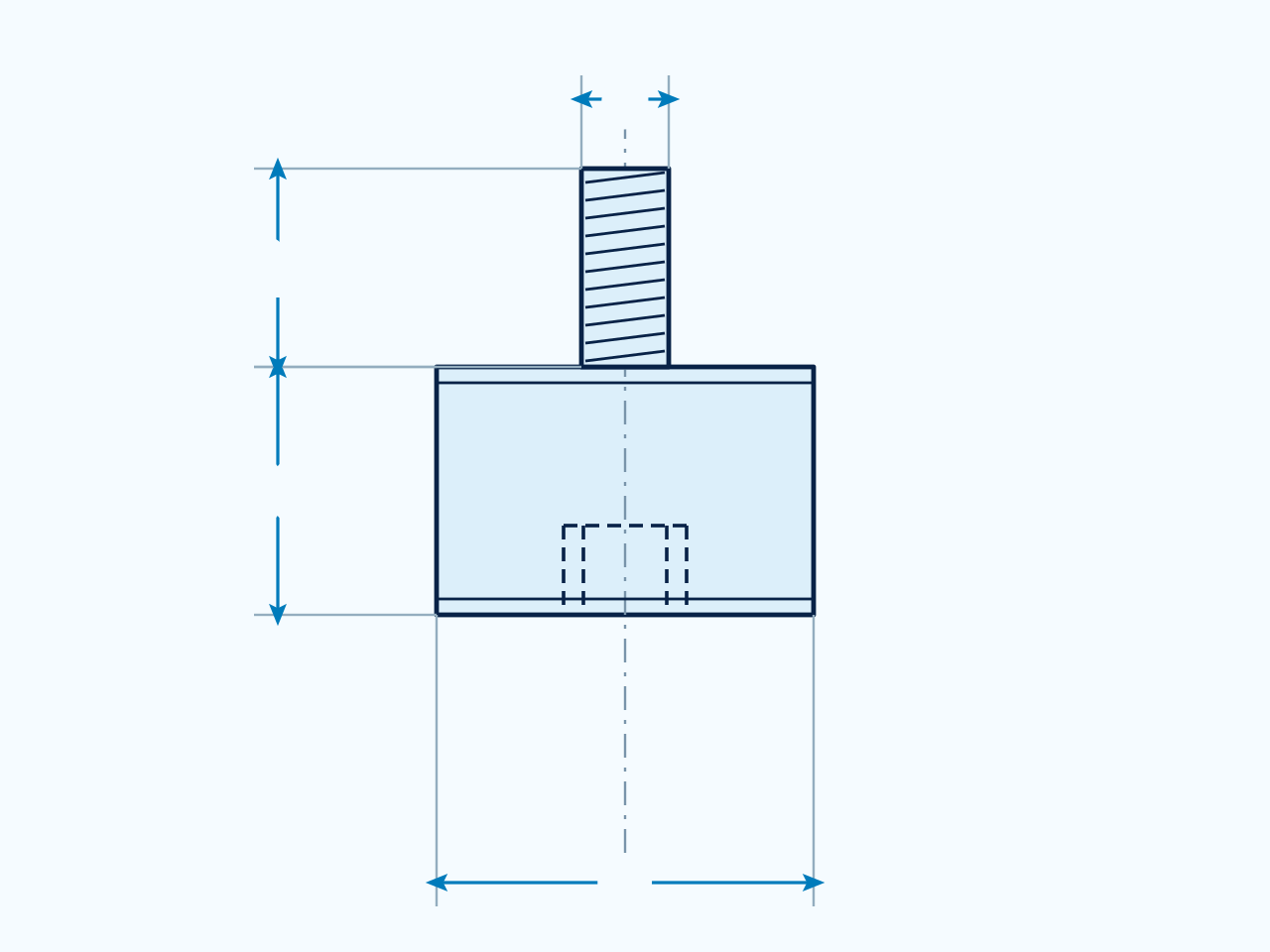
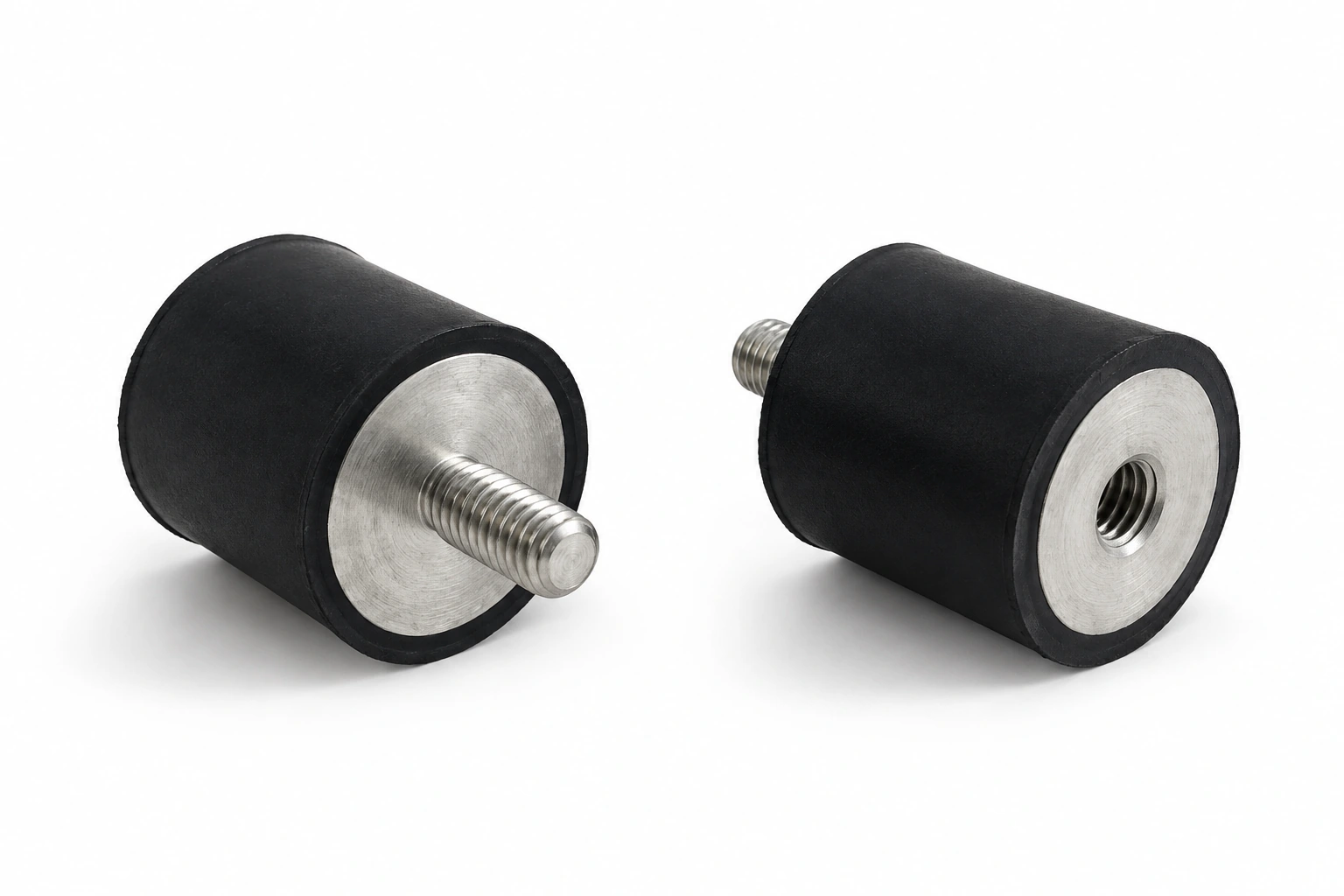
Vibration Isolators C
Match D, H and thread d to the drawing. Dimensions are in mm; thread designations, load in kg and compression in mm follow the table headings. Confirm load direction and operating conditions for your installation.
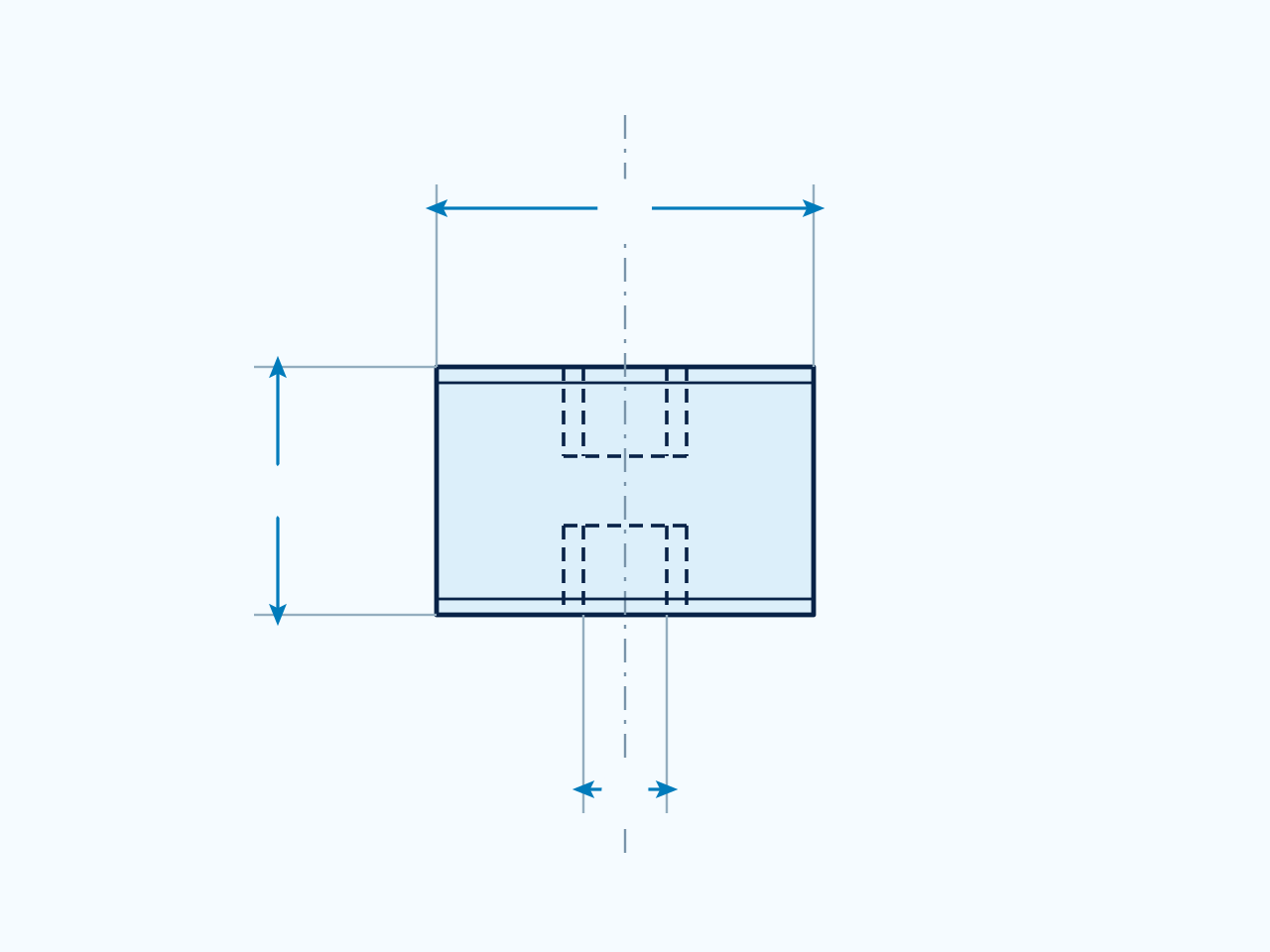
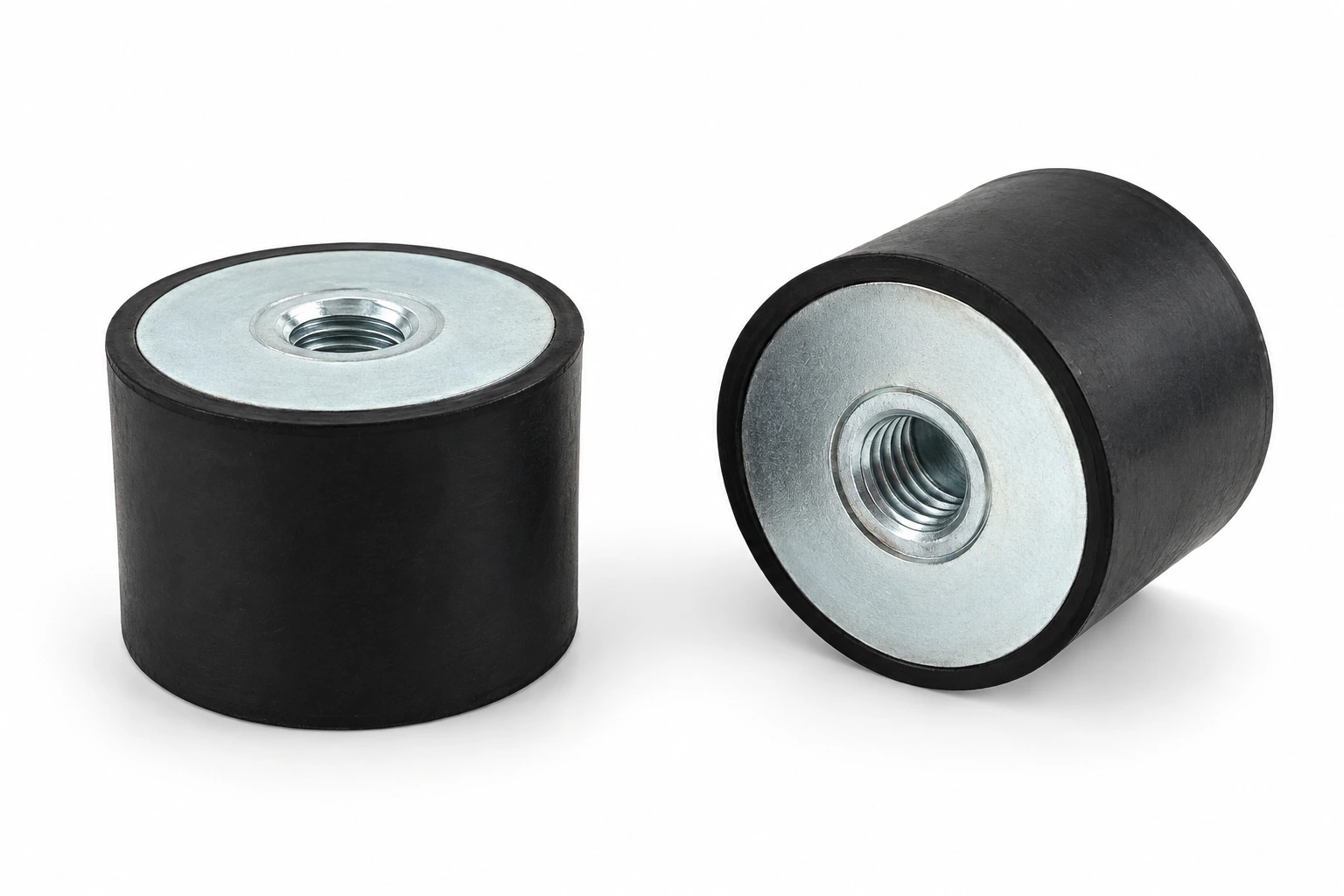
Rubber Mountings D
Match D, H and thread d to the drawing, including stud length L. Dimensions are in mm; thread designations, load in kg and compression in mm follow the table headings. Confirm load direction and operating conditions for your installation.
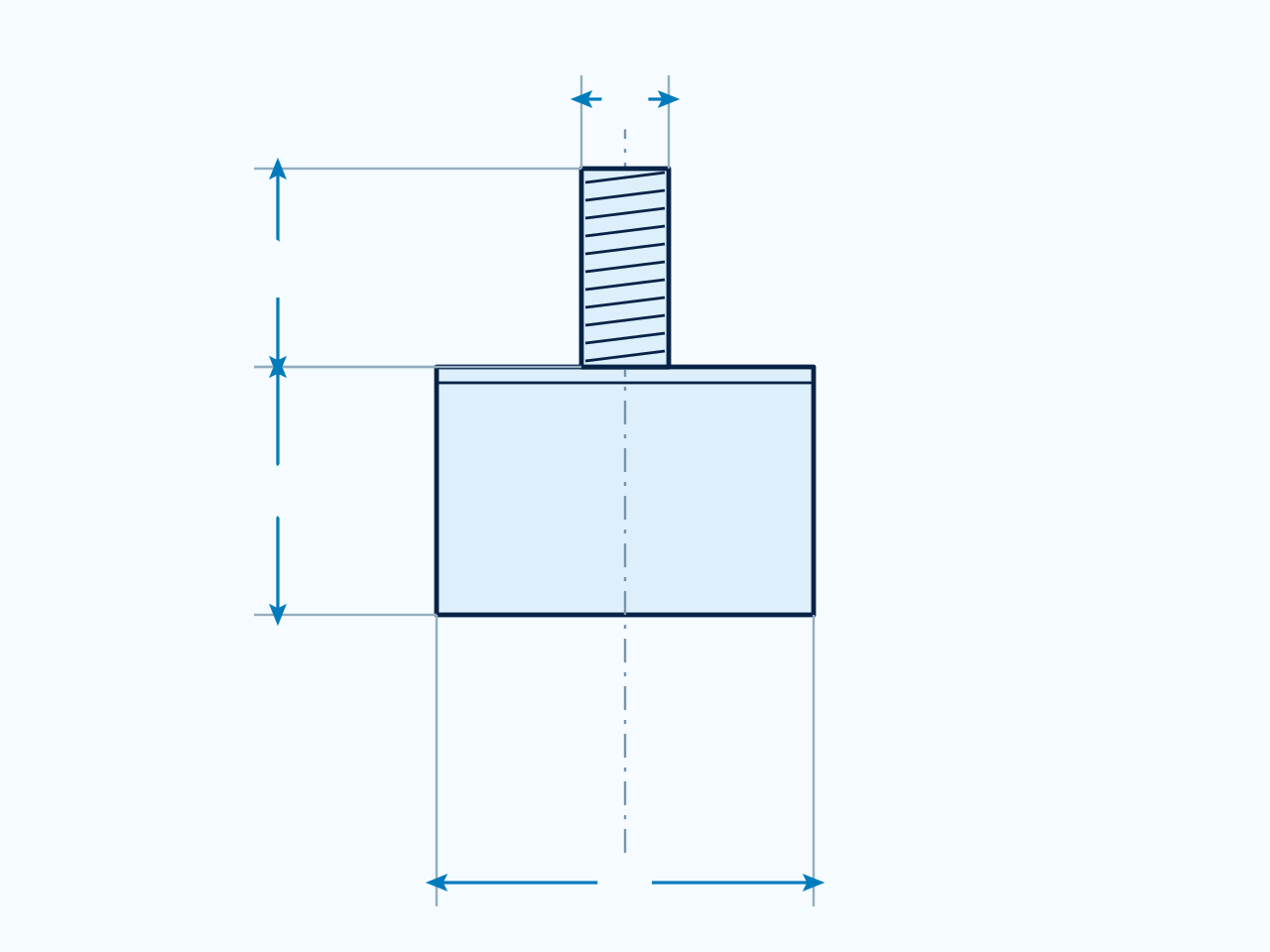
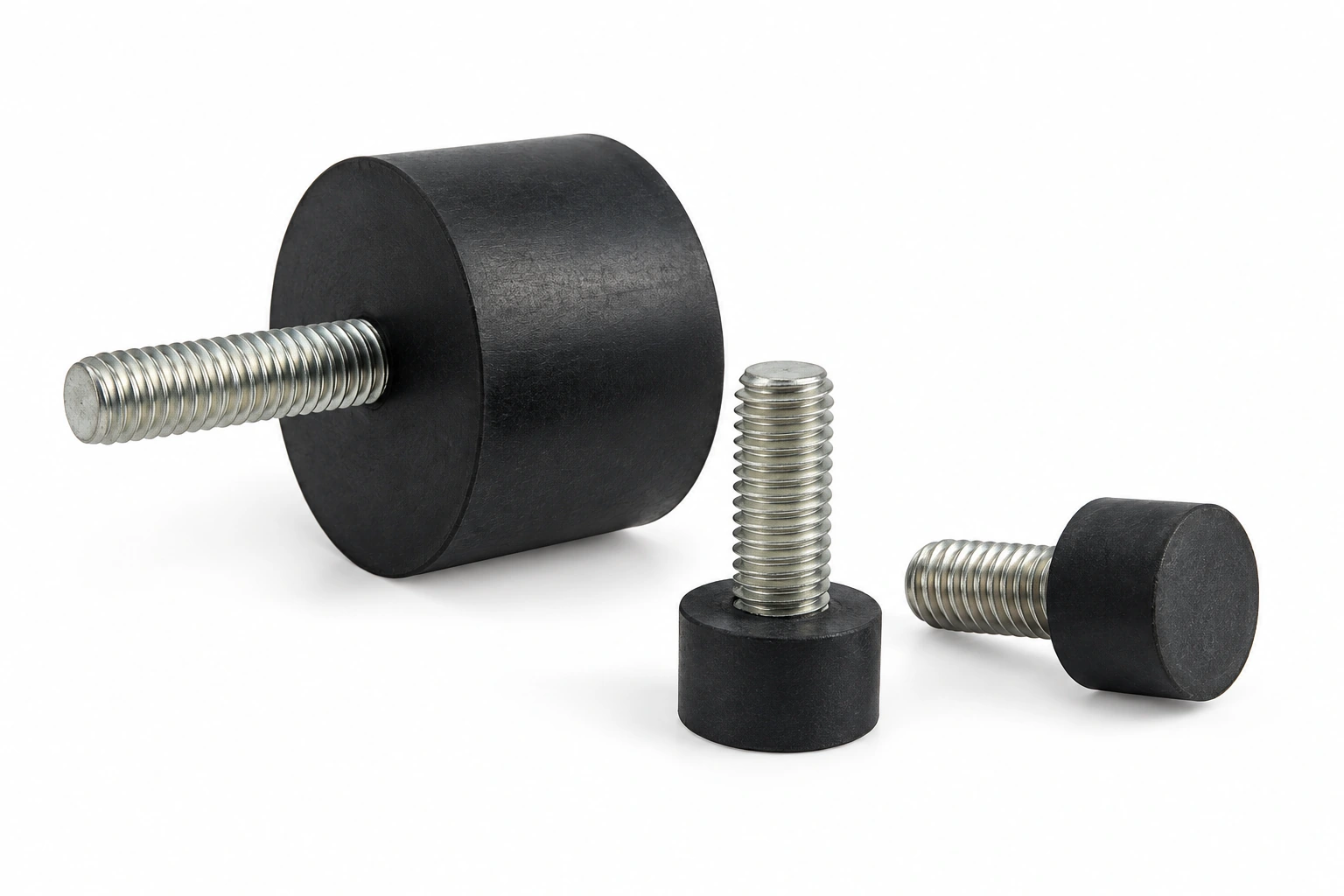
Rubber Vibration Mounts E
Match D, H and thread d to the drawing. Dimensions are in mm; thread designations, load in kg and compression in mm follow the table headings. Confirm load direction and operating conditions for your installation.
Need a different size? Share your drawing, mating dimensions and intended use to discuss a suitable part.
Discuss Your RequirementsProduct specifications
- Product form
- Elastomer mount between a vibrating assembly and its support
- Dimensions to confirm
- Free and loaded heights, attachment spacing and body envelope.
- Isolation objectives
- Steady vibration. Define a measurable acceptance target on the supported assembly.
- Dynamic selection
- Use the load per mount, excitation frequency and allowed movement to select the mount.
- Damping assessment
- Define whether the aim is limiting transmitted vibration or shortening the decay after disturbance, and measure the assembly response over the operating frequency range.
Need a quote or a custom part?
Send your requirements, drawings or samples to discuss standard and custom silicone rubber parts.
Email us[email protected]