
Silicone Bungs
Do you like beer? Of course, you do – who does not? There aren’t a lot of things as refreshing as a pint of cold beer on a hot summer day, right? Now, would you believe us if we told you that some beers could not have been made if it weren’t for rubber stoppers? That’s right, rubber stoppers, or in this particular case, silicone bungs, are essential for the process of fermentation during the manufacturing process of beer. Silicone bungs offer a tight seal while the beer ferments inside of a flask, keeping the oxygen and potential airborne contaminants out of it, while at the same time, allowing the built-up CO2 to leave the flask. So, the next time you crack open a cold one, keep that in mind.
However, beermakers are not the only ones that use silicone bungs. These silicone stoppers are also present in other industries as well. For instance, they are immensely popular in the chemical industry, and there is pretty much no laboratory or chemical facility in the world that can operate without silicone bungs. Not only do they offer a brilliant airtight seal, keeping the contents inside of the flask, bottle, Erlenmeyer, or vial completely intact, but due to silicone’s low inert nature, you can safely use any of these containers with the silicone bungs in pretty much any environment you choose.
Silicone is naturally resistant to a lot of things. It can withstand both very high and very low temperatures, in the range of 270 to negative 70 degrees Celsius. But, in addition to excellent thermal stability, silicone bungs also offer remarkably low thermal conductivity, meaning it will be very hard for them to get hot or cold. Potentially even more important than that is the low chemical reactivity possessed by these bungs. In practice, that means that the bung won’t interact with the contents inside of the container it is sealing.
Stopper & Plug Size Catalog
Compare four stopper profiles and check the selected part dimensions against your opening and available depth. Each profile has its own drawing and dimension meanings.
Custom colors are available to your Pantone color code. Include the code in your inquiry.
RST T-Shaped Plugs
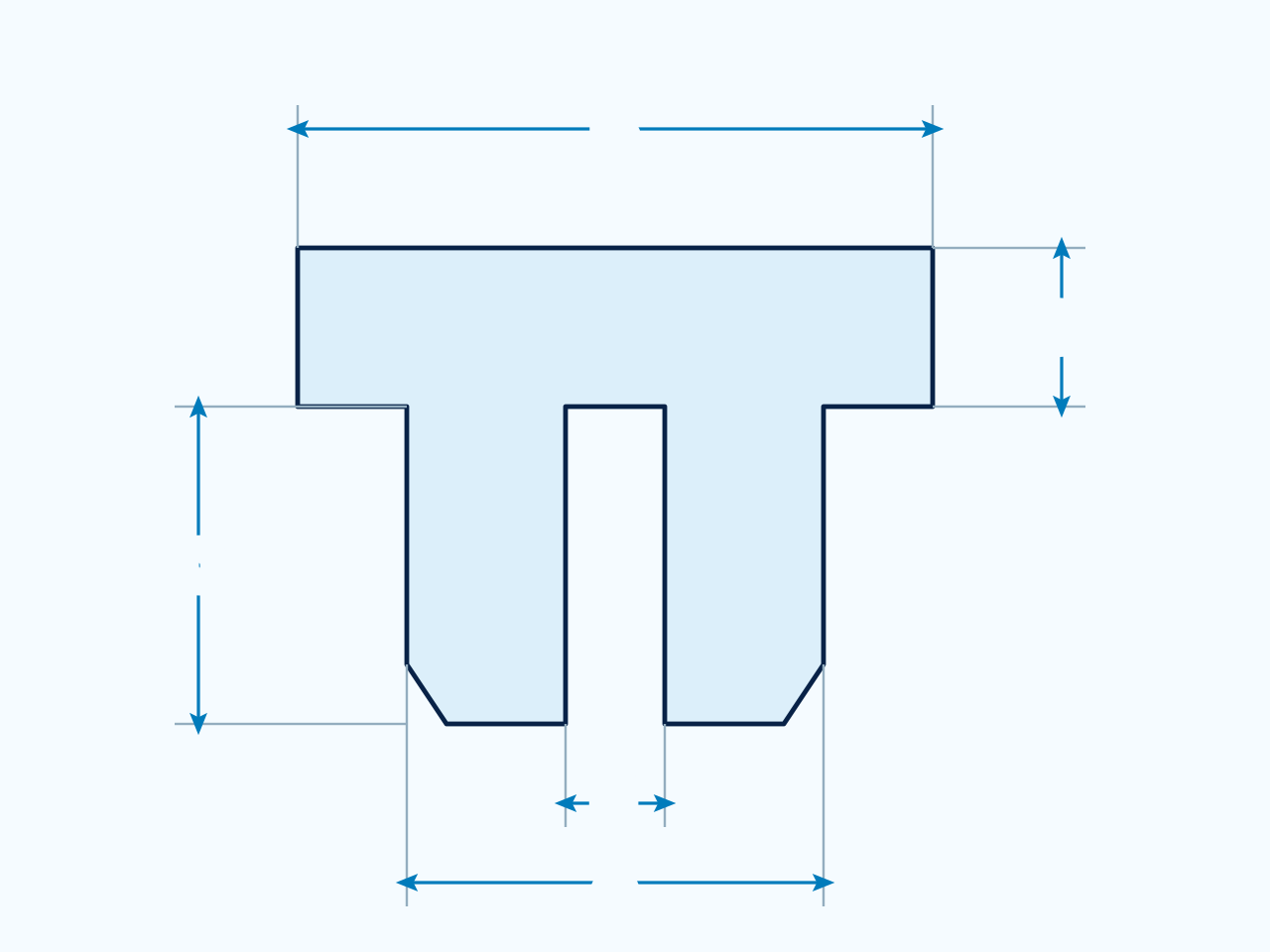
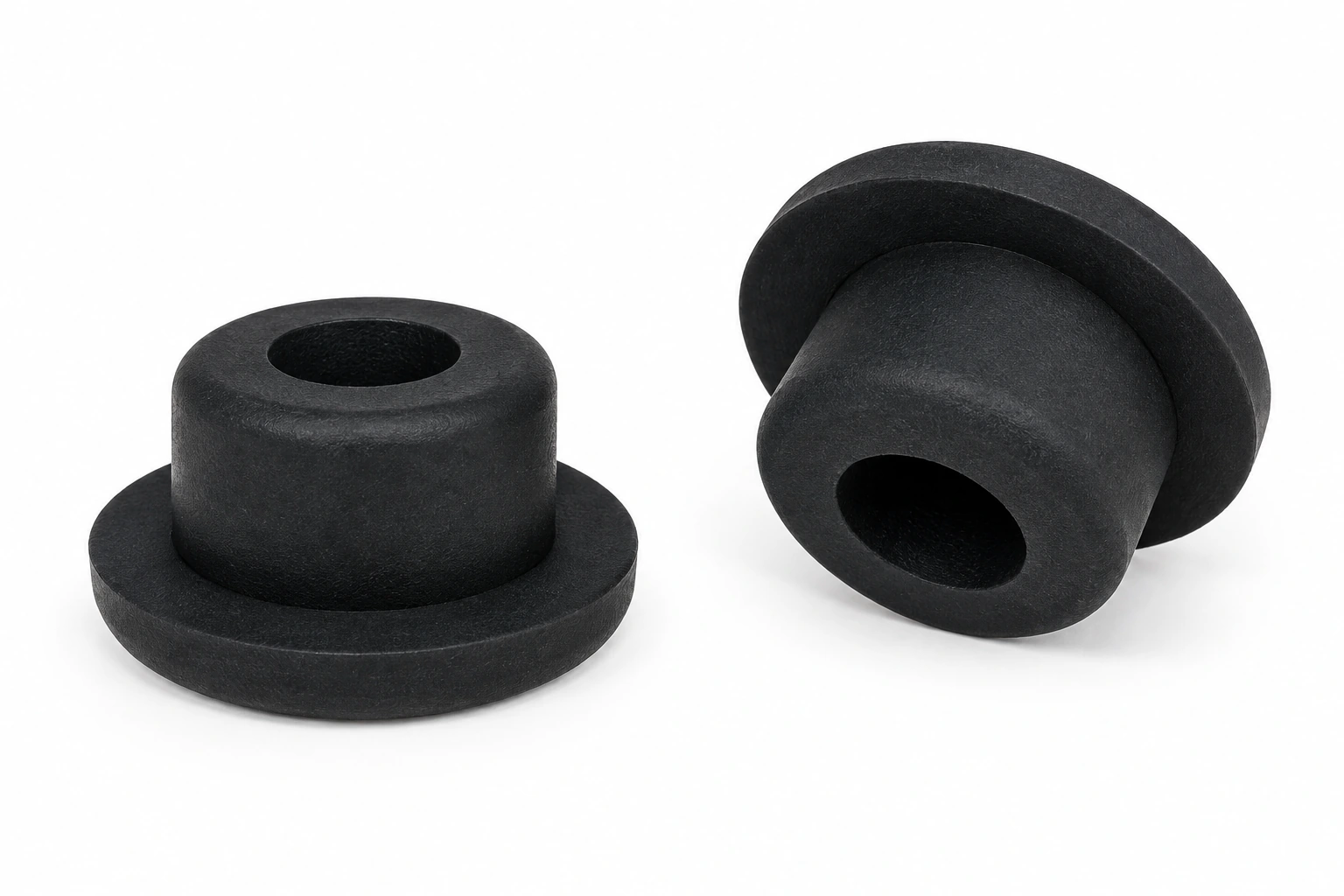
Match stem diameter A, flange diameter B, stem length C and flange thickness D. E refers to the underside recess; use the selected row and approved drawing to confirm the actual profile.
RSA Tapered Corks
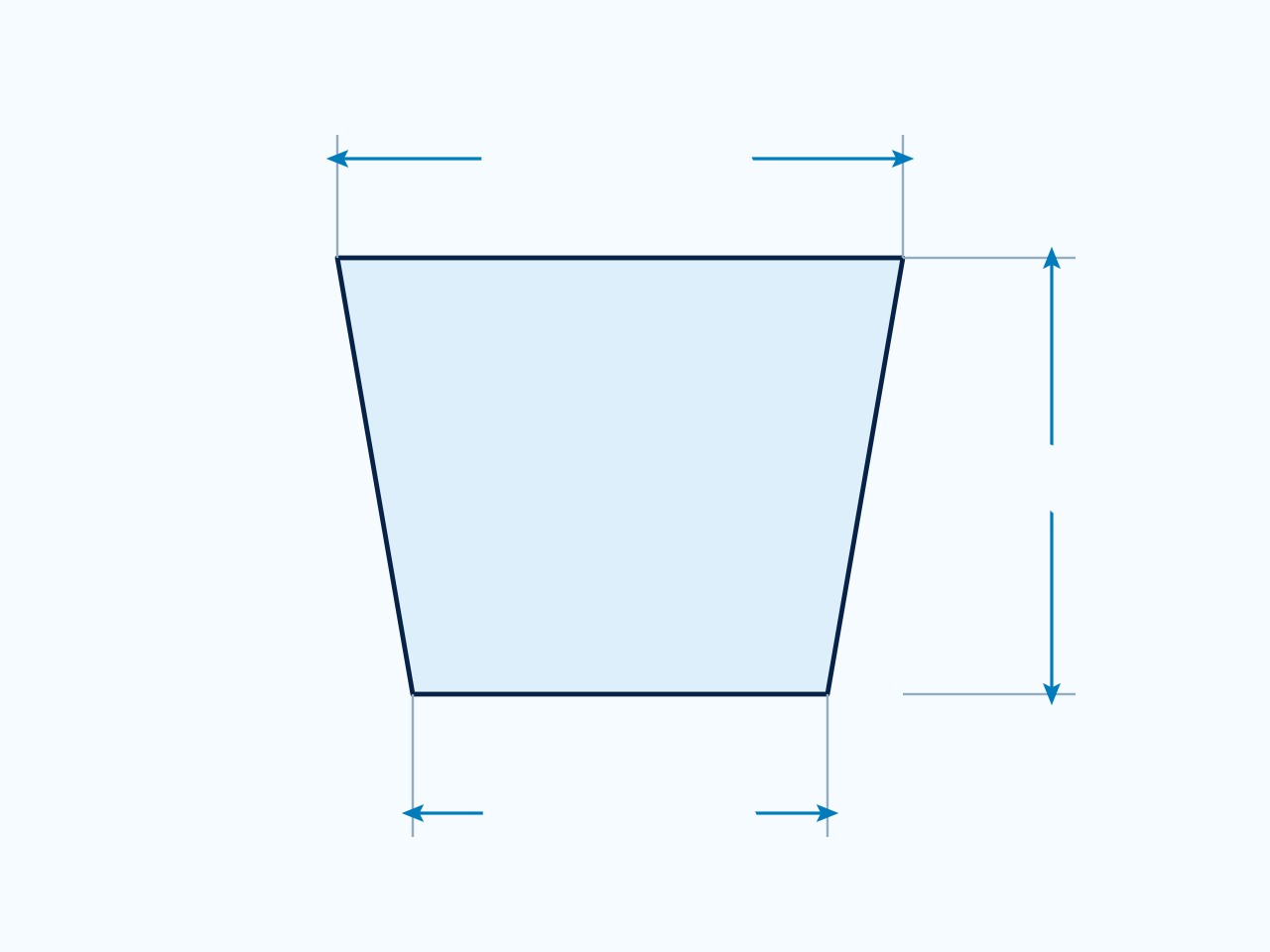
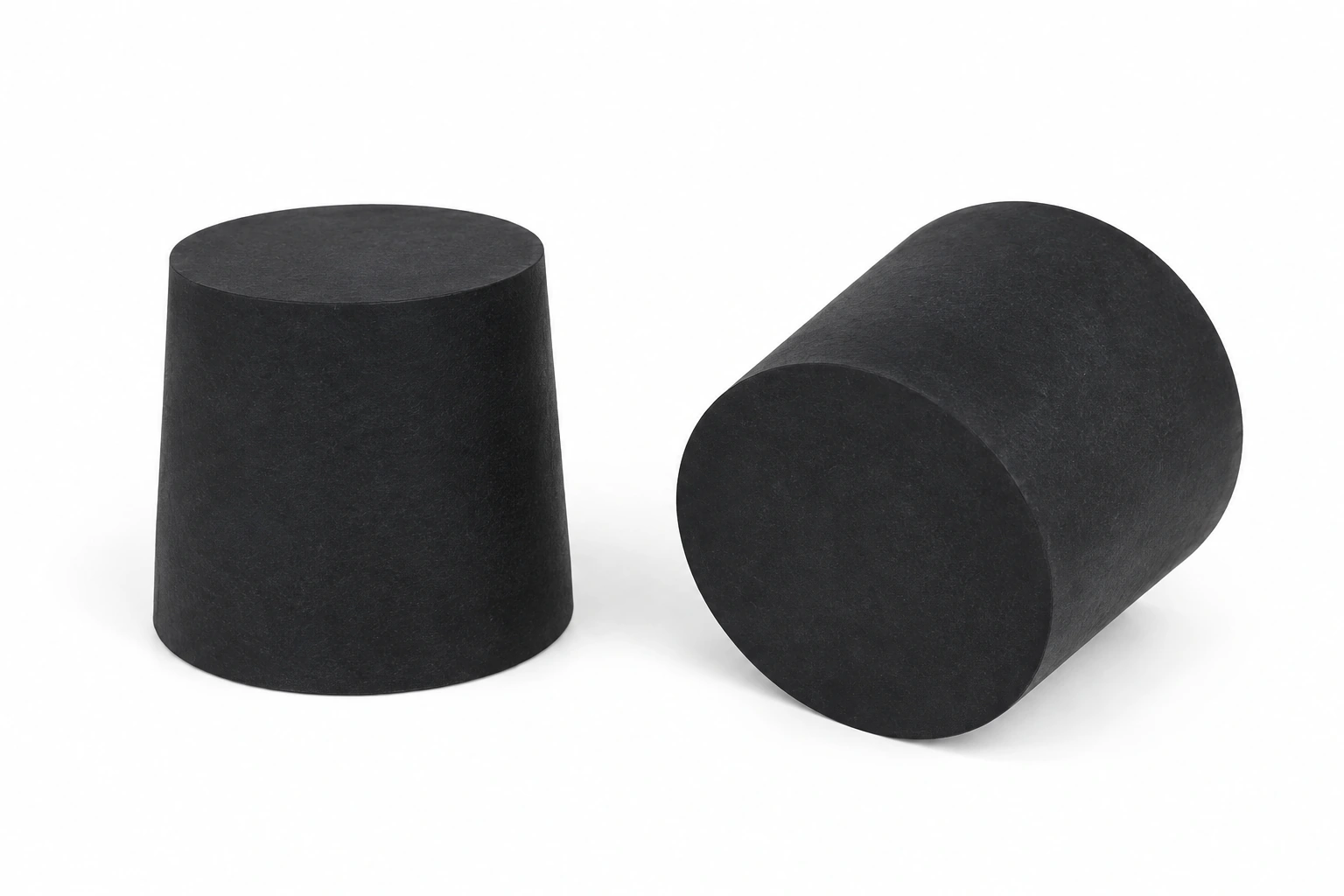
Compare large-end diameter A, small-end diameter B and Height, in mm. The mating bore and required seating depth determine where the taper contacts the opening.
RSB Undercut Plugs
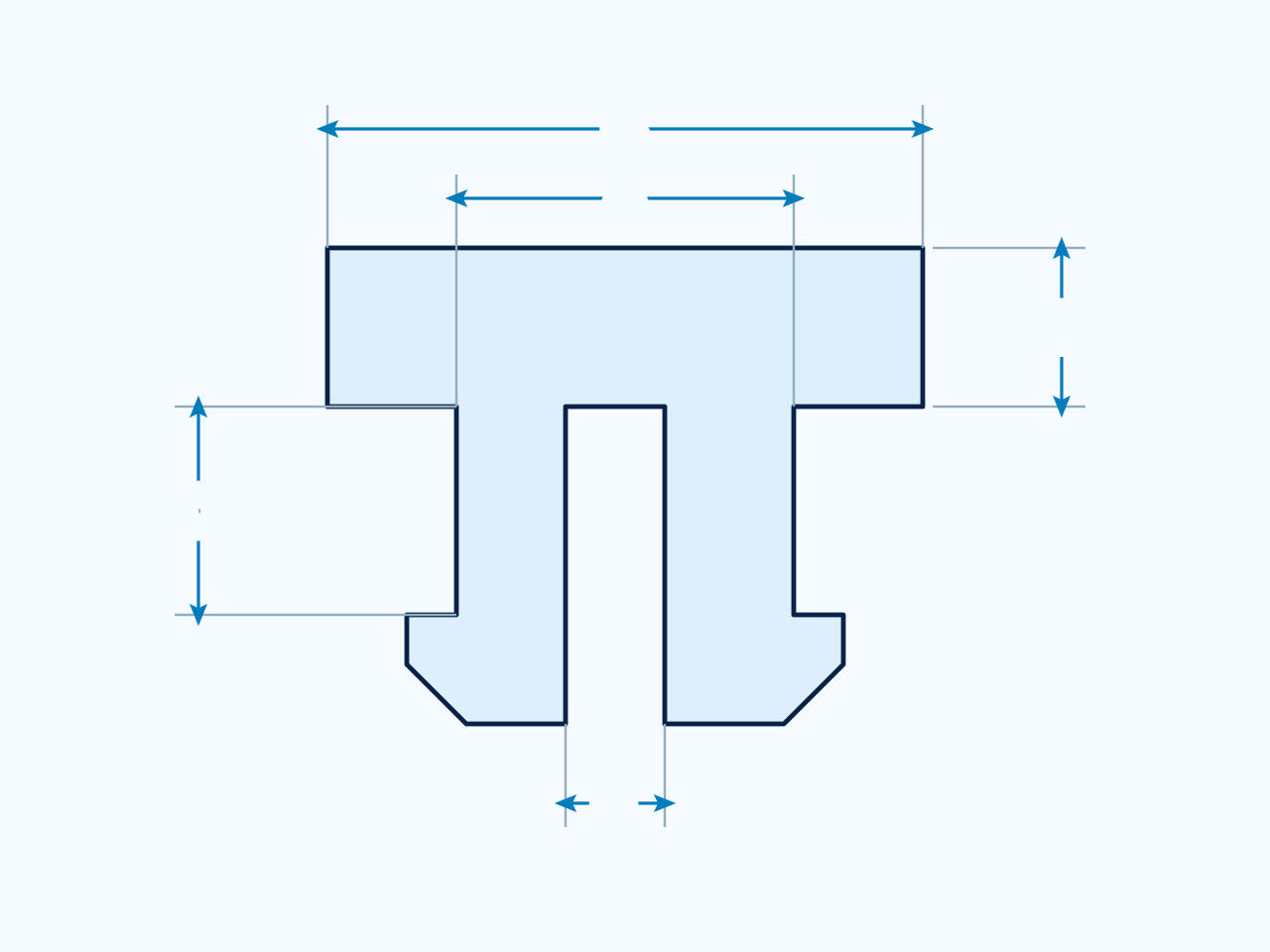
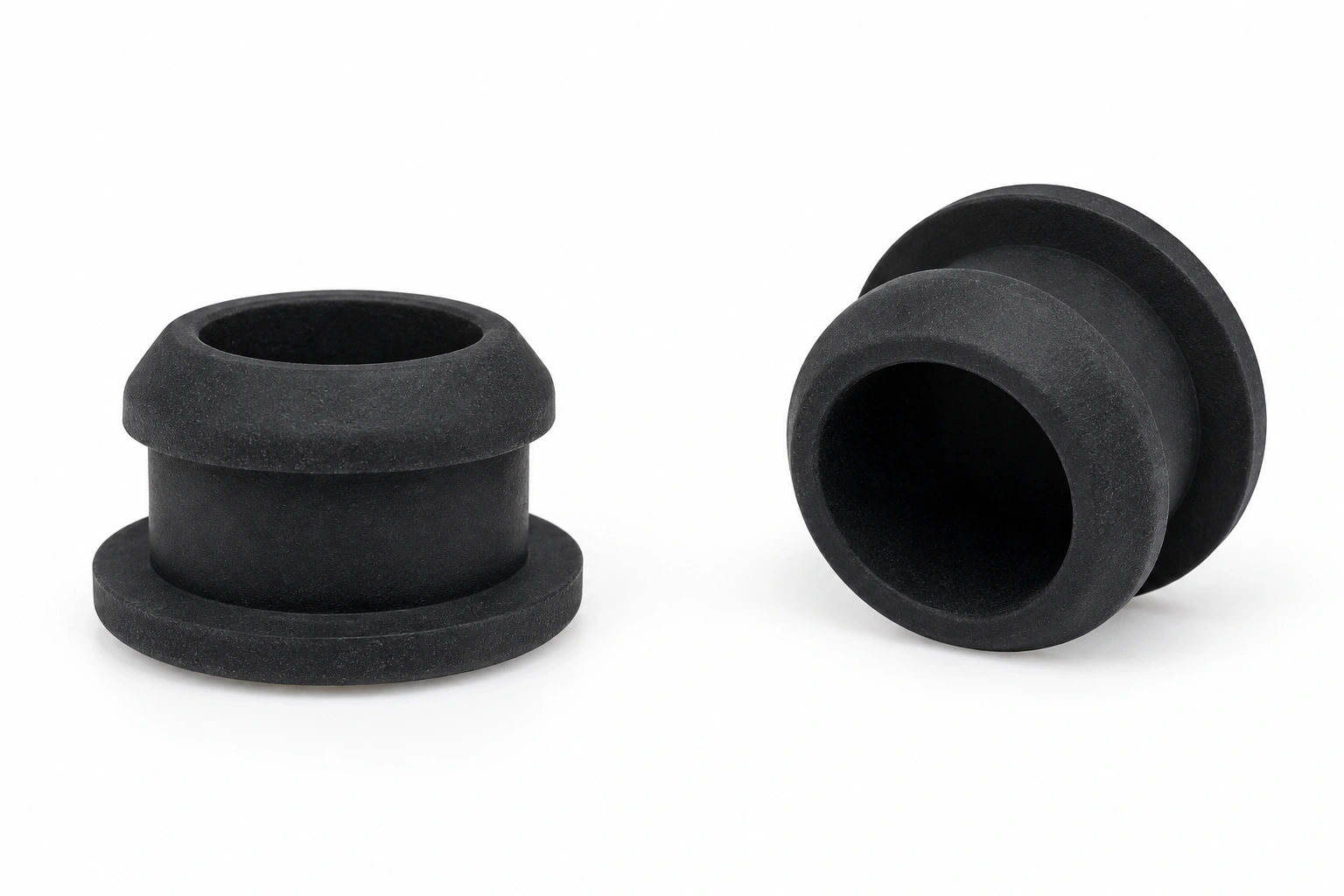
Compare neck diameter A, flange diameter B, flange-to-lip distance C and flange thickness D. Check panel thickness and rear clearance. E refers to the underside recess.
RSD T-Shaped Stoppers
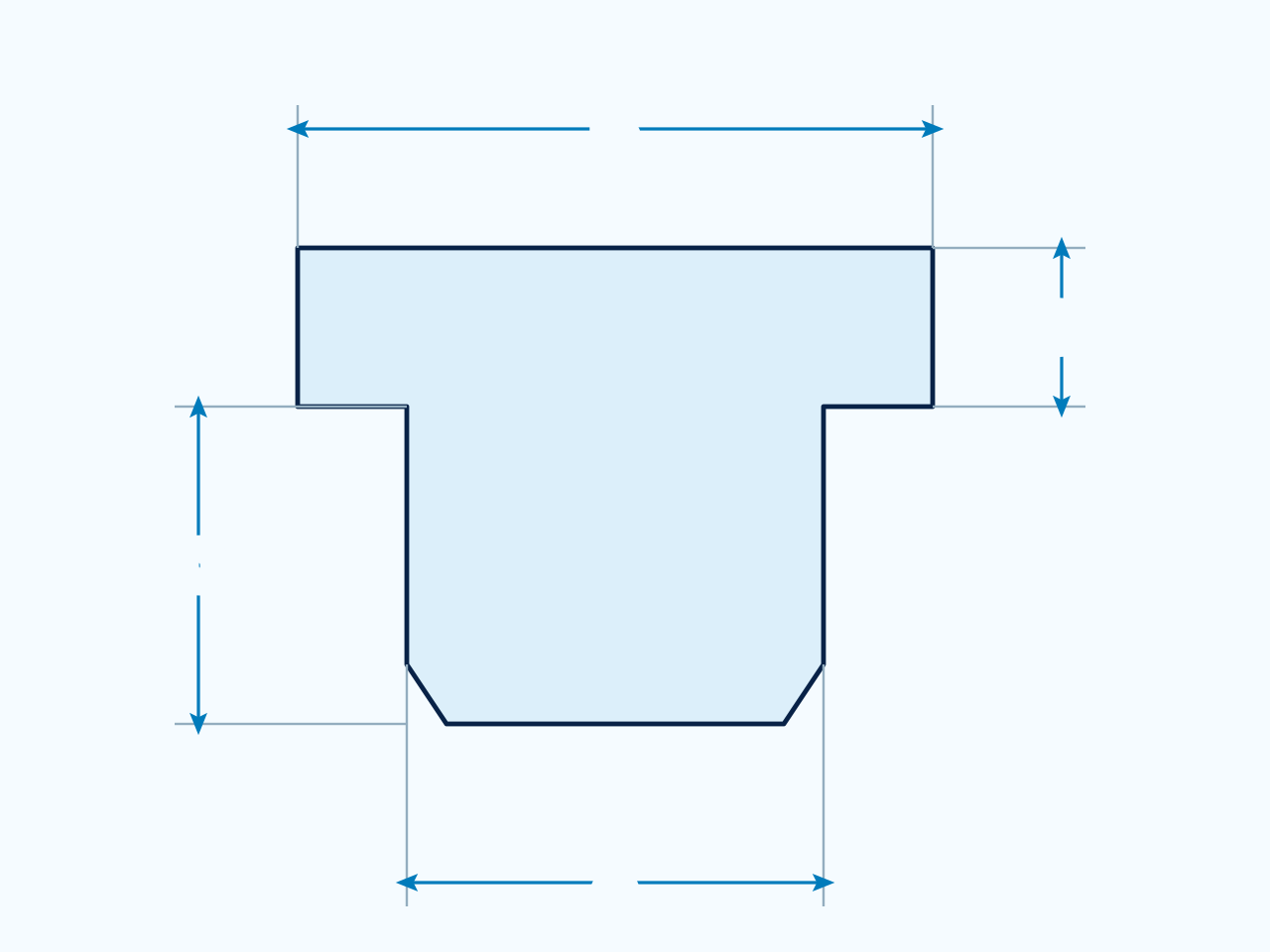
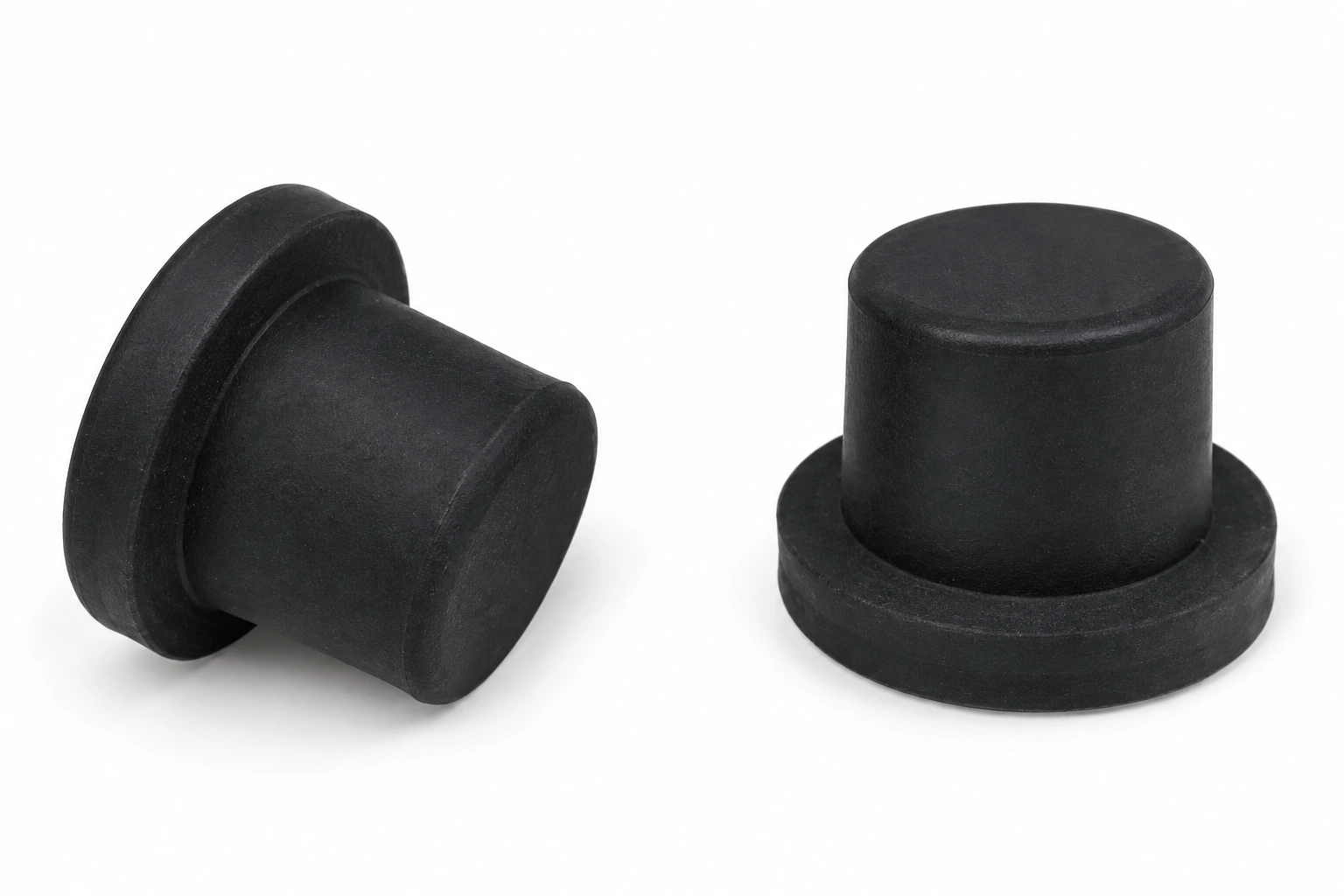
Compare stem diameter A, flange diameter B, stem length C and head thickness D, in mm. Check the seating surface and available depth as well as the hole diameter.
Need a different fit? Share the opening dimensions, mating profile and intended use for a custom size.
Discuss Your RequirementsProduct specifications
- Product form
- Removable closure fitted inside an opening
- Material
- Silicone. Specify the compound grade for the selected service.
- Application focus
- Brewing equipment, laboratory flasks, laboratory vessels, bottle necks and Erlenmeyer flasks. Size the part against the selected assembly.
- Dimensions to confirm
- Opening diameter, closure profile, insertion depth and exposed grip. Match these to brewing equipment and laboratory flasks.
- Contact conditions
- Beer and oxygen: define concentration, temperature and contact time, then check compatibility with the chosen compound.
- Seating check
- Check the sealing contact around the opening and the force needed for insertion and removal.
Need a quote or a custom part?
Send your requirements, drawings or samples to discuss standard and custom silicone rubber parts.
Email us[email protected]