
Silicone elastic tubing
If you are in need of flexible, elastic tubing – we might just have the perfect product for you. Silicone elastic tubing is the best choice if you need a high-quality tubing that is reliable, long-lasting, not prone to breakage, and can withstand a lot of wear and tear, amongst many other things. Silicone elastic tubing has many applications. Generally speaking, you will find elastic silicone tubing pretty much everywhere, but they are most commonly found in food processing facilities and laboratories all over the world. Seeing how silicone is naturally transparent, elastic tubing made from silicone allows people to look at what is going on during their work.
The elasticity of the silicone is mostly there due to its soft nature. Unlike some other rubbers, silicone is usually somewhere in the vicinity of 20 to 30 Shore A Durometer in terms of hardness. That means that you can bend, squeeze, and even tie the tubing up in a knot without damaging it. However, we don’t really see why you would want to tie your tubing in a knot other than to test how resilient and flexible it is.
Aside from being very flexible and elastic, silicone tubing is also very thermally stable and not at all thermally conductive. Loosely translated, that means that tubing won’t heat up or cool down and will be able to withstand both very high and very low temperatures. More precisely, a silicone tube will easily handle up to 270 degrees Celsius, as well as temperatures as low as negative 70 degrees Celsius. Additionally, silicone elastic tubing is chemically stable and non-reactive, meaning you will be able to use it in various conditions and run all kinds of abrasive liquids through it. As long as you properly seal the ends of the tube – silicone will be able to handle pretty much any liquid you throw at it.
Silicone Tubing Size Catalog
Compare inside diameter, outside diameter and listed wall thickness across silicone tube ranges. Confirm the material grade and application requirements for the selected part.
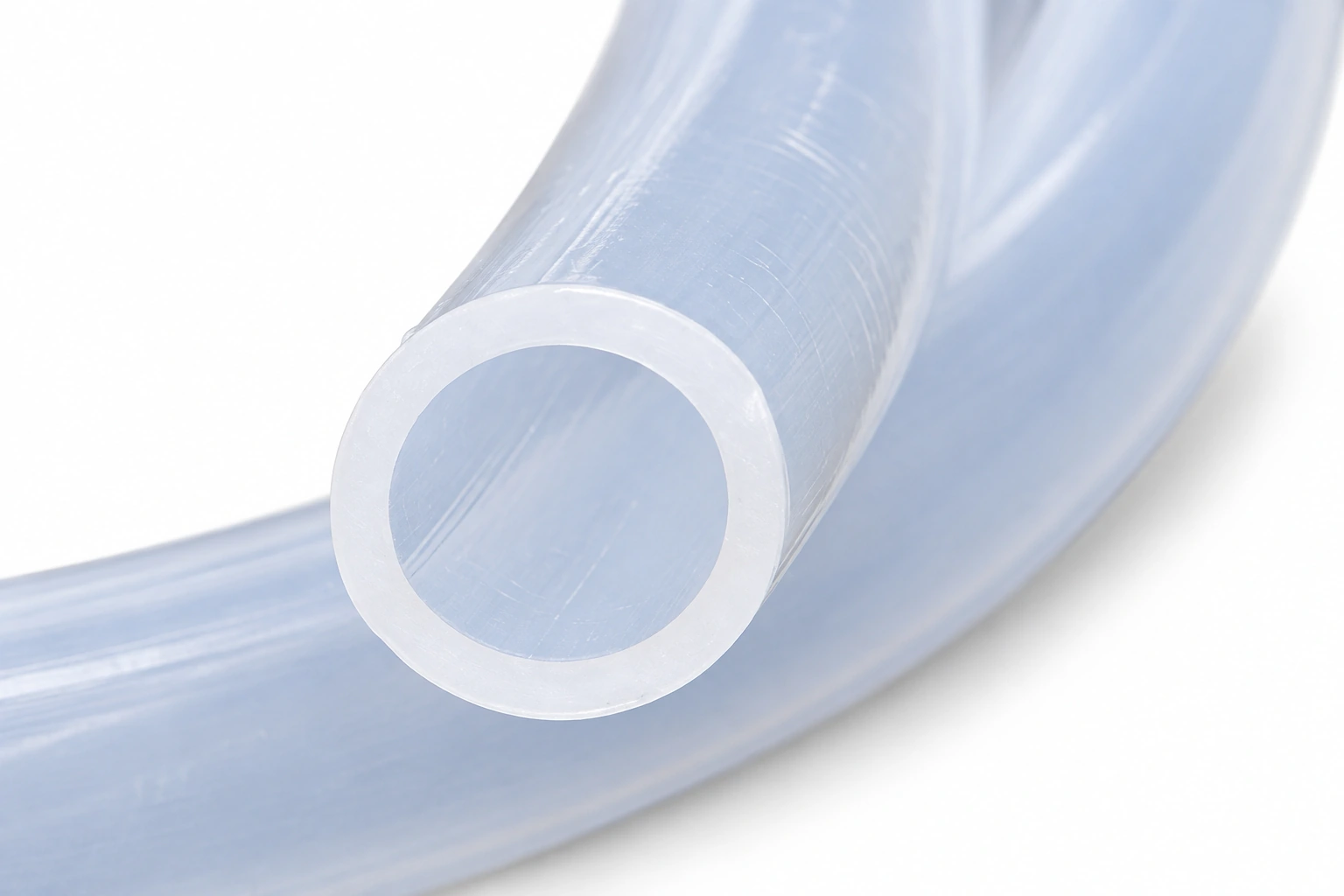
Food grade silicone tube
Compare Inside Diameter and Outside Diameter in mm, together with the listed Thickness and Colour. The cross-section drawing identifies the bore and outside diameter; confirm the selected tube material and service requirements.

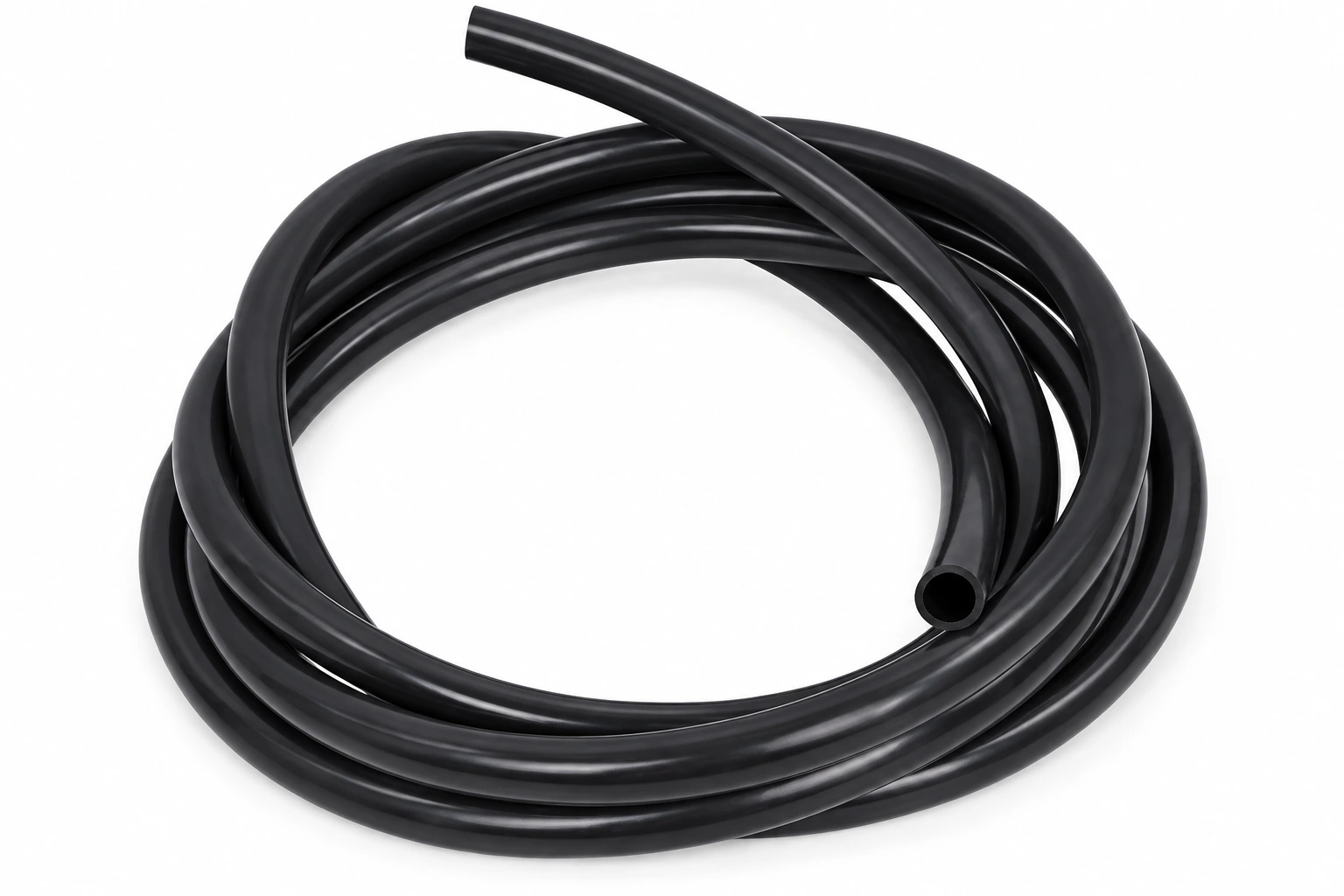
Black silicone tubing
Compare Inside Diameter and Outside Diameter in mm, together with the listed Thickness and Colour. The cross-section drawing identifies the bore and outside diameter; confirm the selected tube material and service requirements.
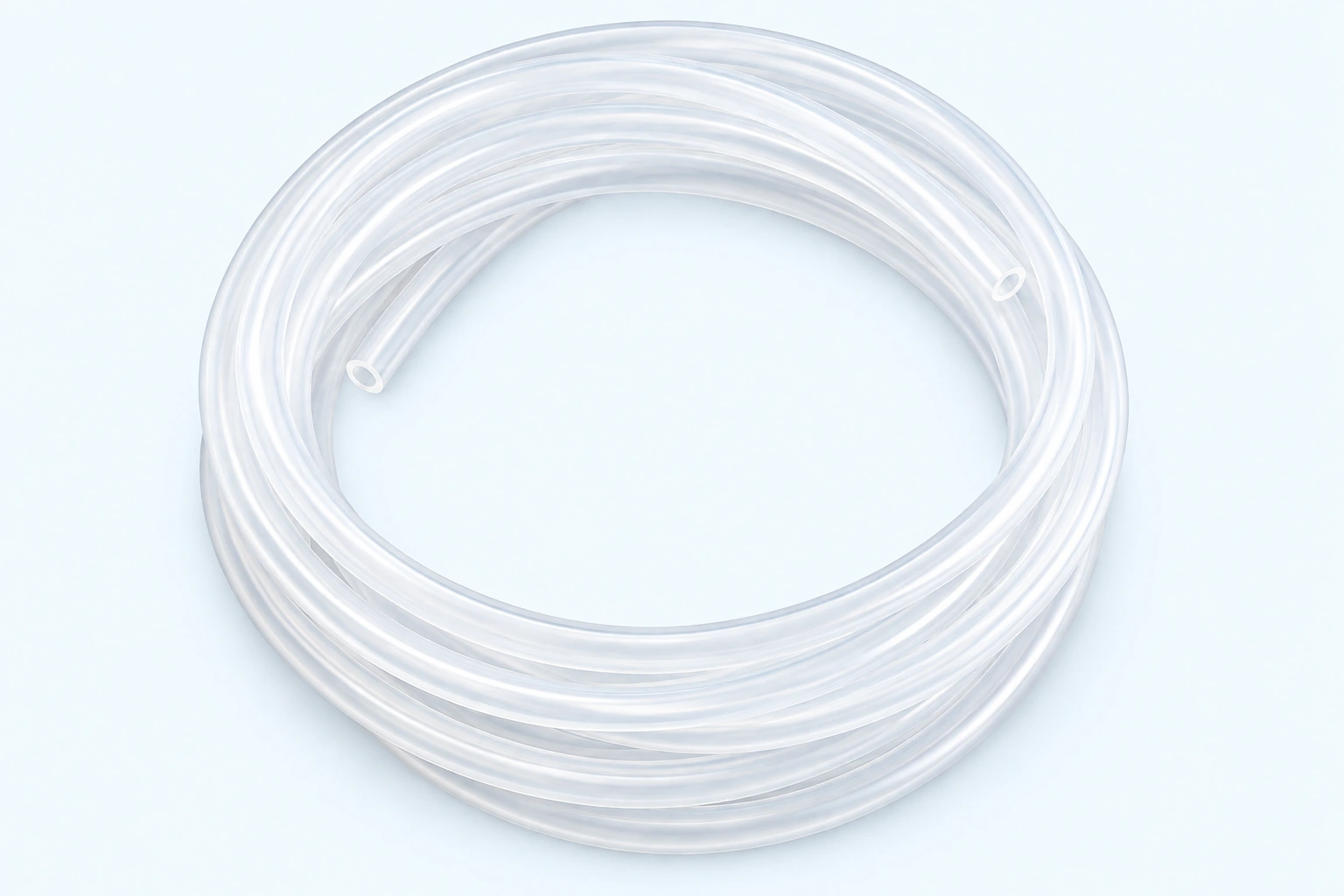
Industrial silicone tube
Compare Inside Diameter and Outside Diameter in mm, together with the listed Thickness and Colour. The cross-section drawing identifies the bore and outside diameter; confirm the selected tube material and service requirements.
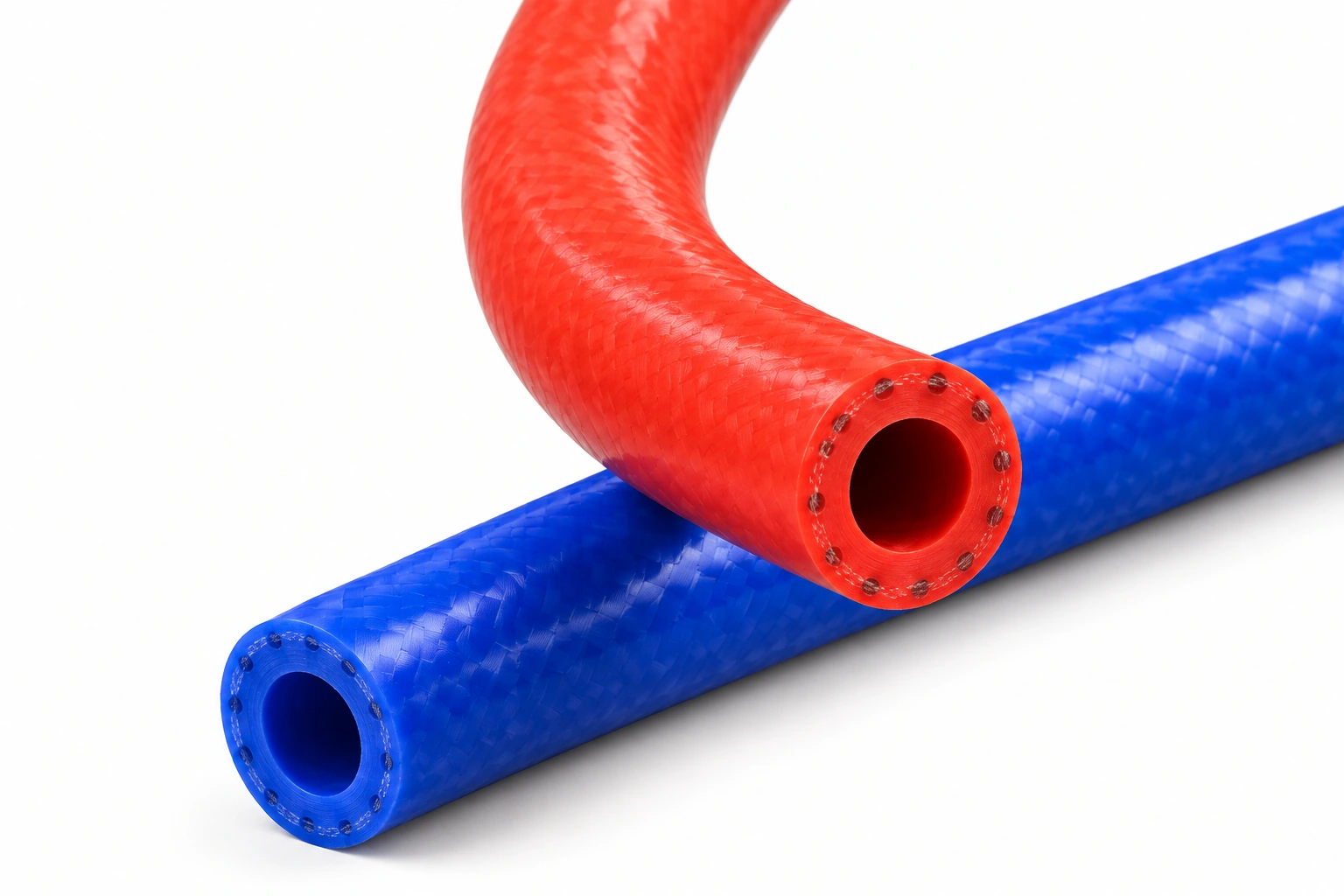
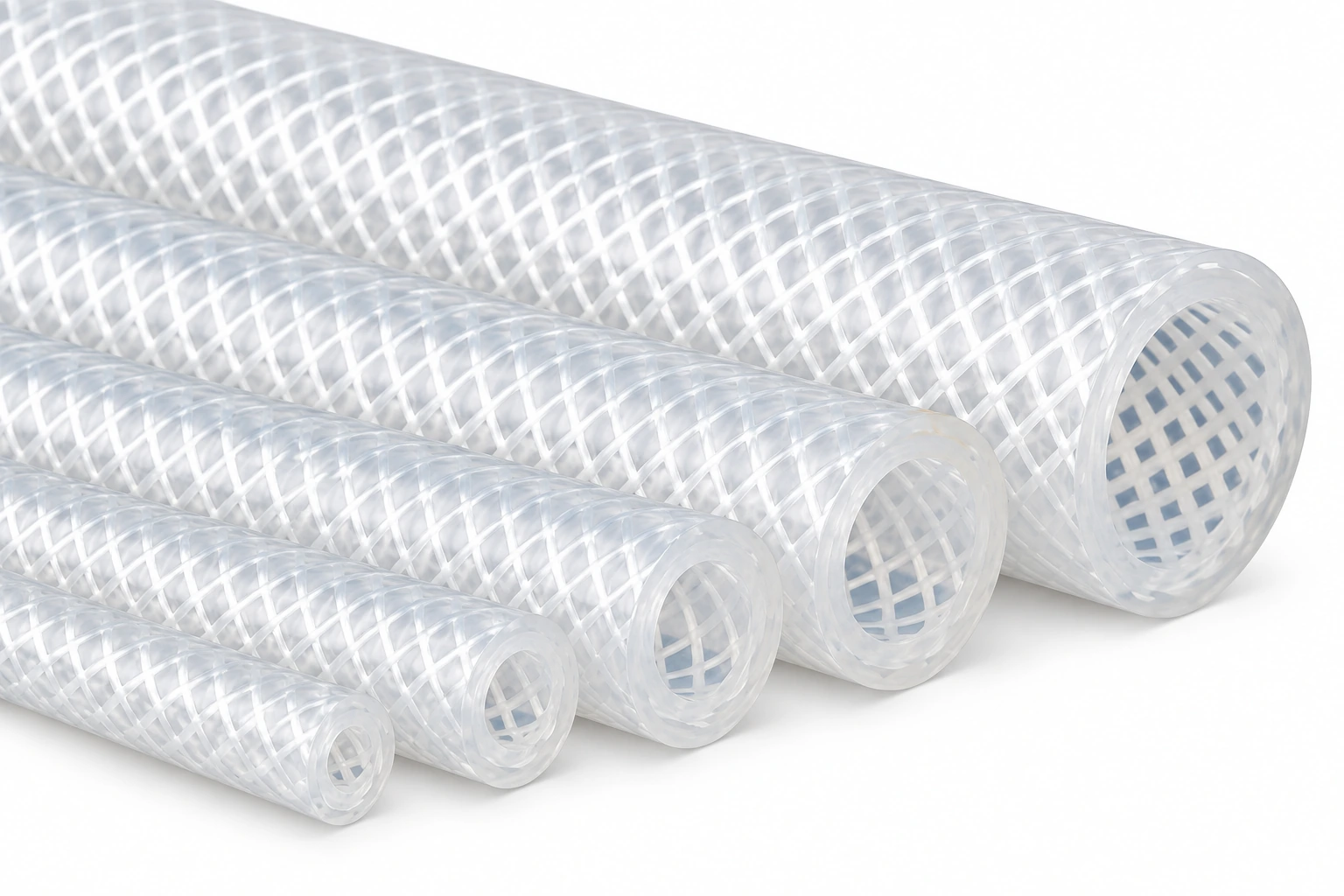
Colourful silicone braided tube
Compare Inside Diameter and Outside Diameter in mm, together with the listed Thickness and Colour. The cross-section drawing identifies the bore and outside diameter; confirm the selected tube material and service requirements.
Food grade silicone braided tube
Compare Inside Diameter and Outside Diameter in mm, together with the listed Thickness and Colour. The cross-section drawing identifies the bore and outside diameter; confirm the selected tube material and service requirements.
Need a different size? Share your drawing, mating dimensions and intended use to discuss a suitable part.
Discuss Your RequirementsProduct specifications
- Product form
- Hollow elastomer tubing for a fitted line or sleeve
- Material
- Silicone. Specify the compound grade for the selected service.
- Application focus
- Food-processing equipment and laboratory connections. Size the part against the selected assembly.
- Dimensions to confirm
- Inside diameter, outside diameter, wall thickness and cut length. Match these to food-processing equipment and laboratory connections.
- Extension duty
- Specify free length, working extension, attachment ends and the force required through the movement.
- Contact conditions
- Food ingredients: define concentration, temperature and contact time, then check compatibility with the chosen compound.
- Exposure to evaluate
- Rubbing or abrasion. Validate the selected material under the combined conditions.
- Line layout
- Check bend radius, unsupported spans and clearance at both connections.
Need a quote or a custom part?
Send your requirements, drawings or samples to discuss standard and custom silicone rubber parts.
Email us[email protected]