
silicone one hole stopper
Equipping the lab is the most important process that has to be done regularly. The parts that get damaged are being thrown away, and they have to be replaced quickly. With that, you are preventing any stoppages or obstructions of the flow that you have. Although the lab is being consisted of many parts, people usually forget about the small items like the silicone one hole stopper. They are an essential piece for almost any experiment. Without them, you will not be able to take the right measurements while the process is ongoing.
Although there are options with more holes or no holes at all, the one-hole stoppers are being the most common ones. They are meant to be placed on the top of the glass equipment so they offer sealant effects. Because of their hole, you can safely measure the temperature of the solution, or measure its pH value. In addition, you can pipette portions through the same hole, so you can prevent any leaks and spillages. However, if you are not sure about how you will use these silicone stoppers, we recommend getting the ones with no hole. That way, you can always drill a hole when you need it.
Silicone is the material that offers the qualities of these items. While it is a synthetic rubber, it can withstand higher temperatures better. That way, when you need to sterilize them, you will not need to worry about the heat. It is important to note that they will not harden after heat exposure, so you will be able to use them many times. To get the most out of them, you will need the right dimensions from the holes of your glass equipment. Usually, they have standard openings, so you should not have problems finding the right dimension in our list. However, if you do, we can create a custom silicone one hole stopper for you.
Stopper & Plug Size Catalog
Compare four stopper profiles and check the selected part dimensions against your opening and available depth. Each profile has its own drawing and dimension meanings.
Custom colors are available to your Pantone color code. Include the code in your inquiry.
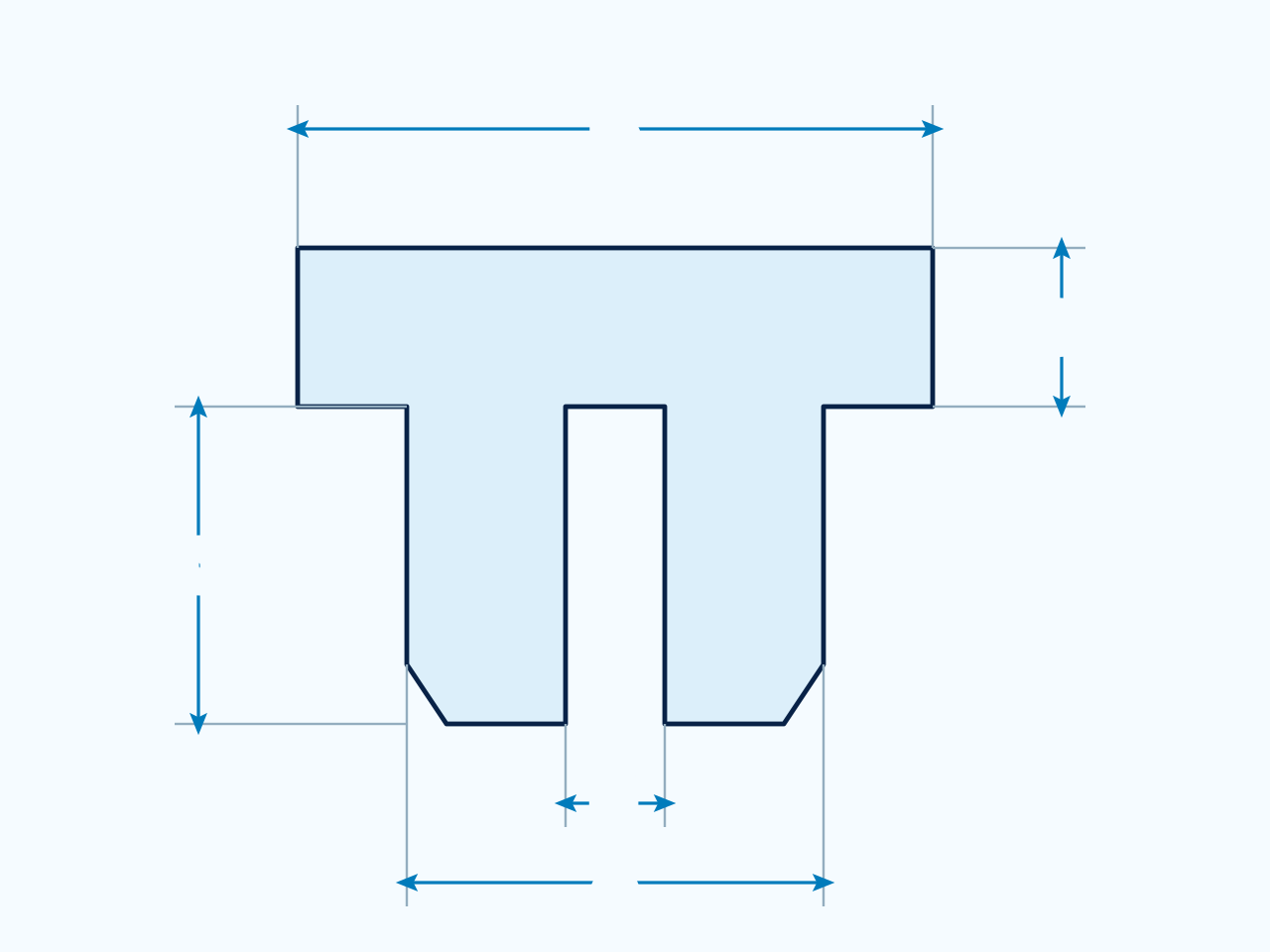
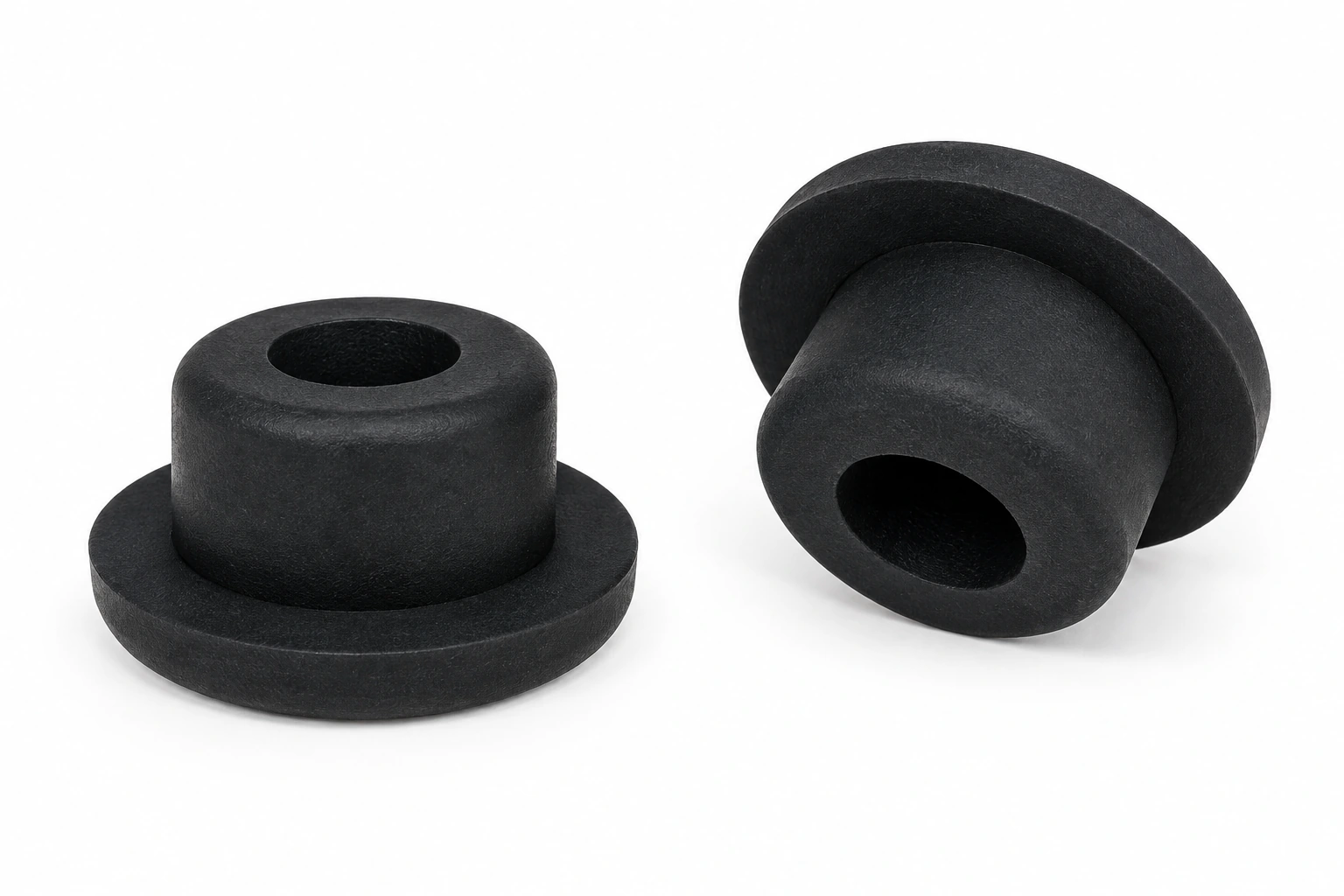
RST T-Shaped Plugs
Match stem diameter A, flange diameter B, stem length C and flange thickness D. E refers to the underside recess; use the selected row and approved drawing to confirm the actual profile.
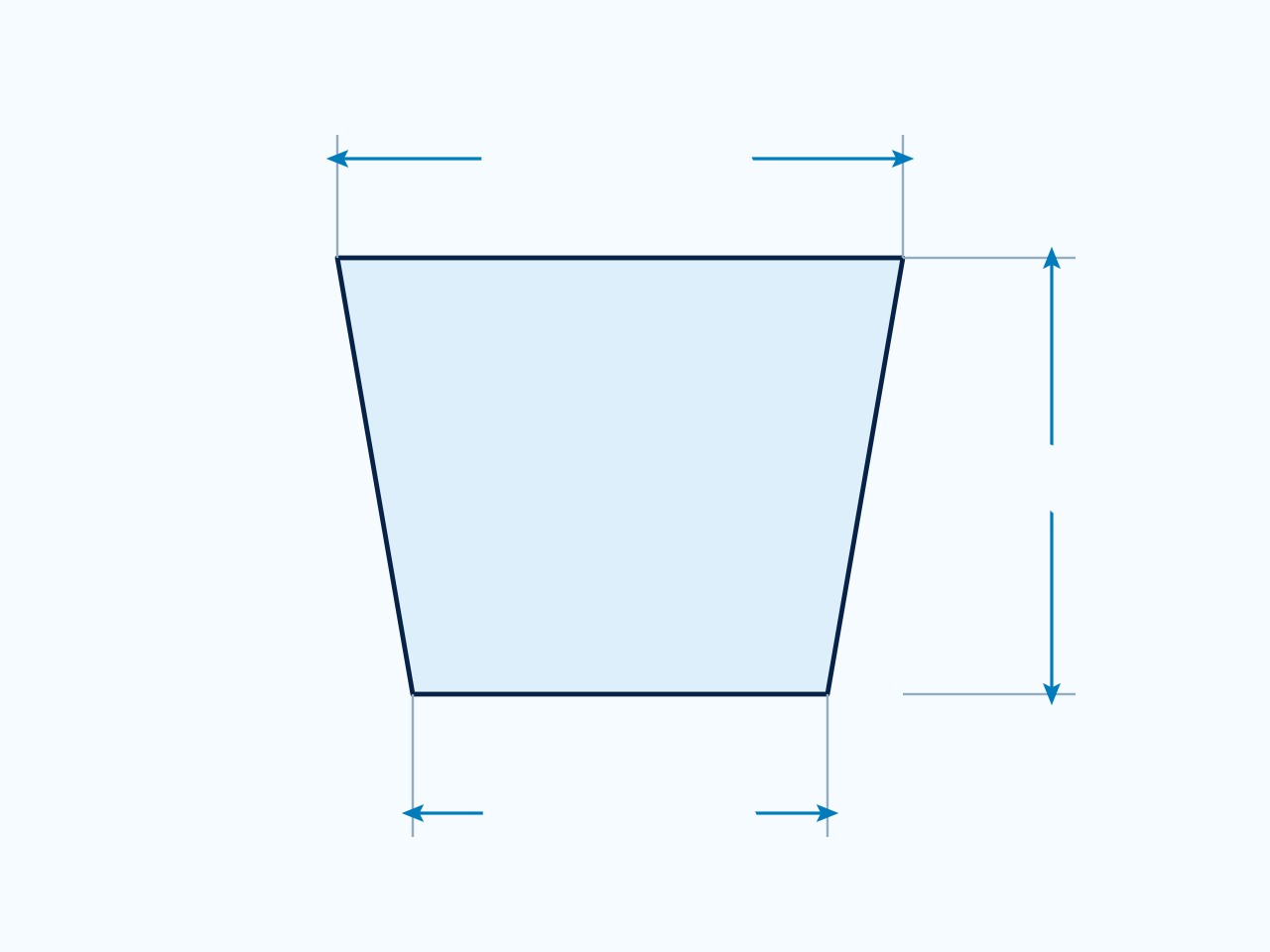
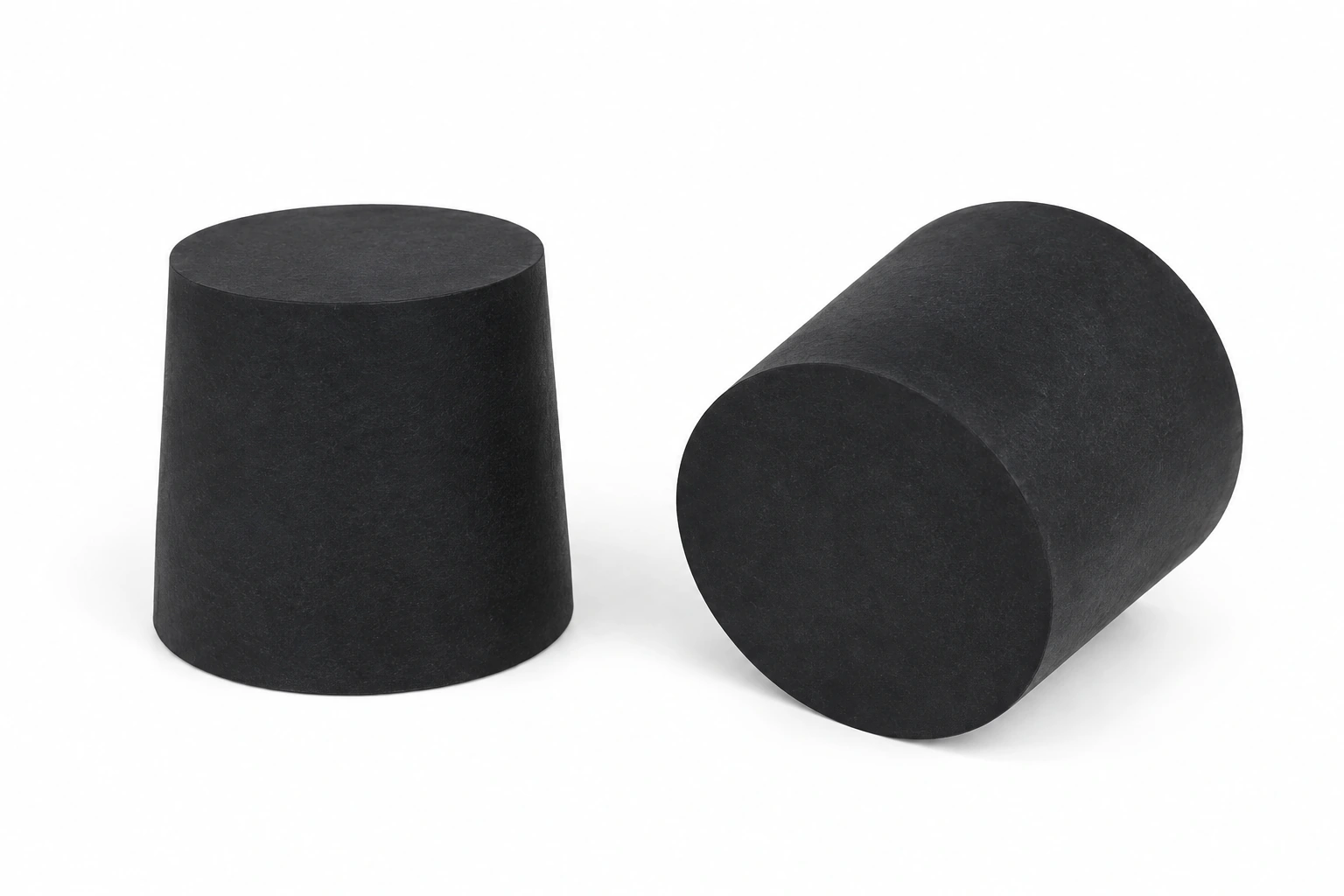
RSA Tapered Corks
Compare large-end diameter A, small-end diameter B and Height, in mm. The mating bore and required seating depth determine where the taper contacts the opening.
RSB Undercut Plugs
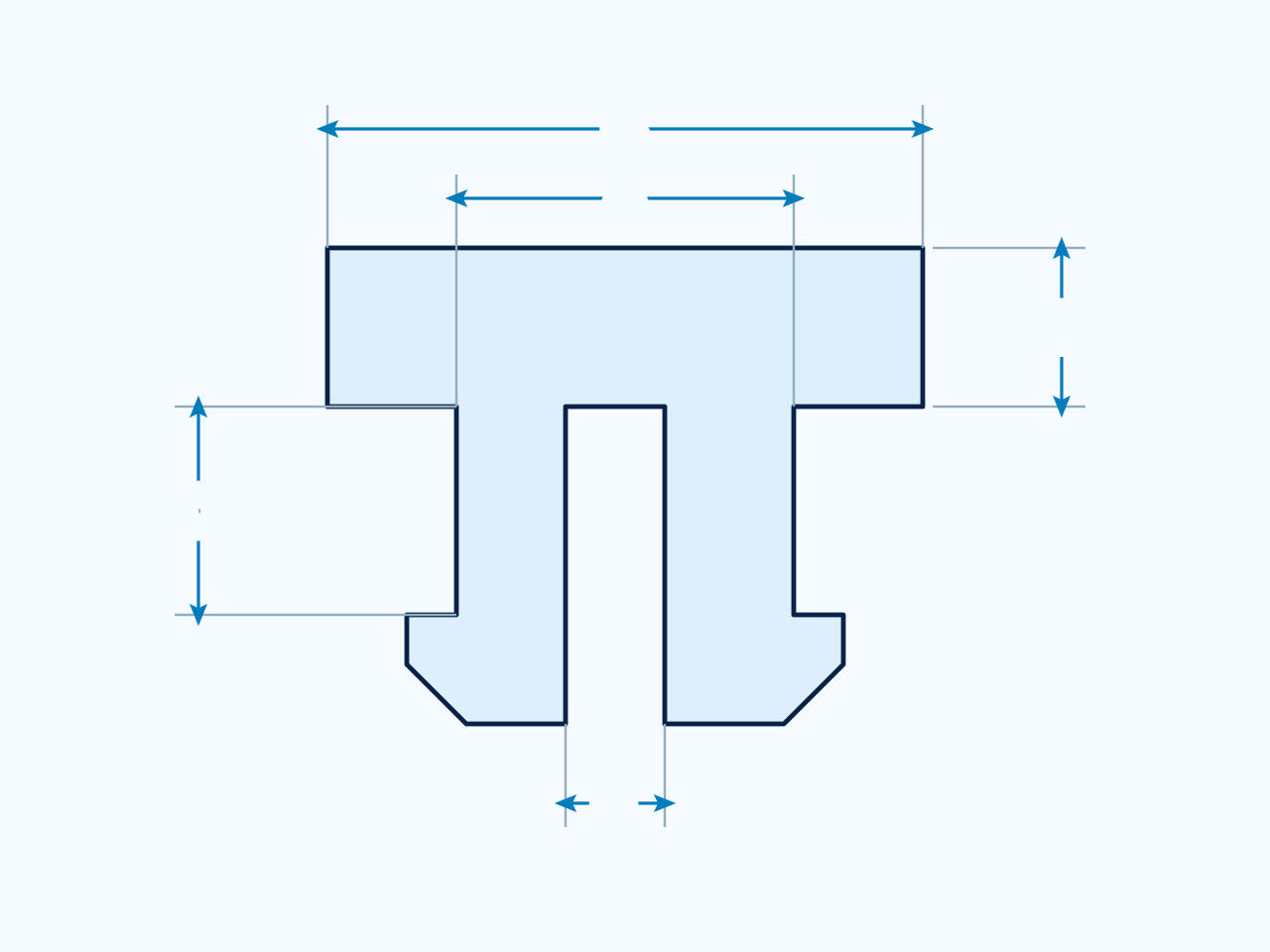
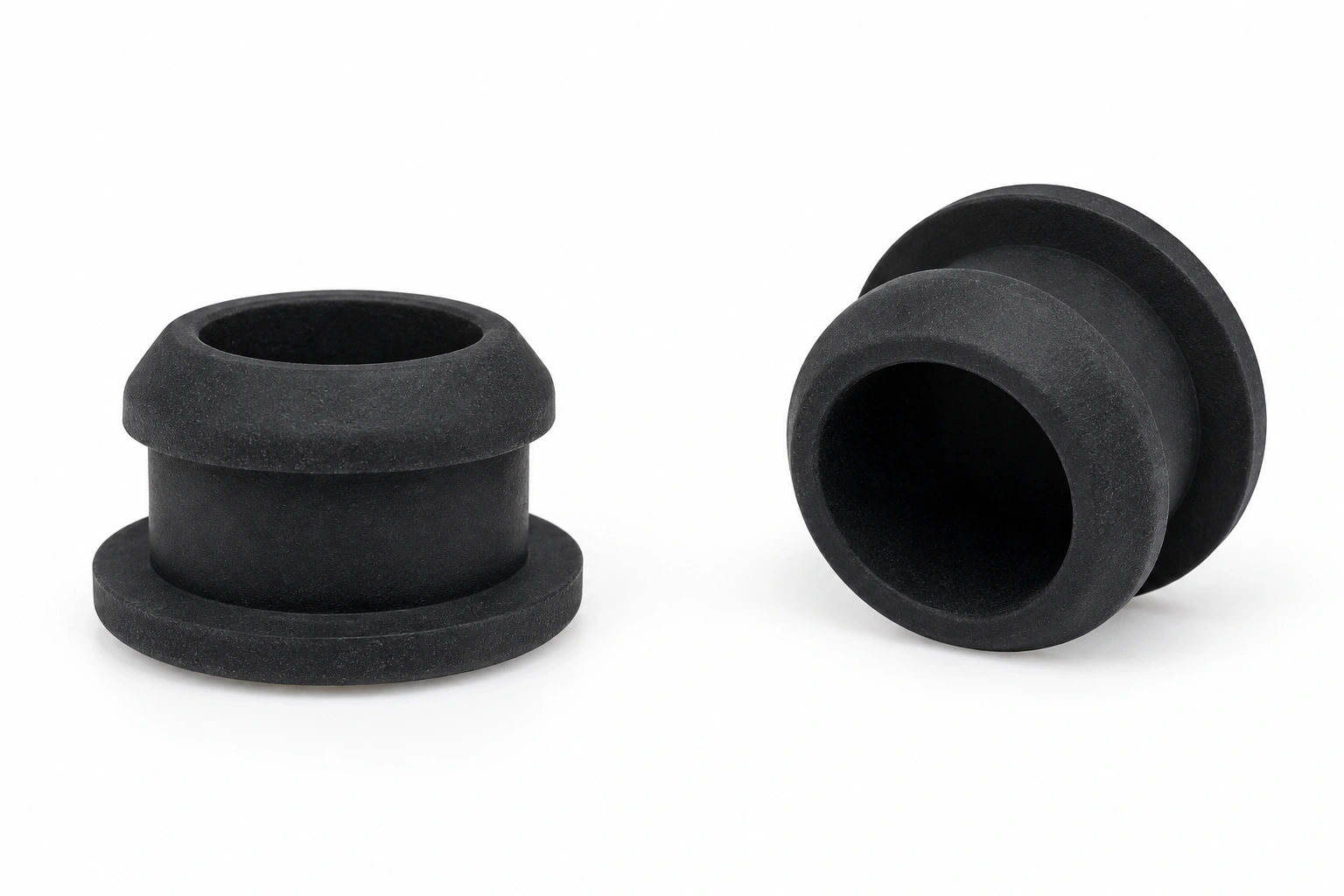
Compare neck diameter A, flange diameter B, flange-to-lip distance C and flange thickness D. Check panel thickness and rear clearance. E refers to the underside recess.
RSD T-Shaped Stoppers
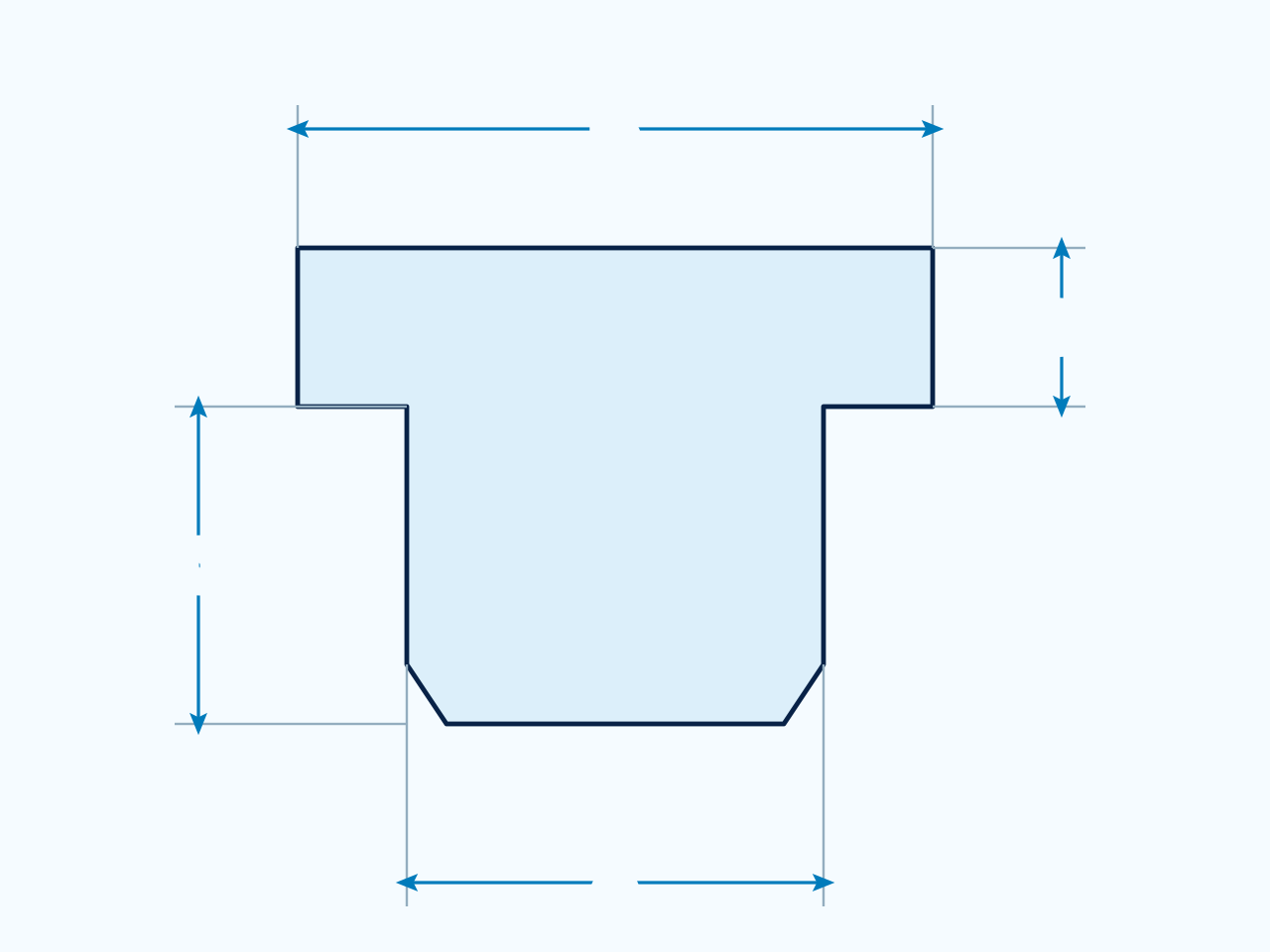
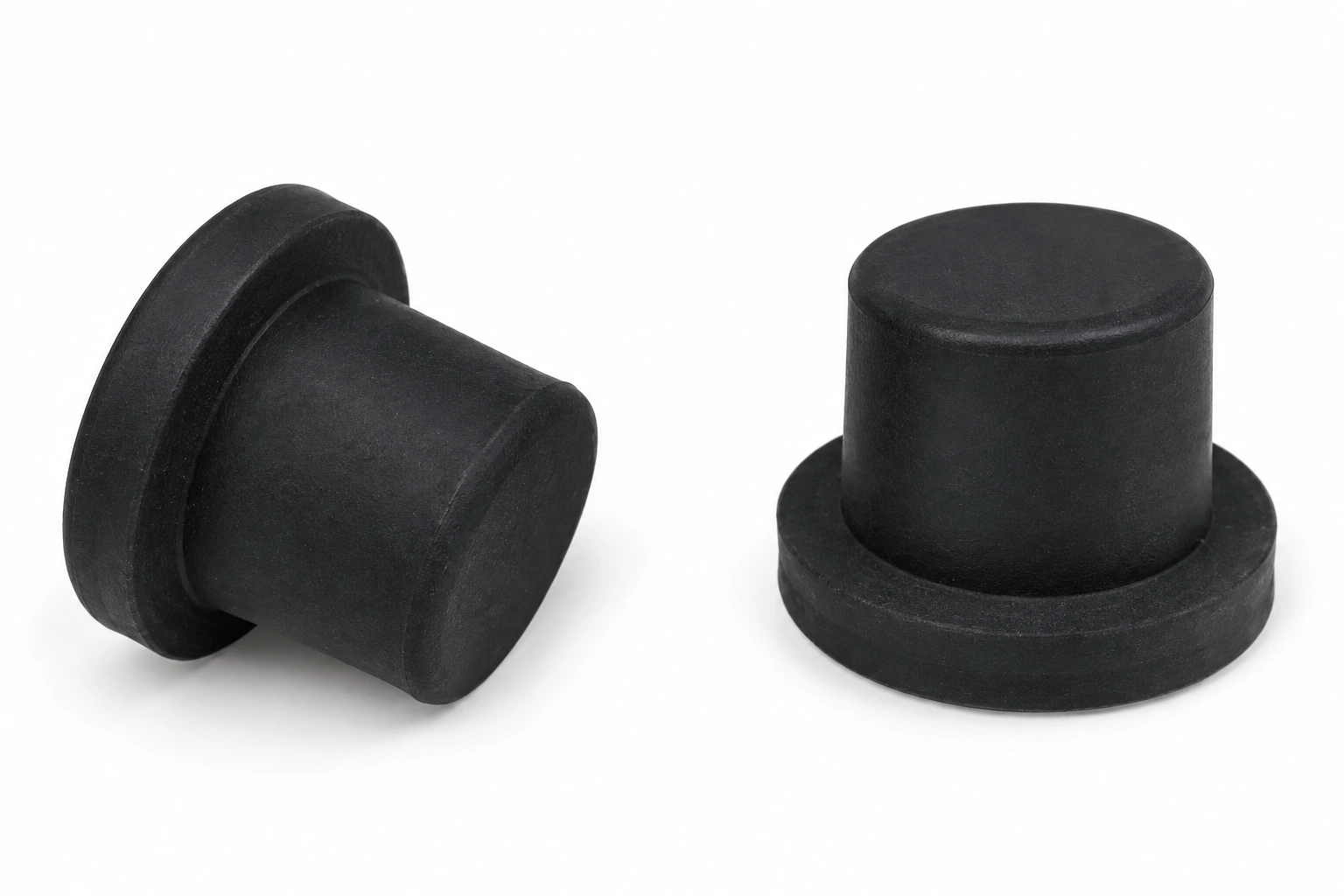
Compare stem diameter A, flange diameter B, stem length C and head thickness D, in mm. Check the seating surface and available depth as well as the hole diameter.
Need a different fit? Share the opening dimensions, mating profile and intended use for a custom size.
Discuss Your RequirementsProduct specifications
- Product form
- Container stopper with one passage
- Material
- Silicone. Specify the compound grade for the selected service.
- Dimensions to confirm
- Opening diameter, closure profile, insertion depth and exposed grip.
- Passage layout
- Dimension each bore, its location and the remaining wall; match it to the tube, probe or fitting passing through.
- Cleaning and reuse
- Specify the cleaning or sterilization cycle discussed for the application, including temperature, duration and permitted reuse.
- Seating check
- Check the sealing contact around the opening and the force needed for insertion and removal.
Need a quote or a custom part?
Send your requirements, drawings or samples to discuss standard and custom silicone rubber parts.
Email us[email protected]