
silicone stopper manufactures
Ordering silicone stoppers for an existing vessel
When sourcing silicone stoppers for bottles, test tubes or similar glassware, begin with the opening that the closure must fit. Record the neck diameter where the stopper will sit and the depth available beneath it. A vessel’s capacity is useful for identifying the container, but it does not specify its neck. A sample vessel or a drawing of the opening helps distinguish a close-looking standard part from the correct closure.
Choose the closure arrangement
Decide whether the application needs a solid stopper or passages for inserted items. For a tapered design, compare both end diameters with the intended seating position rather than treating the largest diameter as the only fit dimension. Consider how the operator will grip the stopper when removing it. A low-profile closure may suit one location while another needs more exposed material above the neck.
Evaluate the stopper in use
Try the proposed stopper on the actual opening and observe insertion, retention and removal through the normal handling sequence. Include the contents, cleaning method and exposure conditions in the material choice. Silicone should not be described as universally chemical-proof: the selected compound needs to suit the particular service. Where the closure has a defined containment duty, evaluate that duty on the complete vessel and stopper assembly.
Keep the approved selection identifiable
After selecting a profile, record its part reference, dimensions and material alongside the vessel it fits. Add any agreed color and passage details to the order. This avoids relying on informal descriptions such as small, large or laboratory size when parts are reordered. If the standard choices do not fit, use the same opening information as the starting point for a custom version.
Stopper & Plug Size Catalog
Compare four stopper profiles and check the selected part dimensions against your opening and available depth. Each profile has its own drawing and dimension meanings.
Custom colors are available to your Pantone color code. Include the code in your inquiry.
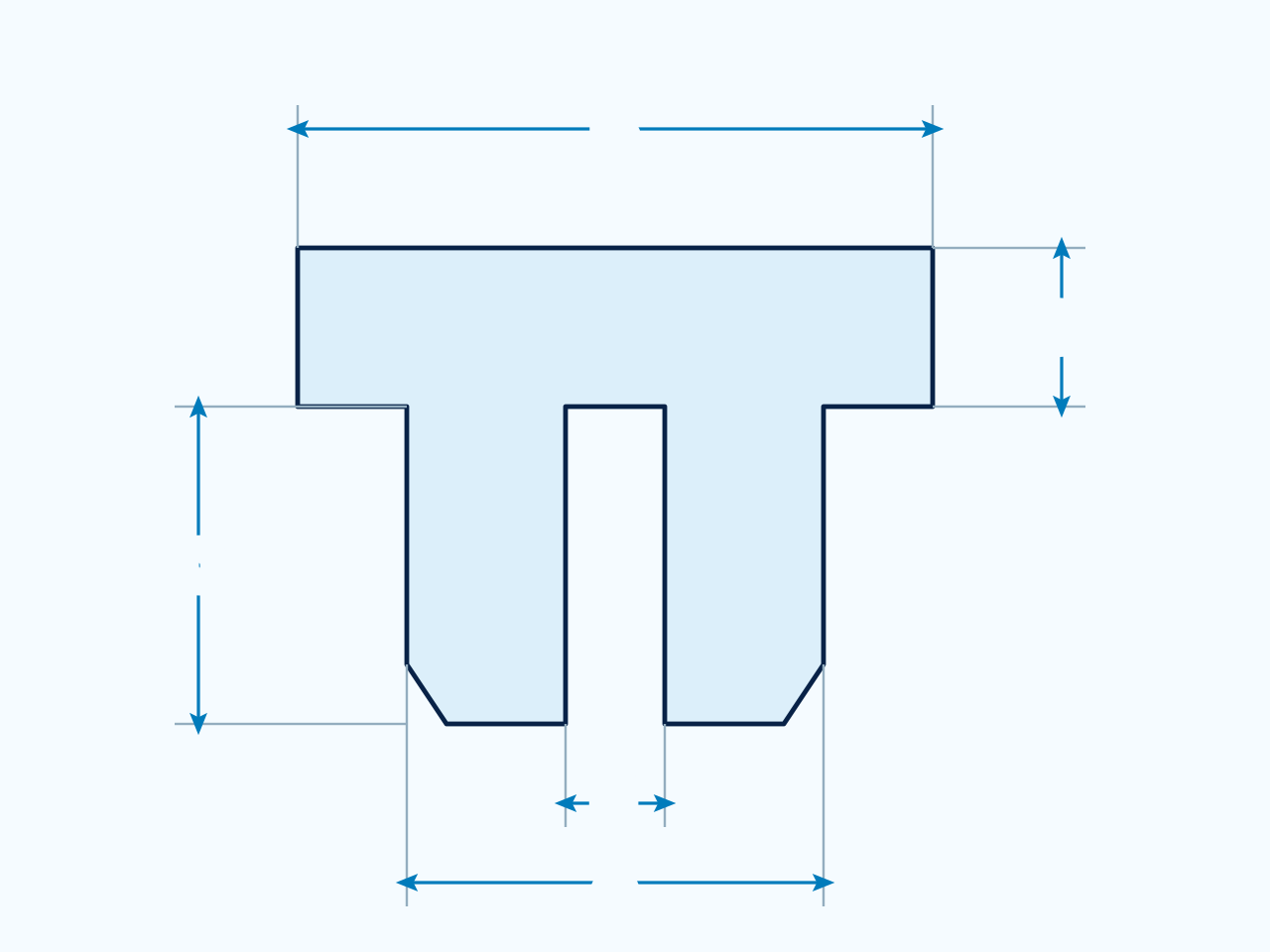
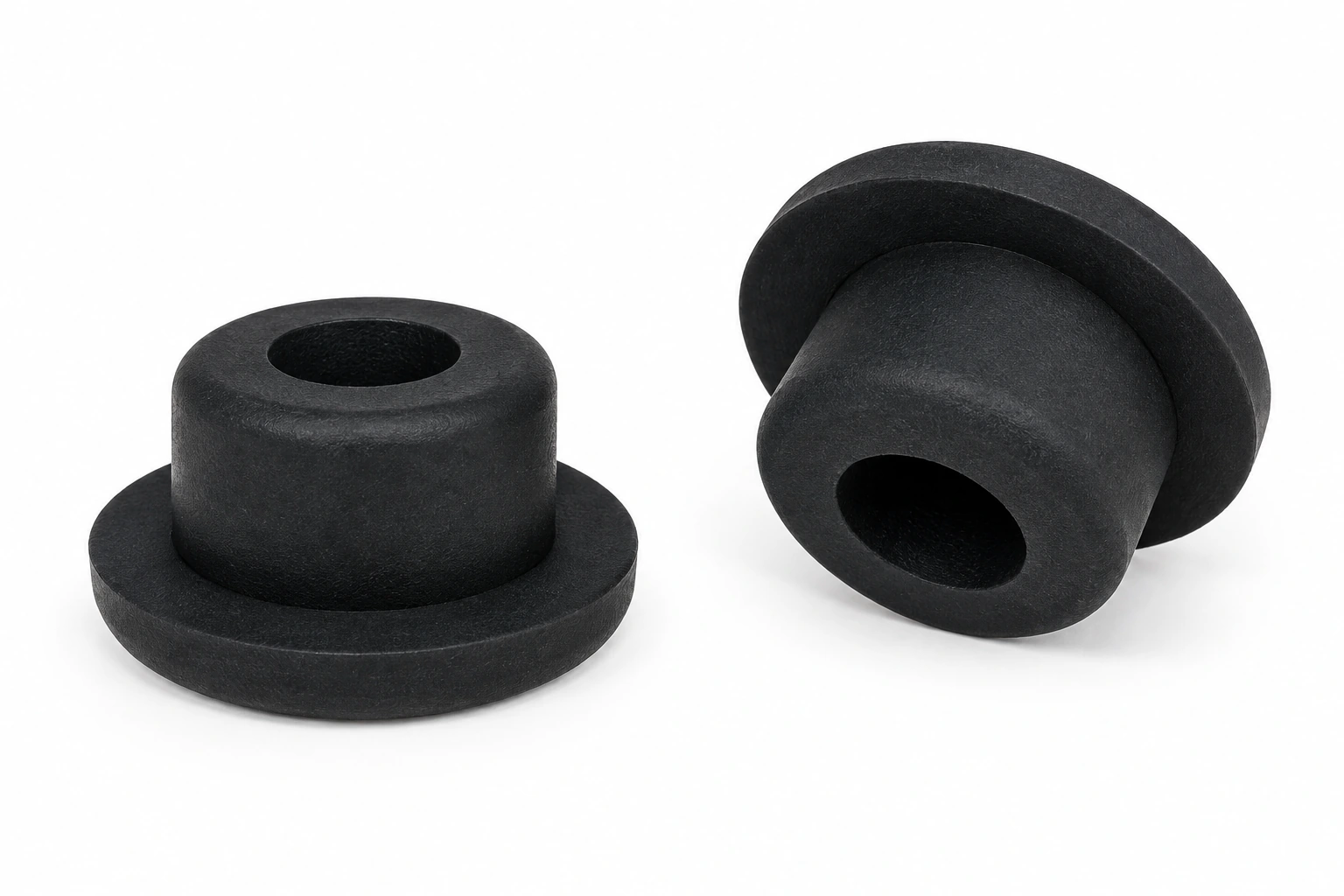
RST T-Shaped Plugs
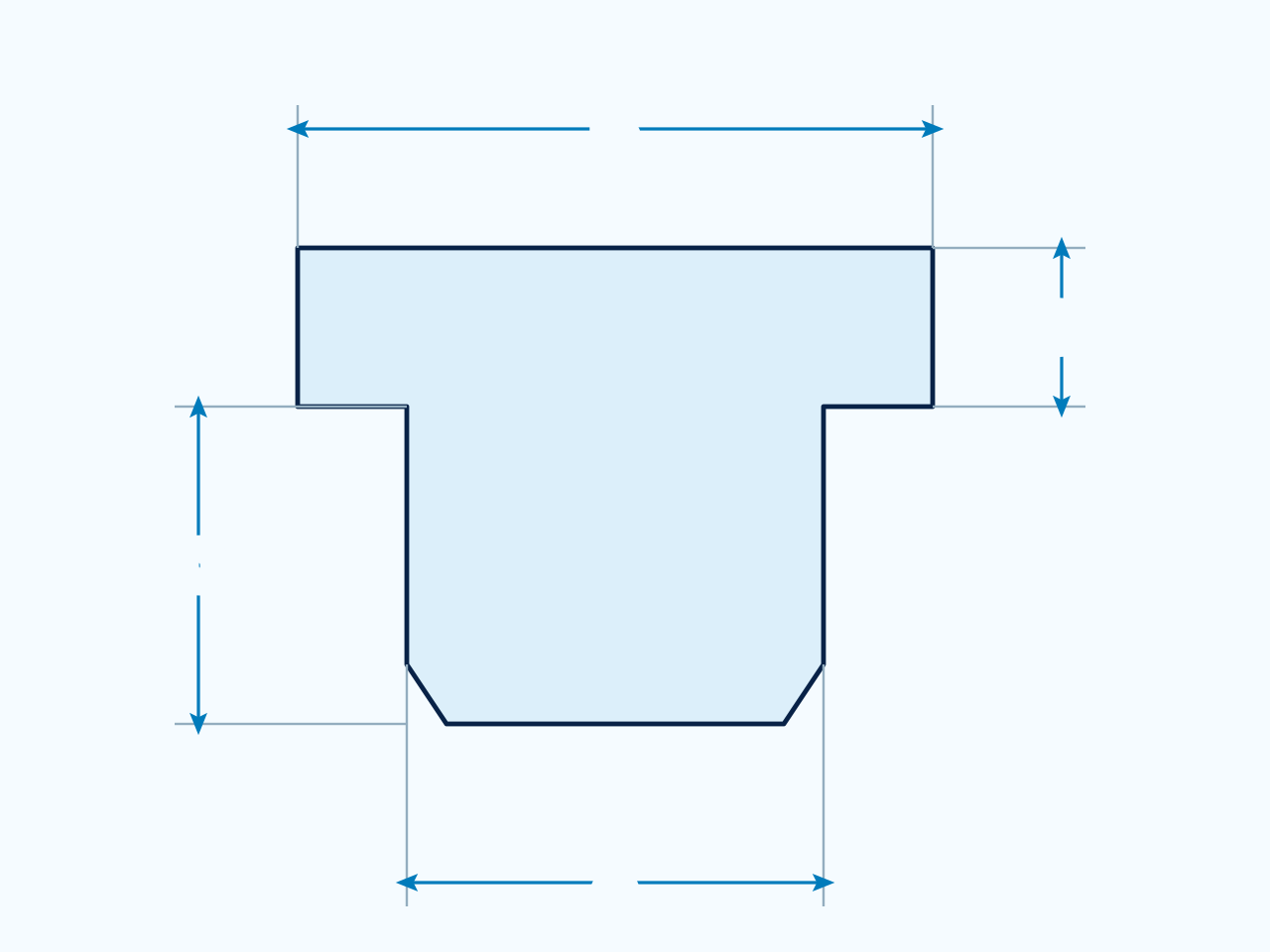
Match stem diameter A, flange diameter B, stem length C and flange thickness D. E refers to the underside recess; use the selected row and approved drawing to confirm the actual profile.
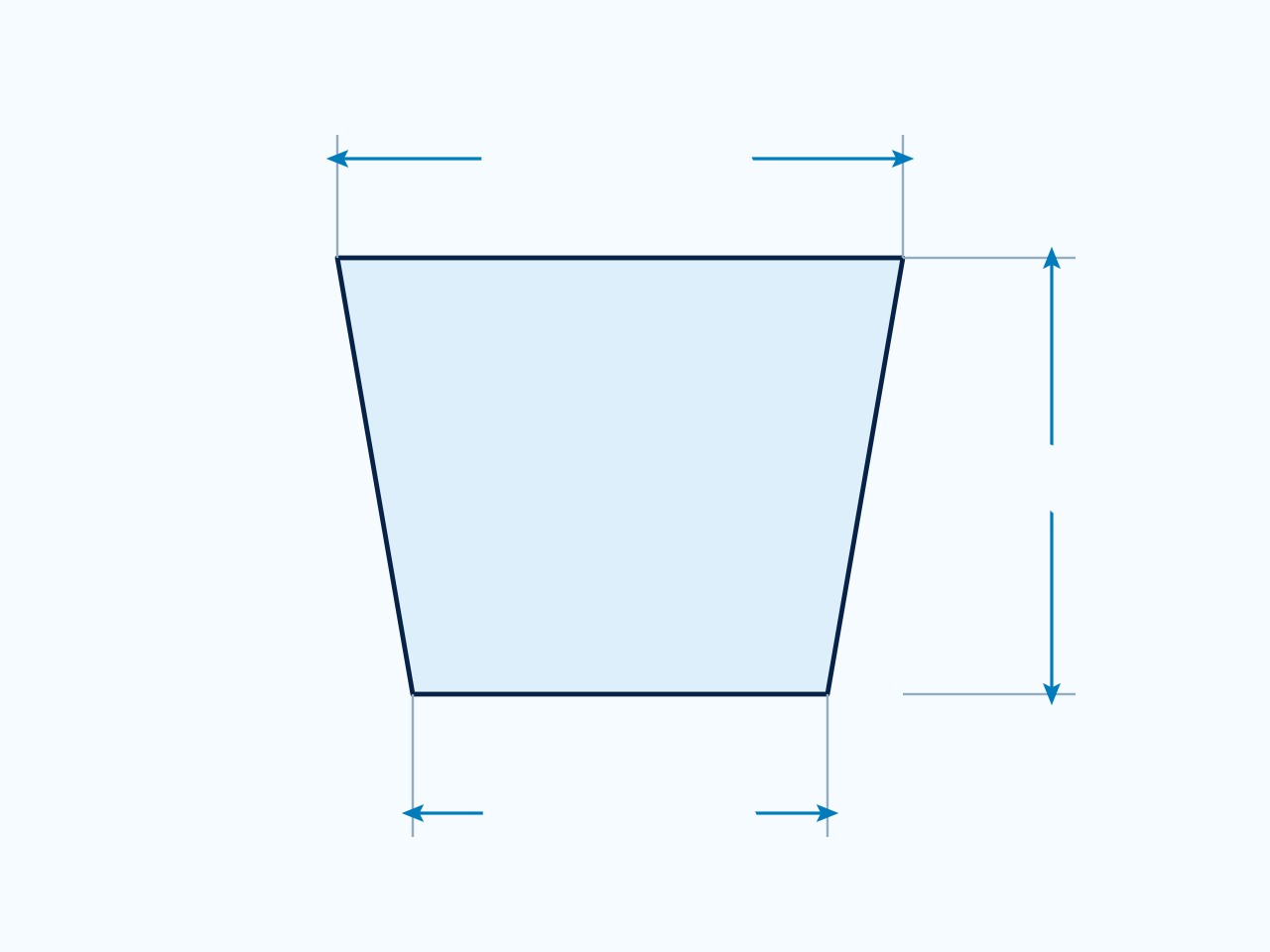
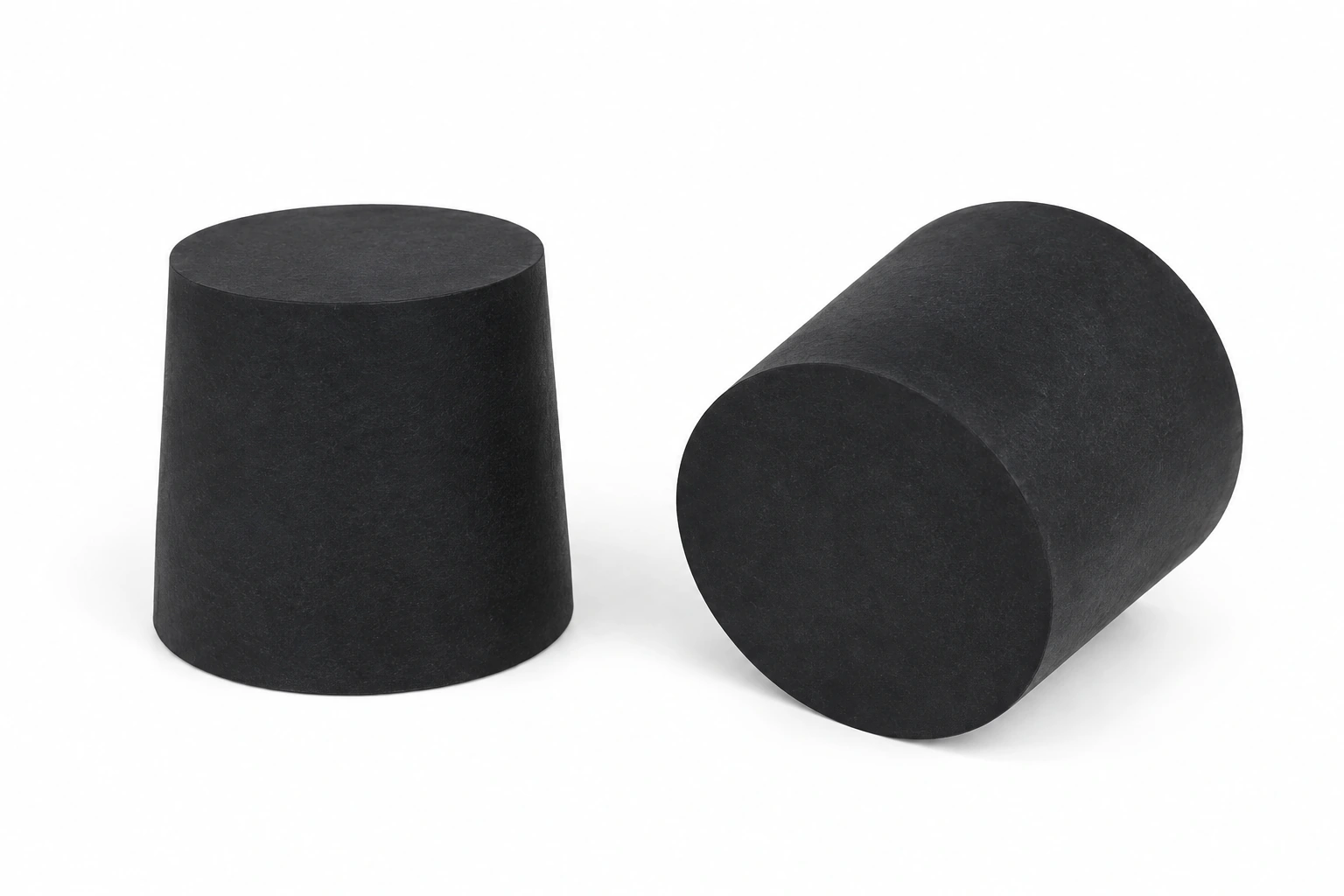
RSA Tapered Corks
Compare large-end diameter A, small-end diameter B and Height, in mm. The mating bore and required seating depth determine where the taper contacts the opening.
RSB Undercut Plugs
Compare neck diameter A, flange diameter B, flange-to-lip distance C and flange thickness D. Check panel thickness and rear clearance. E refers to the underside recess.

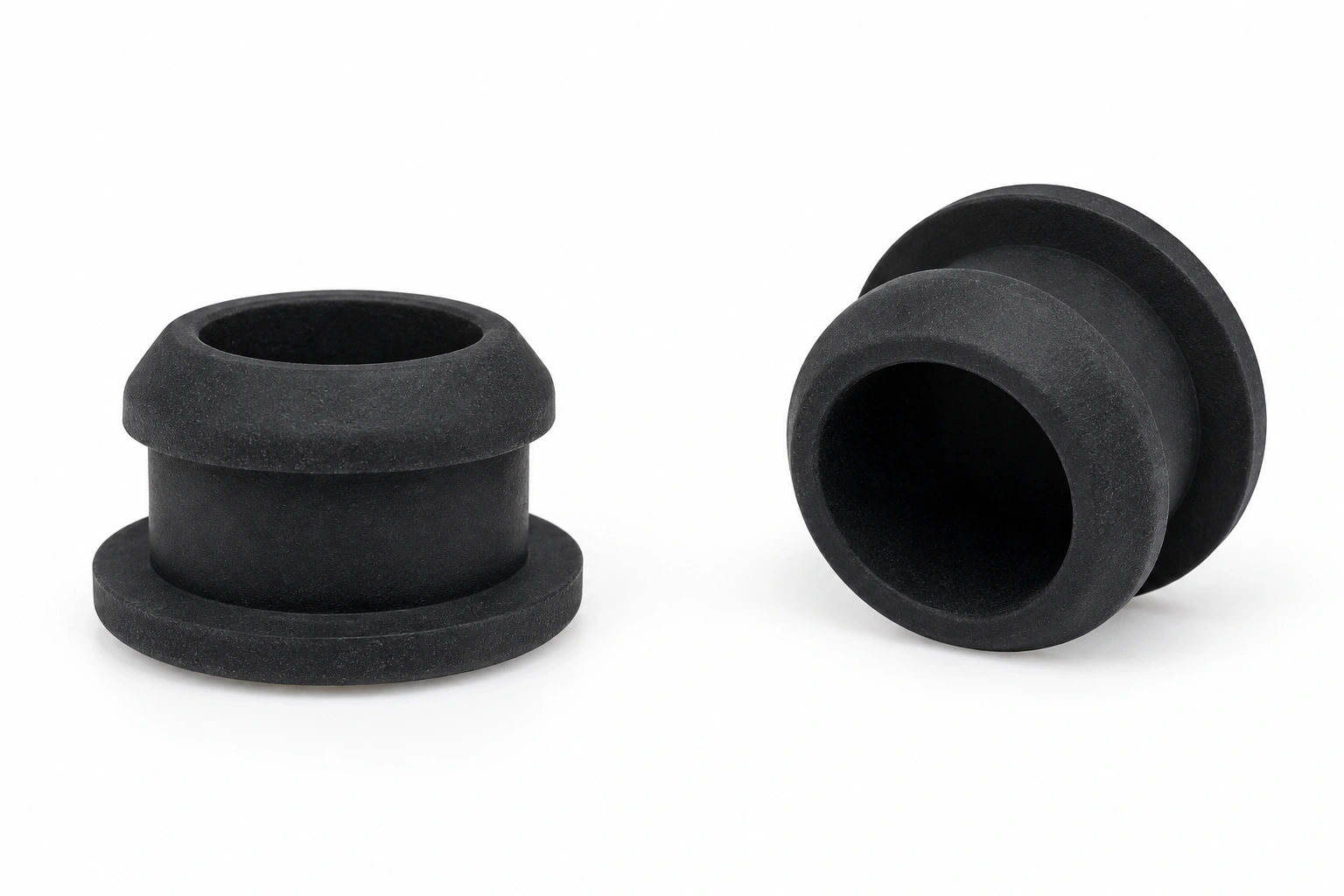
RSD T-Shaped Stoppers
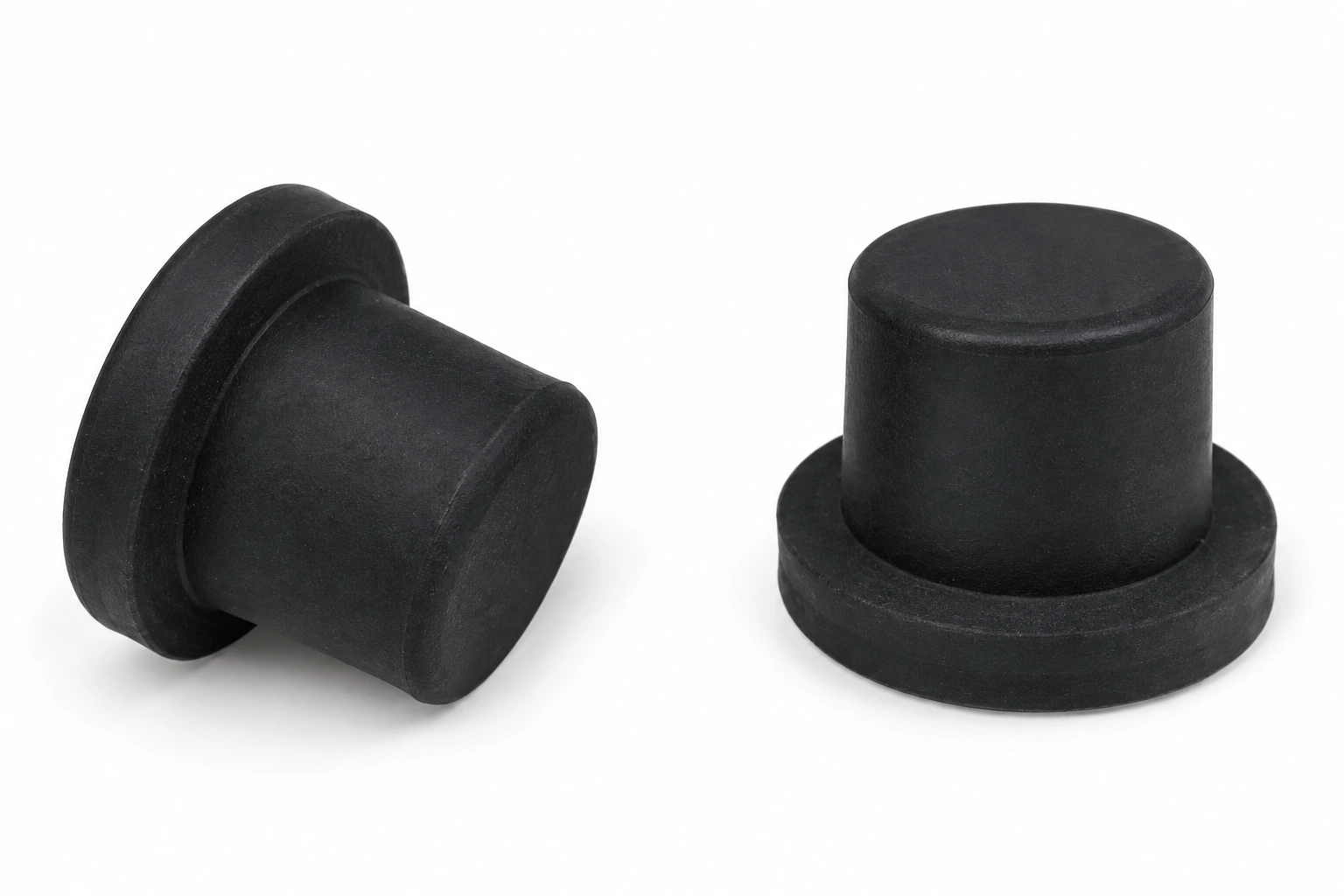
Compare stem diameter A, flange diameter B, stem length C and head thickness D, in mm. Check the seating surface and available depth as well as the hole diameter.
Need a different fit? Share the opening dimensions, mating profile and intended use for a custom size.
Discuss Your RequirementsProduct specifications
- Product form
- Silicone stopper selected for an existing bottle, test tube or similar vessel.
- Vessel dimensions
- Measure the neck at the seating position and the available insertion depth; vessel capacity is not a stopper dimension.
- Closure choice
- Select solid or bored construction. For a taper, compare both end diameters against the intended seated position.
- Handling fit
- Check insertion, retention and grip for removal on the actual vessel, through its normal use sequence.
- Material duty
- Define contents, cleaning method and exposure for the selected silicone compound and complete closure.
- Reorder reference
- Record the approved stopper dimensions, compound, color and passage details together with the vessel it fits.
Need a quote or a custom part?
Send your requirements, drawings or samples to discuss standard and custom silicone rubber parts.
Email us[email protected]