
Small clear rubber feet
Rubber feet are generally produced to protect a certain surface from vibration, friction, wear, as well as to help you lift the object without much trouble. However, there is another purpose, especially if we’re talking about small clear rubber feet, and that is to reduce noise when two surfaces are right next to each other. As they are most often visible, these special rubber feet require to be aesthetically adaptable. Precisely because of this, it is created completely clean, colorless, and small enough rubber feet. It is transparent to easily fit on any surface and reflect the appropriate color. It is small enough to serve a purpose but not to take up much space.
These small clear rubber feet are most often made of silicone because of their properties. The structure of the silicone is soft enough to reduce friction while dampening noise. That is why these rubber feet are ideal for everyday use in both industry and household.
A clear bumper is often chosen because the support remains visible through glass or beside a light-colored finish. Place it where the closing panel or resting object will meet the center of the pad. At a cabinet door, compare the gap on both sides after fitting so the pad does not create an obvious uneven edge. On a display base, check the appearance from the customer’s viewing angle as well as the contact underneath. A discreet color is most effective when the pad’s position and height also suit the assembly.
Small clear feet may be supplied on a release liner for convenient handling. Select the required diameter and projection before separating a pad, and keep the exposed bonding face clean during placement. For a visible installation, trial the part on the actual finish to assess both attachment and appearance. Clear material can make trapped debris or a poorly positioned edge noticeable, so consistent placement matters when several pads form a set.
Rubber Feet & Bumper Size Catalog
Compare mounting style, overall size and recess dimensions. Each profile uses its own drawing and column meanings.
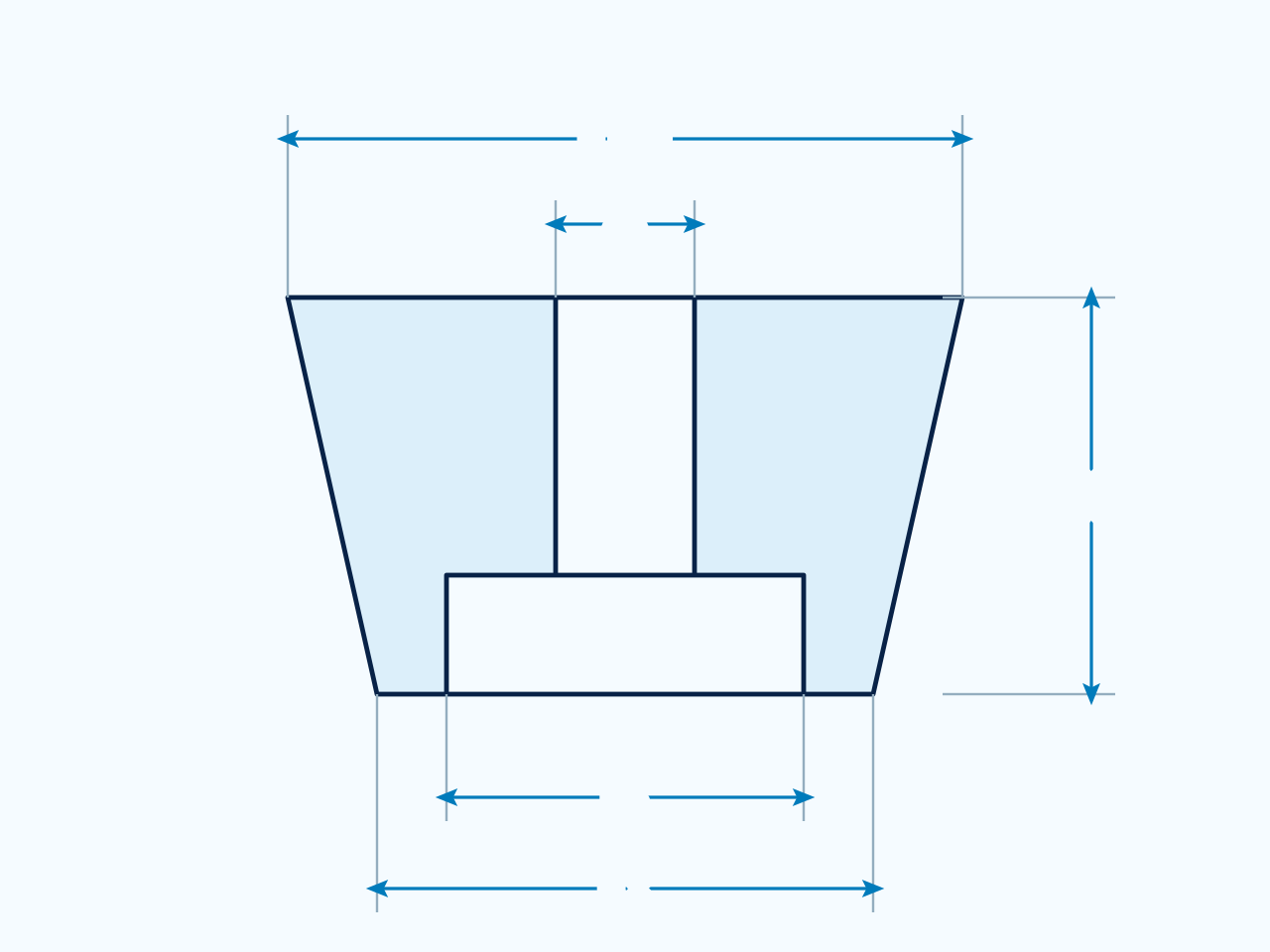
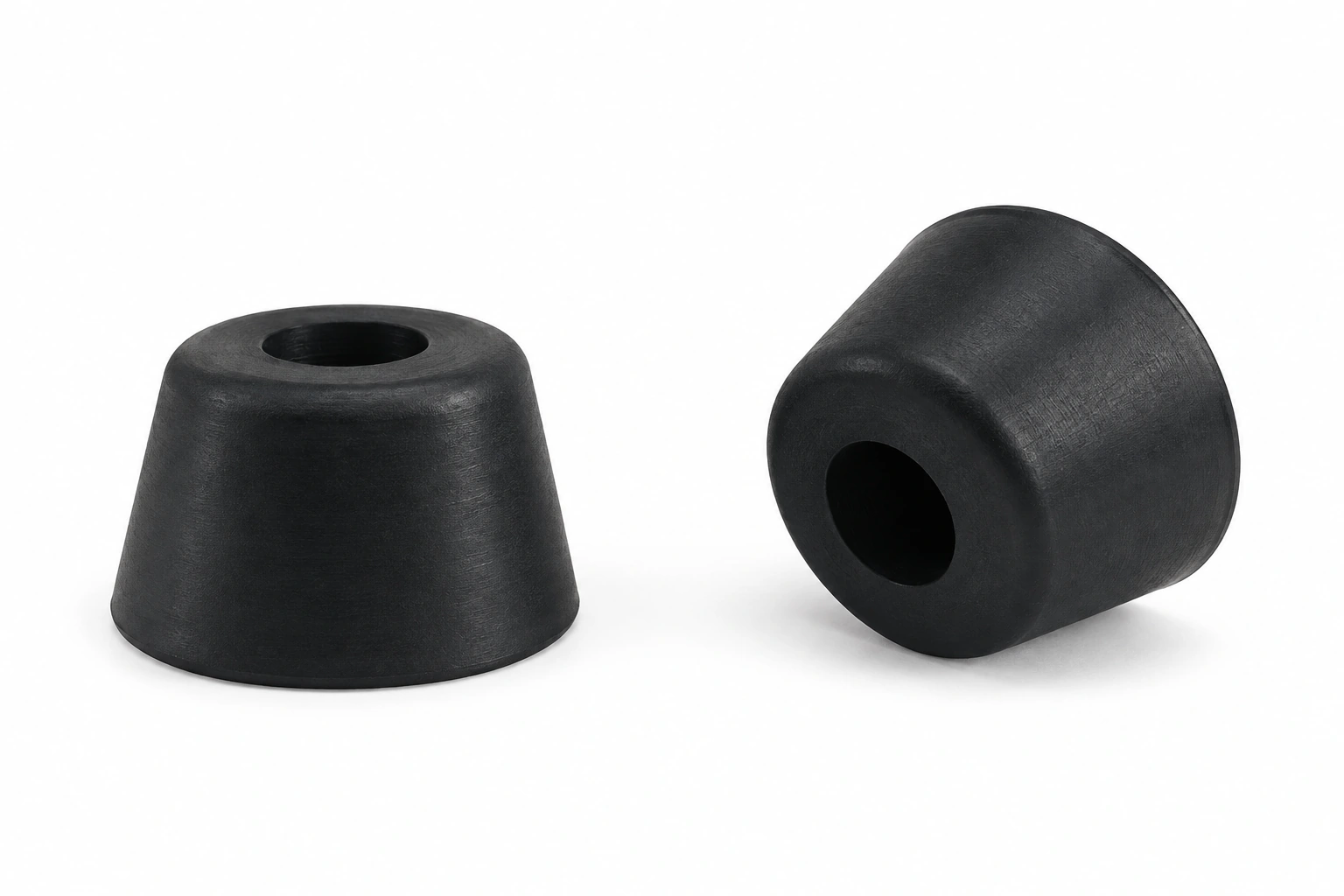
Recess Rubber Bumper
Compare OD, H, A, B and C in mm. C indicates the outer base dimension on this bumper profile, not the recess depth.
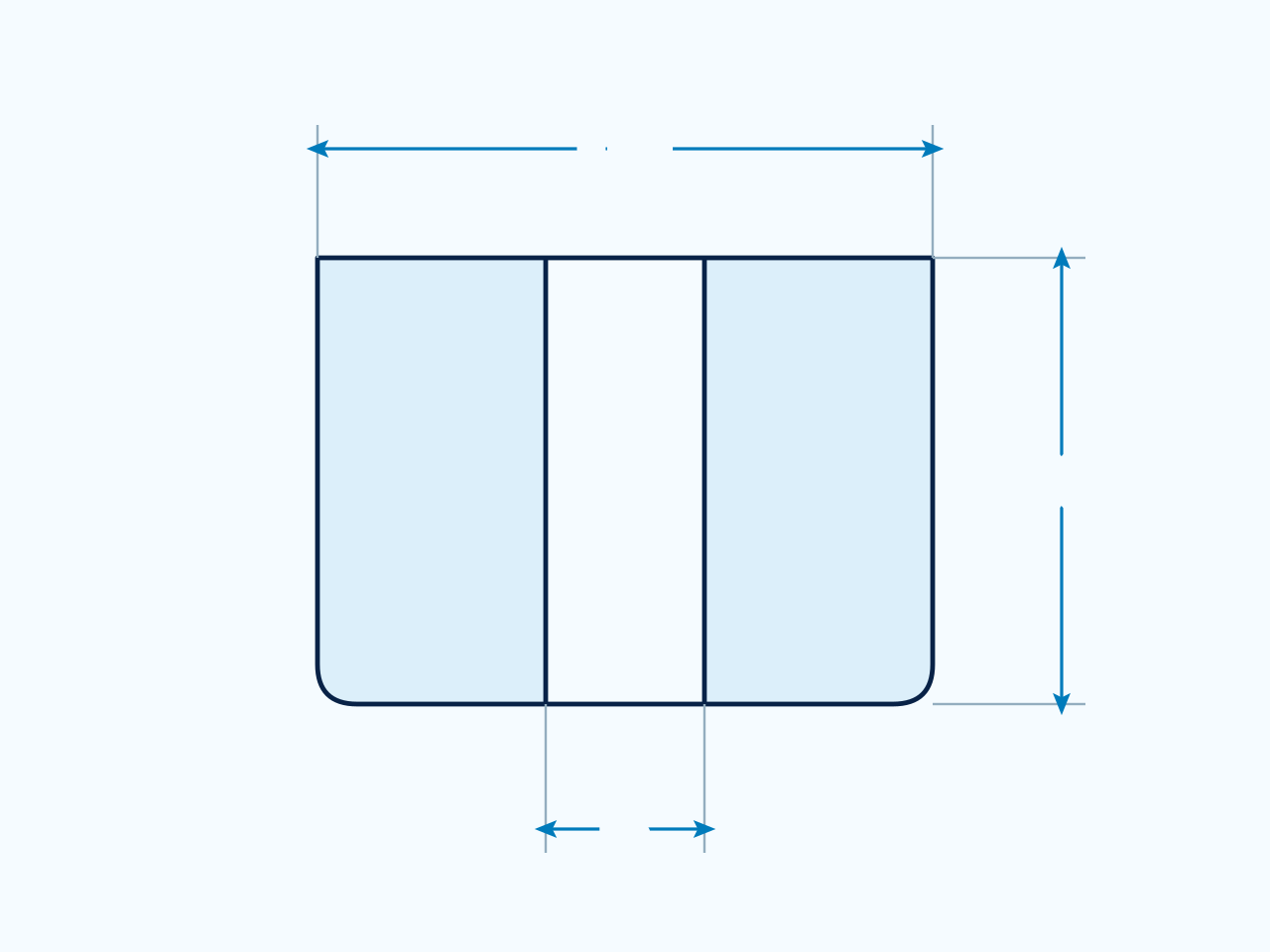
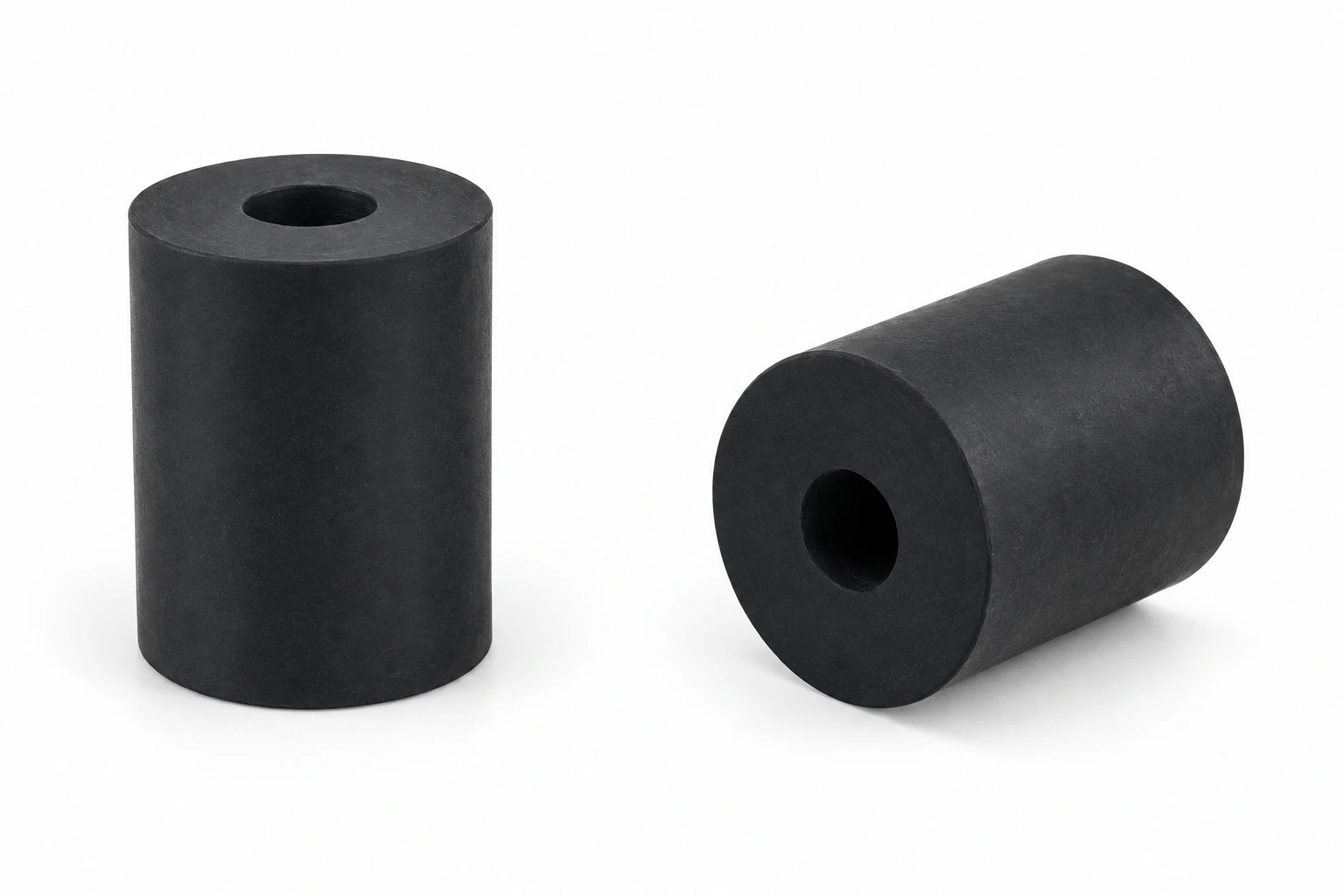
Cylindrical Rubber Feet
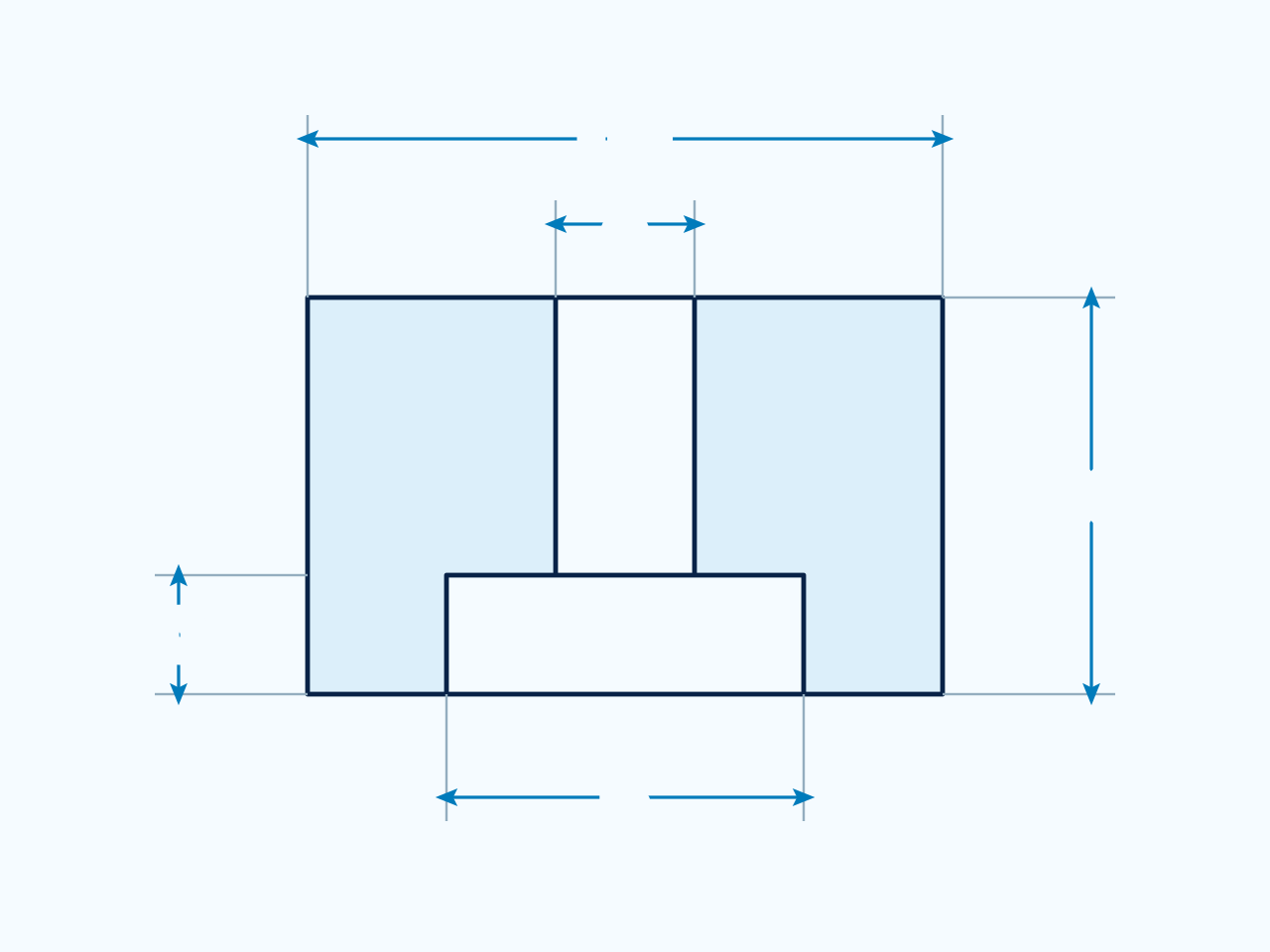
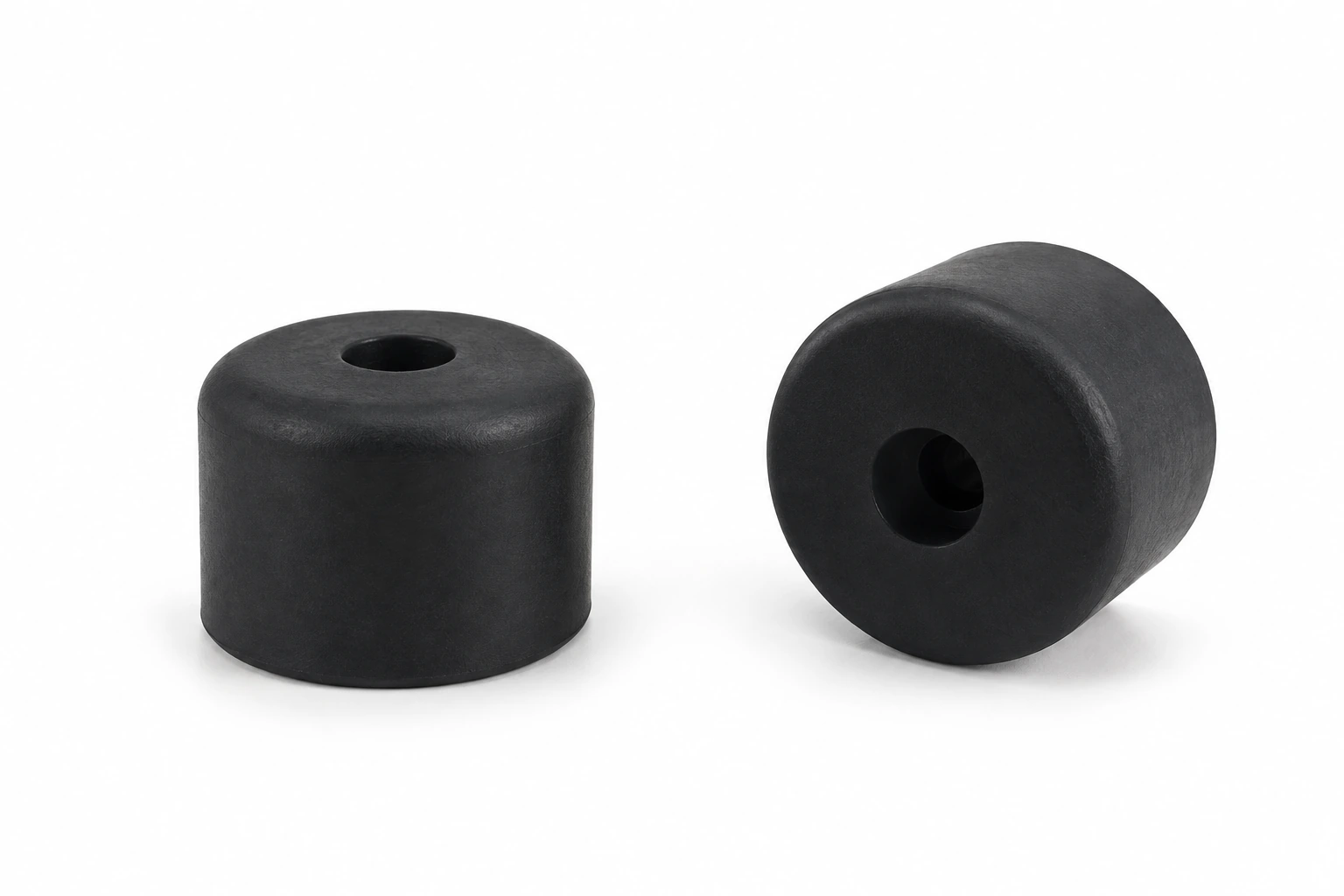
Compare OD, H and B in mm using the cylindrical-foot drawing. Material and colour remain listed separately.
Recess Rubber Feet
Compare OD, H, A, B and C in mm. C indicates the recess depth on this feet profile.
Hemispherical Rubber Bumper
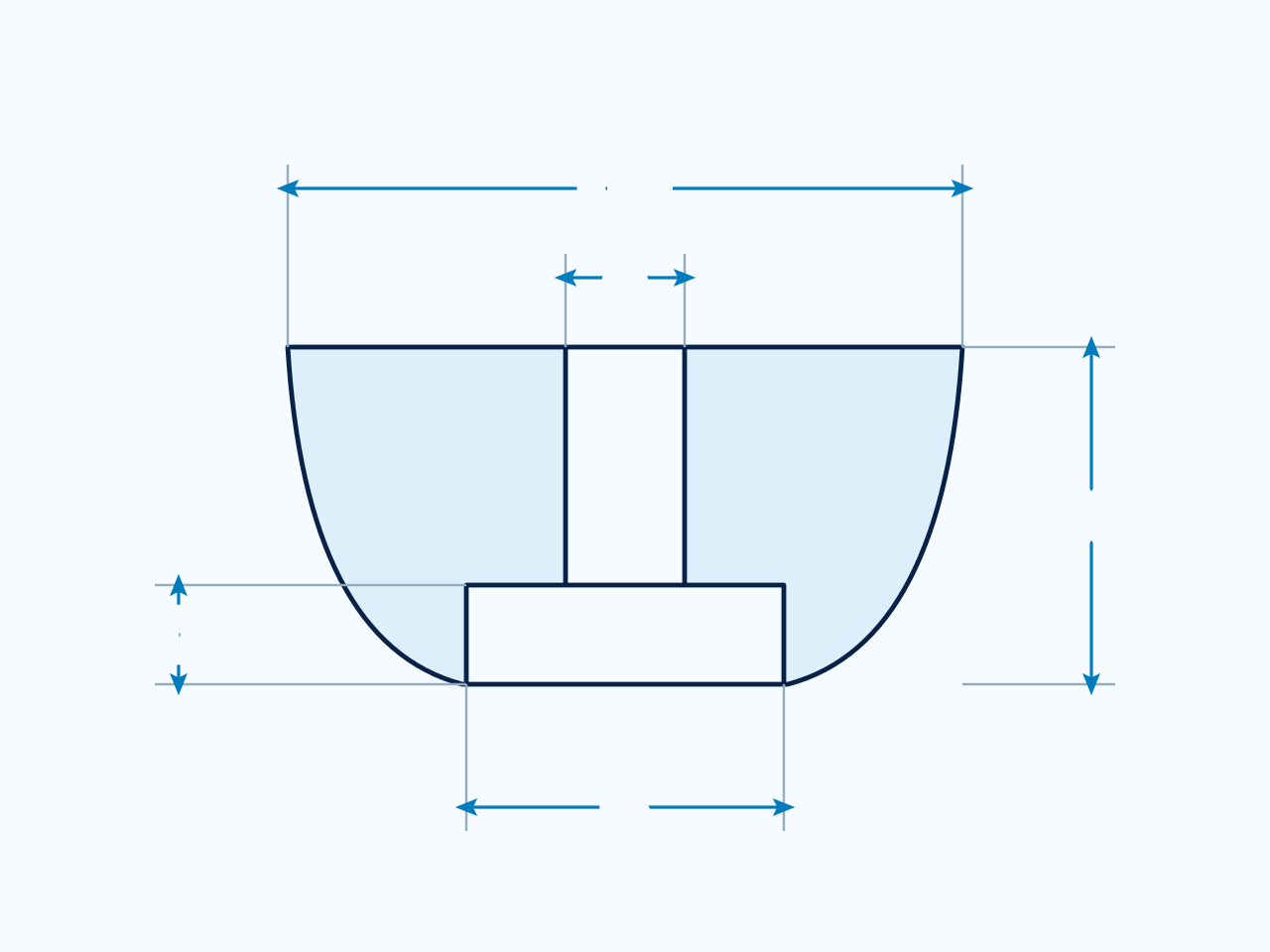
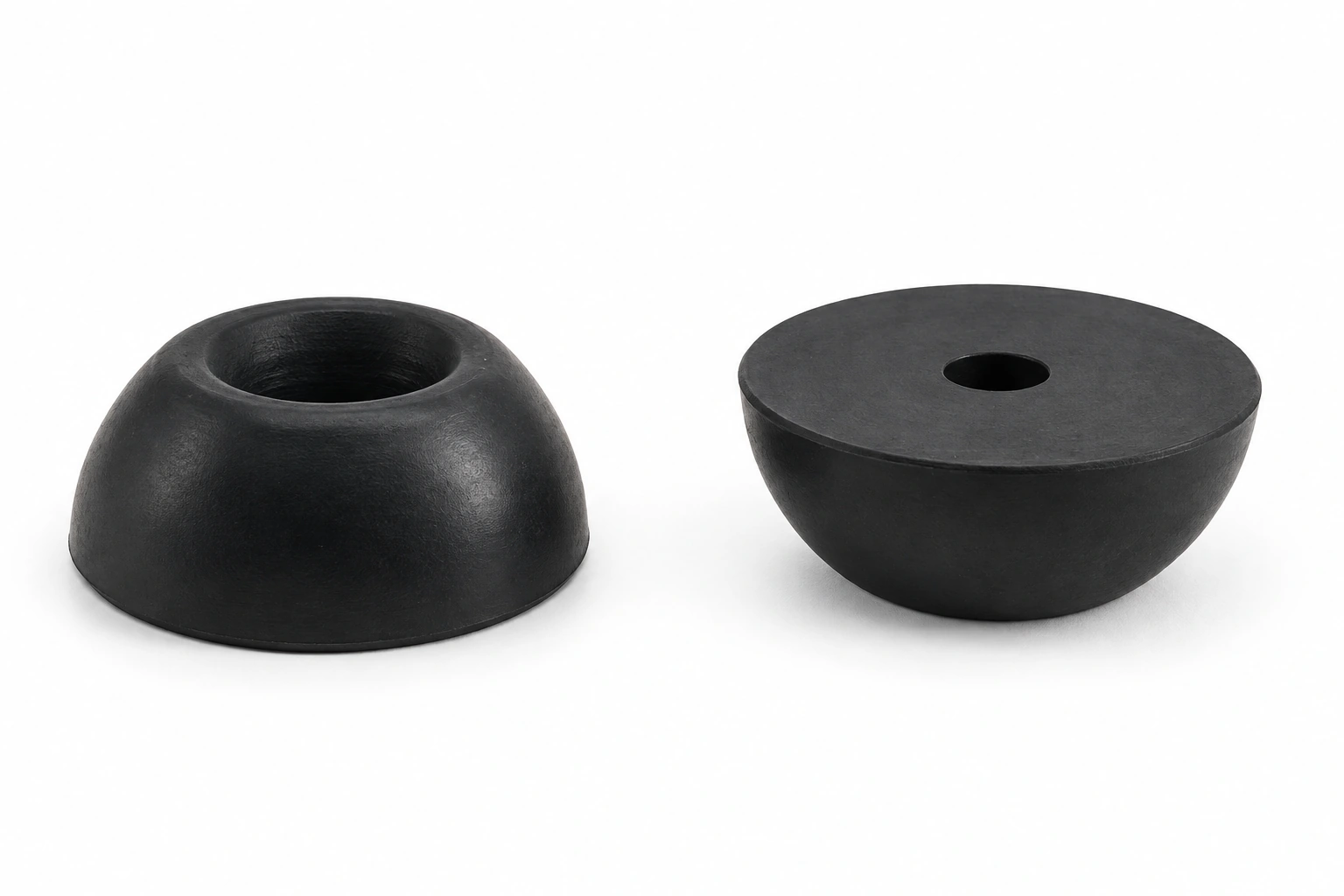
Compare OD, H, A, B and C in mm using the hemispherical-bumper drawing.
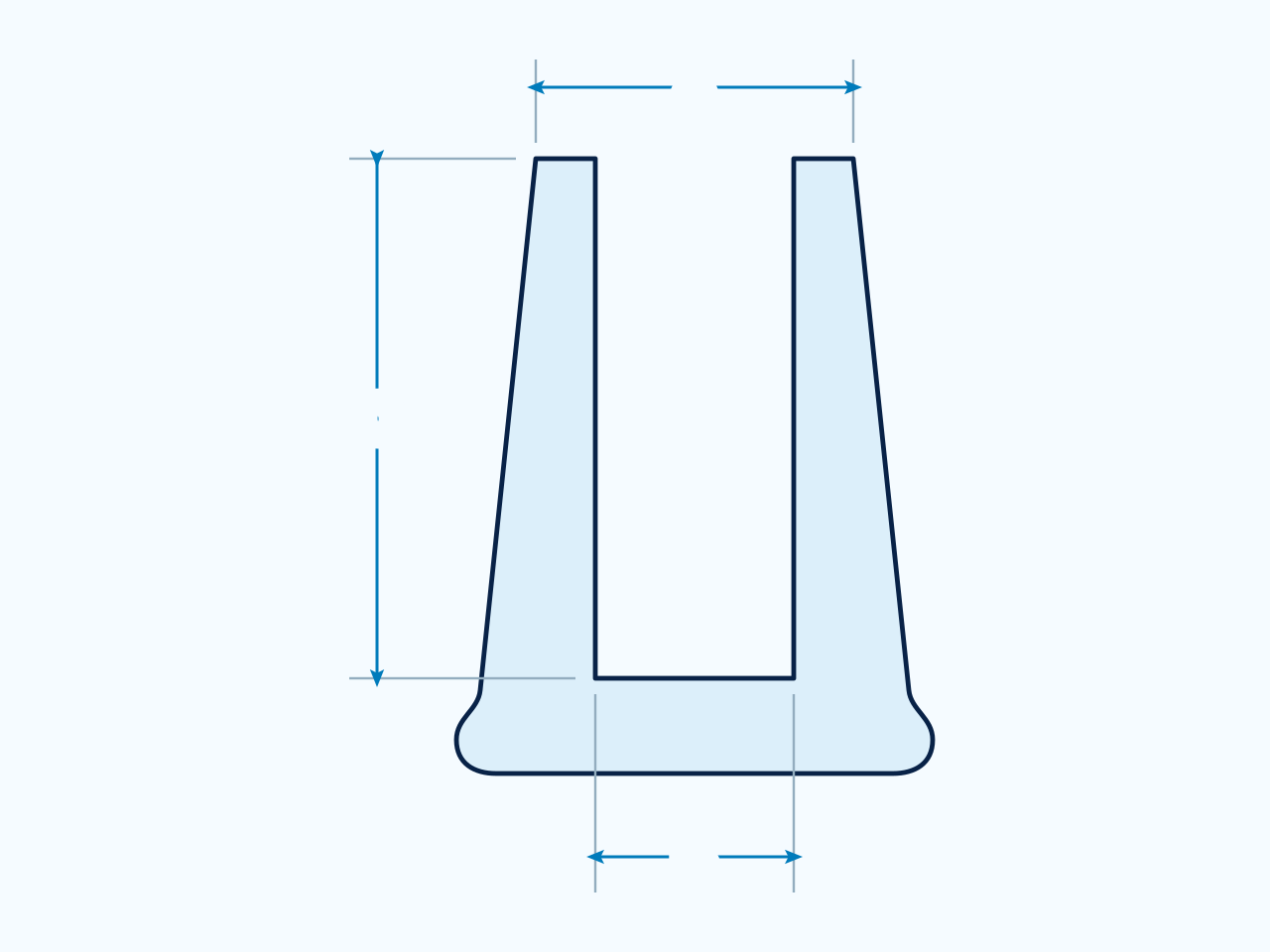
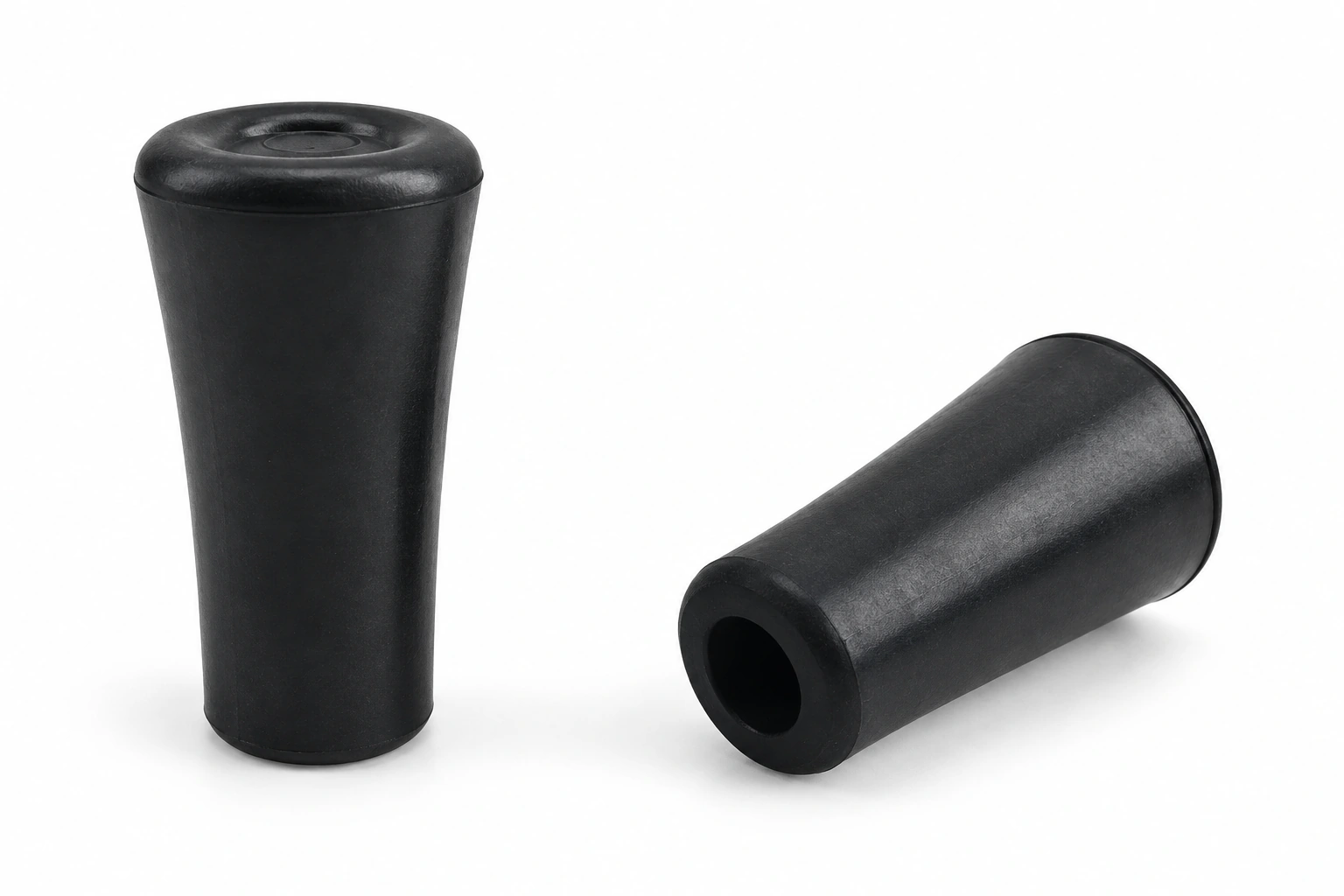
Rubber Tips
Compare A, B and C in mm using the open round-tip drawing. Check the mating leg dimensions and seating depth.
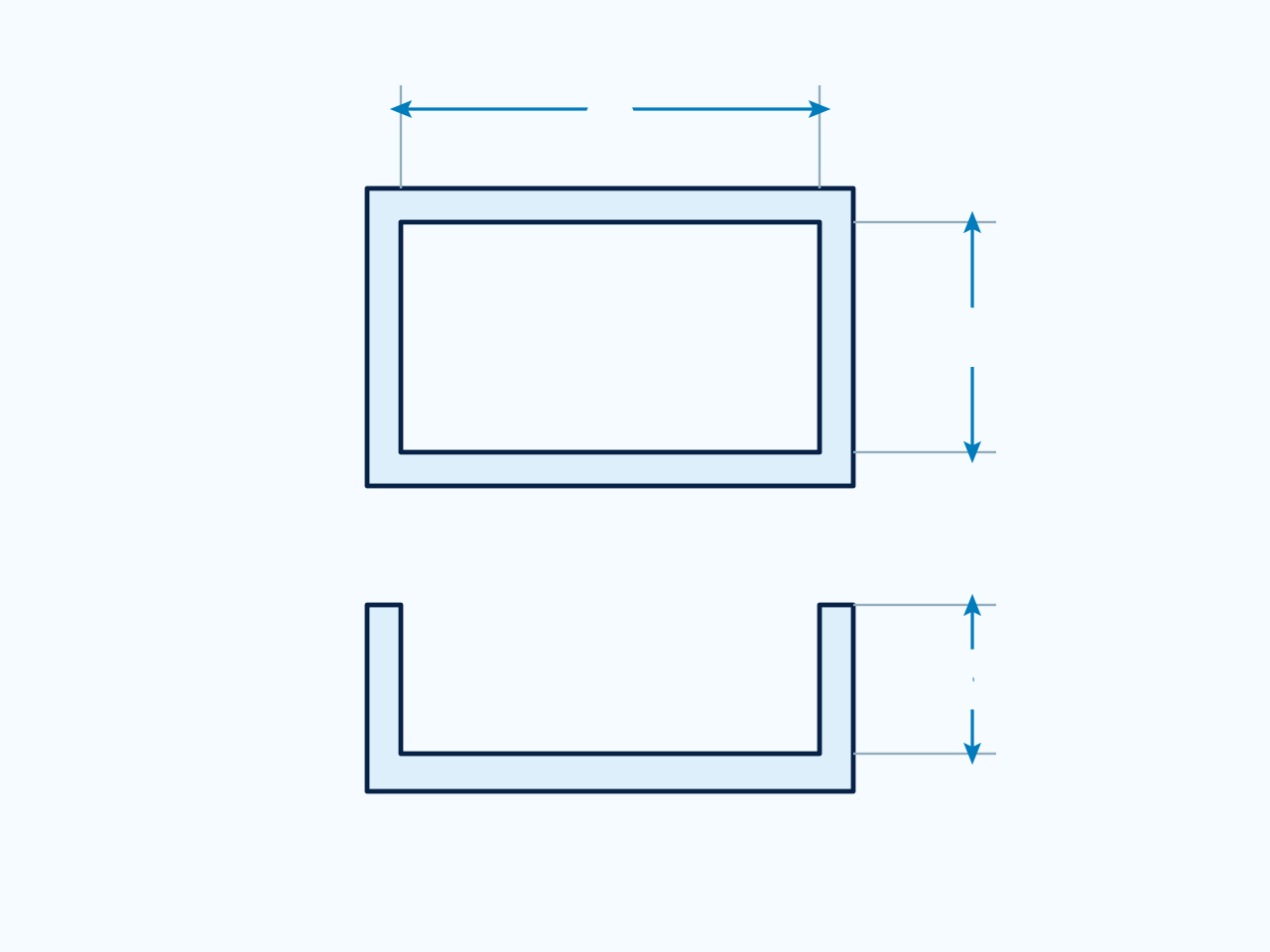
Rectangular rubber feet for chairs
Compare A, B and C in mm using the rectangular-tip drawing. Check both sides of the mating leg and the seating depth.
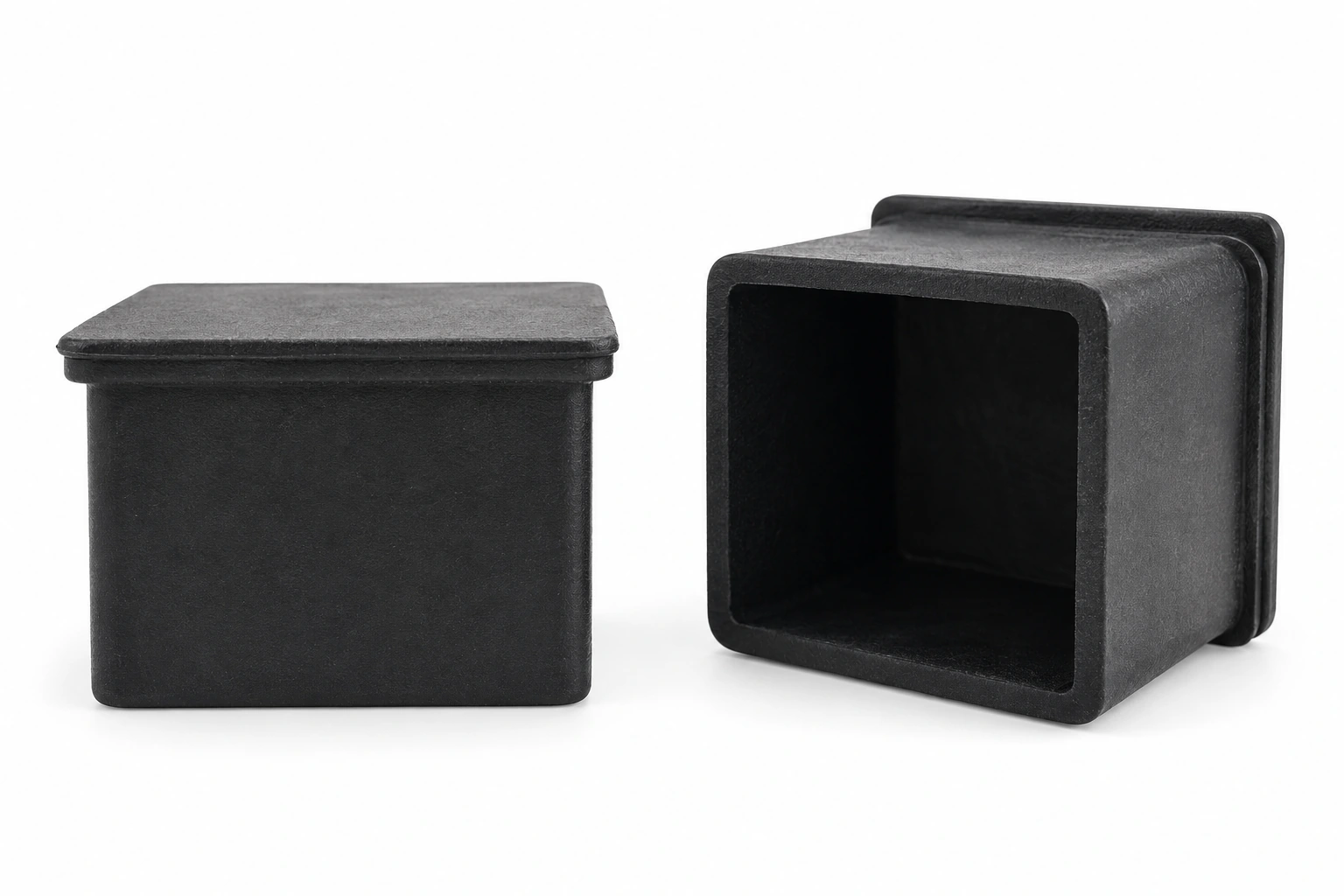
Rubber Feet For Chairs
Compare A, B, C and D in mm using the square-tip drawing. Check the mating leg profile and seating depth.
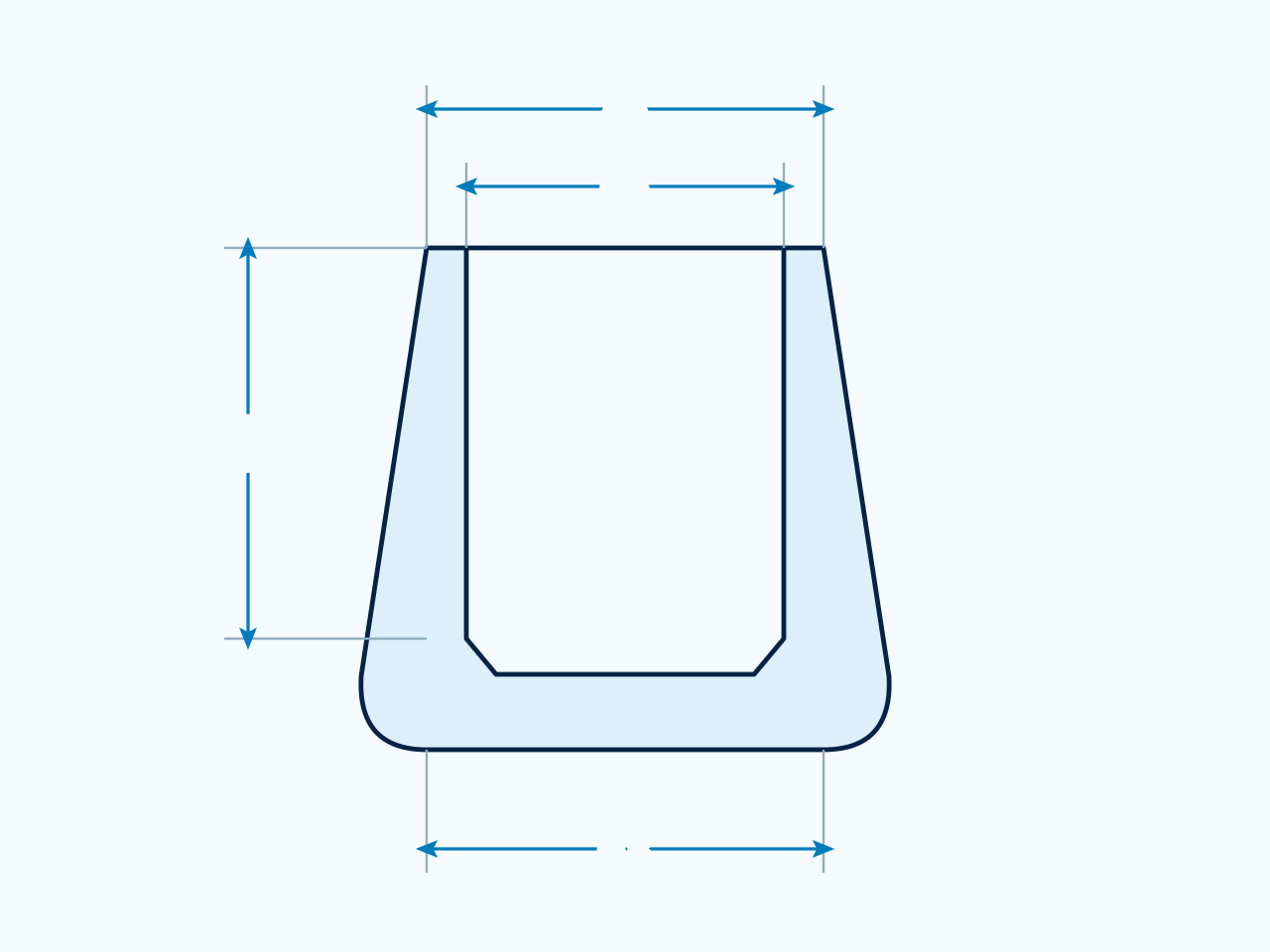
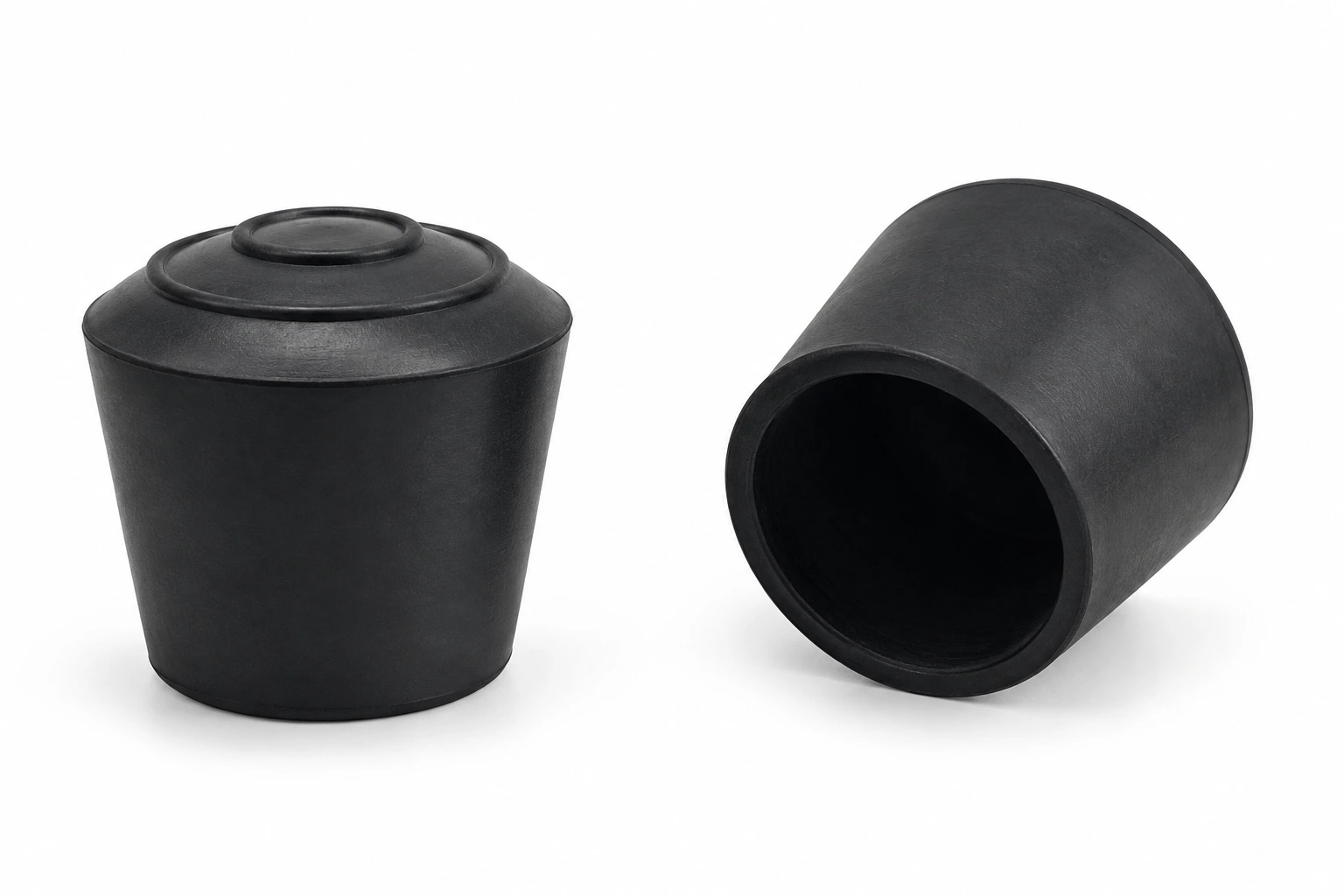
Need a different size? Share your drawing, mating dimensions and intended use to discuss a suitable part.
Discuss Your RequirementsProduct specifications
- Product form
- Resilient support foot for an equipment or furniture base
- Material options discussed
- Silicone. Choose one formulation for the actual contact and loading conditions.
- Application focus
- Glass table supports. Size the part against the selected assembly.
- Dimensions to confirm
- Footprint, installed height and attachment position. Match these to glass table supports.
- Compact envelope
- Define the available installation space, minimum wall or web thickness and access for fitting and removal.
- Visibility
- Define the required visibility through the finished wall and approve appearance using a sample of the ordered thickness.
- Exposure to evaluate
- Dust or debris. Validate the selected material under the combined conditions.
- Glass contact
- Define the contact footprint, glass thickness and load; check local pressure and marking on a sample assembly.
- Support loading
- Determine the load at each foot and check the resulting compression and stability.
Need a quote or a custom part?
Send your requirements, drawings or samples to discuss standard and custom silicone rubber parts.
Email us[email protected]