
Soft rubber bumpers
Not all furniture manufacturers provide cushioning with their drawer and cabinet doors. This leads to a huge noise every time you open and close them. No homeowner wants to use furniture that goes off with a bang each time it’s used. Homeowners require something that cushions the force and dampens the sound that is created after closing.
Many homeowner owners have tried home remedies to resolve this problem but to no avail. What most homeowners require is an object that is specifically made for this task and can come in extremely affordable prices. Fortunately, that’s exactly what our soft rubber bumpers are. They stick to the corners of your drawer and cabinet doors and brace the impact that they face upon closing, thus eliminating any sound and also protecting the door.
Our soft rubber bumpers are specially designed to absorb kinetic energy in itself so that your drawer doors won’t face the brunt of it. With our soft rubber bumpers installed on your doors, you won’t have to worry about your furniture ever making unbearable noises again. Our soft rubber bumpers go perfectly well with your furniture to match it’s aesthetics with the myriad number of sizes and styles we offer.
If you need the soft rubber bumpers in a unique color, we can deliver! Our soft rubber bumpers are extremely easy to apply as well. All you need to do is ensure that you carefully remove the bumpers from the bumper sheet we provide you and stick the adhesive surface to the doors. Stick two to cabinet doors and four to drawer doors, on each of their corners, to minimize all noise and damage.
Our soft rubber bumpers can also be used for preventing slippage and sliding of objects by applying the bumpers to their base. Since they are made of rubber, they can stop any sliding and slipping motion in its tracks.
Rubber Feet & Bumper Size Catalog
Compare mounting style, overall size and recess dimensions. Each profile uses its own drawing and column meanings.
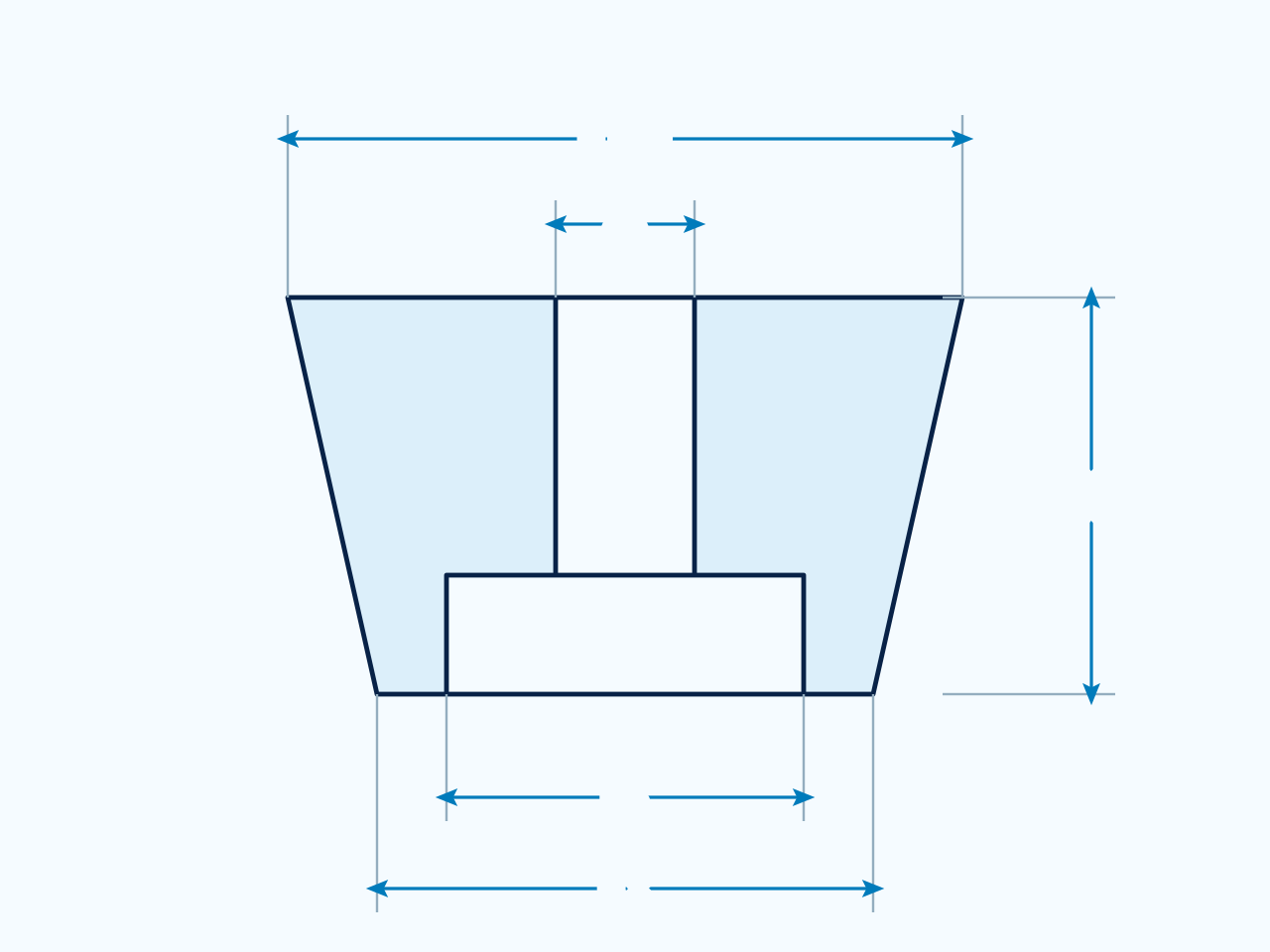
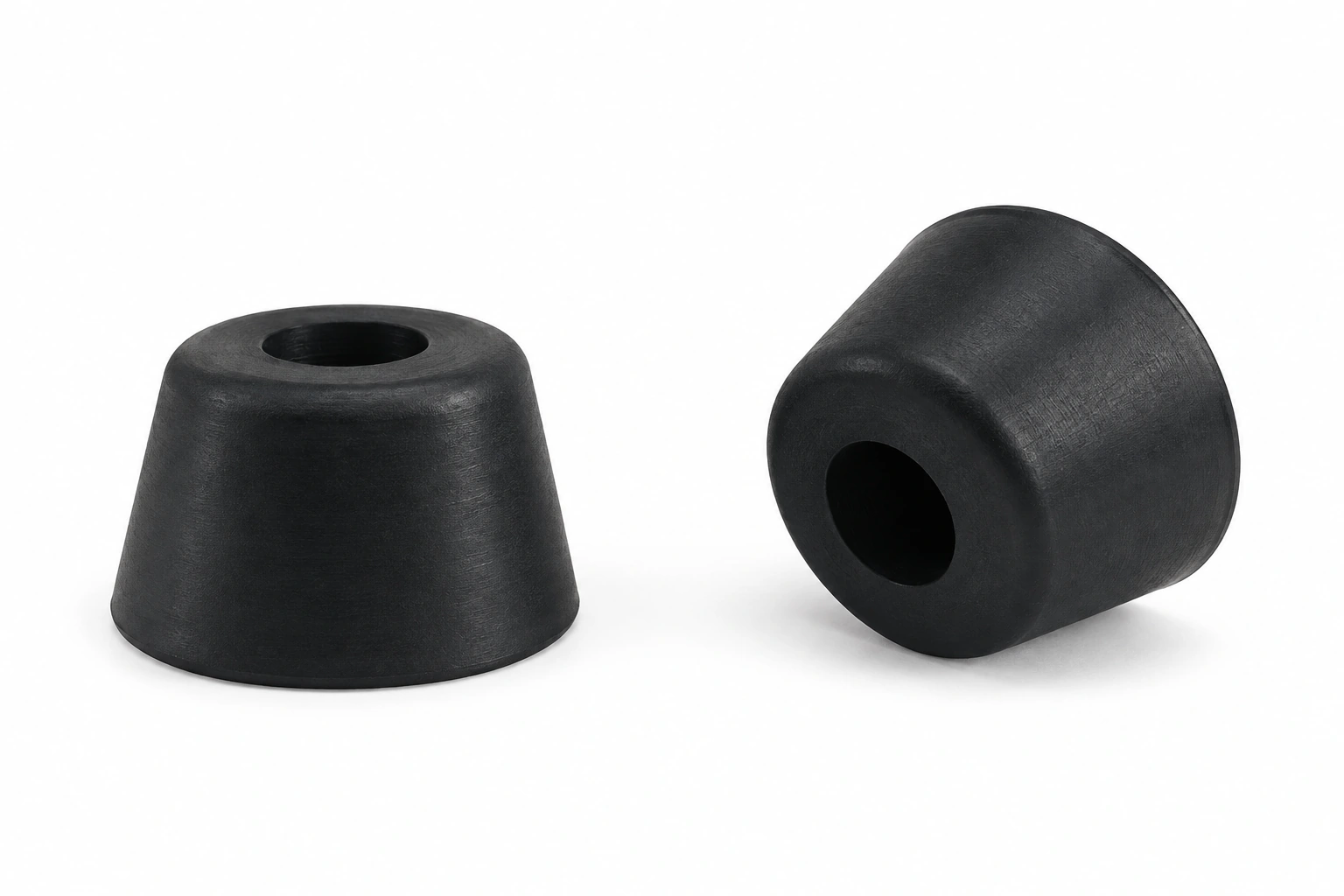
Recess Rubber Bumper
Compare OD, H, A, B and C in mm. C indicates the outer base dimension on this bumper profile, not the recess depth.
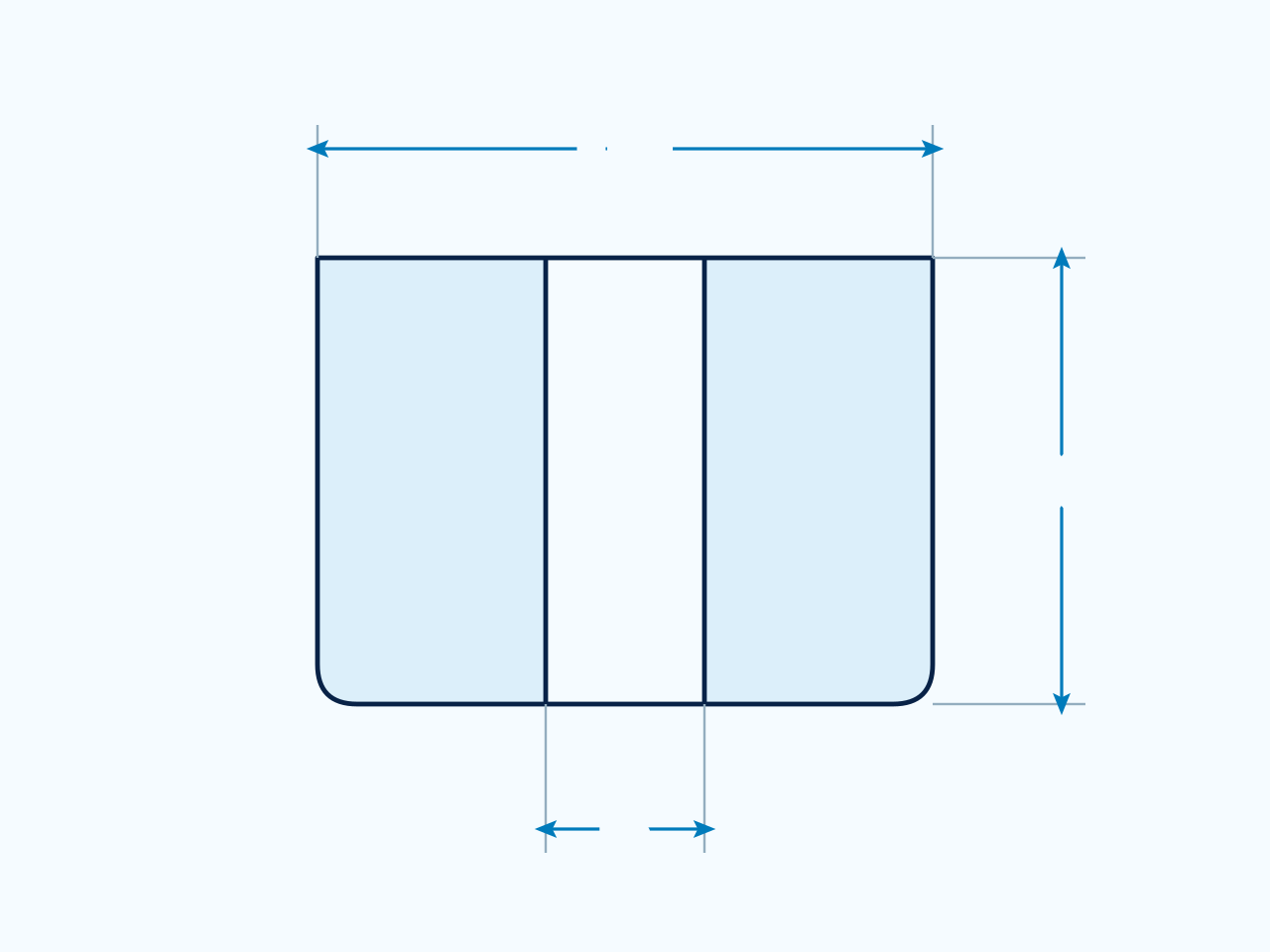
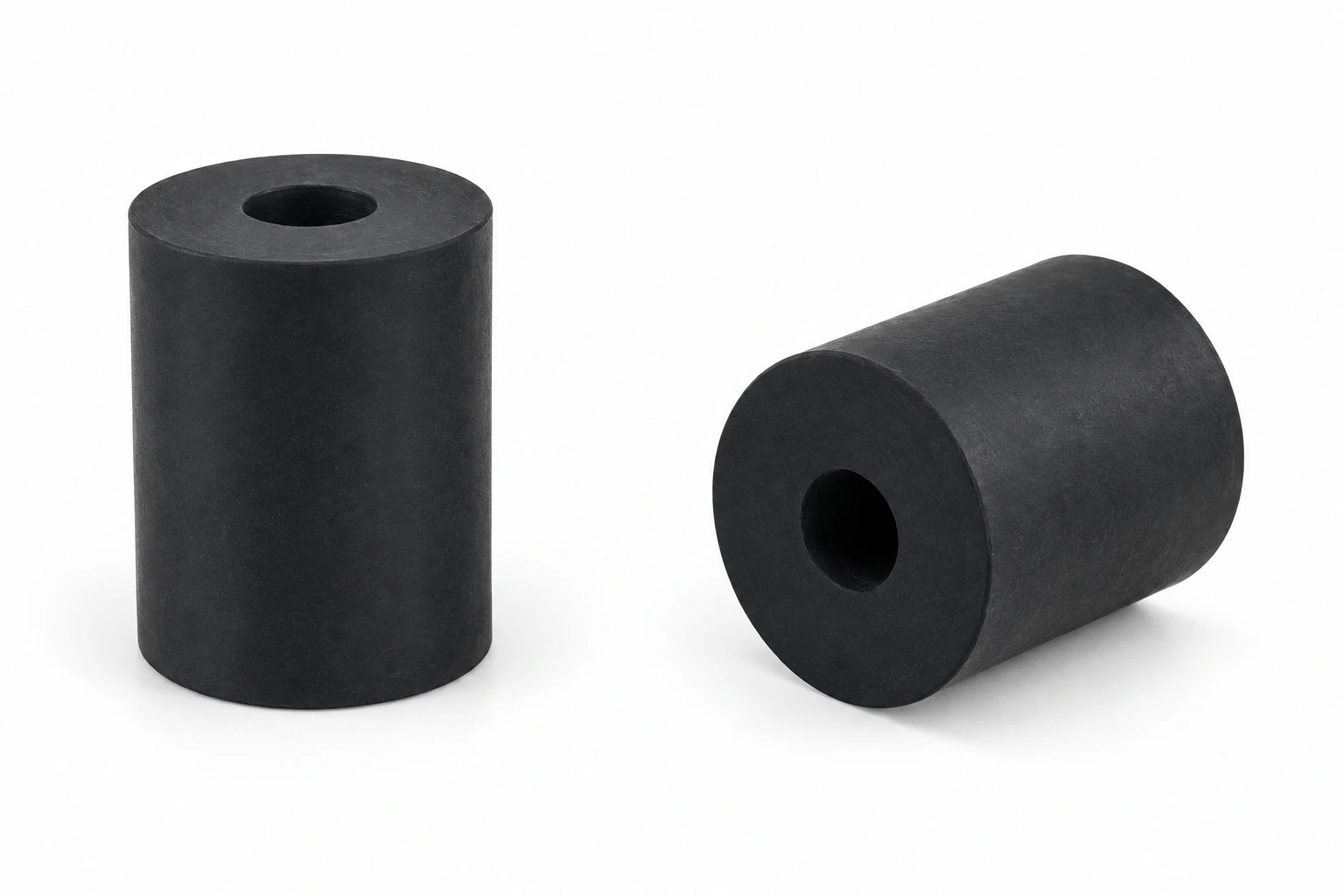
Cylindrical Rubber Feet
Compare OD, H and B in mm using the cylindrical-foot drawing. Material and colour remain listed separately.
Recess Rubber Feet
Compare OD, H, A, B and C in mm. C indicates the recess depth on this feet profile.
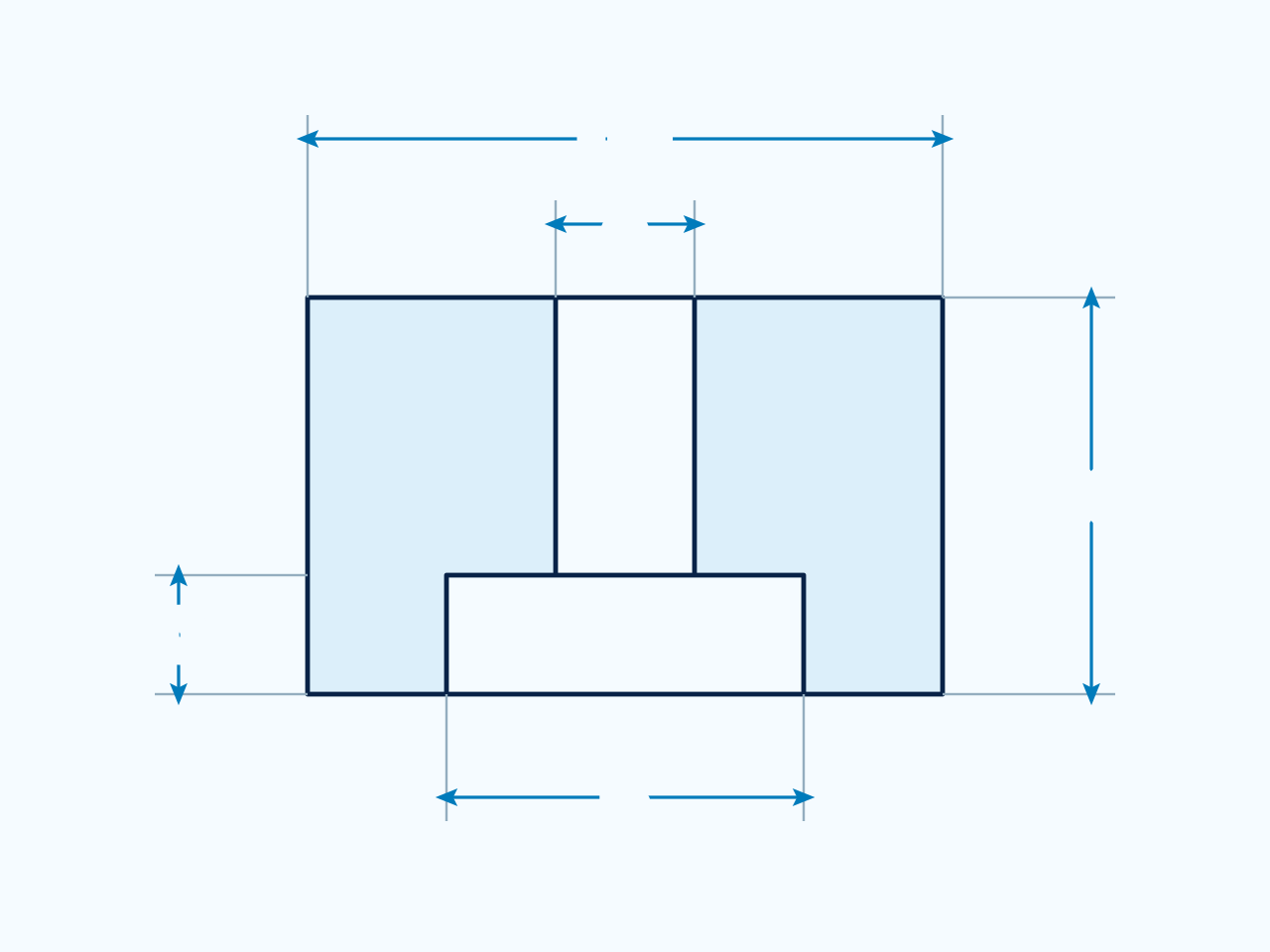
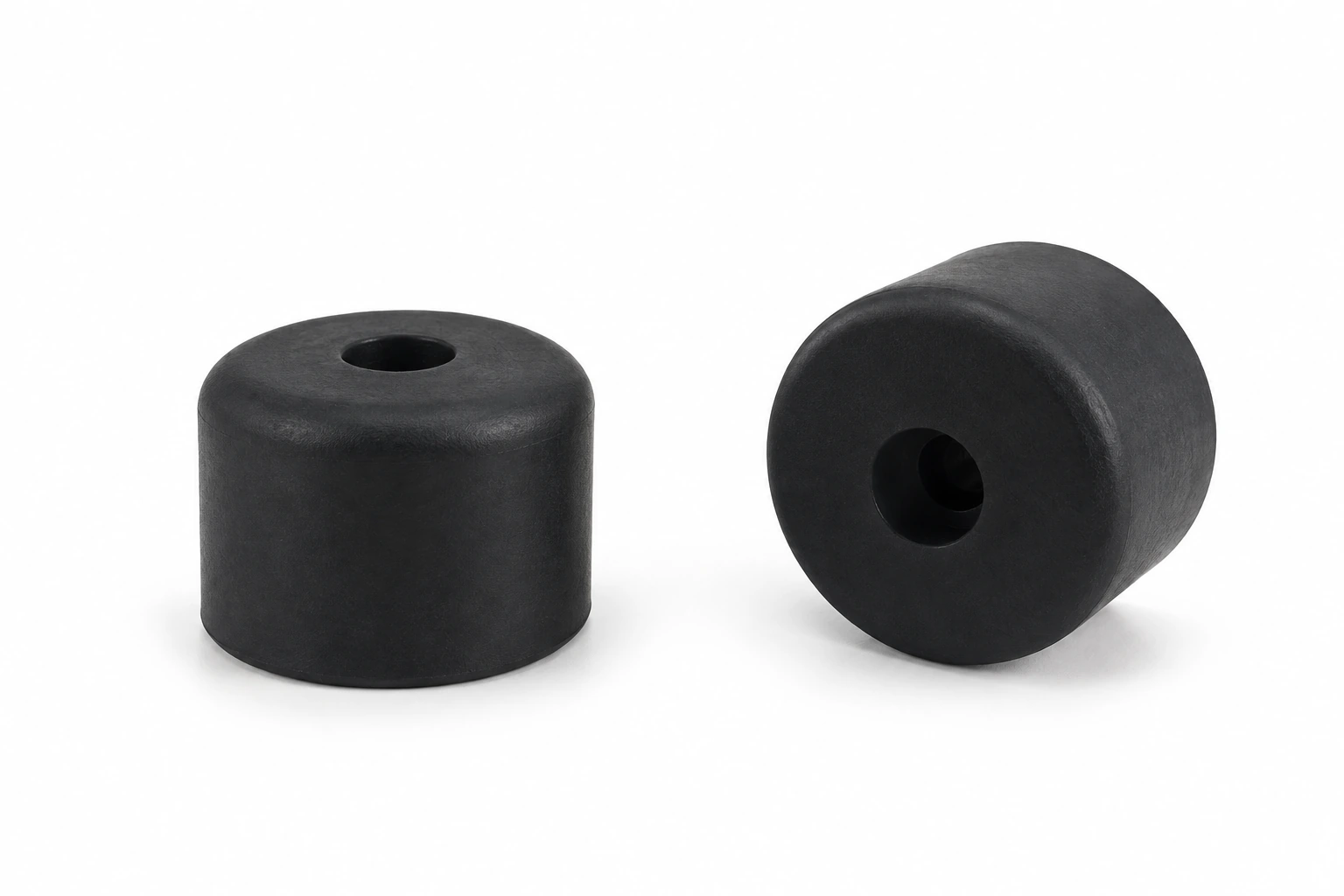
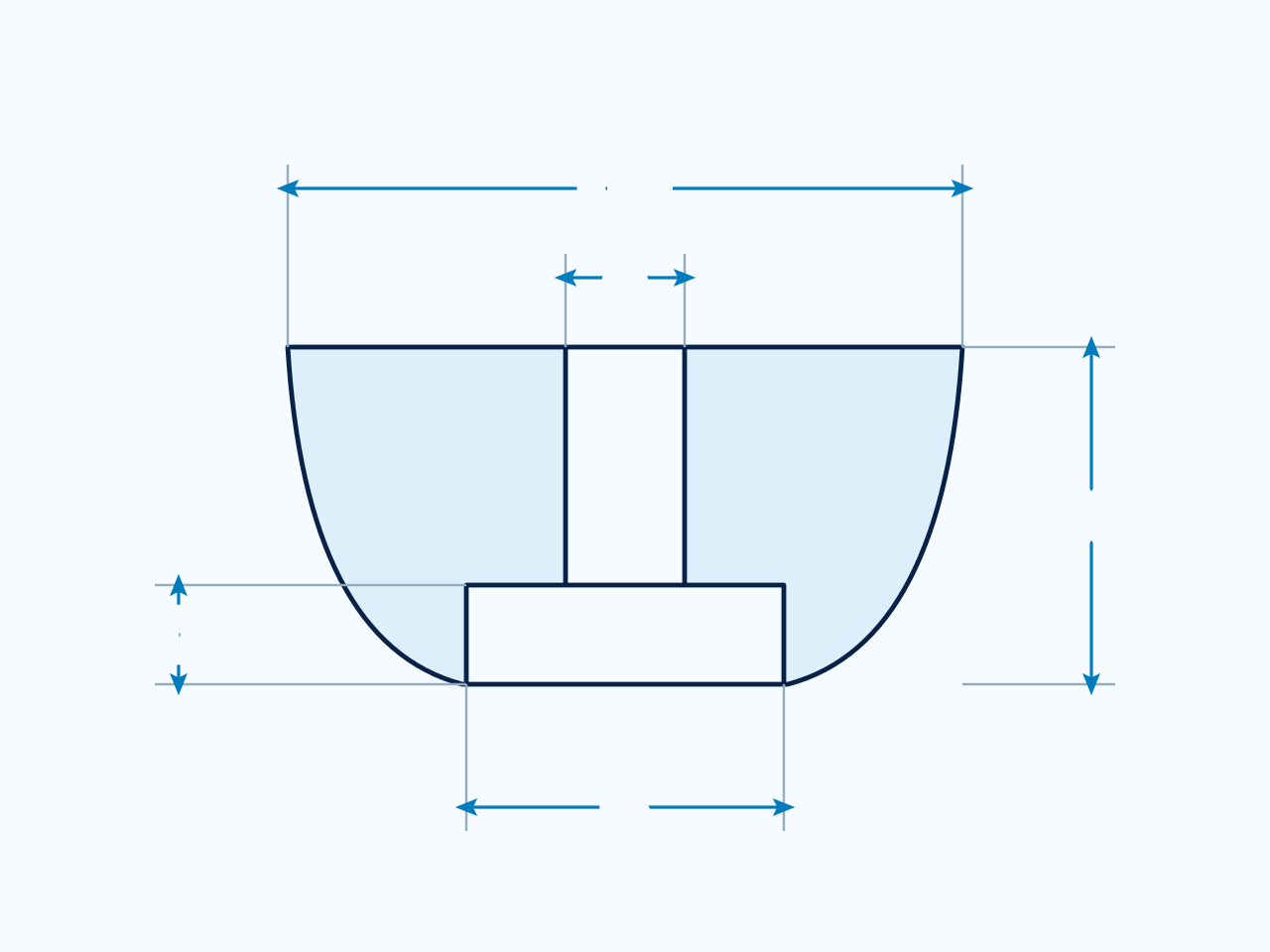
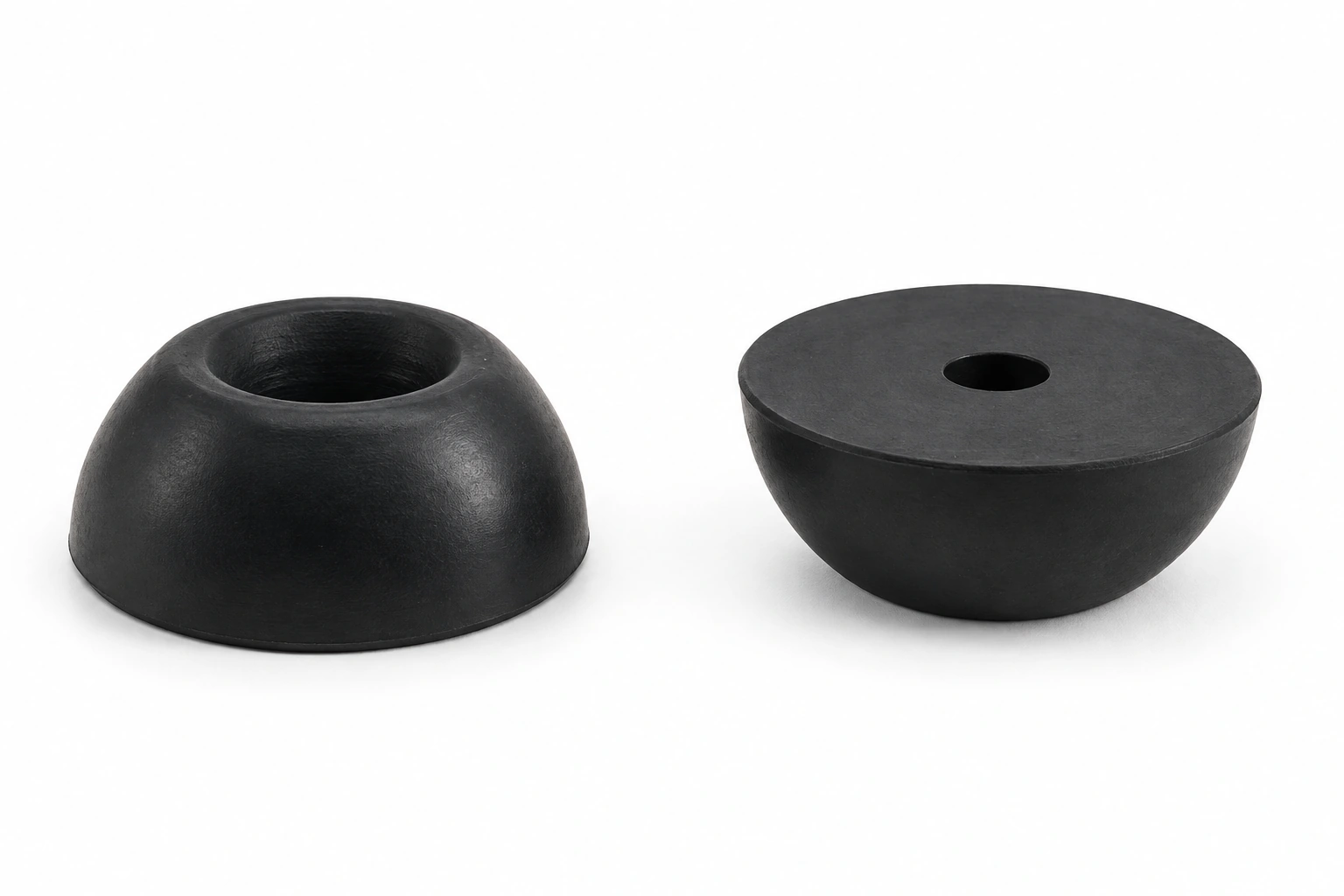
Hemispherical Rubber Bumper
Compare OD, H, A, B and C in mm using the hemispherical-bumper drawing.
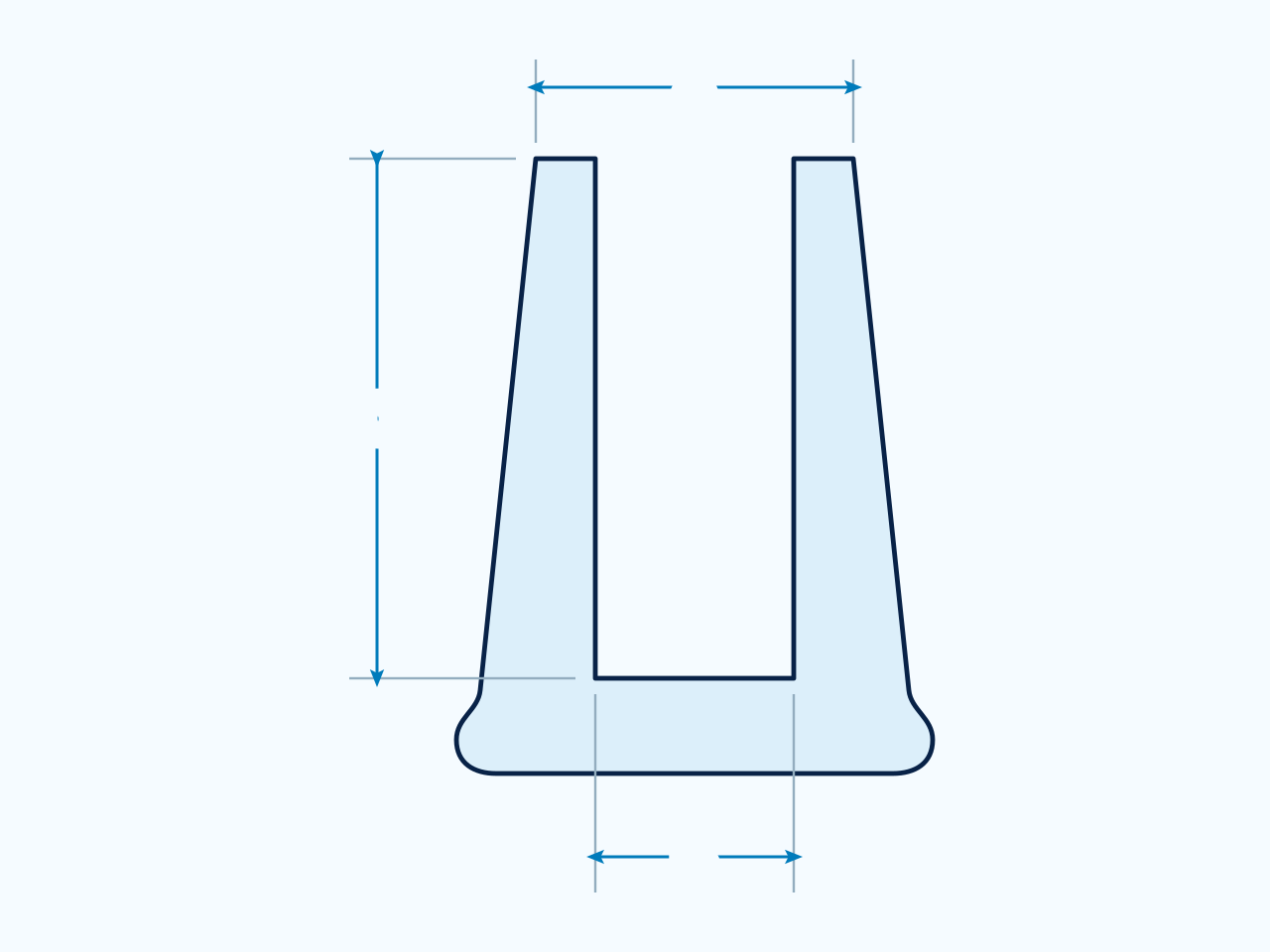
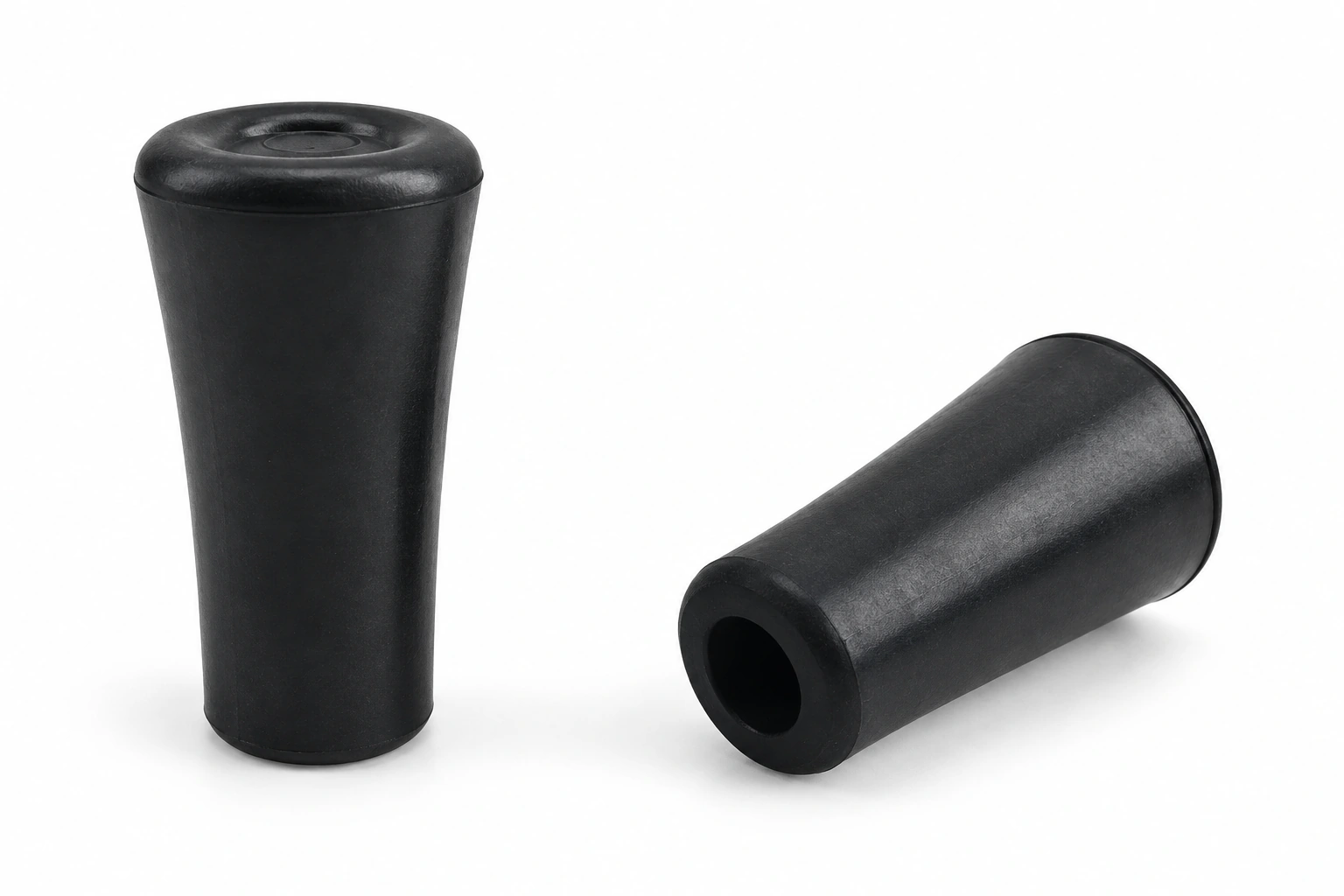
Rubber Tips
Compare A, B and C in mm using the open round-tip drawing. Check the mating leg dimensions and seating depth.
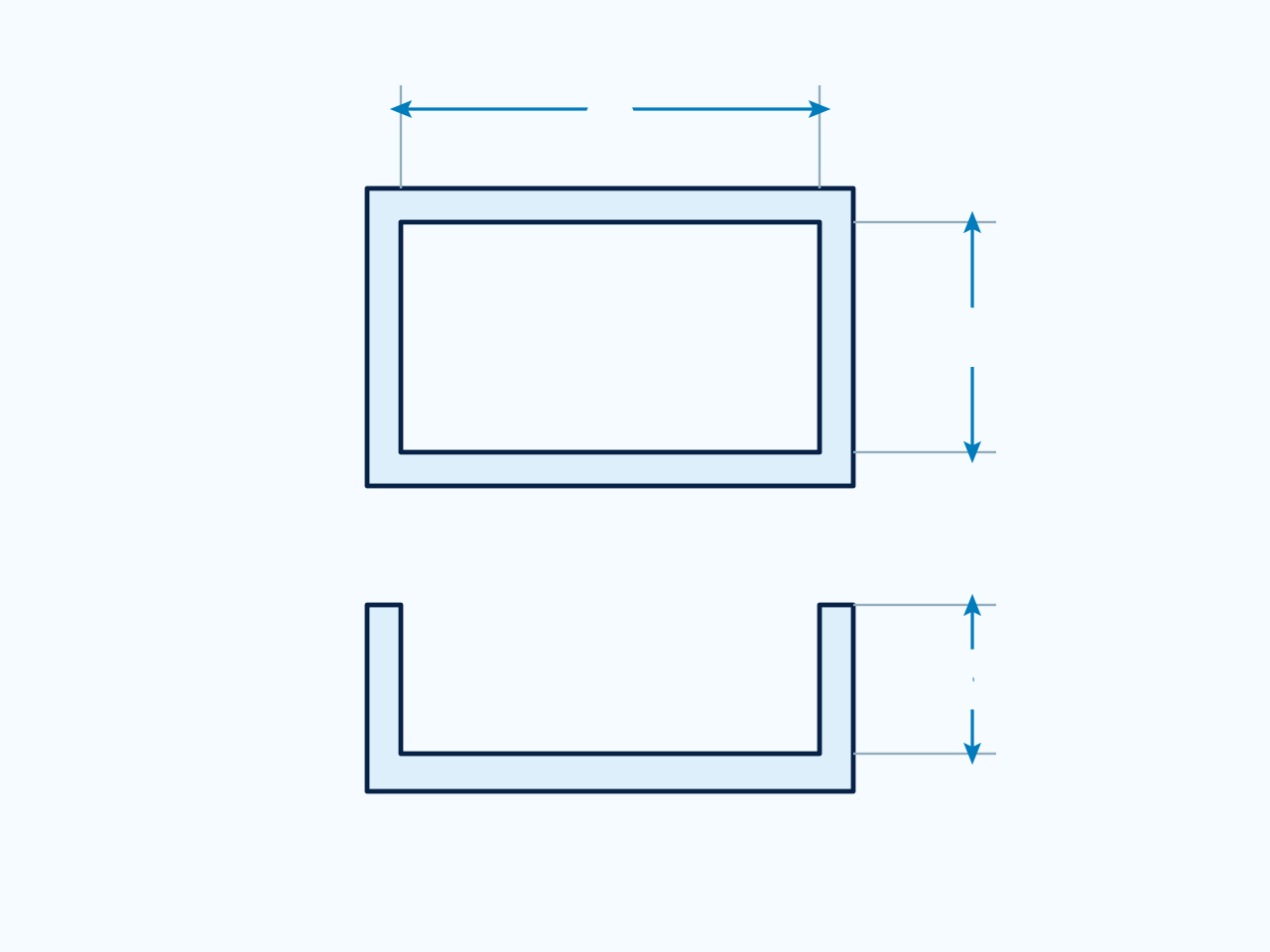
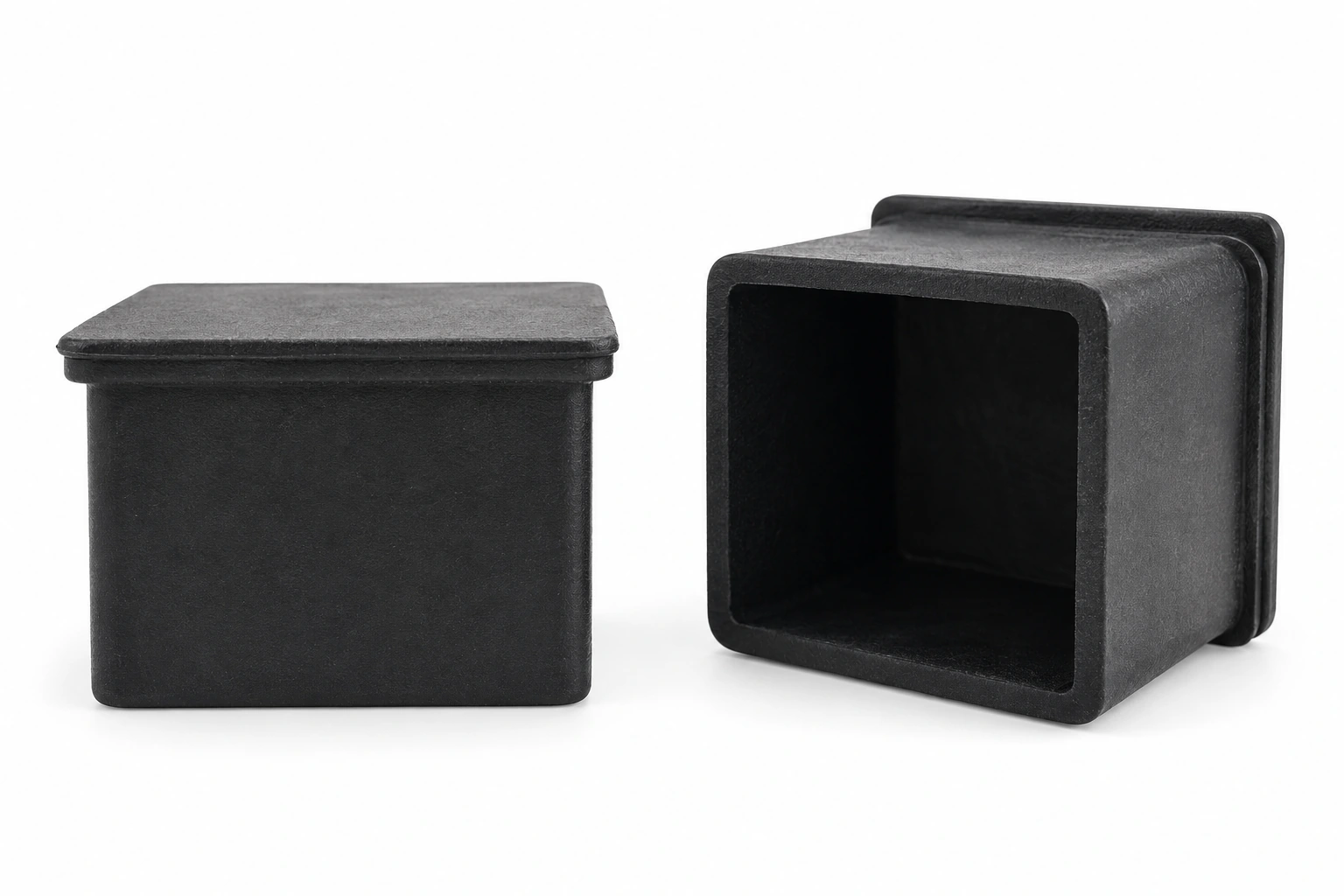
Rectangular rubber feet for chairs
Compare A, B and C in mm using the rectangular-tip drawing. Check both sides of the mating leg and the seating depth.
Rubber Feet For Chairs
Compare A, B, C and D in mm using the square-tip drawing. Check the mating leg profile and seating depth.
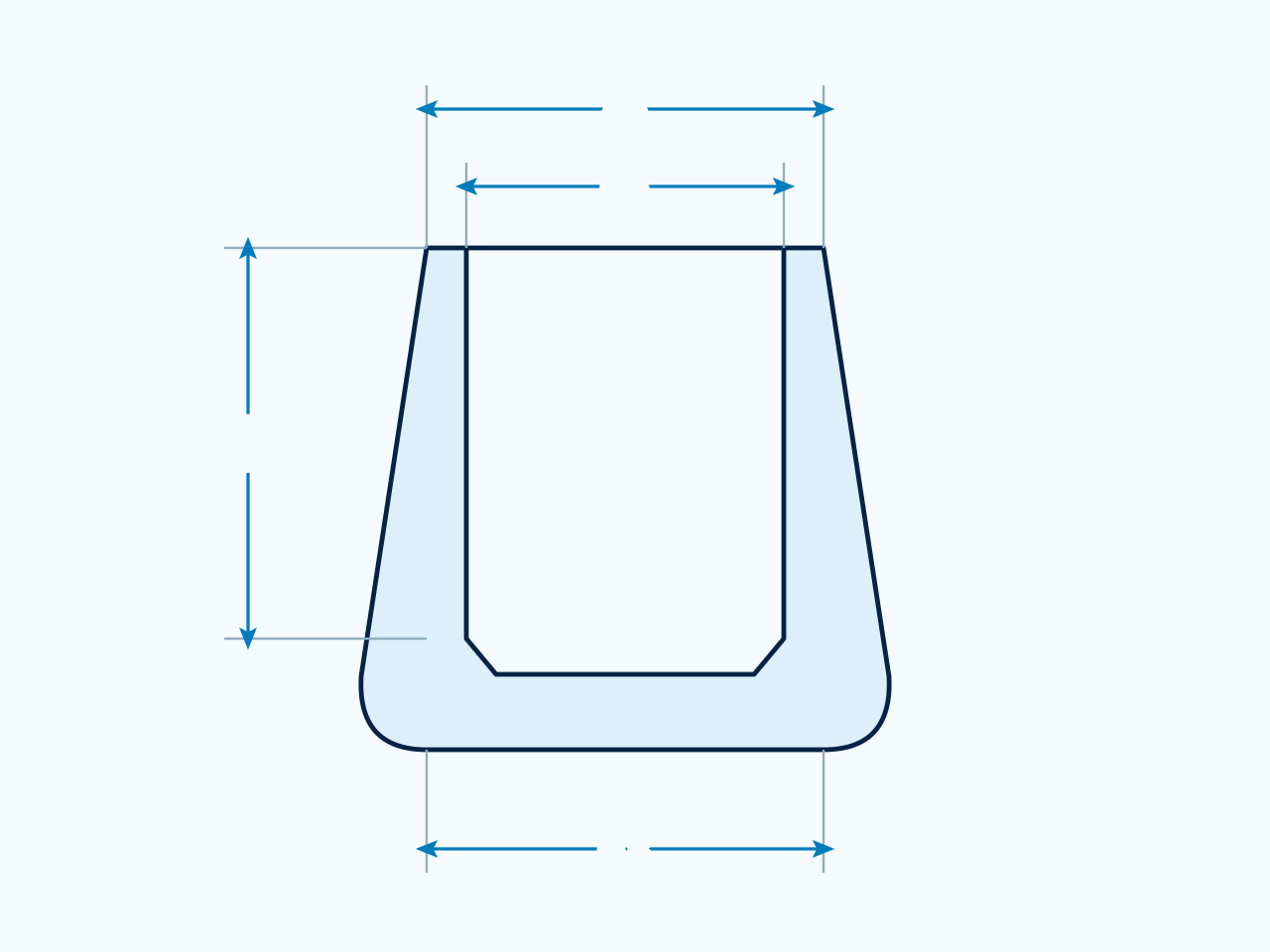
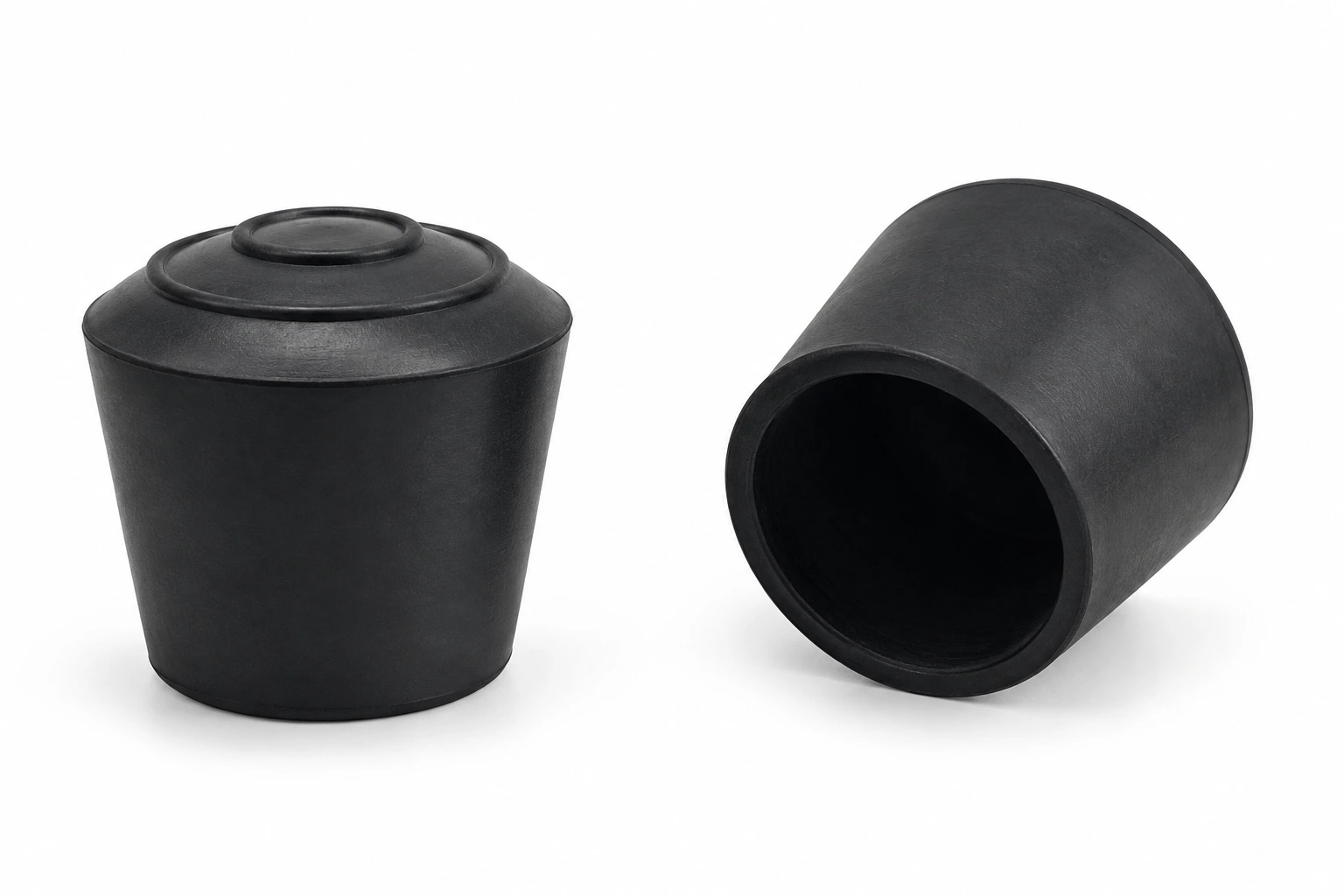
Need a different size? Share your drawing, mating dimensions and intended use to discuss a suitable part.
Discuss Your RequirementsProduct specifications
- Product form
- Resilient contact stop
- Application focus
- Cabinet or door contact points. Size the part against the selected assembly.
- Dimensions to confirm
- Contact-face area, projection and mounting geometry. Match these to cabinet or door contact points.
- Compliance
- Specify hardness and its tolerance together with the required deflection of the finished part.
- Installation discussed
- Adhesive bonding. Identify the chosen retention method and the surface or hardware it engages.
- Attachment options
- Adhesive attachment is discussed. Define the bonded substrate, preparation and loaded contact area before selecting a backing.
- Working clearance
- Define the closing gap, contact direction and compression available at the stop.
Need a quote or a custom part?
Send your requirements, drawings or samples to discuss standard and custom silicone rubber parts.
Email us[email protected]