
Stopper Chemistry
There are not a lot of industries in the world that rely on stoppers as much as the chemical industry does. But what kind of stopper chemistry facility would use? As we know, they operate by handling various chemicals and liquids, with most of them being potentially dangerous, harmful, or toxic. For instance, it is not uncommon for chemical facilities and laboratories to keep acids in large carboys sealed with a stopper. Chemistry labs also use a lot of smaller glassware like vials and Erlenmayers, which are also sealed and plugged with a stopper. Also, let us not forget about the biochemical laboratories and facilities that conduct various tests on a large number of samples. Those samples must be kept in perfect condition if we want the results to be good.
Now, let’s talk about what kind of stopper chemistry lab would use? Most commonly, it would be a silicone stopper. Silicone is an excellent choice for this kind of application for a variety of reasons. As we have already said, chemistry labs and facilities often deal with hazardous or abrasive chemicals like acids. Therefore, it is a necessity to use a stopper or a plug that will not interact with any of those chemicals. As you might know, silicone is very chemically stable. In other words, silicone’s low chemical reactivity is what makes it ideal for this kind of environment.
Another reason as to why this is the stopper chemistry labs and facilities would use is low thermal conductivity and excellent thermal stability, in addition to unparalleled resistance to ozone, oxygen and other gases, UV lighting, and more. For instance, if you were to take an Erlenmeyer and conduct a chemical experiment in a very hot environment under the UV lights, you would absolutely have to use a stopper that is as resilient as this one.
Stopper & Plug Size Catalog
Compare four stopper profiles and check the selected part dimensions against your opening and available depth. Each profile has its own drawing and dimension meanings.
Custom colors are available to your Pantone color code. Include the code in your inquiry.
RST T-Shaped Plugs
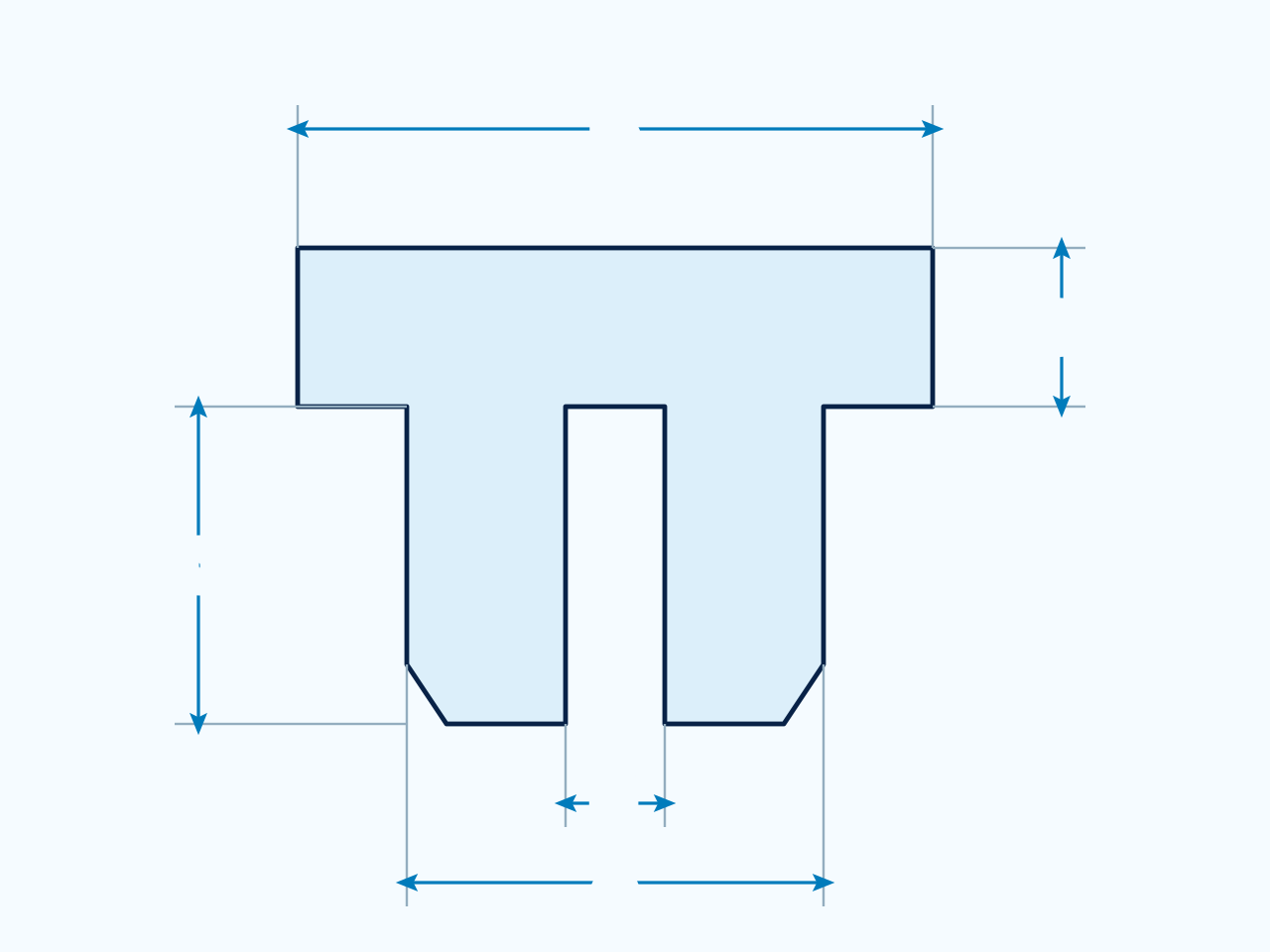
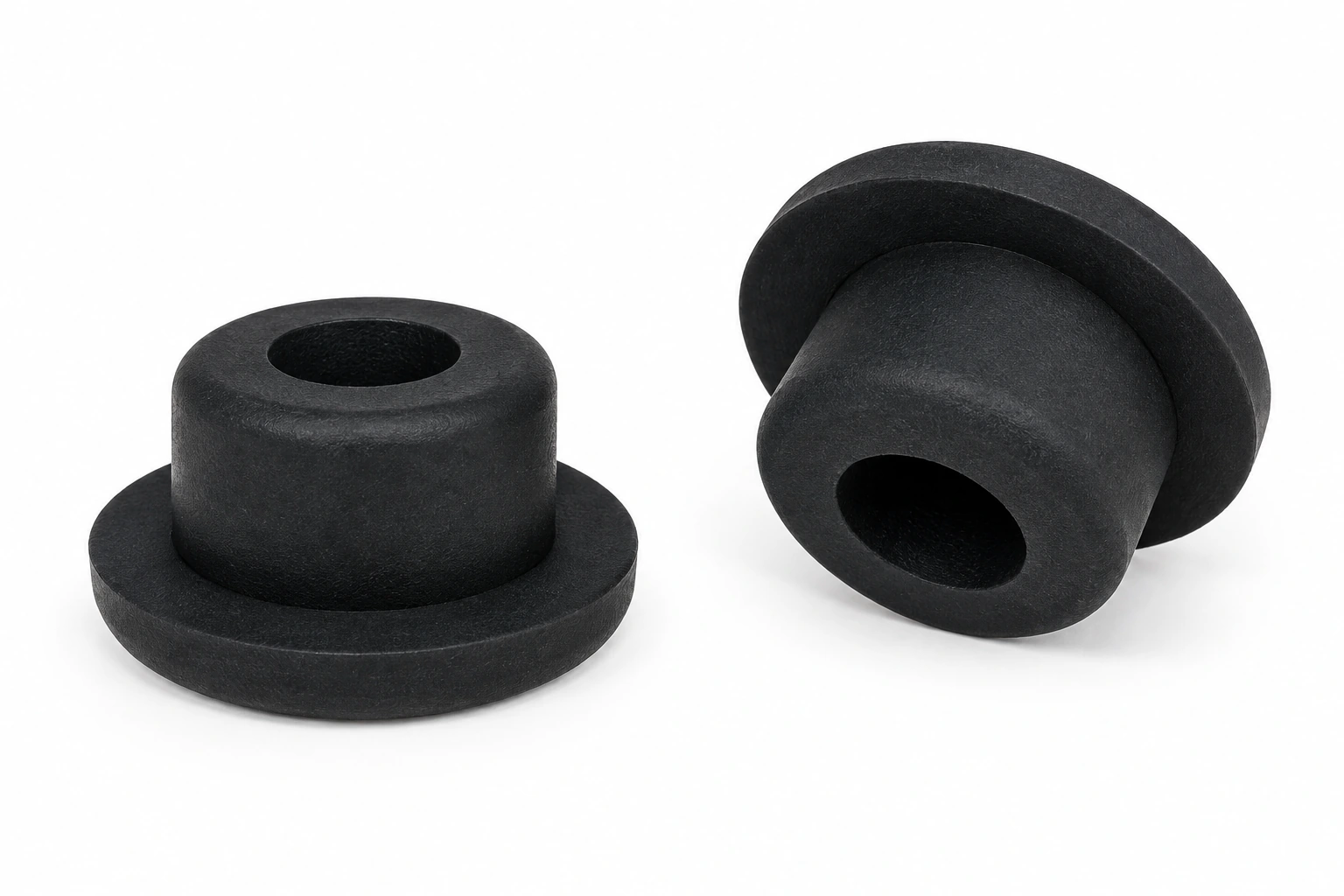
Match stem diameter A, flange diameter B, stem length C and flange thickness D. E refers to the underside recess; use the selected row and approved drawing to confirm the actual profile.
RSA Tapered Corks
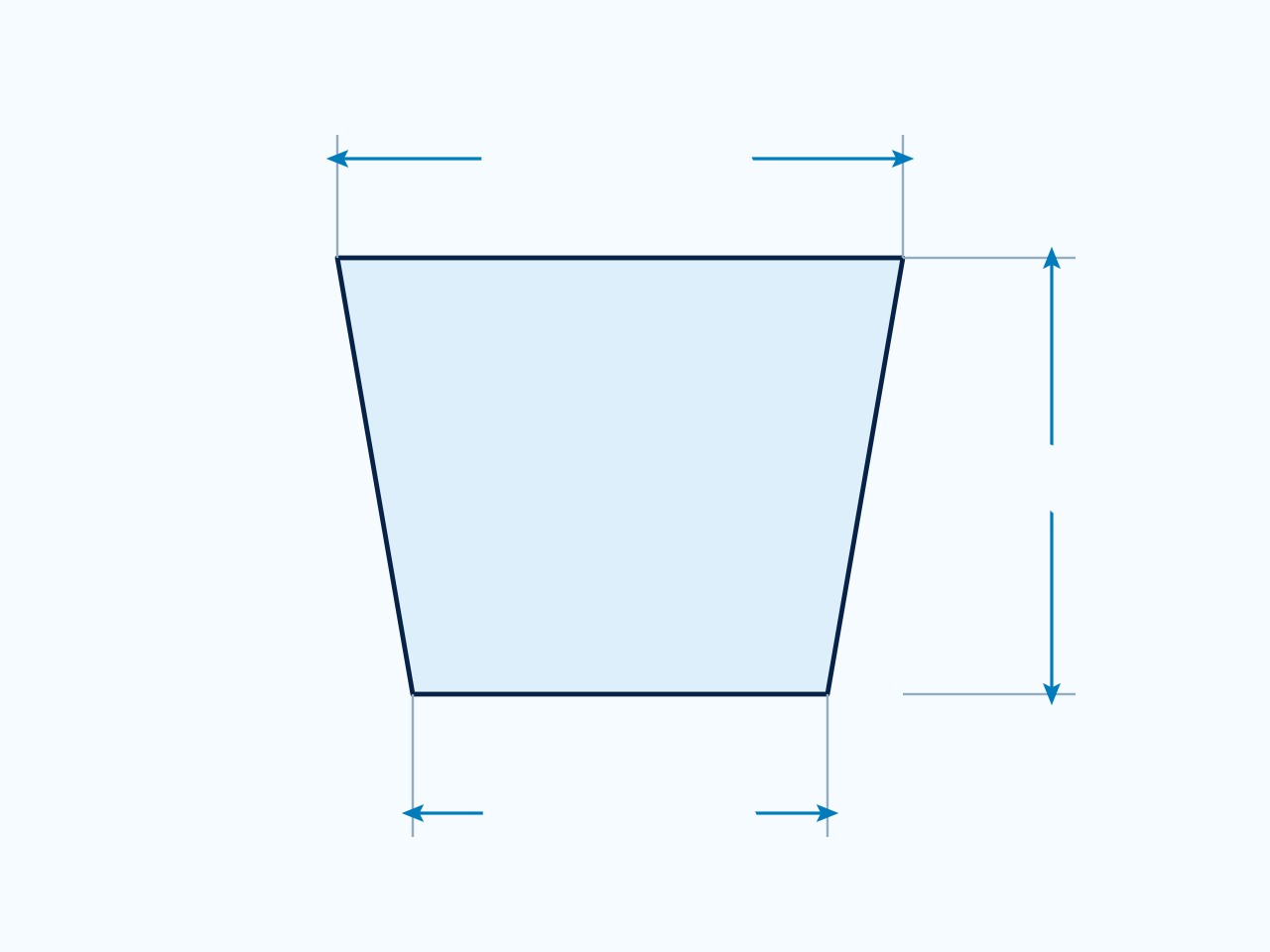
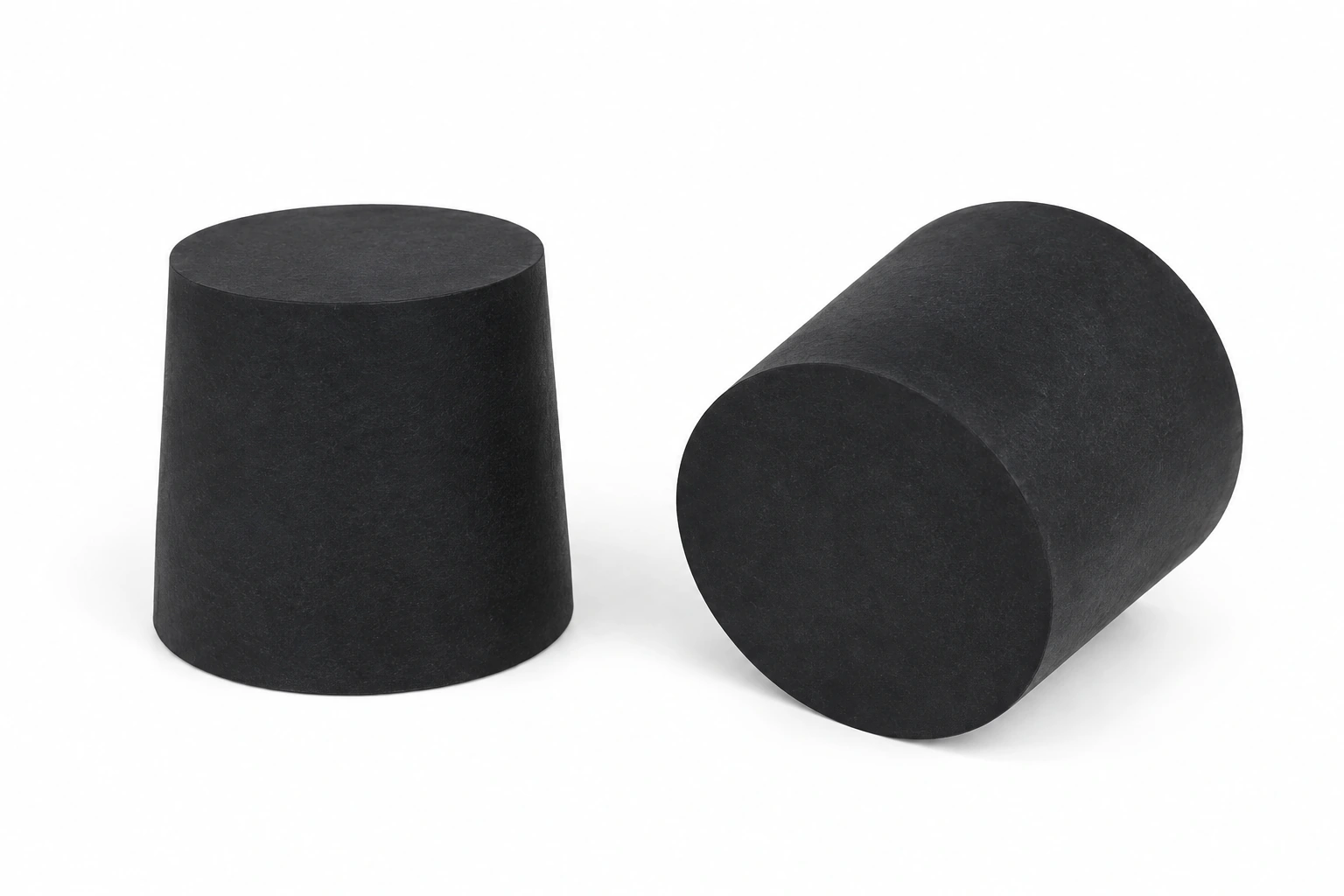
Compare large-end diameter A, small-end diameter B and Height, in mm. The mating bore and required seating depth determine where the taper contacts the opening.
RSB Undercut Plugs
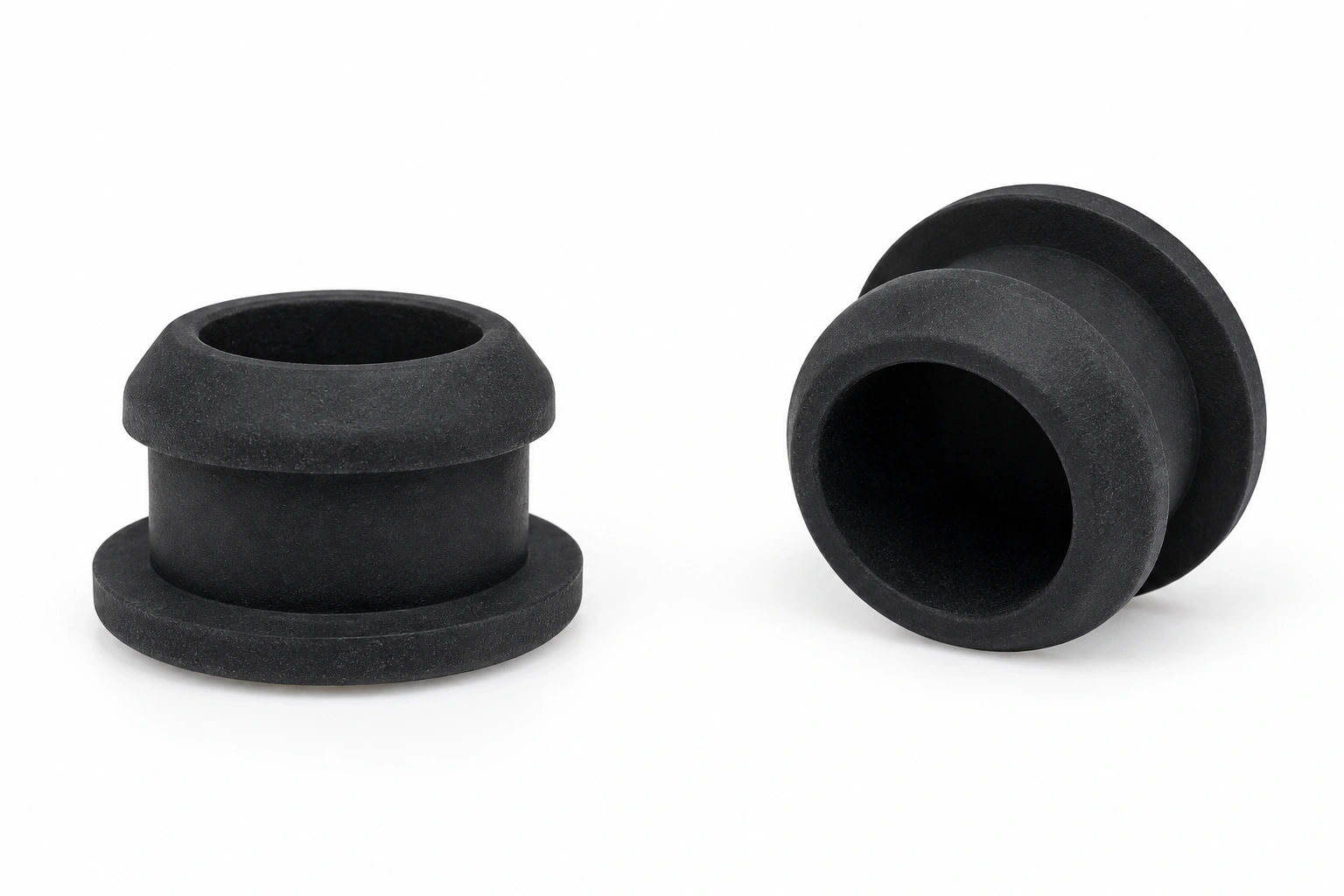
Compare neck diameter A, flange diameter B, flange-to-lip distance C and flange thickness D. Check panel thickness and rear clearance. E refers to the underside recess.

RSD T-Shaped Stoppers
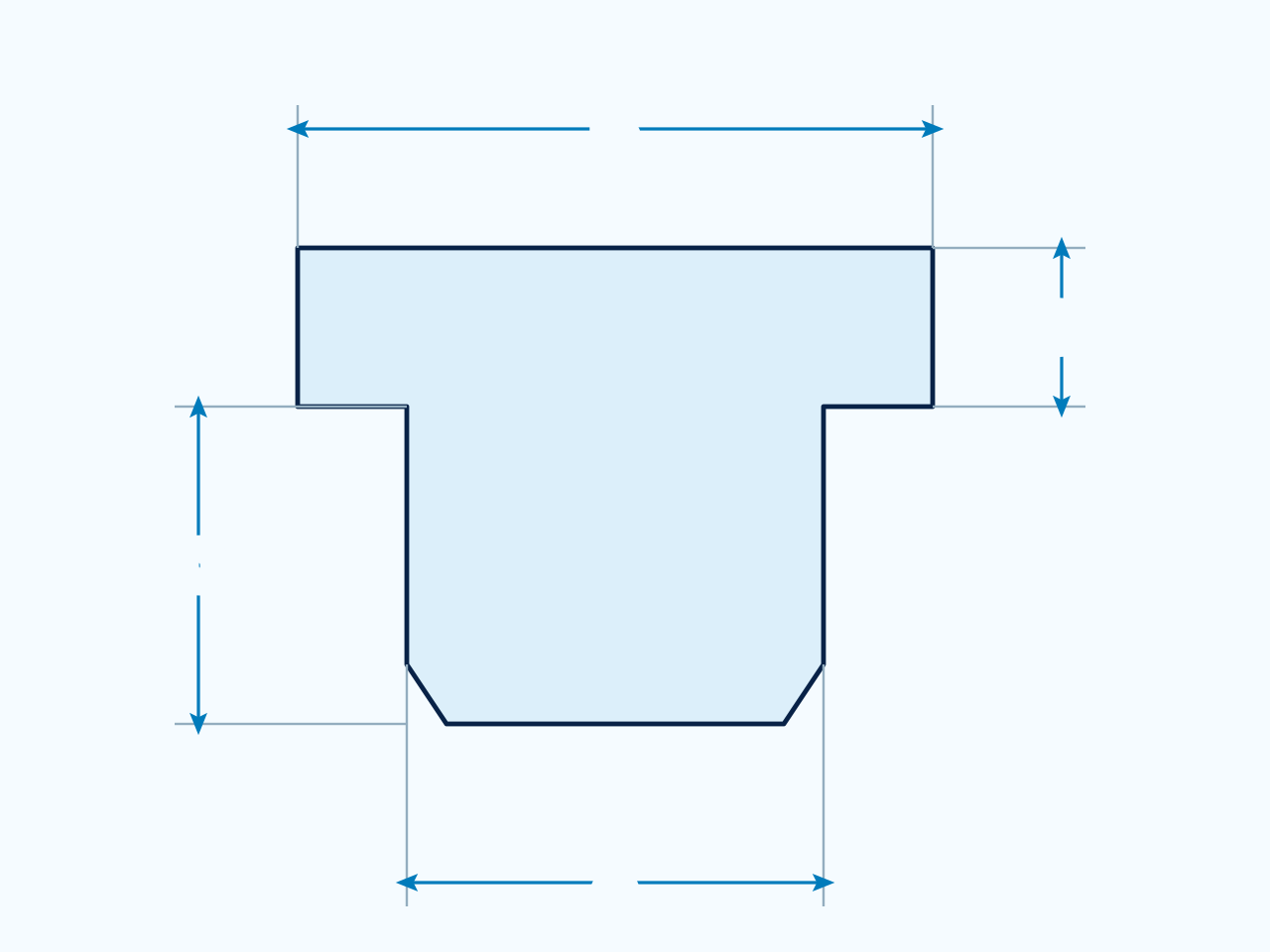
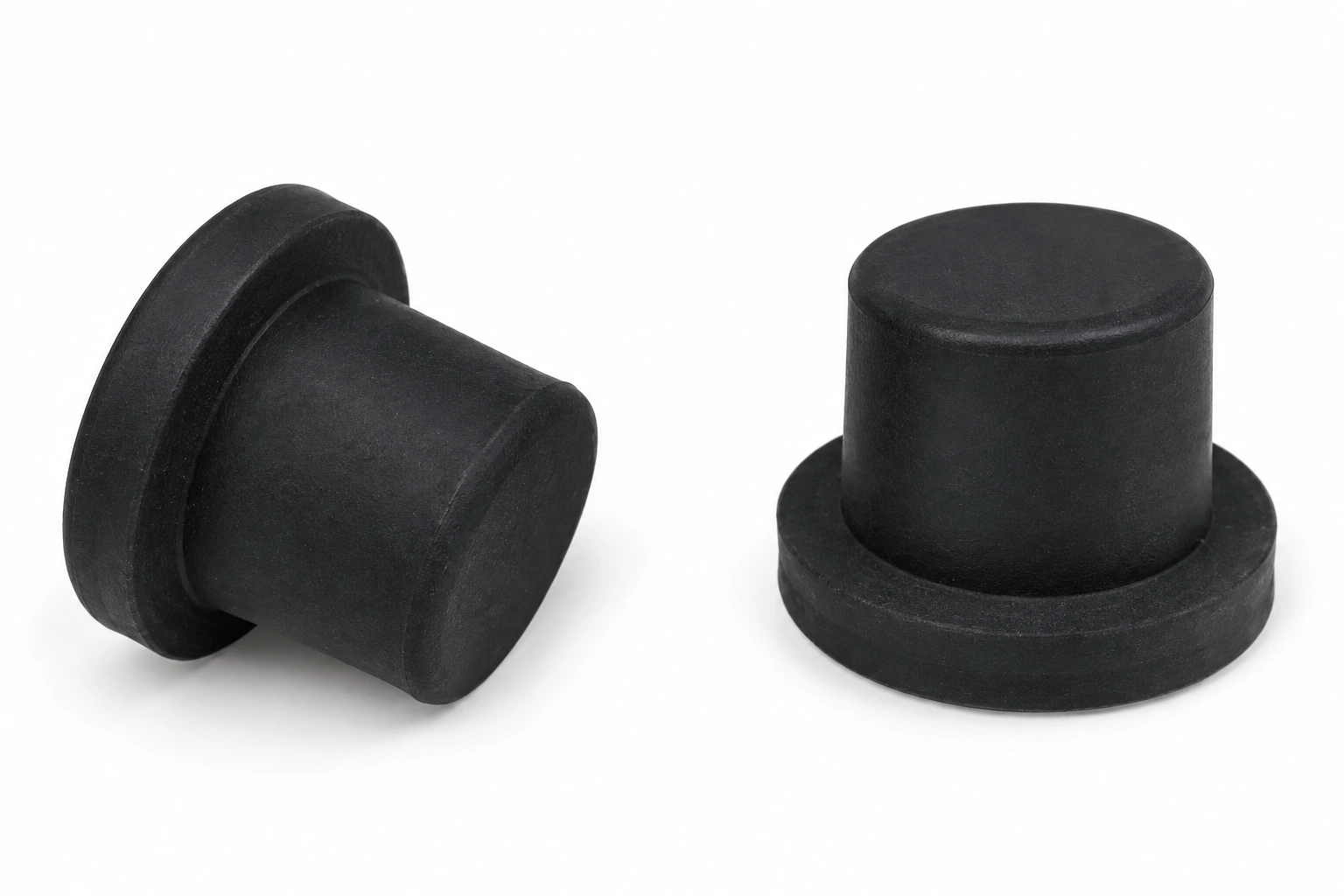
Compare stem diameter A, flange diameter B, stem length C and head thickness D, in mm. Check the seating surface and available depth as well as the hole diameter.
Need a different fit? Share the opening dimensions, mating profile and intended use for a custom size.
Discuss Your RequirementsProduct specifications
- Product form
- Removable closure fitted inside an opening
- Material options discussed
- Silicone. Choose one formulation for the actual contact and loading conditions.
- Application focus
- Laboratory vessels, carboys, vials and Erlenmeyer flasks. Size the part against the selected assembly.
- Dimensions to confirm
- Opening diameter, closure profile, insertion depth and exposed grip. Match these to laboratory vessels and carboys.
- Contact conditions
- Acids and oxygen: define concentration, temperature and contact time, then check compatibility with the chosen compound.
- Exposure to evaluate
- Sunlight or UV, ozone and rubbing or abrasion. Validate the selected material under the combined conditions.
- Seating check
- Check the sealing contact around the opening and the force needed for insertion and removal.
Need a quote or a custom part?
Send your requirements, drawings or samples to discuss standard and custom silicone rubber parts.
Email us[email protected]