
Thin flexible rubber tubing
Did you know that there are many different types of tubing used for different types of tasks? Did you hear about thin flexible rubber tubing? Of course, you did. However, if you’re new to the world of rubber technology and rubber tubing – this might not be something you’ve heard of. Thin flexible rubber tubing is a type of tubing that is flexible and thin, which makes it easy to work with regardless of the scenario in which it is being used.
Rubber is a strong and resilient material that is used in industrial, automotive, transportation applications – but also many others. Rubber can also be found in healthcare products, such as orthopaedic shoes, medical and surgical gloves, interventional devices and catheters. The latter would be thin flexible rubber tubing – usually made from latex. As you can see – rubber tubing is a product that has many applications.
Thin flexible rubber tubing is usually made from synthetic rubbers like silicone, but they can also be made from latex and some other rubbers. The reason why thin flexible rubber tubing isn’t commonly made from natural rubbers or rubbers like neoprene is that those rubber are quite a bit rigid and firm. In order to stay flexible, elastic, and resilient to physical damage, flexible rubber thing is often quite small in profile, although there could be some bigger tubes. However, what they all have in common is the fact that they have thin walls – hence the flexibility. If you make a rube with thick walls – it won’t be flexible as much as you would’ve wanted it to be. So, if you’re in the market for a thin flexible rubber tube, make sure you find the one that has soft, thin edges, and the one that is made from silicone or latex.
Rubber Hose Size Catalog
Compare tube bore, outside diameter and available wall thickness. Confirm material compatibility and operating requirements for the selected hose.
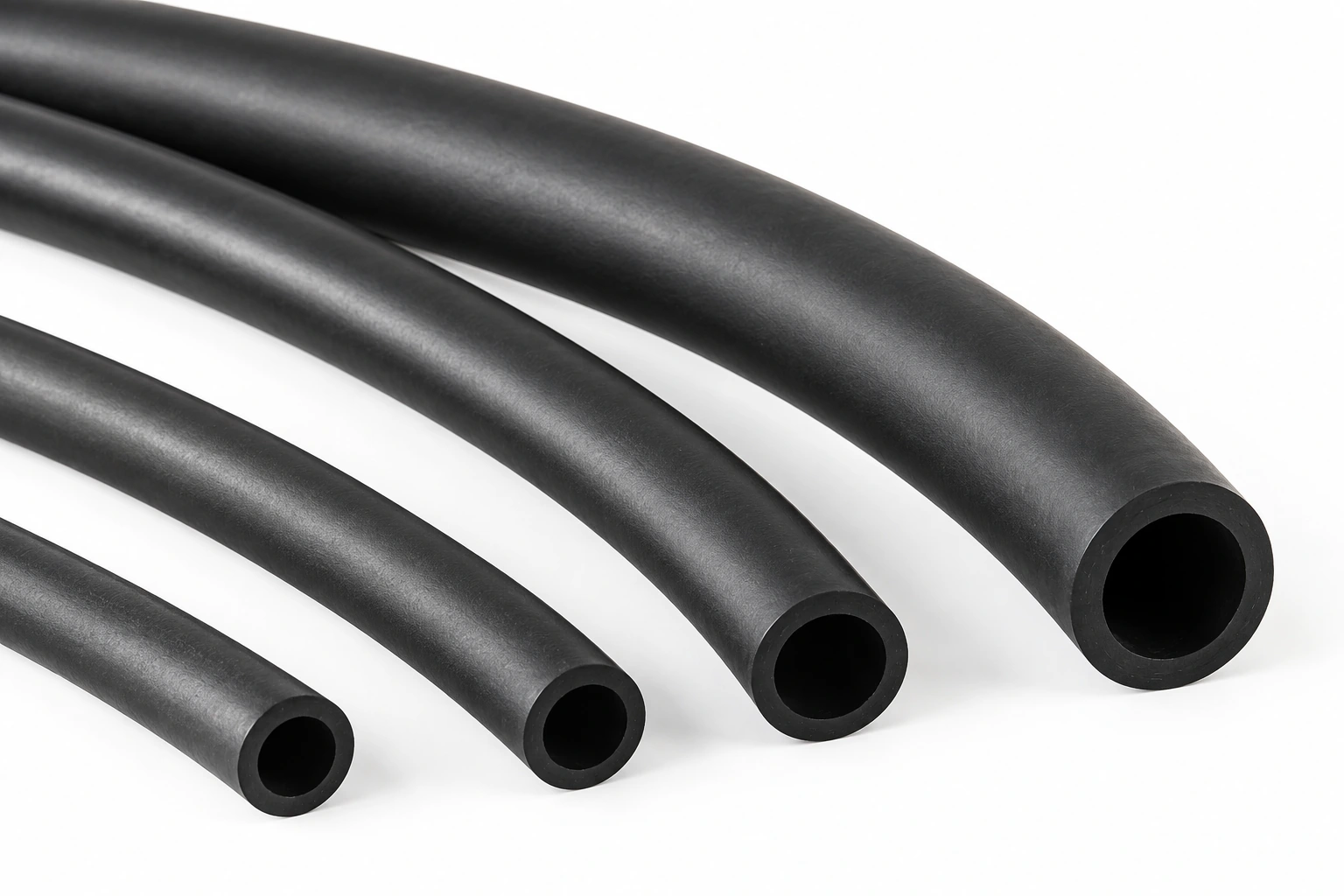
Rubber Hose
Compare Inside Diameter and Outside Diameter in mm. The cross-section drawing identifies the bore and outside diameter; confirm the selected tube material and service requirements.

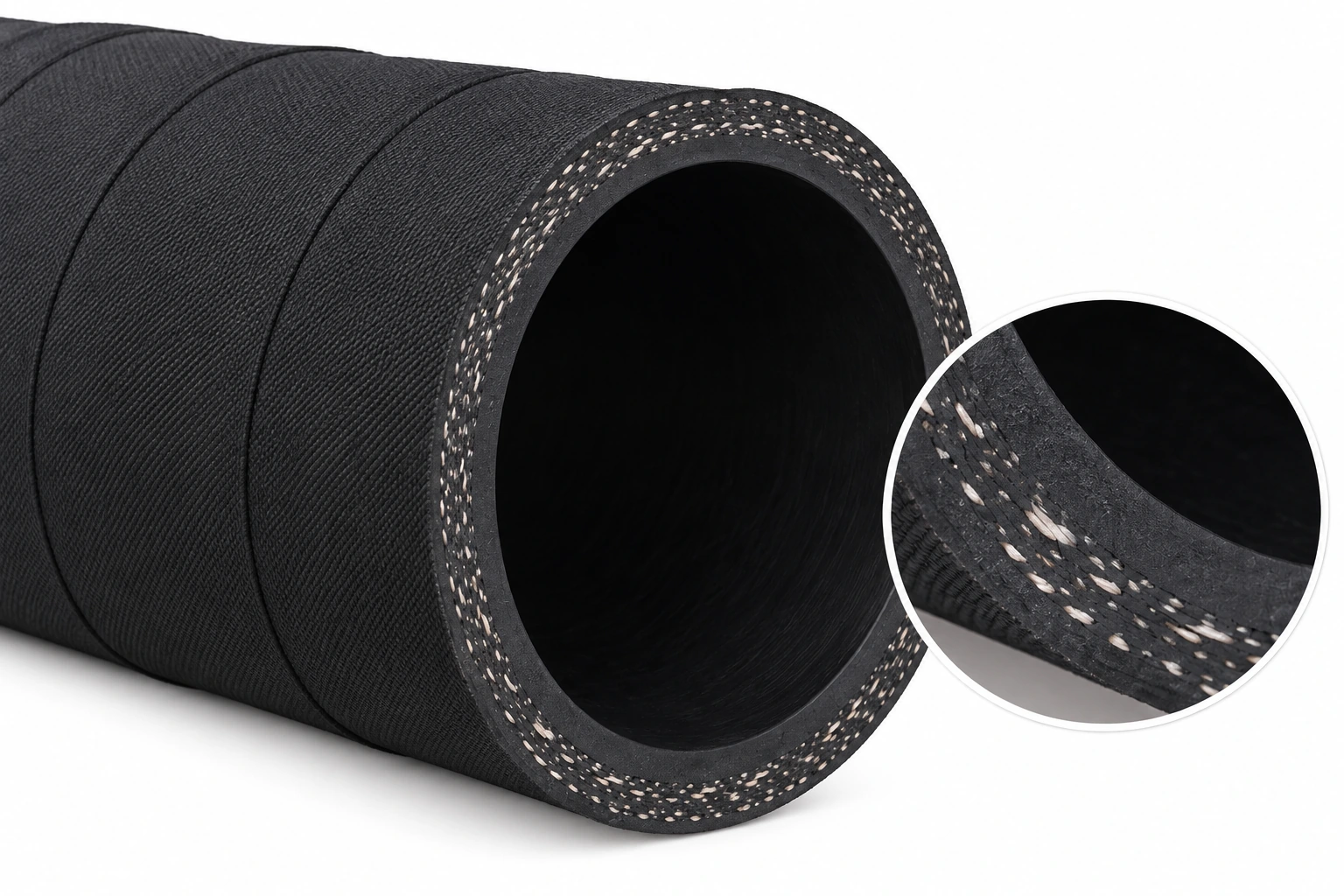
Fluororubber Hose
Compare Inside Diameter and Outside Diameter in mm. The cross-section drawing identifies the bore and outside diameter; confirm the selected tube material and service requirements.
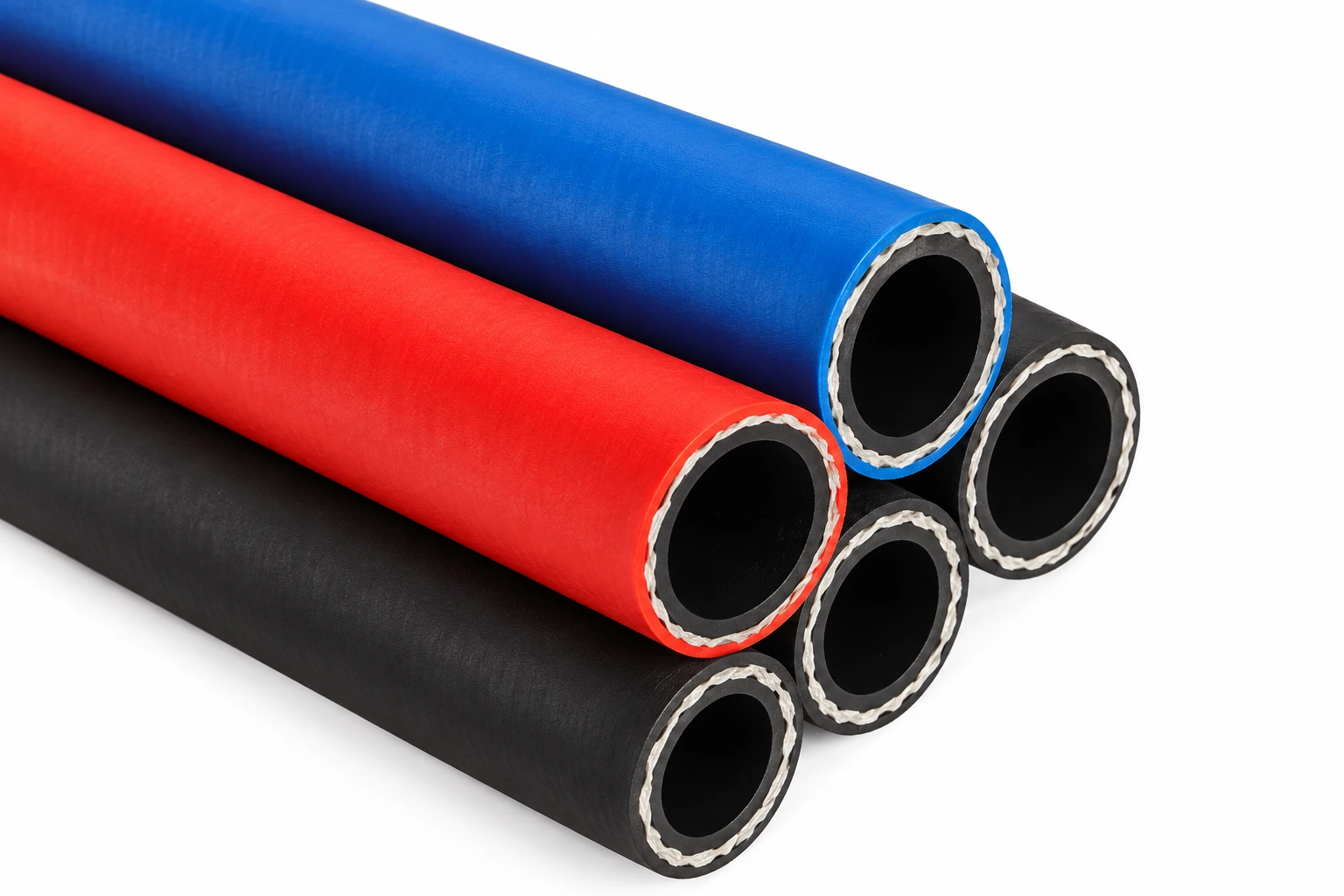
Colourful rubber high pressure hose
Compare Inside Diameter and Outside Diameter in mm, together with the listed Thickness and Colour. The cross-section drawing identifies the bore and outside diameter; confirm the selected tube material and service requirements.
Need a different size? Share your drawing, mating dimensions and intended use to discuss a suitable part.
Discuss Your RequirementsProduct specifications
- Product form
- Hollow elastomer tubing for a fitted line or sleeve
- Material options discussed
- Silicone, chloroprene rubber (CR) and natural rubber / latex. Choose one formulation for the actual contact and loading conditions.
- Application focus
- Industrial fluid lines, vehicle hose runs, medical-device assemblies and catheter assemblies. Size the part against the selected assembly.
- Dimensions to confirm
- Inside diameter, outside diameter, wall thickness and cut length. Match these to industrial fluid lines and vehicle hose runs.
- Wall control
- Dimension wall thickness separately from the bore; check the required bending behavior and connection fit at that thickness.
- Line layout
- Check bend radius, unsupported spans and clearance at both connections.
Need a quote or a custom part?
Send your requirements, drawings or samples to discuss standard and custom silicone rubber parts.
Email us[email protected]