
Threaded rubber bumpers
What a threaded bumper connects to
A threaded rubber bumper provides a rubber contact surface with a mechanical fixing. Some arrangements use a projecting threaded stud; others receive a screw in an insert. Identify that arrangement before choosing the body shape. The mating bracket or equipment base must provide a compatible attachment point, with enough room for the bumper face to contact the moving or supported part.
Match the fixing details
Record the thread diameter, pitch and available engagement. A similar-looking thread is not a substitute for a matching one. Include the protruding length of a stud or the usable depth of an insert, and account for any washer or mounting plate in the assembly. These details determine whether the bumper can be secured in the intended position without the fixing reaching an obstruction.
Set the contact position
The rubber body’s diameter and height affect where contact occurs and how much room remains around it. For a travel stop, consider the approach direction and the clearance before the moving part reaches the bumper. For a support, look at the installed height relative to the other feet. A threaded attachment holds the part in place; it does not by itself define the load or impact that the rubber body can accept.
Review the duty at the bumper
Describe whether the contact is occasional, repeated or continuous, along with the load direction and the surrounding conditions. A bumper compressed on its face is being used differently from one loaded sideways through its fixing. Select the compound and geometry for the actual duty, then evaluate the assembled component. Pay attention to uneven contact, movement at the fixing and clearance after the equipment is operating.
Prepare the part specification
For a replacement or a new design, combine the body outline with the complete thread callout and a view of the mounting surface. Note any tool access needed for installation. This gives a useful basis for comparing a standard threaded bumper with a custom profile while keeping the rubber contact function and the metal attachment requirements clear.
Rubber Feet & Bumper Size Catalog
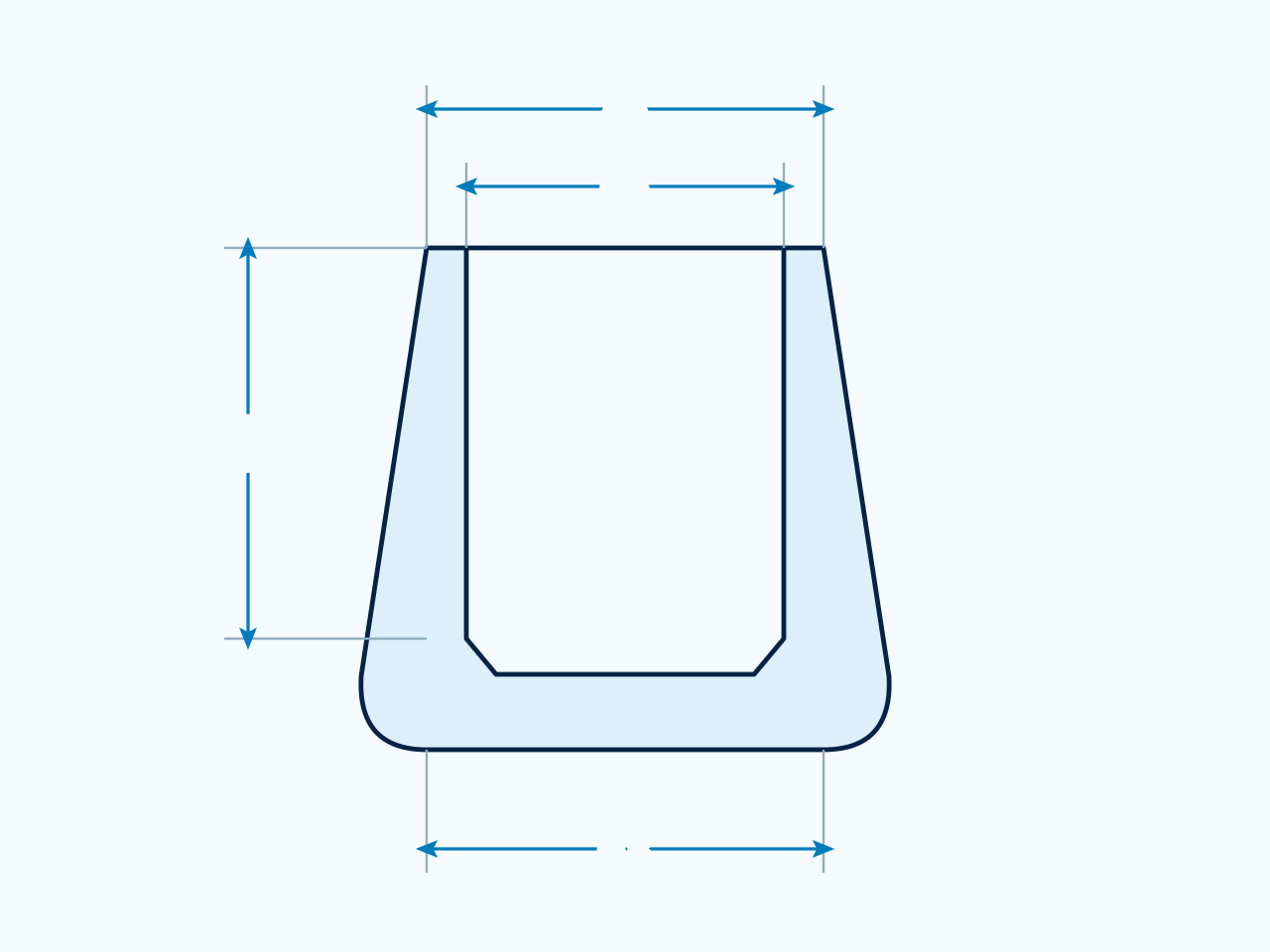
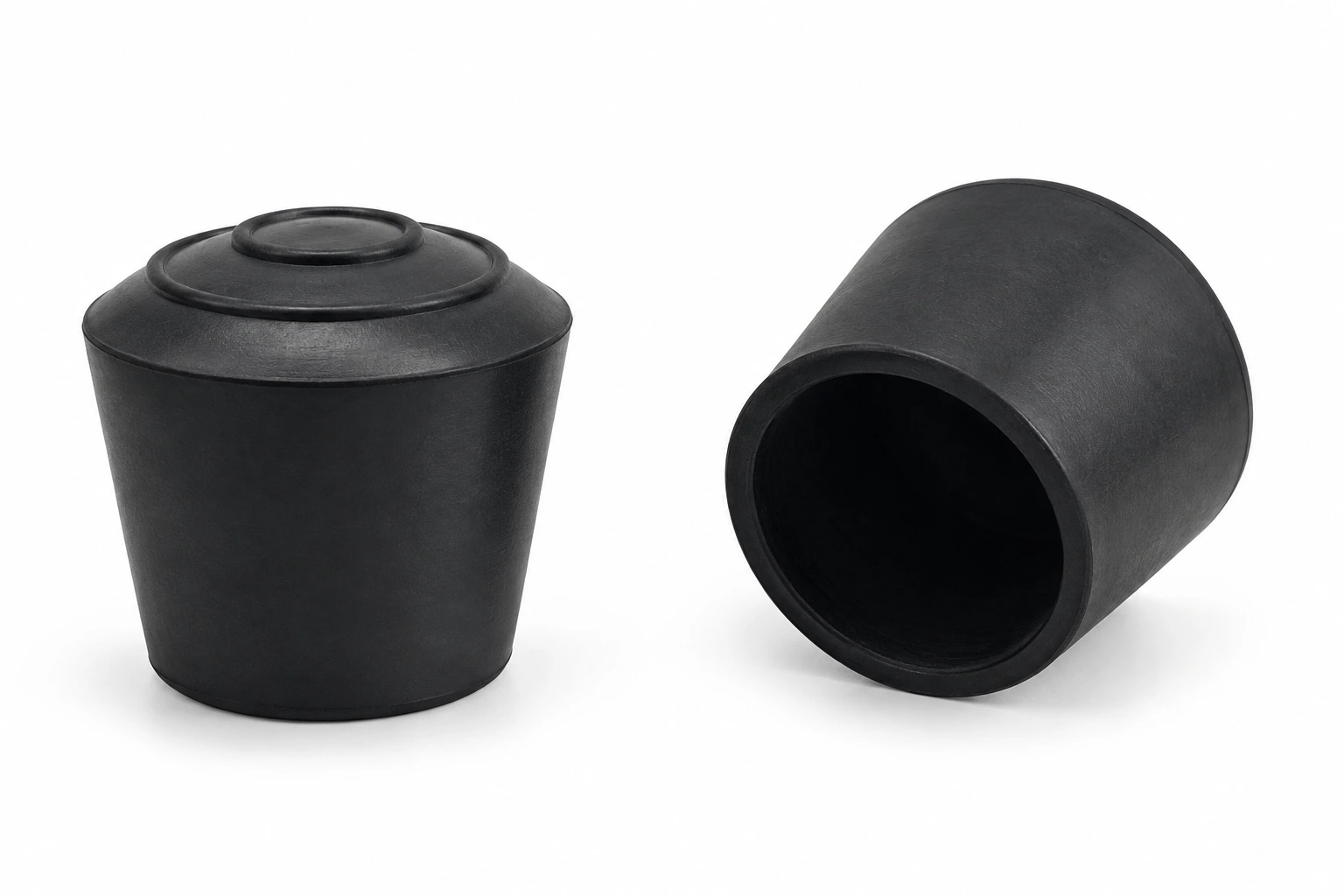
Compare mounting style, overall size and recess dimensions. Each profile uses its own drawing and column meanings.
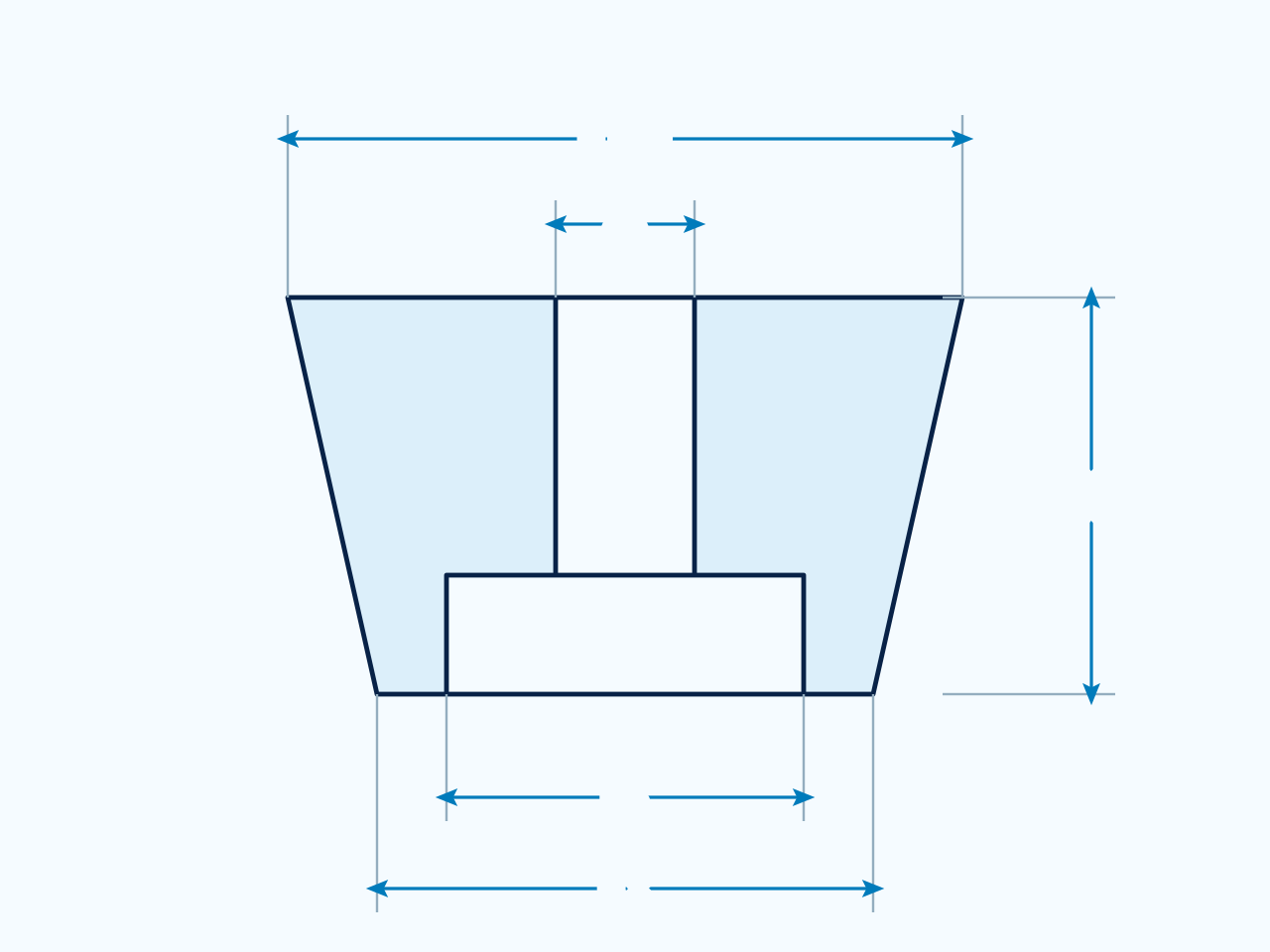
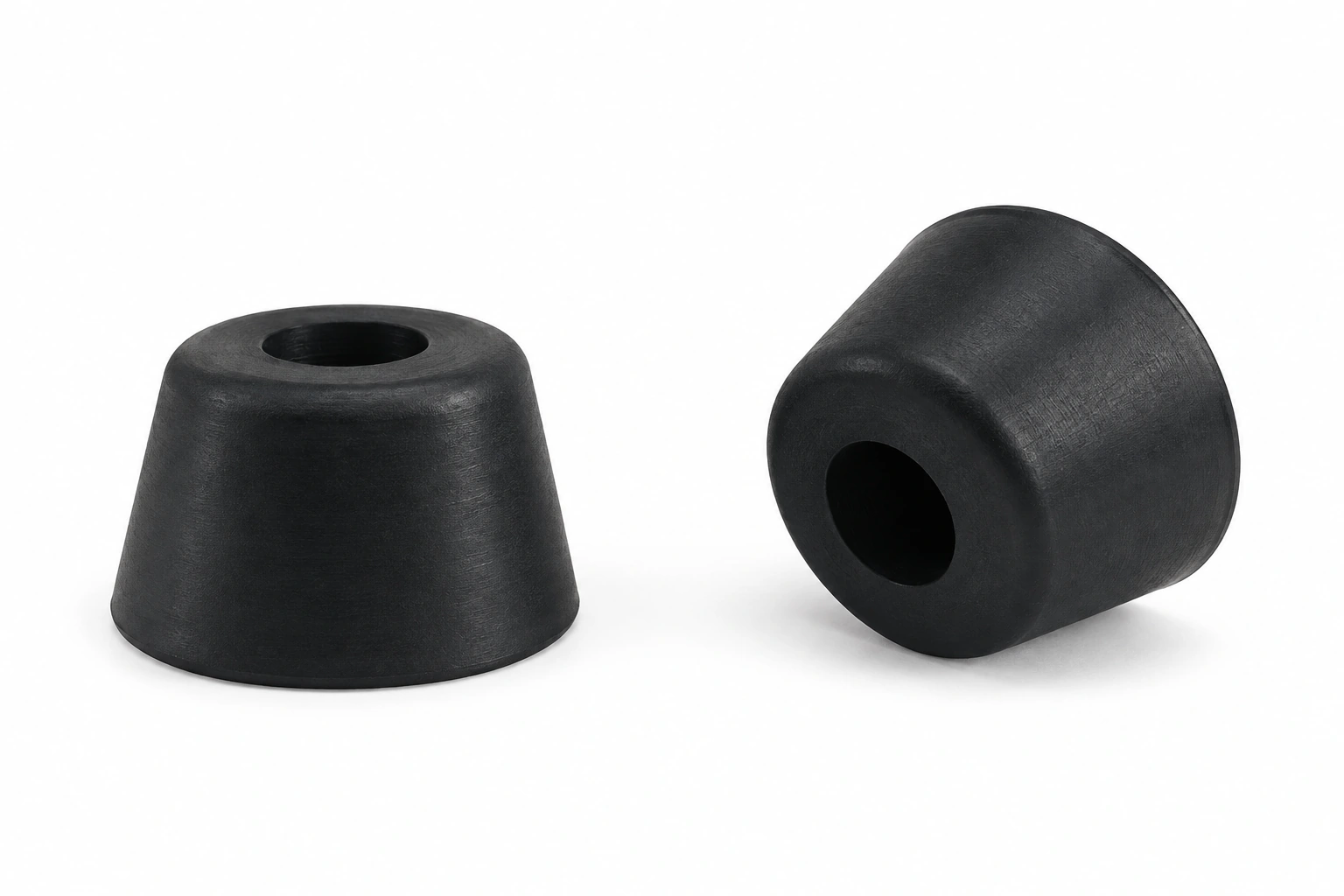
Recess Rubber Bumper
Compare OD, H, A, B and C in mm. C indicates the outer base dimension on this bumper profile, not the recess depth.
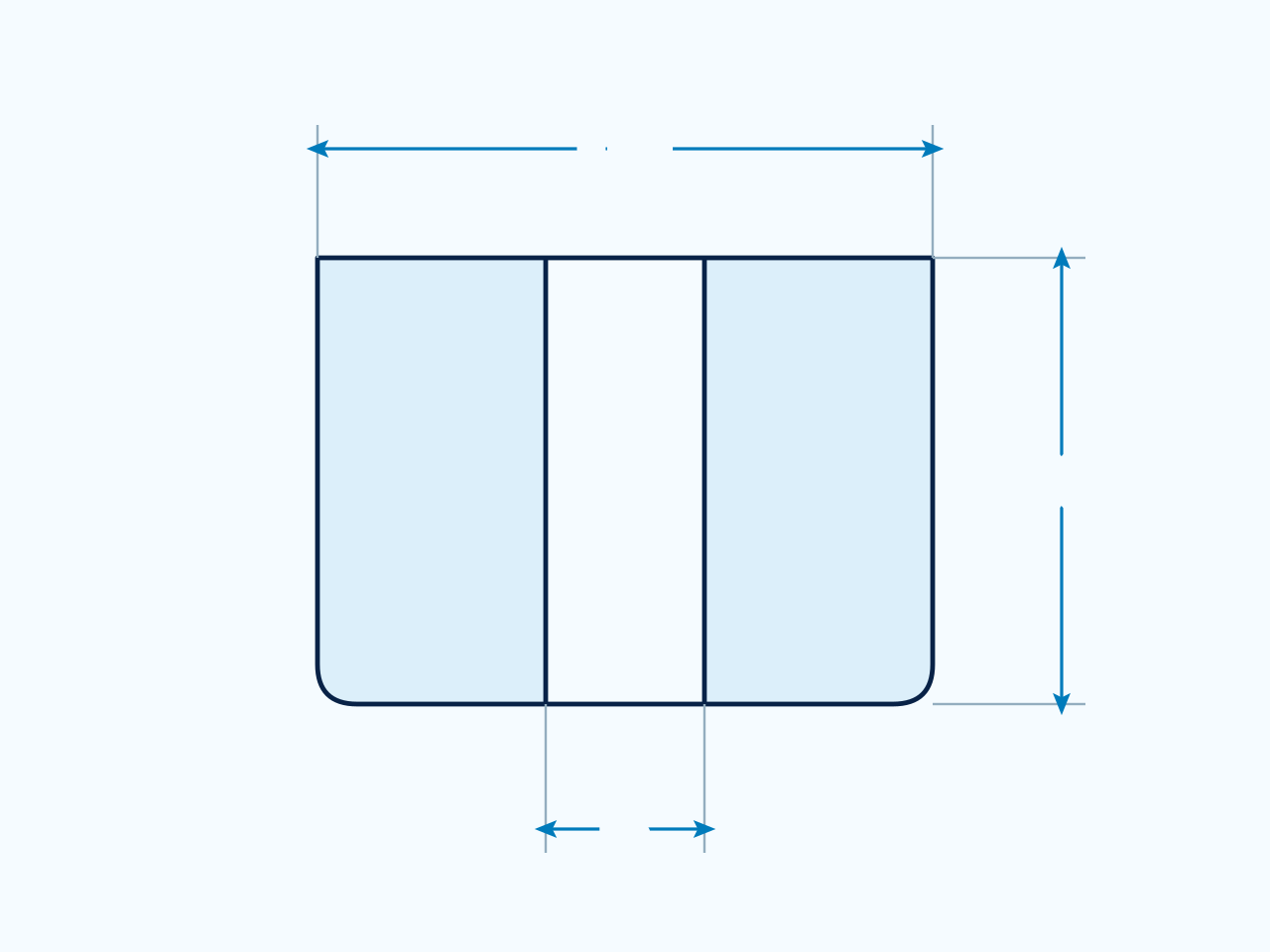
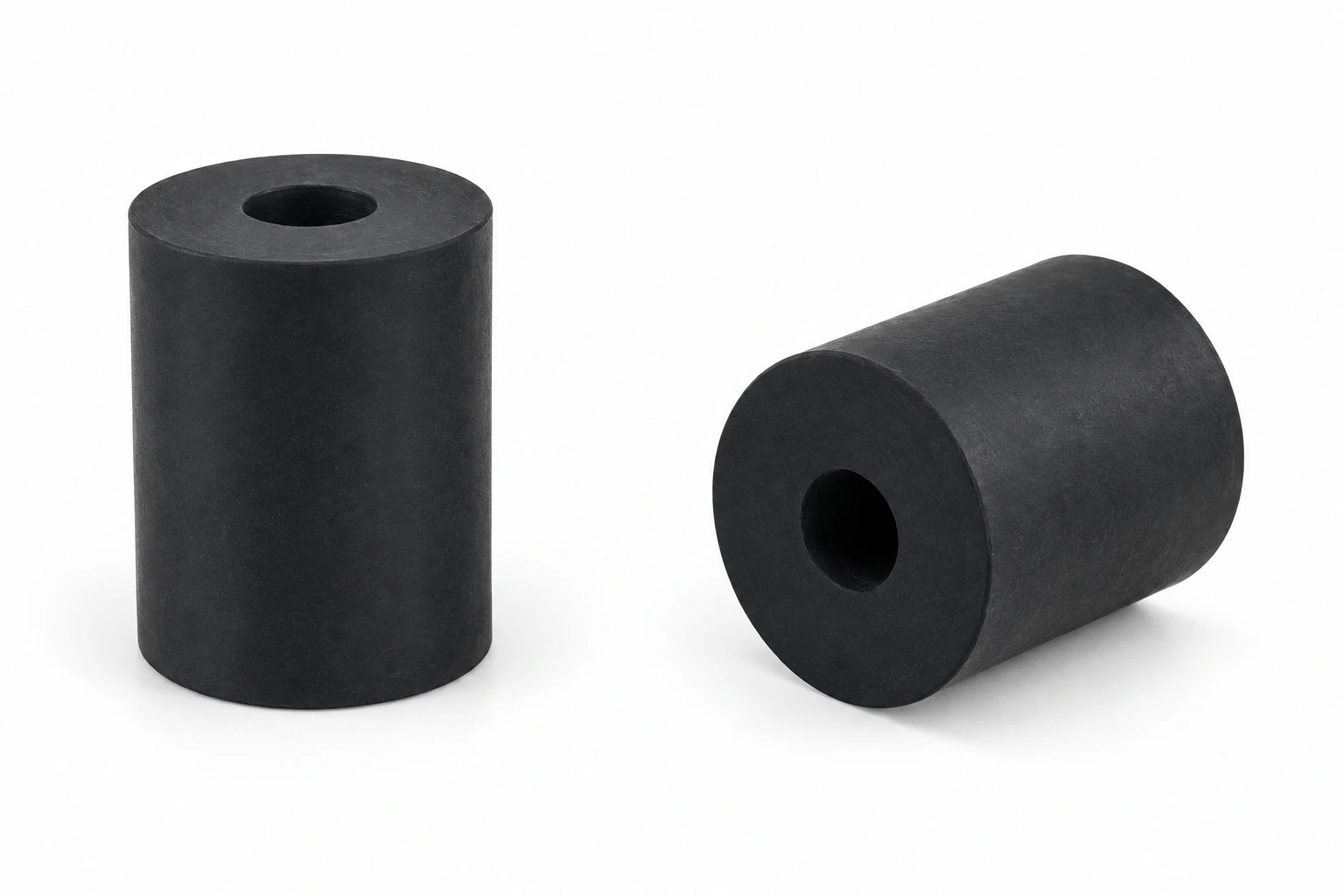
Cylindrical Rubber Feet
Compare OD, H and B in mm using the cylindrical-foot drawing. Material and colour remain listed separately.
Recess Rubber Feet
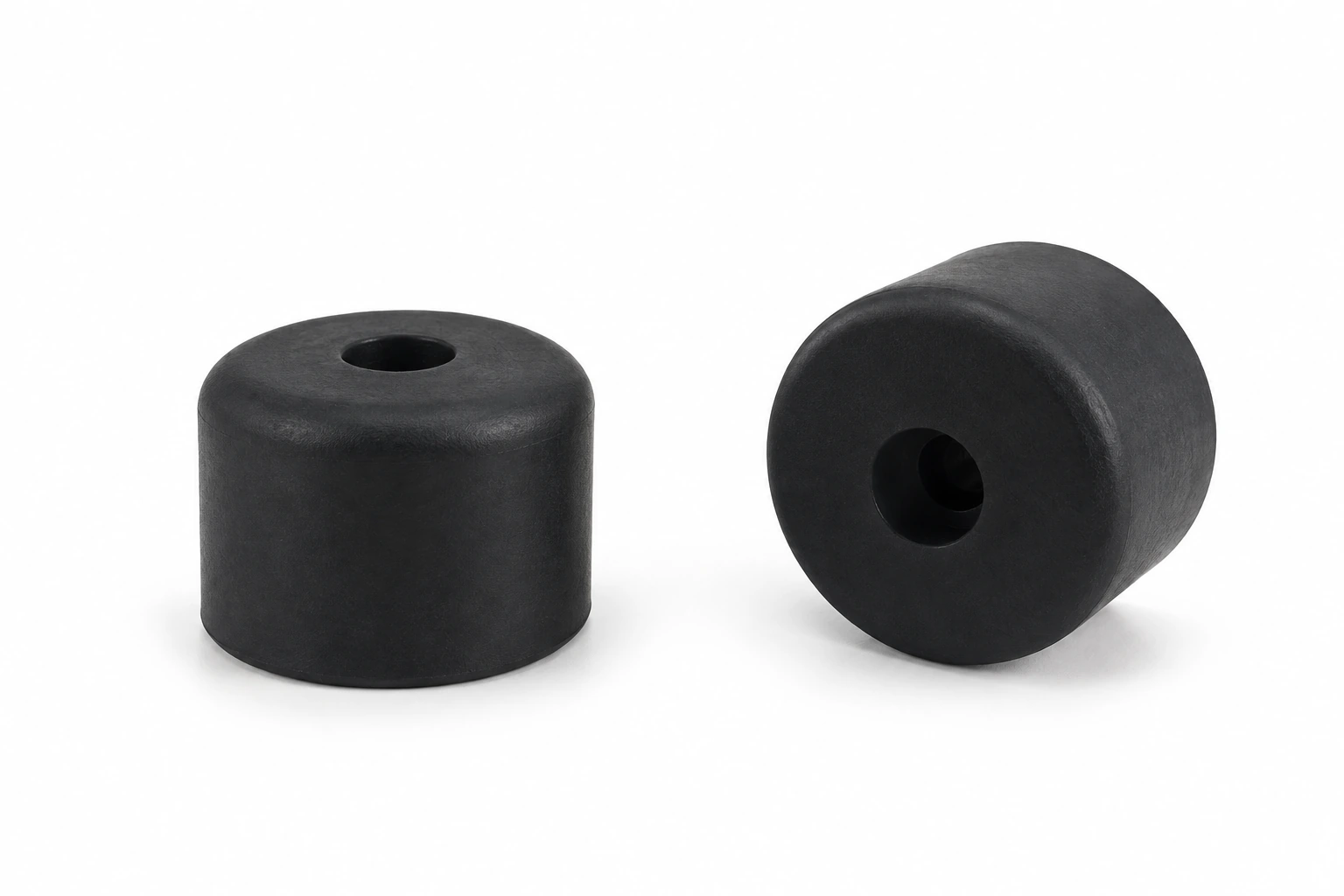
Compare OD, H, A, B and C in mm. C indicates the recess depth on this feet profile.
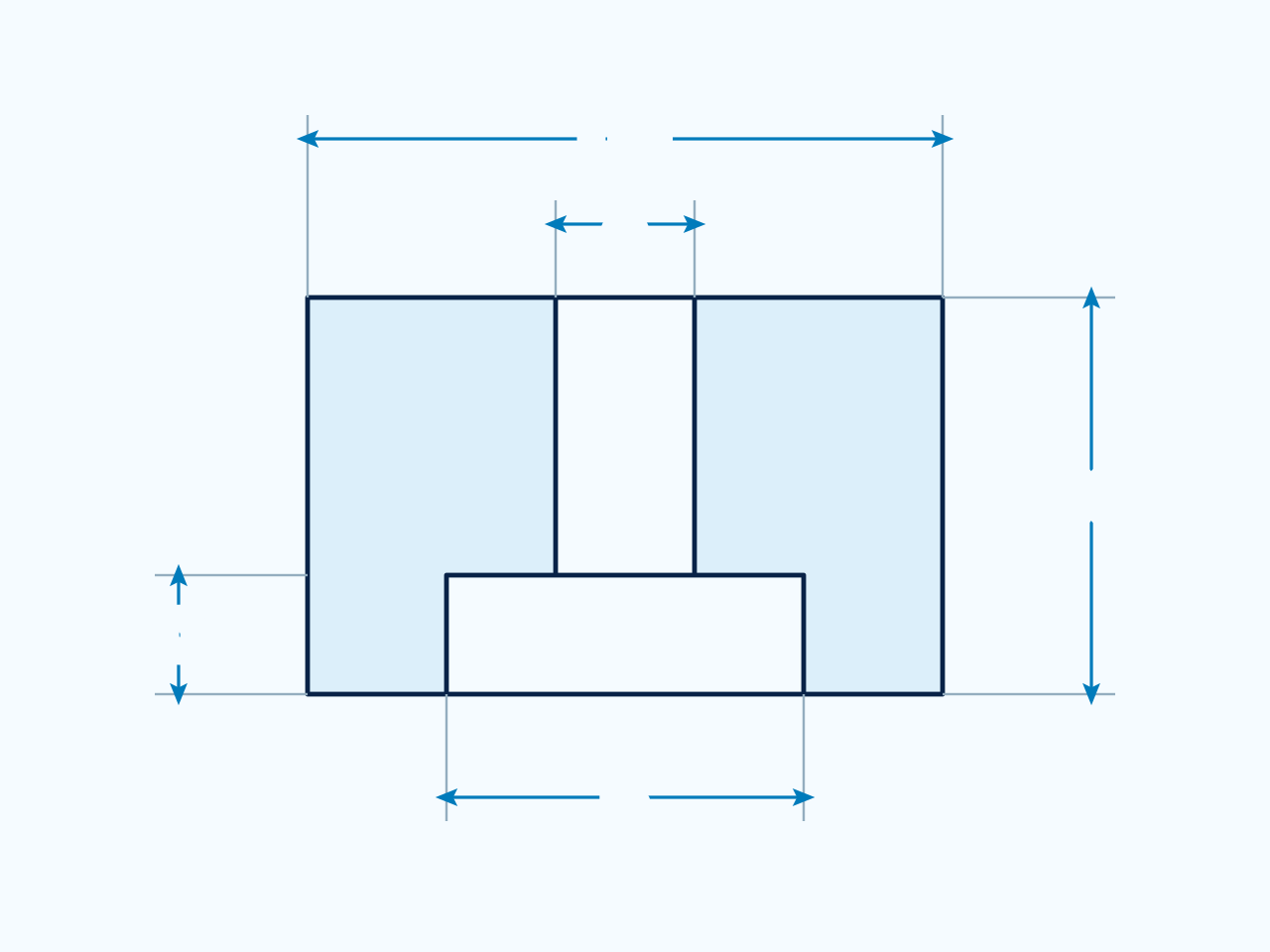
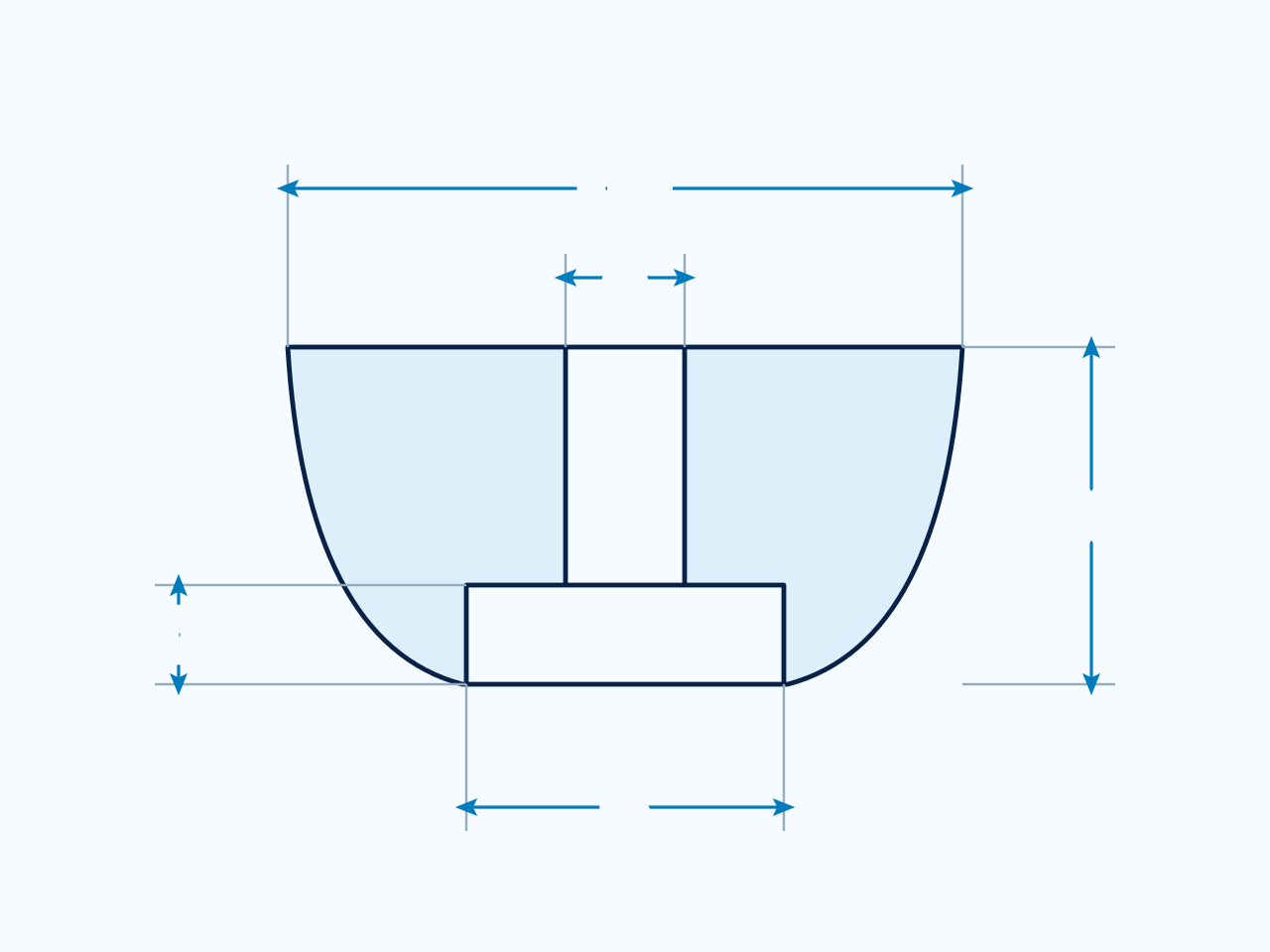
Hemispherical Rubber Bumper
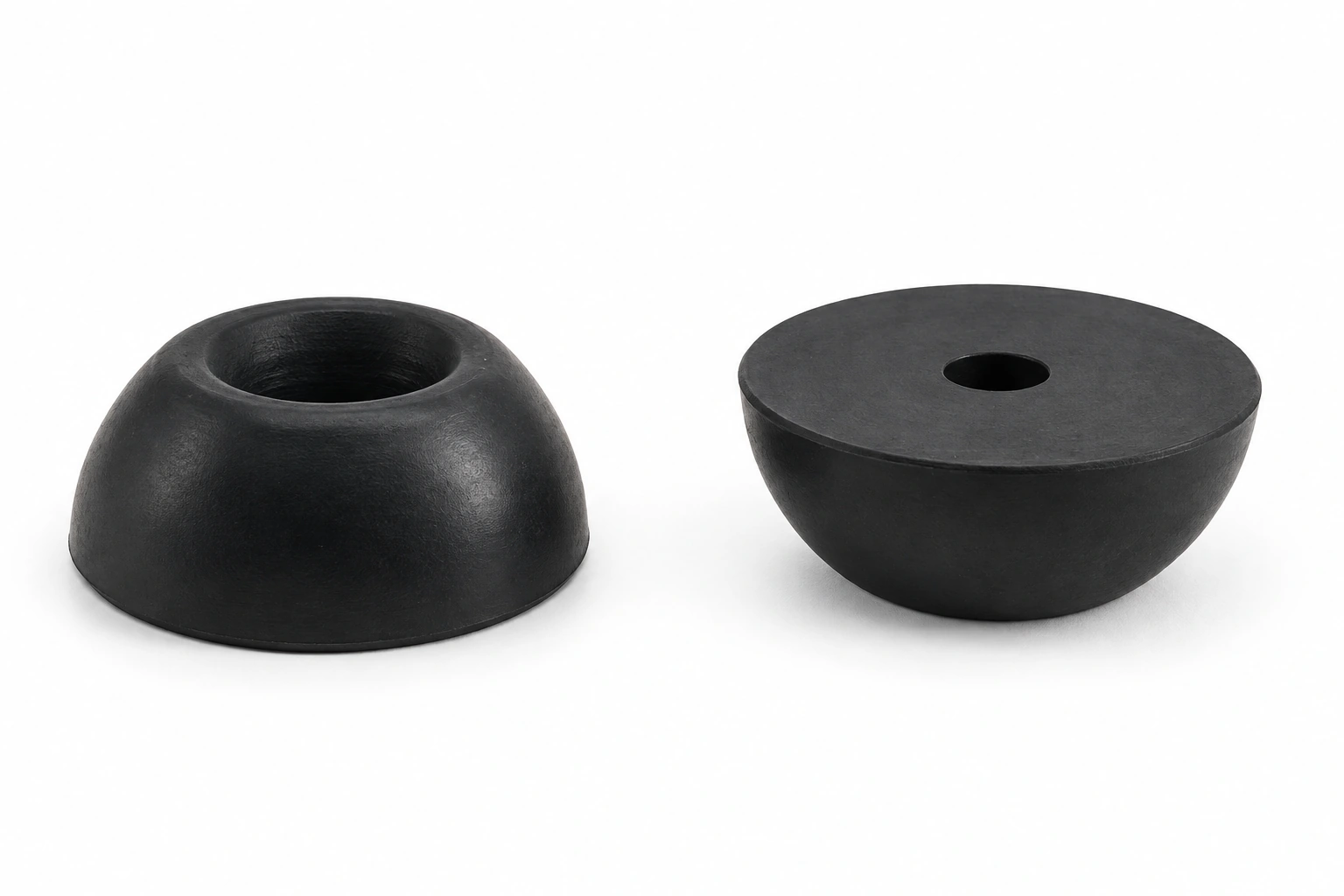
Compare OD, H, A, B and C in mm using the hemispherical-bumper drawing.
Rubber Tips
Compare A, B and C in mm using the open round-tip drawing. Check the mating leg dimensions and seating depth.
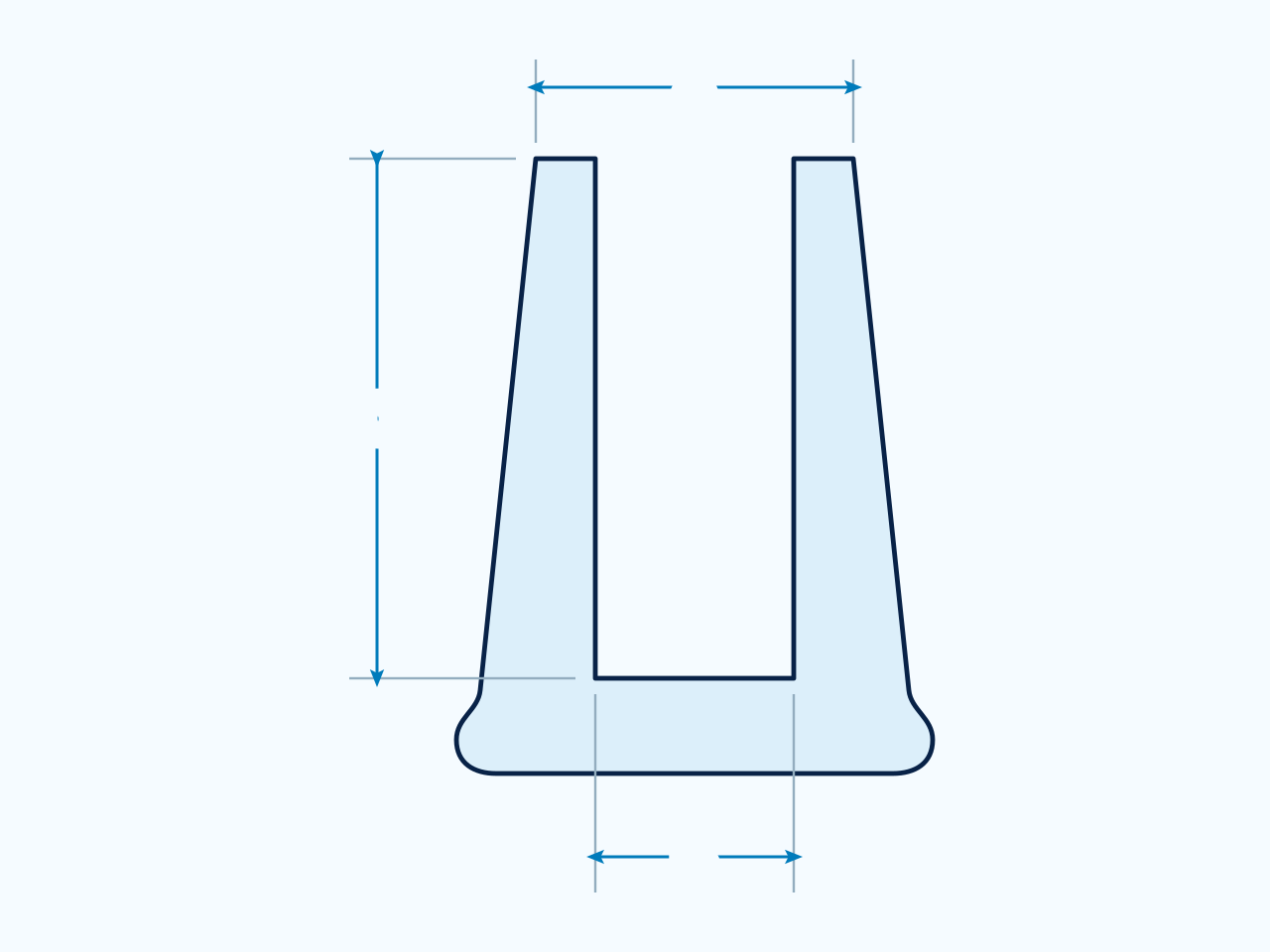
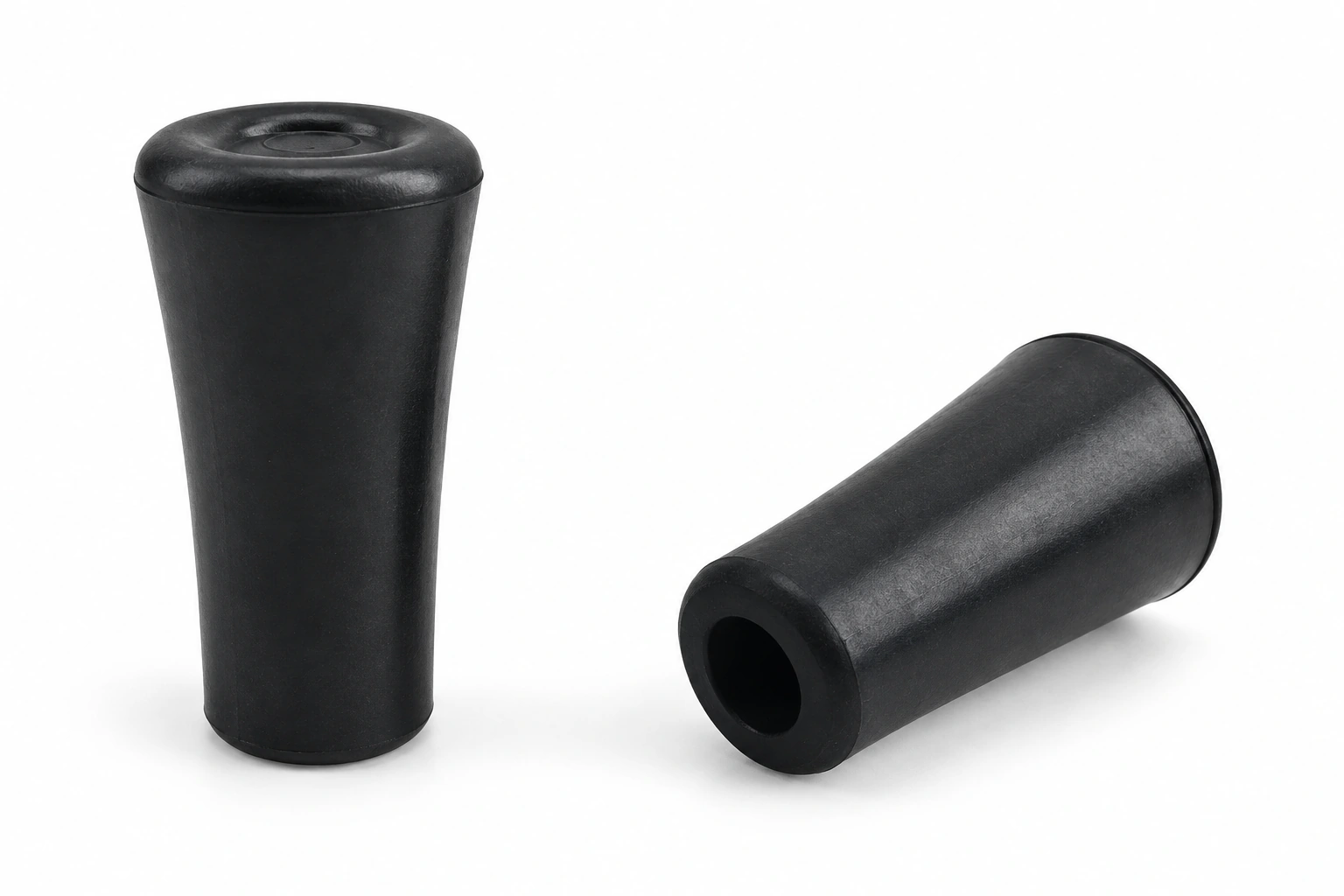
Rectangular rubber feet for chairs
Compare A, B and C in mm using the rectangular-tip drawing. Check both sides of the mating leg and the seating depth.
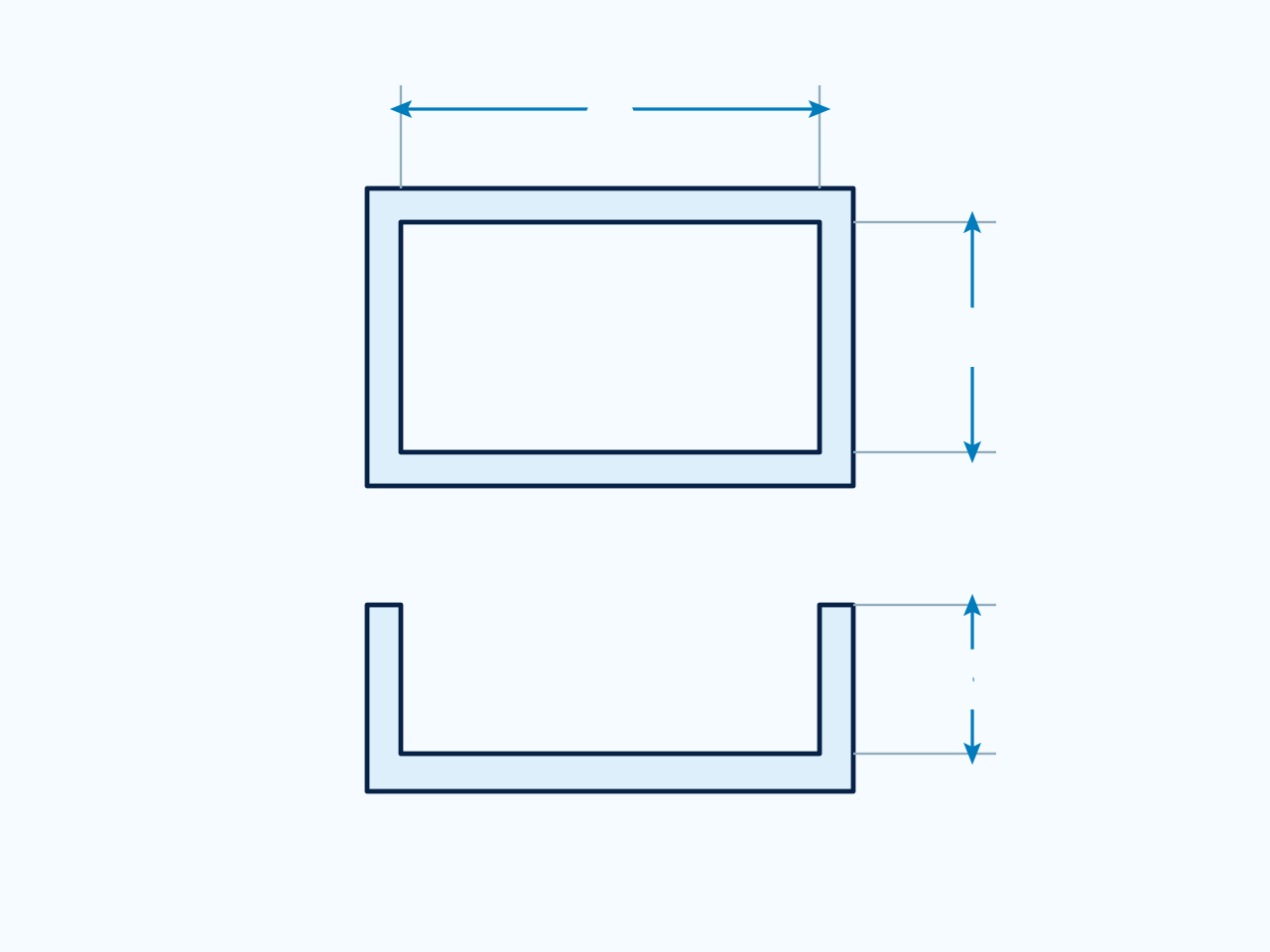
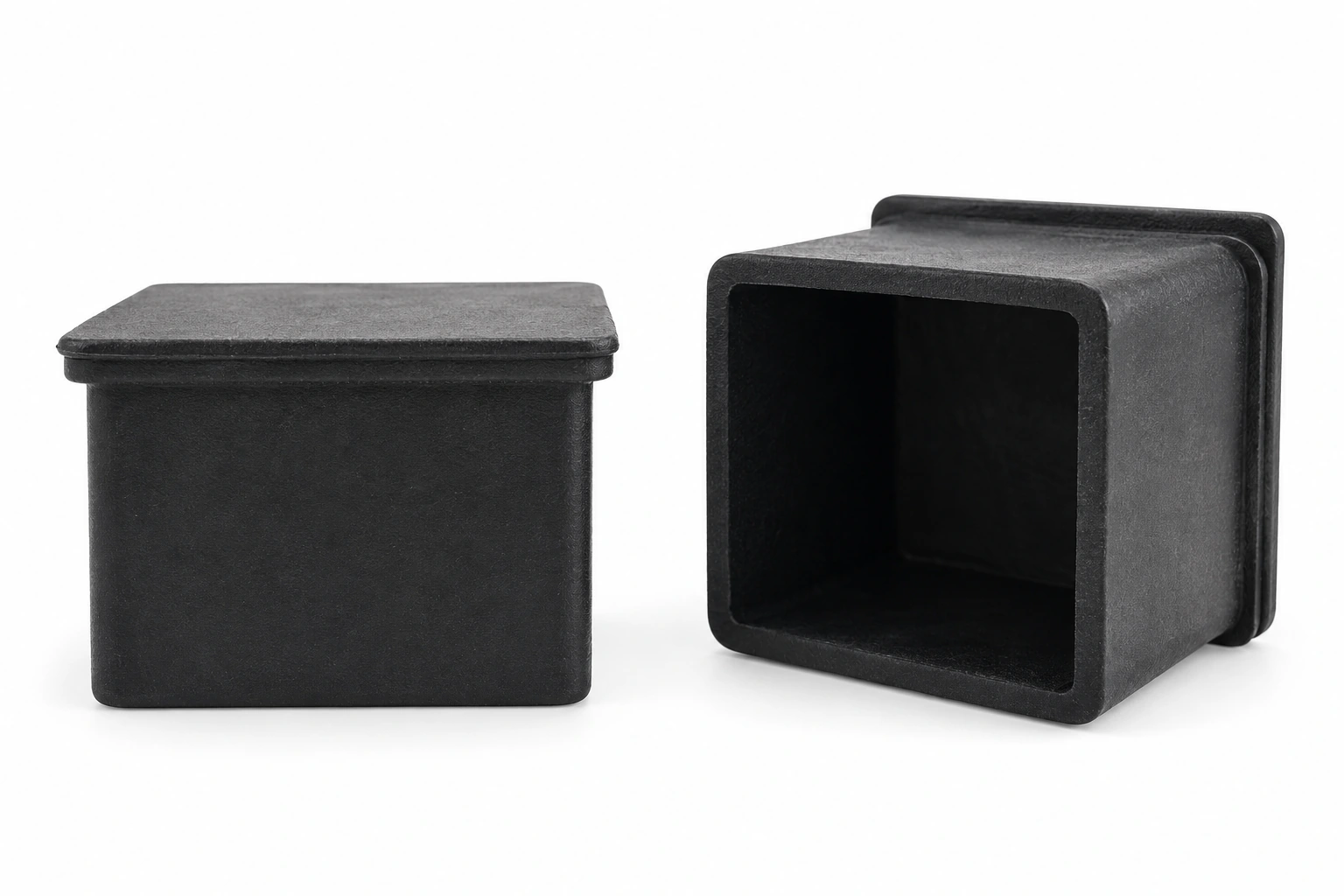
Rubber Feet For Chairs
Compare A, B, C and D in mm using the square-tip drawing. Check the mating leg profile and seating depth.
Need a different size? Share your drawing, mating dimensions and intended use to discuss a suitable part.
Discuss Your RequirementsProduct specifications
- Product form
- Rubber contact bumper with a projecting threaded stud or an internally threaded insert.
- Thread specification
- Identify male or female attachment, thread diameter and pitch, stud projection or usable insert depth.
- Mounting stack
- Include the bracket, washer or plate thickness and clearance to obstructions when setting thread engagement.
- Contact geometry
- Specify rubber body diameter and height, contact direction and the clearance before the moving part reaches the bumper.
- Working duty
- Define occasional, repeated or continuous contact, load direction and allowed compression; evaluate the rubber contact and metal fixing together.
Need a quote or a custom part?
Send your requirements, drawings or samples to discuss standard and custom silicone rubber parts.
Email us[email protected]