
Rubber resistive tubing
Rubber resistive tubing is a reinforced type of rubber tubing that is able to withstand numerous actions and effects. Whether you need food grade rubber tubing, conductive rubber tubing, air rubber tubing, chemical rubber tubing or any other type of rubber tubing, you can choose rubber resistive tubing. Since rubber tubing is generally used in a large number of different industries, including the chemical industry, aerospace industry, as well as in various machines as part of air pumps, aspirators and hydraulic systems, this means that rubber tubing is often exposed to heavy duty tasks. If you choose for example silicone rubber tubing and expose it to heavy duty tasks, it lasts much shorter than rubber resistive tubing which has fantastic durability.
Rubber resistive tubing in most cases has a higher hardness compared to many other types of tubing, so this hardness is usually between 50 and 90 Shore A, which is a unit of hardness, while other types of tubing sometimes have a hardness of only 20 to 30 Shore A. There are different ways to strengthen rubber tubing and how we do it when you order rubber resistive tubing. In cases where you need for heavy duty tasks, natural rubber is usually used, as well as gum rubber, as these are highly resilient and tear resistant types of material. While in cases where you need rubber resistive tubing, but resistant to chemicals, then we recommend silicone because it has the best chemical stability. An excellent choice is also FKM, a fluoroelastomer material versatile application.
All these characteristics do not affect the choice of sizes. We offer a large number of different sizes, and we can also adjust the sizes to your needs. We can also make rubber resistive tubing of different colors to make it easy to distinguish tubing by size and other characteristics as soon as you see the color of it.
Rubber Hose Size Catalog
Compare tube bore, outside diameter and available wall thickness. Confirm material compatibility and operating requirements for the selected hose.
Rubber Hose
Compare Inside Diameter and Outside Diameter in mm. The cross-section drawing identifies the bore and outside diameter; confirm the selected tube material and service requirements.

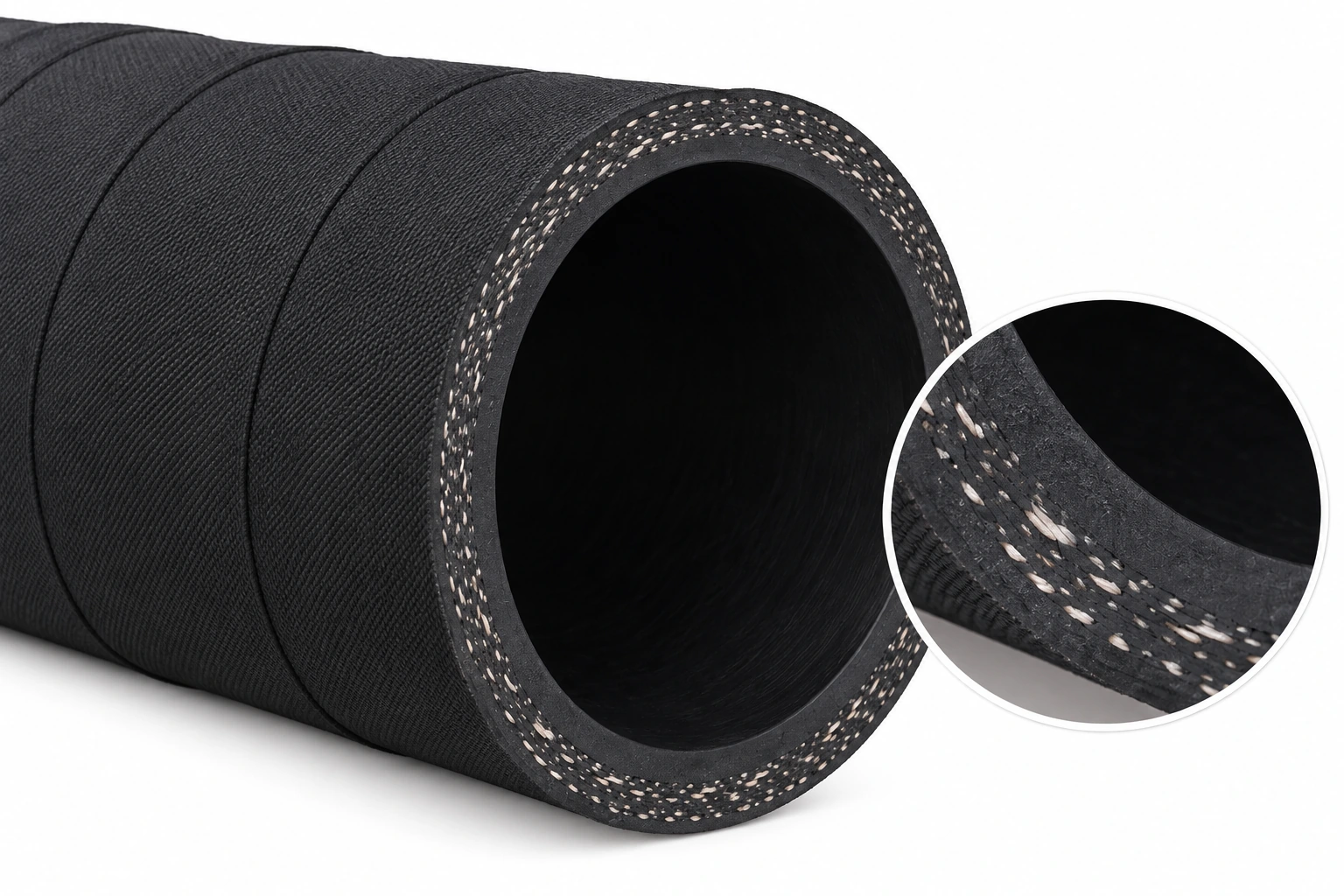
Fluororubber Hose
Compare Inside Diameter and Outside Diameter in mm. The cross-section drawing identifies the bore and outside diameter; confirm the selected tube material and service requirements.
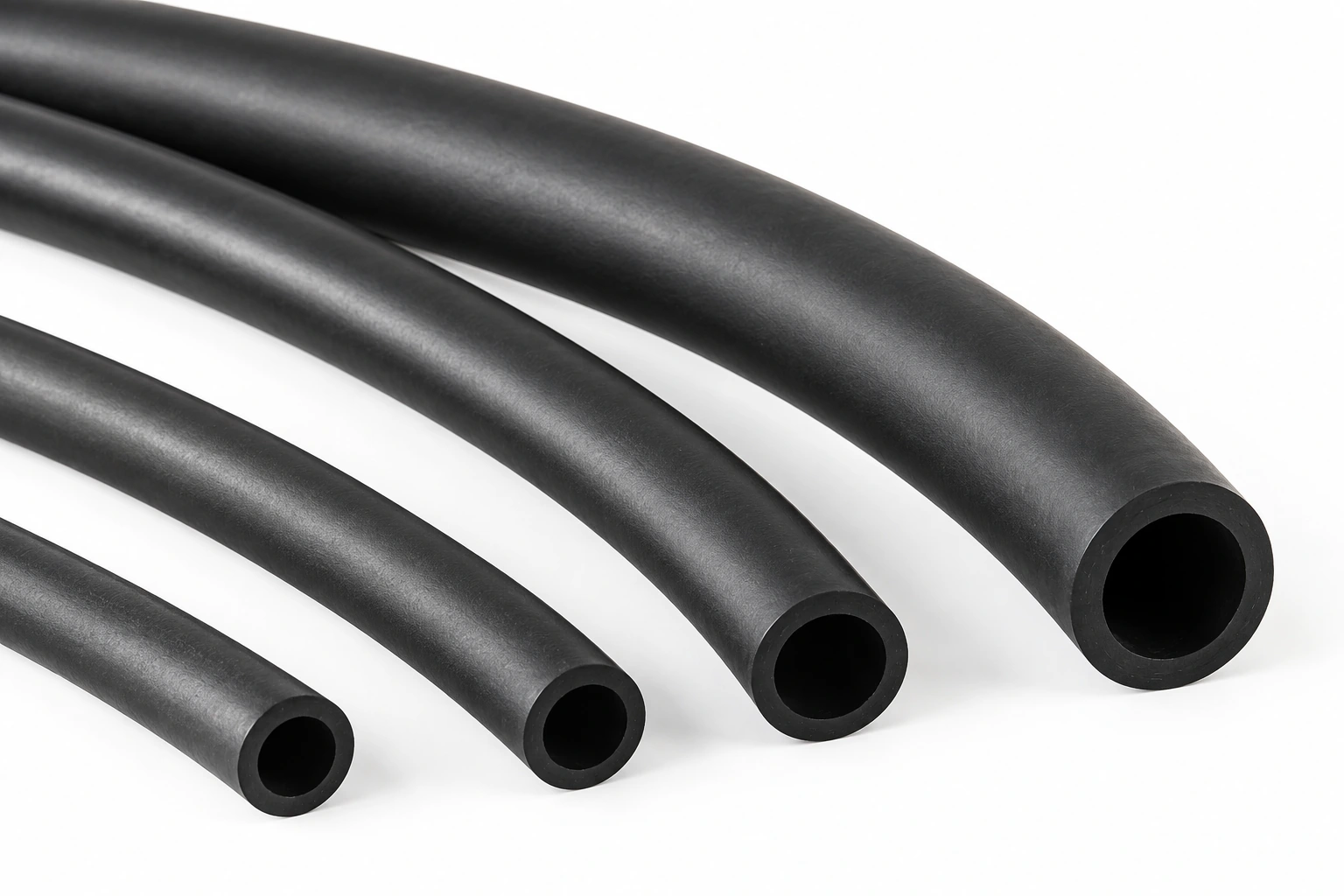
Colourful rubber high pressure hose
Compare Inside Diameter and Outside Diameter in mm, together with the listed Thickness and Colour. The cross-section drawing identifies the bore and outside diameter; confirm the selected tube material and service requirements.
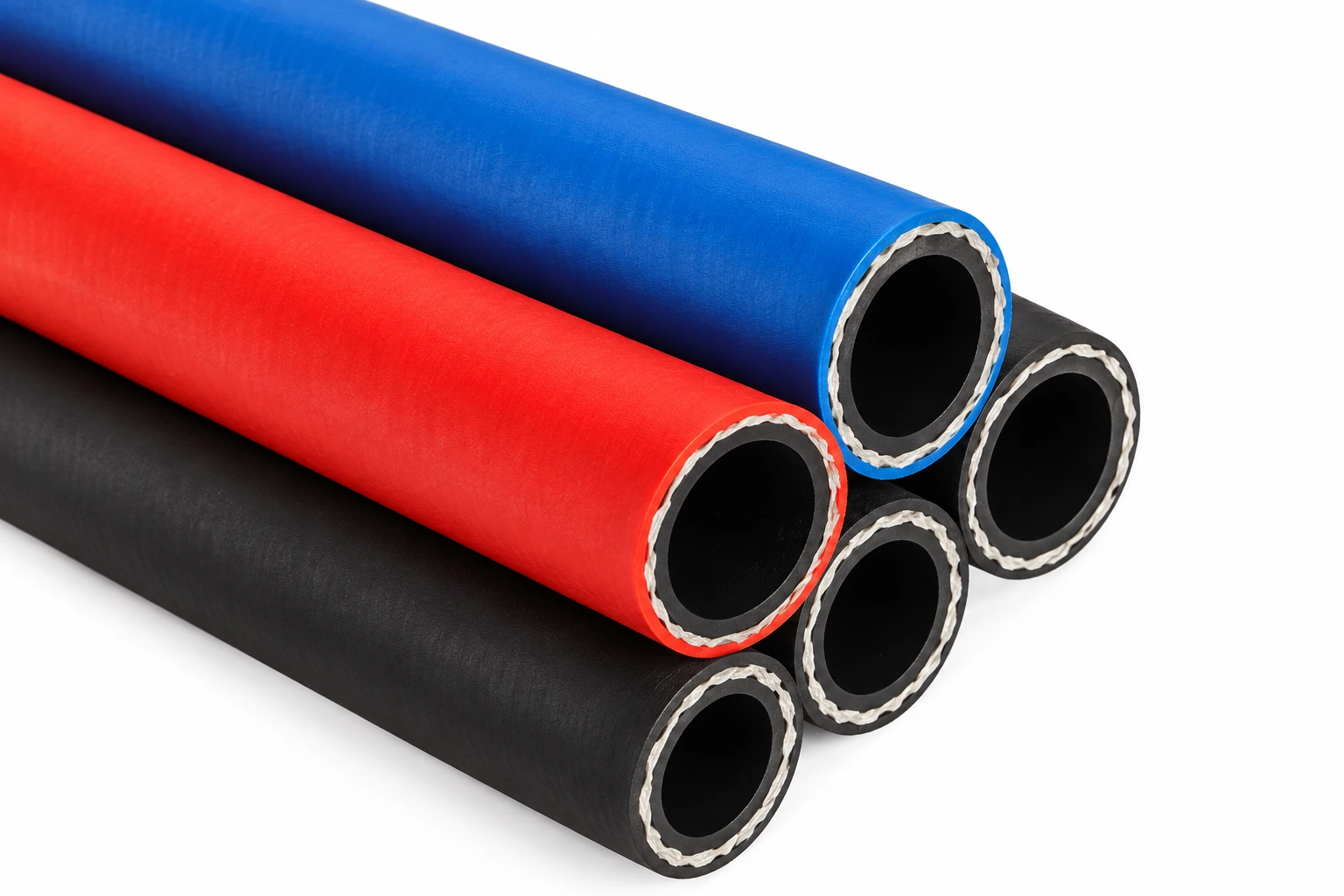
Need a different size? Share your drawing, mating dimensions and intended use to discuss a suitable part.
Discuss Your RequirementsProduct specifications
- Product form
- Hollow elastomer tubing for a fitted line or sleeve
- Material options discussed
- Silicone, FKM and natural rubber / latex. Choose one formulation for the actual contact and loading conditions.
- Application focus
- Food-processing equipment and aircraft equipment. Size the part against the selected assembly.
- Dimensions to confirm
- Inside diameter, outside diameter, wall thickness and cut length. Match these to food-processing equipment and aircraft equipment.
- Extension duty
- Specify free length, working extension, attachment ends and the force required through the movement.
- Contact conditions
- Food ingredients, air and hydraulic fluid: define concentration, temperature and contact time, then check compatibility with the chosen compound.
- Line layout
- Check bend radius, unsupported spans and clearance at both connections.
Need a quote or a custom part?
Send your requirements, drawings or samples to discuss standard and custom silicone rubber parts.
Email us[email protected]