
Electrically conductive rubber tubing
Electrically conductive rubber tubing is selected when a controlled conductive path is part of the equipment design. Its electrical behavior differs from that of an insulating rubber sleeve. Specify the required resistance range and the way the tube will connect to the rest of the system.
For static dissipation, review continuity through the installed line, including fittings and any grounding arrangement. Do not use a conductive tube as a substitute for insulation around live conductors or as an ordinary power-carrying wire. Electrical protection depends on the complete circuit and the component’s intended rating.
A conductive liner or filled rubber can change both the construction and the contact surface of a tube. Identify which layer carries the medium and which provides the electrical function. Check the finished assembly for connection fit, bending, fluid compatibility and electrical performance under its operating conditions.
Rubber Hose Size Catalog
Compare tube bore, outside diameter and available wall thickness. Confirm material compatibility and operating requirements for the selected hose.
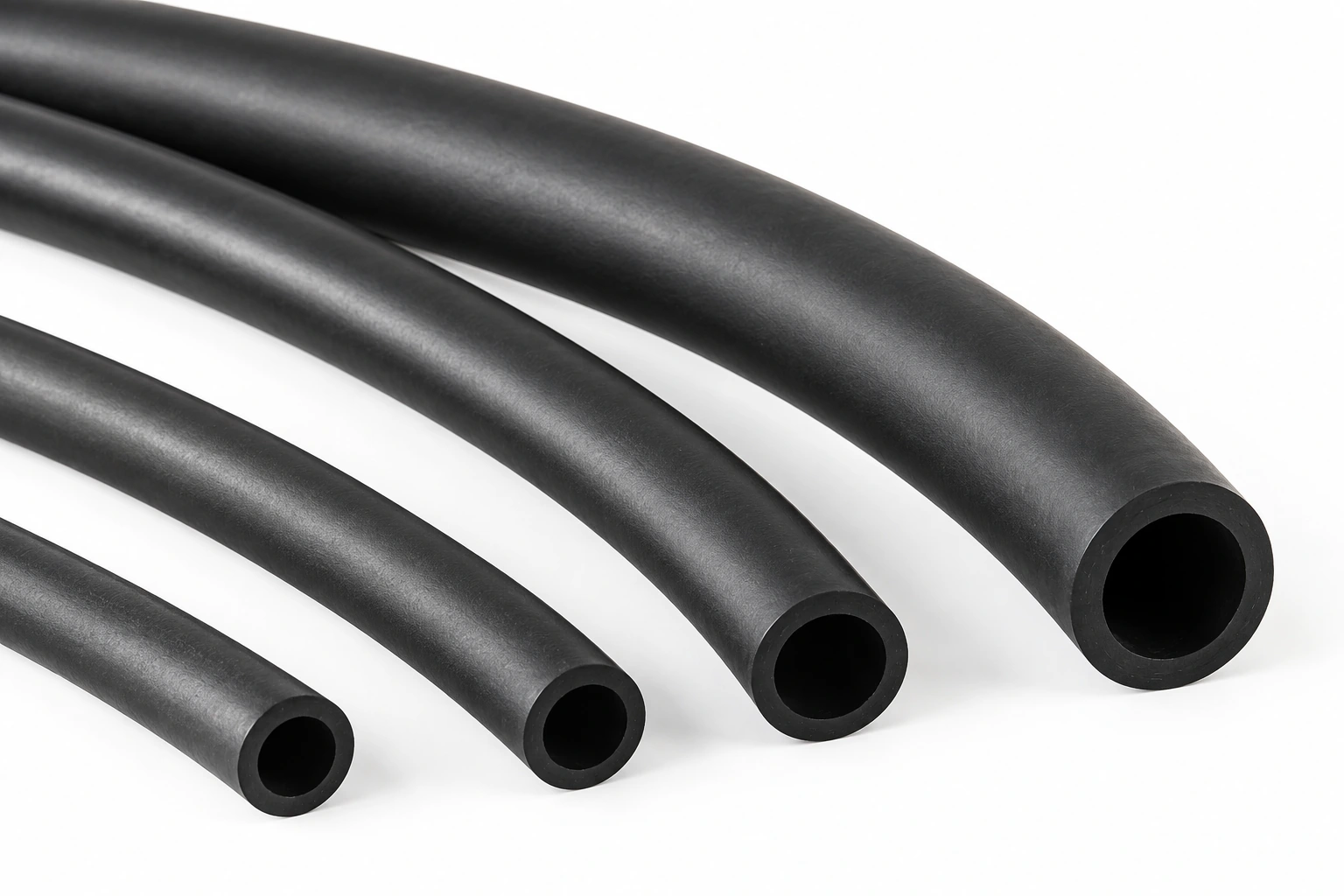
Rubber Hose
Compare Inside Diameter and Outside Diameter in mm. The cross-section drawing identifies the bore and outside diameter; confirm the selected tube material and service requirements.

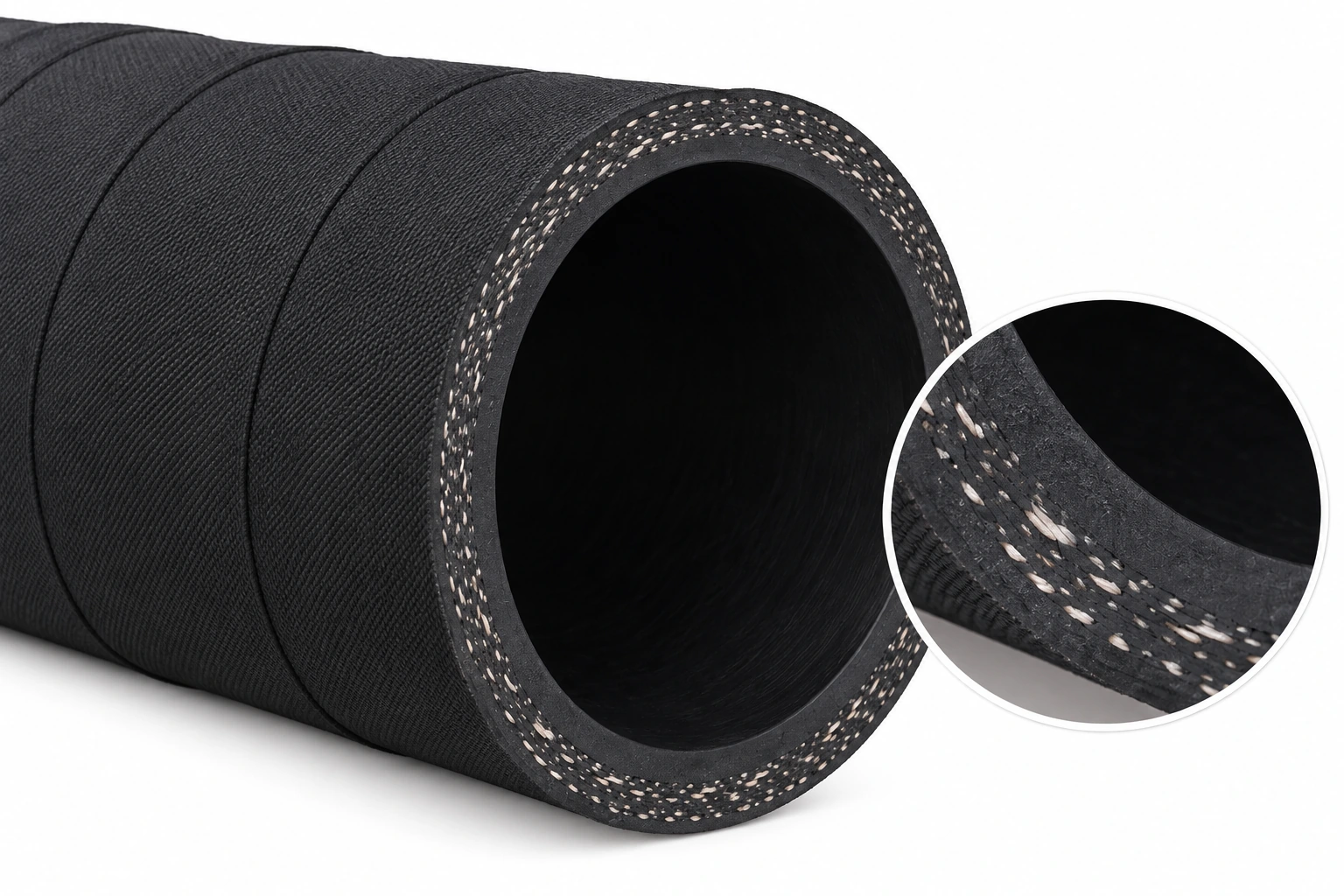
Fluororubber Hose
Compare Inside Diameter and Outside Diameter in mm. The cross-section drawing identifies the bore and outside diameter; confirm the selected tube material and service requirements.
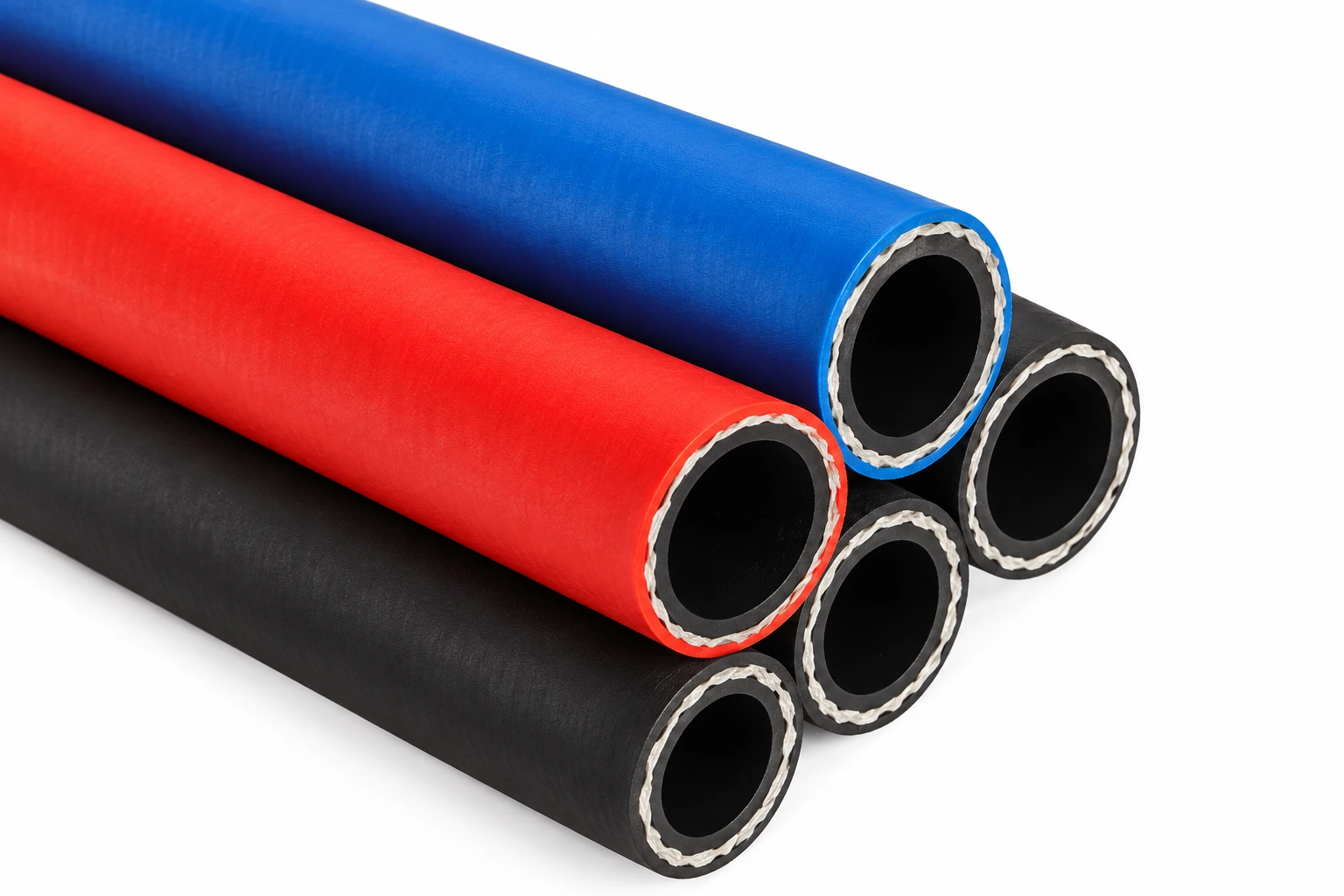
Colourful rubber high pressure hose
Compare Inside Diameter and Outside Diameter in mm, together with the listed Thickness and Colour. The cross-section drawing identifies the bore and outside diameter; confirm the selected tube material and service requirements.
Need a different size? Share your drawing, mating dimensions and intended use to discuss a suitable part.
Discuss Your RequirementsProduct specifications
- Product form
- Conductive rubber tube or tube with a conductive liner.
- Electrical path
- Specify resistance and the complete continuity or grounding arrangement.
- Layer definition
- Identify the medium-contact layer and the layer providing conductivity.
- Use boundary
- Conductivity does not establish insulation protection or suitability as a power conductor.
- Assembly assessment
- Check electrical behavior, fluid compatibility, fitting engagement and bends together.
Need a quote or a custom part?
Send your requirements, drawings or samples to discuss standard and custom silicone rubber parts.
Email us[email protected]